Скачать презентацию a Mike Worth Game Music Inc Game
6d6ec9a506bccb3ebb36731e05f77191.ppt
- Количество слайдов: 26
 a. Mike Worth, Game Music, Inc.
 Game Music’s Uniqueness a. Evolved from Film Music. a. Epic, Emotional, drives the experience. b. Uniquely different from Film Music. a. Adaptive rather than Linear b. Promotes Gameplay Excitement, rather than Narrative Cohesion. c. Designed to support the Game Experience and Immersion, rather than support the Story. d. Is often Assembled in real time, rather than Constructed before delivery.
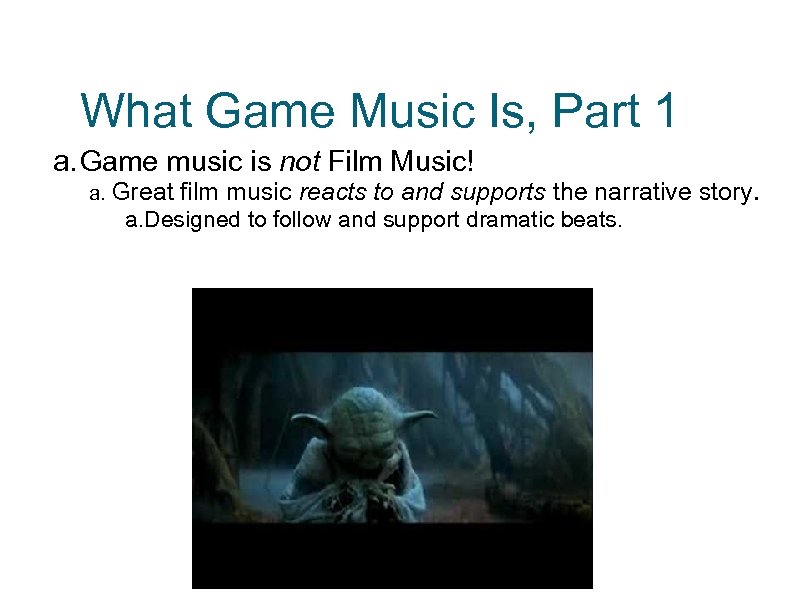 What Game Music Is, Part 1 a. Game music is not Film Music! a. Great film music reacts to and supports the narrative story. a. Designed to follow and support dramatic beats.
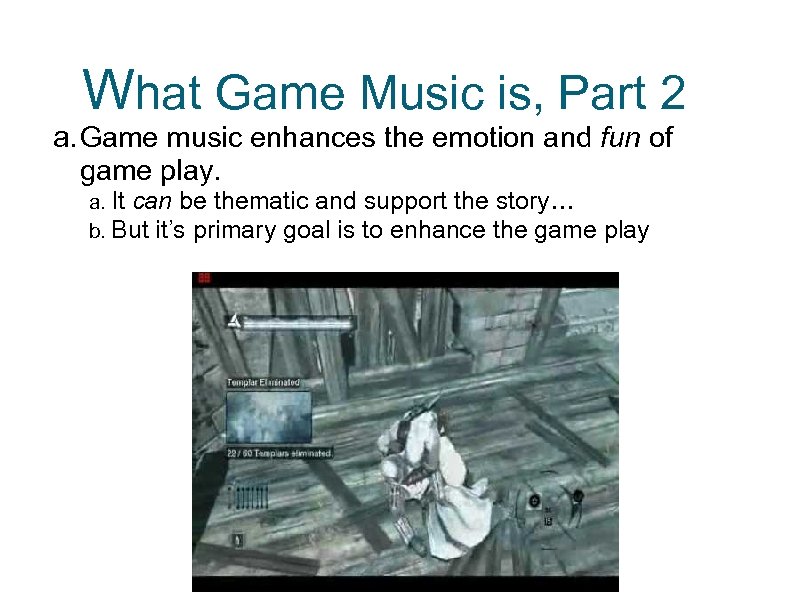 What Game Music is, Part 2 a. Game music enhances the emotion and fun of game play. a. It can be thematic and support the story… b. But it’s primary goal is to enhance the game play
 Game Music Vs. Film Music
 Mapping Out Your Cues a. Like a movie has a timing sheet, o o Game scores have a “Game State” matrix spreadsheet. Example: list of cues § § Outdoor exploration, outdoor battle, outdoor victory Indoor exploration, indoor battle indoor victory Player Game State, Injured, Triumphant, Powered Up Composer must be able to have the above pieces link and flow to one another!
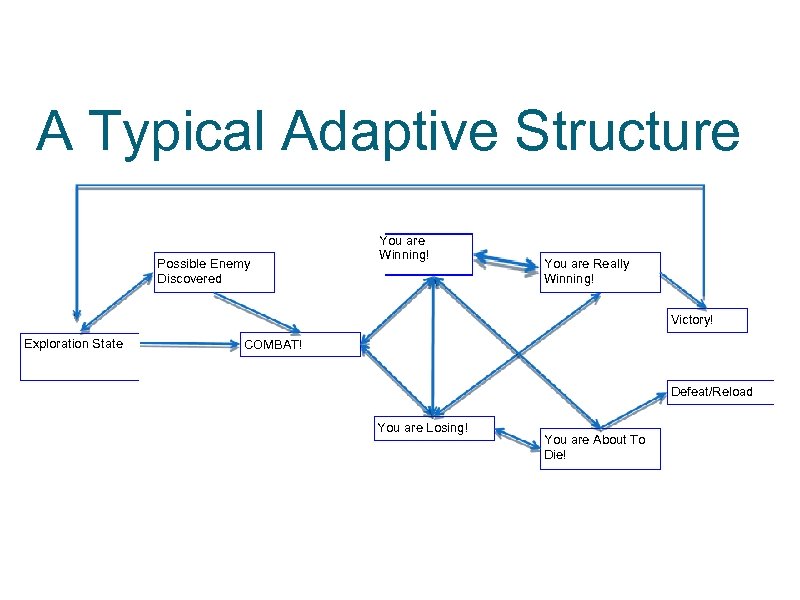 A Typical Adaptive Structure Possible Enemy Discovered You are Winning! You are Really Winning! Victory! Exploration State COMBAT! Defeat/Reload You are Losing! You are About To Die!
 The Game Audio Team a. Composer, Sound Designer a. Creates music and SFX assets. b. Implementor / Integrator a. Gets music and sound effects into the game. c. Editor a. Loops, tweaks, cuts and arranges music. d. Programmer a. Most likely not a musician. b. Works on the audio engine or middleware code directly, not assets. e. Music Supervisor - Like TV/film, seeks existing songs to license. f. Audio Lead / Director a. Manages the staff, deals with budget, scheduling, interfaces with rest of team.
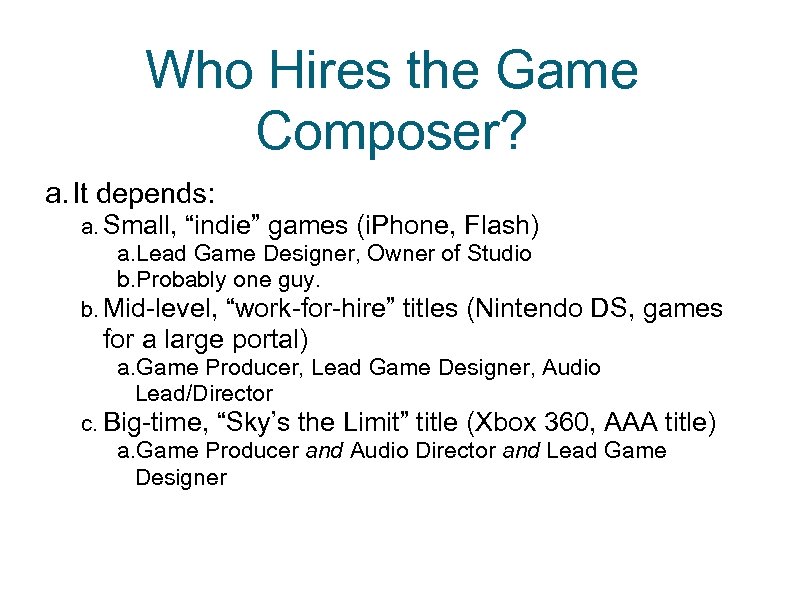 Who Hires the Game Composer? a. It depends: a. Small, “indie” games (i. Phone, Flash) a. Lead Game Designer, Owner of Studio b. Probably one guy. b. Mid-level, “work-for-hire” titles (Nintendo DS, games for a large portal) a. Game Producer, Lead Game Designer, Audio Lead/Director c. Big-time, “Sky’s the Limit” title (Xbox 360, AAA title) a. Game Producer and Audio Director and Lead Game Designer
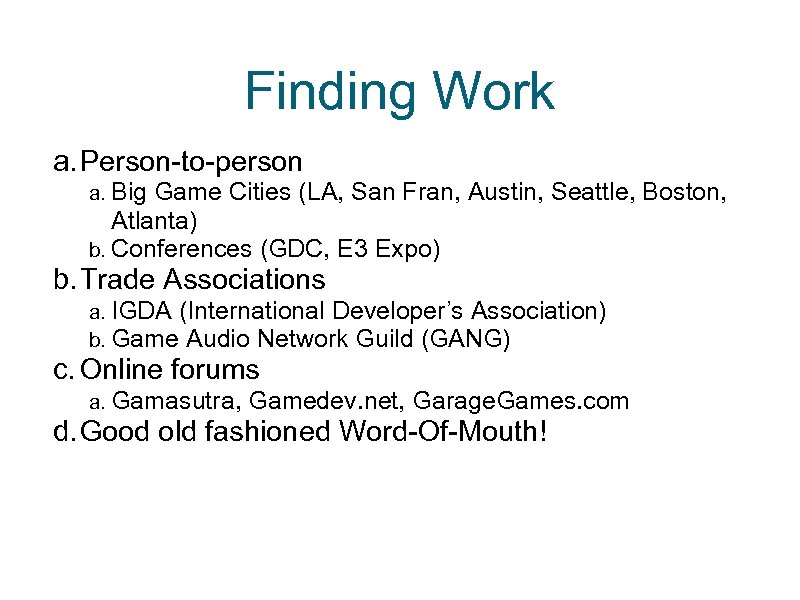 Finding Work a. Person-to-person a. Big Game Cities (LA, San Fran, Austin, Seattle, Boston, Atlanta) b. Conferences (GDC, E 3 Expo) b. Trade Associations a. IGDA (International Developer’s Association) b. Game Audio Network Guild (GANG) c. Online forums a. Gamasutra, Gamedev. net, Garage. Games. com d. Good old fashioned Word-Of-Mouth!
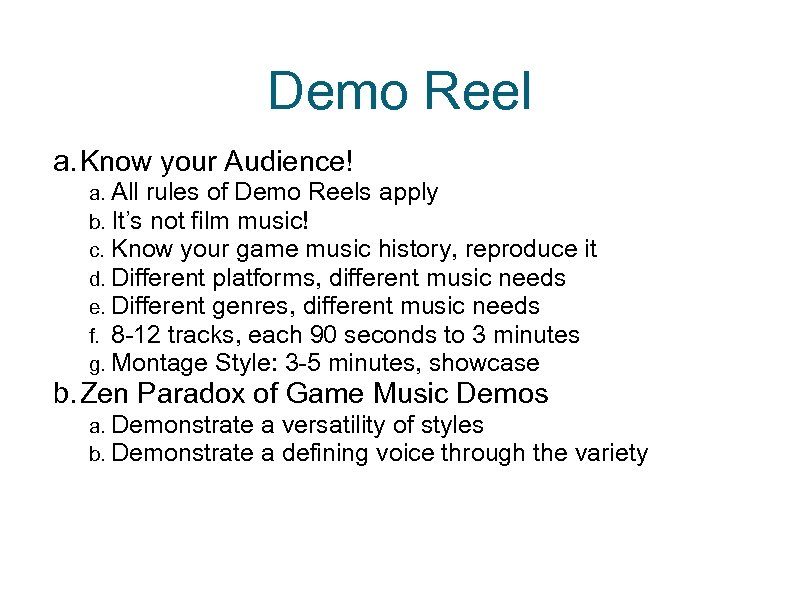 Demo Reel a. Know your Audience! a. All rules of Demo Reels apply b. It’s not film music! c. Know your game music history, reproduce it d. Different platforms, different music needs e. Different genres, different music needs f. 8 -12 tracks, each 90 seconds to 3 minutes g. Montage Style: 3 -5 minutes, showcase b. Zen Paradox of Game Music Demos a. Demonstrate a versatility of styles b. Demonstrate a defining voice through the variety
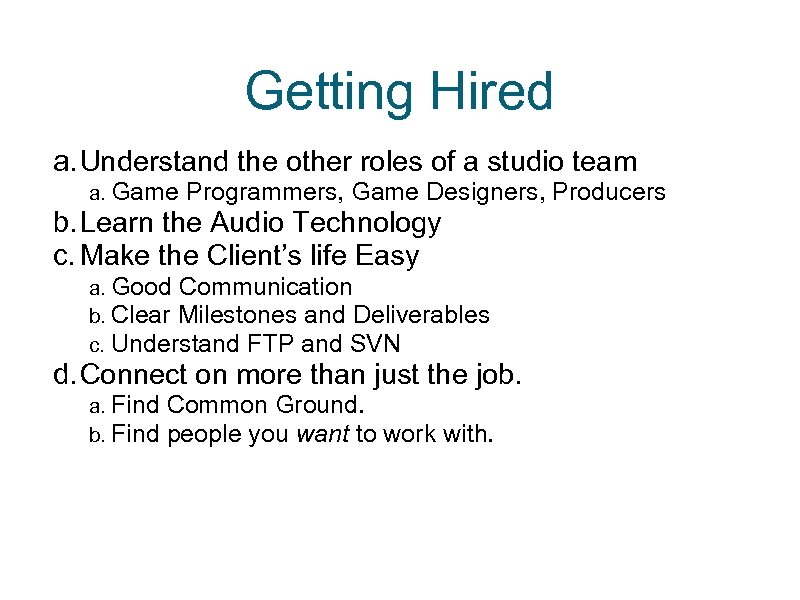 Getting Hired a. Understand the other roles of a studio team a. Game Programmers, Game Designers, Producers b. Learn the Audio Technology c. Make the Client’s life Easy a. Good Communication b. Clear Milestones and Deliverables c. Understand FTP and SVN d. Connect on more than just the job. a. Find Common Ground. b. Find people you want to work with.
 The Art of Writing Game Music a. Map out your cues a. Discuss game levels with your producer/audio director b. Reference other games c. Create an Audio Design Document! b. Play similar games to get ideas a. Shamelessly lift concepts and strategies c. Decide on a sonic palette a. Orchestral, World, Electronica, Hybrid, etc. d. Decide the emotions you want to convey a. It’s not always adrenalized excitement!
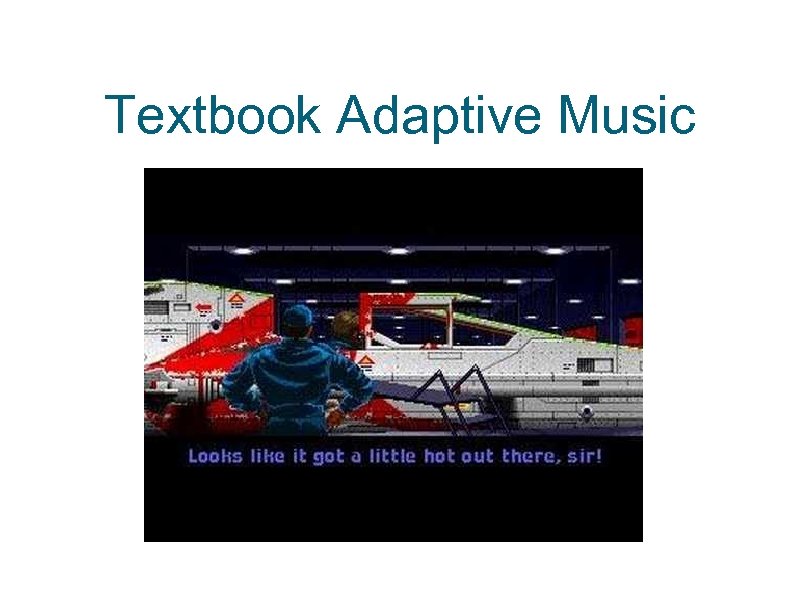 Textbook Adaptive Music
 The Craft of Writing Game Music a. Map out How Your Music “cells” flow between one another a. “Composing with Legos” b. Use your Audio Design Document c. Reduce, re-use, recycle a. Audio requires memory b. Re-use sections of music, cut down loops, re- combine
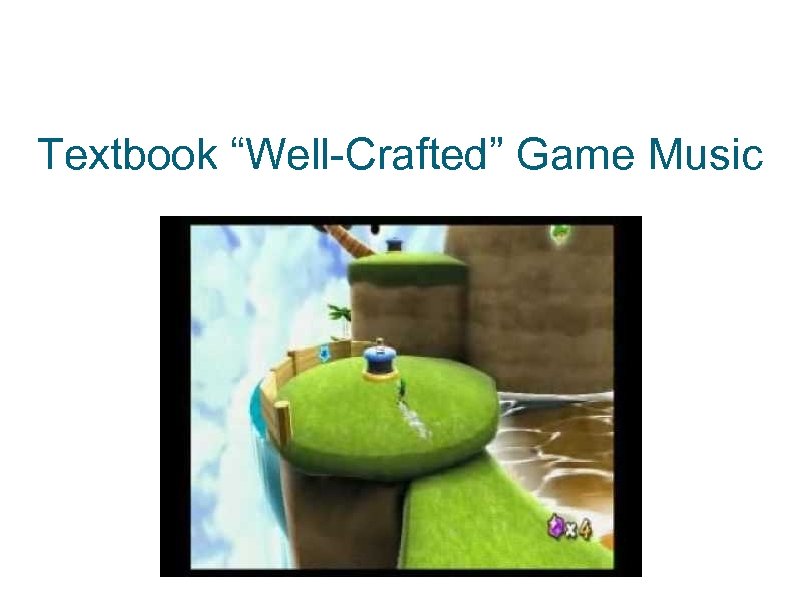 Textbook “Well-Crafted” Game Music
 The “Tech” of Writing Game Music a. Audio Implementation: a. “Middleware” app that allows game code variables to trigger sound effects and music. a. Player Game State (Injured, Discovered) b. Level State (Boss Level, Discovery Zone) c. Narration Point (Key Item Discovered, Puzzle Solved) d. Real Time DSP to Morph Environmental Audio
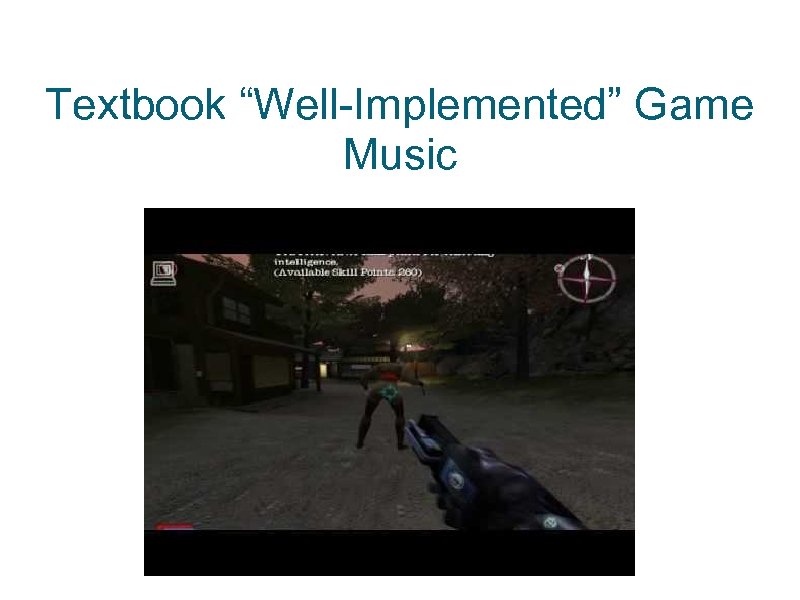 Textbook “Well-Implemented” Game Music
 Common Applications to Implement Your Audio a. FMOD a. b. www. fmod. com Industry Standard – ports to most common platforms: a. Xbox 360, PS 3, PC, Wii… c. Been around for ages b. Wwise a. b. http: //www. audiokinetic. com New kid on the block – amazing GUI. c. Xact a. Xbox Live XNA Audio Implementation App a. Sooo nice and friendly (C# compiler) b. Only exports to XBLA format/XNA format
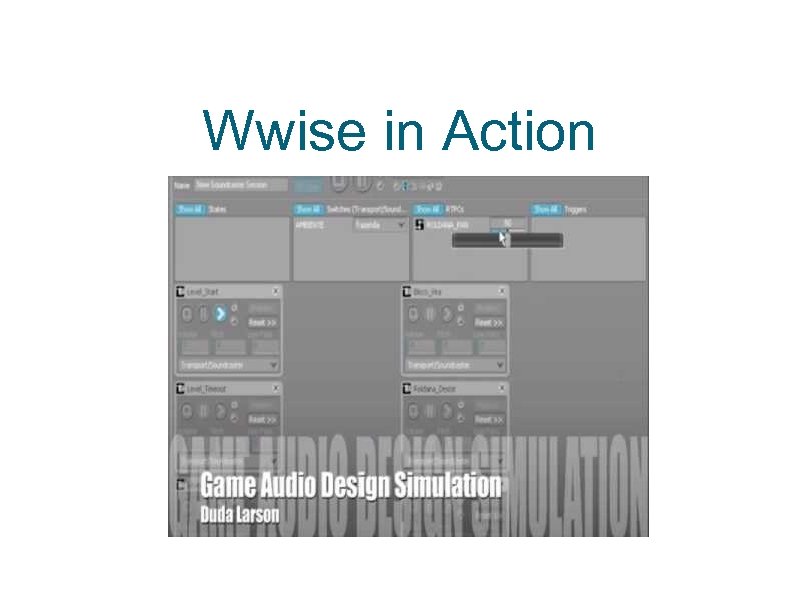 Wwise in Action
 Things to Think About When Implementing Audio a. How much memory is the producer giving you? a. Disk Space, RAM b. Preloaded or Streaming Sounds? c. Mixing sounds on the fly, or premade textures? d. Running effects on the fly (DSP), or pre-done effects? e. Number of simultaneous channels of audio? f. Budget and Time Constraints? g. Are you capturing the feel of the gameplay? h. Are you supporting the game designer’s vision?

 How to find out what to charge? a. Research a. Game Career Guide, G. A. N. G. b. Ask! a. Discuss with the producer or audio lead c. Industry Rates, as of 2009 a. Ultra-low budget (Flash, XBIG): $0 - $200 per minute b. Low-Budget, “indie”: 400 -700$ per minute c. Mid-budget: $700 -$1200 per minute d. “AAA” Budget: $1500 -$2500 per minute (high-end)
 Back End and Royalties? a. Game music is generally a BUYOUT deal b. Bonus Structures: a. Every “X” Thousand Games Shipped = “Y” bonus b. Port to new Platform = “Y” bonus c. Ancillary Rights a. Ancillary usage (eg. soundtrack release), profits are split with the studio. d. “Performance Rights”? a. Ehhh, not really. Covered in the bonus structure and Ancillary structure.