


 Скачать презентацию A mari usque ad mare The presentation was
A mari usque ad mare.pptx
- Количество слайдов: 19
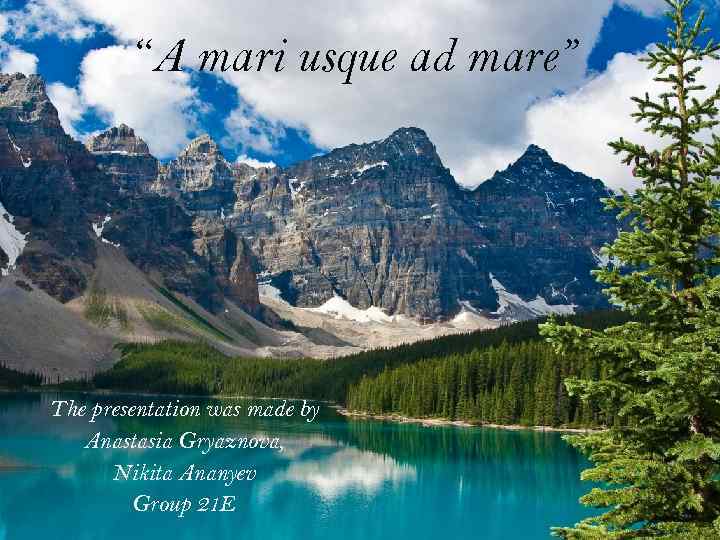 “A mari usque ad mare” The presentation was made by Anastasia Gryaznova, Nikita Ananyev Group 21 E
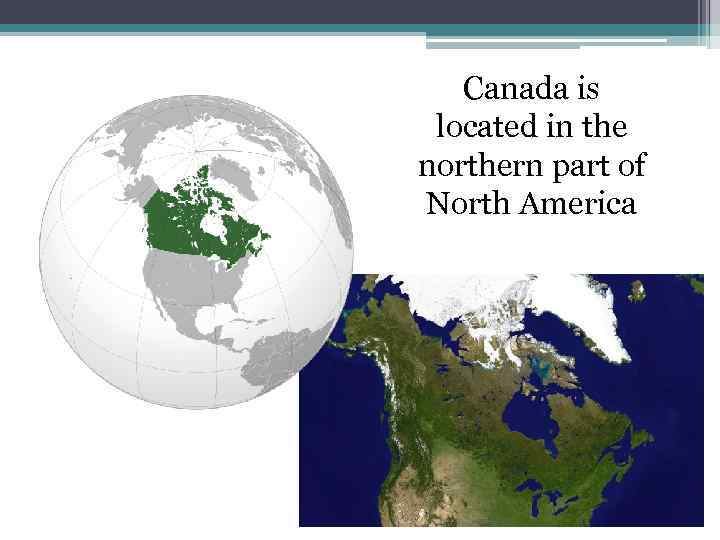 Canada is located in the northern part of North America
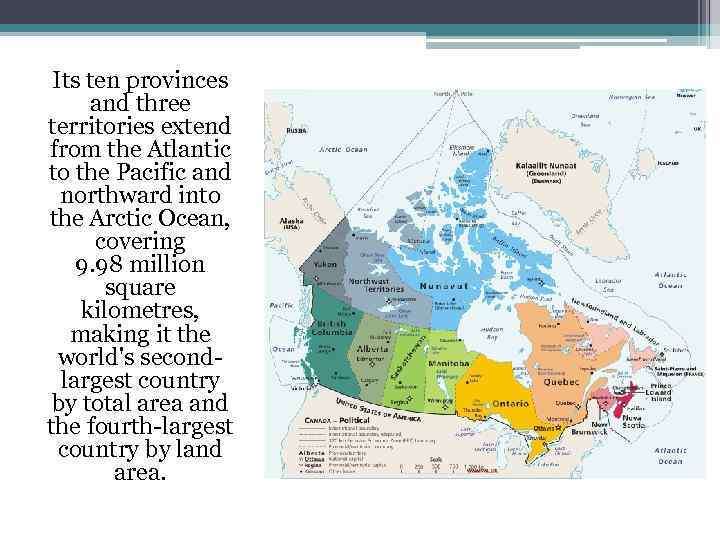 Its ten provinces and three territories extend from the Atlantic to the Pacific and northward into the Arctic Ocean, covering 9. 98 million square kilometres, making it the world's secondlargest country by total area and the fourth-largest country by land area.
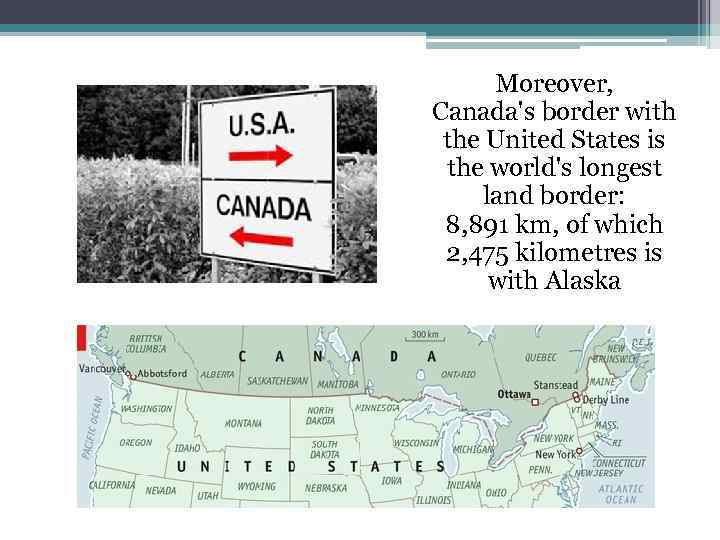 Moreover, Canada's border with the United States is the world's longest land border: 8, 891 km, of which 2, 475 kilometres is with Alaska
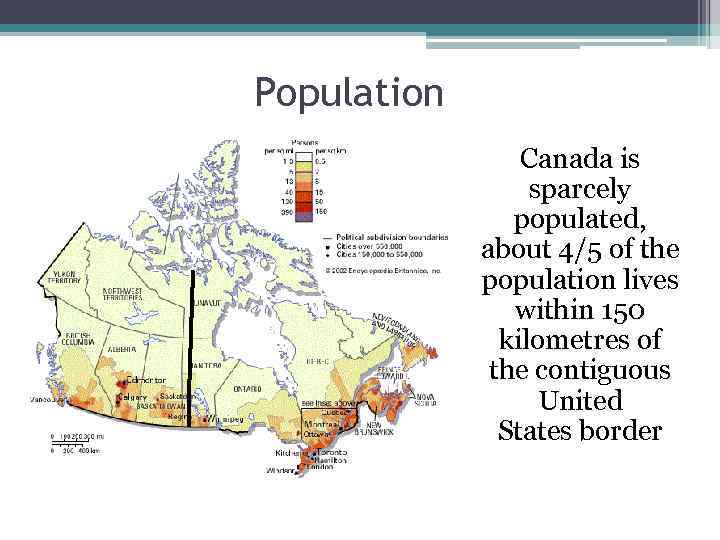 Population Canada is sparcely populated, about 4/5 of the population lives within 150 kilometres of the contiguous United States border
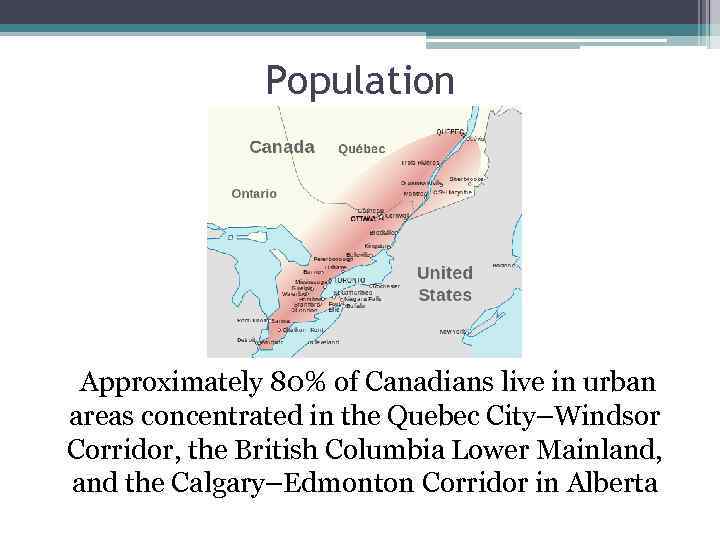 Population Approximately 80% of Canadians live in urban areas concentrated in the Quebec City–Windsor Corridor, the British Columbia Lower Mainland, and the Calgary–Edmonton Corridor in Alberta
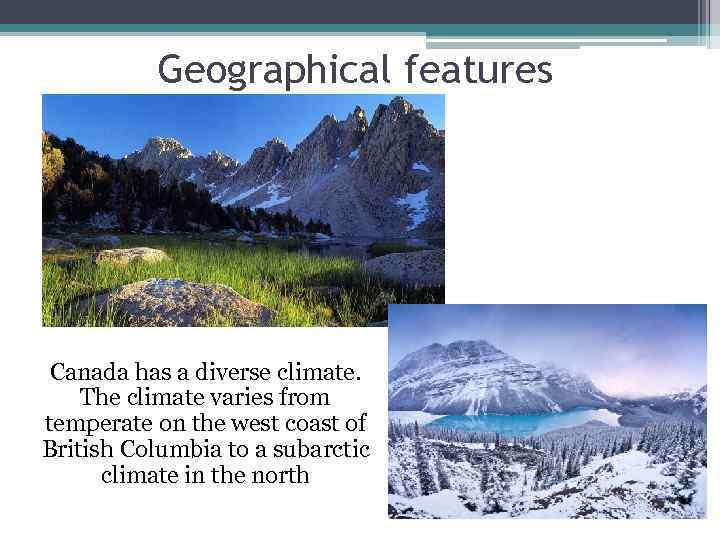 Geographical features Canada has a diverse climate. The climate varies from temperate on the west coast of British Columbia to a subarctic climate in the north
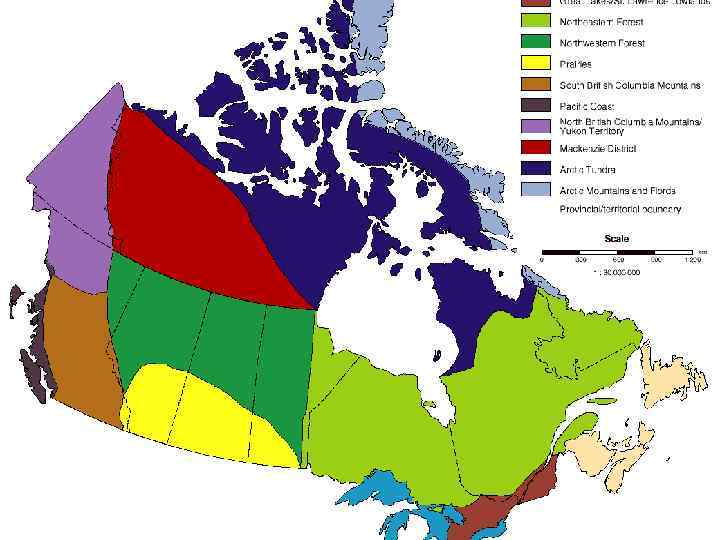
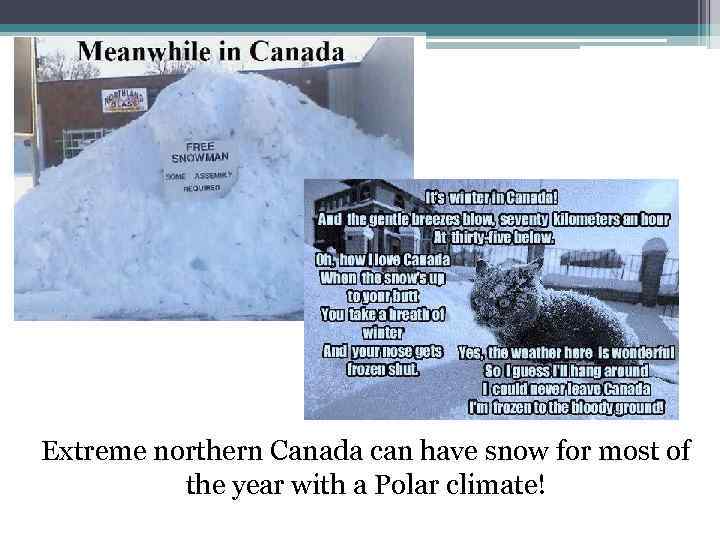 Extreme northern Canada can have snow for most of the year with a Polar climate!
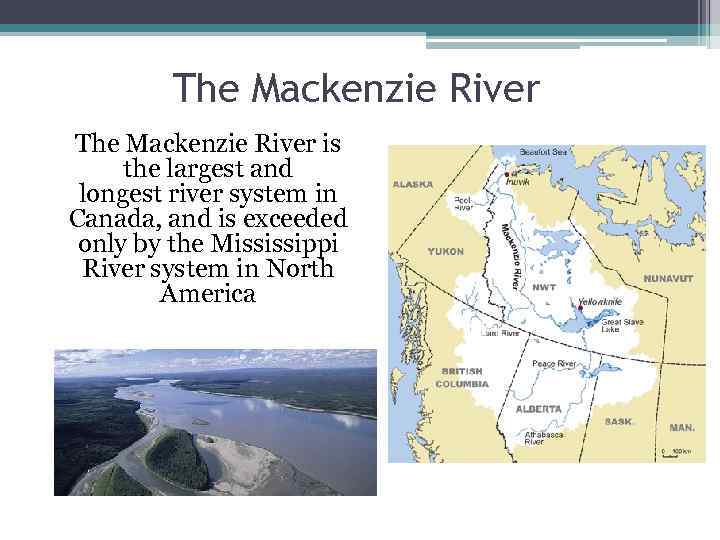 The Mackenzie River is the largest and longest river system in Canada, and is exceeded only by the Mississippi River system in North America
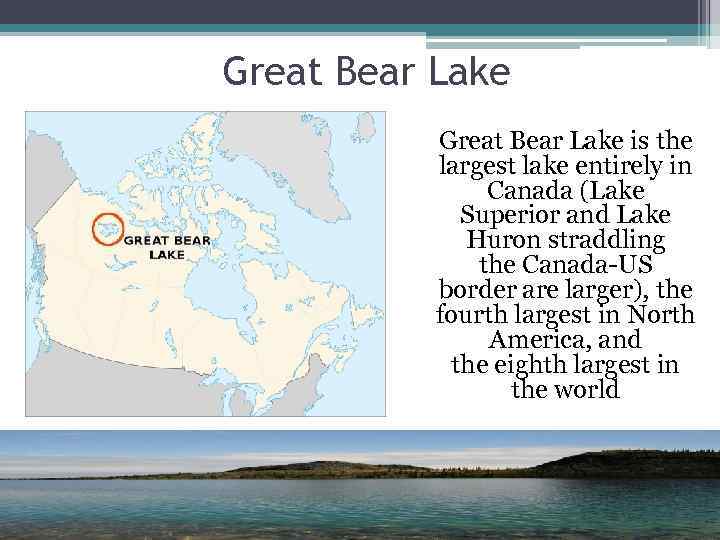 Great Bear Lake is the largest lake entirely in Canada (Lake Superior and Lake Huron straddling the Canada-US border are larger), the fourth largest in North America, and the eighth largest in the world
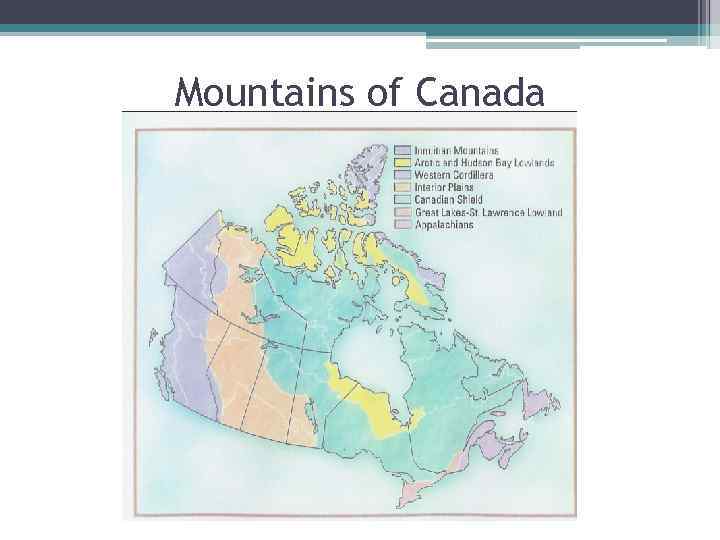 Mountains of Canada
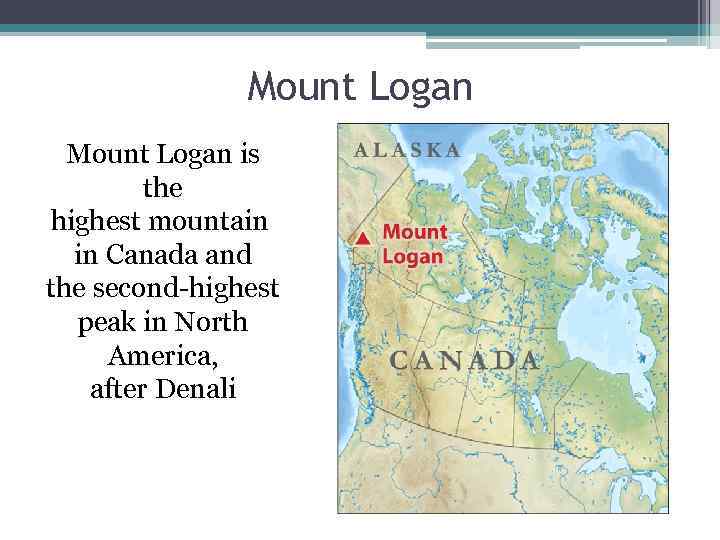 Mount Logan is the highest mountain in Canada and the second-highest peak in North America, after Denali
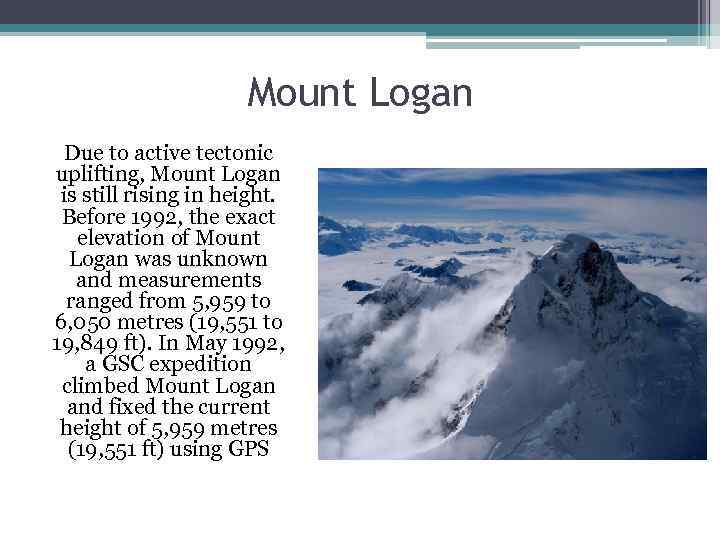 Mount Logan Due to active tectonic uplifting, Mount Logan is still rising in height. Before 1992, the exact elevation of Mount Logan was unknown and measurements ranged from 5, 959 to 6, 050 metres (19, 551 to 19, 849 ft). In May 1992, a GSC expedition climbed Mount Logan and fixed the current height of 5, 959 metres (19, 551 ft) using GPS
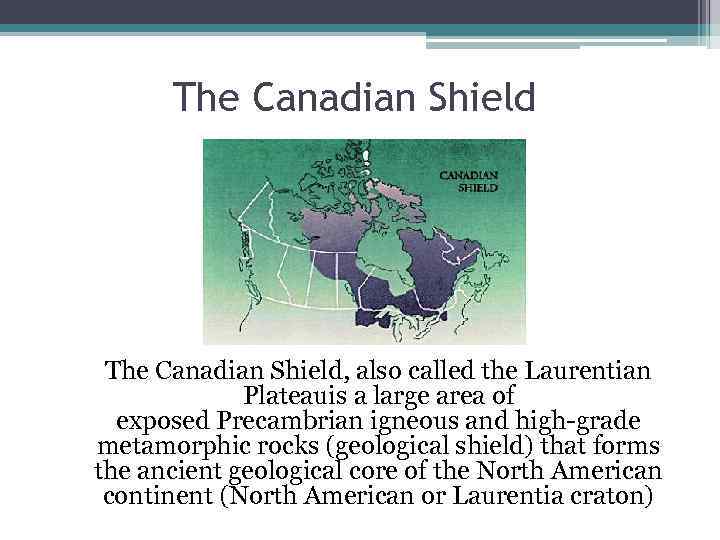 The Canadian Shield, also called the Laurentian Plateauis a large area of exposed Precambrian igneous and high-grade metamorphic rocks (geological shield) that forms the ancient geological core of the North American continent (North American or Laurentia craton)
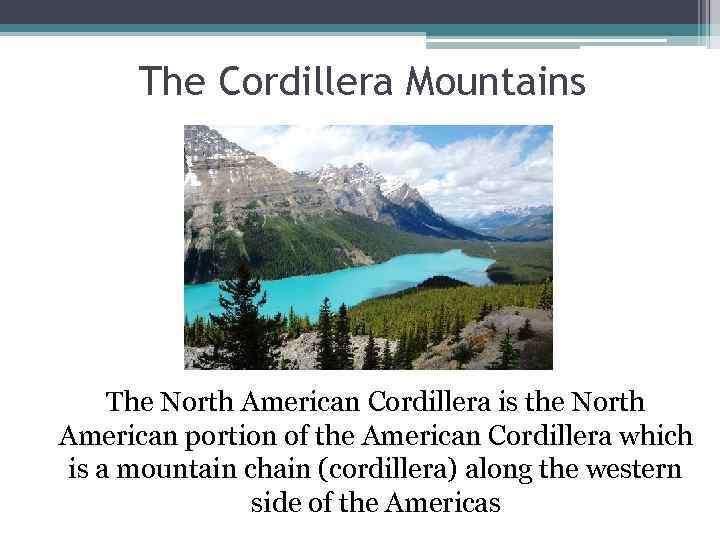 The Cordillera Mountains The North American Cordillera is the North American portion of the American Cordillera which is a mountain chain (cordillera) along the western side of the Americas
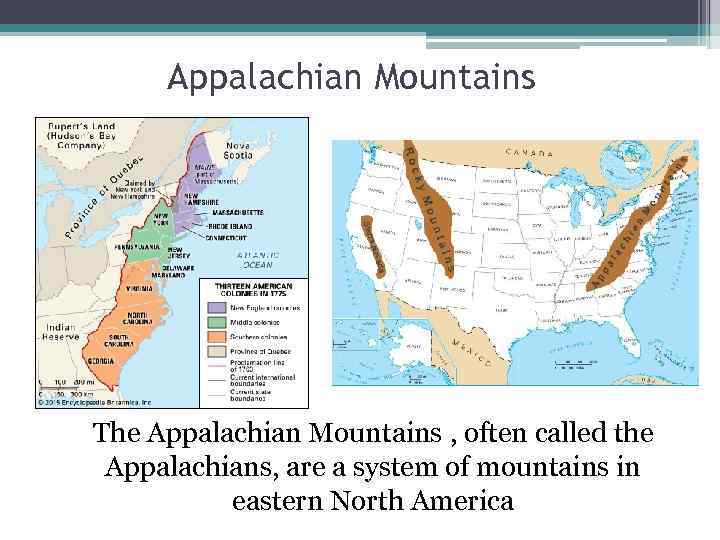 Appalachian Mountains The Appalachian Mountains , often called the Appalachians, are a system of mountains in eastern North America
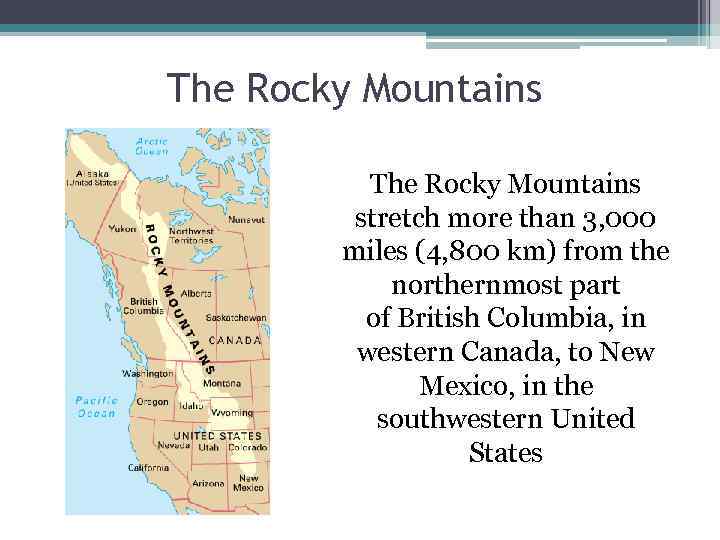 The Rocky Mountains stretch more than 3, 000 miles (4, 800 km) from the northernmost part of British Columbia, in western Canada, to New Mexico, in the southwestern United States
 Thank you for your attention! If you have any questions left, please contact us by e-mail: nastyafatina@gmail. com gogenvandam@mail. ru