


 Скачать презентацию A Land Preservation Framework for the Cacapon Watershed
487bf625916abf14df9a3edc785f66c7.ppt
- Количество слайдов: 22
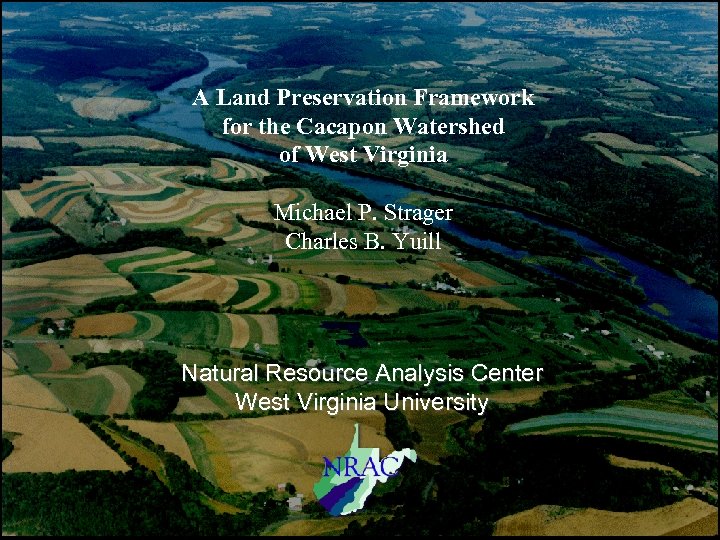 A Land Preservation Framework for the Cacapon Watershed of West Virginia Michael P. Strager Charles B. Yuill Natural Resource Analysis Center West Virginia University
 Overview Land preservation in WV Land conservation groups Issues or challenges MCA and DSS framework Application in the Cacapon watershed Summary / Conclusions
 Why land preservation? Preserve existing land uses Protect native plant species or wildlife habitat Extend natural areas Preserve historically significant land
 Land conservation groups West Virginia Land Trust Mission to protect farms, forests, wildlands, urban green spaces, and historically significant lands • • • West Virginia Cave Conservancy Cacapon and Lost Rivers Land Trust Indian Creek Conservancy Land Trust of the Eastern Panhandle WV Chapter of the Nature Conservancy
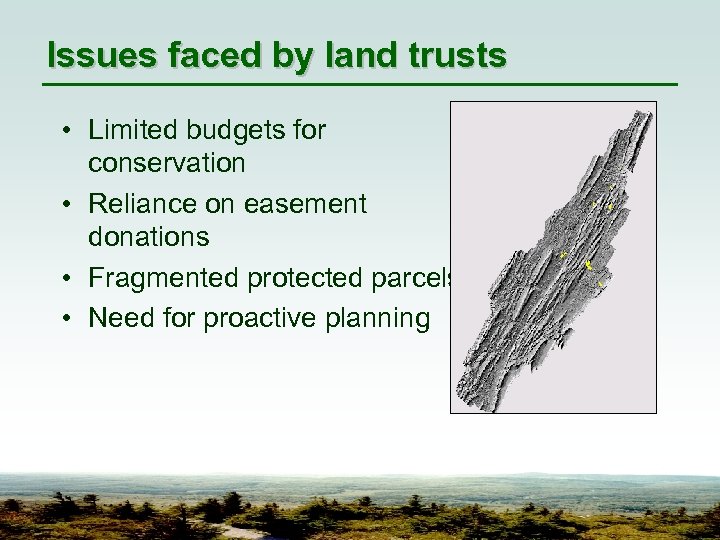 Issues faced by land trusts • Limited budgets for conservation • Reliance on easement donations • Fragmented protected parcels • Need for proactive planning
 Methodology Spatial multi-criteria analysis (MCA) framework • MCA: A decision making framework for problems with multiple goals, objectives and alternatives • Spatial MCA: Alternatives vary with location
 Decision support system • An interactive, computer-based system designed to support a user or group of users in achieving a higher effectiveness of decision making • Functions: • explore solutions by building alternatives • allow user interaction and input • provide for flexible data and analysis capabilities (Jankowski, 1995)
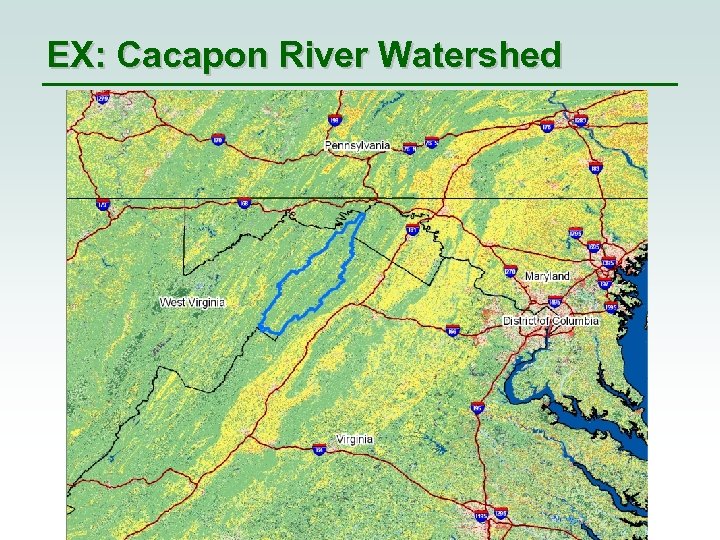 EX: Cacapon River Watershed
 Cacapon Land Trust • Actively involved in preserving land through easements • Mission statement: “… to assist landowners and their communities in maintaining healthy rivers, protecting forests and farms, and preserving rural heritage for the enjoyment and well being of present and future generations. "
 Decision making methodology • Four objectives of Land Trust: Agriculture Forests Water quality Rural heritage • Develop multiple criteria to meet each objective
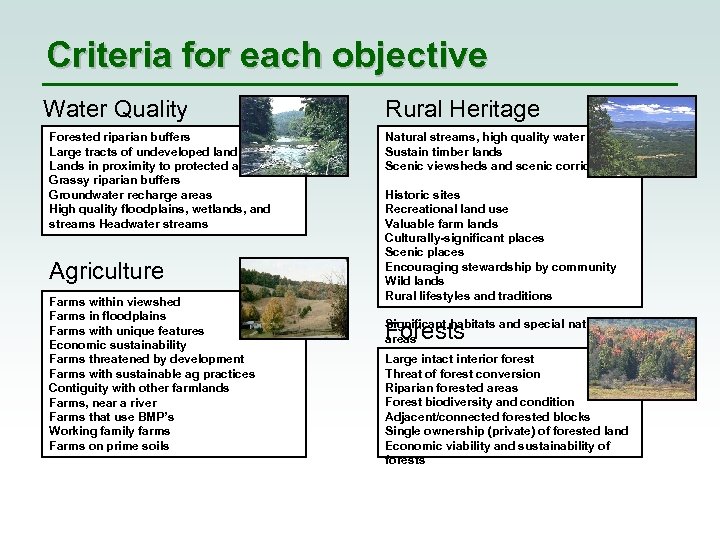 Criteria for each objective Water Quality Forested riparian buffers Large tracts of undeveloped land Lands in proximity to protected areas Grassy riparian buffers Groundwater recharge areas High quality floodplains, wetlands, and streams Headwater streams Agriculture Farms within viewshed Farms in floodplains Farms with unique features Economic sustainability Farms threatened by development Farms with sustainable ag practices Contiguity with other farmlands Farms, near a river Farms that use BMP’s Working family farms Farms on prime soils Rural Heritage Natural streams, high quality water Sustain timber lands Scenic viewsheds and scenic corridors Historic sites Recreational land use Valuable farm lands Culturally-significant places Scenic places Encouraging stewardship by community Wild lands Rural lifestyles and traditions Forests Significant habitats and special natural areas Large intact interior forest Threat of forest conversion Riparian forested areas Forest biodiversity and condition Adjacent/connected forested blocks Single ownership (private) of forested land Economic viability and sustainability of forests
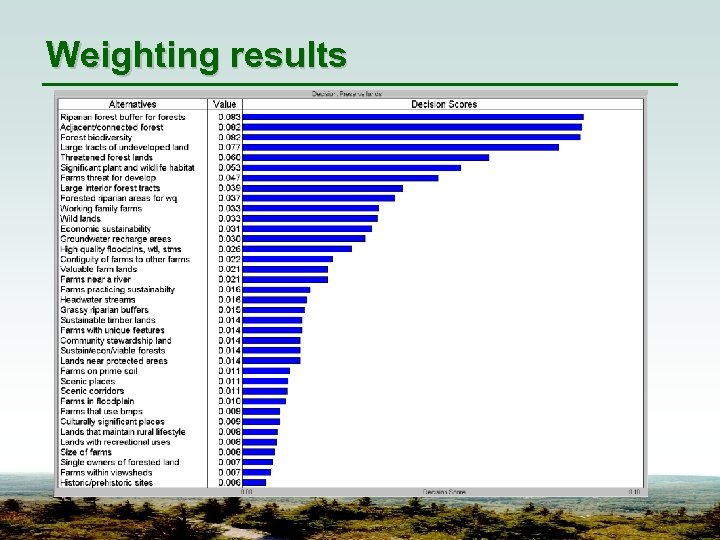
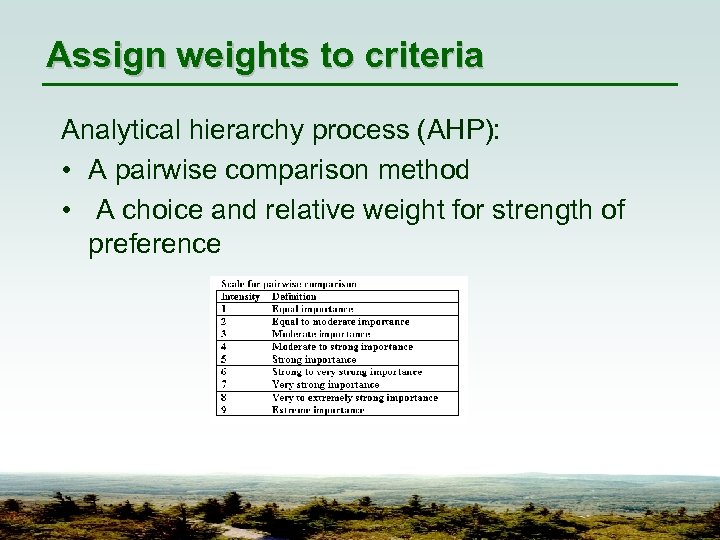 Assign weights to criteria Analytical hierarchy process (AHP): • A pairwise comparison method • A choice and relative weight for strength of preference
 Weighting results
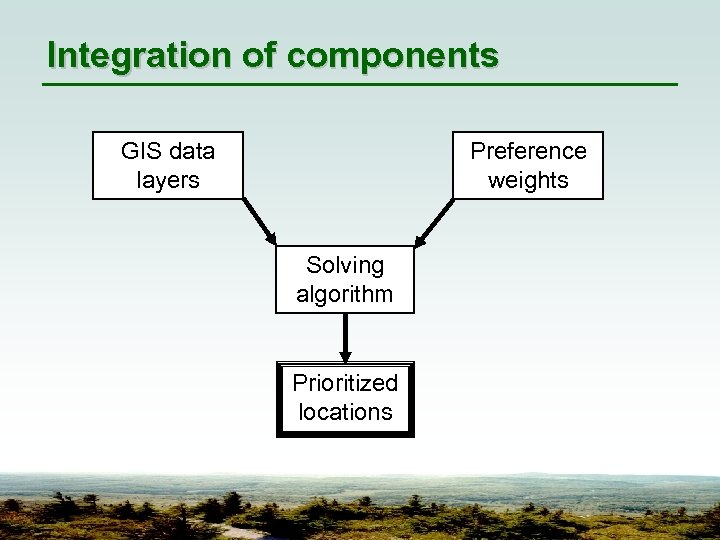 Integration of components GIS data layers Preference weights Solving algorithm Prioritized locations
 Forests
 Implementation strategies • Adapting results to the real world - “Can’t buy a pixel but you can buy a parcel” • Additional issues and complexity in using parcels • Multifunctionality • Limited budget • Protection of contiguous areas
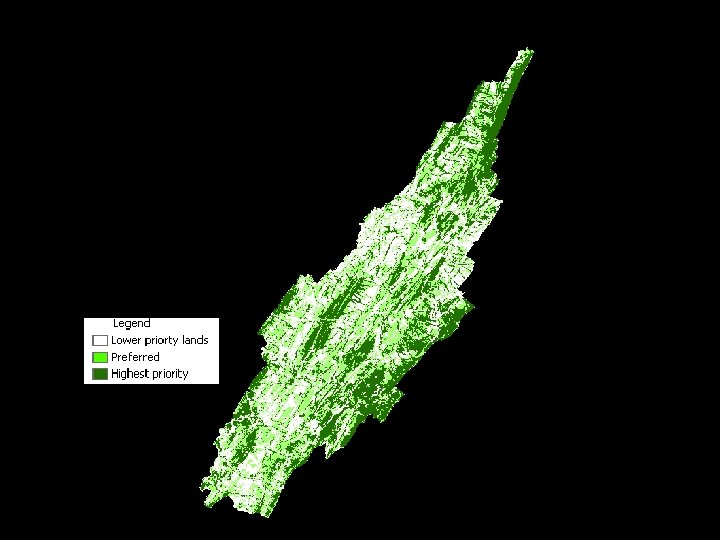
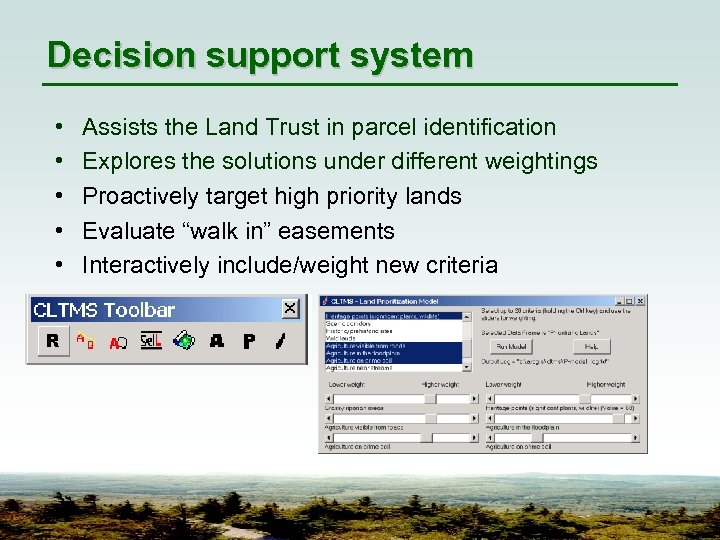 Decision support system • • • Assists the Land Trust in parcel identification Explores the solutions under different weightings Proactively target high priority lands Evaluate “walk in” easements Interactively include/weight new criteria
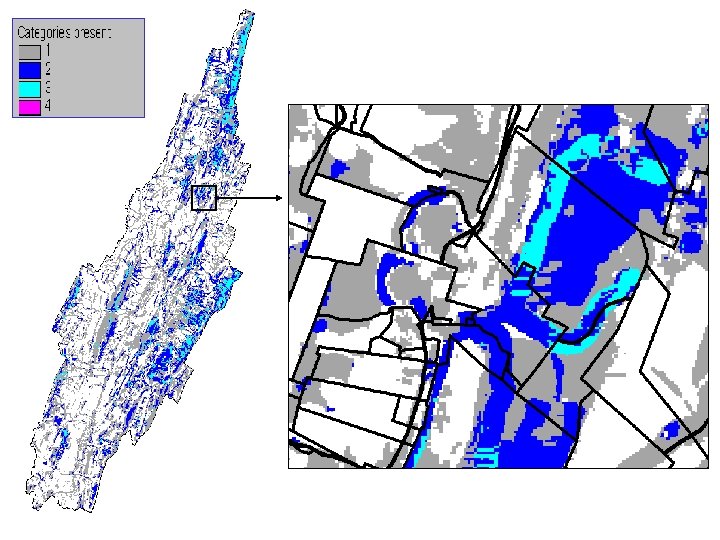
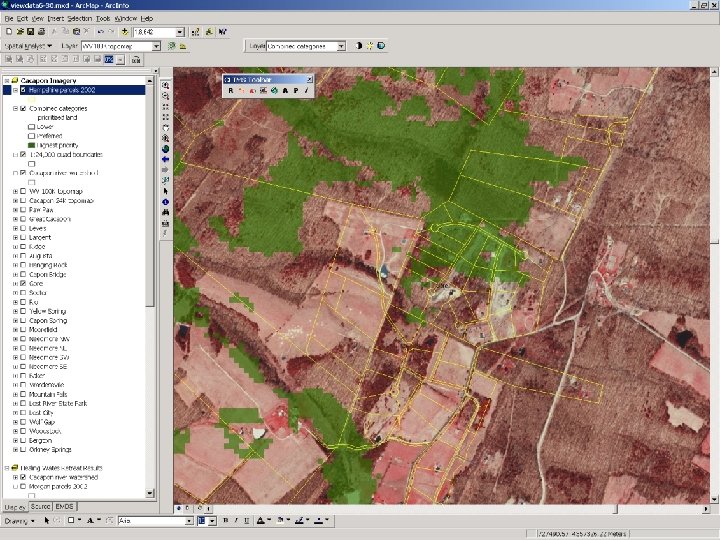
 Current status • Land Trust is actively using the GIS data, ranking methodology and results in the decision support system (DSS) • Easement acquisition is now more proactive • Evaluation of proposed easements is more defendable • “I use the DSS weekly, and at times daily, to build maps, target landowners, identify high priority corridors connecting conservation hubs to public lands, or to triage easement donations with the high priority lands. ” - Nancy Ailes, Director, Cacapon Land Trust, April 23, 2004.
 Summary / conclusions The Multiple Criteria Analysis (MCA) framework and Decision Support System (DSS) provides a valuable land management tool Ability to document decision making process Bottom up approach involving local issues and stakeholders
 Acknowledgments Cacapon Land Trust Canaan Valley Institute