 Скачать презентацию A human nose scoring system for boar taint
ae64672abf80232188cc5a7e7803141a.ppt
- Количество слайдов: 18



A human nose scoring system for boar taint and its implications for detection in a slaughter line (3) (2) (1) Lourens Heres 1, Han Mulder 3, Egbert Knol 2, Saskia Bloemhof 2, Jan ten Napel 3, Bennie van der Fels 3, Pramod Mathur 2
Goal l Explore the test characteristics of the human nose method – – – l Reproducibility (between tester comparability) Repeatability (within tester comparability) Correlation with chemical methods Sensitivity Specificity Assess the consequences for in-line detection
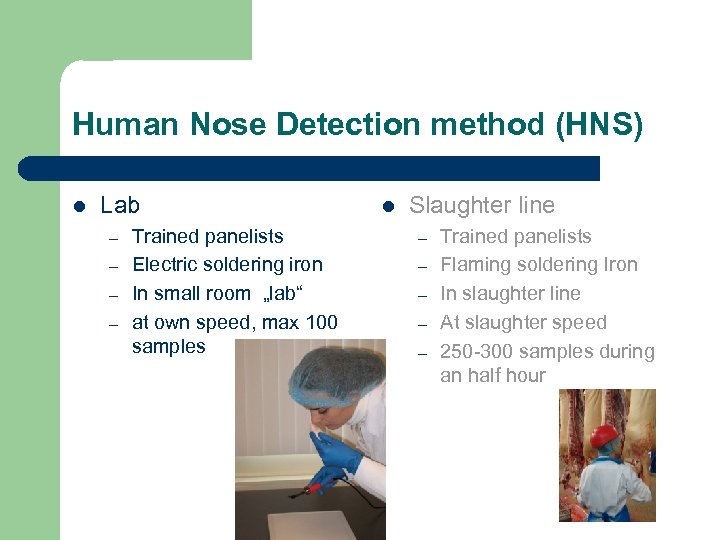
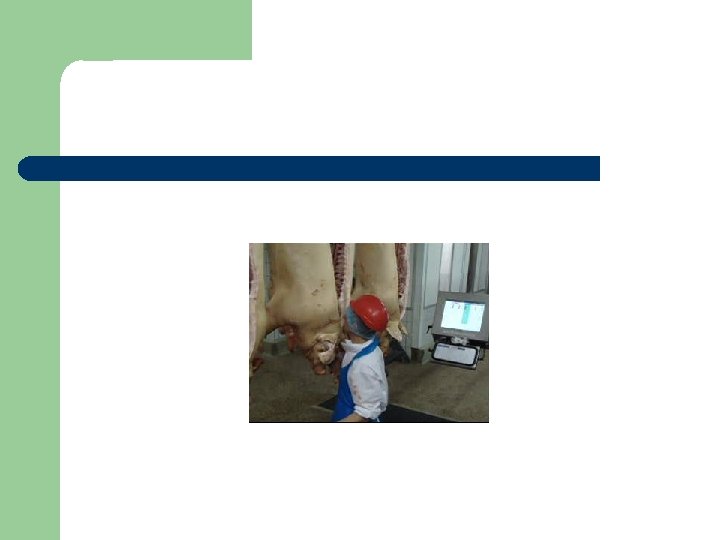
Human Nose Detection method (HNS) l Lab – – Trained panelists Electric soldering iron In small room „lab“ at own speed, max 100 samples l Slaughter line – – – Trained panelists Flaming soldering Iron In slaughter line At slaughter speed 250 -300 samples during an half hour
Critical elements for a certified in- line detection method 1. 2. 3. 4. 5. 6. 7. 8. A documented procedure Validated specification defining: sensitivity, specificity, repeatability and reproducibility, test time per individual animal, and operation time per tester. Quality controls Training Separate logistic Corrective and preventive measures Feed-back to the farmer/sender. Audits
Why The Human Nose? l A low cost method with high through put – – l l Tester employment costs under 1€/test Additional test for genetic selection A method that helps us in making progress – Feedback information for suppliers l Supply management l Feeding l Genetic selection Practicable for breeding purposes and slaughter line detection – – A method that fulfills the requirements of customers who buy pork (Dutch and German Retailers) Applied at IPG/Topigs for breeding purposes
Materials and methods: l l l 6574 entire males, different genetic lines Neck fat, divided into three pieces Stored vacuum, -18°C, maximum 6 months Each time ± 100 samples were randomly selected heated by a soldering iron (Weller®, Catalog number W 100 PG, 100 Watt). – – – l l 370°C. hot iron tip, 6 mm wide and 20 mm long, about 2 -3 seconds the volatiles were sniffed by the panelist Each piece tested by 3 panelists Androstenon and Skatol (ASI) for 5025 of the samples 9 panelists
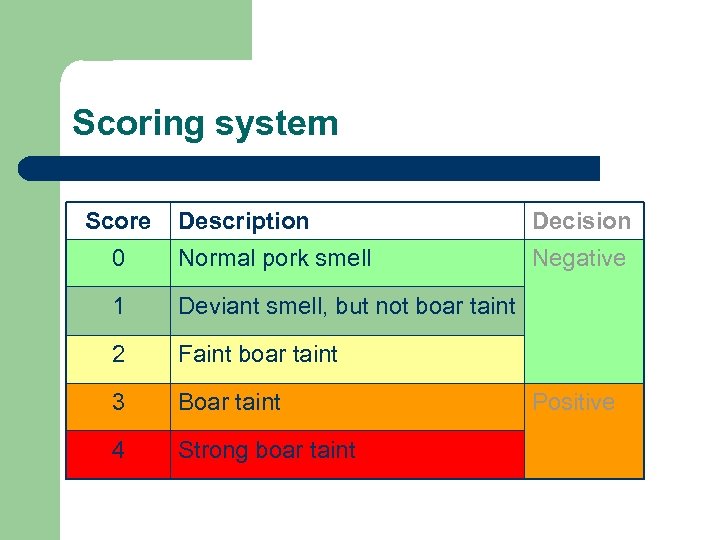
Scoring system Score Description Decision 0 Normal pork smell Negative 1 Deviant smell, but not boar taint 2 Faint boar taint 3 Boar taint 4 Strong boar taint Positive
Laboratory panelist: selection and training l l Testers are sensitive to pure Androstenon and Skatol Instructions are given about the method Initial training by parallel testing and discussing the outcomes Statistical analyses took account of date of sampling (training effect)
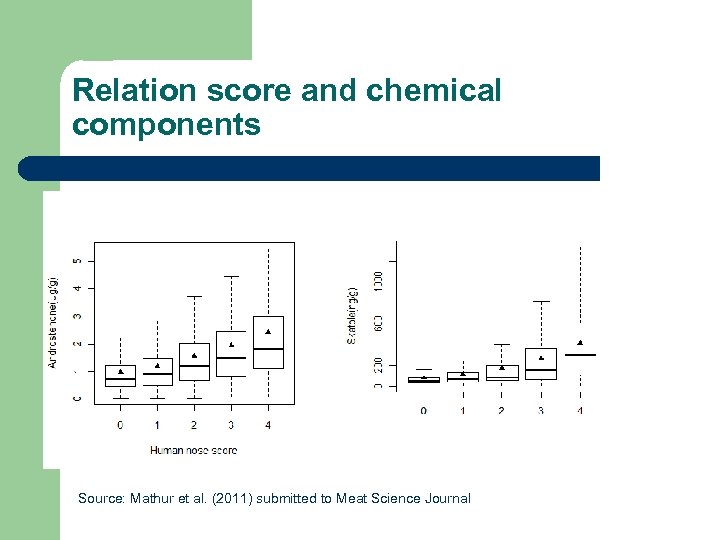
Relation score and chemical components Source: Mathur et al. (2011) submitted to Meat Science Journal
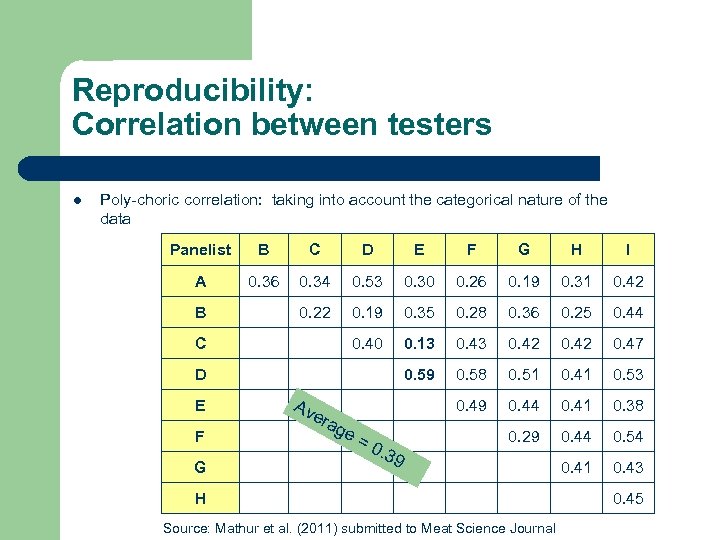
Reproducibility: Correlation between testers l Poly-choric correlation: taking into account the categorical nature of the data Panelist B C D E F G H I A 0. 36 0. 34 0. 53 0. 30 0. 26 0. 19 0. 31 0. 42 0. 22 0. 19 0. 35 0. 28 0. 36 0. 25 0. 44 0. 40 0. 13 0. 42 0. 47 0. 59 0. 58 0. 51 0. 41 0. 53 0. 49 0. 44 0. 41 0. 38 0. 29 0. 44 0. 54 0. 41 0. 43 0. 45 B C D Av E era F ge = 0. 3 G H 9 Source: Mathur et al. (2011) submitted to Meat Science Journal
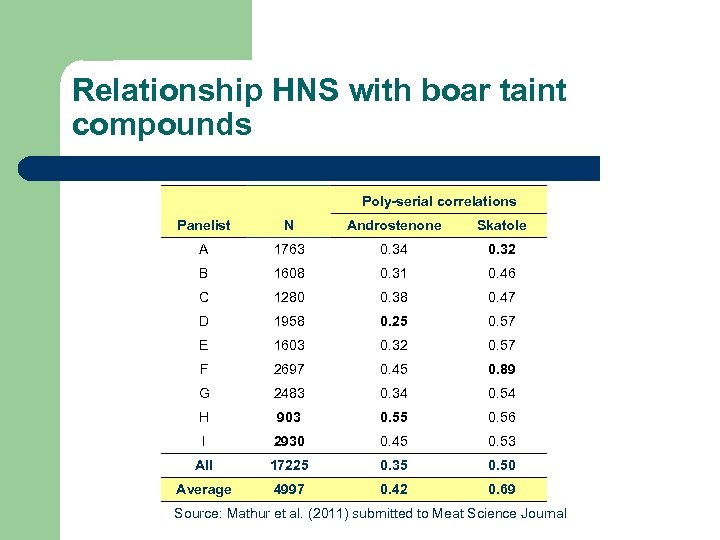
Relationship HNS with boar taint compounds Poly-serial correlations Panelist N Androstenone Skatole A 1763 0. 34 0. 32 B 1608 0. 31 0. 46 C 1280 0. 38 0. 47 D 1958 0. 25 0. 57 E 1603 0. 32 0. 57 F 2697 0. 45 0. 89 G 2483 0. 34 0. 54 H 903 0. 55 0. 56 I 2930 0. 45 0. 53 All 17225 0. 35 0. 50 Average 4997 0. 42 0. 69 Source: Mathur et al. (2011) submitted to Meat Science Journal
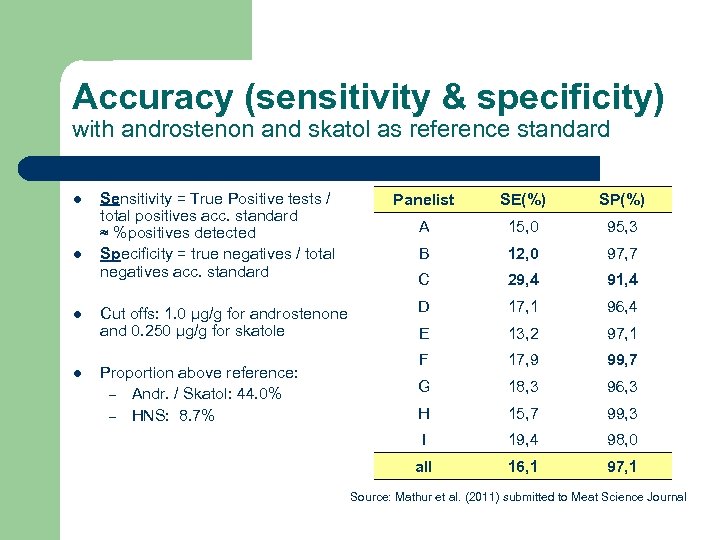
Accuracy (sensitivity & specificity) with androstenon and skatol as reference standard l l Sensitivity = True Positive tests / total positives acc. standard ≈ %positives detected Specificity = true negatives / total negatives acc. standard Panelist SE(%) SP(%) A 15, 0 95, 3 B 12, 0 97, 7 C 29, 4 91, 4 Cut offs: 1. 0 µg/g for androstenone and 0. 250 µg/g for skatole D 17, 1 96, 4 E 13, 2 97, 1 F 17, 9 99, 7 G 18, 3 96, 3 H 15, 7 99, 3 I 19, 4 98, 0 all 16, 1 97, 1 Proportion above reference: – Andr. / Skatol: 44. 0% – HNS: 8. 7% Source: Mathur et al. (2011) submitted to Meat Science Journal
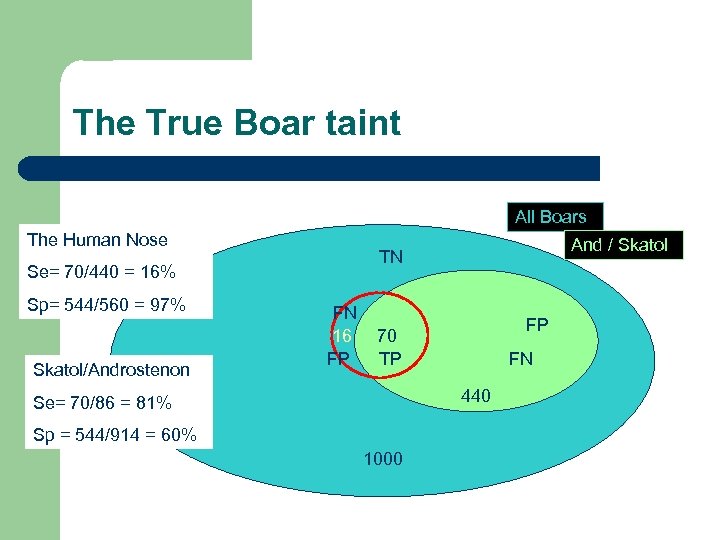
The True Boar taint All Boars The Human Nose Se= 70/440 = 16% Sp= 544/560 = 97% Skatol/Androstenon And / Skatol TN FN 16 70 FP TP FP FN 440 Se= 70/86 = 81% Sp = 544/914 = 60% 1000
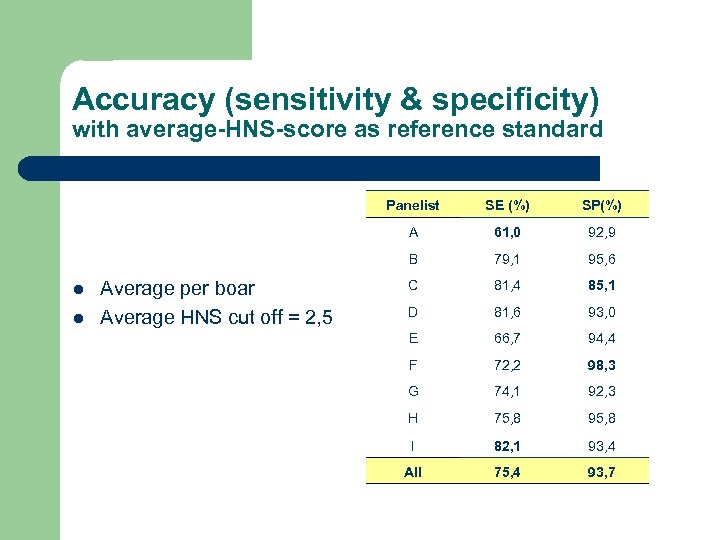
Accuracy (sensitivity & specificity) with average-HNS-score as reference standard Panelist l 61, 0 92, 9 B Average per boar Average HNS cut off = 2, 5 SP(%) A l SE (%) 79, 1 95, 6 C 81, 4 85, 1 D 81, 6 93, 0 E 66, 7 94, 4 F 72, 2 98, 3 G 74, 1 92, 3 H 75, 8 95, 8 I 82, 1 93, 4 All 75, 4 93, 7
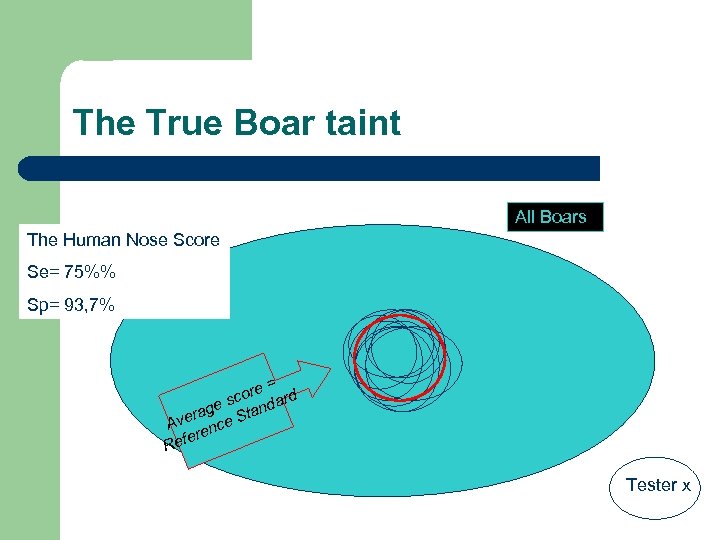
The True Boar taint All Boars The Human Nose Score Se= 75%% Sp= 93, 7% e= cor dard s age Stan r Ave ence r efe R Tester x
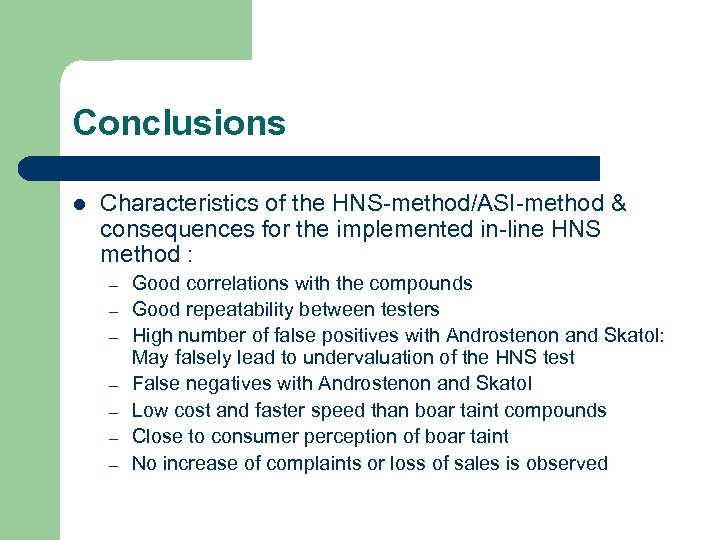
Conclusions l Characteristics of the HNS-method/ASI-method & consequences for the implemented in-line HNS method : – – – – Good correlations with the compounds Good repeatability between testers High number of false positives with Androstenon and Skatol: May falsely lead to undervaluation of the HNS test False negatives with Androstenon and Skato. I Low cost and faster speed than boar taint compounds Close to consumer perception of boar taint No increase of complaints or loss of sales is observed

Acknowledgements l Panelists IPG and VION – – – – – l Francien Arts, Monique van Hilten, Merel Bosman, Brigitte Coenen, Monique Willemsen, Ilene Hattink, Sharonne Martini Marjo Liebers Rebeca Polgar Ronald Crump l Funds The European Community's Seventh Framework Programme FP 7/20072013 under grant agreement n° 228821.
Скачать презентацию A human nose scoring system for boar taint
ae64672abf80232188cc5a7e7803141a.ppt