


 Скачать презентацию A Guide to Personal Protective Equipment PPE
385076434dfff83cc3857afd182e7713.ppt
- Количество слайдов: 25
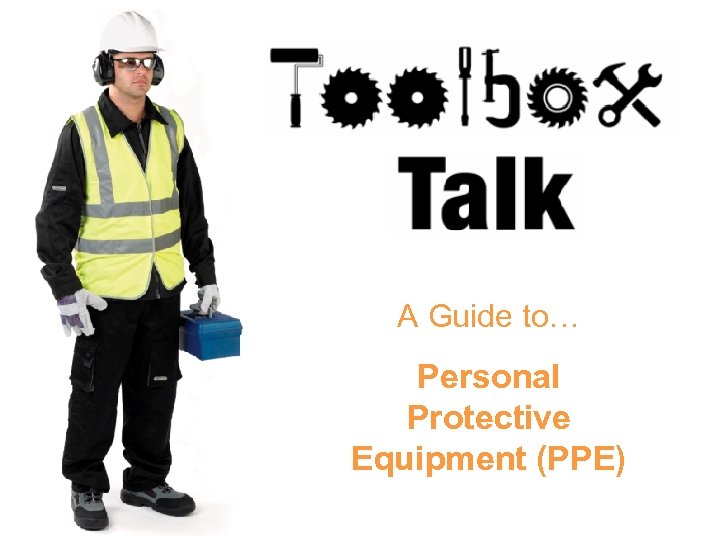 A Guide to… Personal Protective Equipment (PPE)
 Definition What is PPE? “all equipment which is intended to be worn or held by a person at work and which protects him against one or more risks to his health and safety”
 Regulations Employers have basic duties concerning the provision and use of PPE equipment at work. This guide explains what you need to do to meet the requirements of the Personal Protective Equipment at Work Regulations 1992 (as amended).
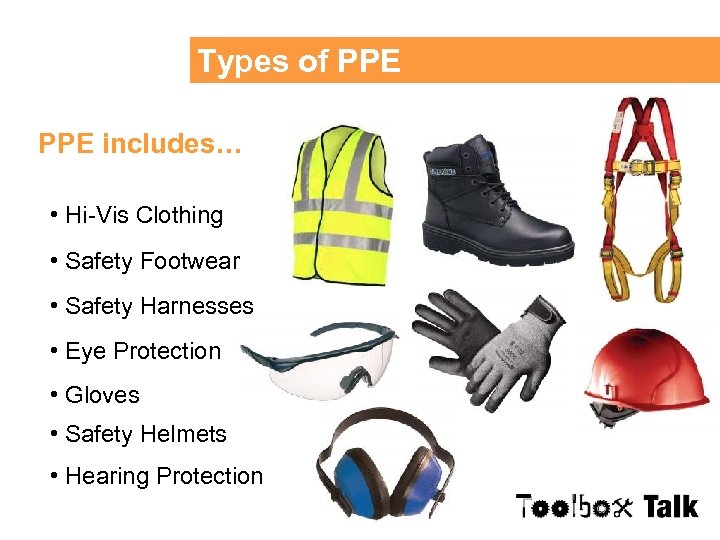 Types of PPE includes… • Hi-Vis Clothing • Safety Footwear • Safety Harnesses • Eye Protection • Gloves • Safety Helmets • Hearing Protection
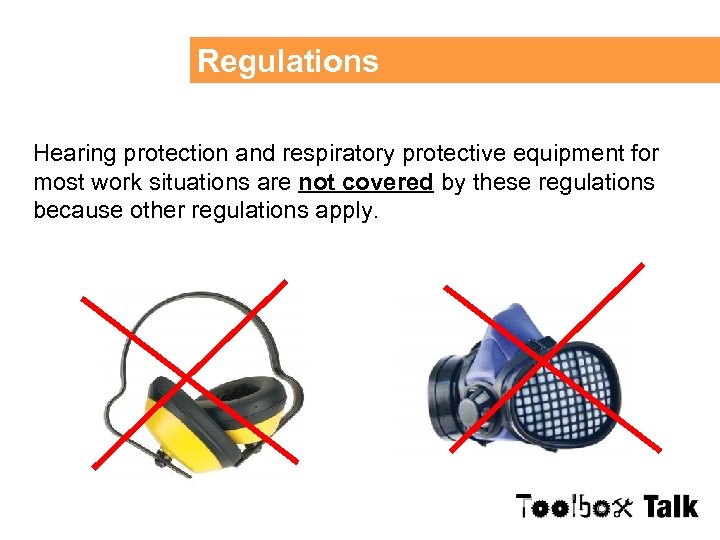 Regulations Hearing protection and respiratory protective equipment for most work situations are not covered by these regulations because other regulations apply.
 Regulation Requirements Regulations require that PPE: ü Is assessed before use to ensure it’s suitable ü Is maintained and stored properly ü Is provided with instructions on how to use it safely ü Is used correctly by employees
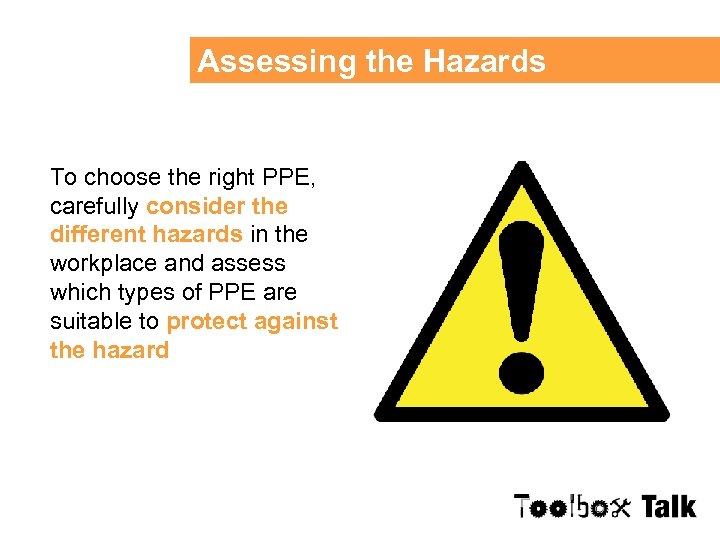 Assessing the Hazards To choose the right PPE, carefully consider the different hazards in the workplace and assess which types of PPE are suitable to protect against the hazard
 Assessing Suitable PPE Consider the following when selecting PPE… ü Is it appropriate for the risk involved and the conditions? ü Does it prevent or control the risks involved? ü Can it be adjusted to fit the wearer properly? ü What are the needs of the job and the demands it places on the wearer? ü If more than 1 item of PPE is required, are they compatible?
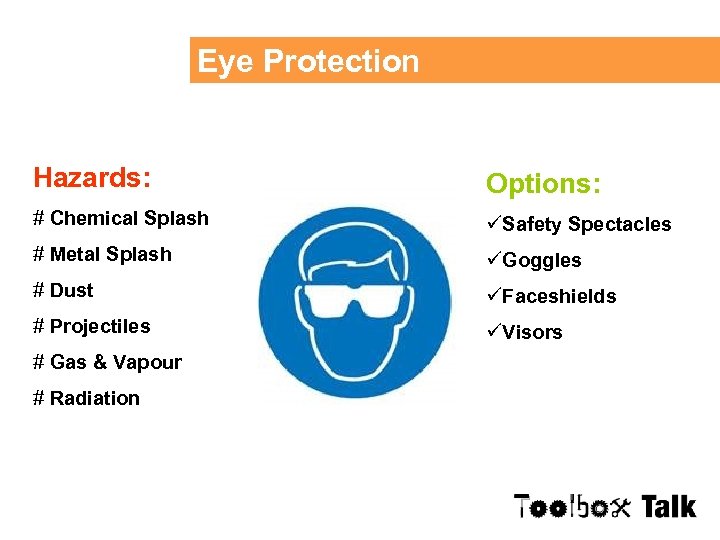 Eye Protection Hazards: Options: # Chemical Splash üSafety Spectacles # Metal Splash üGoggles # Dust üFaceshields # Projectiles üVisors # Gas & Vapour # Radiation
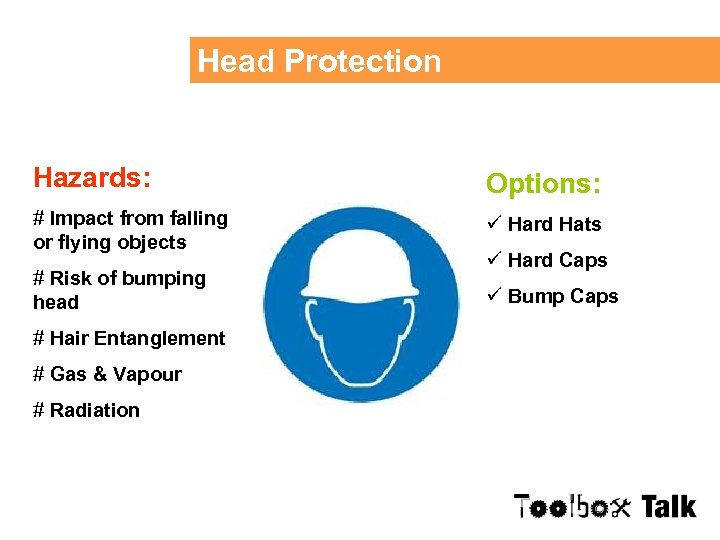 Head Protection Hazards: Options: # Impact from falling or flying objects ü Hard Hats # Risk of bumping head ü Bump Caps # Hair Entanglement # Gas & Vapour # Radiation ü Hard Caps
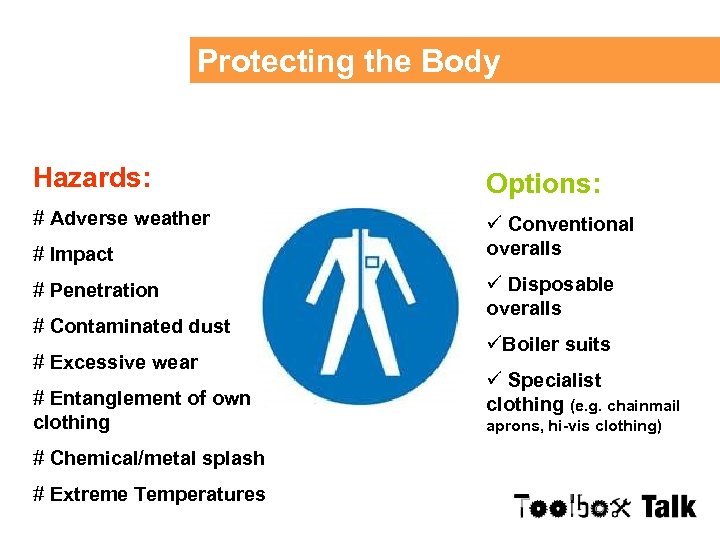 Protecting the Body Hazards: Options: # Adverse weather ü Conventional overalls # Impact # Penetration # Contaminated dust # Excessive wear # Entanglement of own clothing # Chemical/metal splash # Extreme Temperatures ü Disposable overalls üBoiler suits ü Specialist clothing (e. g. chainmail aprons, hi-vis clothing)
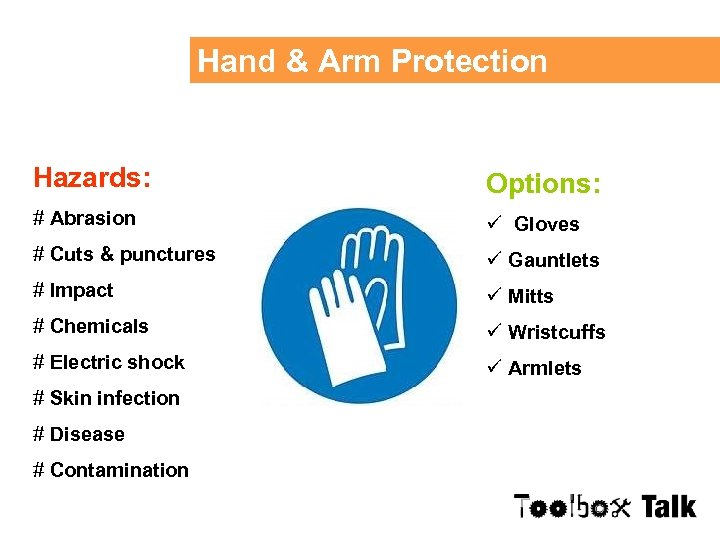 Hand & Arm Protection Hazards: Options: # Abrasion ü Gloves # Cuts & punctures ü Gauntlets # Impact ü Mitts # Chemicals ü Wristcuffs # Electric shock ü Armlets # Skin infection # Disease # Contamination
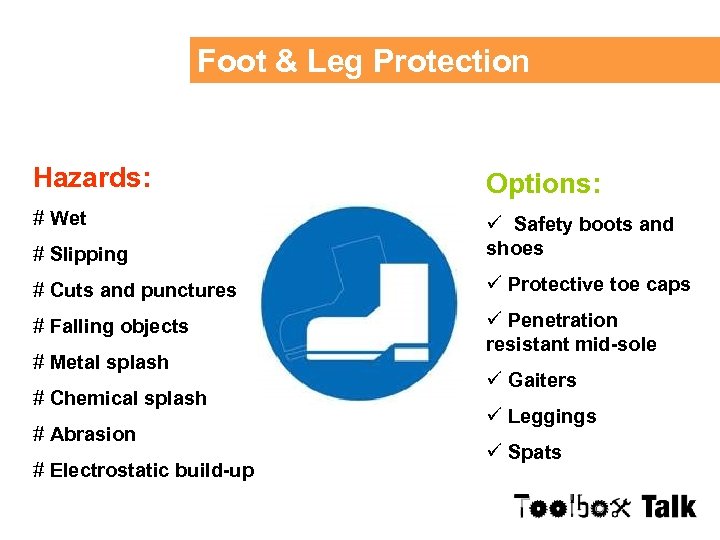 Foot & Leg Protection Hazards: Options: # Wet # Slipping ü Safety boots and shoes # Cuts and punctures ü Protective toe caps # Falling objects ü Penetration resistant mid-sole # Metal splash # Chemical splash # Abrasion # Electrostatic build-up ü Gaiters ü Leggings ü Spats
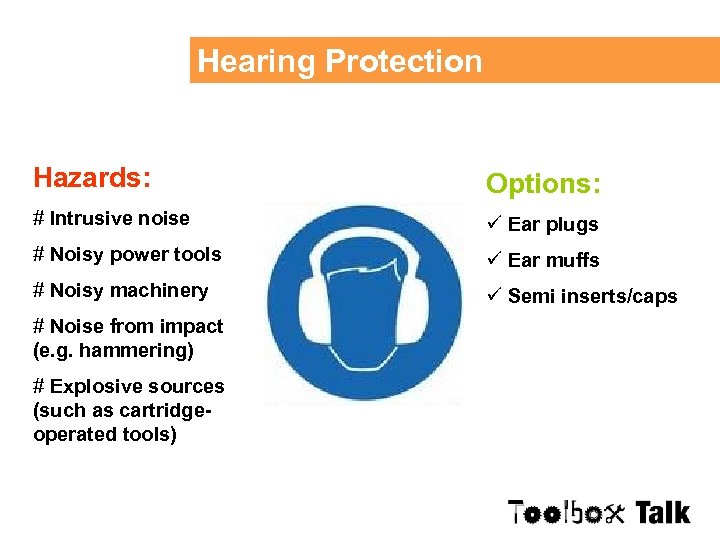 Hearing Protection Hazards: Options: # Intrusive noise ü Ear plugs # Noisy power tools ü Ear muffs # Noisy machinery ü Semi inserts/caps # Noise from impact (e. g. hammering) # Explosive sources (such as cartridgeoperated tools)
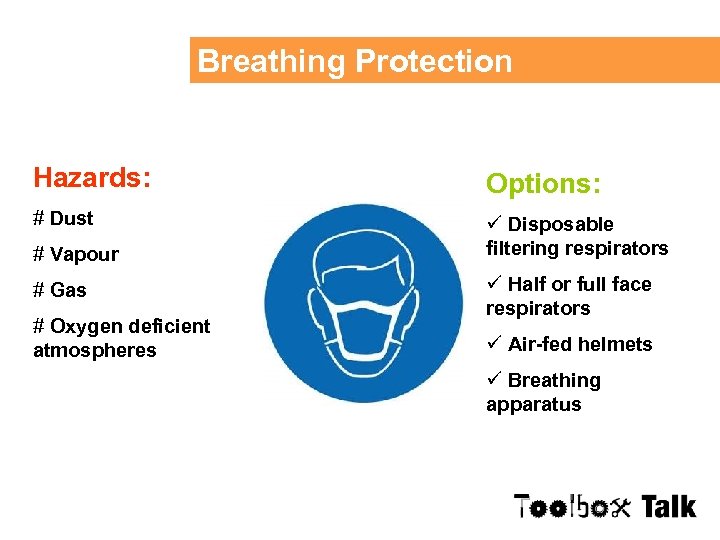 Breathing Protection Hazards: Options: # Dust ü Disposable filtering respirators # Vapour # Gas # Oxygen deficient atmospheres ü Half or full face respirators ü Air-fed helmets ü Breathing apparatus
 Can I be charged for PPE? ! o N An employer cannot ask for money from an employee for PPE, whether it is returnable or not.
 Training PPE users should be aware of: • Why PPE is needed • When it should be used • When it should be repaired or replaced • Its limitations
 Training Managers or supervisors should: • Train and instruct people how to use it properly • Check regularly that PPE is being used • Investigate if PPE is not being used correctly • Position safety signs as a useful reminder
 Maintenance Make sure equipment is: ü Well looked after and properly stored after use ü Kept clean and in good repair ü Always readily available
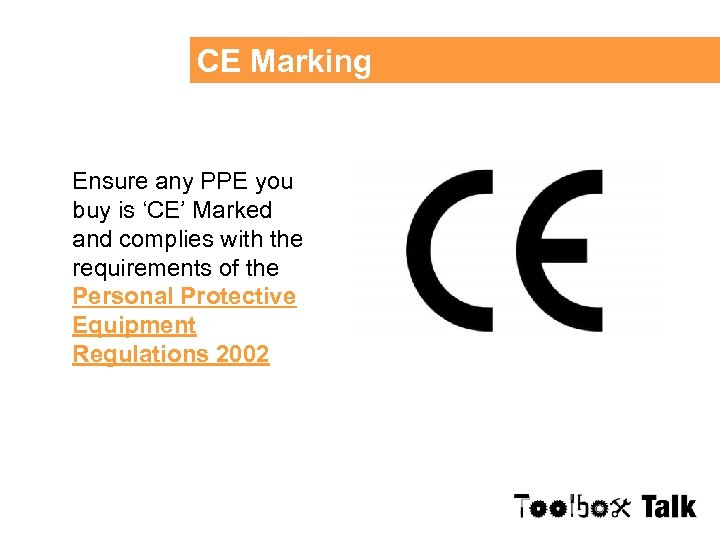 CE Marking Ensure any PPE you buy is ‘CE’ Marked and complies with the requirements of the Personal Protective Equipment Regulations 2002
 Other Regulations • The Control of Lead at Work Regulations 2002 • The Ionising Radiations Regulations 1999 • The Control of Asbestos at Work Regulations 2002 • The Control of Substances Hazardous to Health Regulations 2002 (as amended) • The Noise at Work Regulations 1989 • The Construction (Head Protection) Regulations 1989
 Key Points to Remember Check that… • PPE is provided • It offers adequate protection for its intended use • Those using it are trained in its safe use • It is properly maintained and defects are reported • It is returned to its proper storage after use
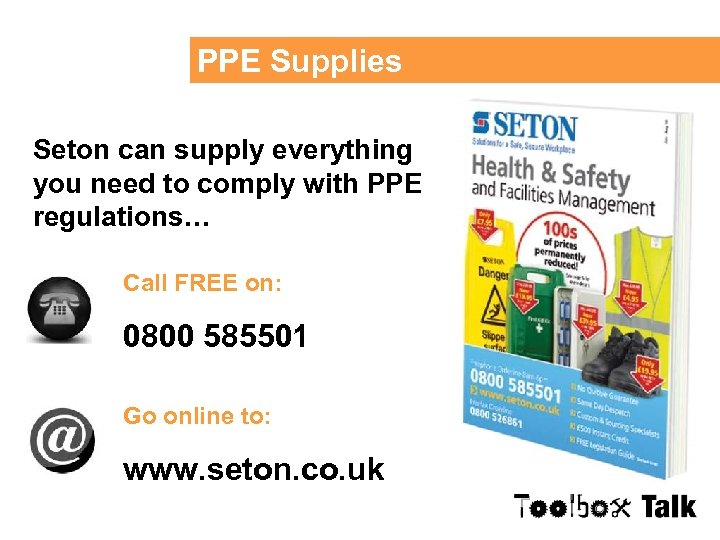 PPE Supplies Seton can supply everything you need to comply with PPE regulations… Call FREE on: 0800 585501 Go online to: www. seton. co. uk
 Questions 1. Give 5 examples of PPE equipment 2. Which 2 types of equipment are not covered by the Personal Protective Equipment (PPE) at Work Regulations 1992? 3. What mark should all PPE carry to ensure it complies with regulations? 4. To select the correct PPE what do you need to consider and assess? 5. Give 3 examples of PPE that will protect the eyes from hazards.
 Further Information This presentation contains notes on good practice which are not compulsory but which you may find helpful in considering what you need to do. Source: HSE