


 Скачать презентацию A GROUP OF MALE STUDENTS APPROACH TOWARDS UNWANTED
706cafc322c44242f0b2a6ff2bd994b9.ppt
- Количество слайдов: 22
 A GROUP OF MALE STUDENTS’ APPROACH TOWARDS UNWANTED PREGNANCIES? Aslan D*, Akın A*, Saka G**. *Hacettepe University, Faculty of Medicine, Department of Public Health **Dicle University, Faculty of Medicine, Department of Public Health
 This project was supported by World Health Organization (WHO/HRP) project number: A 05153 “Situation of and Influencing Factors on Sexual and Reproductive Health of Adolescents in Turkey”
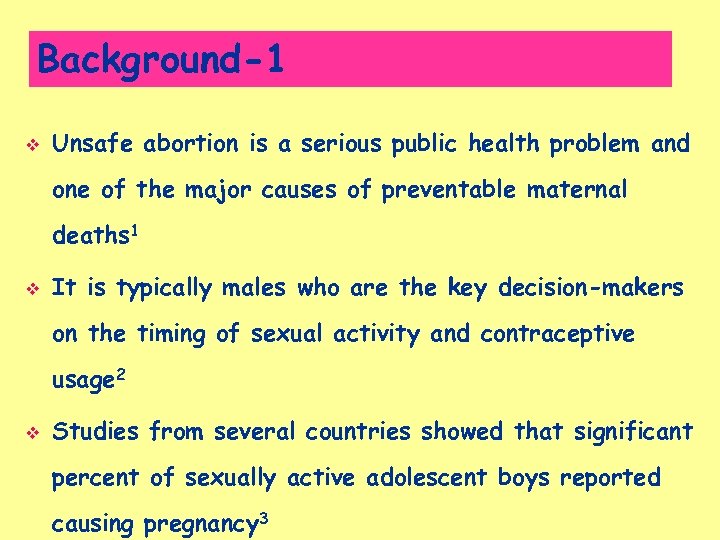 Background-1 v Unsafe abortion is a serious public health problem and one of the major causes of preventable maternal deaths 1 v It is typically males who are the key decision-makers on the timing of sexual activity and contraceptive usage 2 v Studies from several countries showed that significant percent of sexually active adolescent boys reported causing pregnancy 3
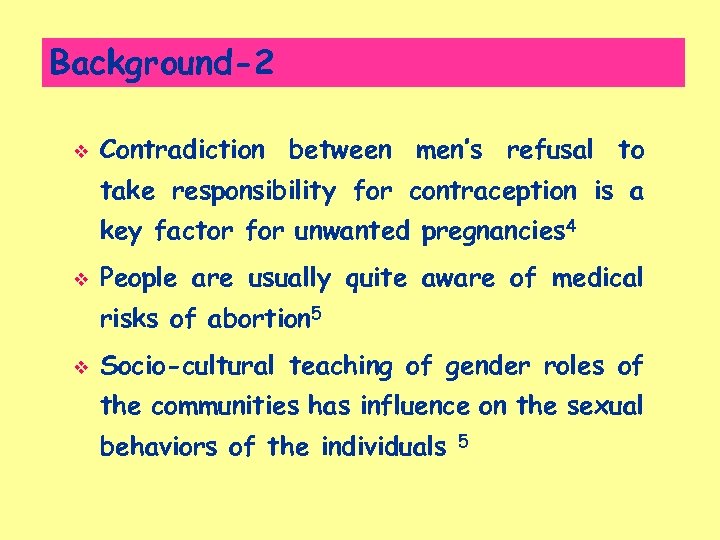 Background-2 v Contradiction between men’s refusal to take responsibility for contraception is a key factor for unwanted pregnancies 4 v People are usually quite aware of medical risks of abortion 5 v Socio-cultural teaching of gender roles of the communities has influence on the sexual behaviors of the individuals 5
 Objective: ü to determine the first grade male students’ approach towards unwanted pregnancy.
 Study design and sample-1 Ø The study was carried out in 20012002 in two cities (Ankara, Diyarbakır).
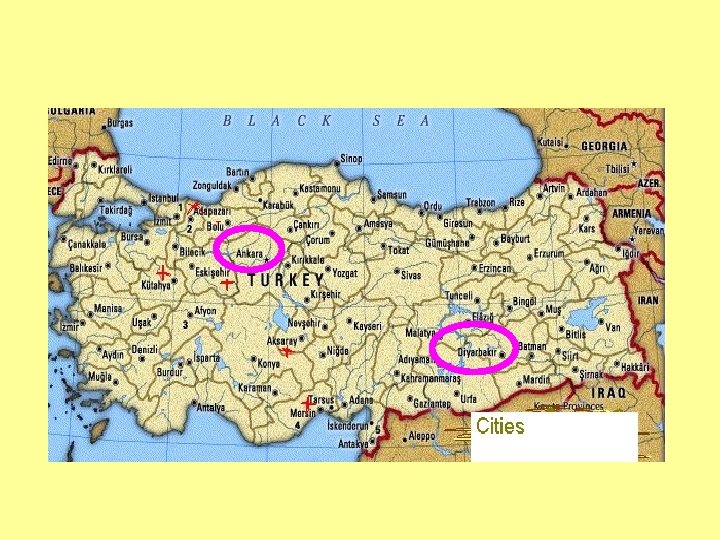
 Study design and sample-2 Ø Ø Ø The first year students of Hacettepe University Beytepe Campus (Ankara) and Dicle University Campus (Diyarbakır) composed the research group. Qualitative and quantitative research methods were used. Qualitative part was conducted to form the questionnaire.
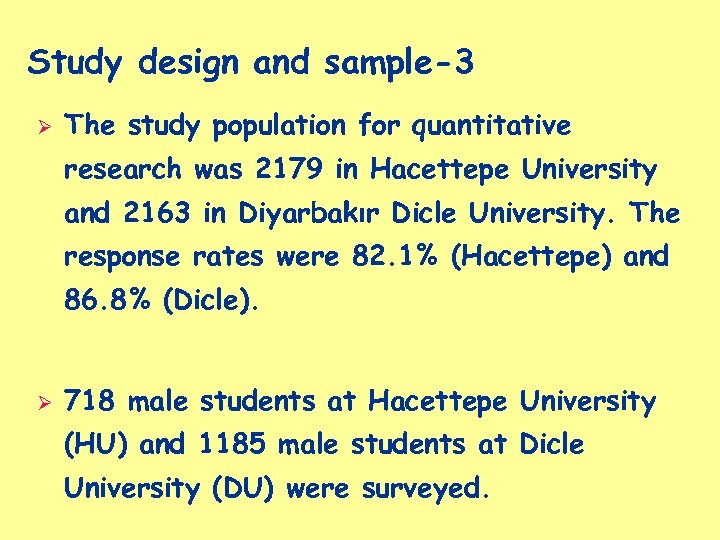 Study design and sample-3 Ø The study population for quantitative research was 2179 in Hacettepe University and 2163 in Diyarbakır Dicle University. The response rates were 82. 1% (Hacettepe) and 86. 8% (Dicle). Ø 718 male students at Hacettepe University (HU) and 1185 male students at Dicle University (DU) were surveyed.
 FINDINGS………………….
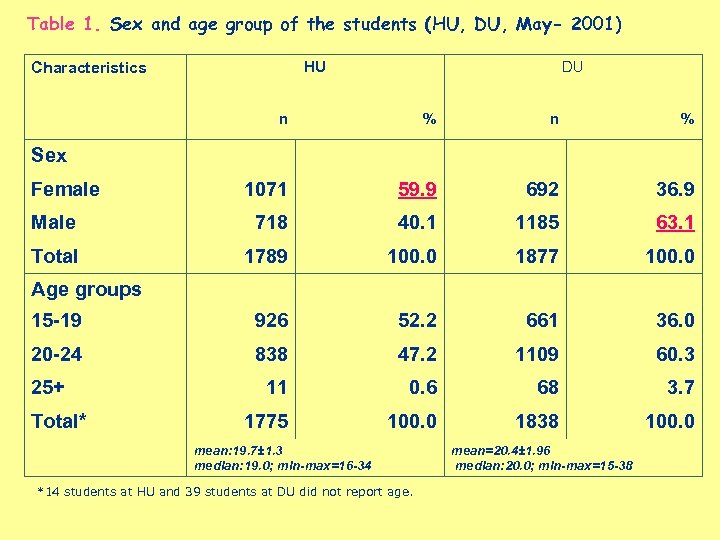 Table 1. Sex and age group of the students (HU, DU, May- 2001) HU Characteristics DU n % Sex 1071 59. 9 692 36. 9 Male 718 40. 1 1185 63. 1 Total 1789 100. 0 1877 100. 0 15 -19 926 52. 2 661 36. 0 20 -24 838 47. 2 1109 60. 3 11 0. 6 68 3. 7 1775 100. 0 1838 100. 0 Female Age groups 25+ Total* mean: 19. 7± 1. 3 median: 19. 0; min-max=16 -34 *14 students at HU and 39 students at DU did not report age. mean=20. 4± 1. 96 median: 20. 0; min-max=15 -38
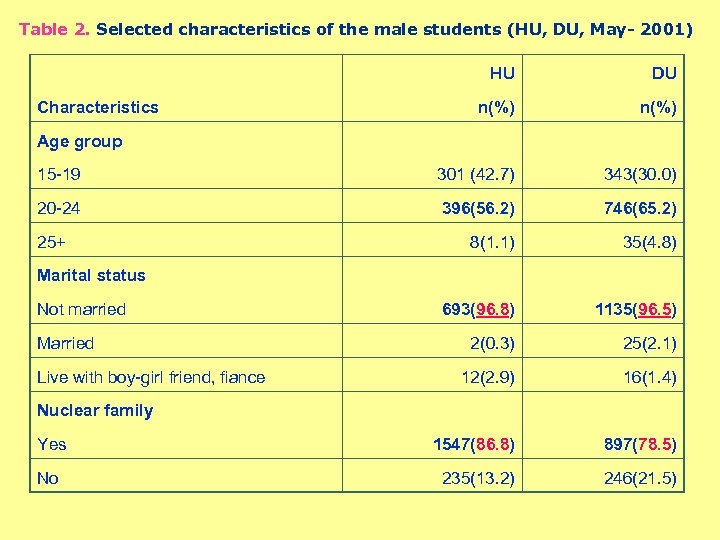 Table 2. Selected characteristics of the male students (HU, DU, May- 2001) HU DU n(%) 15 -19 301 (42. 7) 343(30. 0) 20 -24 396(56. 2) 746(65. 2) 8(1. 1) 35(4. 8) 693(96. 8) 1135(96. 5) 2(0. 3) 25(2. 1) 12(2. 9) 16(1. 4) Yes 1547(86. 8) 897(78. 5) No 235(13. 2) 246(21. 5) Characteristics Age group 25+ Marital status Not married Married Live with boy-girl friend, fiance Nuclear family
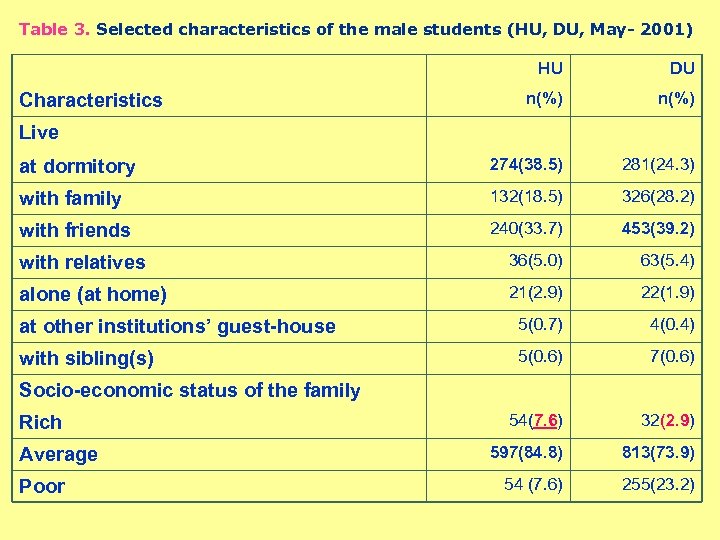 Table 3. Selected characteristics of the male students (HU, DU, May- 2001) HU DU n(%) at dormitory 274(38. 5) 281(24. 3) with family 132(18. 5) 326(28. 2) with friends 240(33. 7) 453(39. 2) with relatives 36(5. 0) 63(5. 4) alone (at home) 21(2. 9) 22(1. 9) at other institutions’ guest-house 5(0. 7) 4(0. 4) with sibling(s) 5(0. 6) 7(0. 6) 54(7. 6) 32(2. 9) 597(84. 8) 813(73. 9) 54 (7. 6) 255(23. 2) Characteristics Live Socio-economic status of the family Rich Average Poor
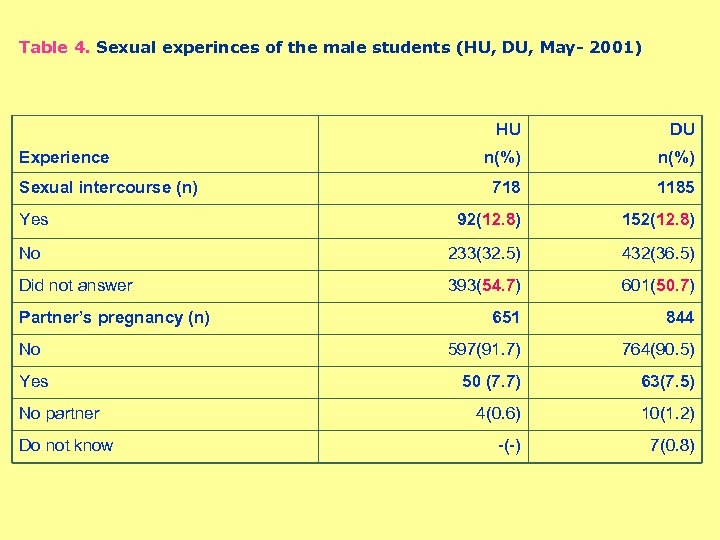 Table 4. Sexual experinces of the male students (HU, DU, May- 2001) HU DU n(%) 718 1185 Yes 92(12. 8) 152(12. 8) No 233(32. 5) 432(36. 5) Did not answer 393(54. 7) 601(50. 7) 651 844 597(91. 7) 764(90. 5) 50 (7. 7) 63(7. 5) 4(0. 6) 10(1. 2) -(-) 7(0. 8) Experience Sexual intercourse (n) Partner’s pregnancy (n) No Yes No partner Do not know
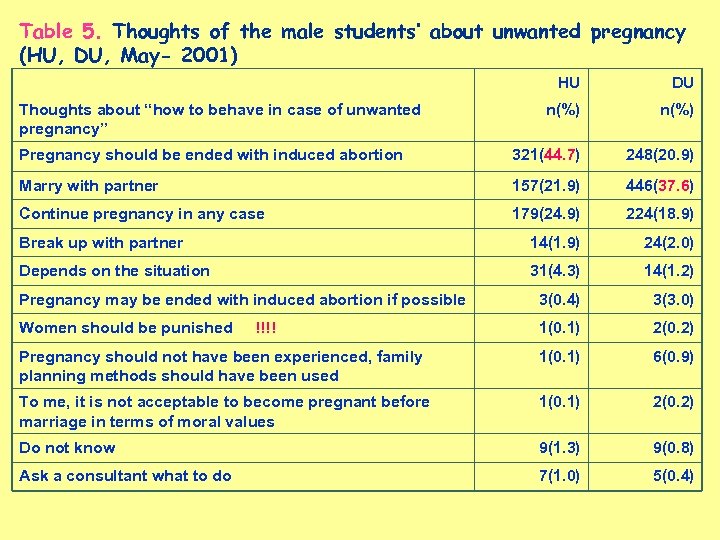 Table 5. Thoughts of the male students’ about unwanted pregnancy (HU, DU, May- 2001) HU DU n(%) Pregnancy should be ended with induced abortion 321(44. 7) 248(20. 9) Marry with partner 157(21. 9) 446(37. 6) Continue pregnancy in any case 179(24. 9) 224(18. 9) Break up with partner 14(1. 9) 24(2. 0) Depends on the situation 31(4. 3) 14(1. 2) Pregnancy may be ended with induced abortion if possible 3(0. 4) 3(3. 0) Women should be punished !!!! 1(0. 1) 2(0. 2) Pregnancy should not have been experienced, family planning methods should have been used 1(0. 1) 6(0. 9) To me, it is not acceptable to become pregnant before marriage in terms of moral values 1(0. 1) 2(0. 2) Do not know 9(1. 3) 9(0. 8) Ask a consultant what to do 7(1. 0) 5(0. 4) Thoughts about “how to behave in case of unwanted pregnancy”
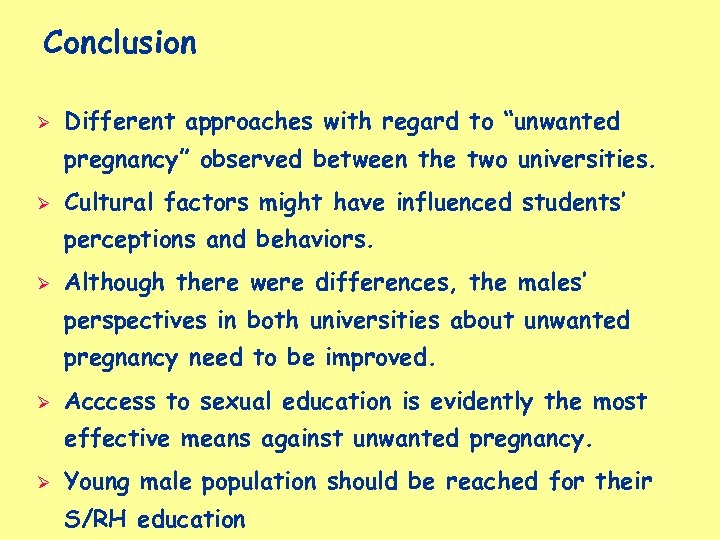 Conclusion Ø Different approaches with regard to “unwanted pregnancy” observed between the two universities. Ø Cultural factors might have influenced students’ perceptions and behaviors. Ø Although there were differences, the males’ perspectives in both universities about unwanted pregnancy need to be improved. Ø Acccess to sexual education is evidently the most effective means against unwanted pregnancy. Ø Young male population should be reached for their S/RH education
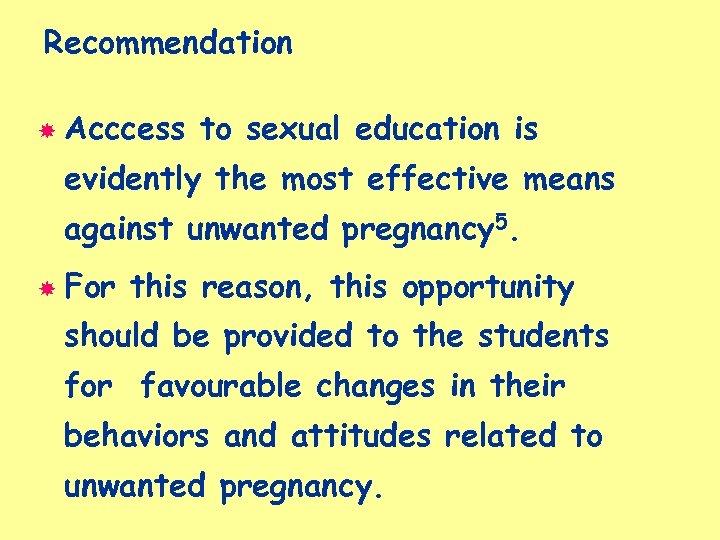 Recommendation Acccess to sexual education is evidently the most effective means against unwanted pregnancy 5. For this reason, this opportunity should be provided to the students for favourable changes in their behaviors and attitudes related to unwanted pregnancy.
 What has been done after the study? ¯ Youth Counselling Units were established at two universities. . . ¯ These units provide counseling and clinical services on sexual and reproductive health for the students. . . ¯ Some other in-depth studies have been carried out to find the ways how to increase “male involvement in RH”
 The Authors thanks to the other members of our study team: Prof. Şevkat Bahar-Özvarış Assoc. Prof. Melikşah Ertem Assoc. Prof. Nalan Şahin-Hodoğlugil Çiğdem Esin Kezban Çelik
 THANK YOU
 Selected references 1. Faundes A, Duarte GA, Neto JA, Souse MH. The Closer You Are, the Better You Understand: The Reaction of Brazilian Obstetrician. Gynaecologists to Unwanted Pregnancy. Reproductive Health Matters 2004; 12 (24 Supp): 47 -56. 2. Nzoika C. Perspectives of Adolescent Boys on the Risk of Unwanted Pregnancy and Sexually Transmitted Infections: Kenya. Reproductive Health Matters 2001; 9 (17): 108 -117. 3. Erulkar AS, Karueru JPM, Kaggwa G et al. Adolescent Experiences and Lifestyles in Central Province, Kenya. New York, Population Council. 4. Yang X, Yukun H, Li. Jun. B, Xiuhua J. Determinants of Unwanted Pregnancy and Abortion in Beijing, China. Reproductive Health Matters 1995; 3 (5): 95 -103. 5. Berglund S, Liljestrand J, Marin FDM, Salgado N, Zeleya E. The Background of Adolescent Pregnancies in Nicaragua: A Qualitative Approach. Soc. Sci Med 1997; 44(1): 1 -12.
 NOW, THE FLOOR IS YOURS. . FOR QUESTIONS and COMMENTS. .