 Скачать презентацию A Framework for the Reconfiguration of Ubicomp Systems
1beaedba831702b40d8f40c3888c8363.ppt
- Количество слайдов: 28



A Framework for the Reconfiguration of Ubicomp Systems Pau Giner, Carlos Cetina, Joan Fons, Vicente Pelechano
Agenda Introduction Background The proposal The reconfiguration framework Conclusions and further work 2
Agenda Introduction Background The proposal The reconfiguration framework Conclusions and further work 3
Ubicomp Systems 4
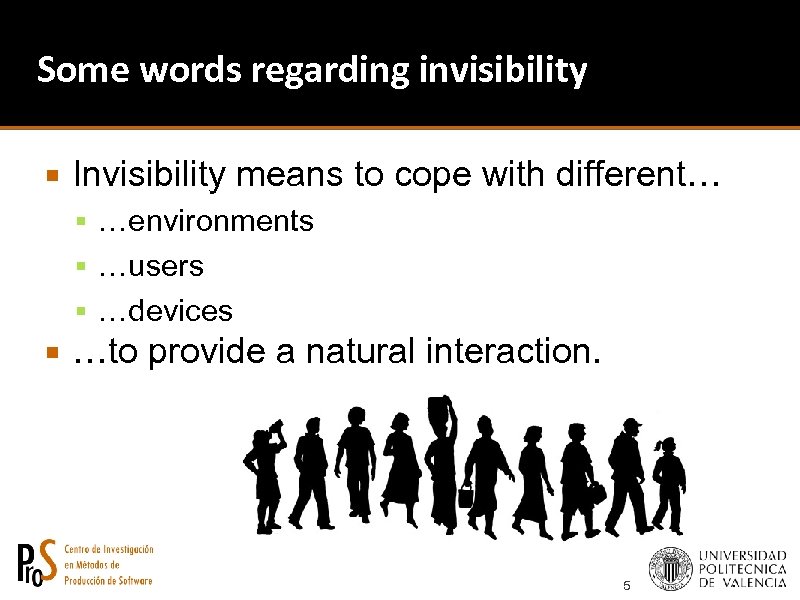
Some words regarding invisibility Invisibility means to cope with different… …environments …users …devices …to provide a natural interaction. 5
The need for configuration Many different devices and user preferences involve many configuration options Services can be combined in different ways Users have different demands regarding the system behavior 6
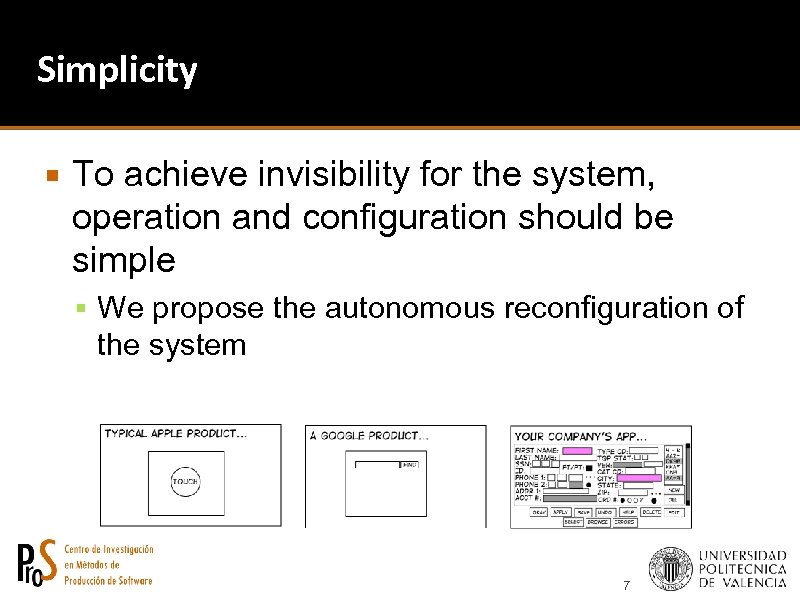
Simplicity To achieve invisibility for the system, operation and configuration should be simple We propose the autonomous reconfiguration of the system 7
Agenda Introduction Background The proposal The reconfiguration framework Conclusions and further work 8
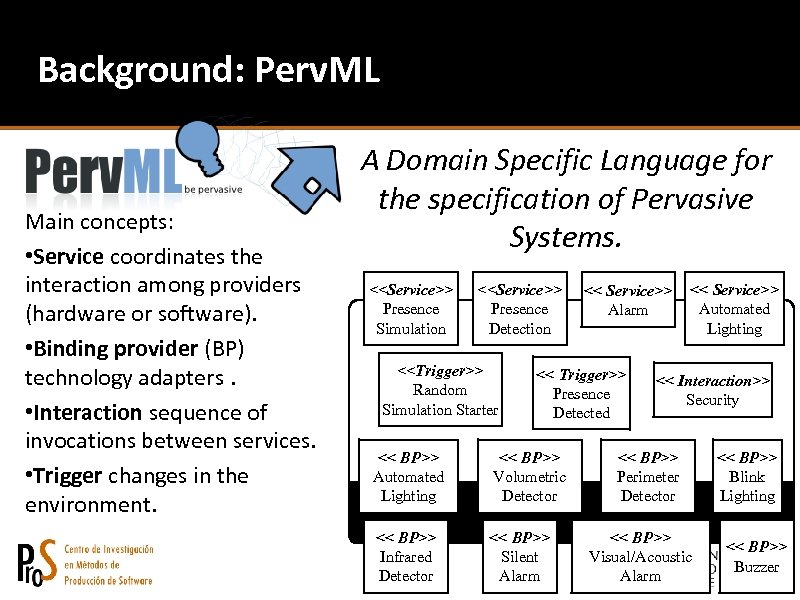
Background: Perv. ML Main concepts: • Service coordinates the interaction among providers (hardware or software). • Binding provider (BP) technology adapters. • Interaction sequence of invocations between services. • Trigger changes in the environment. A Domain Specific Language for the specification of Pervasive Systems. <<Service>> Presence Simulation <<Service>> Presence Detection <<Trigger>> Random Simulation Starter << Service>> Alarm << Trigger>> Presence Detected << BP>> Automated Lighting << BP>> Volumetric Detector << BP>> Infrared Detector << BP>> Silent Alarm << Service>> Automated Lighting << Interaction>> Security << BP>> Perimeter Detector 9 << BP>> Visual/Acoustic Alarm 9 << BP>> Blink Lighting << BP>> Buzzer
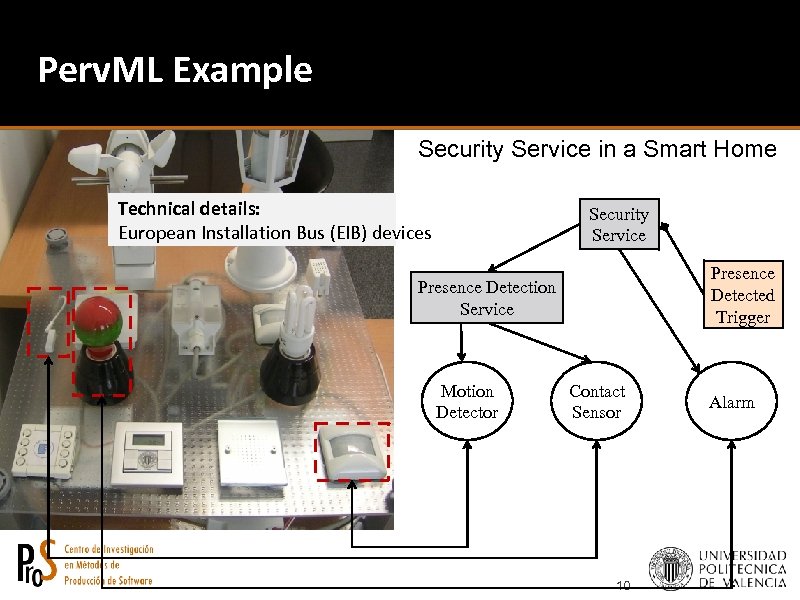
Perv. ML Example Security Service in a Smart Home Technical details: European Installation Bus (EIB) devices Security Service Presence Detected Trigger Presence Detection Service Motion Detector Contact Sensor 10 Alarm
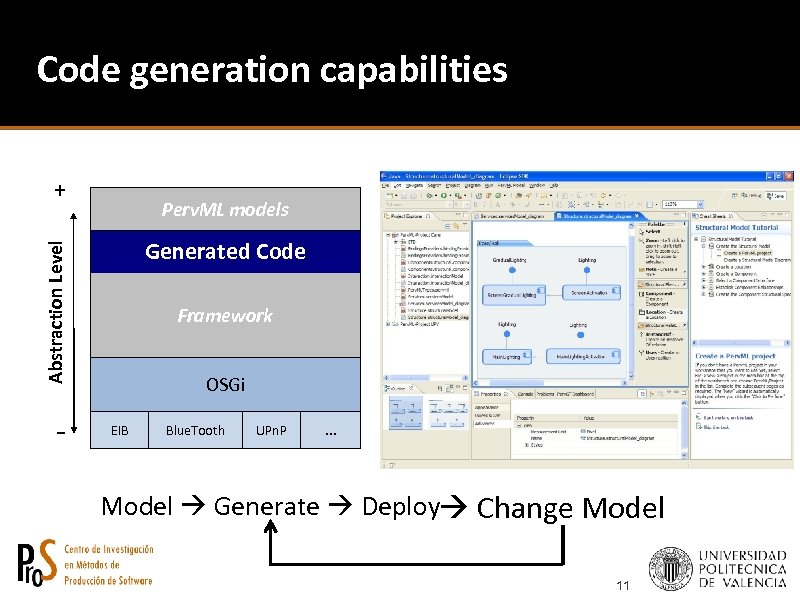
Code generation capabilities + Perv. ML models Abstraction Level Generated Code - Framework OSGi EIB Blue. Tooth UPn. P . . . Model Generate Deploy Change Model 11
Agenda Introduction Background The proposal The reconfiguration framework Conclusions and further work 12
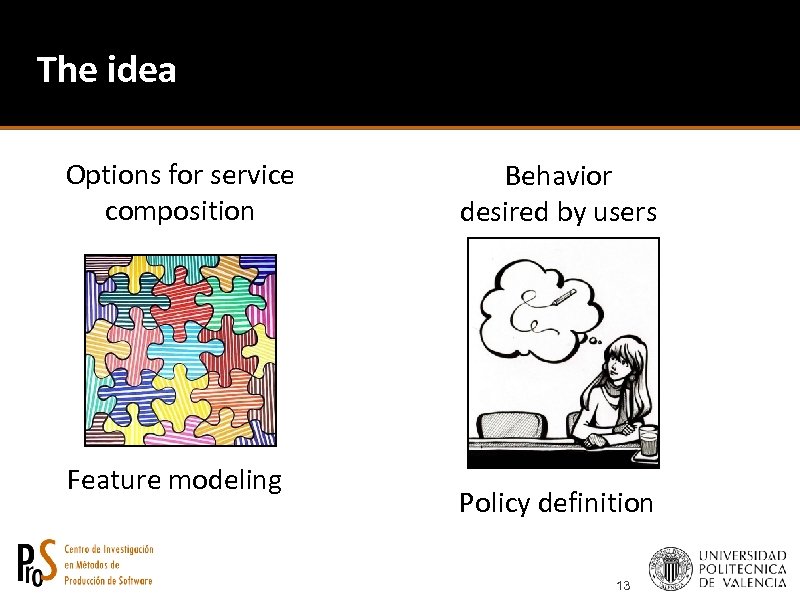
The idea Options for service composition Feature modeling Behavior desired by users Policy definition 13
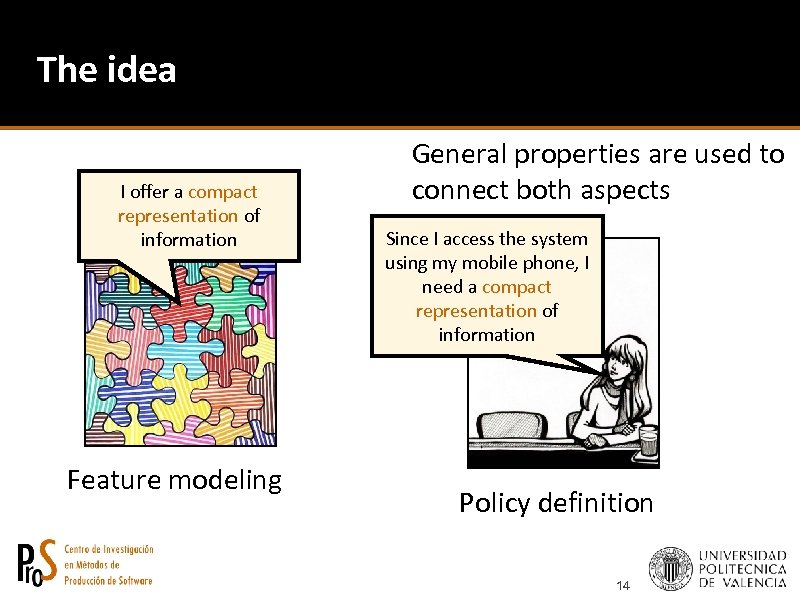
The idea I offer a compact representation of information Feature modeling General properties are used to connect both aspects Since I access the system using my mobile phone, I need a compact representation of information Policy definition 14
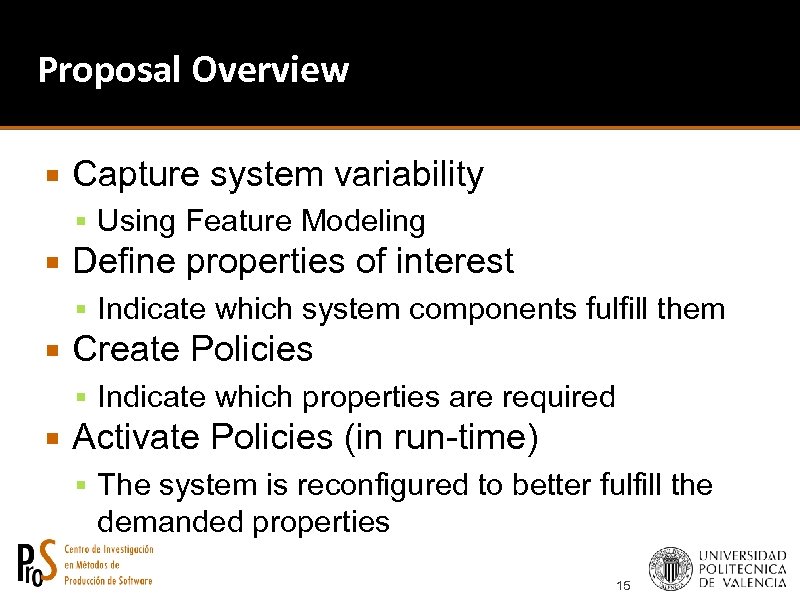
Proposal Overview Capture system variability Using Feature Modeling Define properties of interest Indicate which system components fulfill them Create Policies Indicate which properties are required Activate Policies (in run-time) The system is reconfigured to better fulfill the demanded properties 15
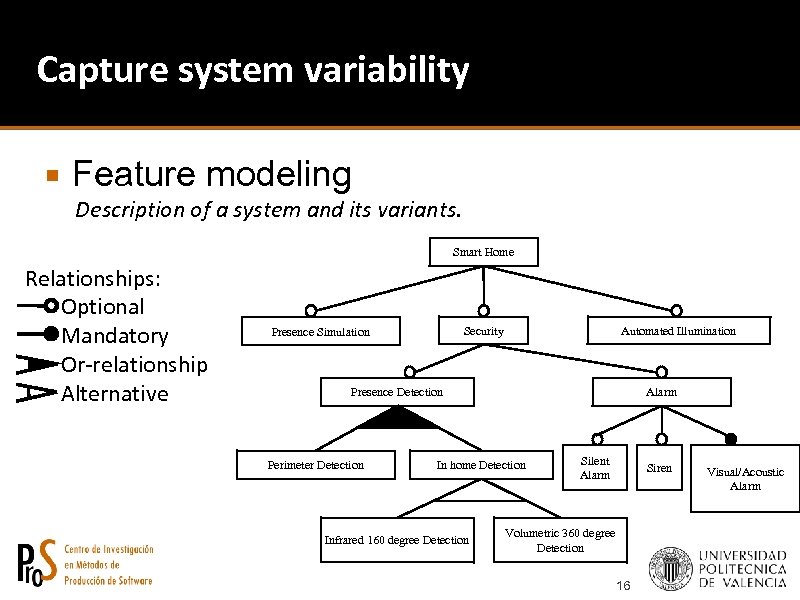
Capture system variability Feature modeling Description of a system and its variants. Smart Home Relationships: Optional Mandatory Or-relationship Alternative Security Presence Simulation Automated Illumination Presence Detection Perimeter Detection Alarm In home Detection Infrared 160 degree Detection Silent Alarm Siren Volumetric 360 degree Detection 16 Visual/Acoustic Alarm
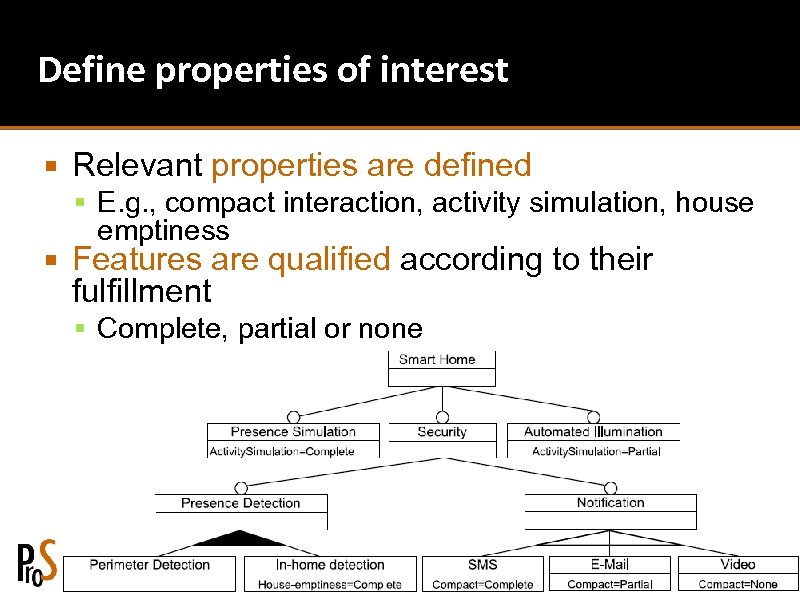
Define properties of interest Relevant properties are defined E. g. , compact interaction, activity simulation, house emptiness Features are qualified according to their fulfillment Complete, partial or none 17
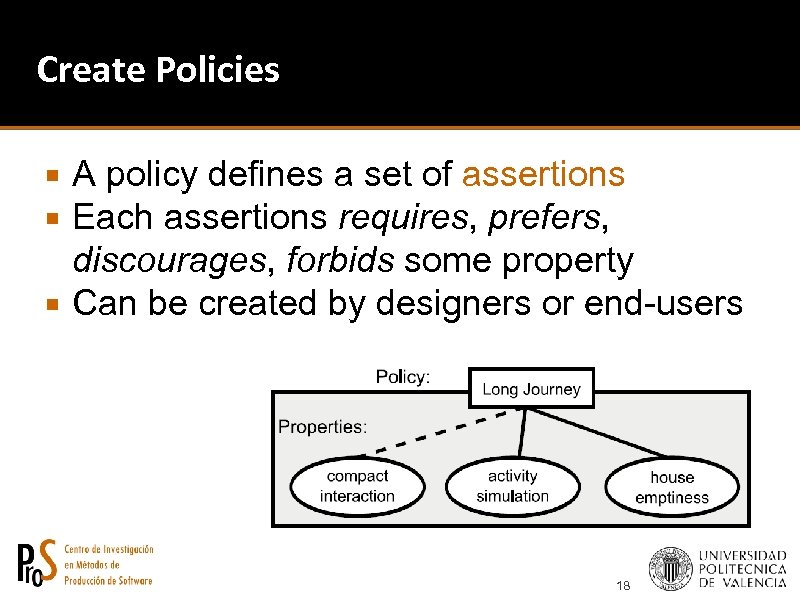
Create Policies A policy defines a set of assertions Each assertions requires, prefers, discourages, forbids some property Can be created by designers or end-users 18
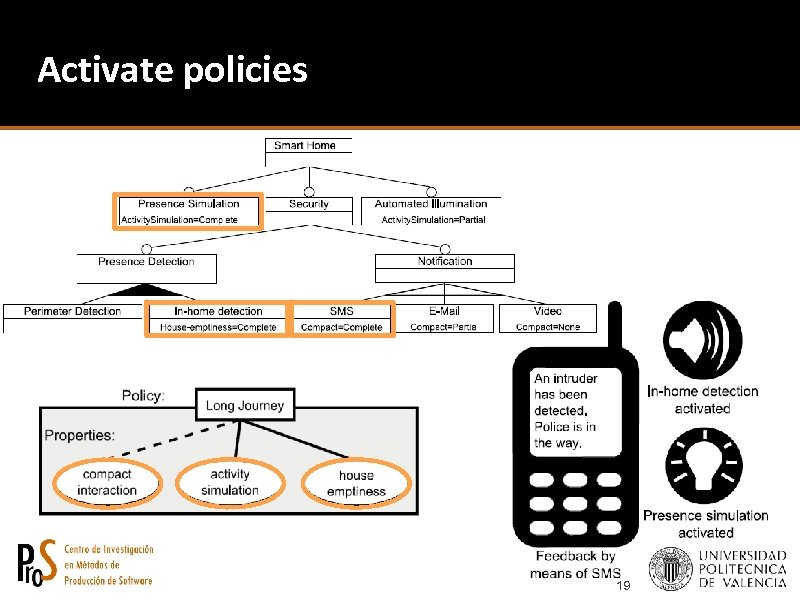
Activate policies 19
Agenda Introduction Background The proposal The reconfiguration framework Conclusions and further work 20
The reconfiguration framework extends the Prv. ML framework Based on OSGi for dynamicity ▪ Using Equinox implementation ▪ The variability model is kept and queried at runtime Providing new components: ▪ Characterization ▪ Analyzer ▪ Reconfigurator 21
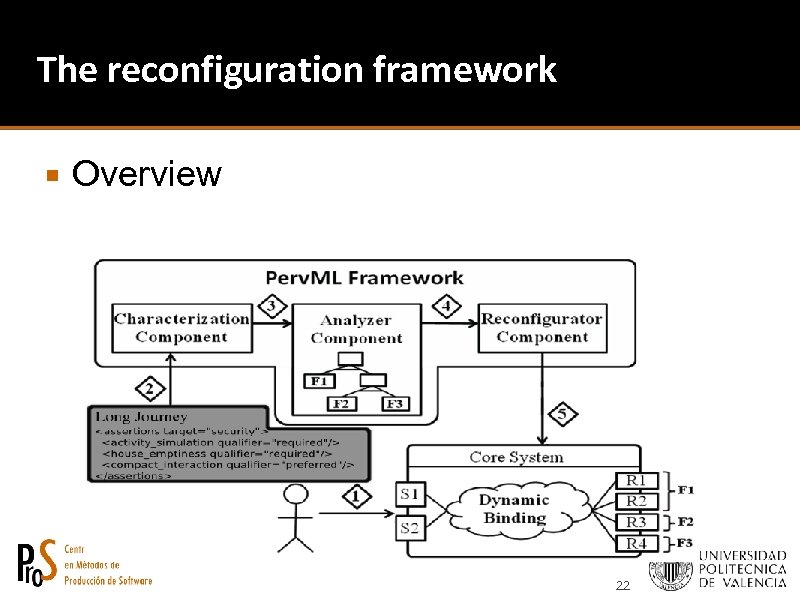
The reconfiguration framework Overview 22
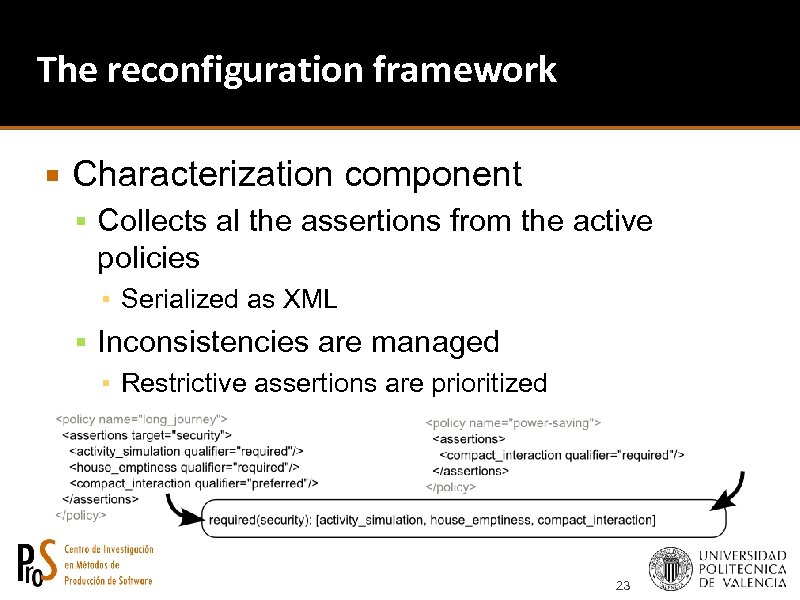
The reconfiguration framework Characterization component Collects al the assertions from the active policies ▪ Serialized as XML Inconsistencies are managed ▪ Restrictive assertions are prioritized 23
The reconfiguration framework Analyzer component Decides which features to activate to fulfill the properties ▪ OCL is used to query models at runtime A conservative approach ▪ A change is produced only when the system improves the property coverage 24
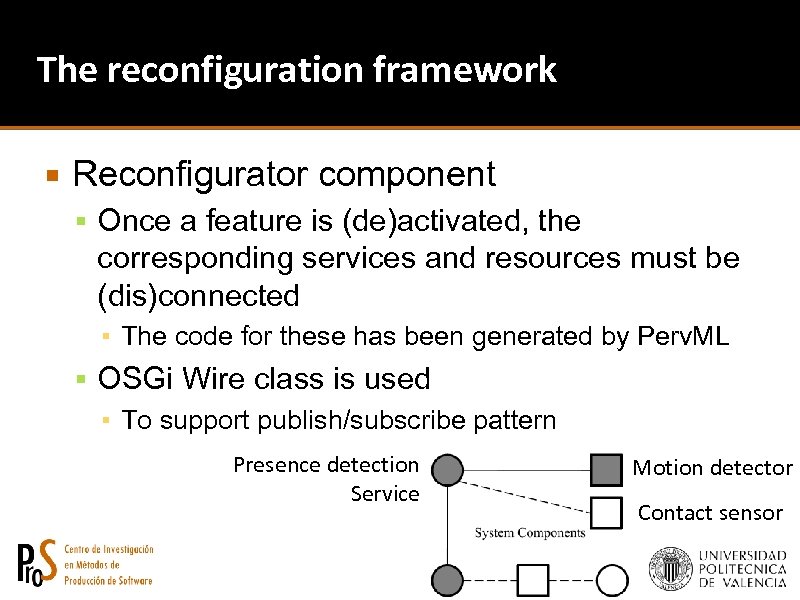
The reconfiguration framework Reconfigurator component Once a feature is (de)activated, the corresponding services and resources must be (dis)connected ▪ The code for these has been generated by Perv. ML OSGi Wire class is used ▪ To support publish/subscribe pattern Presence detection Service Motion detector Contact sensor 25
Agenda Introduction Background The proposal The reconfiguration framework Conclusions and further work 26
Conclusions and further work The main goal was to provide Perv. ML systems with reconfiguration capabilities The obtained framework can be used out of the method The application to more case studies Better management of policy scope and definition 27

Thank. S
Скачать презентацию A Framework for the Reconfiguration of Ubicomp Systems
1beaedba831702b40d8f40c3888c8363.ppt