


 Скачать презентацию A Few Marine Facts Ocean is 2 3 of
e7bca44d86b10ad138ec897222c6702d.ppt
- Количество слайдов: 27
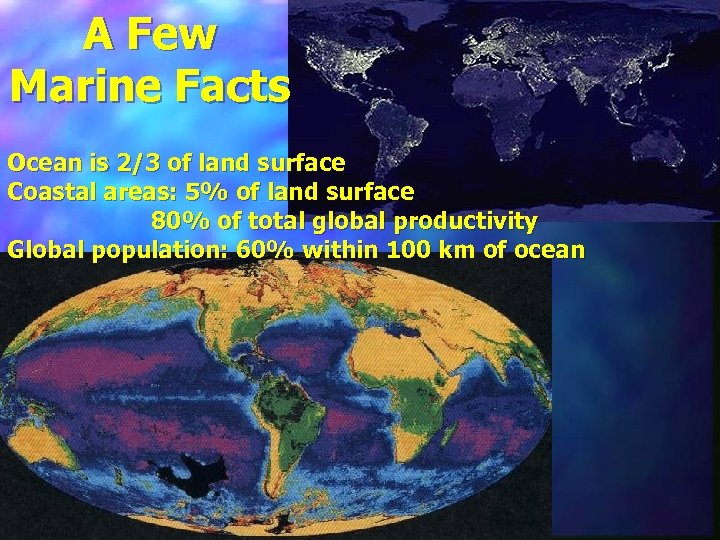 A Few Marine Facts Ocean is 2/3 of land surface Coastal areas: 5% of land surface 80% of total global productivity Global population: 60% within 100 km of ocean
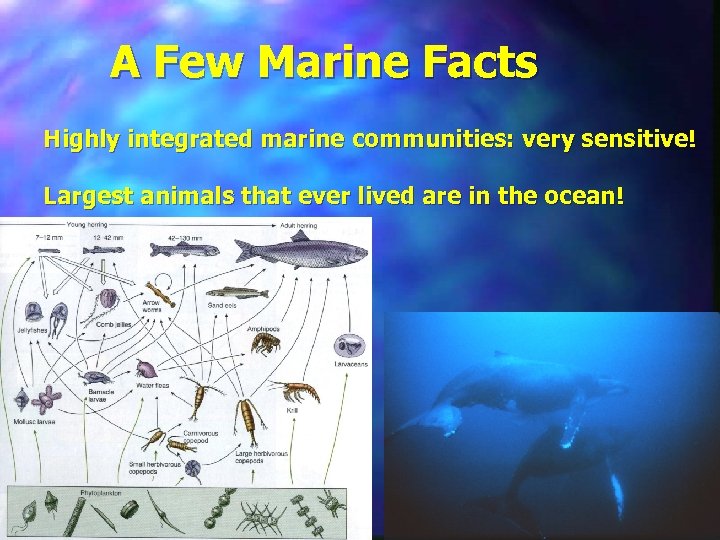 A Few Marine Facts Highly integrated marine communities: very sensitive! Largest animals that ever lived are in the ocean!
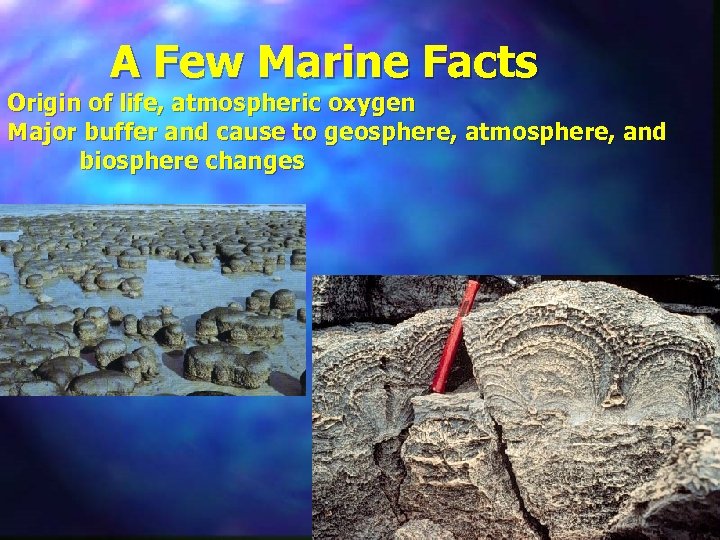 A Few Marine Facts Origin of life, atmospheric oxygen Major buffer and cause to geosphere, atmosphere, and biosphere changes
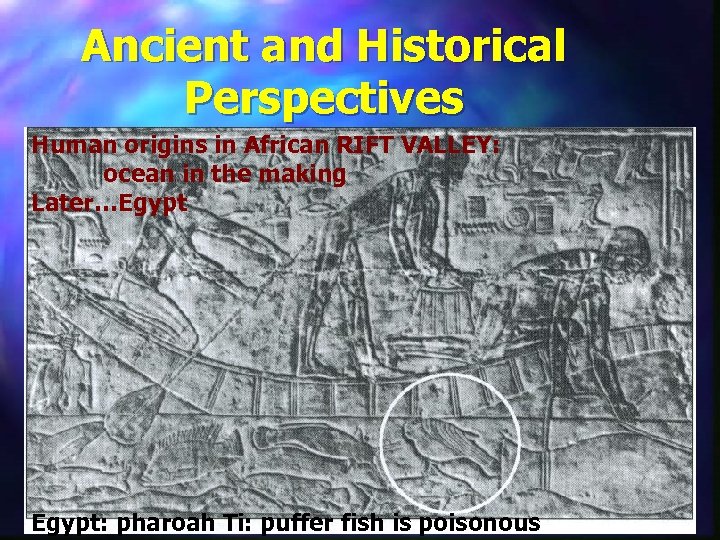 Ancient and Historical Perspectives Human origins in African RIFT VALLEY: ocean in the making Later…Egypt: pharoah Ti: puffer fish is poisonous
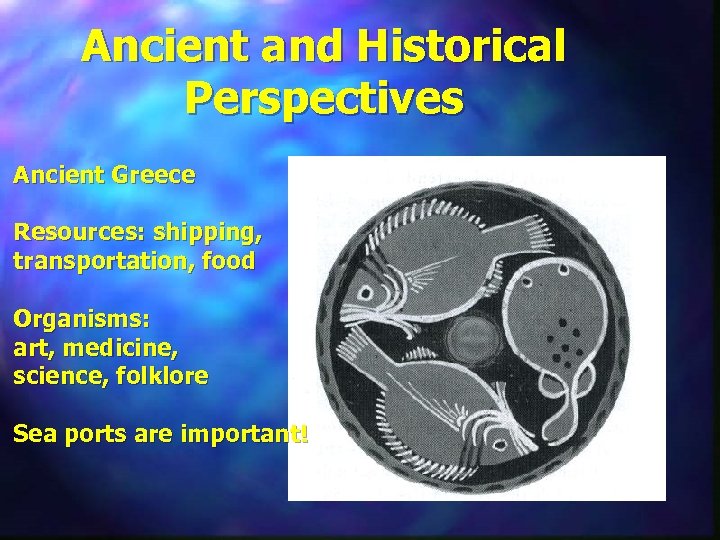 Ancient and Historical Perspectives Ancient Greece Resources: shipping, transportation, food Organisms: art, medicine, science, folklore Sea ports are important!
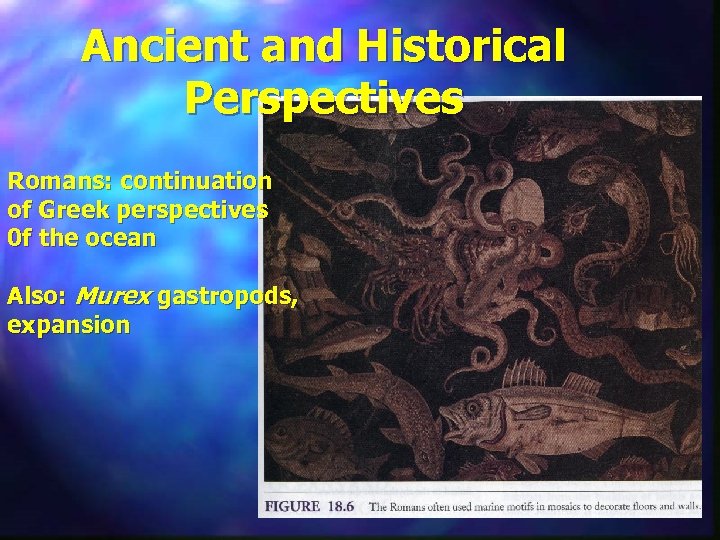 Ancient and Historical Perspectives Romans: continuation of Greek perspectives 0 f the ocean Also: Murex gastropods, expansion
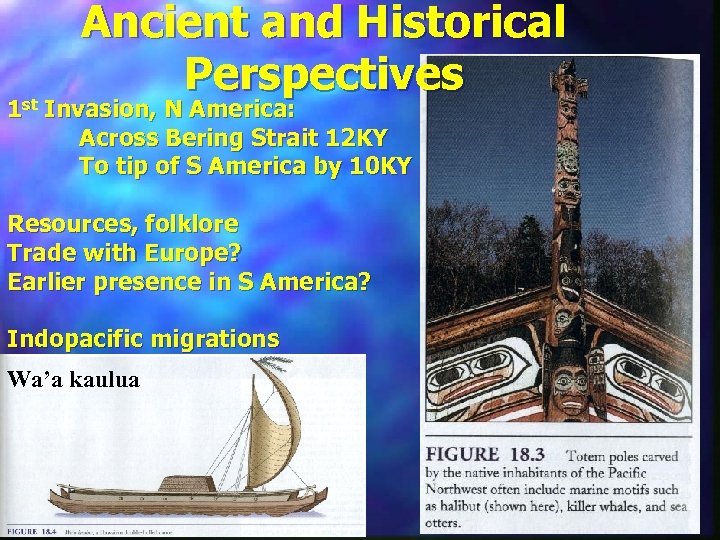 Ancient and Historical Perspectives 1 st Invasion, N America: Across Bering Strait 12 KY To tip of S America by 10 KY Resources, folklore Trade with Europe? Earlier presence in S America? Indopacific migrations Wa’a kaulua
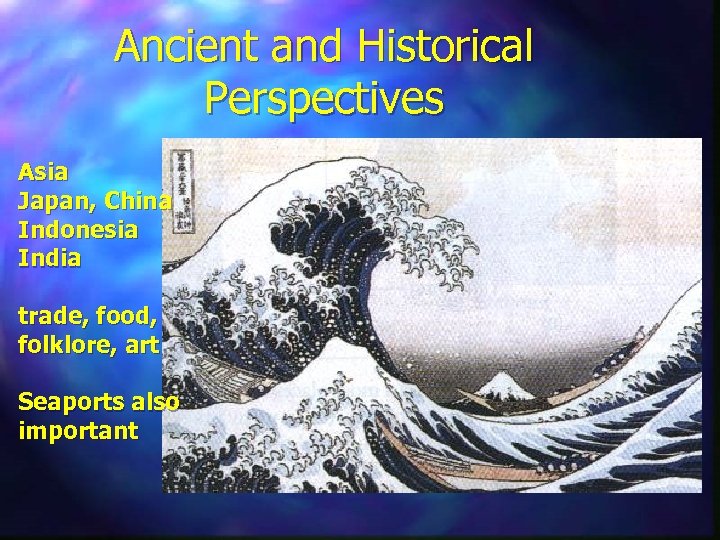 Ancient and Historical Perspectives Asia Japan, China Indonesia India trade, food, folklore, art Seaports also important
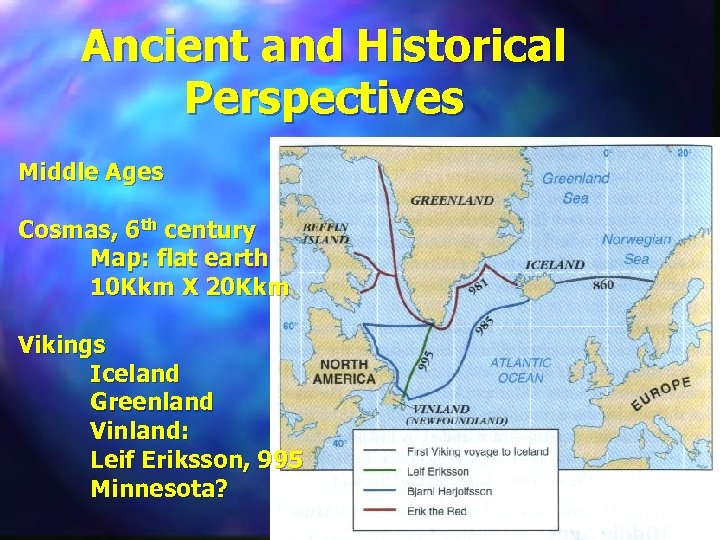 Ancient and Historical Perspectives Middle Ages Cosmas, 6 th century Map: flat earth 10 Kkm X 20 Kkm Vikings Iceland Greenland Vinland: Leif Eriksson, 995 Minnesota?
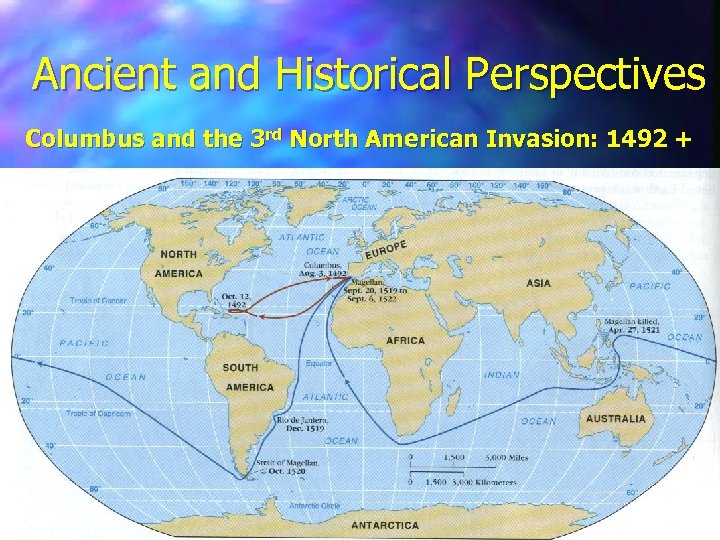 Ancient and Historical Perspectives Columbus and the 3 rd North American Invasion: 1492 +
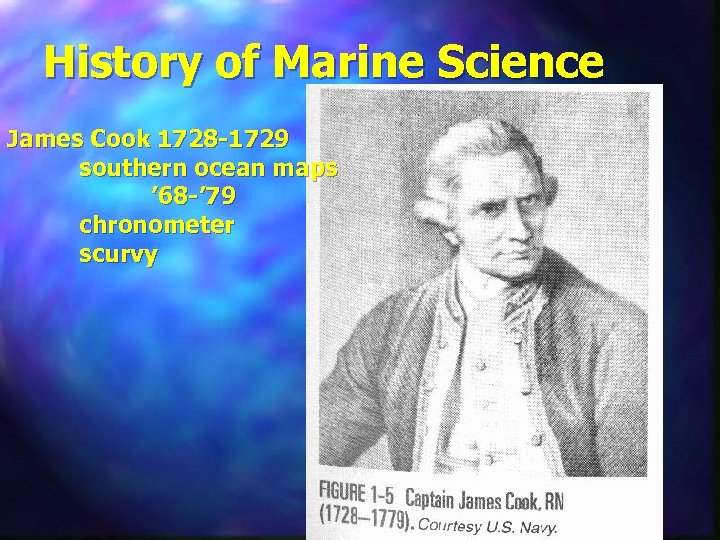 History of Marine Science James Cook 1728 -1729 southern ocean maps ’ 68 -’ 79 chronometer scurvy
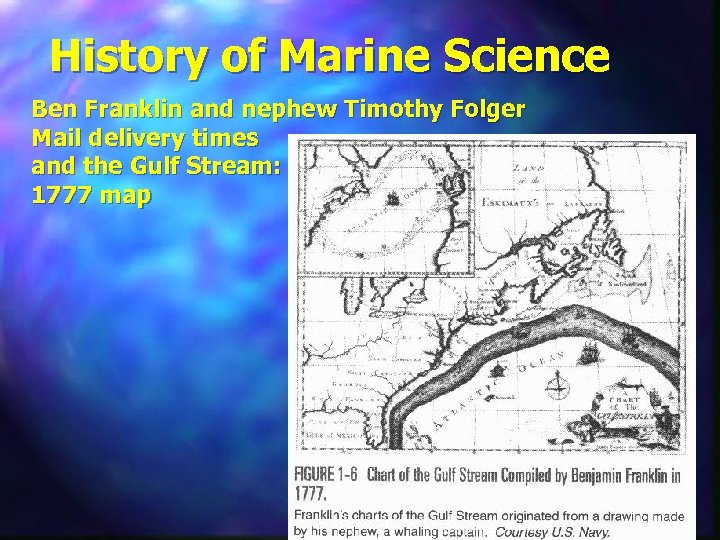 History of Marine Science Ben Franklin and nephew Timothy Folger Mail delivery times and the Gulf Stream: 1777 map
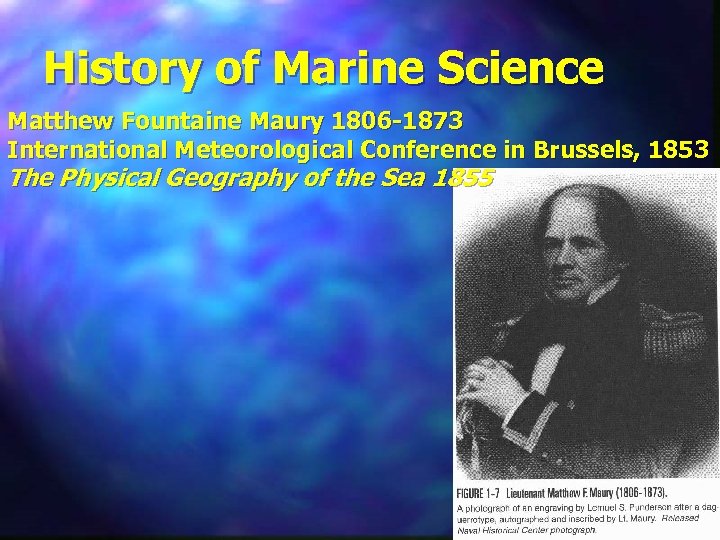 History of Marine Science Matthew Fountaine Maury 1806 -1873 International Meteorological Conference in Brussels, 1853 The Physical Geography of the Sea 1855
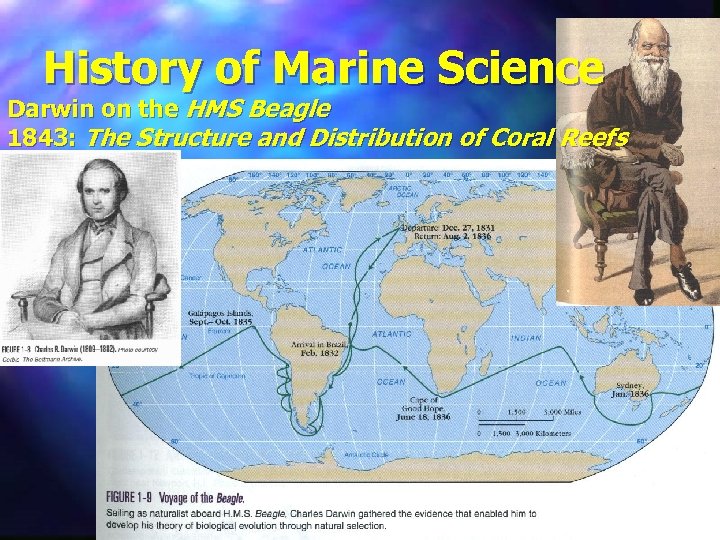 History of Marine Science Darwin on the HMS Beagle 1843: The Structure and Distribution of Coral Reefs
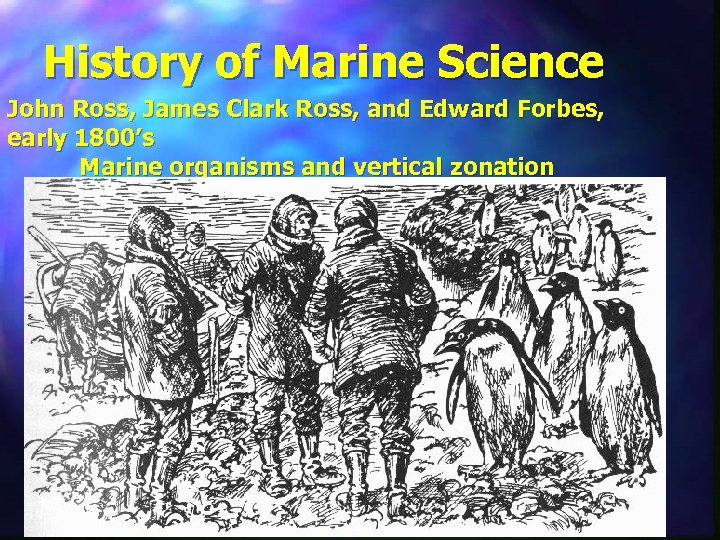 History of Marine Science John Ross, James Clark Ross, and Edward Forbes, early 1800’s Marine organisms and vertical zonation
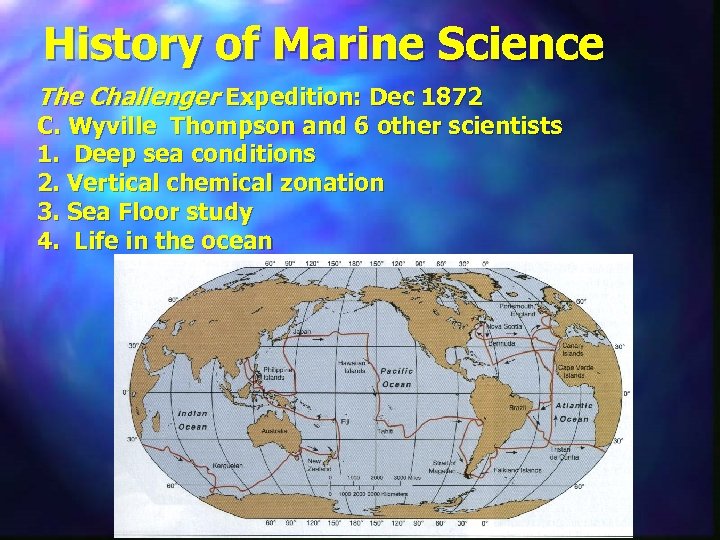 History of Marine Science The Challenger Expedition: Dec 1872 C. Wyville Thompson and 6 other scientists 1. Deep sea conditions 2. Vertical chemical zonation 3. Sea Floor study 4. Life in the ocean
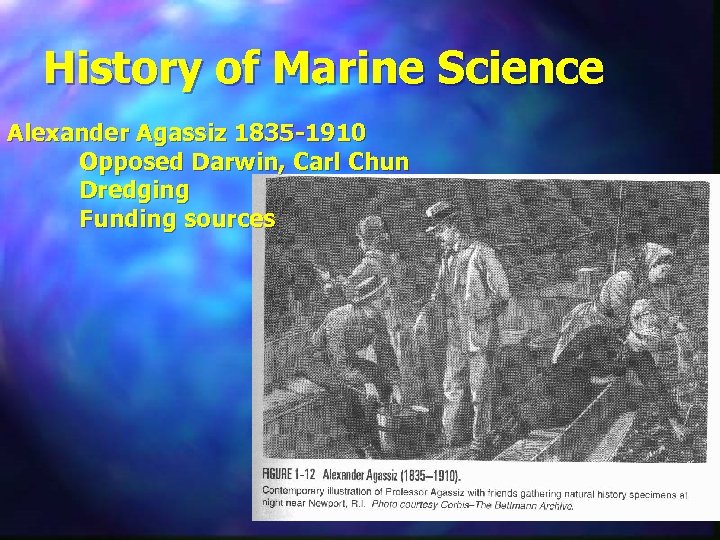 History of Marine Science Alexander Agassiz 1835 -1910 Opposed Darwin, Carl Chun Dredging Funding sources
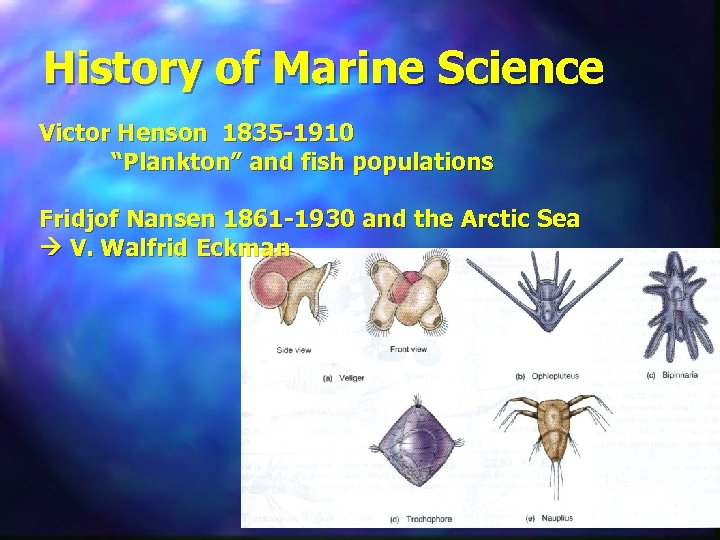 History of Marine Science Victor Henson 1835 -1910 “Plankton” and fish populations Fridjof Nansen 1861 -1930 and the Arctic Sea V. Walfrid Eckman
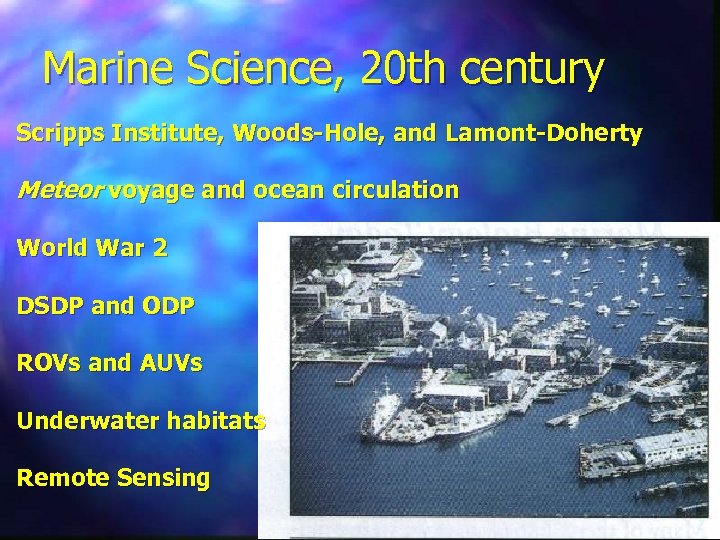 Marine Science, 20 th century Scripps Institute, Woods-Hole, and Lamont-Doherty Meteor voyage and ocean circulation World War 2 DSDP and ODP ROVs and AUVs Underwater habitats Remote Sensing
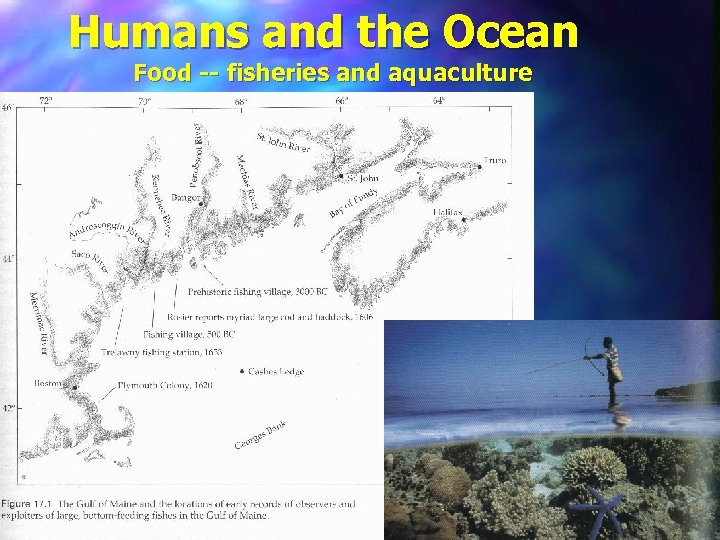 Humans and the Ocean Food -- fisheries and aquaculture
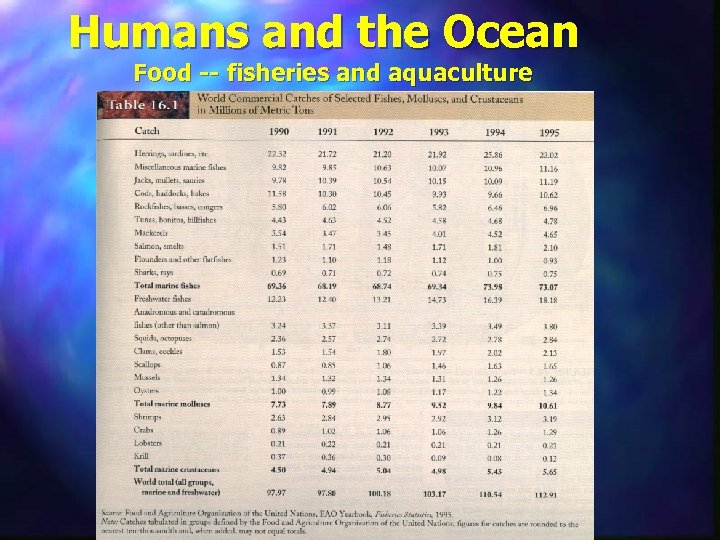 Humans and the Ocean Food -- fisheries and aquaculture
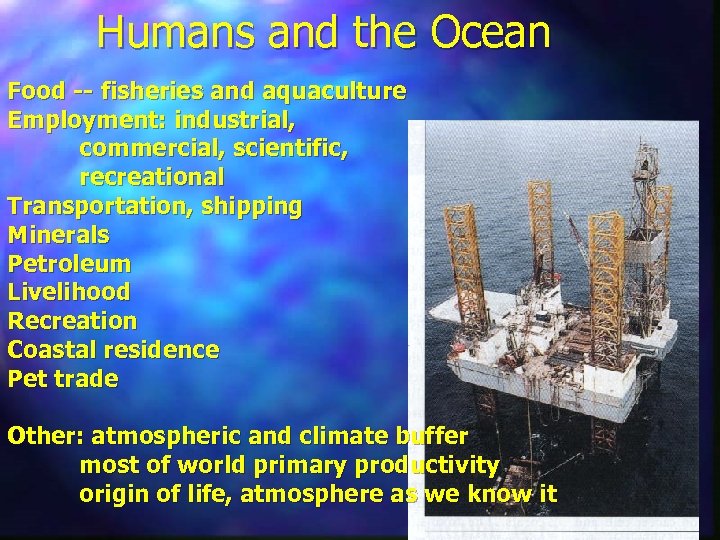 Humans and the Ocean Food -- fisheries and aquaculture Employment: industrial, commercial, scientific, recreational Transportation, shipping Minerals Petroleum Livelihood Recreation Coastal residence Pet trade Other: atmospheric and climate buffer most of world primary productivity origin of life, atmosphere as we know it
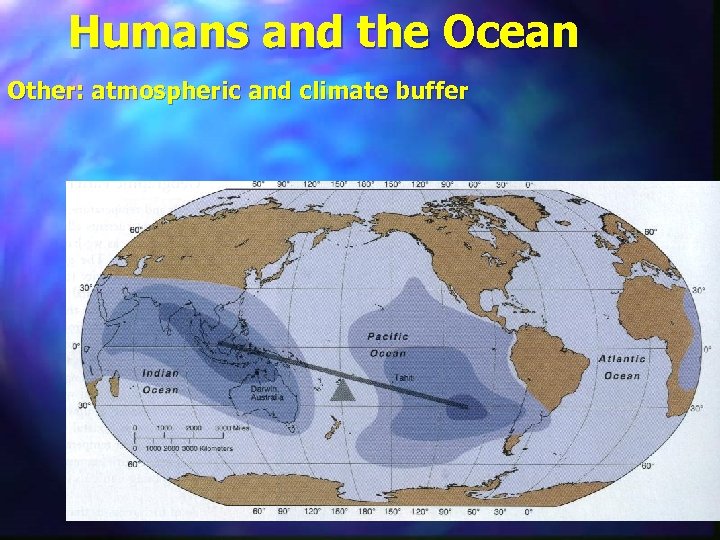 Humans and the Ocean Other: atmospheric and climate buffer
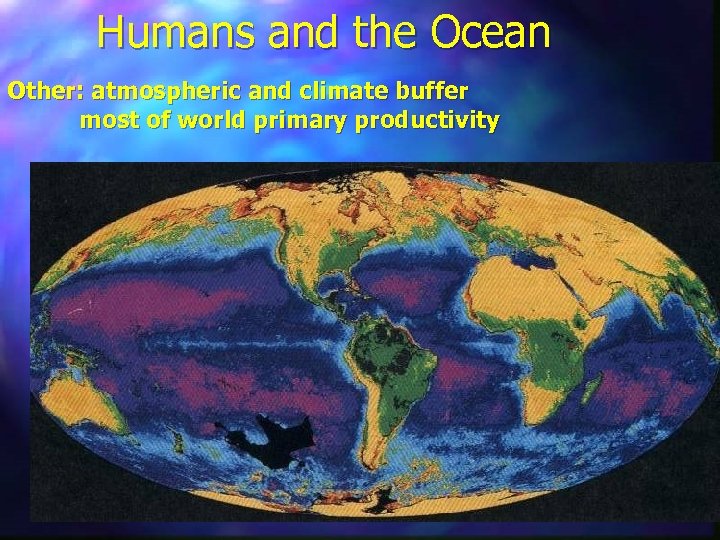 Humans and the Ocean Other: atmospheric and climate buffer most of world primary productivity
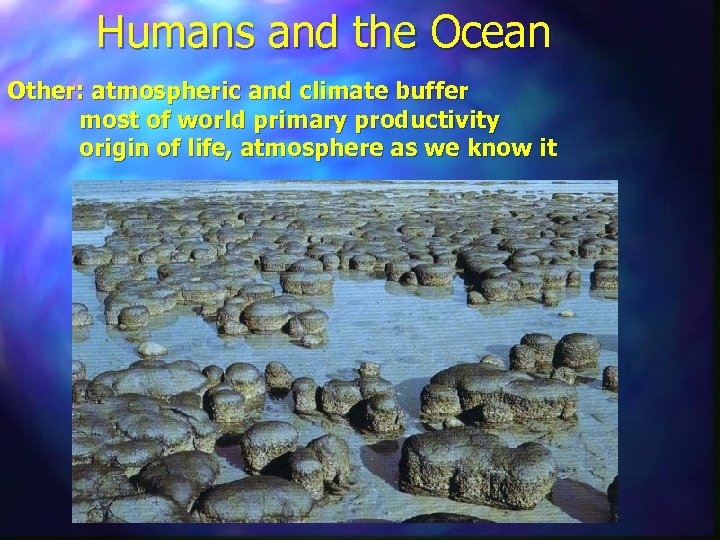 Humans and the Ocean Other: atmospheric and climate buffer most of world primary productivity origin of life, atmosphere as we know it
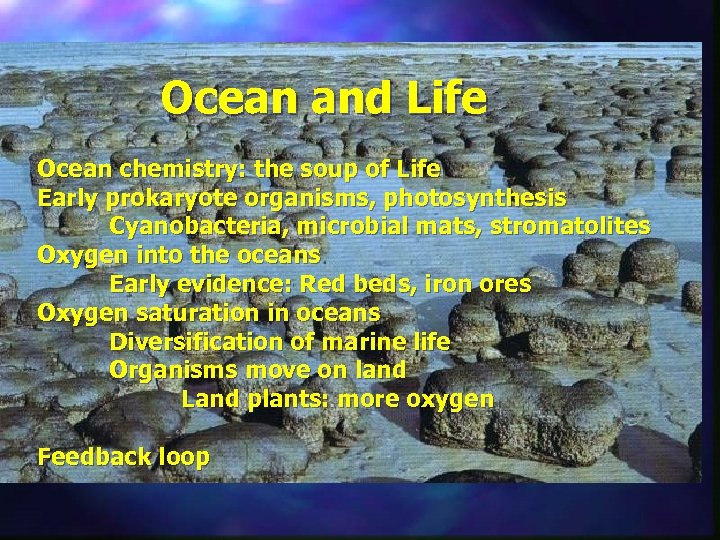 Ocean and Life Ocean chemistry: the soup of Life Early prokaryote organisms, photosynthesis Cyanobacteria, microbial mats, stromatolites Oxygen into the oceans Early evidence: Red beds, iron ores Oxygen saturation in oceans Diversification of marine life Organisms move on land Land plants: more oxygen Feedback loop
 The Livable Earth Why is liquid water necessary for life? Mars, moon has water; also other planets, moons Water necessary for: origin of life, life maintenance climate, temperature buffer dynamics of sedimentology, rock recycling …what else?