


 Скачать презентацию A Few Implementation Frameworks for Health Interventions in
edef86539360f5cd149c3c89089b75ff.ppt
- Количество слайдов: 48
 A Few Implementation Frameworks for Health Interventions in Global Context Margaret Handley, Ph. D MPH Associate Professor UCSF Department of Epidemiology and Biostatistics and SFGH Division of General Internal Medicine, Center for Vulnerable Populations April 25, 2012
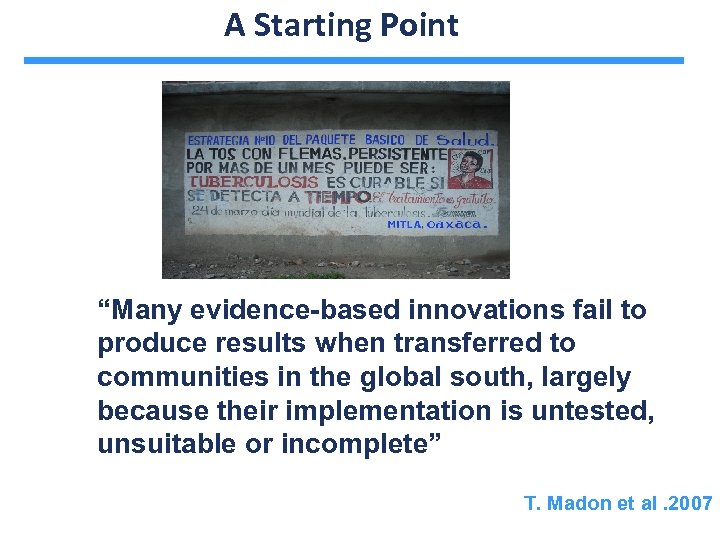 A Starting Point “Many evidence-based innovations fail to produce results when transferred to communities in the global south, largely because their implementation is untested, unsuitable or incomplete” T. Madon et al. 2007
 Implementation is Challenging “Strategies required to deliver good care in low-income settings should recognize that this will need to be coproduced through engagement, often over prolonged periods and as part of a directive but adaptive, participatory, information-rich, and reflective process” -English M et al, 2011
 Definitions • A theory is a set of testable propositions that help us to explain and predict phenomena, such as health behaviors. A theory is a tool that allows one toinform and strengthen practical solutions to old and emerging problems in public health. • Planning models or frameworks exist at a macroscopic level; they serve as an organizing framework for an entire health promotion effort aimed at fostering reduction in a given disease. Unlike theories, planning models are not made up of a set of testable propositions. Rather, planning models serve as a blueprint for building and improving intervention programs. Crosby and Noar 2011
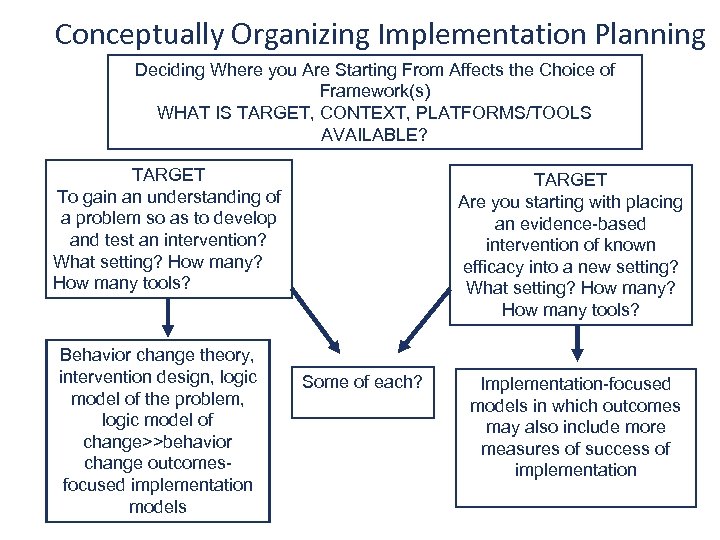 Conceptually Organizing Implementation Planning Deciding Where you Are Starting From Affects the Choice of Framework(s) WHAT IS TARGET, CONTEXT, PLATFORMS/TOOLS AVAILABLE? TARGET To gain an understanding of a problem so as to develop and test an intervention? What setting? How many tools? Behavior change theory, intervention design, logic model of the problem, logic model of change>>behavior change outcomesfocused implementation models TARGET Are you starting with placing an evidence-based intervention of known efficacy into a new setting? What setting? How many tools? Some of each? Implementation-focused models in which outcomes may also include more measures of success of implementation
 Foundations • What are implementation “theories” (models, frameworks)? • How and why are they useful?
 Why Implementation “Theory” or Frameworks? Theories, models, frameworks provide a systematic method: … for identifying, understanding, operationalizing & evaluating the black box phenomenon = “IMPLEMENTATION”
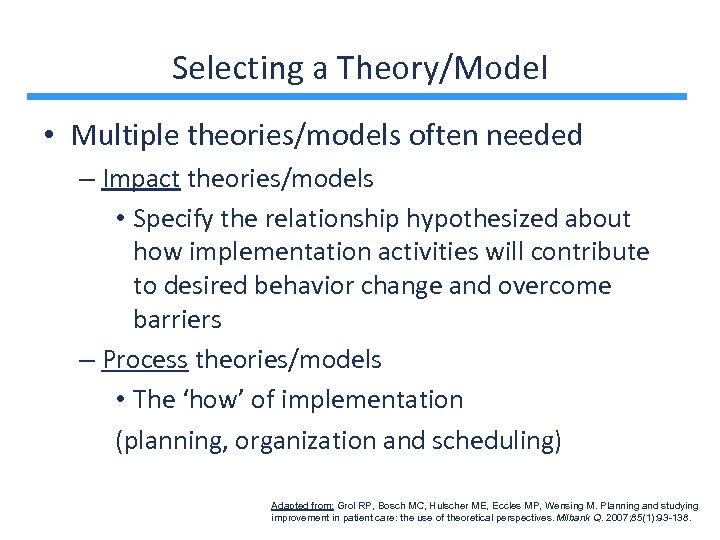 Selecting a Theory/Model • Multiple theories/models often needed – Impact theories/models • Specify the relationship hypothesized about how implementation activities will contribute to desired behavior change and overcome barriers – Process theories/models • The ‘how’ of implementation (planning, organization and scheduling) Adapted from: Grol RP, Bosch MC, Hulscher ME, Eccles MP, Wensing M. Planning and studying improvement in patient care: the use of theoretical perspectives. Milbank Q. 2007; 85(1): 93 -138.
 Selecting a Theory/Model cont. • Multiple theories/models often needed --Theories/models that focus on specific settings or contexts (e. g. health systems, community activation) -- Theories/models that incorporate multiple layers or multiple components to select from
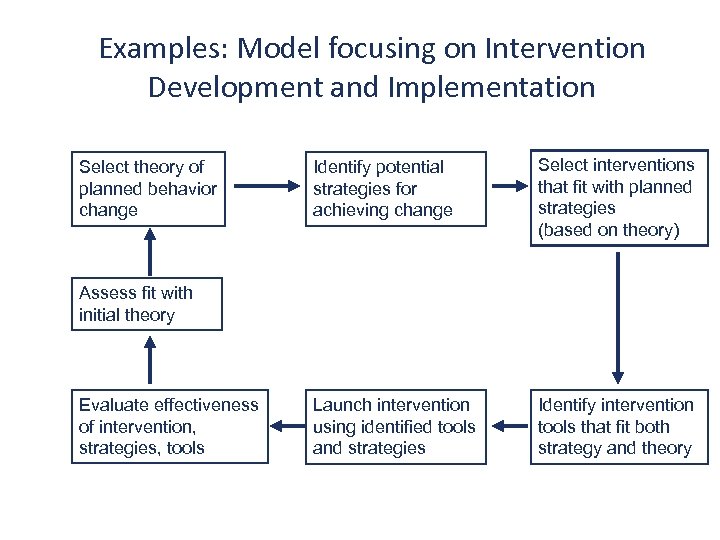 Examples: Model focusing on Intervention Development and Implementation Select theory of planned behavior change Identify potential strategies for achieving change Select interventions that fit with planned strategies (based on theory) Launch intervention using identified tools and strategies Identify intervention tools that fit both strategy and theory Assess fit with initial theory Evaluate effectiveness of intervention, strategies, tools
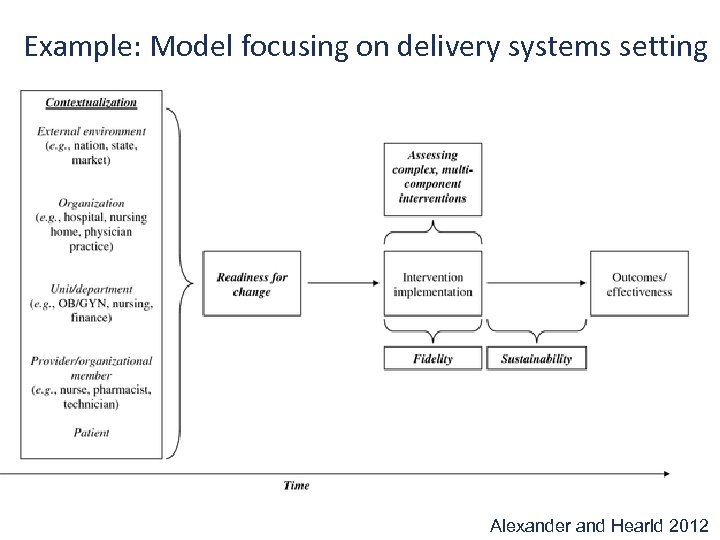 Example: Model focusing on delivery systems setting Alexander and Hearld 2012
 Selected Models for Discussion 1. PRECEDE-PROCEDE (mostly the PRECEDE) Predisposing, Reinforcing, and Enabling Constructs in Educational/ environmental Diagnosis and Evaluation 2. Consolidated Framework for Implementation Research (CFIR) 3. Promoting Action on Research Implementation in Heath Research (PARIHS) D
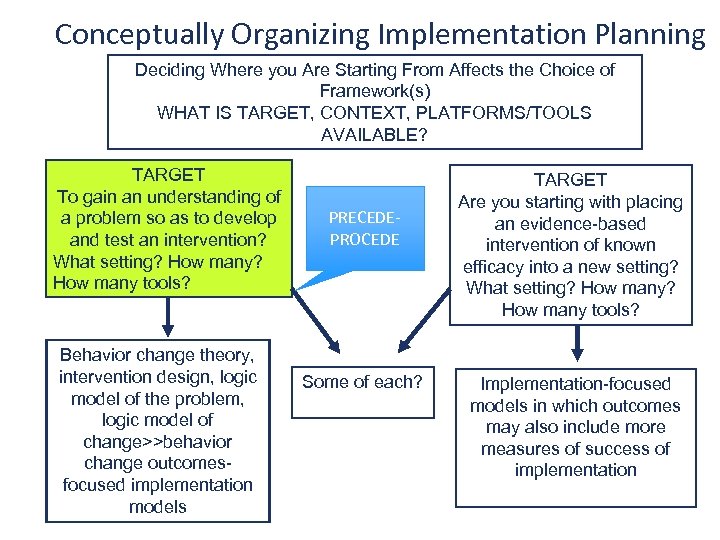 Conceptually Organizing Implementation Planning Deciding Where you Are Starting From Affects the Choice of Framework(s) WHAT IS TARGET, CONTEXT, PLATFORMS/TOOLS AVAILABLE? TARGET To gain an understanding of a problem so as to develop and test an intervention? What setting? How many tools? Behavior change theory, intervention design, logic model of the problem, logic model of change>>behavior change outcomesfocused implementation models PRECEDEPROCEDE Some of each? TARGET Are you starting with placing an evidence-based intervention of known efficacy into a new setting? What setting? How many tools? Implementation-focused models in which outcomes may also include more measures of success of implementation
 Selected Models for Discussion 1. PRECEDE-PROCEDE- the most widely used planning model for the development and evaluation of health promotion and policy programs in the world. Socio-ecological. • Organizing framework, multi-component, timesequenced activities that serve as a “blueprint, ” systematically guiding program developers • Predisposing= • Reinforcing= • Enabling= (Green & Kreuter, 1991, 2005).
 Selected Models for Discussion 2. CFIR- Consolidated Framework for Implementation“A comprehensive practical taxonomy of constructs that have an established evidence base in the literature to enable implementation researchers to see further through the complex array of influences on implementation by bringing together constructs across many different scientific disciplines into a single framework for pragmatic and scientific application” Damschroeder and Hagedorn, 2011
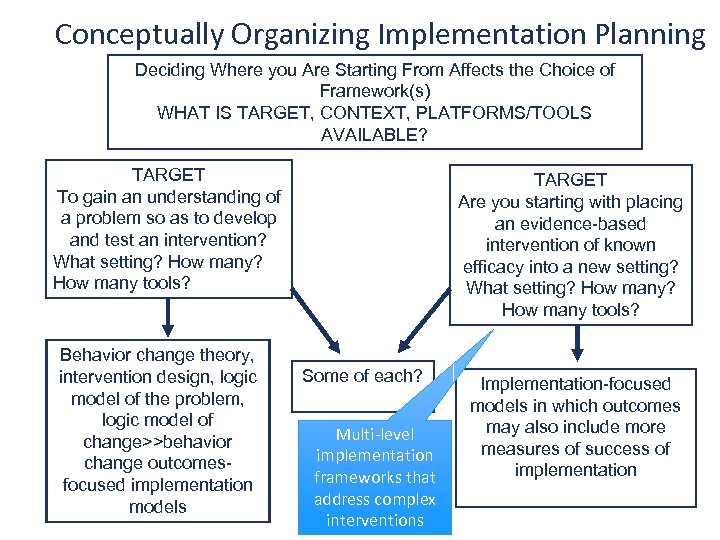 Conceptually Organizing Implementation Planning Deciding Where you Are Starting From Affects the Choice of Framework(s) WHAT IS TARGET, CONTEXT, PLATFORMS/TOOLS AVAILABLE? TARGET To gain an understanding of a problem so as to develop and test an intervention? What setting? How many tools? Behavior change theory, intervention design, logic model of the problem, logic model of change>>behavior change outcomesfocused implementation models TARGET Are you starting with placing an evidence-based intervention of known efficacy into a new setting? What setting? How many tools? Some of each? Multi-level implementation frameworks that address complex interventions Implementation-focused models in which outcomes may also include more measures of success of implementation
 Consolidated Framework for Implementation Research (CFIR) Outer Setting Inner Setting
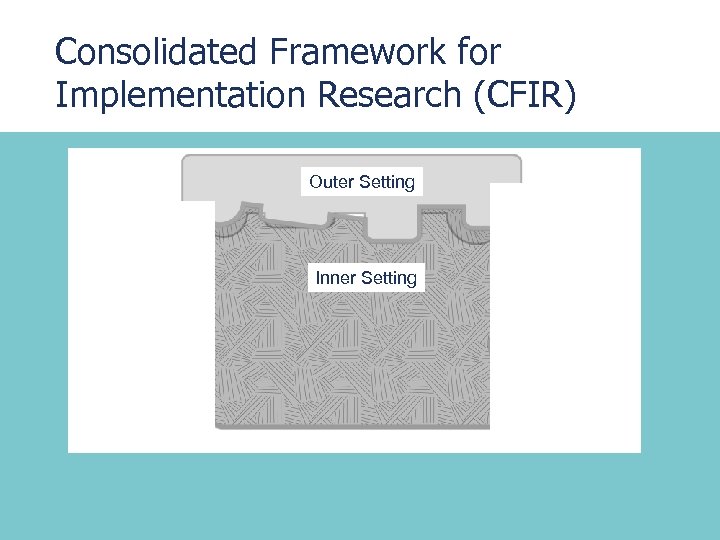 Consolidated Framework for Implementation Research (CFIR) Outer Setting Inner Setting
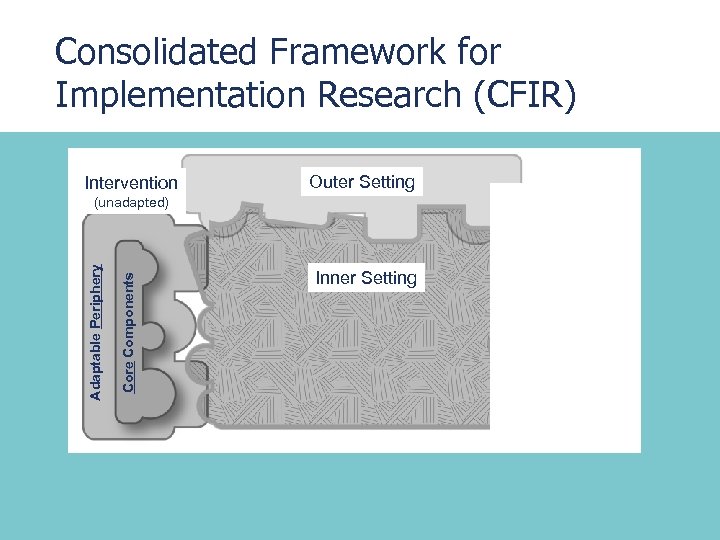 Consolidated Framework for Implementation Research (CFIR) Intervention Outer Setting Core Components Adaptable Periphery (unadapted) Inner Setting
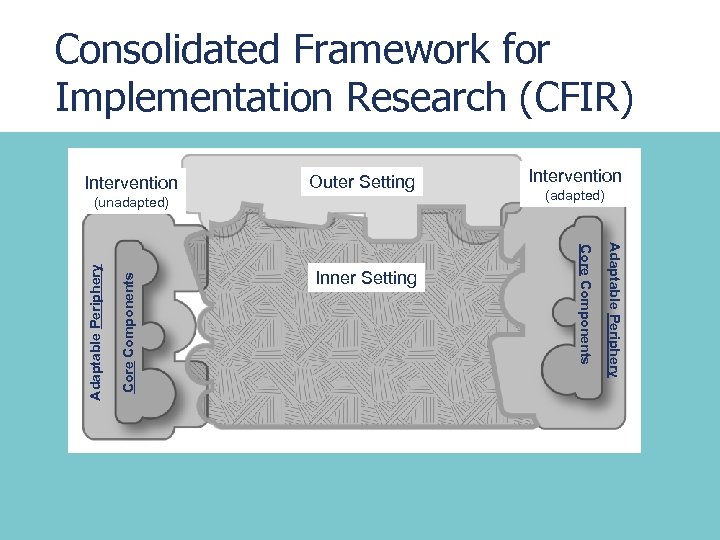 Consolidated Framework for Implementation Research (CFIR) Intervention Outer Setting Core Components Adaptable Periphery Inner Setting (adapted) Core Components Adaptable Periphery (unadapted) Intervention
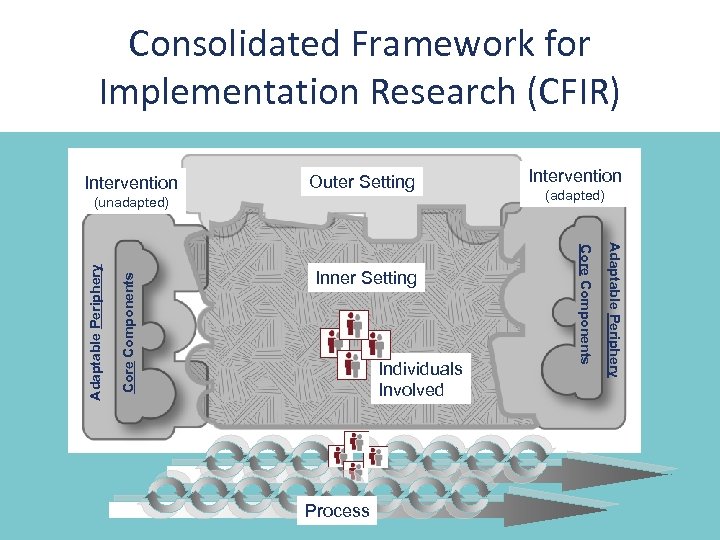 Consolidated Framework for Implementation Research (CFIR) Intervention Outer Setting Core Components Individuals Involved Process Adaptable Periphery Inner Setting (adapted) Core Components Adaptable Periphery (unadapted) Intervention
 Application of the CFIR • Consists of 39 individual constructs • Cannot use them all in every study – And not all will apply – A priori assessment of which constructs to include • Modifiable & non-modifiable constructs • Determine levels at which each construct may apply – E. g. , teams, departments, clinics, regions 22
 Example of Application of CFIR in Rural Kenya
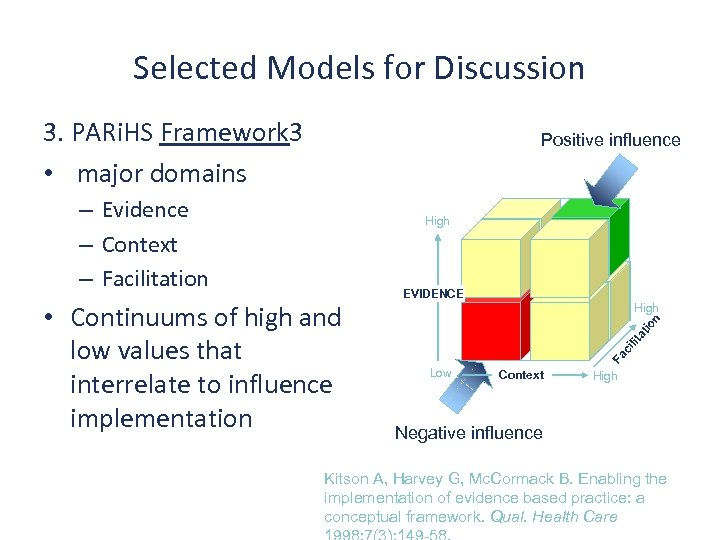 Selected Models for Discussion 3. PARi. HS Framework 3 • major domains Positive influence – Evidence – Context – Facilitation High ci lit at io n High Fa • Continuums of high and low values that interrelate to influence implementation EVIDENCE Low Context High Negative influence Kitson A, Harvey G, Mc. Cormack B. Enabling the implementation of evidence based practice: a conceptual framework. Qual. Health Care
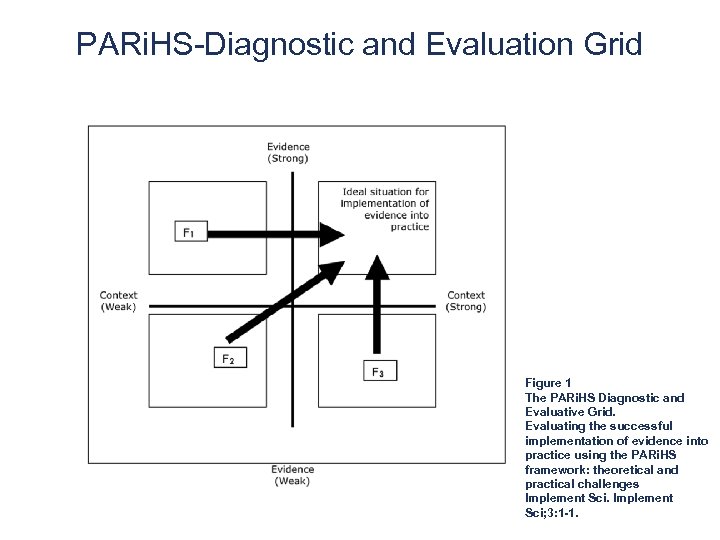 PARi. HS-Diagnostic and Evaluation Grid Figure 1 The PARi. HS Diagnostic and Evaluative Grid. Evaluating the successful implementation of evidence into practice using the PARi. HS framework: theoretical and practical challenges Implement Sci; 3: 1 -1.
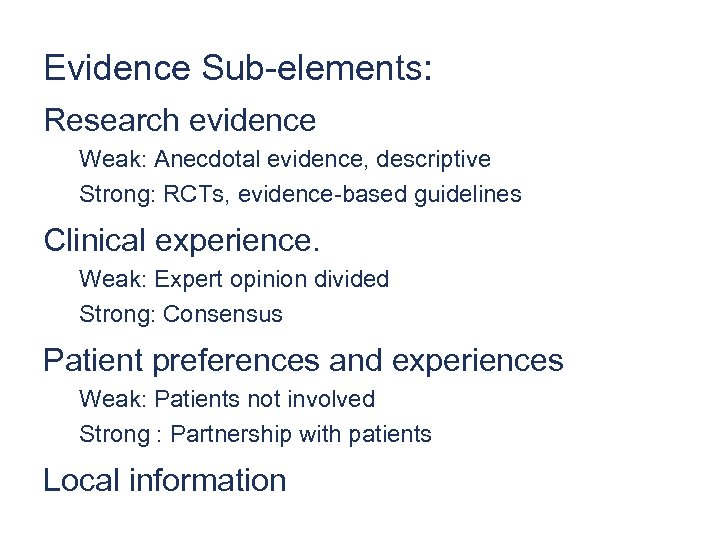 Evidence Sub-elements: Research evidence Weak: Anecdotal evidence, descriptive Strong: RCTs, evidence-based guidelines Clinical experience. Weak: Expert opinion divided Strong: Consensus Patient preferences and experiences Weak: Patients not involved Strong : Partnership with patients Local information
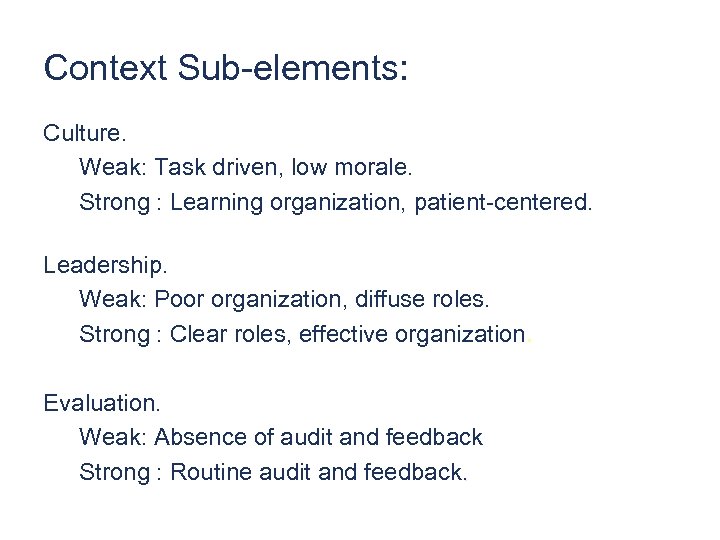 Context Sub-elements: Culture. Weak: Task driven, low morale. Strong : Learning organization, patient-centered. Leadership. Weak: Poor organization, diffuse roles. Strong : Clear roles, effective organization. Evaluation. Weak: Absence of audit and feedback Strong : Routine audit and feedback.
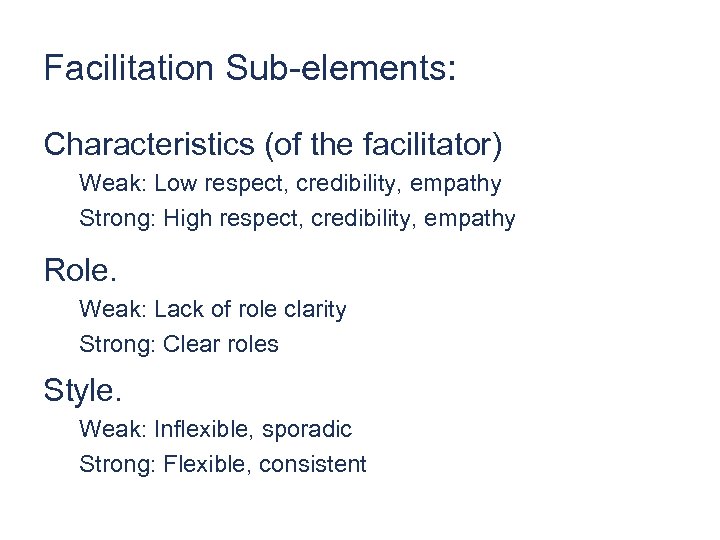 Facilitation Sub-elements: Characteristics (of the facilitator) Weak: Low respect, credibility, empathy Strong: High respect, credibility, empathy Role. Weak: Lack of role clarity Strong: Clear roles Style. Weak: Inflexible, sporadic Strong: Flexible, consistent
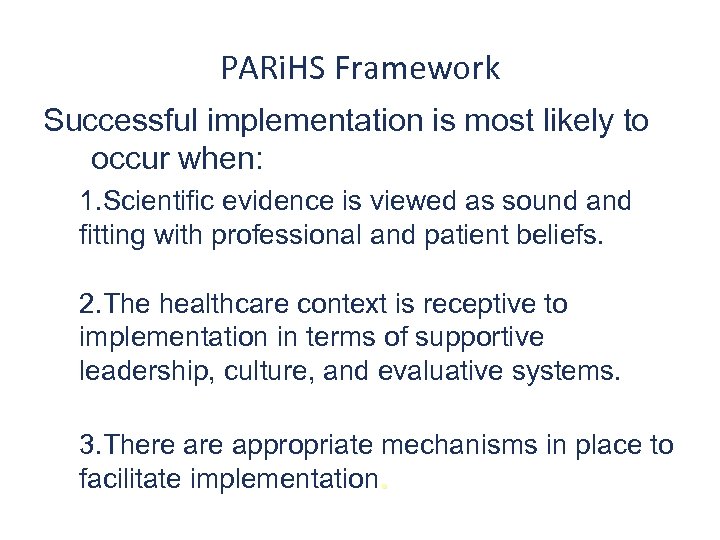 PARi. HS Framework Successful implementation is most likely to occur when: 1. Scientific evidence is viewed as sound and fitting with professional and patient beliefs. 2. The healthcare context is receptive to implementation in terms of supportive leadership, culture, and evaluative systems. 3. There appropriate mechanisms in place to facilitate implementation.

 Discussion
 Theoretical or Conceptual Framework – More specific and concrete than theory – Can usually be shown in a diagram/picture – “… could be populated by multiple theories, at multiple levels” (Kitson et al, 2008) CIPRS: Stetler & Damschroder Theoretical Frameworks
 Model – Represents a specific situation – Narrower in scope – More precise in their assumptions – including relationships (Kitson et a, 2008) – May be used interchangeably with “framework” (Sales, et al. , 2006) CIPRS: Stetler & Damschroder Theoretical Frameworks
 Why NOT Theory? • Just “use common sense” 1 – Using theory doesn’t make it any easier to judge applicability of evidence – It isn’t clear how to translate theory reliably to study design – So many theories why should any one of them be given supremacy? • BUT: “Common Sense” alone hasn’t worked so far… BUT – Trial & error approach – Reinventing the wheel – Cherry-picking interventions – Retrospectively trying to understand the black box CIPRS: Stetler & Damschroder Theoretical Frameworks 1. Bhattacharyya O, Reeves S, Garfinkel S, Zwarenstein M. Designing theoretically-informed implementation interventions: fine in theory, but evidence of effectiveness in practice is needed. Implement Sci 2006; 1: 5.
 Why “Theory”: Dual Objectives 1. Generalize knowledge about how to implement and sustain interventions – Facilitate systematic accumulation of generalizable knowledge • Across studies • Across settings • Across interventions • …other salient characteristics/factors 2. Replicate successful implementation • Help navigate complexity of implementation & sustainability • Tailor essential factors to fit the context From Damschroeder and Stetler 2011
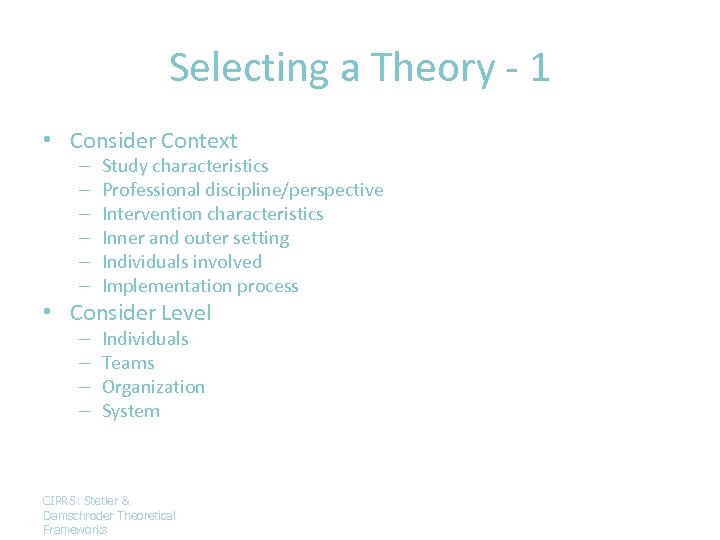 Selecting a Theory - 1 • Consider Context – – – Study characteristics Professional discipline/perspective Intervention characteristics Inner and outer setting Individuals involved Implementation process • Consider Level – – Individuals Teams Organization System CIPRS: Stetler & Damschroder Theoretical Frameworks
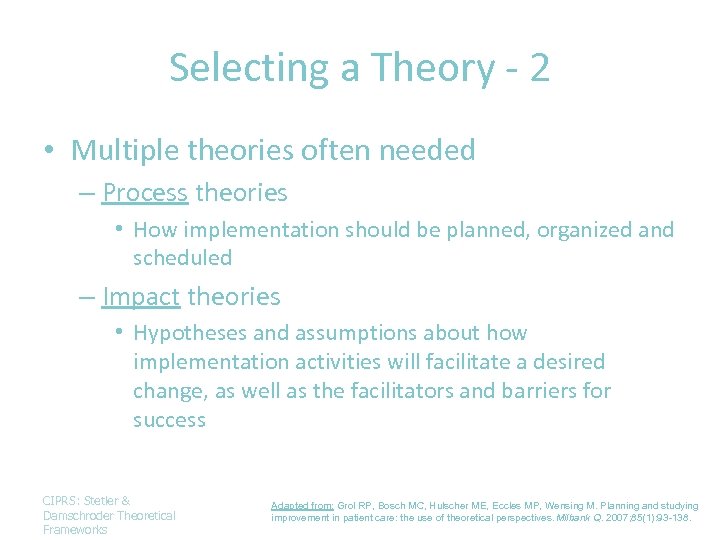 Selecting a Theory - 2 • Multiple theories often needed – Process theories • How implementation should be planned, organized and scheduled – Impact theories • Hypotheses and assumptions about how implementation activities will facilitate a desired change, as well as the facilitators and barriers for success CIPRS: Stetler & Damschroder Theoretical Frameworks Adapted from: Grol RP, Bosch MC, Hulscher ME, Eccles MP, Wensing M. Planning and studying improvement in patient care: the use of theoretical perspectives. Milbank Q. 2007; 85(1): 93 -138.
 Selecting & Using a Theoretical Framework CIPRS: Stetler/Damschroder, Theoretical Frameworks
![Uses/Potential Value [PDI*] • • • Provide a way of thinking about a study/project/implementation](https://present5.com/presentation/edef86539360f5cd149c3c89089b75ff/image-39.jpg "Uses/Potential Value [PDI*] • • • Provide a way of thinking about a study/project/implementation") Uses/Potential Value [PDI*] • • • Provide a way of thinking about a study/project/implementation Focus the user on what is important to the issue Understand your EB-innovation/ recommendation/change Develop a plan formative evaluation; e. g. , diagnostic analysis of barriers to and influences on using targeted best practices and applying an implementation strategy Select and tailor interventions to promote the use of evidence [Intervention mapping] Assist with operational definitions of intervention element CIPRS: Stetler & Damschroder Theoretical Frameworks • • Describe relationships among elements/constructs Guide development of hypotheses to test implementation science Identify concepts that may be of importance and need to be statistically controlled or tracked Help with measurement Facilitate interpretation re: influences and meanings Identify boundaries around the project/study Provide a framework for summarizing, reporting findings
Uses/Potential Value [PDI*] • • • Provide a way of thinking about a study/project/implementation Focus the user on what is important to the issue Understand your EB-innovation/ recommendation/change Develop a plan formative evaluation; e. g. , diagnostic analysis of barriers to and influences on using targeted best practices and applying an implementation strategy Select and tailor interventions to promote the use of evidence [Intervention mapping] Assist with operational definitions of intervention element CIPRS: Stetler & Damschroder Theoretical Frameworks • • Describe relationships among elements/constructs Guide development of hypotheses to test implementation science Identify concepts that may be of importance and need to be statistically controlled or tracked Help with measurement Facilitate interpretation re: influences and meanings Identify boundaries around the project/study Provide a framework for summarizing, reporting findings
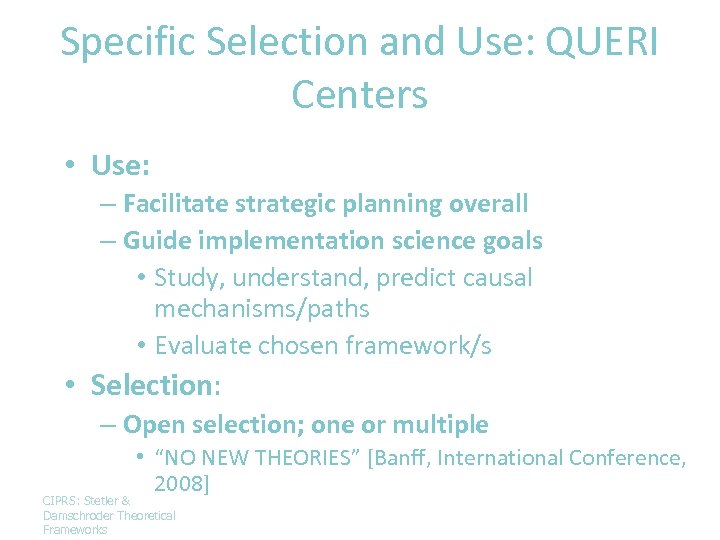 Specific Selection and Use: QUERI Centers • Use: – Facilitate strategic planning overall – Guide implementation science goals • Study, understand, predict causal mechanisms/paths • Evaluate chosen framework/s • Selection: – Open selection; one or multiple • “NO NEW THEORIES” [Banff, International Conference, 2008] CIPRS: Stetler & Damschroder Theoretical Frameworks
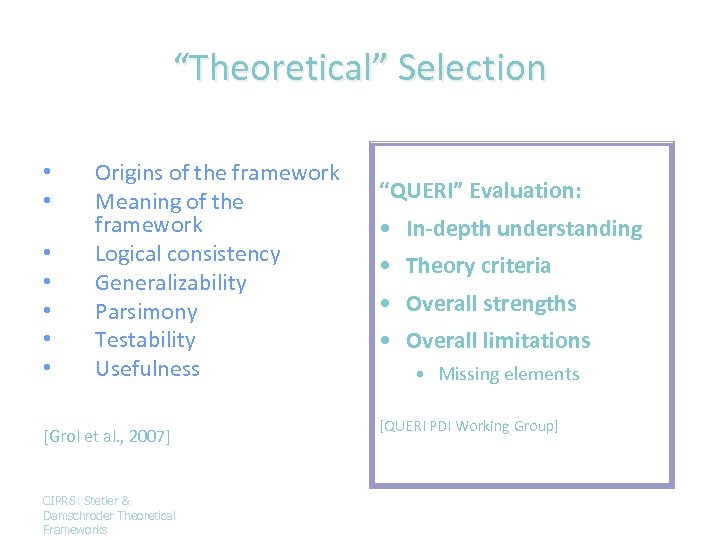 “Theoretical” Selection • • Origins of the framework Meaning of the framework Logical consistency Generalizability Parsimony Testability Usefulness [Grol et al. , 2007] CIPRS: Stetler & Damschroder Theoretical Frameworks “QUERI” Evaluation: • In-depth understanding • Theory criteria • Overall strengths • Overall limitations • Missing elements [QUERI PDI Working Group]
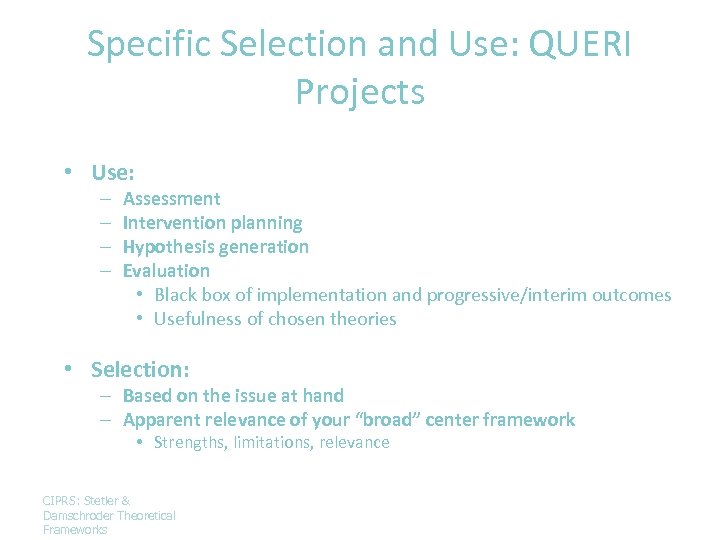 Specific Selection and Use: QUERI Projects • Use: – – Assessment Intervention planning Hypothesis generation Evaluation • Black box of implementation and progressive/interim outcomes • Usefulness of chosen theories • Selection: – Based on the issue at hand – Apparent relevance of your “broad” center framework • Strengths, limitations, relevance CIPRS: Stetler & Damschroder Theoretical Frameworks
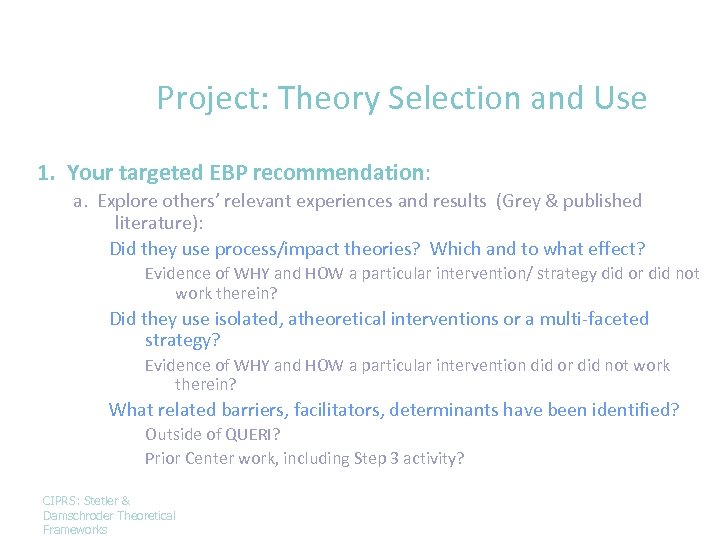 Project: Theory Selection and Use 1. Your targeted EBP recommendation: a. Explore others’ relevant experiences and results (Grey & published literature): Did they use process/impact theories? Which and to what effect? Evidence of WHY and HOW a particular intervention/ strategy did or did not work therein? Did they use isolated, atheoretical interventions or a multi-faceted strategy? Evidence of WHY and HOW a particular intervention did or did not work therein? What related barriers, facilitators, determinants have been identified? Outside of QUERI? Prior Center work, including Step 3 activity? CIPRS: Stetler & Damschroder Theoretical Frameworks
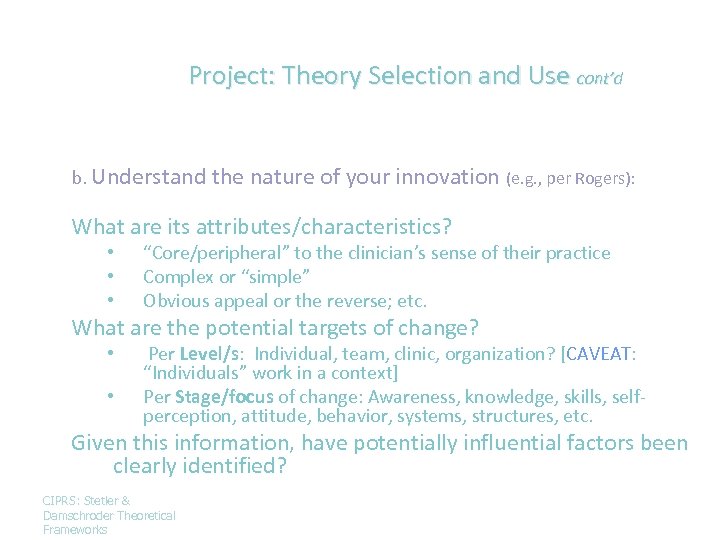 Project: Theory Selection and Use cont’d b. Understand the nature of your innovation (e. g. , per Rogers): What are its attributes/characteristics? • • • “Core/peripheral” to the clinician’s sense of their practice Complex or “simple” Obvious appeal or the reverse; etc. What are the potential targets of change? • • Per Level/s: Individual, team, clinic, organization? [CAVEAT: “Individuals” work in a context] Per Stage/focus of change: Awareness, knowledge, skills, selfperception, attitude, behavior, systems, structures, etc. Given this information, have potentially influential factors been clearly identified? CIPRS: Stetler & Damschroder Theoretical Frameworks
 Project: Theory Selection and Use cont’d 2. Choose “ 2” implementation theories to “try” as a “way of thinking” about your particular issue: – – 3. Per your general knowledge of their focus and or prior use Per their strengths, limitations, potential usefulness for your issue Assess “fit” of these various frameworks and make selection/s of one or more, as appropriate CIPRS: Stetler & Damschroder Theoretical Frameworks
 4. Plan your implementation project in context of the selected framework a. Define relevant terms • • Conceptually Operationally /measurement and/or actions b. Develop formative evaluation questions/tools [E. g. , if PARIHSrelated] • • Local diagnostic analysis: E. g. , assess likely barriers (How do stakeholders perceive the attributes of the expected change? ) Implementation-focused: E. g. , actual barriers (To what extent does leadership actually support the new practice or adoption efforts? ) Progress-focused: E. g. , interim staff performance on the new, expected innovation (Relates to designated outcomes or “successful implementation”) Theoretical/Interpretive: E. g. , to what extent did the framework provide an adequate description of results and related influential factors? (Were any significant factors missing? ) CIPRS: Stetler & Damschroder Theoretical Frameworks
 4. Plan… cont’d c. Select interventions, per theory/theories and in light of: • • • Expected barriers Prior studies’ findings Local diagnostic data (Simple example: Complex E-B delivery system) • d. Per PARIHS model, consider use of an external facilitator & routine audit/feedback system; based on identified concerns of clinicians regarding strength of the evidence, additionally use social marketing actions/theory; based on prior similar study findings, use other “facilitation” techniques such as clinical reminder. Identify “theory-related” hypotheses to be tested • (Simple example: Complex E-B delivery system) Test hypothesis that sites with an external facilitator will be more successful than comparison sites under analogous conditions of limited resources and passive leadership. CIPRS: Stetler & Damschroder Theoretical Frameworks
 Challenges of Understanding the Black Box • Implementation theories under-studied – May be “borrowed” – Few have been critically analyzed for strengths/limitations • Measurement tools limited • Published studies use of theory often unclear or absent CIPRS: Stetler & Damschroder Theoretical Frameworks