


 Скачать презентацию A Culturally Adapted Intervention to Treat Depression and
5cb620df8e45e36b1ca8a931c4a462e4.ppt
- Количество слайдов: 42
 A Culturally Adapted Intervention to Treat Depression and ART Nonadherence on the U. S. -Mexico Border: Feasibility and Initial Results from a Pilot RCT Jane M. Simoni Department of Psychology, University of Washington John S. Wiebe, John A. Sauceda, Giselle Sanchez, Virginia Longoria, C. Andres Bedoya, Steven A. Safren IAPAC/NIMH 6 th International Conference on HIV Treatment and Prevention Adherence Miami, FL May 22 -24 , 2011
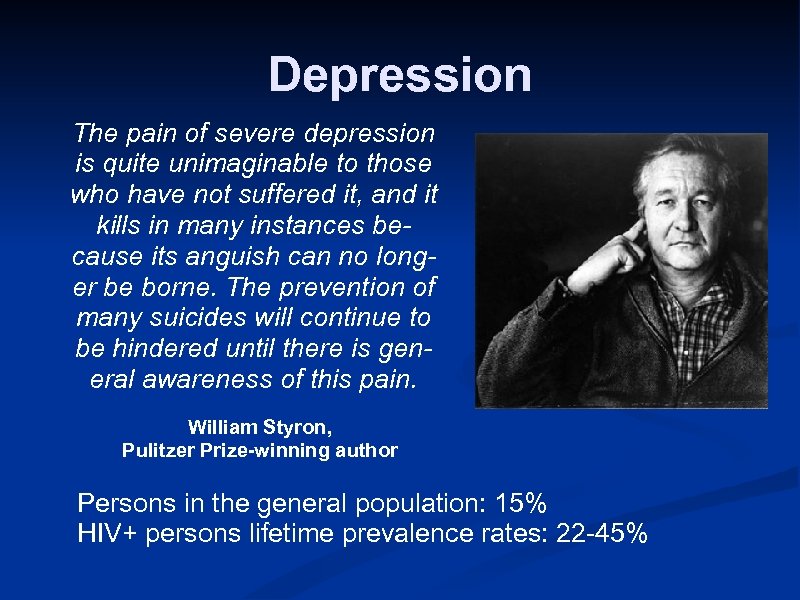 Depression The pain of severe depression is quite unimaginable to those who have not suffered it, and it kills in many instances because its anguish can no longer be borne. The prevention of many suicides will continue to be hindered until there is general awareness of this pain. William Styron, Pulitzer Prize-winning author Persons in the general population: 15% HIV+ persons lifetime prevalence rates: 22 -45%
 Depression and Nonadherence • Depression predicts nonadherence across various medical conditions, including HIV (Catz, Kelly, Bogart, Benotsch, & Mc. Auliffe, 2000; Di. Matteo, Lepper, & Croghan, 2000; Gordillo, del Amo, Soriano, & Gonzalez-Lahoz, 1999; Holzemer, 1999). • Safren et al. (2001) found that depressive symptomatology was negatively associated with adherence over and above additional psychosocial predictors (i. e. , social support, adherence selfefficacy, and punishment beliefs about HIV).
 • The association between depression and adherence may be due to the symptoms of depression themselves (e. g. , sadness, poor concentration, psychomotor retardation, suicidal ideation) or to the associated impairments in problem-solving and coping that can be secondary to depression (Safren, Radomsky, Otto, & Salomon, 2002).
 Depression also linked to… • Symptoms of HIV infection (Roberts, 2000) • Higher viral load or lower CD 4+ cell count (Arnsten et al. , 2001; Bangsberg et al. , 2000; Burack et al. , 1993; Catz et al. , 2000; Chan et al. , 2003; Gifford et al. , 2000; Paterson et al. , 2000) • HIV disease progression (Alciati, Gallo, Monforte, Brambilla, & Mellado, 2007; Burack et al. , 1993; Leserman et al. , 1999; Leserman et al. , 2002; Page. Shafer, Delorenze, Satariano, & Winkelstein, 1996) • Shorter survival time (Ickovics et al. , 2001; Lima et al. , 2007; Mayne, Vittinghoff, Chesney, Barrett, & Coates, 1996).
 Preliminary Work In the border region, about 33% of Latinos living with HIV had a diagnosable mood disorder, predominantly major depression.
 U. S. - Mexico Border • The border area is dramatically underserved by mental health care providers, particularly at the doctoral level. • Well-defined, manualized psychosocial treatments can be effectively applied by paraprofessional counselors or health care providers with primary training in other areas. • There are virtually no well-defined, linguistically and culturally appropriate, empirically supported psychosocial treatment approaches for depression and nonadherence in Latinos.
 Safren’s Cognitive-Behavioral Therapy for Adherence and Depression • CBT-AD is an EBI that addresses the association between depressive symptomatology and poor ART adherence. • The model hypothesizes that decreasing depression will directly affect biomedical outcomes of VL and CD 4 count and indirectly affect them through adherence by improving problem-solving skills, motivation, and memory.
 CBT-AD in HIV • Orientation to Cognitive Behavioral Model of Depression • Motivational Interviewing • Life Steps o Adherence-focused (e. g. , communication, cue control) • Activity Scheduling • Adaptive Thinking (Cognitive Restructuring) • Problem Solving • Relaxation Training and Diaphragmatic Breathing • Review, Maintenance, and Relapse Prevention
 CDC Map of Adaptation Process • A systematic approach for adapting evidence-based behavioral interventions. • This model incorporates input from community members and agencies, and experiences of experts both in research and the target population by integrating continuous feedback through the adaptation process.
 Action Steps • Action Step 1: Assess factors associated with depression in Latinos living with HIV, identify current evidenced based interventions (EBIs) used in this population, and recruit stakeholders and community agencies for guidance and ideas. • Action Step 2: Select CBT-AD and develop plan for linguistic and cultural appropriateness through qualitative data. • Action Step 3: Modify CBT-AD model with information from CABs, consultants, and focus groups, and pre-test all Spanish-language materials. • Action Step 4: Test the feasibility of the intervention.
 Community Advisory Boards • Scientific and Administrative CAB – medical and social service providers, clinic administrators, researchers from both sides of the border • Patient CAB – six patients recruited by social workers at La Fe CARE Center • Semi-annual meetings • Simultaneous interpretation
 Qualitative Pilot Work • Three focus group were conducted in Spanish. • Groups comprised: o Adult females living with HIV/AIDS o Adult gay-identified males living with HIV/AIDS o Treatment experienced adults living with HIV/AIDS • Qualitative analysis was conducted with Atlas. ti software and was guided by the principles of the grounded theory method (GTM). • Analysis was conducted in Spanish, and illustrative quotes were translated to English for presentation.
 Qualitative Findings • Issues related to disclosure, depression and adherence were common to all groups. • Financial stress was related to ability to buy medications, pay for medical services and access transportation (median annual household income in this clinic was <$10, 000).
 Qualitative Findings - II • Women expressed more difficulty in living with HIV as a results of being infected by spouses, and feeling prohibited from disclosing. Issues related to physical appearance were common. • Psychosocial intervention efforts may benefit from inclusion of culturally-specific issues and attention to disclosure, stigma, family relationships, and their impact on adherence.
 Adaptation • Content: Informally assess how relevant culturally specific domains may be, identify most salient concerns, and explore how these overlap with depression and adherence so as to begin working from the same narrative. • Process: Incorporate traditional Latino values (respeto, confianza, personalismo, familismo) and apply them to interaction with clients throughout the intervention.
 Cultural Exploration Session. . . Layers of stigma • Disclosure issues • Stigma and discrimination • Family issues • Social support • Religion and spirituality
 Adaptation Both to Hispanic culture and low SES of our patients: • Increasing relevance of behavioral activation. low or no cost options that are culturally relevant (e. g. , playing "lotería“) and incorporate family interactions, “other” focused activities that may also bring pleasure or mastery (e. g. , cooking for family members, volunteering one’s time, donating used items to charity). • Adapting stories and metaphors (parenting or spirituality rather than baseball). • “Adaptive thinking” and “rational response” concepts incorporate relevant information gathered during cultural exploration session. • Simplifying terminology of cognitive restructuring. • Using session time to complete homework.
 Strategies • Adapt an empirically supported cognitive-behavioral therapy program (Safren et al. , 2009) for HIV medication adherence and symptoms of depression (CBT-AD) o Weekly sessions every week for 4 months o Two booster sessions at months 5 and 6 o Modules § Psycho-education, motivational interviewing § Adherence training § Cognitive restructuring § Relaxation training & diaphragmatic breathing • Train local non-professionals to deliver the treatment • Pilot test the intervention
 Method • Participants from Centro de Salud Familiar la Fe CARE Center, Inc. • Inclusion Criteria: o Age > 18 o Prescribed HAART for at least 30 days o Mexican ancestry o Evidence of depression and nonadherence • Exclusion Criteria: o Advanced dementia o Active psychosis o Hard drug use in the last month
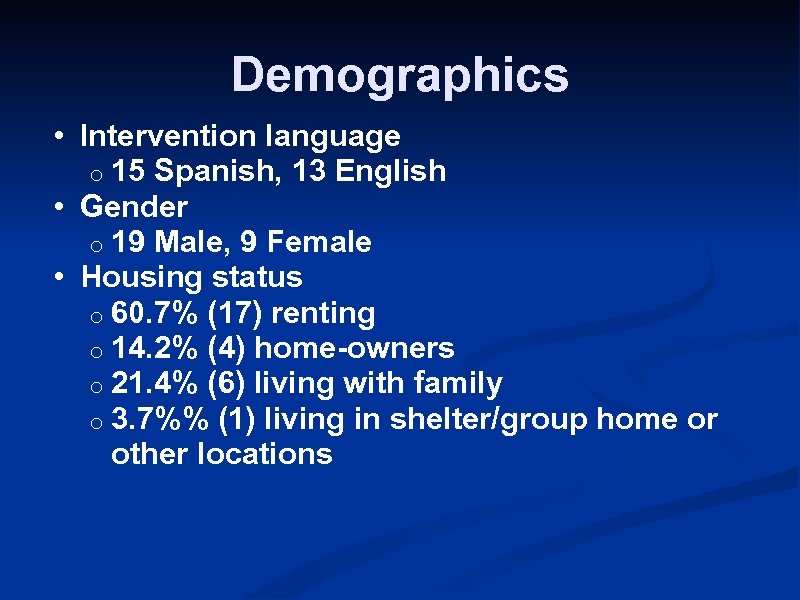 Demographics • Intervention language o 15 Spanish, 13 English • Gender o 19 Male, 9 Female • Housing status o 60. 7% (17) renting o 14. 2% (4) home-owners o 21. 4% (6) living with family o 3. 7%% (1) living in shelter/group home or other locations
 • Employment Status o 60. 7% (17) Not currently employed o 10. 7% (3) working odd jobs o 28. 6% (8) working part-time o 0% working full-time • Relationship Status o 64. 2% (18) were not in a committed relationship, 35. 8% (10) were in a committed relationship. • Religious Preference o 71. 4% (20) Catholic o 10. 7% (3) Other Christian o 7. 2% (2) do not identify with any religion o 10. 7% (3) other
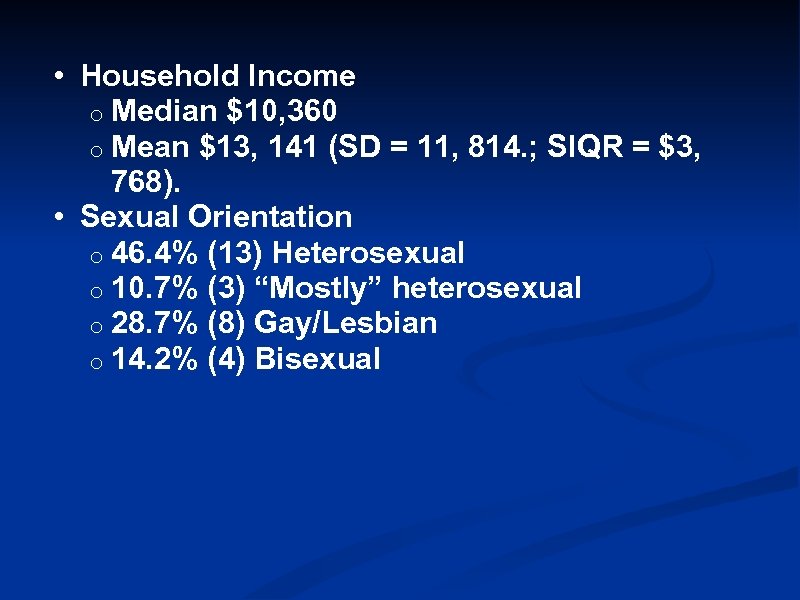 • Household Income o Median $10, 360 o Mean $13, 141 (SD = 11, 814. ; SIQR = $3, 768). • Sexual Orientation o 46. 4% (13) Heterosexual o 10. 7% (3) “Mostly” heterosexual o 28. 7% (8) Gay/Lesbian o 14. 2% (4) Bisexual
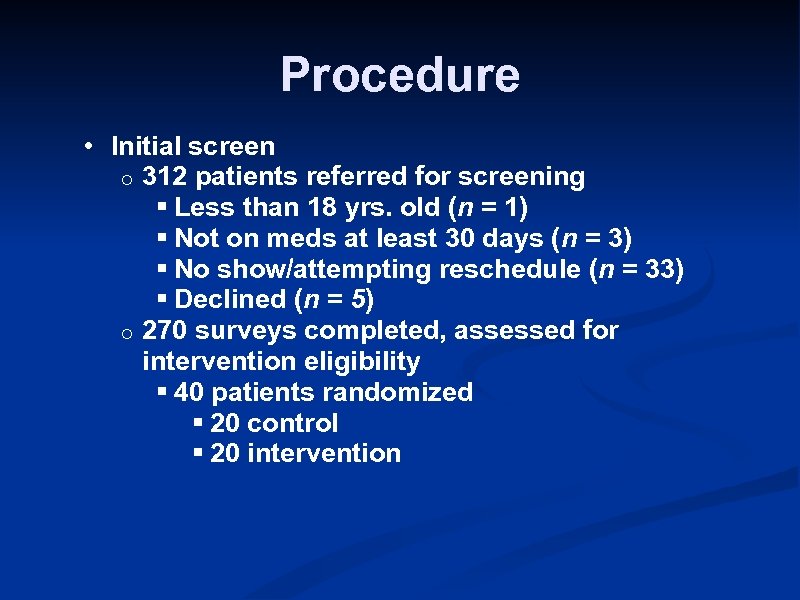 Procedure • Initial screen o 312 patients referred for screening § Less than 18 yrs. old (n = 1) § Not on meds at least 30 days (n = 3) § No show/attempting reschedule (n = 33) § Declined (n = 5) o 270 surveys completed, assessed for intervention eligibility § 40 patients randomized § 20 control § 20 intervention
 Control Condition • Treatment as usual • Adherence monitoring • Monthly check-ins • Letter to primary care physician
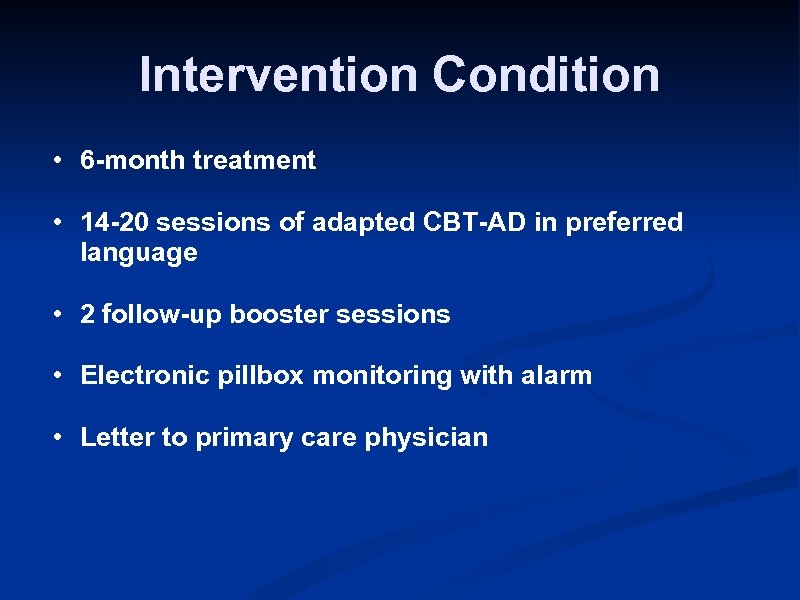 Intervention Condition • 6 -month treatment • 14 -20 sessions of adapted CBT-AD in preferred language • 2 follow-up booster sessions • Electronic pillbox monitoring with alarm • Letter to primary care physician
 Interviewing & Reimbursement Schedule • Screening interview/ questionnaire: $20 • Run-in procedure/second interview: $20 at baseline • Each therapy session: $20 • Qualitative and quantitative measures at 6 and 9 month follow ups: $20 each • Return of pillbox: $20 • Intervention participants earned a total of $240 -$300, depending on the number of sessions.
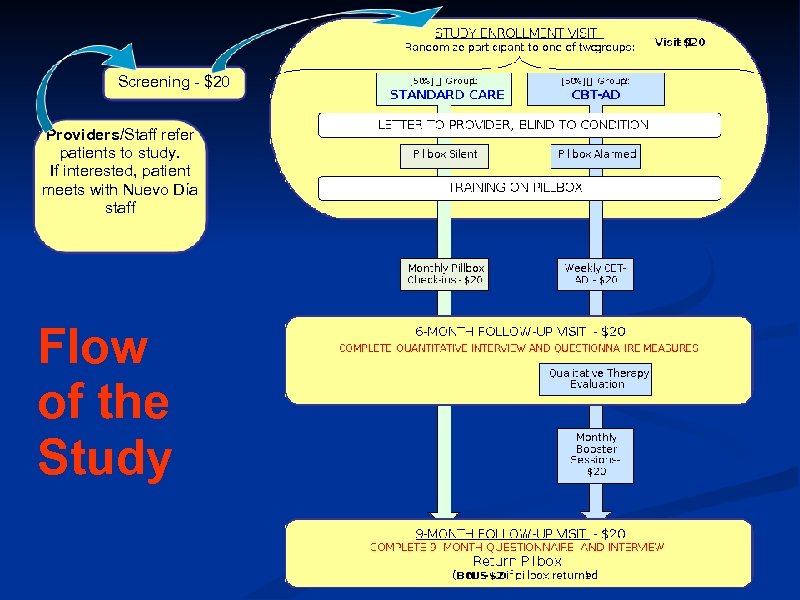 Screening - $20 Providers/Staff refer patients to study. If interested, patient meets with Nuevo Día staff Flow of the Study
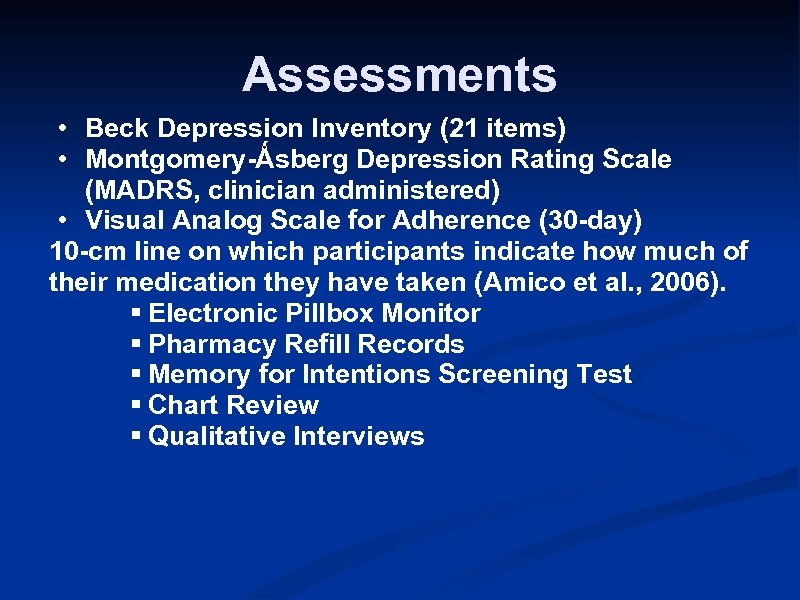 Assessments • Beck Depression Inventory (21 items) • Montgomery-Ǻsberg Depression Rating Scale (MADRS, clinician administered) • Visual Analog Scale for Adherence (30 -day) 10 -cm line on which participants indicate how much of their medication they have taken (Amico et al. , 2006). § Electronic Pillbox Monitor § Pharmacy Refill Records § Memory for Intentions Screening Test § Chart Review § Qualitative Interviews
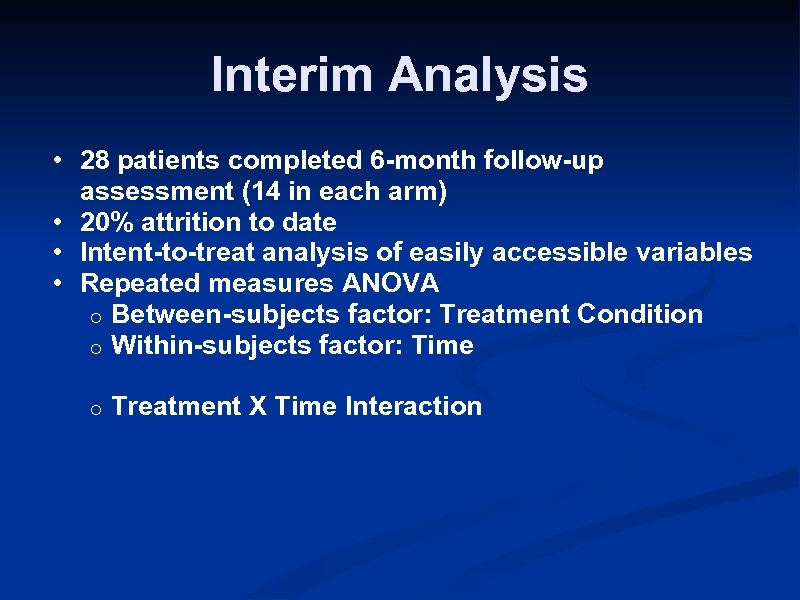 Interim Analysis • 28 patients completed 6 -month follow-up assessment (14 in each arm) • 20% attrition to date • Intent-to-treat analysis of easily accessible variables • Repeated measures ANOVA o Between-subjects factor: Treatment Condition o Within-subjects factor: Time o Treatment X Time Interaction
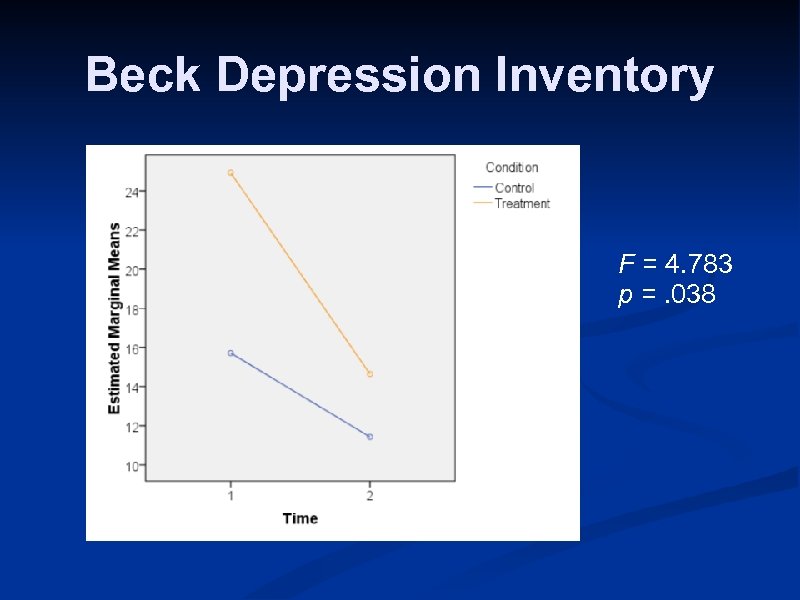 Beck Depression Inventory F = 4. 783 p =. 038
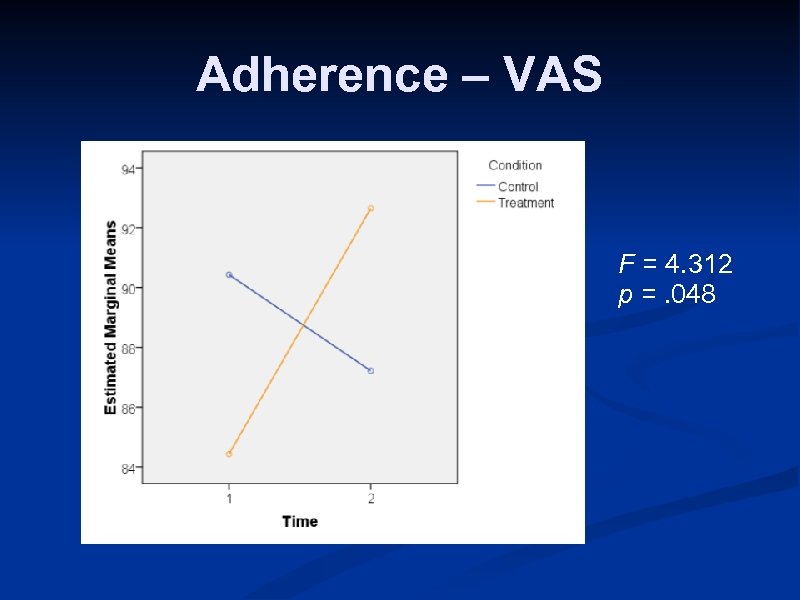 Adherence – VAS F = 4. 312 p =. 048
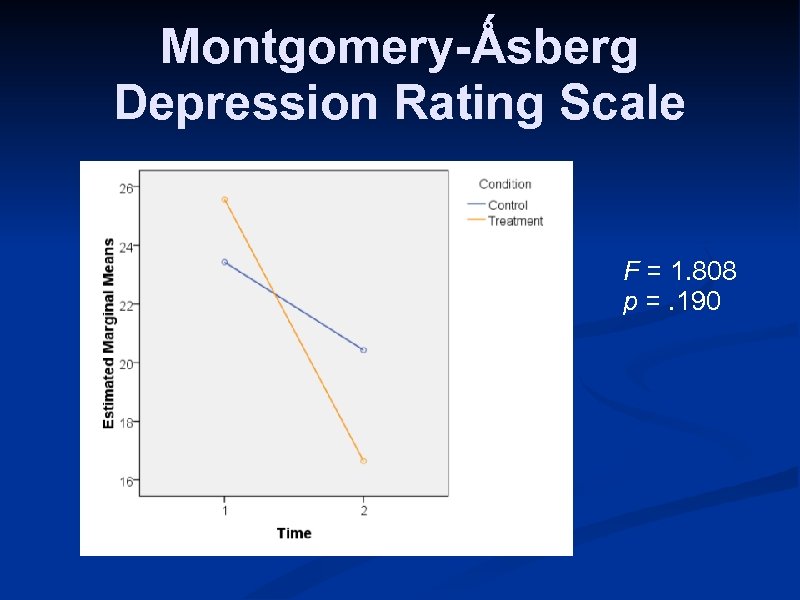 Montgomery-Ǻsberg Depression Rating Scale F = 1. 808 p =. 190
 Conclusions • Can adapt an intervention developed and tested in a non-Hispanic White context for Latinos on the border o Intervention feasible, with high interest and low attrition • Challenges: o Literacy and language issues with some CBT content and homework • Must take into account context: stigma of HIV and homosexuality, importance of family and religion, multiple other stressors • Can train graduate students to implement therapy
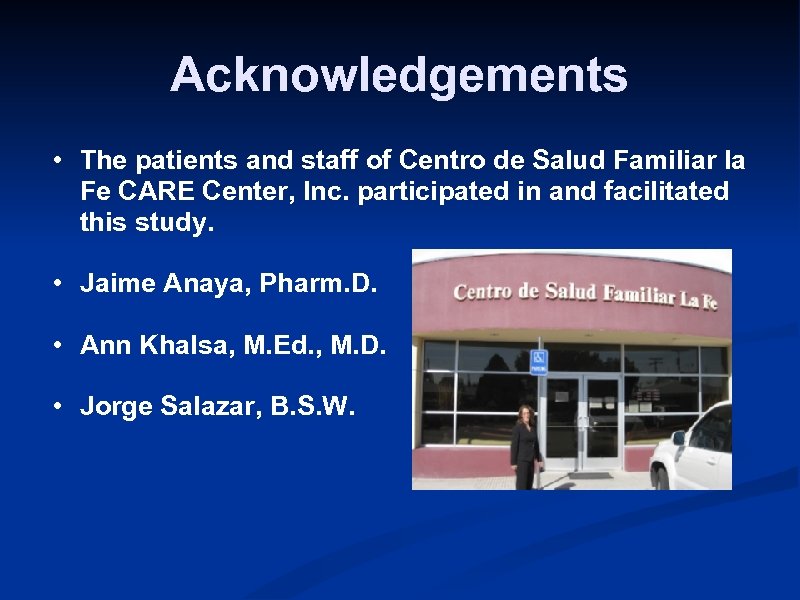 Acknowledgements • The patients and staff of Centro de Salud Familiar la Fe CARE Center, Inc. participated in and facilitated this study. • Jaime Anaya, Pharm. D. • Ann Khalsa, M. Ed. , M. D. • Jorge Salazar, B. S. W.
 Acknowledgments • Jane Simoni, Ph. D. , PI and Professor of Psychology, University of Washington • John S. Wiebe, Ph. D. Site PI and Assoc Professor of Psychology, UTEP • UW staff and graduate students: Samantha Yard, David Huh, Kimberly Nelson • NIMH funding (R 34 MH 084674 and MH 084674 -S) and NIH project officer Michael Stirratt
 Consultants • Steve Safren, Ph. D. , Harvard University and Massachusetts General Hospital • Andrés Bedoya, Ph. D. , Harvard University and Massachusetts General Hospital • Kurt Organista, Ph. D. , University of California, Berkley • Steffanie Strathdee, Ph. D. , University of California, San Diego • Karina Walters, M. S. W. , Ph. D. , University of Washington
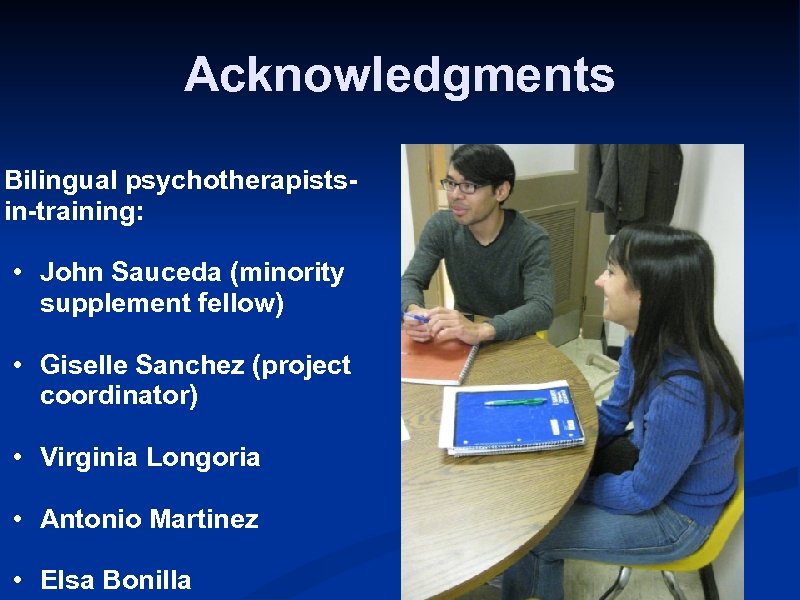 Acknowledgments Bilingual psychotherapistsin-training: • John Sauceda (minority supplement fellow) • Giselle Sanchez (project coordinator) • Virginia Longoria • Antonio Martinez • Elsa Bonilla
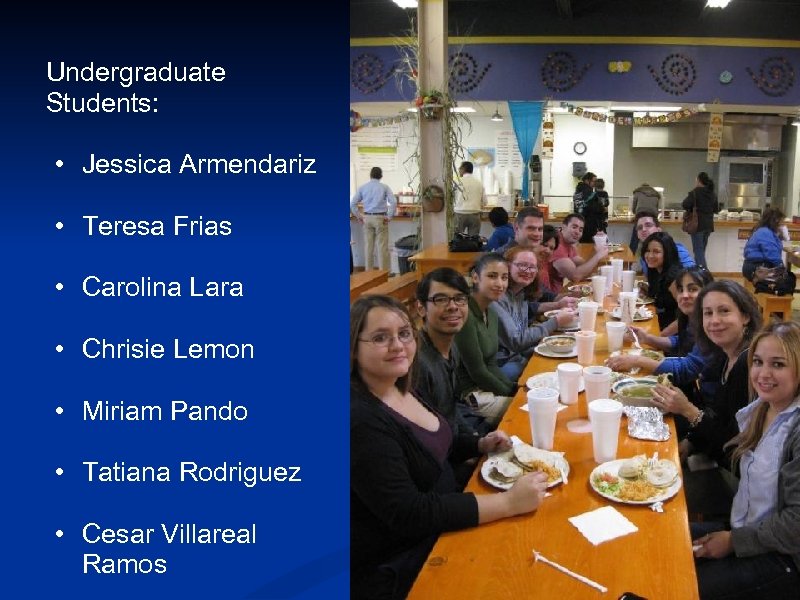 Undergraduate Students: • Jessica Armendariz • Teresa Frias • Carolina Lara • Chrisie Lemon • Miriam Pando • Tatiana Rodriguez • Cesar Villareal Ramos
 Thank you
 Jane M. Simoni, Ph. D. University of Washington Seattle, WA jsimoni@uw. edu For copies of this presentation or to join the adherence listserv
 End of presentation