


 Скачать презентацию A Climate Angle on Uncertainty in Salmon Recovery
44ff09389473a40edbeb58334b6548f9.ppt
- Количество слайдов: 21
 A Climate Angle on Uncertainty in Salmon Recovery Scenarios Nate Mantua Ph D Joint Institute for the Study of the Atmosphere and Oceans University of Washington
 Key Points • Spatial variability: – Complex topography in PS region yields complex spatial patterns of hydro-climate • Temporal variability: – Climate and weather variations cause habitat variations at time scales from days to decades • Salmon in the future? – Don’t buy into long-term climate predictions! – Careful considerations of climate uncertainty will help paint more realistic pictures of the true uncertainty in recovery scenarios
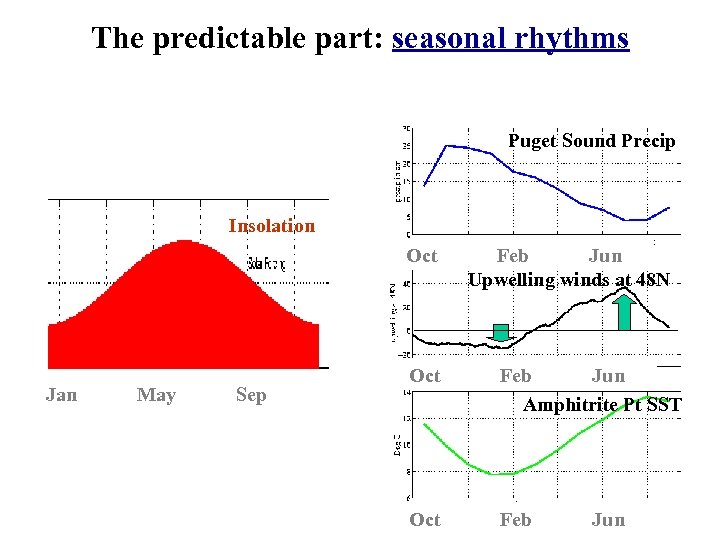 The predictable part: seasonal rhythms Puget Sound Precip Insolation Oct Jan May Sep Feb Jun Upwelling winds at 48 N Oct Feb Jun Amphitrite Pt SST Oct Feb Jun
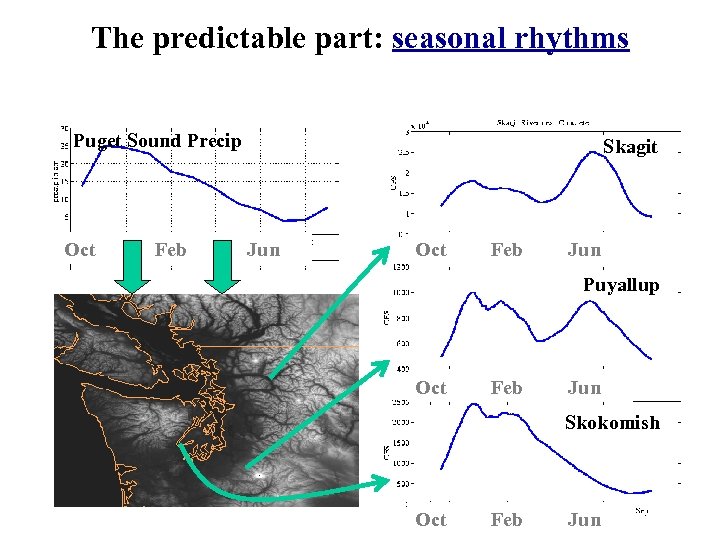 The predictable part: seasonal rhythms Puget Sound Precip Oct Feb Skagit Jun Oct Feb Jun Puyallup Oct Feb Jun Skokomish Oct Feb Jun
 Why is climate important? • salmon have successfully colonized and occupied each stream type (snow-melt, runoff, and everything in-between) – Different stocks employ distinct life history behaviors tuned to the predictable seasonal rhythms – “stability” and “variability” of seasonal climate and environmental changes have obviously played a role in shaping salmon behavior at the stock level
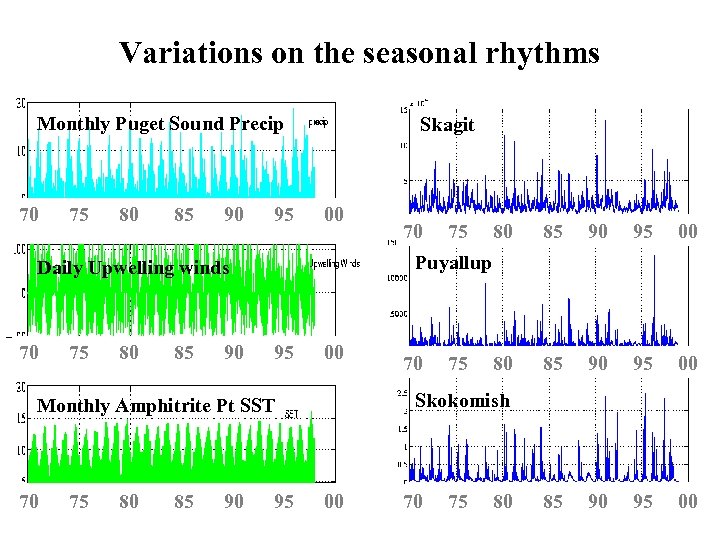 Variations on the seasonal rhythms Monthly Puget Sound Precip 70 75 80 85 90 95 Skagit 00 75 80 85 90 95 00 95 70 75 80 85 90 95 00 Skokomish Monthly Amphitrite Pt SST 70 75 Puyallup Daily Upwelling winds 70 70 00 70 75 80
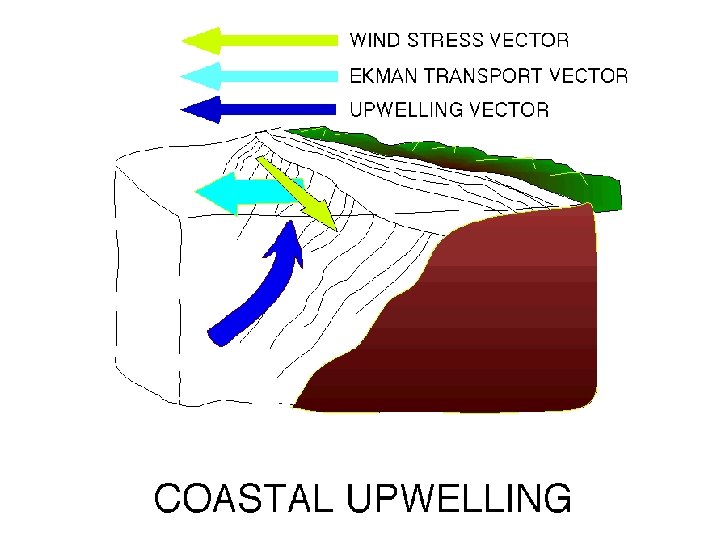
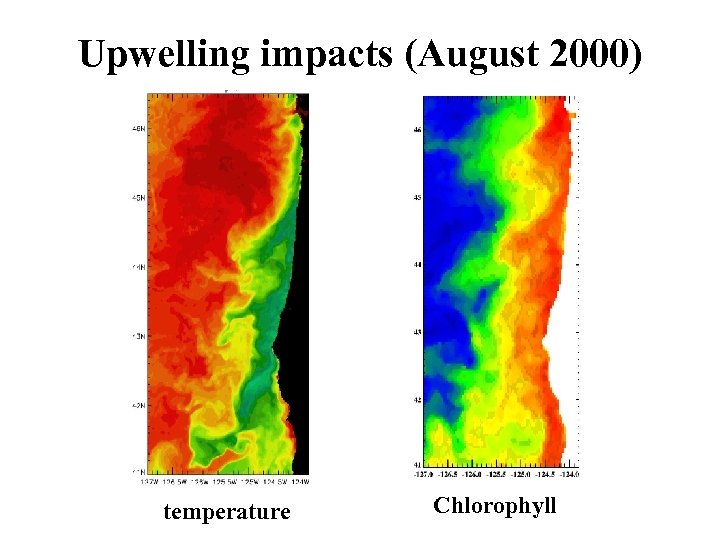 Upwelling impacts (August 2000) temperature Chlorophyll
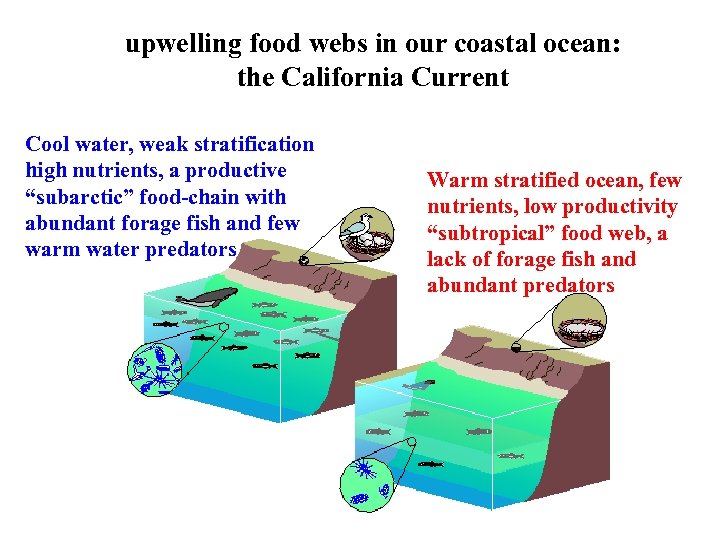 upwelling food webs in our coastal ocean: the California Current Cool water, weak stratification high nutrients, a productive “subarctic” food-chain with abundant forage fish and few warm water predators Warm stratified ocean, few nutrients, low productivity “subtropical” food web, a lack of forage fish and abundant predators
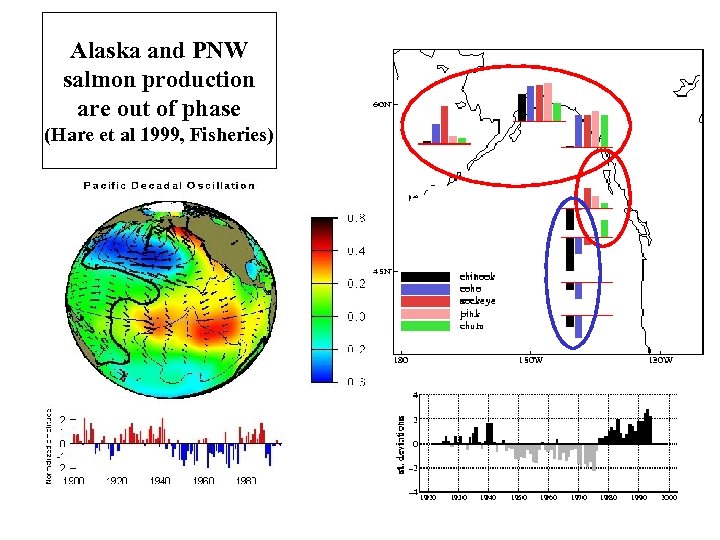 Alaska and PNW salmon production are out of phase (Hare et al 1999, Fisheries)
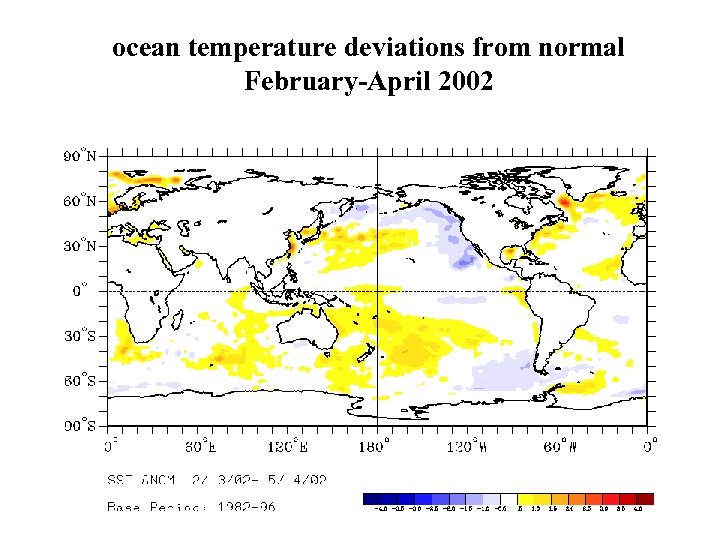
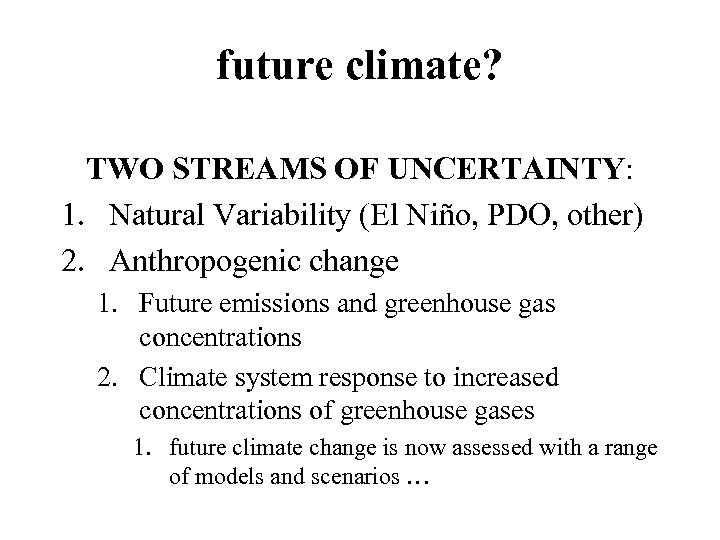 future climate? TWO STREAMS OF UNCERTAINTY: 1. Natural Variability (El Niño, PDO, other) 2. Anthropogenic change 1. Future emissions and greenhouse gas concentrations 2. Climate system response to increased concentrations of greenhouse gases 1. future climate change is now assessed with a range of models and scenarios …
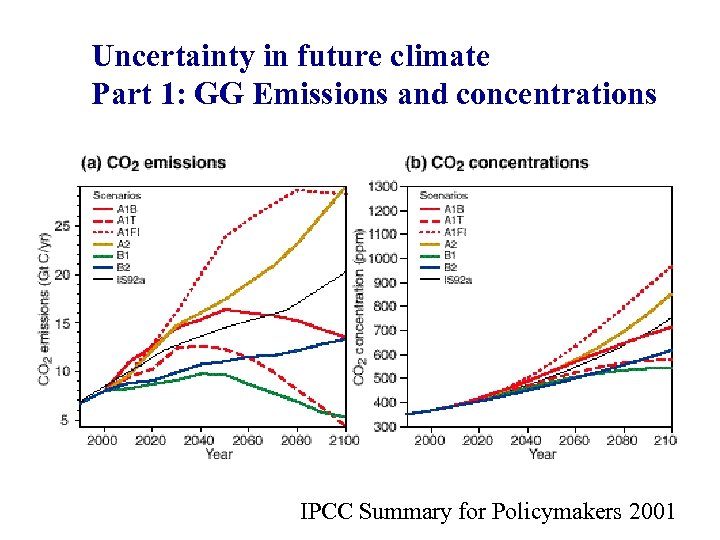 Uncertainty in future climate Part 1: GG Emissions and concentrations IPCC Summary for Policymakers 2001
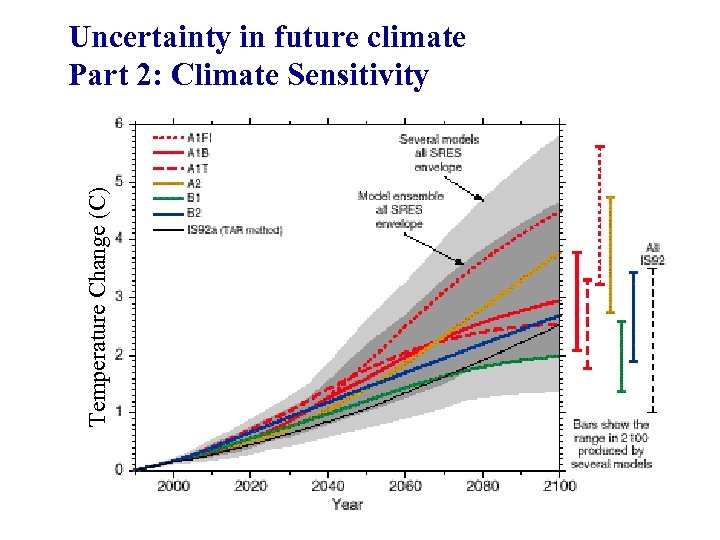 Temperature Change (C) Uncertainty in future climate Part 2: Climate Sensitivity
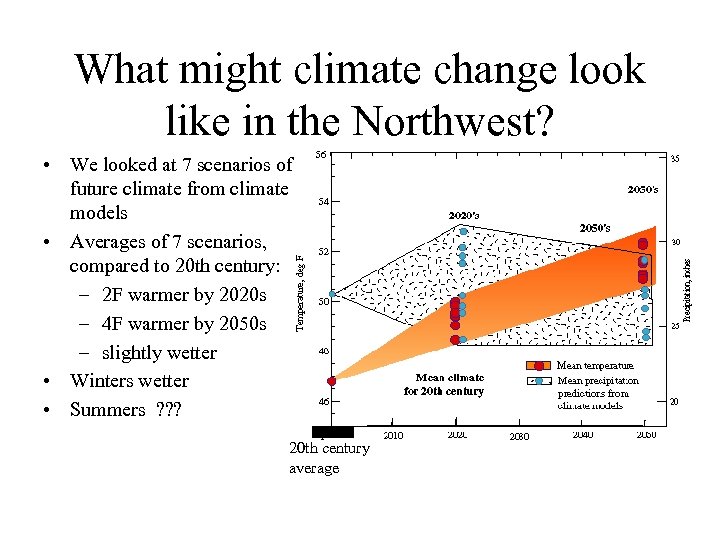 What might climate change look like in the Northwest? • We looked at 7 scenarios of future climate from climate models • Averages of 7 scenarios, compared to 20 th century: – 2 F warmer by 2020 s – 4 F warmer by 2050 s – slightly wetter • Winters wetter • Summers ? ? ? 20 th century average
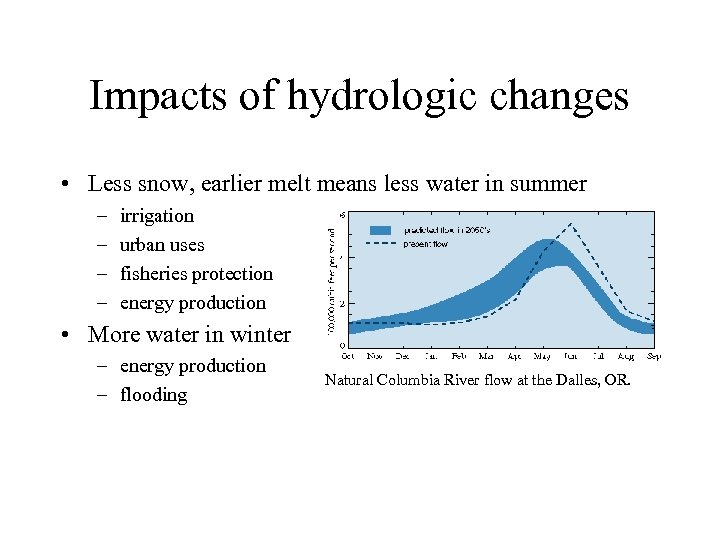 Impacts of hydrologic changes • Less snow, earlier melt means less water in summer – – irrigation urban uses fisheries protection energy production • More water in winter – energy production – flooding Natural Columbia River flow at the Dalles, OR.
 recommendations • Consider climate as a source of habitat uncertainty – develop recovery scenarios based on past climate records and/or future scenarios, perhaps bounded by “best” and “worst” cases • Consider potential roles for stock diversity – explore a range of functional relationships between habitat state and survival – examine the importance of straying between different population segments
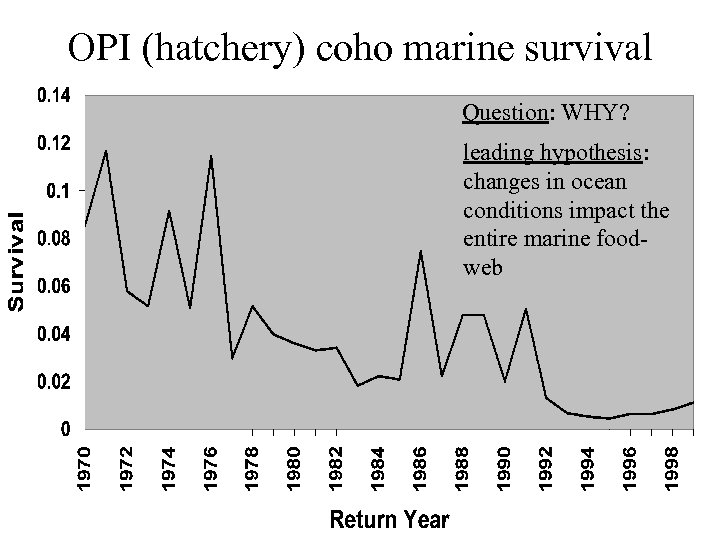 OPI (hatchery) coho marine survival Question: WHY? leading hypothesis: changes in ocean conditions impact the entire marine foodweb
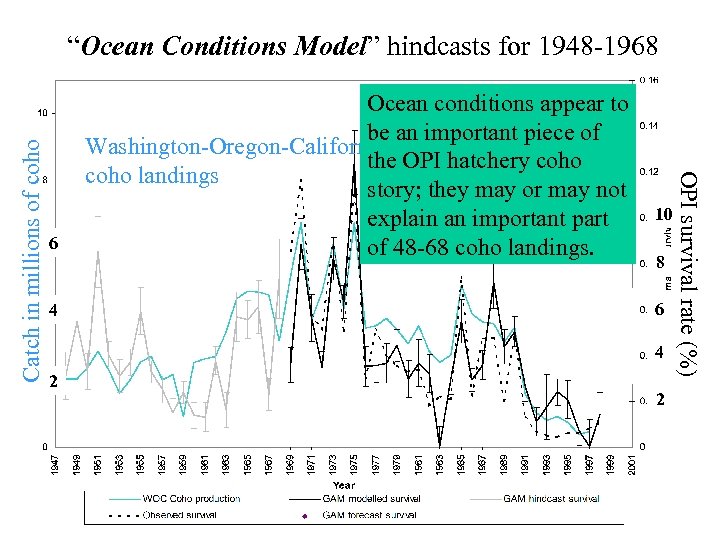 6 4 Ocean conditions appear to be an important piece of Washington-Oregon-California the OPI hatchery coho landings story; they may or may not explain an important part of 48 -68 coho landings. 10 8 6 4 2 2 OPI survival rate (%) Catch in millions of coho “Ocean Conditions Model” hindcasts for 1948 -1968
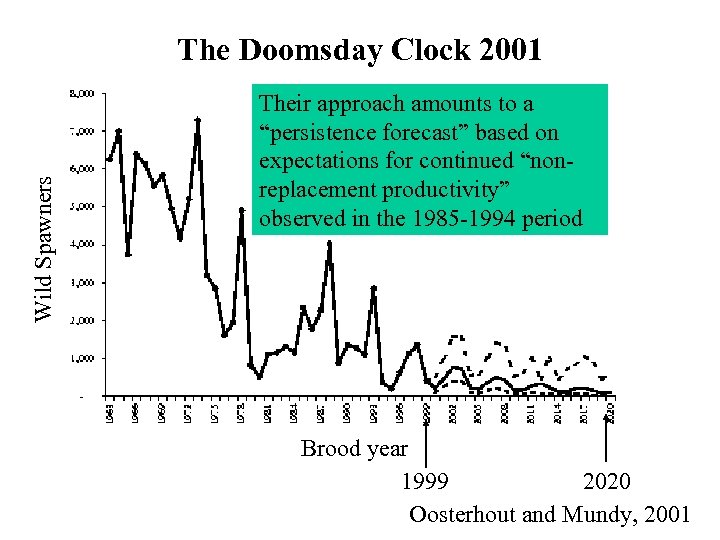 Wild Spawners The Doomsday Clock 2001 Their approach amounts to a “persistence forecast” based on expectations for continued “nonreplacement productivity” observed in the 1985 -1994 period Brood year 1999 2020 Oosterhout and Mundy, 2001
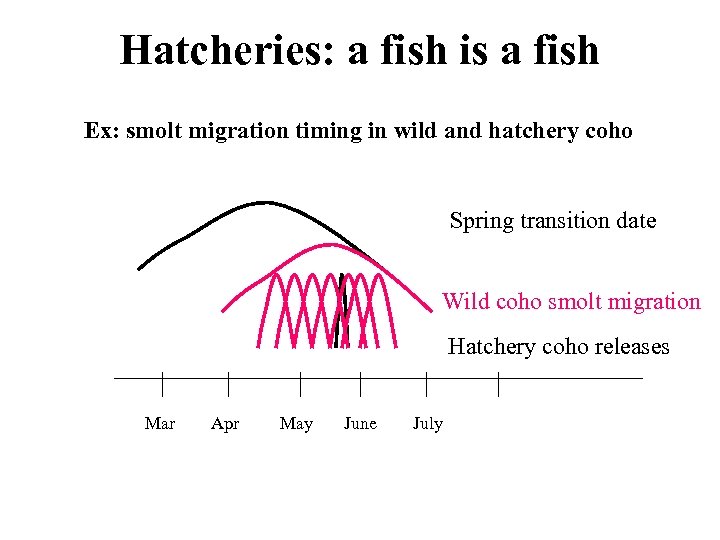 Hatcheries: a fish is a fish Ex: smolt migration timing in wild and hatchery coho Spring transition date Wild coho smolt migration Hatchery coho releases Mar Apr May June July
 ocean temperature deviations from normal February-April 2002