


 Скачать презентацию A chemotactic gradient sequestered on endothelial heparan sulfate
1c6186d66c66764c03ff961ea13aacc9.ppt
- Количество слайдов: 7
 A chemotactic gradient sequestered on endothelial heparan sulfate induces directional intraluminal crawling of neutrophils by Sara Massena, Gustaf Christoffersson, Elina Hjertström, Eyal Zcharia, Israel Vlodavsky, Nora Ausmees, Charlotte Rolny, Jin-Ping Li, and Mia Phillipson Blood Volume 116(11): 1924 -1931 September 16, 2010 © 2010 by American Society of Hematology
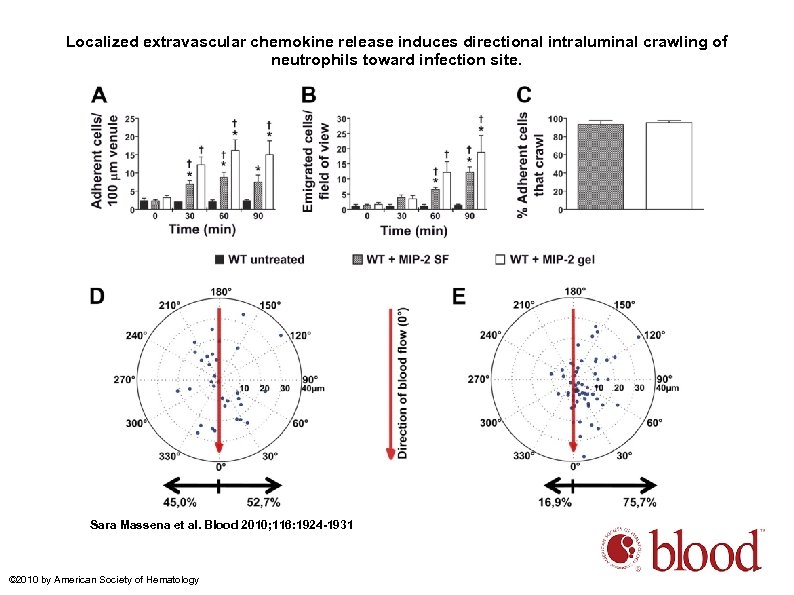 Localized extravascular chemokine release induces directional intraluminal crawling of neutrophils toward infection site. Sara Massena et al. Blood 2010; 116: 1924 -1931 © 2010 by American Society of Hematology
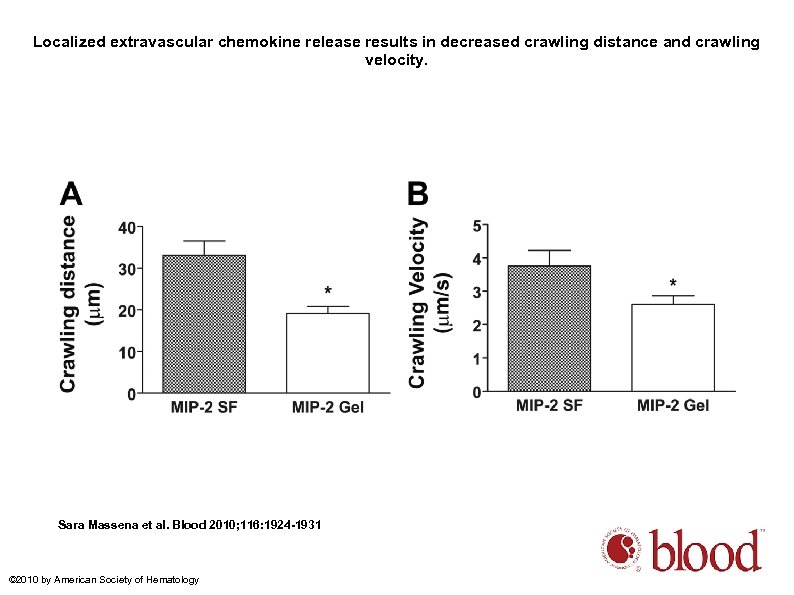 Localized extravascular chemokine release results in decreased crawling distance and crawling velocity. Sara Massena et al. Blood 2010; 116: 1924 -1931 © 2010 by American Society of Hematology
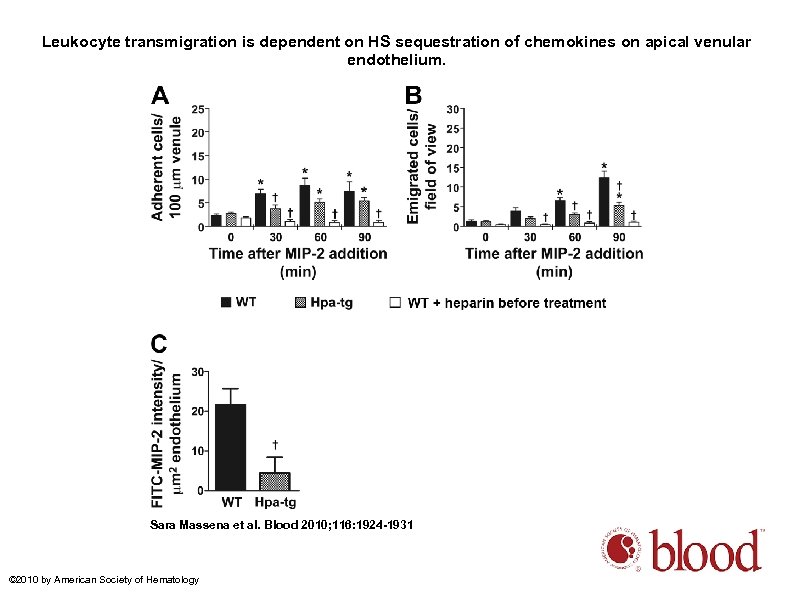 Leukocyte transmigration is dependent on HS sequestration of chemokines on apical venular endothelium. Sara Massena et al. Blood 2010; 116: 1924 -1931 © 2010 by American Society of Hematology
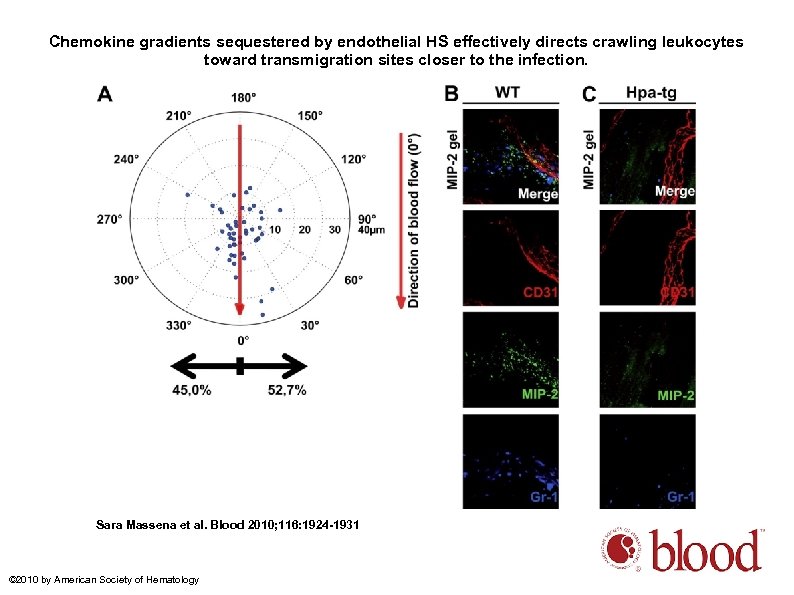 Chemokine gradients sequestered by endothelial HS effectively directs crawling leukocytes toward transmigration sites closer to the infection. Sara Massena et al. Blood 2010; 116: 1924 -1931 © 2010 by American Society of Hematology
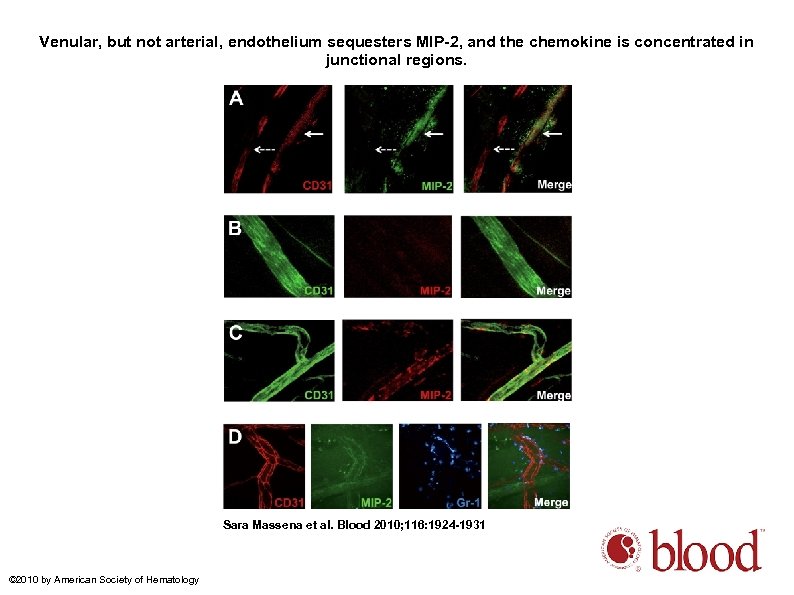 Venular, but not arterial, endothelium sequesters MIP-2, and the chemokine is concentrated in junctional regions. Sara Massena et al. Blood 2010; 116: 1924 -1931 © 2010 by American Society of Hematology
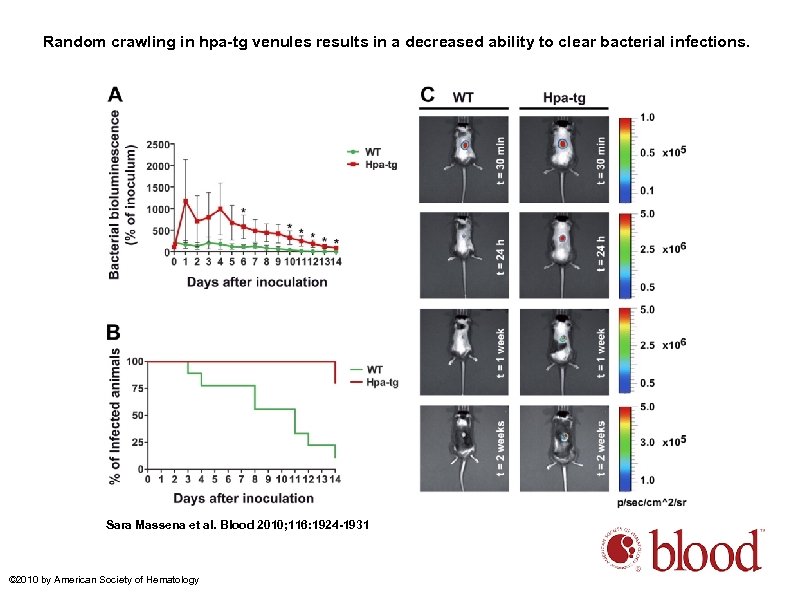 Random crawling in hpa-tg venules results in a decreased ability to clear bacterial infections. Sara Massena et al. Blood 2010; 116: 1924 -1931 © 2010 by American Society of Hematology