


 Скачать презентацию 97 Seconds for Sepsis Increasing the Awareness of
e0d14a4fd53d5c1fa971131e0bd52d2a.ppt
- Количество слайдов: 42
 97 Seconds for Sepsis Increasing the Awareness of World Sepsis Day Vesna Degoricija, MD, Ph. D Professor of Internal Medicine University of Zagreb School of Medicine and Sisters of Charity University Hospital Centre
 97 Seconds for Sepsis Increasing the Awareness of World Sepsis Day September 13 th https: //www. youtube. com/watch? v=GNz 3 S 3 tv. YLA https: //www. facebook. com/World. Sepsis. Day http: //www. sepsisalliance. org/sepsisawarenessmonth/
 The Challenge: Understanding Sepsis In 2002, the European Society of Intensive Care Medicine and the Society of Critical Care Medicine conducted an international survey on 1, 050 physicians worldwide. The goal was to investigate: Physicians’ views on sepsis Satisfaction with current definitions Routes to diagnosis Treatment options Survey conducted by Yankelovich Partners, Inc. 2002.
 The Challenge: Understanding Sepsis Most physicians found sepsis challenging and frustrating to diagnose and treat. 86% said that symptoms of sepsis can easily be misattributed to other conditions 89% said doctors are eager for a breakthrough in treating sepsis 81% said that a common definition for sepsis among the medical community would be a significant step toward better treatment Survey conducted by Yankelovich Partners, Inc. 2002.
 The Response: Surviving Sepsis Campaign A six point action plan to reduce global mortality from severe sepsis by 25% by 2009: . Building awareness of sepsis among healthcare professionals, governments, health and funding agencies, and the general public Improving early and accurate diagnosis Increasing the use of appropriate treatments and interventions Educating all healthcare professionals about diagnosis, treatment, and management of sepsis Improving access to post-ICU care for sepsis patients Developing global standards of care Dellinger RP, et al. Crit Care Med 2004; 32: 858 -73
 Sepsis: Treatment Improvements 2004 Surviving Sepsis Campaign (SSC) Guidelines. 2006 Surviving Sepsis Campaign Implementation 2008 An updated version of SSC Guidelines 2012 The revised SSC Guidelines contain two bundles, a resuscitation bundle for the first 3 hours and a management bundle for the following 6 hours Early goal-directed therapy (EGDT) European Society of Intensive Care Medicine (ESICM), the Society of Critical Care Medicine (SCCM), and the International Sepsis Forum (ISF) Dellinger RP et al. Crit Care Med 2004; 32: 858 -73. Dellinger RP et al. Crit Care Med 2008; 36: 296 -327. Dellinger R. P et al. Surviving Sepsis Campaign: International Guidelines for Management of Severe Sepsis and Septic Shock, 2012. Intensive Care Med, 2013. 39(2): p. 165 --‐ 228.
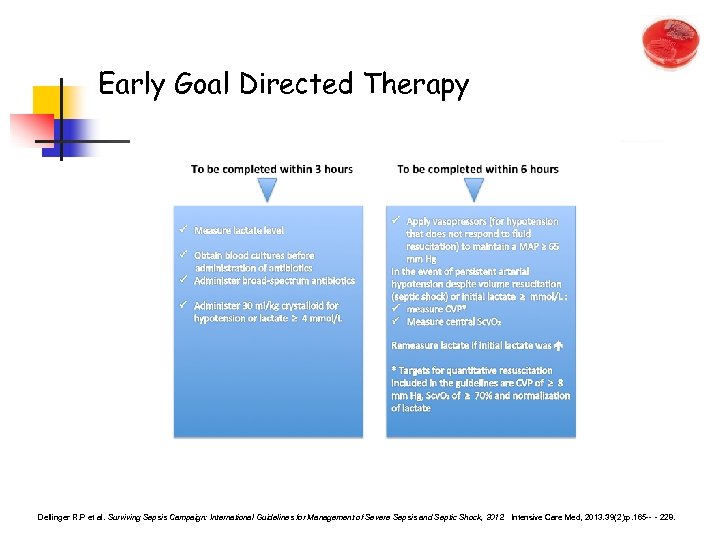 Early Goal Directed Therapy Dellinger R. P et al. Surviving Sepsis Campaign: International Guidelines for Management of Severe Sepsis and Septic Shock, 2012. Intensive Care Med, 2013. 39(2): p. 165 --‐ 228.
 Early Goal Directed Therapy Protocolised Care for Early Septic Shock trial Pro. CESS – USA The Pro. CESS Investigators. A randomized trial of protocol-based care for early septic shock. N Engl J Med 2014; 370: 1683 -1693. Australasian Resuscitation in Sepsis Evaluation trial ARISE The ARISE Investigators and the ANZICS Clinical Trials Group. Goal-directed resuscitation for patients with early septic shock. N Engl J Med 2014; 371: 1496 -1506 Protocolised Management in Sepsis trial Pro. MISe – UK The Pro. MISe Trial Investigators. N Engl J Med 2015; March 17, 2015 DOI: 10. 1056/NEJMoa 150089. 6. . The three published studies reported no benefit for EGDT The addition of continuous Scv. O 2 monitoring and strict protocolisation did not improve outcomes in the EGDT group EGDT was not superior to usual care
 Sepsis: Incidence and Costs Severe sepsis is the leading cause of death in the non-coronary ICU. More than 27 million cases of sepsis occur each year 19 million sepsis victims survived 2014/ at least 1 million more could Sepsis kills some 1, 400 people worldwide every day The number of sepsis cases is projected to grow at a rate of 1. 5% per year as the population ages and medicine become more aggressive (2007 18 mill cases vs. 2014 27 mill cases) The mortality rates are: 12 -17% for sepsis, 30 -50% for severe sepsis and 50 -60% for septic shock Average cost for sepsis treatment is approximately $22 000
 Sepsis 2015 2013 US Sepsis mortality rate was more than the mortality rate of: Brest cancer, Prostate cancer, and AIDS COMBINED www. Sepsis. Alliance. org /2015
 Sepsis 2735 BC Chinese emperor Sheng Nung described use of herbal tonic for fever treatment Two millenniums of plague, cholera, measles, tuberculosis and gonorrhea took millions of lives and changed the course of history and civilizations 1546 Hieronymus Fracastorius: cause of infection is living organism
 Sepsis In 19 th century introduction od antiseptic measures among woman at birth reduced maternal mortality from 13. 6% on 1. 5% in one year!. 1879 Louis Paster: Streptococcus is the cause of puerperal sepsis 1892 Richard Pfeiffer: toxin is a cause of shock in infective disease 1928 Alexander Fleming: blue mold Penicillium notatum inhibits bacterial growth in Petri dish 1914 Schottmueller: septicemia is presence of living organism in the blood of humans
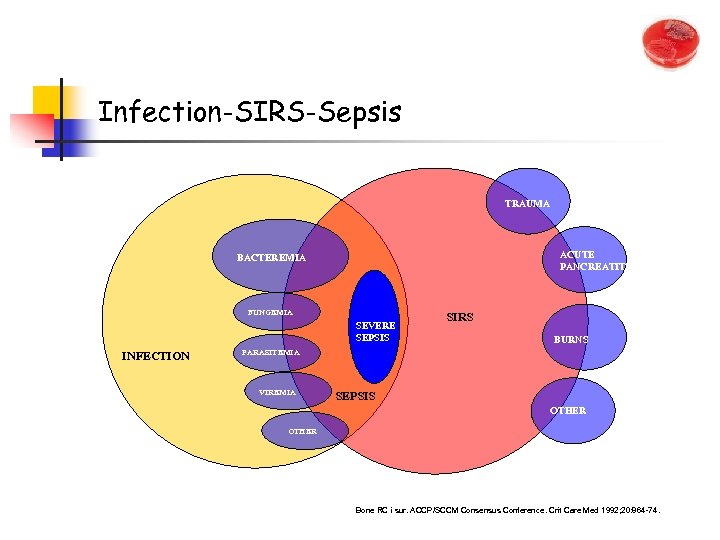 Infection-SIRS-Sepsis TRAUMA ACUTE PANCREATITIS BACTEREMIA FUNGEMIA SEVERE SEPSIS INFECTION SIRS BURNS PARASITEMIA VIREMIA SEPSIS OTHER Bone RC i sur. ACCP/SCCM Consensus Conference. Crit Care Med 1992; 20: 864 -74.
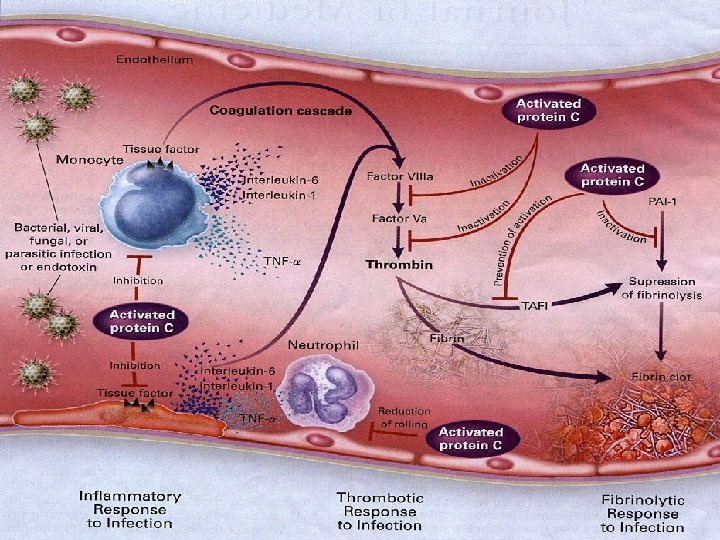
 Sepsis-SIRS Definition Sepsis, Greek word meaning blood poisoning Klaić B. Rječnik stranih riječi. Zagreb: Nakladni zavod Matice Hrvatske; 1982: 1213. . Profound inflammatory response to an underlying infection Living microorganisms activate and stimulate release of inflammation mediators and nitric oxide (NO) leading to profound vasodilatation and HYPOTENSION Results in endothelial injury, creates a procoagulant state and impaired fibrinolysis Bone RC i sur. ACCP/SCCM Consensus Conference. Crit Care Med 1992; 20: 864 -74. Levy MM i sur. 2001 SCCM/ESICM/ACCP/ATS/SIS International sepsis definition conference. Intensive Care Med 2003; 29: 530 -8.
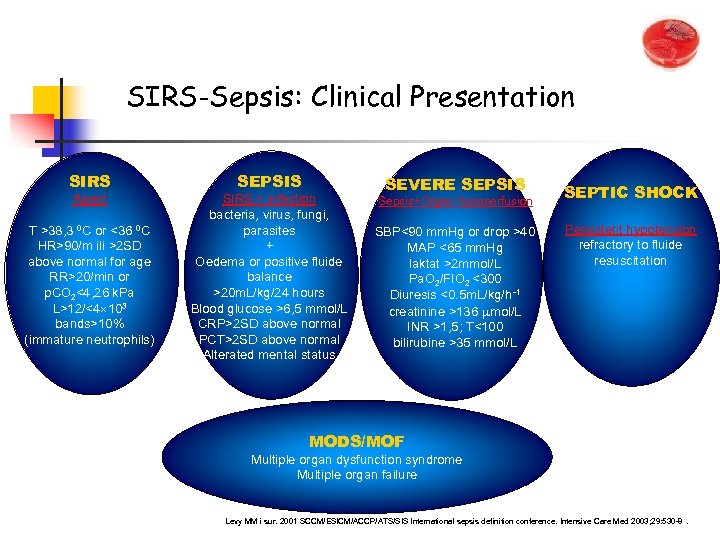 SIRS-Sepsis: Clinical Presentation SIRS SEPSIS Agent SIRS + infection bacteria, virus, fungi, parasites + Oedema or positive fluide balance >20 m. L/kg/24 hours Blood glucose >6, 5 mmol/L CRP>2 SD above normal PCT>2 SD above normal Alterated mental status T >38, 3 0 C or <36 0 C HR>90/m ili >2 SD above normal for age RR>20/min or p. CO 2<4, 26 k. Pa L>12/<4 103 bands>10% (immature neutrophils) SEVERE SEPSIS Sepsis+Organ hypoperfusion SBP<90 mm. Hg or drop >40 MAP <65 mm. Hg laktat >2 mmol/L Pa. O 2/FIO 2 <300 Diuresis <0. 5 m. L/kg/h-1 creatinine >136 mol/L INR >1, 5; T<100 bilirubine >35 mmol/L SEPTIC SHOCK Persistent hypotension refractory to fluide resuscitation MODS/MOF Multiple organ dysfunction syndrome Multiple organ failure Levy MM i sur. 2001 SCCM/ESICM/ACCP/ATS/SIS International sepsis definition conference. Intensive Care Med 2003; 29: 530 -8.
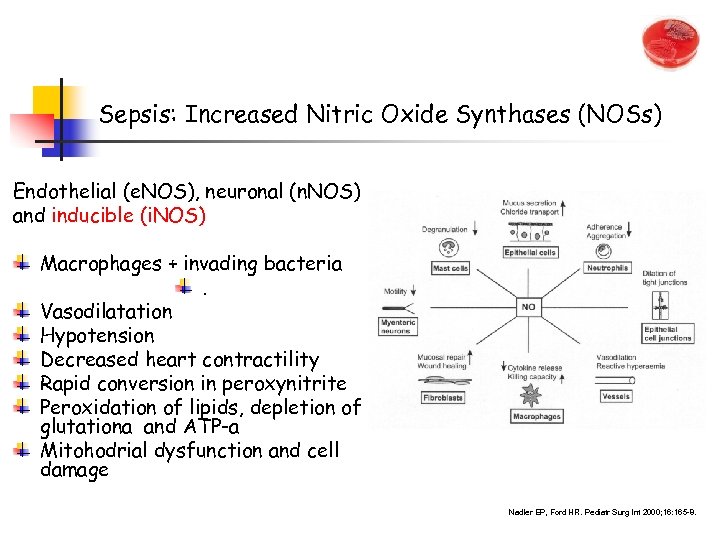 Sepsis: Increased Nitric Oxide Synthases (NOSs) Endothelial (e. NOS), neuronal (n. NOS) and inducible (i. NOS) Macrophages + invading bacteria. Vasodilatation Hypotension Decreased heart contractility Rapid conversion in peroxynitrite Peroxidation of lipids, depletion of glutationa and ATP-a Mitohodrial dysfunction and cell damage Nadler EP, Ford HR. Pediatr Surg Int 2000; 16: 165 -8.
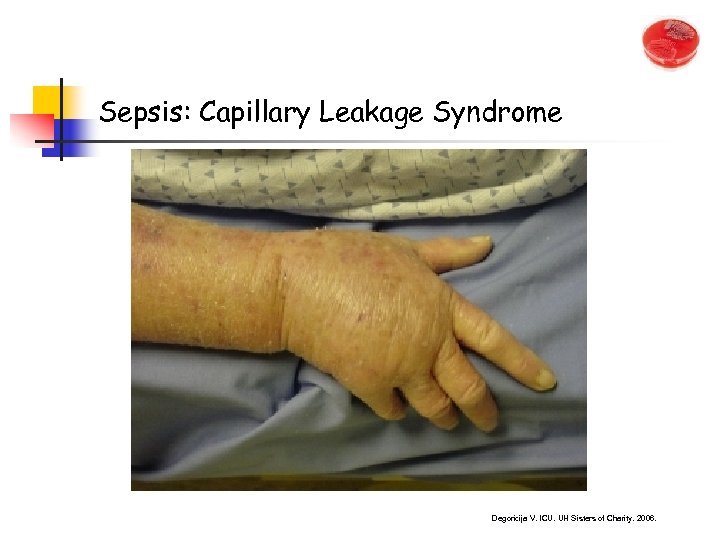 Sepsis: Capillary Leakage Syndrome Degoricija V. ICU. UH Sisters of Charity. 2006.
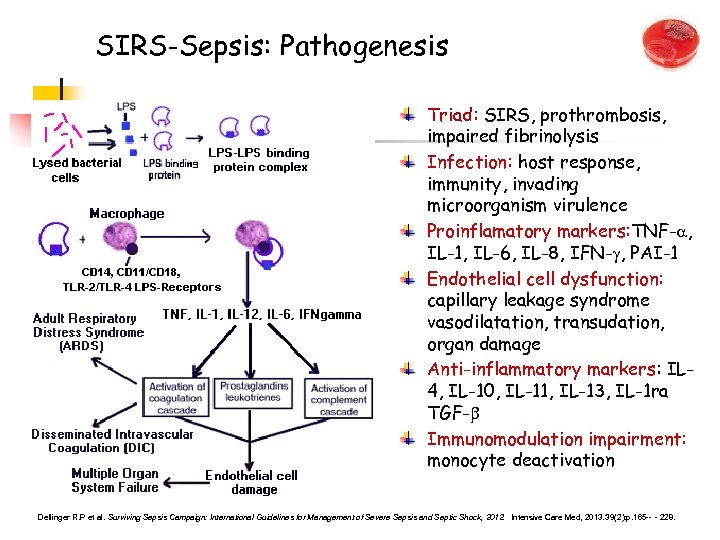 SIRS-Sepsis: Pathogenesis Triad: SIRS, prothrombosis, impaired fibrinolysis Infection: host response, immunity, invading microorganism virulence Proinflamatory markers: TNF- , IL-1, IL-6, IL-8, IFN- , PAI-1 Endothelial cell dysfunction: capillary leakage syndrome vasodilatation, transudation, organ damage Anti-inflammatory markers: IL 4, IL-10, IL-11, IL-13, IL-1 ra TGF- Immunomodulation impairment: monocyte deactivation Dellinger R. P et al. Surviving Sepsis Campaign: International Guidelines for Management of Severe Sepsis and Septic Shock, 2012. Intensive Care Med, 2013. 39(2): p. 165 --‐ 228.
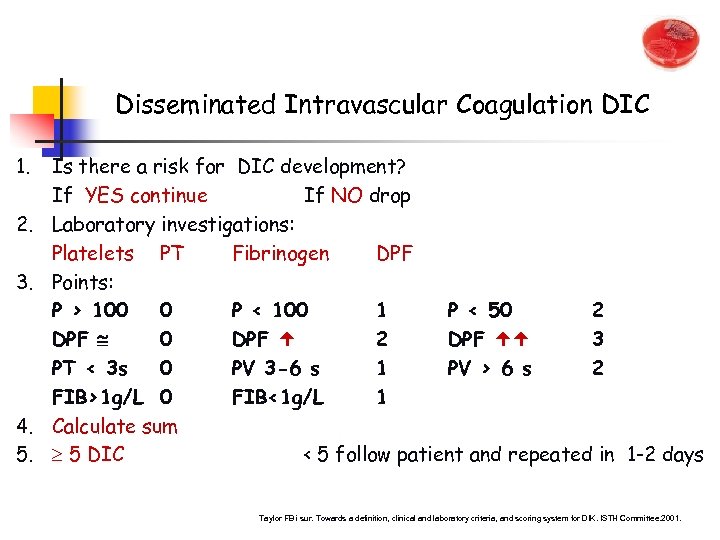 Disseminated Intravascular Coagulation DIC 1. 2. 3. 4. 5. Is there a risk for DIC development? If YES continue If NO drop Laboratory investigations: Platelets PT Fibrinogen DPF Points: P > 100 0 P < 100 1 P < 50 2 DPF 0 DPF 2 DPF 3 PT < 3 s 0 PV 3 -6 s 1 PV > 6 s 2 FIB>1 g/L 0 FIB<1 g/L 1 Calculate sum 5 DIC < 5 follow patient and repeated in 1 -2 days Taylor FB i sur. Towards a definition, clinical and laboratory criteria, and scoring system for DIK. ISTH Committee. 2001.
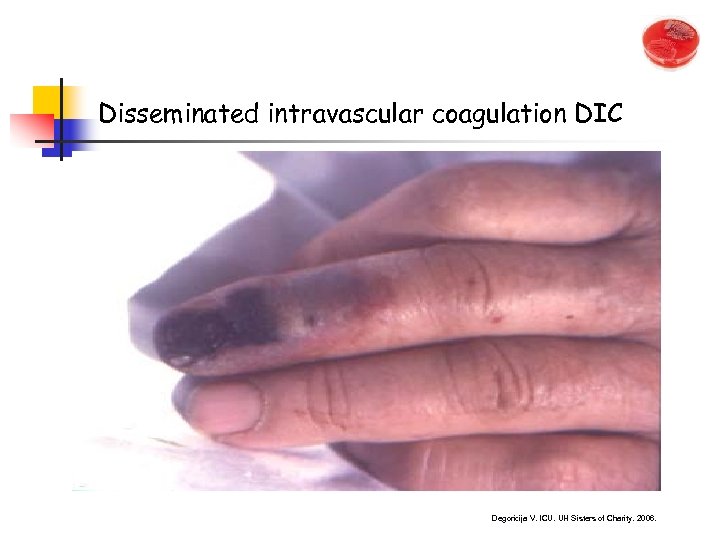 Disseminated intravascular coagulation DIC Degoricija V. ICU. UH Sisters of Charity. 2006.
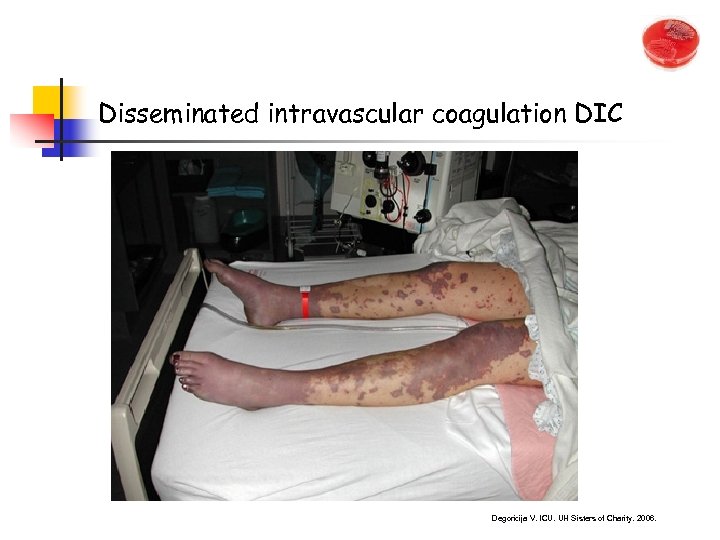 Disseminated intravascular coagulation DIC Degoricija V. ICU. UH Sisters of Charity. 2006.
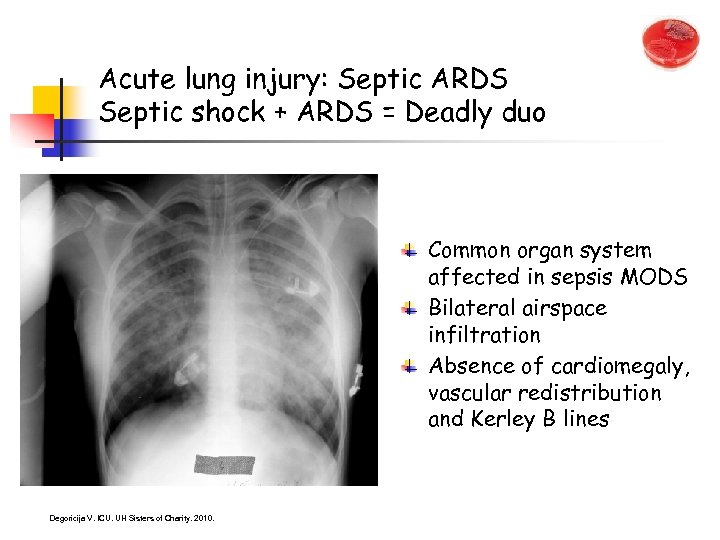 Acute lung injury: Septic ARDS Septic shock + ARDS = Deadly duo Common organ system affected in sepsis MODS Bilateral airspace infiltration Absence of cardiomegaly, vascular redistribution and Kerley B lines Degoricija V. ICU. UH Sisters of Charity. 2010.
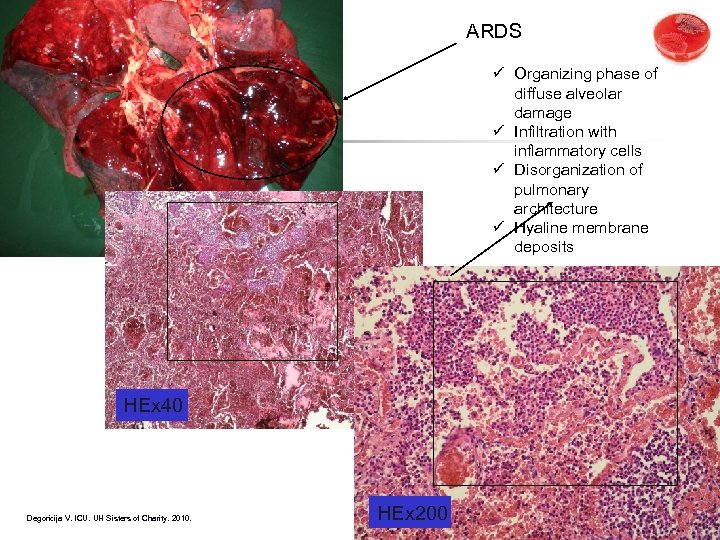 ARDS ü Organizing phase of diffuse alveolar damage ü Infiltration with inflammatory cells ü Disorganization of pulmonary architecture ü Hyaline membrane deposits HEx 40 Degoricija V. ICU. UH Sisters of Charity. 2010. HEx 200
 Sepsis: Renal Impairment A continum of severity from sepsis to septic shock exists The cause of acute renal injury (ARI) is multifactorial Decrease in effective intravascular volume Systemic hypotension Direct renal vasoconstriction Release of cytokines Activation of neutrophils and endotoxins
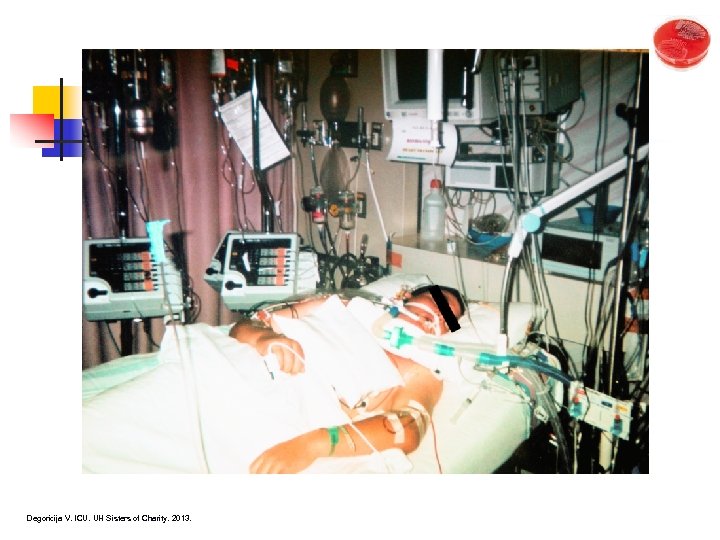 Degoricija V. ICU. UH Sisters of Charity. 2013.
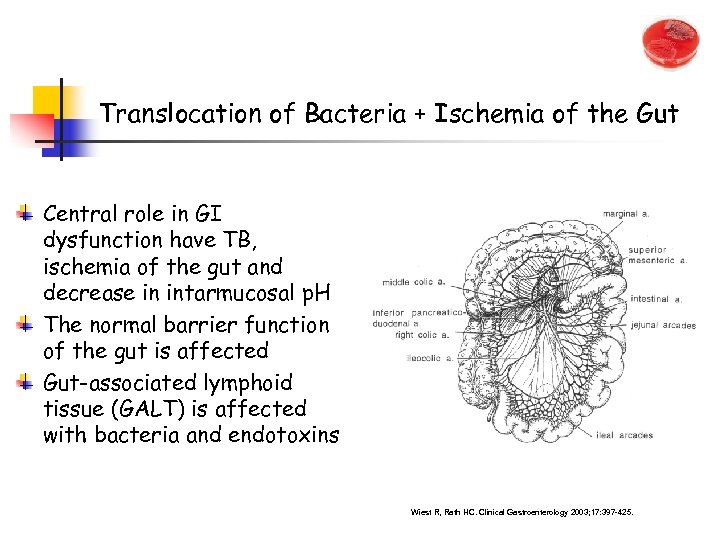 Translocation of Bacteria + Ischemia of the Gut Central role in GI dysfunction have TB, ischemia of the gut and decrease in intarmucosal p. H The normal barrier function of the gut is affected Gut-associated lymphoid tissue (GALT) is affected with bacteria and endotoxins Wiest R, Rath HC. Clinical Gastroenterology 2003; 17: 397 -425.
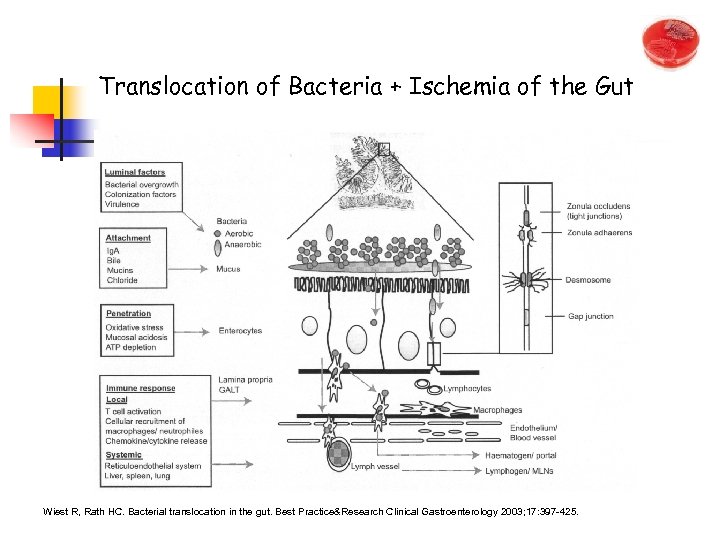 Translocation of Bacteria + Ischemia of the Gut Wiest R, Rath HC. Bacterial translocation in the gut. Best Practice&Research Clinical Gastroenterology 2003; 17: 397 -425.
 Sepsis: Gastrointestinal Dysfunction Overgrowth of bacteria in the upper GI tract may be aspirated into lungs ending with nosocomial pneumonia Paralytic ileus leads to a delay in the institution of enteral feeding Nutritional intake is interfered with in the face of high protein and calorie requirements Narcotics and muscle relaxants worse GI tract motility
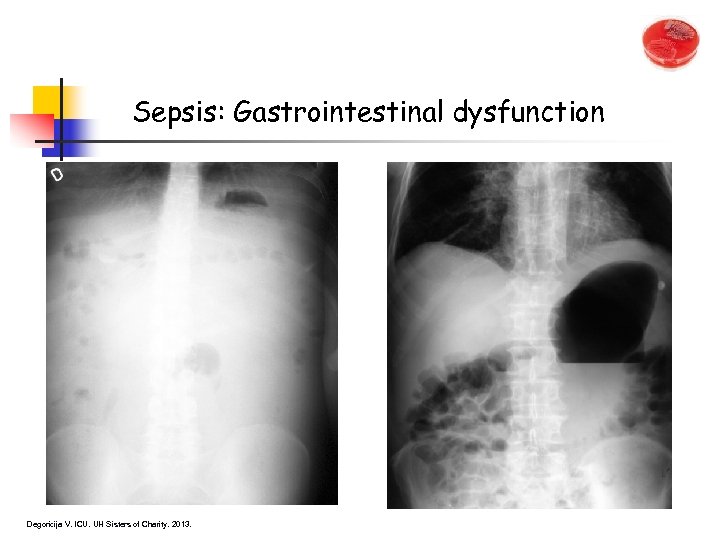 Sepsis: Gastrointestinal dysfunction Degoricija V. ICU. UH Sisters of Charity. 2013.
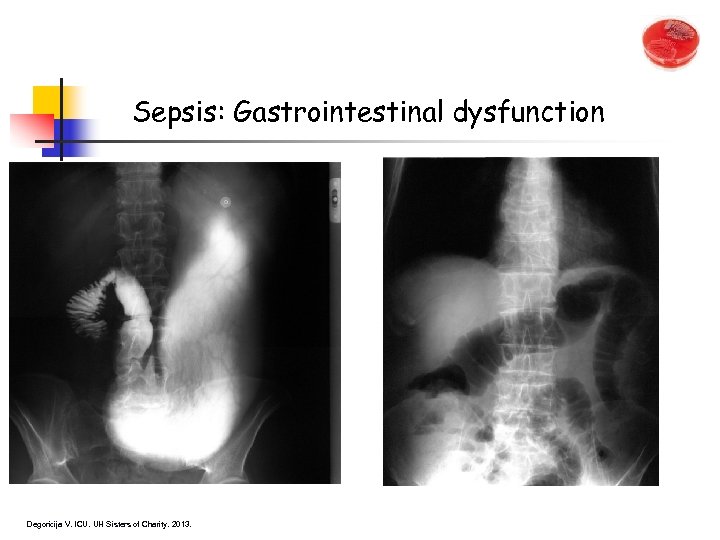 Sepsis: Gastrointestinal dysfunction Degoricija V. ICU. UH Sisters of Charity. 2013.
 Sepsis: MODS Development of MODS is not connected with first hours of septic shock ALI/ARDS develops early and lasts for days Septic shock develops early, is reversible or leads to poor outcome in early stage of sepsis DIC, ARI, hepatic insufficiency and septic encephalopathy are developed hours and days in the natural course of sepsis and last for days Mortality from MODS remains high: ARDS alone 40 -50% plus one additional organ system, usually ARI increases to 90% Russell JA et al. Crit Care Med 2000; 28: 3405 -11. Degoricija V et al. Intensive Care Med 2006; 32 (suppl 1): S 20.
 Sepsis: MODS The precise mechanism of cell injury and resulting organ dysfunction in sepsis is not fully understood Widespread endothelial and parenchymal cell injury Four proposed mechanisms: 1. Hypoxic hypoxia 2. Direct cytotoxicity 3. Apoptosis (programmed cell death) 4. Immunosuppression
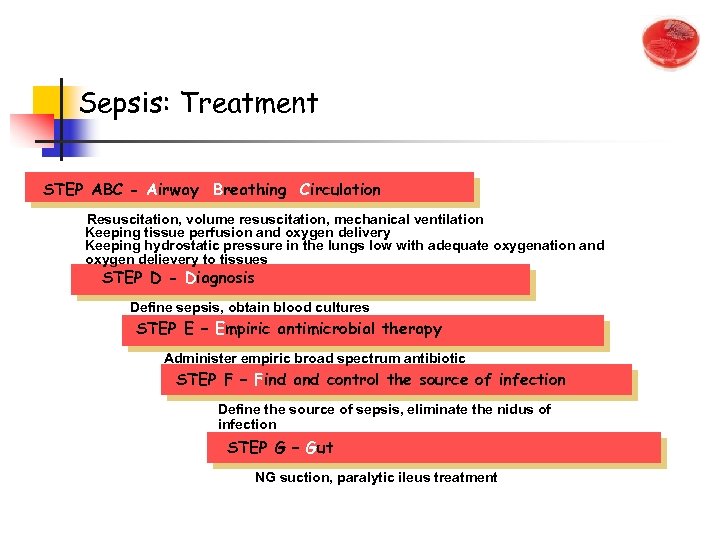 Sepsis: Treatment STEP ABC - Airway Breathing Circulation Resuscitation, volume resuscitation, mechanical ventilation Keeping tissue perfusion and oxygen delivery Keeping hydrostatic pressure in the lungs low with adequate oxygenation and oxygen delievery to tissues STEP D - Diagnosis Define sepsis, obtain blood cultures STEP E – Empiric antimicrobial therapy Administer empiric broad spectrum antibiotic STEP F – Find and control the source of infection Define the source of sepsis, eliminate the nidus of infection STEP G – Gut NG suction, paralytic ileus treatment
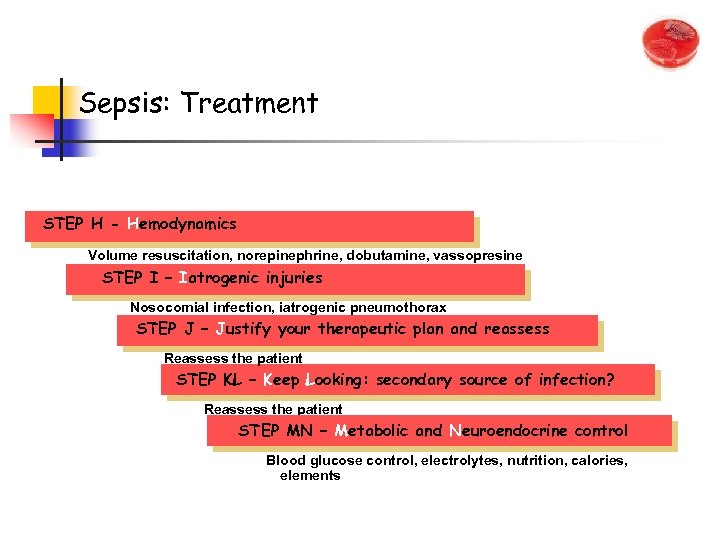 Sepsis: Treatment STEP H - Hemodynamics Volume resuscitation, norepinephrine, dobutamine, vassopresine STEP I – Iatrogenic injuries Nosocomial infection, iatrogenic pneumothorax STEP J – Justify your therapeutic plan and reassess Reassess the patient STEP KL – Keep Looking: secondary source of infection? Reassess the patient STEP MN – Metabolic and Neuroendocrine control Blood glucose control, electrolytes, nutrition, calories, elements
 FAST HUG Protocol FEEDING ANALGESIA SEDATION THROMBOEMBOLIC PROPHYLAXIS HEAD OF BED ELEVATION ULCER PROPHYLAXIS GLYCEMIC CONTROL Vincent JL et al. Crit Care Med 2005; 33(6): 1225 -30. .
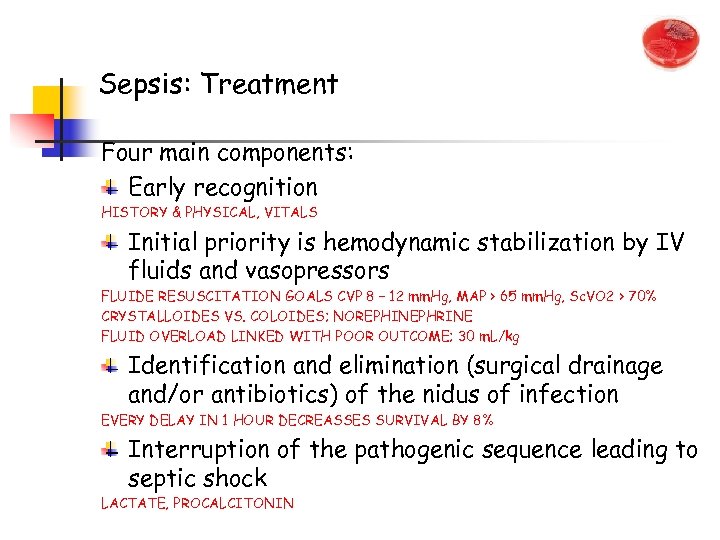 Sepsis: Treatment Four main components: Early recognition HISTORY & PHYSICAL, VITALS Initial priority is hemodynamic stabilization by IV fluids and vasopressors FLUIDE RESUSCITATION GOALS CVP 8 – 12 mm. Hg, MAP > 65 mm. Hg, Sc. VO 2 > 70% CRYSTALLOIDES VS. COLOIDES; NOREPHINEPHRINE FLUID OVERLOAD LINKED WITH POOR OUTCOME; 30 m. L/kg Identification and elimination (surgical drainage and/or antibiotics) of the nidus of infection EVERY DELAY IN 1 HOUR DECREASSES SURVIVAL BY 8% Interruption of the pathogenic sequence leading to septic shock LACTATE, PROCALCITONIN
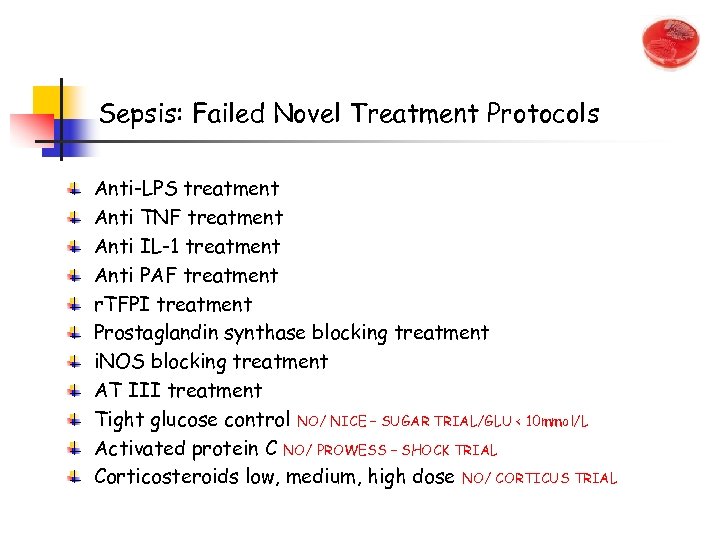 Sepsis: Failed Novel Treatment Protocols Anti-LPS treatment Anti TNF treatment Anti IL-1 treatment Anti PAF treatment r. TFPI treatment Prostaglandin synthase blocking treatment i. NOS blocking treatment AT III treatment Tight glucose control NO/ NICE – SUGAR TRIAL/GLU < 10 mmol/L Activated protein C NO/ PROWESS – SHOCK TRIAL Corticosteroids low, medium, high dose NO/ CORTICUS TRIAL
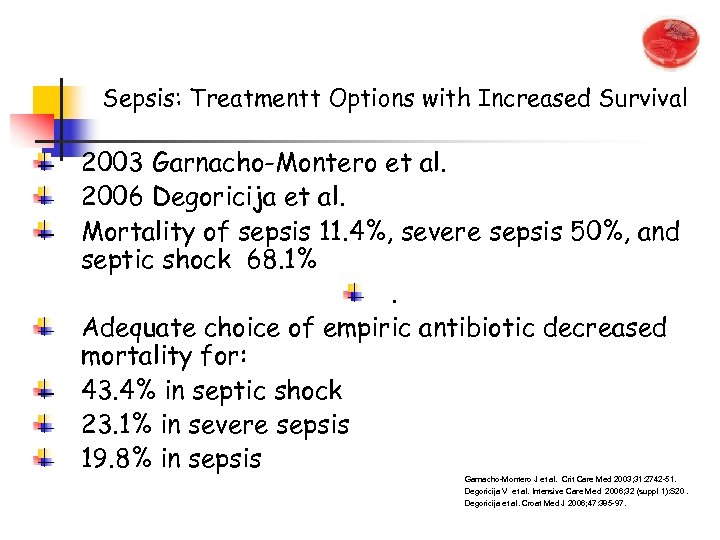 Sepsis: Treatmentt Options with Increased Survival 2003 Garnacho-Montero et al. 2006 Degoricija et al. Mortality of sepsis 11. 4%, severe sepsis 50%, and septic shock 68. 1%. Adequate choice of empiric antibiotic decreased mortality for: 43. 4% in septic shock 23. 1% in severe sepsis 19. 8% in sepsis Garnacho-Montero J et al. Crit Care Med 2003; 31: 2742 -51. Degoricija V et al. Intensive Care Med 2006; 32 (suppl 1): S 20. Degoricija et al. Croat Med J 2006; 47: 385 -97.
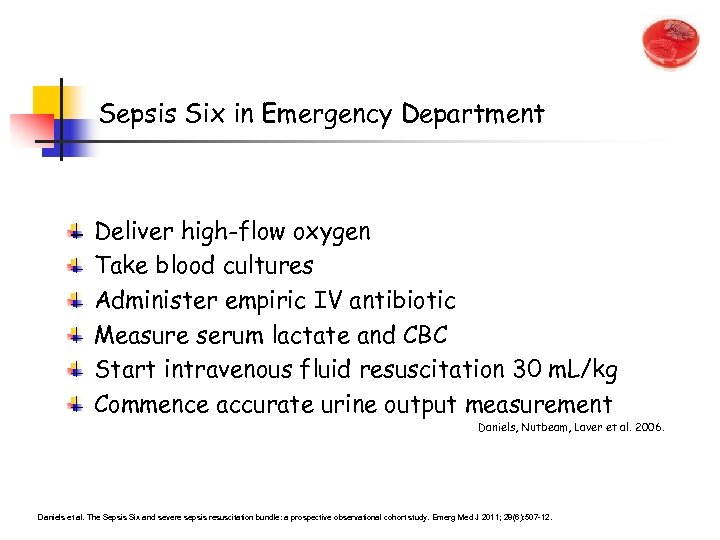 Sepsis Six in Emergency Department Deliver high-flow oxygen Take blood cultures Administer empiric IV antibiotic Measure serum lactate and CBC Start intravenous fluid resuscitation 30 m. L/kg Commence accurate urine output measurement Daniels, Nutbeam, Laver et al. 2006. Daniels et al. The Sepsis Six and severe sepsis resuscitation bundle: a prospective observational cohort study. Emerg Med J 2011; 28(6): 507 -12.
 Sepsis Any kind of infection can lead to sepsis Quick diagnosis and treatment are the difference between life and death Know the symptoms, suspect sepsis, save lives! 3 R: Recognize, Resuscitate, Refer www. Sepsis. Alliance. org /2015 The Pro. CESS Investigators. A randomized trial of protocol-based care for early septic shock. N Engl J Med 2014; 370: 1683 -1693. The ARISE Investigators and the ANZICS Clinical Trials Group. Goal-directed resuscitation for patients with early septic shock. N Engl J Med 2014; 371: 1496 -1506. The Pro. MISe Trial Investigators. N Engl J Med 2015; March 17, 2015 DOI: 10. 1056/NEJMoa 150089. 6.
 Zagreb, UH Sisters of Charity Solar eclipse on March, 20 th 2015 Photo by Karlo Stemberger