 Скачать презентацию 9 EXAMPLES OF FIRMS IMPLEMENTING GLOBAL STRATEGY
Brands.ppt
- Количество слайдов: 40



9 EXAMPLES OF FIRMS IMPLEMENTING GLOBAL STRATEGY
Agenda Red. Bull and Packaging Nokia and Economic Adaptation Levi Strauss and Adaptation H&B and Adaptation Reebok and Adaptation Ford Motor Company and Adaptation Mc. Donald’s and Adaptation
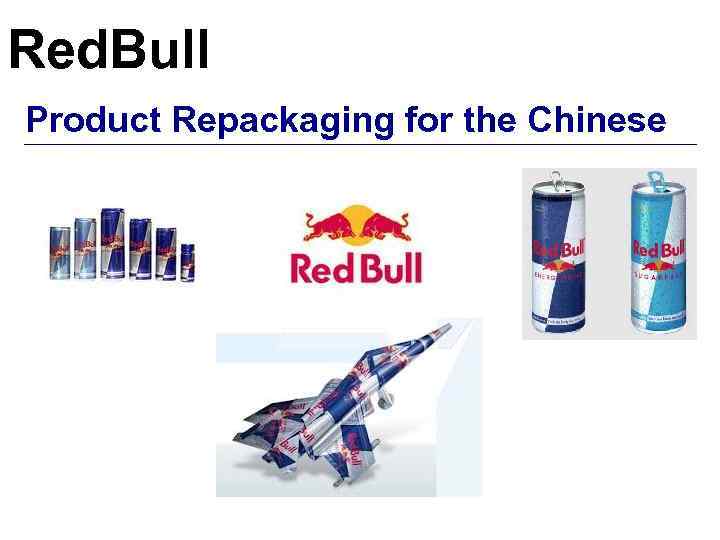
Red. Bull Product Repackaging for the Chinese
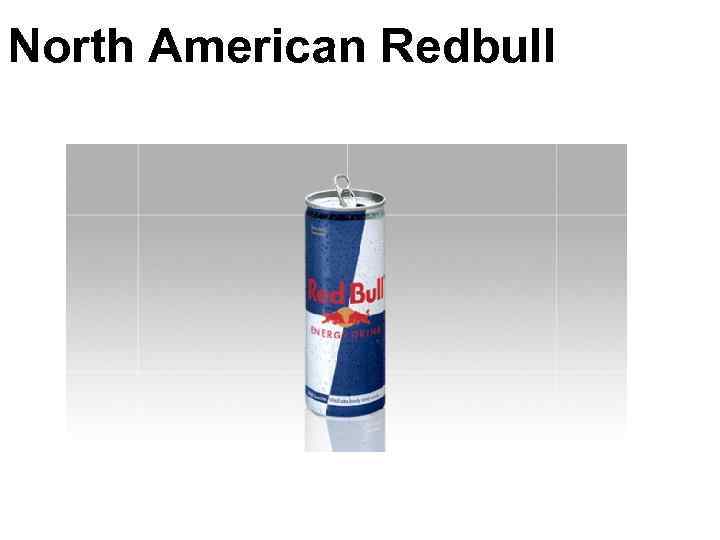
North American Redbull
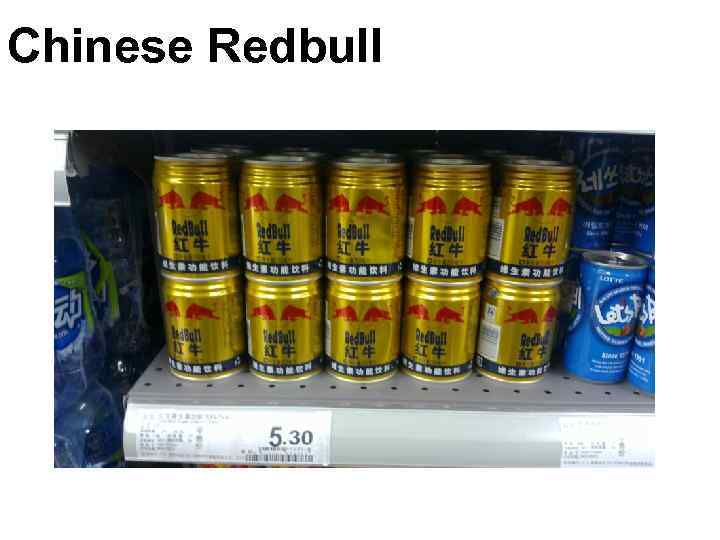
Chinese Redbull
Packaging • Companies add value by adapting packaging based on consumer preferences. • North American Red Bull § Red is a symbol of action and courage § Silver is a symbol of maturity § Blue is a symbol of youth spirituality and peace
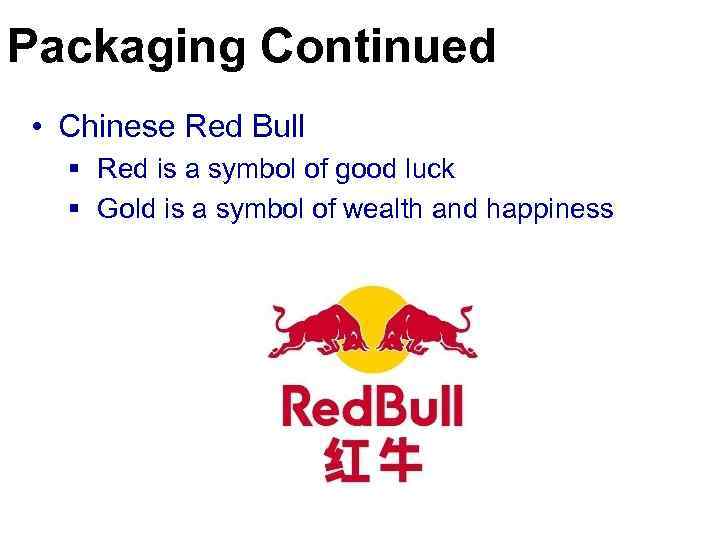
Packaging Continued • Chinese Red Bull § Red is a symbol of good luck § Gold is a symbol of wealth and happiness

Nokia Economic Adaptation For Emerging Markets
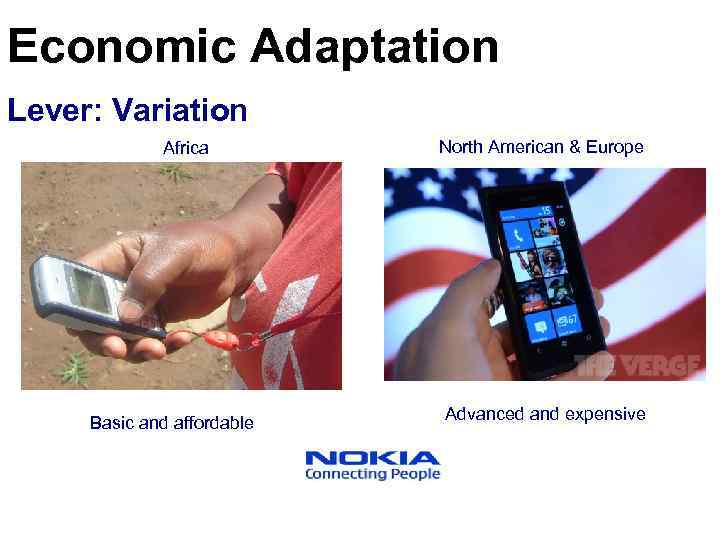
Economic Adaptation Lever: Variation Africa Basic and affordable North American & Europe Advanced and expensive
Barbie – Dolls of the World Cultural Adaptation
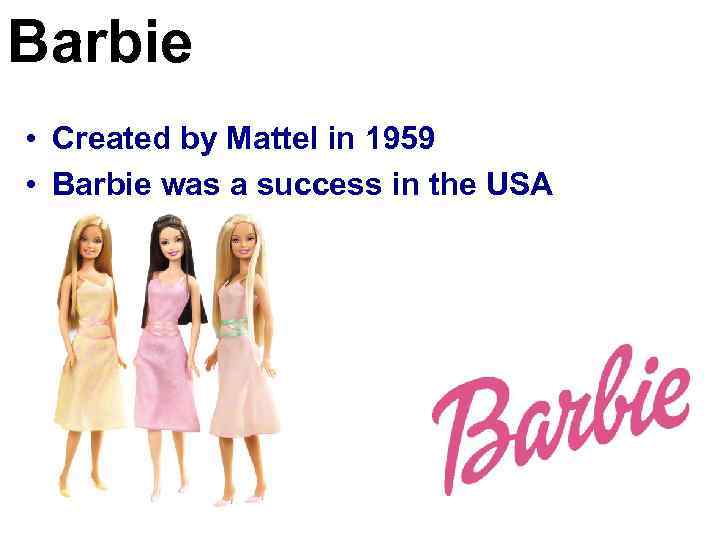
Barbie • Created by Mattel in 1959 • Barbie was a success in the USA
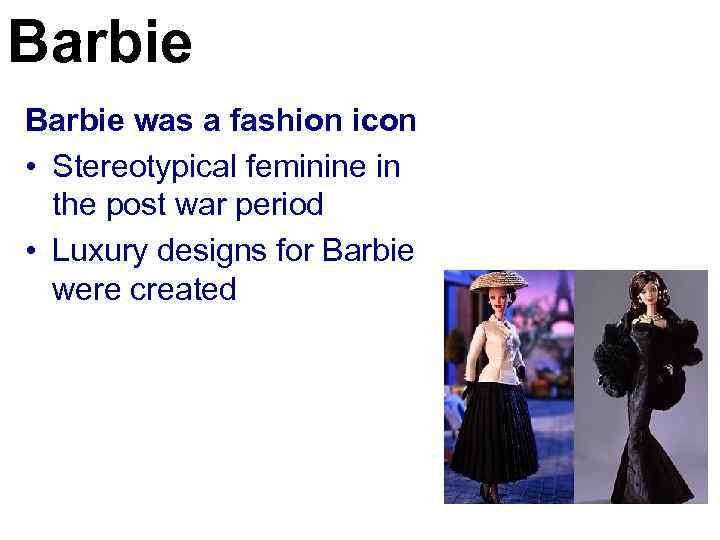
Barbie was a fashion icon • Stereotypical feminine in the post war period • Luxury designs for Barbie were created
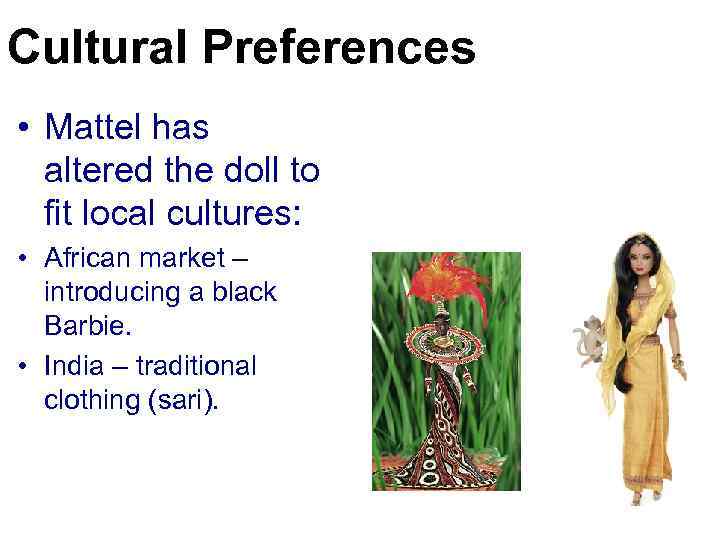
Cultural Preferences • Mattel has altered the doll to fit local cultures: • African market – introducing a black Barbie. • India – traditional clothing (sari).
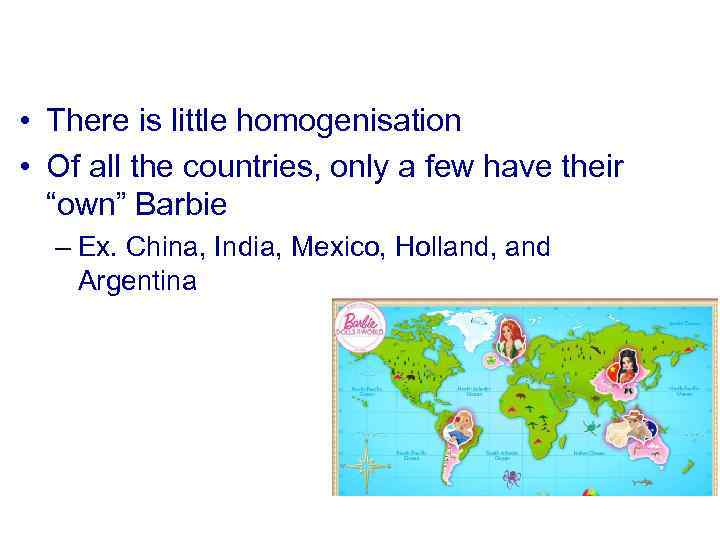
Focus • There is little homogenisation • Of all the countries, only a few have their “own” Barbie – Ex. China, India, Mexico, Holland, and Argentina
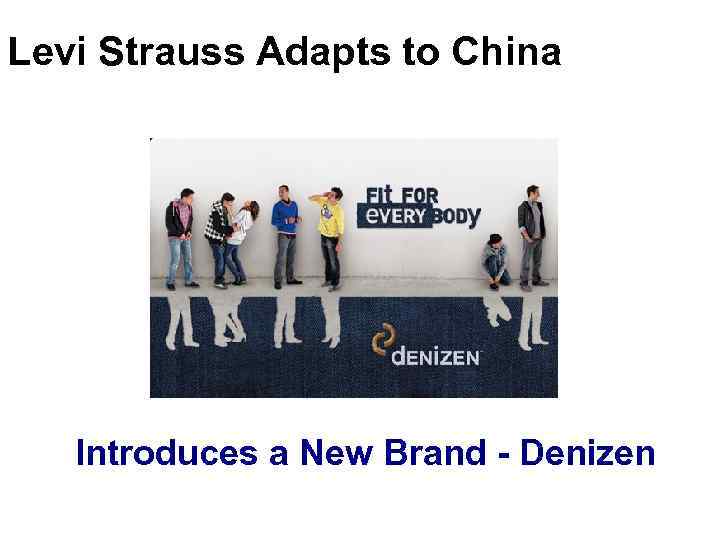
Levi Strauss Adapts to China Introduces a New Brand - Denizen
Adaptation Strategy: Design • Design: To reduce the cost of variation. • Levi’s Target Market: Price-sensitive and active youth. • How: Levi’s created a similar product, however, made it more affordable to appeal to. creativeroots. org
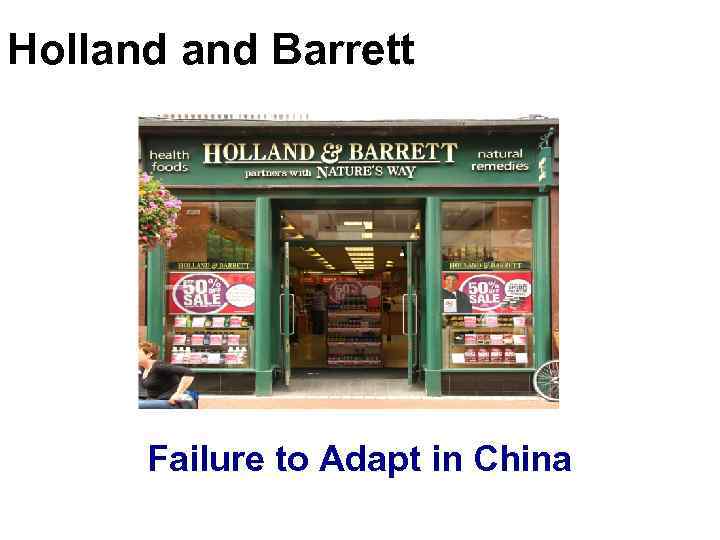
Holland Barrett Failure to Adapt in China

Holland Barrett: Intro • UK based health food retailer • 80 years experience in health retail industry • Over 1, 000 high quality, vitamins, minerals and other nutritional supplements • Holland & Barrett attempt to penetrate the Chinese market
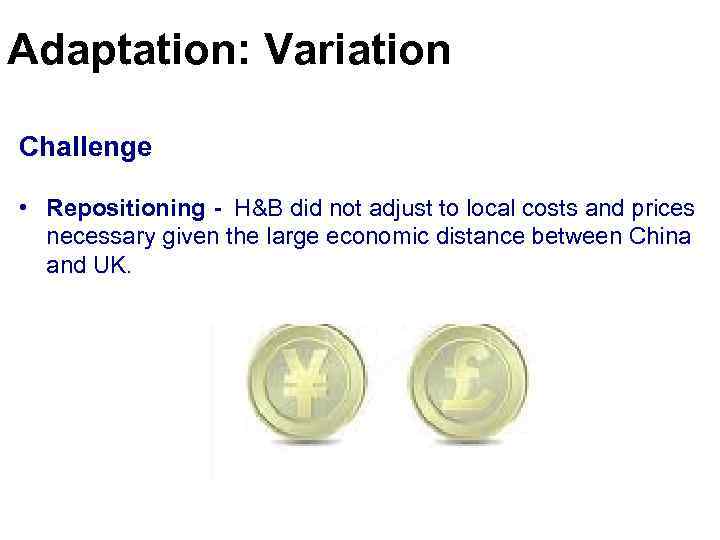
Adaptation: Variation Challenge • Repositioning - H&B did not adjust to local costs and prices necessary given the large economic distance between China and UK.
Adaptation: Focus Success • Segment Focus - H&B targeted a limited customer base in China that would appeal to their products. – H&B targeted Shanghai, the region with the highest minimum wage and the most westernization. Challenge • Segment Focus - Not a widely known brand name in the global market, therefore, it was not successful in grasping the niche cliental it was hoping for.
Adaptation: Externalization Challenge • Franchise - H&B lost control by franchising – should have had directly operated stores • Franchisee incurs high fixed costs therefore high prices – increasing economic distance
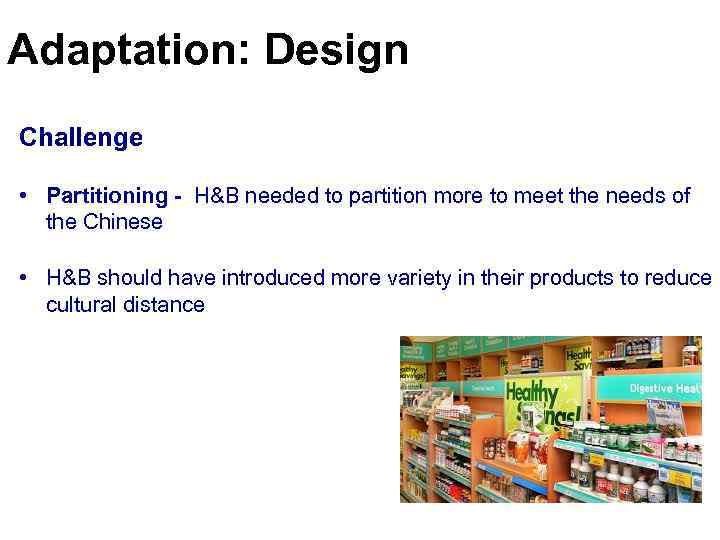
Adaptation: Design Challenge • Partitioning - H&B needed to partition more to meet the needs of the Chinese • H&B should have introduced more variety in their products to reduce cultural distance
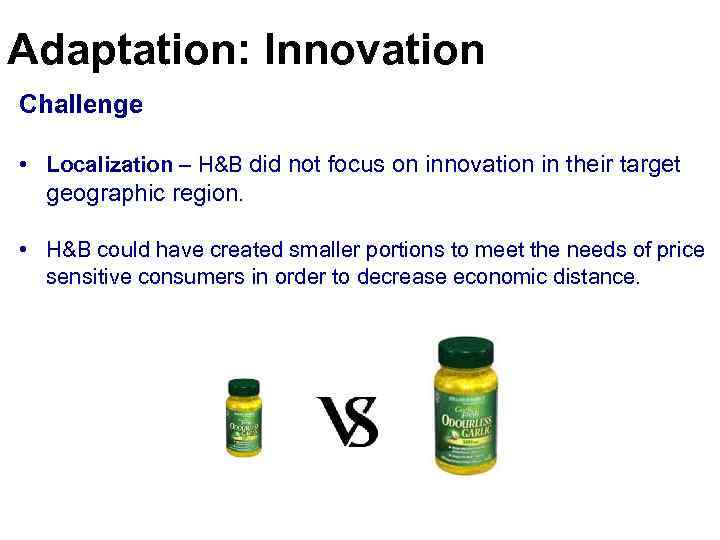
Adaptation: Innovation Challenge • Localization – H&B did not focus on innovation in their target geographic region. • H&B could have created smaller portions to meet the needs of price sensitive consumers in order to decrease economic distance.
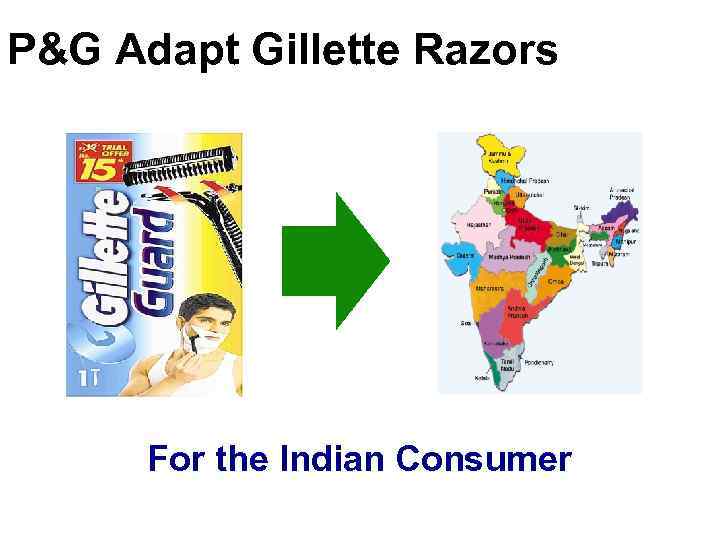
P&G Adapt Gillette Razors For the Indian Consumer
Gillette’s Approach in India Go to the source • Understand the wants, needs, and desires of the target consumer. • For example: shaving experience is markedly different for people in rural areas who shaved using little or no water while balancing a hand-held mirror in one hand.
Gillette’s Approach in India Delight, don’t dilute • Rather the lowering performance, the customer was kept at the center of the process offering a distinct service. • P&G included features like easy-rinsing, given the paucity of water in target markets, or unique grips given the ways consumers tended to hold razors.
Gillette’s Approach in India Match the model to the market • Succeeding in India requires new manufacturing, distribution and promotion approaches.
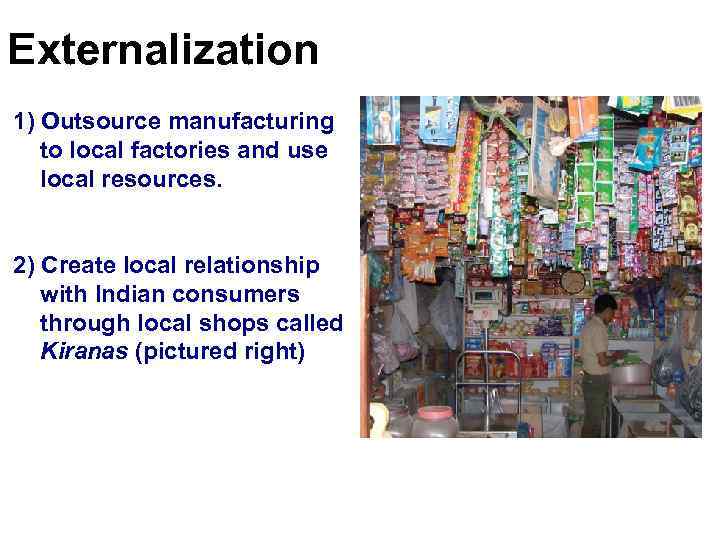
Externalization 1) Outsource manufacturing to local factories and use local resources. 2) Create local relationship with Indian consumers through local shops called Kiranas (pictured right)
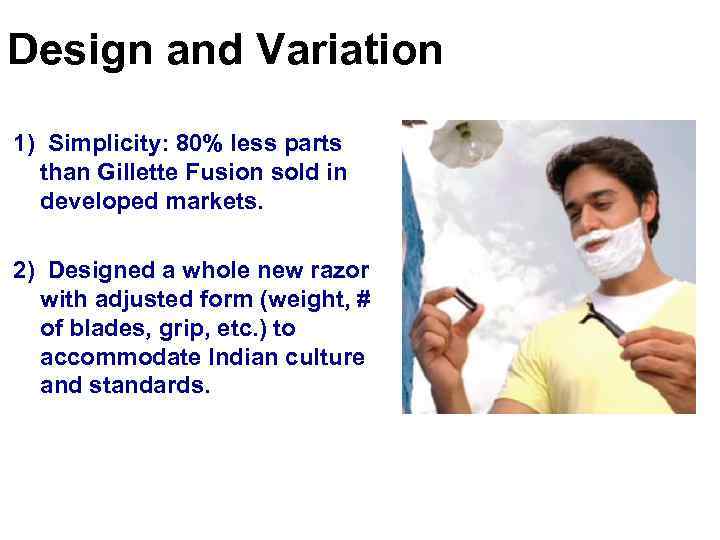
Design and Variation 1) Simplicity: 80% less parts than Gillette Fusion sold in developed markets. 2) Designed a whole new razor with adjusted form (weight, # of blades, grip, etc. ) to accommodate Indian culture and standards.
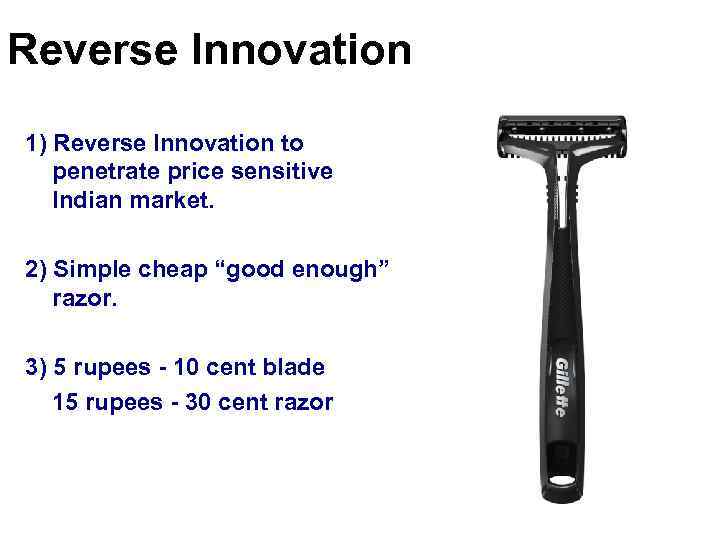
Reverse Innovation 1) Reverse Innovation to penetrate price sensitive Indian market. 2) Simple cheap “good enough” razor. 3) 5 rupees - 10 cent blade 15 rupees - 30 cent razor

Reebok Adapting the Product-Line Across Markets
Introduction • Sports brand specialized in shoes • Subsidiary of Adidas • Present in many emerging countries
Variation Products • Different product lines adapted to each country’s market where Reebok operates. • Product variation depending on trends, climate and lifestyle. • High cost of adaptation.
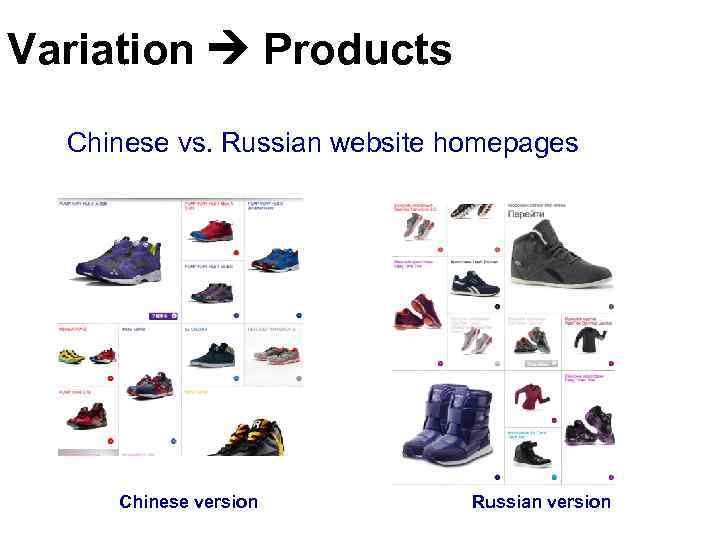
Variation Products Chinese vs. Russian website homepages Chinese version Russian version

Ford Motor Company Product and Design-based Adaptation
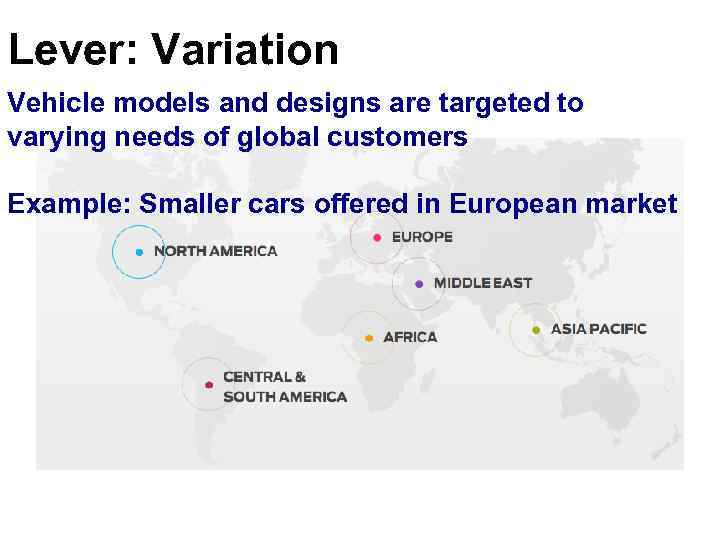
Lever: Variation Vehicle models and designs are targeted to varying needs of global customers Example: Smaller cars offered in European market
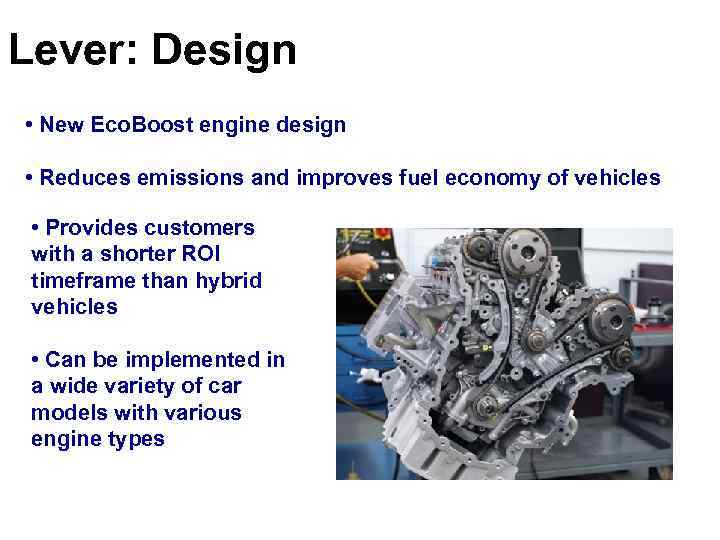
Lever: Design • New Eco. Boost engine design • Reduces emissions and improves fuel economy of vehicles • Provides customers with a shorter ROI timeframe than hybrid vehicles • Can be implemented in a wide variety of car models with various engine types

Mc. Donald’s Modifying the Burger Around the World
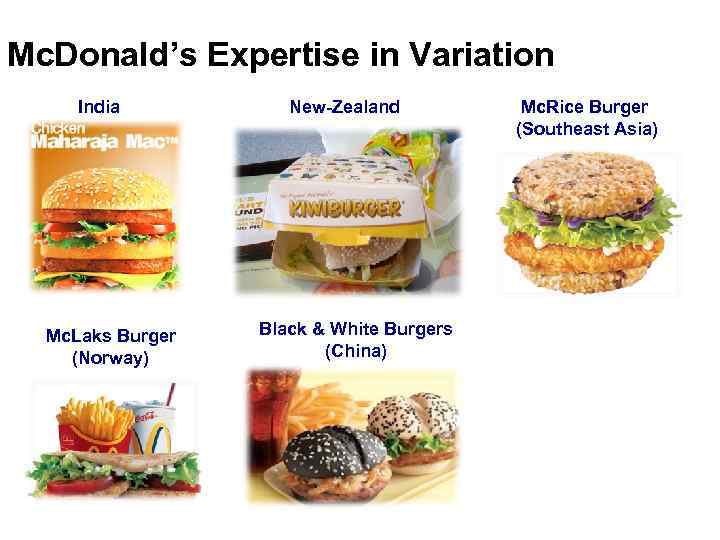
Mc. Donald’s Expertise in Variation India Mc. Laks Burger (Norway) New-Zealand Black & White Burgers (China) Mc. Rice Burger (Southeast Asia)
Summary Red. Bull and Packaging Nokia and Economic Adaptation Levi Strauss and Adaptation H&B and Adaptation Reebok and Adaptation Ford Motor Company and Adaptation Mc. Donald’s and Adaptation
Скачать презентацию 9 EXAMPLES OF FIRMS IMPLEMENTING GLOBAL STRATEGY
Brands.ppt