 Скачать презентацию 9 30 13 4 th Bellringer Vocab Homework Due Thursday
781f29b5f761bf13608ad5fc5174540b.ppt
- Количество слайдов: 40




9/30/13 4 th Bellringer: Vocab Homework Due Thursday Carrying Capacity & Ecofootprint DISCUSSION & NOTES
VOCAB Pick one of these vocabulary terms and Try and explain what it means in your own words Carrying Capacity Sustainability Ecological Footprint
Carrying Capacity and the Ecological Footprint
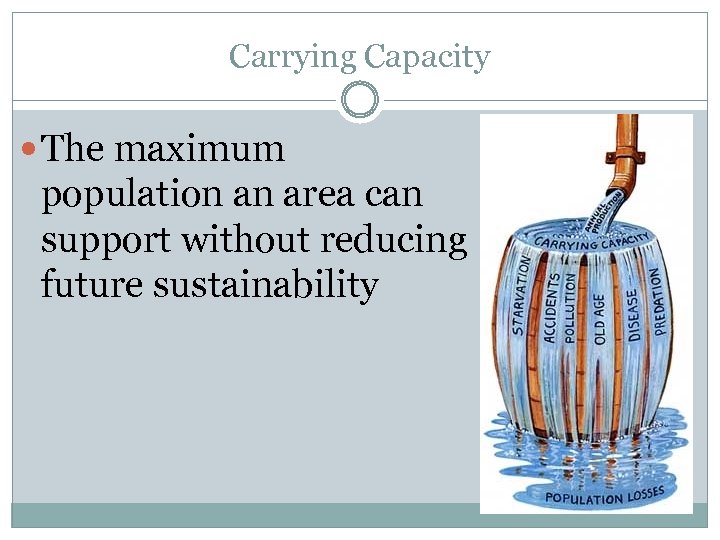
Carrying Capacity The maximum population an area can support without reducing future sustainability
Chicago CTA as an example Early Sunday Morning The train is well below C. C. (empty seats, lots of space) Addison Redline Stop when the Cubs game ends The train is above C. C. (overuse, crowding, not sustainable) Monday Rush Hour The train is at C. C. (all resources are filled, no empty space)
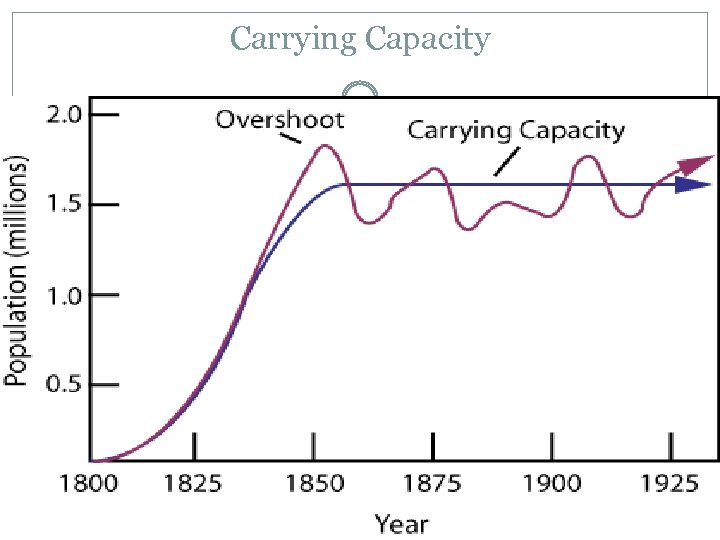
Carrying Capacity
Carrying Capacity Is a function of both of the area and the individual Area = How beneficial is the land? Individual= How much land does the particular individual need?
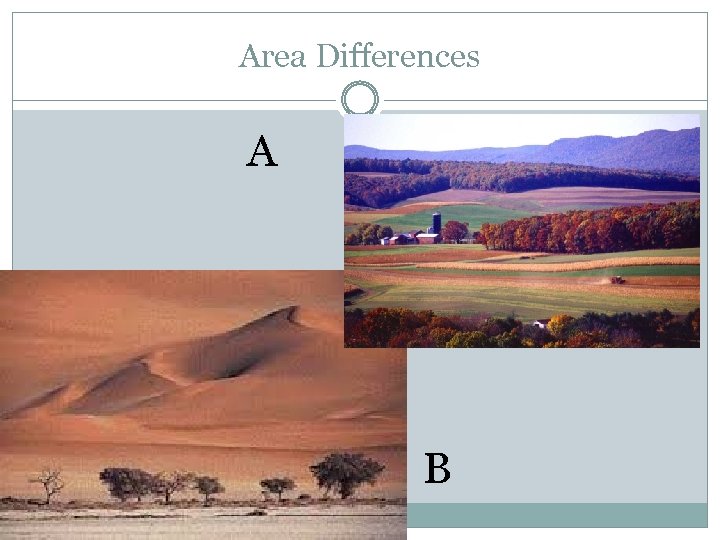
Area Differences A B
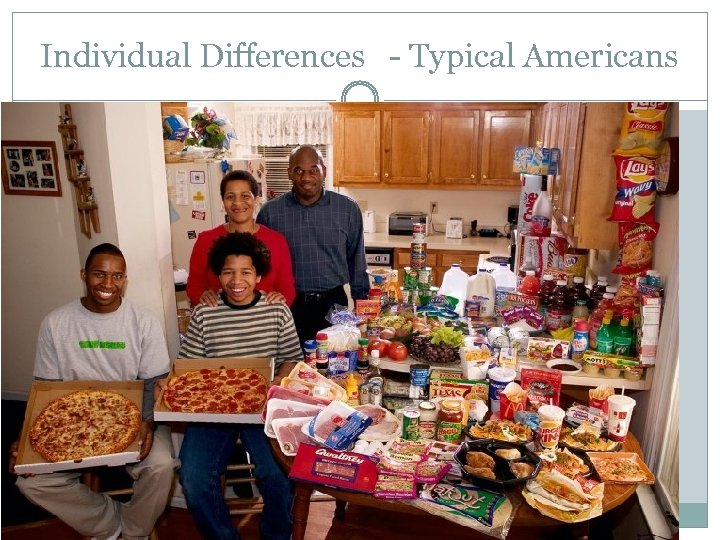
Individual Differences - Typical Americans
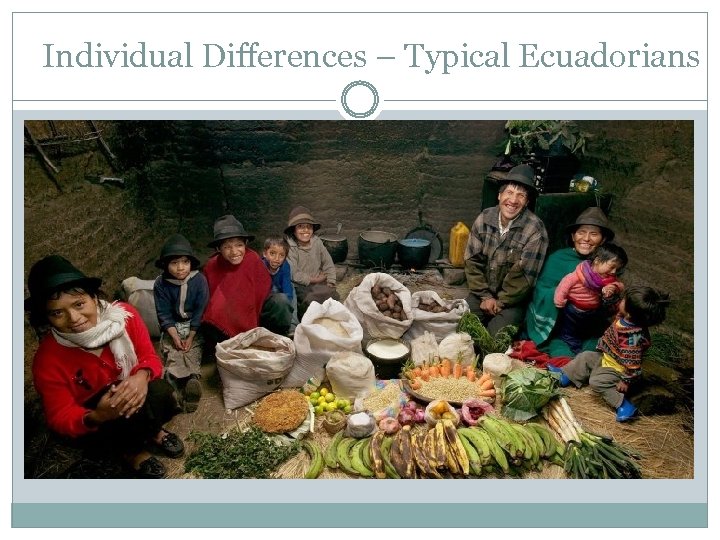
Individual Differences – Typical Ecuadorians
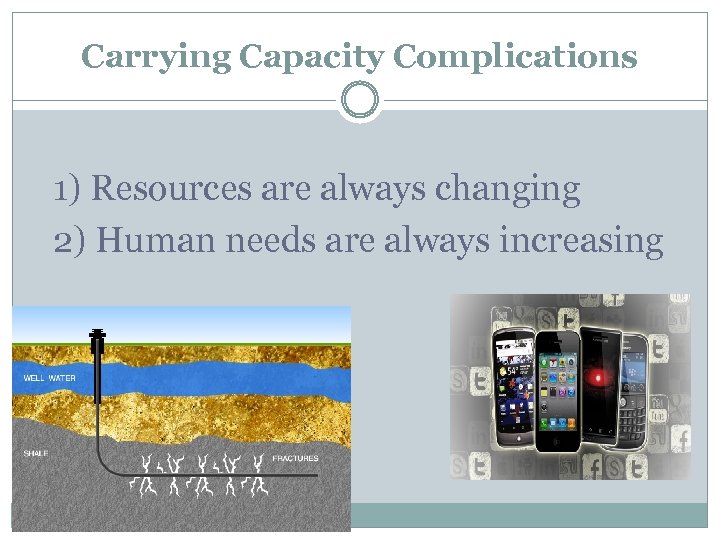
Carrying Capacity Complications 1) Resources are always changing 2) Human needs are always increasing
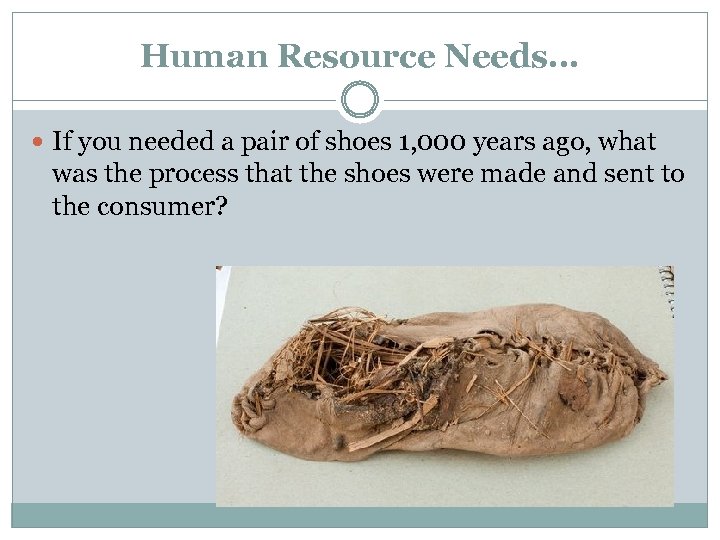
Human Resource Needs… If you needed a pair of shoes 1, 000 years ago, what was the process that the shoes were made and sent to the consumer?
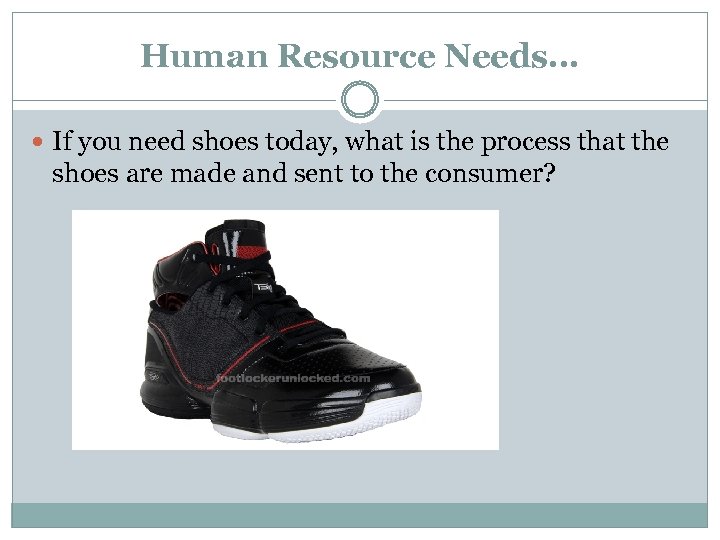
Human Resource Needs… If you need shoes today, what is the process that the shoes are made and sent to the consumer?
Ecological Footprint
What is an Eco. Footprint? A measure of how much resources are needed for a person to live their current lifestyle.
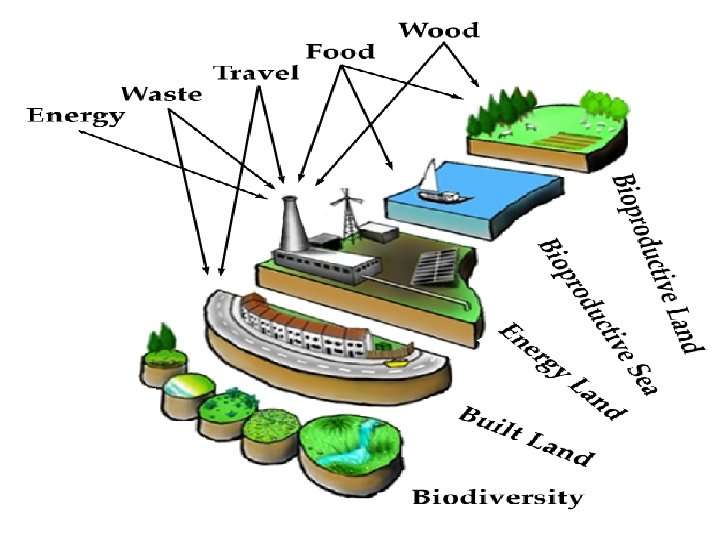
The Concept
Ecological Footprint Depending on the type of country you live in, your ecological footprint will vary greatly!
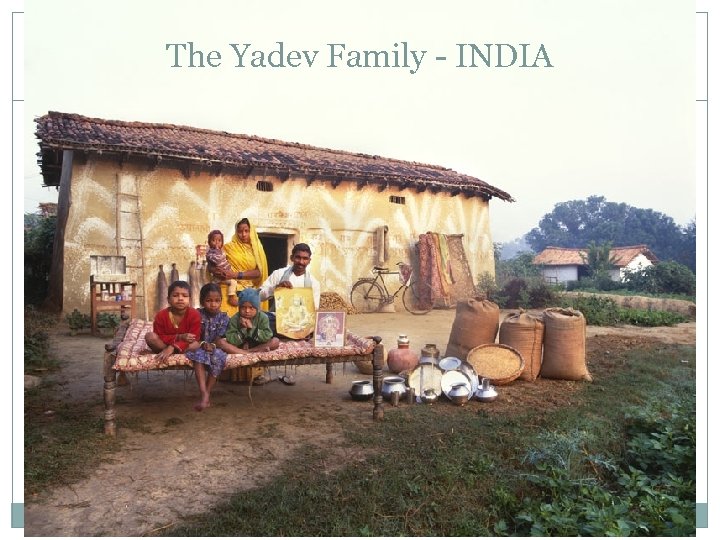
The Yadev Family - INDIA
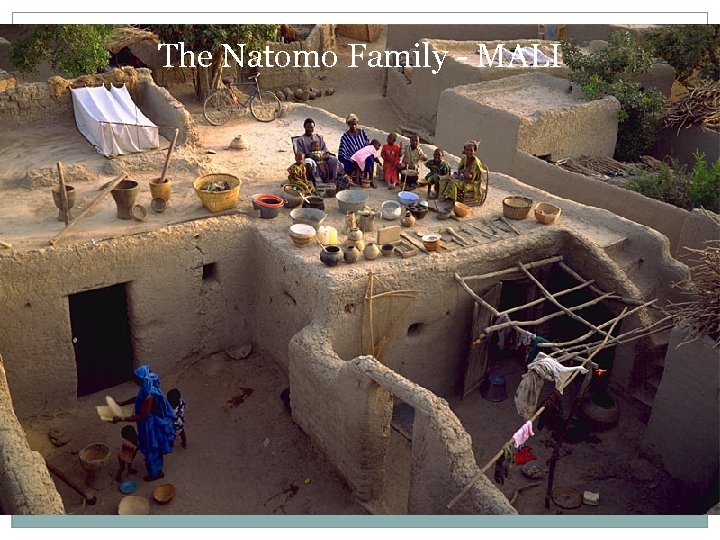
The Natomo Family - MALI
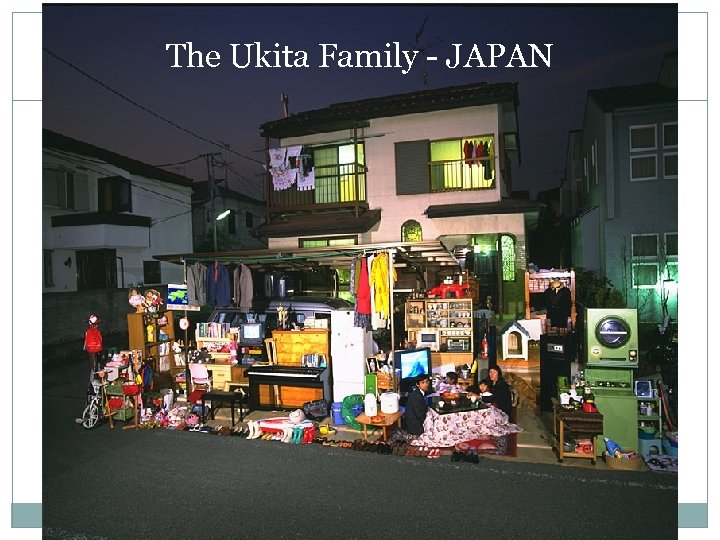
The Ukita Family - JAPAN

The Skeen Family - USA
Common Misconception A bus uses more gasoline than a car. However, a person who rides the bus has a smaller ecofootprint than someone who drives a car. Explain how this is possible.
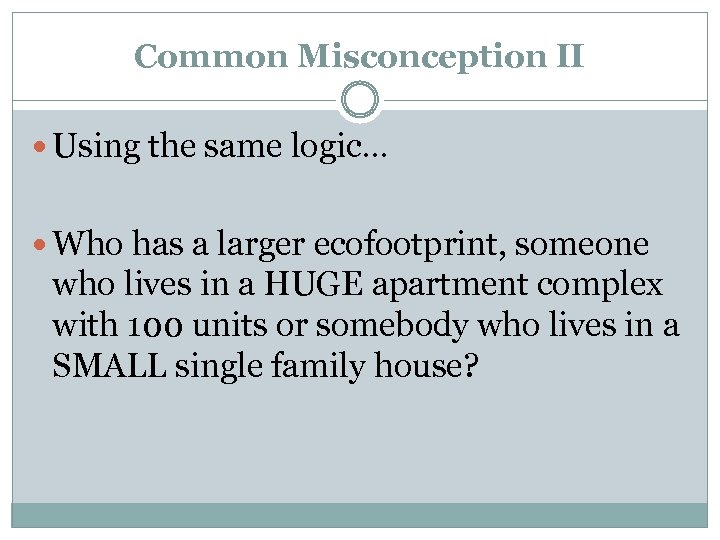
Common Misconception II Using the same logic… Who has a larger ecofootprint, someone who lives in a HUGE apartment complex with 100 units or somebody who lives in a SMALL single family house?
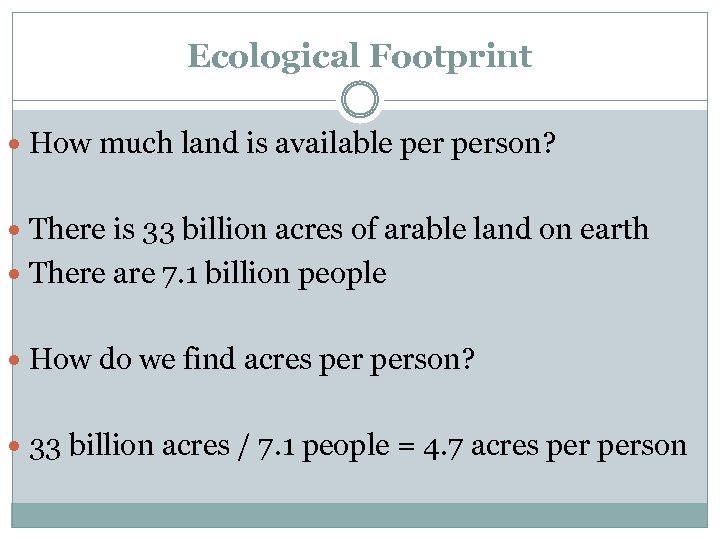
Ecological Footprint How much land is available person? There is 33 billion acres of arable land on earth There are 7. 1 billion people How do we find acres person? 33 billion acres / 7. 1 people = 4. 7 acres person
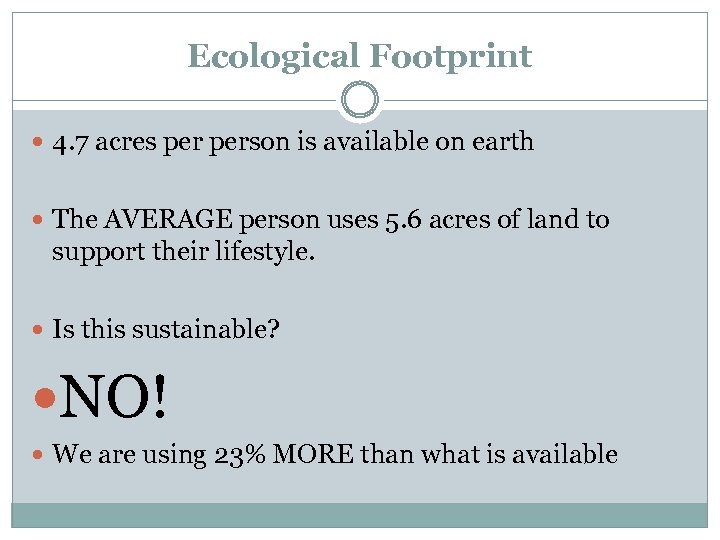
Ecological Footprint 4. 7 acres person is available on earth The AVERAGE person uses 5. 6 acres of land to support their lifestyle. Is this sustainable? NO! We are using 23% MORE than what is available
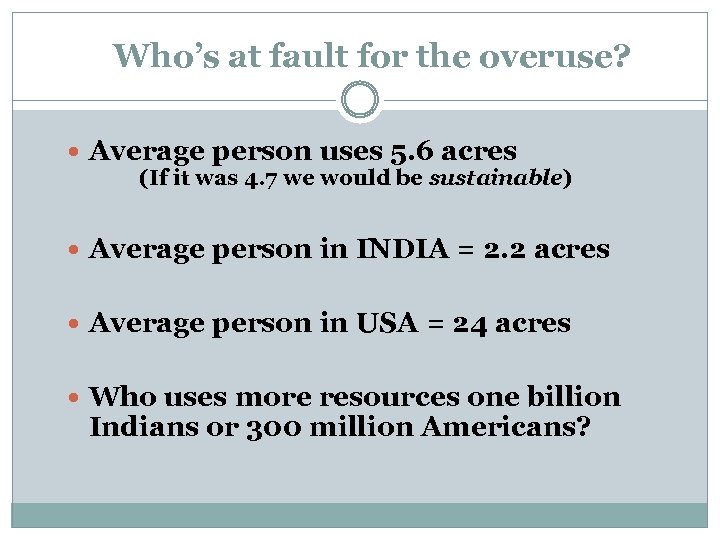
Who’s at fault for the overuse? Average person uses 5. 6 acres (If it was 4. 7 we would be sustainable) Average person in INDIA = 2. 2 acres Average person in USA = 24 acres Who uses more resources one billion Indians or 300 million Americans?
9/30/13 Bellringer: Ecofootprint Predictions Permission Slip (5 th) Pass out Vocab Homework (Due Thursday) Ecofootprint Equations Go to #205 to start Ecofootprint Activity
Ecofootprint Predictions Do you think your ecofootprint will be bigger or smaller than the class average? What did you base your prediction on?
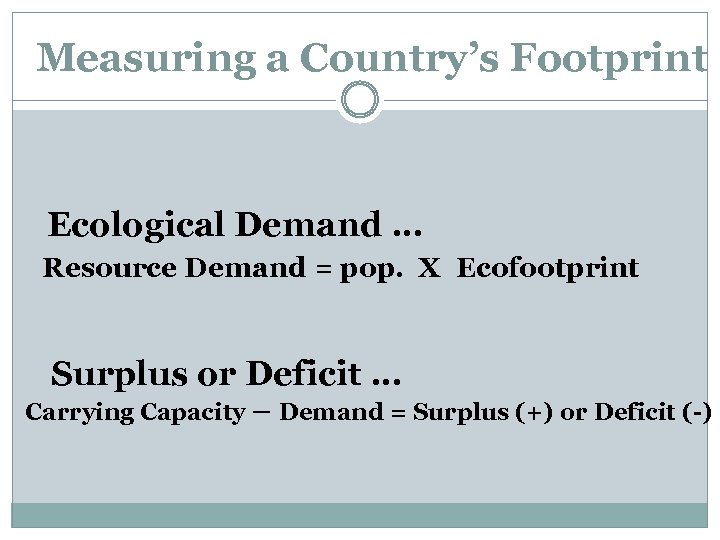
Measuring a Country’s Footprint Ecological Demand … Resource Demand = pop. X Ecofootprint Surplus or Deficit … Carrying Capacity – Demand = Surplus (+) or Deficit (-)
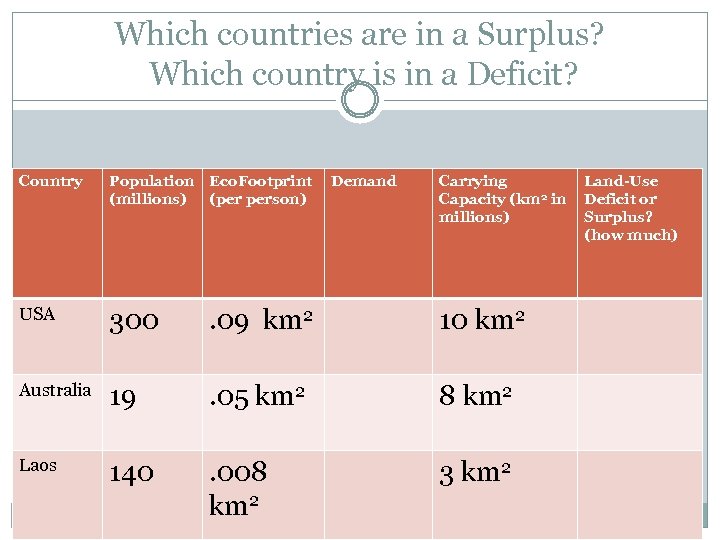
Which countries are in a Surplus? Which country is in a Deficit? Country Population Eco. Footprint (millions) (per person) Demand Carrying Capacity (km 2 in millions) USA 300 . 09 km 2 10 km 2 Australia 19 . 05 km 2 8 km 2 Laos 140 . 008 km 2 3 km 2 Land-Use Deficit or Surplus? (how much)
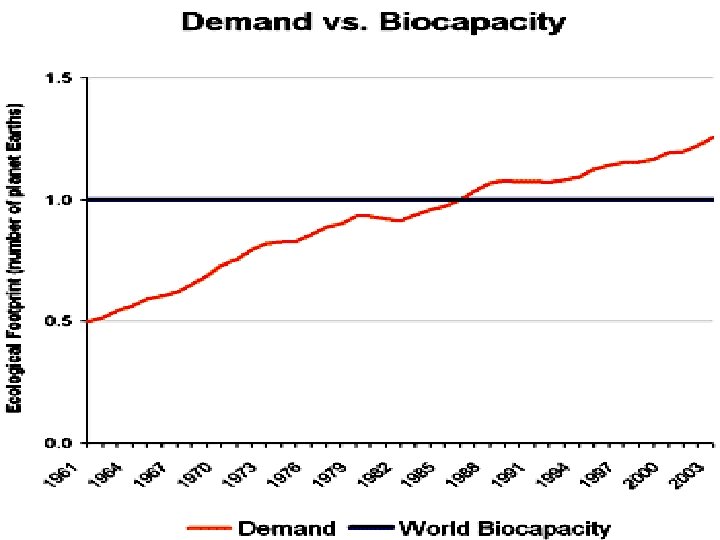
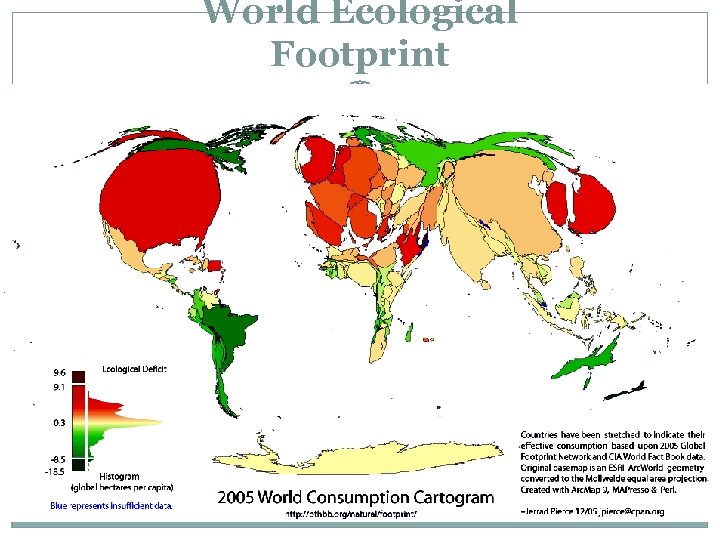
World Ecological Footprint
Ecological Footprint Answer Questions 1 -4. Then share those responses with your neighbor and answer question 5. 1) Approximately how far do you travel to school? 2) What is your most used type of transportation? 3) How many times a week do you eat animal products? 4) Do you live in a single family house, shared house or apartment? 5) Based on your answers, who uses the most resources?
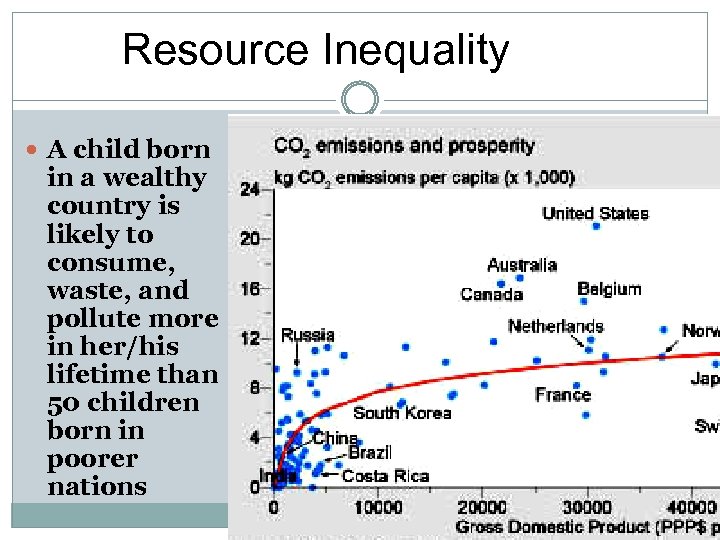
Resource Inequality A child born in a wealthy country is likely to consume, waste, and pollute more in her/his lifetime than 50 children born in poorer nations
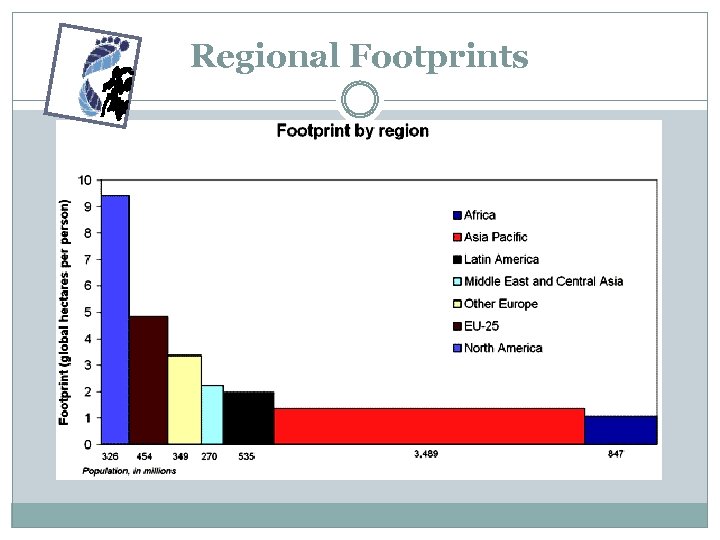
Regional Footprints
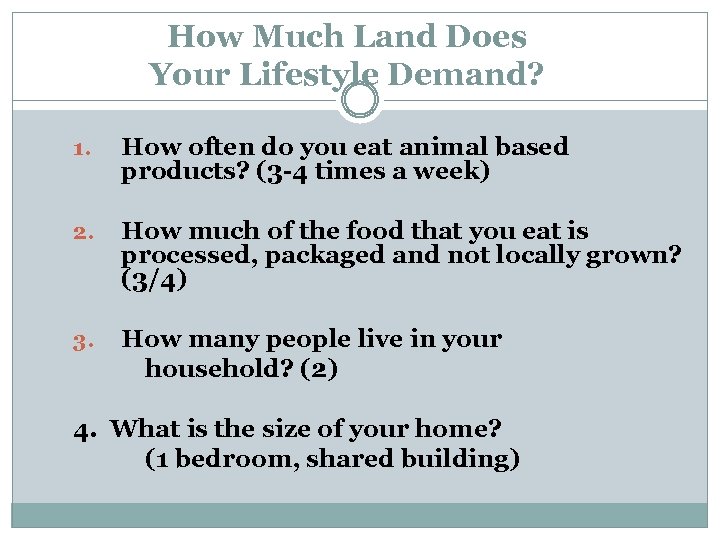
How Much Land Does Your Lifestyle Demand? 1. How often do you eat animal based products? (3 -4 times a week) 2. How much of the food that you eat is processed, packaged and not locally grown? (3/4) 3. How many people live in your household? (2) 4. What is the size of your home? (1 bedroom, shared building)
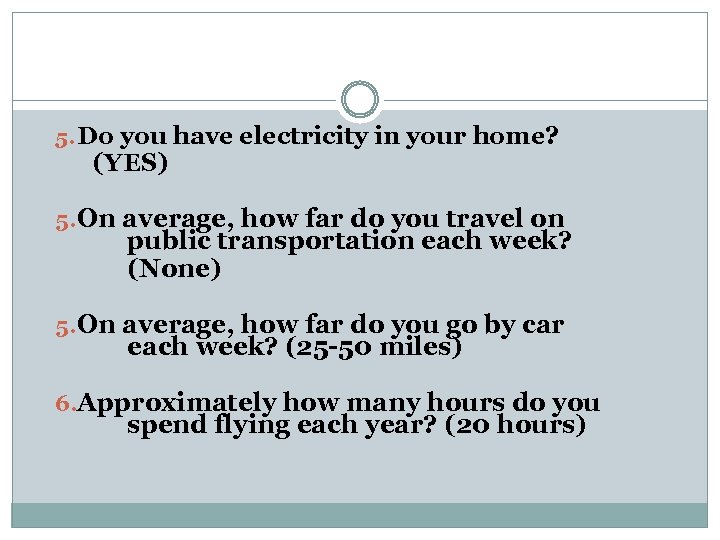
5. Do you have electricity in your home? (YES) 5. On average, how far do you travel on public transportation each week? (None) 5. On average, how far do you go by car each week? (25 -50 miles) 6. Approximately how many hours do you spend flying each year? (20 hours)
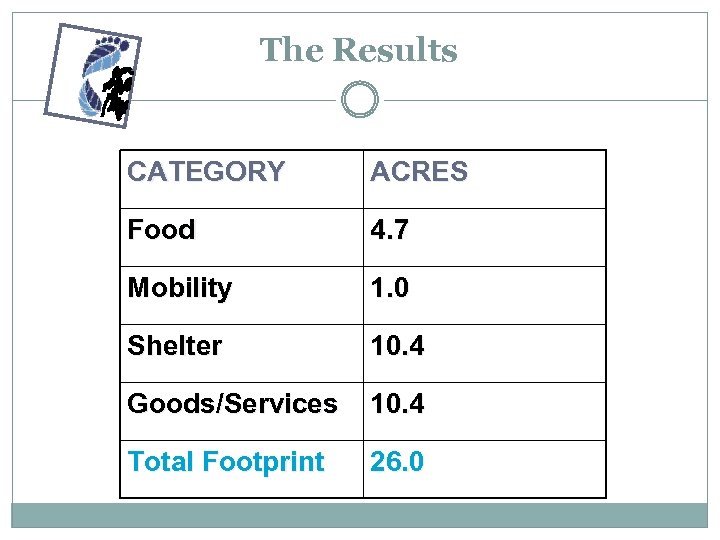
The Results CATEGORY ACRES Food 4. 7 Mobility 1. 0 Shelter 10. 4 Goods/Services 10. 4 Total Footprint 26. 0
What Does it Mean? This means I need 26 acres to sustain my lifestyle (WORLDWIDE, THERE EXIST 4. 7 BIOLOGICALLY PRODUCTIVE ACRES PERSON) SO IF EVERYONE LIVED LIKE ME, WE WOULD NEED 5. 9 PLANETS
If everyone in the world lived as we do in the United States, we would need over 7½ planets to live sustainably
Скачать презентацию 9 30 13 4 th Bellringer Vocab Homework Due Thursday
781f29b5f761bf13608ad5fc5174540b.ppt