 Скачать презентацию 80 th IFLA General Conference and Assembly 16
671a97db574e191624e2fa40cc54d757.ppt
- Количество слайдов: 32



80 th IFLA General Conference and Assembly 16 -22 August 2014, Lyon, France Session 210 “New technologies, information, users and libraries: Looking into the future” (Thursday, 21 August, Auditorium Pasteur) The 6 th wave of technological innovation: from information and communication technologies (ICT) to converging nano-bio-info-cognitive (NBIC) technologies Dr. Yuri Chernyy INION RAN, Moscow, Russia yuri. chiorny@mail. ru
Introduction. Five theses of the presentation What does the phrase “Looking into the future” mean in the context of new technologies, information, users and libraries? The five theses of the presentation. Here the Russian scientific community perspective is presented. This community gathered at the joint seminar “Methodological problems in the sciences of information“, which was organized by IPI RAN and INION RAN (two academic institutions in Moscow). 2
Thesis 1 Libraries originated in ancient times in traditional societies. In their essence, they have been conservative institutions, which preserve social memory. Libraries are older than the modern technogenic civilization, which originated in Western Europe after the Reformation (approximately in the 17 th century). In the context of scientific and technical progress, technodocuments (photography, audiorecording, cinema etc. ) appeared in the 19 th century and then the Internet appeared at the end of the 20 th century. After the advent of technodocuments and the Internet, libraries cannot remain unchanged any longer, as they used to be in traditional societies. 3
Thesis 2 To the man-in-the-street, it seems that new technologies appear out of nothing like by magic. Example: 15 years ago there were no social media like Facebook. Where did it come from? 10 years ago there were no smart phones as we know them today. Now we take all this for granted as being part of our daily life. Today we can use our smart phone using our voice. What will appear over the next 10/15/20 years? This question has received little attention. We know too little about the laws of technological development. But lack of knowledge does not mean that such laws do not exist. We must find out about them so that we can use this knowledge in our practical actions. The father of modern sociology French philosopher and scientist Auguste Comte said: “To know in order to predict; to predict in order to act” (“Savoir pour prévoir, prévoir pouvoir”). 4
Thesis 3 In the past and in the present, libraries had and have adaptation strategies to technologies. Technology is defined here as any means that can convey our thoughts and aims. For example, music, language and body language are technologies. Historically speaking, libraries first adapted to technologies of handwriting and later to technologies of the printed book. Now they are adapting to technologies of electronic (digital) communication. 5
Thesis 4 Modern society from 1770 s has gone through five waves of technological innovation. Now the world is standing on the threshold of a new technological revolution: the 6 th wave of technological innovation. Research predicts that in four years’ time (2018), everybody will experience this revolution in their daily lives. Libraries are neither ready for this revolution nor aware of it. 6
Thesis 5 From a theoretical point of view, libraries may choose a non-adaptive strategy to technologies. This might be called a co-evolution strategy because librarians and technology specialists can work together and create a new common sociotechnological reality. Technologies are neutral. Its use is not neutral. Its use should be underpinned by the humanistic values libraries have been working with traditionally. Then libraries will be actors of social change, they will effect change, instead of just adapting to it. 7
Libraries in the future: adaptation or co-evolution? How much longer should libraries adapt? Is that the only option: to always adapt? 8
2. Thesis 4. Waves of technological innovation 2. 1. Kondratiev waves In the beginning of 1920 s, Russian economist Nikolai Kondratiev (1892 -1938), based on statistical materials, showed empirically that the economic activity of industrial developed countries has a cyclic character. The period of “long” cycle covers approximately 50 years (+/- 10 years). Kondratiev predicted “The great depression” (world economy crisis in 1929 -39). 9
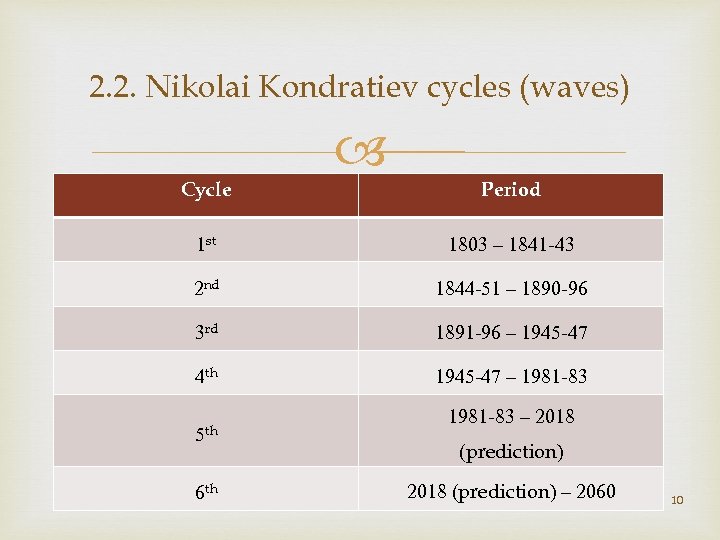
2. 2. Nikolai Kondratiev cycles (waves) Cycle Period 1 st 1803 – 1841 -43 2 nd 1844 -51 – 1890 -96 3 rd 1891 -96 – 1945 -47 4 th 1945 -47 – 1981 -83 5 th 6 th 1981 -83 – 2018 (prediction) – 2060 10
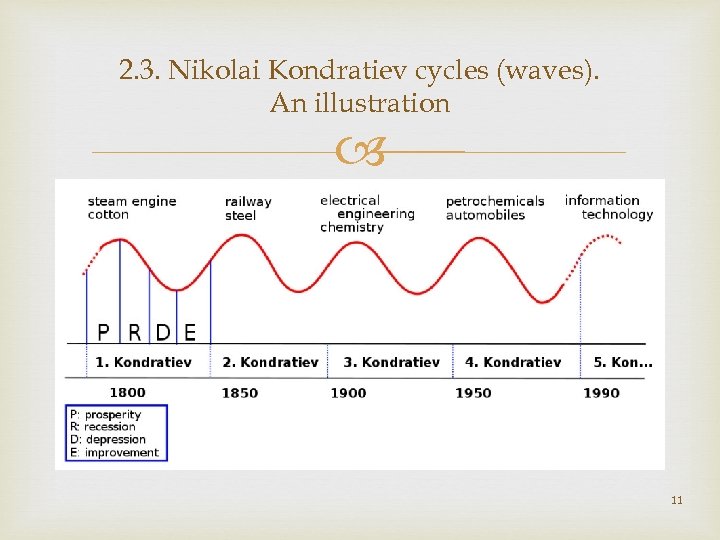
2. 3. Nikolai Kondratiev cycles (waves). An illustration 11
2. 4. From economic cycles to the innovation theory of business cycles Austrian-American economist Joseph Schumpeter (18831950), based on N. Kondratiev’s ideas, proposed in 1930 s the innovation theory of business cycles. According to Schumpeter, innovations bring about long economic cycles. When innovations enter the market, the whirlwind of “creative destruction” appears. Creative destruction undermines the balance of the current economic system. As a result: The outdated technologies are displaced from the market. The existing economic structures become obsolete. 12
2. 5. The definition of “technological path” Seeking to establish the material reasons which are the cornerstone of Kondratiev waves, the Russian economists academicians Dmitry Lvov (1930 -2007) and Sergey Glazyev (born in 1961) proposed the concept of technological path (“technologicheskij uklad”). A technological path is a set of the interconnected technological productions developing synchronously. At the base of each long cycle, there is a certain type of basic technology. Technological inventions appear first, and then a new Kondratiev wave follows. 13
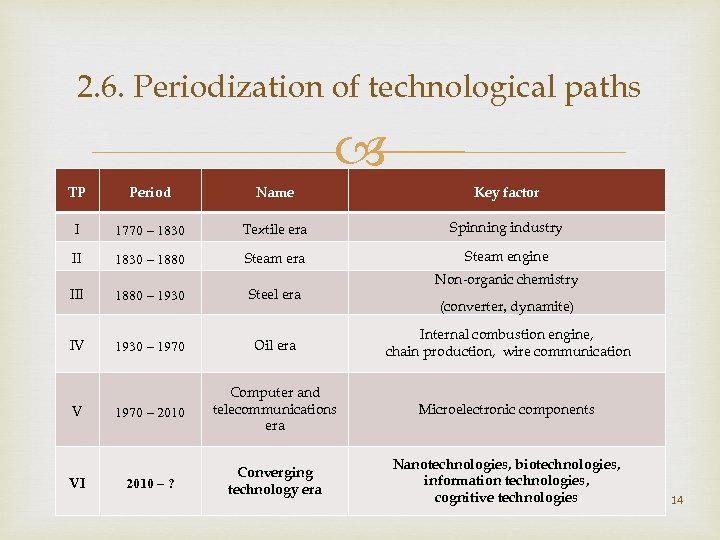
2. 6. Periodization of technological paths TP Period Name Key factor I 1770 – 1830 Textile era Spinning industry II 1830 – 1880 Steam era Steam engine Non-organic chemistry III 1880 – 1930 Steel era IV 1930 – 1970 Oil era Internal combustion engine, chain production, wire communication 1970 – 2010 Computer and telecommunications era Microelectronic components 2010 – ? Converging technology era Nanotechnologies, biotechnologies, information technologies, cognitive technologies V VI (converter, dynamite) 14
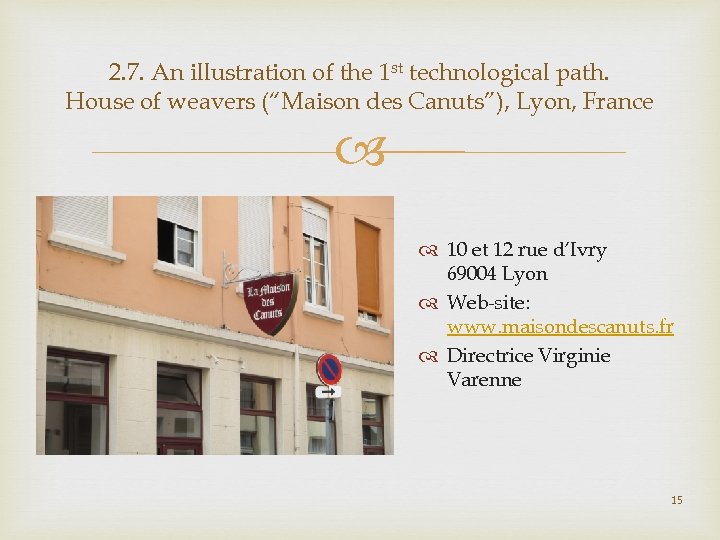
2. 7. An illustration of the 1 st technological path. House of weavers (“Maison des Canuts”), Lyon, France 10 et 12 rue d’Ivry 69004 Lyon Web-site: www. maisondescanuts. fr Directrice Virginie Varenne 15
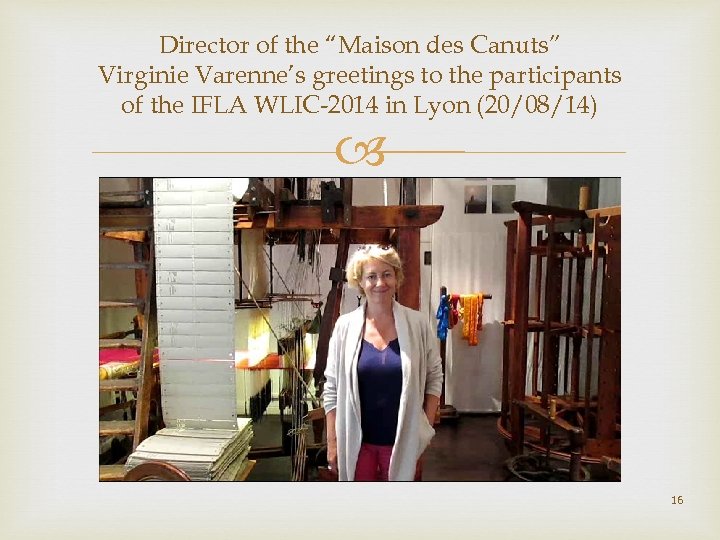
Director of the “Maison des Canuts” Virginie Varenne’s greetings to the participants of the IFLA WLIC-2014 in Lyon (20/08/14) 16
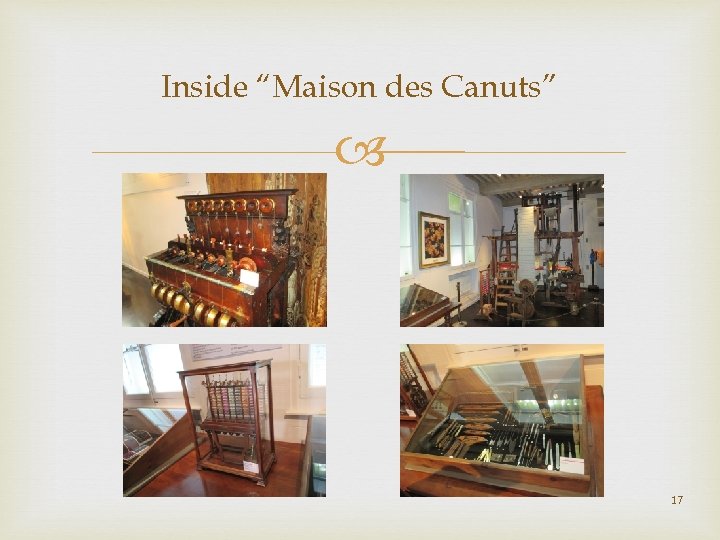
Inside “Maison des Canuts” 17
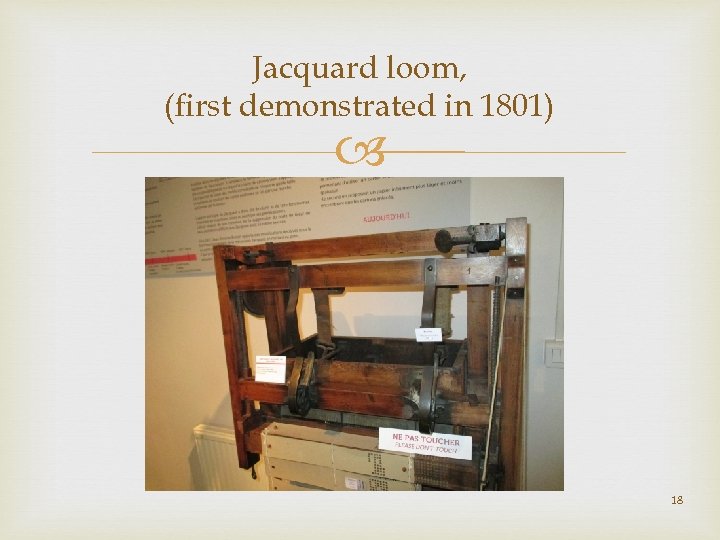
Jacquard loom, (first demonstrated in 1801) 18
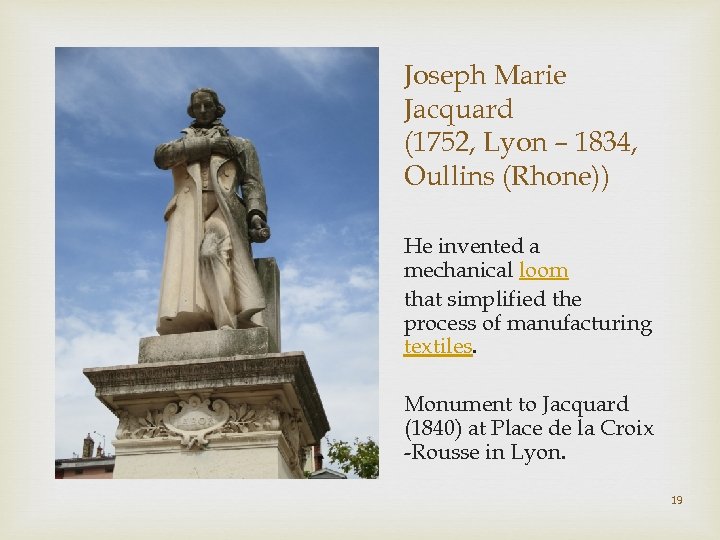
Joseph Marie Jacquard (1752, Lyon – 1834, Oullins (Rhone)) He invented a mechanical loom that simplified the process of manufacturing textiles. Monument to Jacquard (1840) at Place de la Croix -Rousse in Lyon. 19
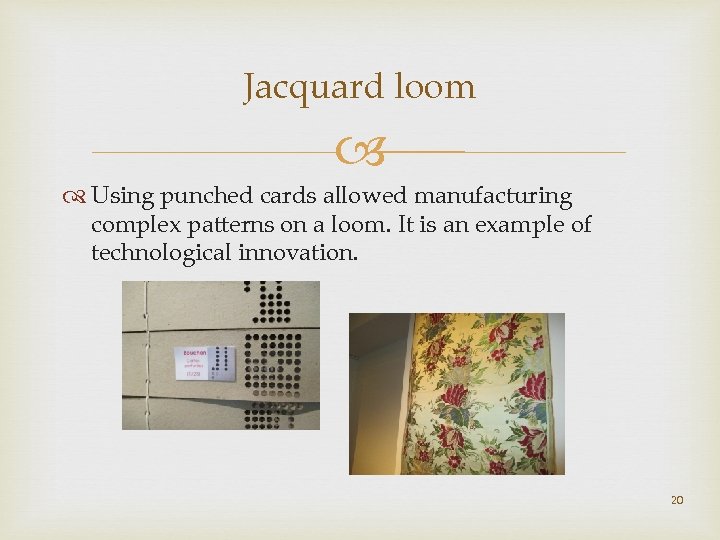
Jacquard loom Using punched cards allowed manufacturing complex patterns on a loom. It is an example of technological innovation. 20
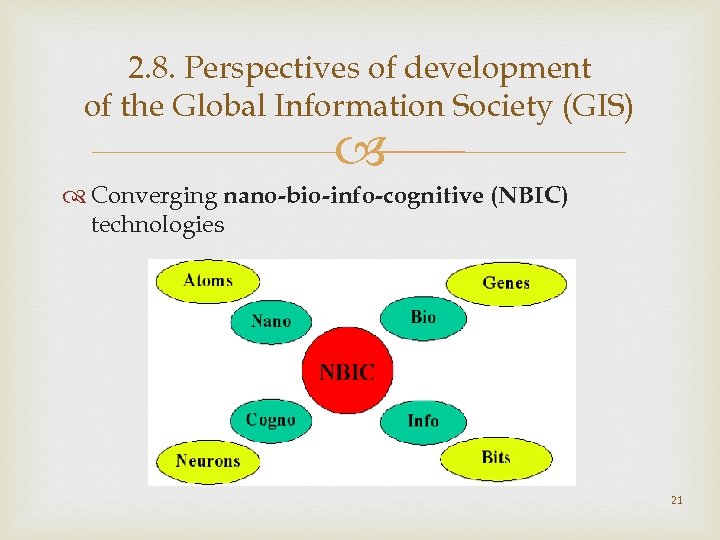
2. 8. Perspectives of development of the Global Information Society (GIS) Converging nano-bio-info-cognitive (NBIC) technologies 21
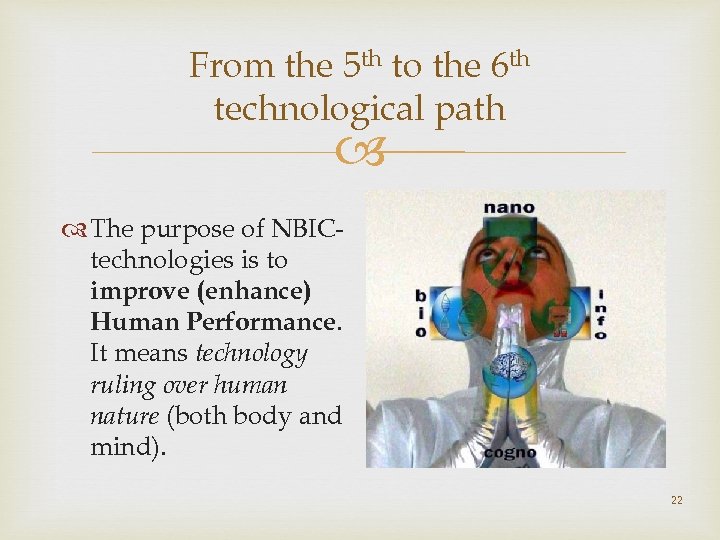
From the 5 th to the 6 th technological path The purpose of NBICtechnologies is to improve (enhance) Human Performance. It means technology ruling over human nature (both body and mind). 22
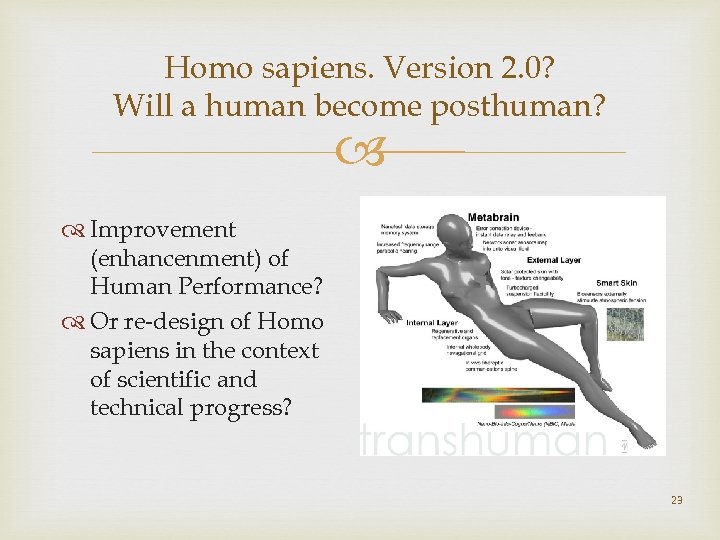
Homo sapiens. Version 2. 0? Will a human become posthuman? Improvement (enhancenment) of Human Performance? Or re-design of Homo sapiens in the context of scientific and technical progress? 23
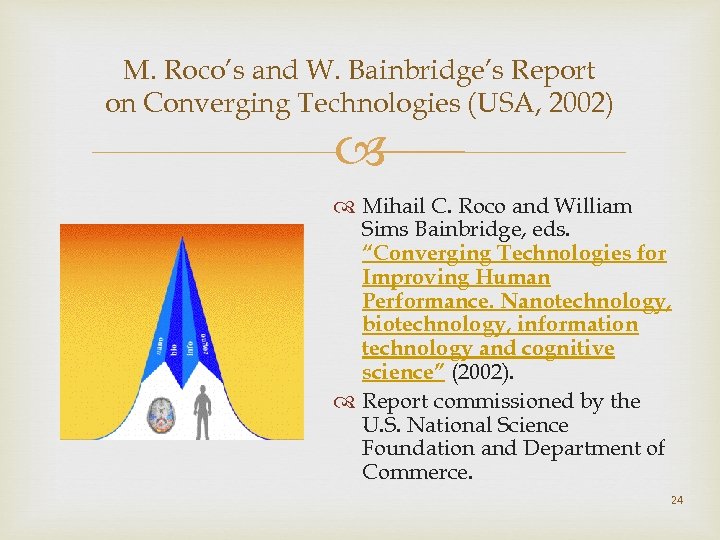
M. Roco’s and W. Bainbridge’s Report on Converging Technologies (USA, 2002) Mihail C. Roco and William Sims Bainbridge, eds. “Converging Technologies for Improving Human Performance. Nanotechnology, biotechnology, information technology and cognitive science” (2002). Report commissioned by the U. S. National Science Foundation and Department of Commerce. 24
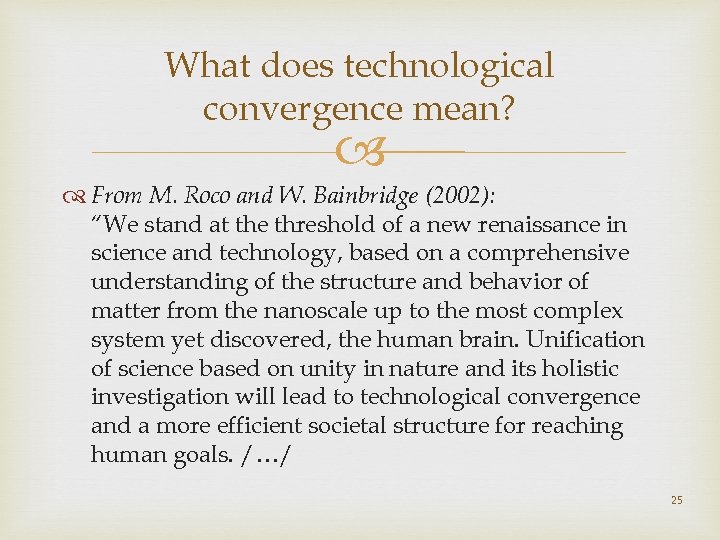
What does technological convergence mean? From M. Roco and W. Bainbridge (2002): “We stand at the threshold of a new renaissance in science and technology, based on a comprehensive understanding of the structure and behavior of matter from the nanoscale up to the most complex system yet discovered, the human brain. Unification of science based on unity in nature and its holistic investigation will lead to technological convergence and a more efficient societal structure for reaching human goals. /…/ 25
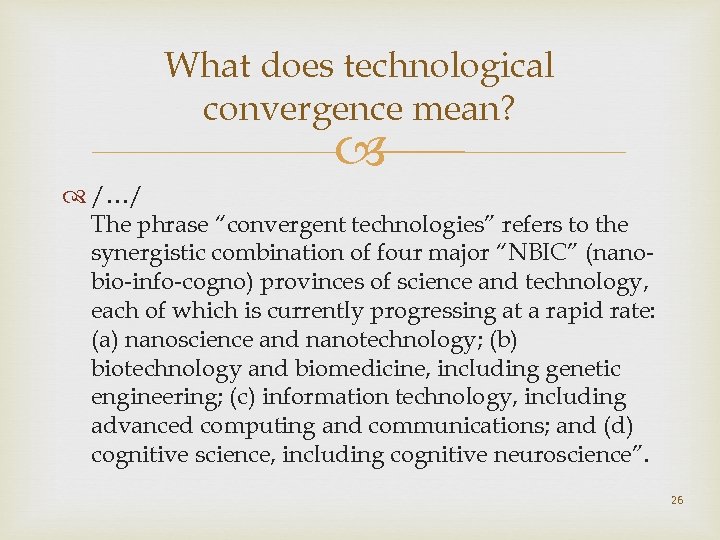
What does technological convergence mean? /…/ The phrase “convergent technologies” refers to the synergistic combination of four major “NBIC” (nanobio-info-cogno) provinces of science and technology, each of which is currently progressing at a rapid rate: (a) nanoscience and nanotechnology; (b) biotechnology and biomedicine, including genetic engineering; (c) information technology, including advanced computing and communications; and (d) cognitive science, including cognitive neuroscience”. 26
A. Nordmann’s Report on Converging Technologies (EU, 2004) Report “Converging Technologies – Shaping the Future of European Societies” by Alfred Nordmann, Rapporteur (2004). European approach to NBIC-convergence: “CTEKS – Converging Technologies for the European Knowledge Society”. 27
M. Roco on Global Governance of Converging Technologies (2008) Mihail C. Roco. ”Possibilities for global governance of converging technologies” (2008). 28
From ICT-technologies to converging NBIC-technologies Information and communication technology (ICT) was the first converging technology (as a result of the confluence of telecommunications, mass media and computer communications). Mass media has given the main content to ICT. Therefore mass media is stronger today than libraries, archive and museums. ICT will become a part (letter “I” - Info) of converging nano-bio-info-cognitive (NBIC) technologies. 29
What should librarians do in this context? First of all they should understand that now the world is standing on the threshold of a new technological revolution: the 6 th wave of technological innovation. Secondly they should change their mindsets and activity. Libraries may choose a co-evolution strategy, whereby librarians and technology specialists can work together and create a new common socio-technological reality. In the future libraries must be actors of social change, they must be able to effect change, instead of just adapting to it. 30
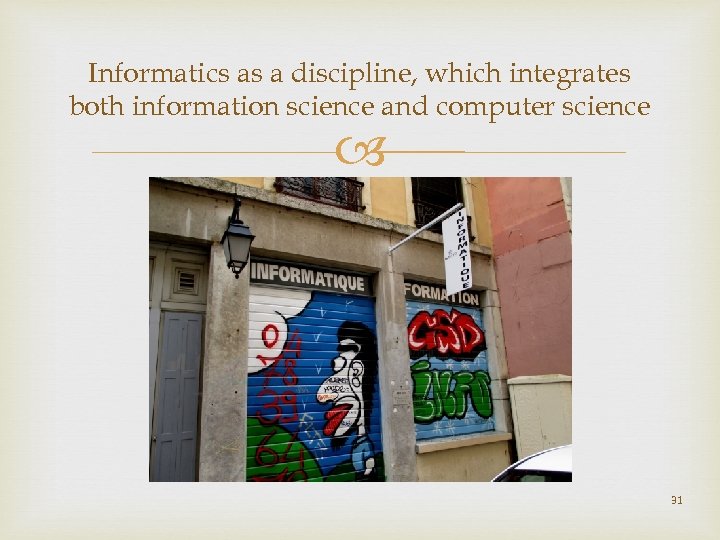
Informatics as a discipline, which integrates both information science and computer science 31
Acknowledgments Dr. Maria-Carme Torras Calvo, Chair of Division III “Information Service” and GB member, IFLA; Dr. Edmund Balnaves, Chair of the Information Technology Section, IFLA; All my colleagues and friends in Russia and Commonwealth of Independent States, who support my research work. Some of them are at IFLA in Lyon. Thank you all very much! 32
Скачать презентацию 80 th IFLA General Conference and Assembly 16
671a97db574e191624e2fa40cc54d757.ppt