


 Скачать презентацию 8 th Class Product Marketing Overview John
81e104034d57fec94ad4919a957c0b2a.ppt
- Количество слайдов: 35
 8 th Class Product Marketing Overview – John Gibbon Beta Programs, Review Programs – Brian Lawley Bus 100: Building Software Products: From Strategy to Sales John Gibbon
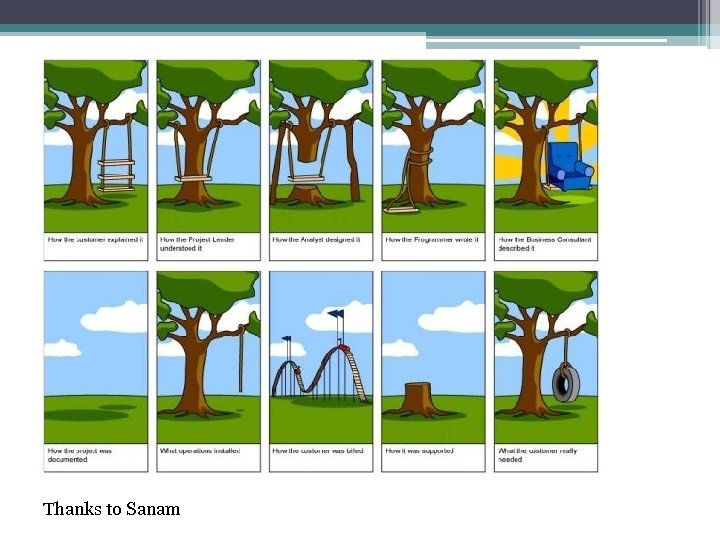 Thanks to Sanam
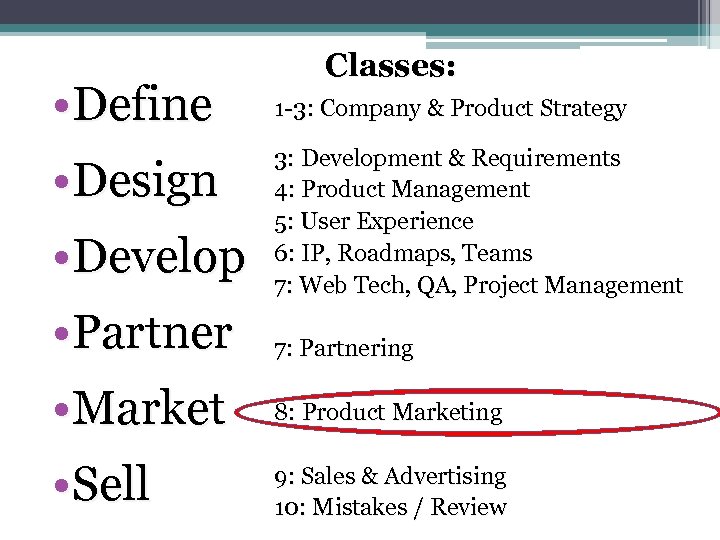 • Define • Design • Develop • Partner • Market • Sell Classes: 1 -3: Company & Product Strategy 3: Development & Requirements 4: Product Management 5: User Experience 6: IP, Roadmaps, Teams 7: Web Tech, QA, Project Management 7: Partnering 8: Product Marketing 9: Sales & Advertising 10: Mistakes / Review
 Product Marketing
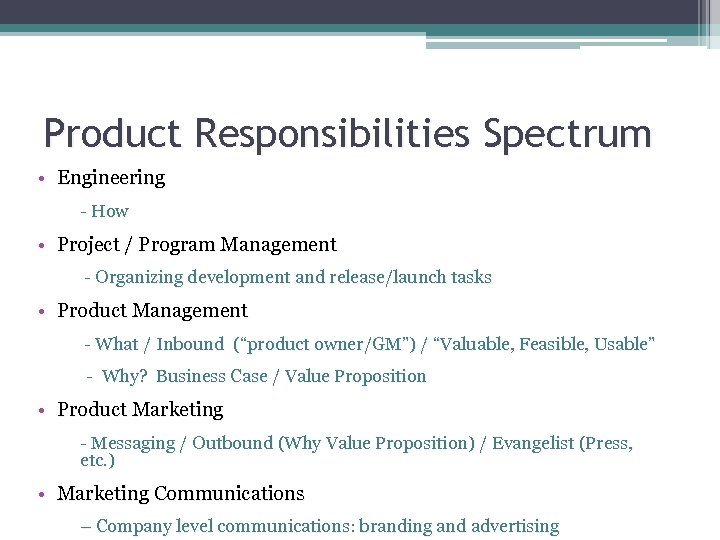 Product Responsibilities Spectrum • Engineering - How • Project / Program Management - Organizing development and release/launch tasks • Product Management - What / Inbound (“product owner/GM”) / “Valuable, Feasible, Usable” - Why? Business Case / Value Proposition • Product Marketing - Messaging / Outbound (Why Value Proposition) / Evangelist (Press, etc. ) • Marketing Communications – Company level communications: branding and advertising
 Product Marketing • Externally focused ▫ Customers, partners, analysts, press ▫ Messaging, positioning, and marketing products • Often same as product mgr, sometimes same as marketing • Go To Market ▫ Preparing sales channels ▫ Launching ▫ Promoting
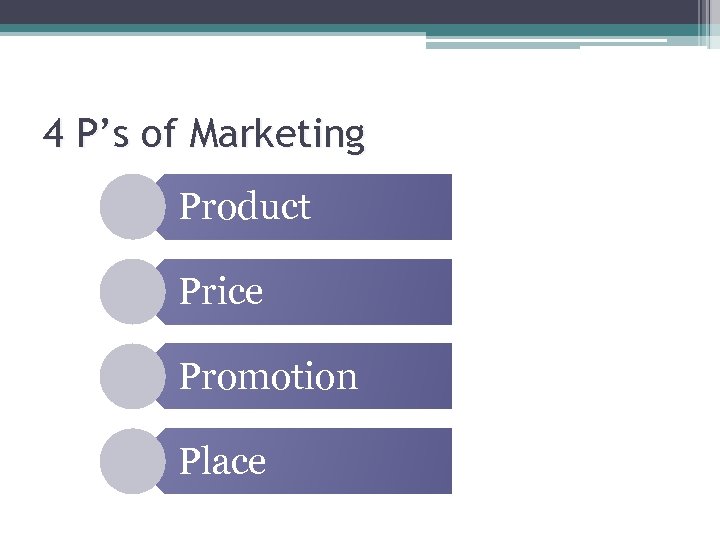 4 P’s of Marketing Product Price Promotion Place
 Product ?
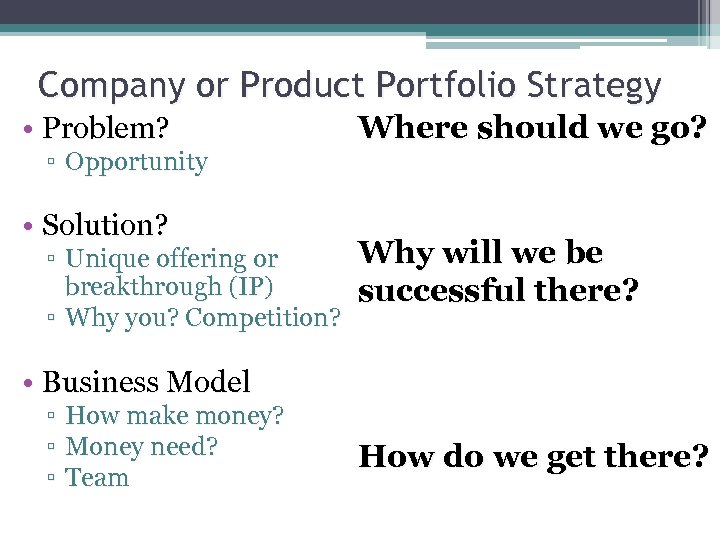 Company or Product Portfolio Strategy • Problem? ▫ Opportunity • Solution? ▫ Unique offering or breakthrough (IP) ▫ Why you? Competition? Where should we go? Why will we be successful there? • Business Model ▫ ▫ ▫ How make money? Money need? Team How do we get there?
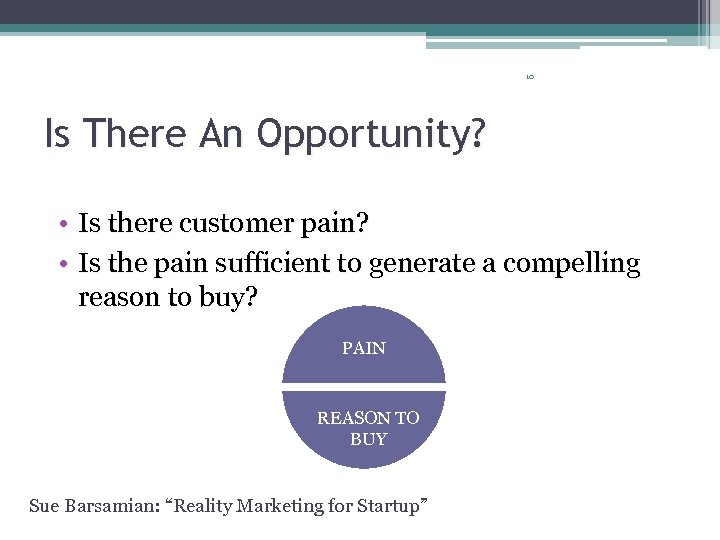 10 Is There An Opportunity? • Is there customer pain? • Is the pain sufficient to generate a compelling reason to buy? PAIN REASON TO BUY Sue Barsamian: “Reality Marketing for Startup”
 Market and Competitive Analysis Sources • Clients ▫ Surveys, Client Visits, Informal Conversations • Industry Experts ▫ In your company, in your network, Trade associations, conferences, Identifying clients that are market influencers • Internet and Published Sources ▫ Annual Reports, Trade Journals, Competitor websites, Google, Quantcast, Company listings (Hoovers, Tradevibes), Newspaper articles, Tradeshows, Industry Research (Forrester, Gartner, Yankee, IDC, Giga)
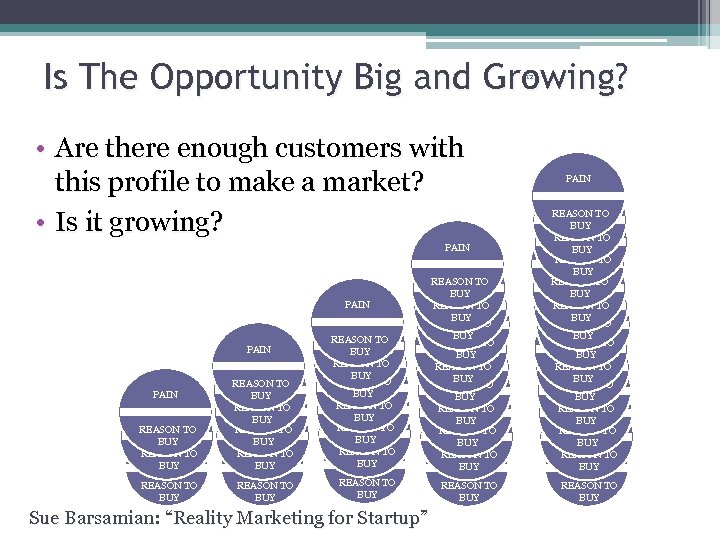 Is The Opportunity Big and Growing? 12 • Are there enough customers with this profile to make a market? • Is it growing? PAIN REASON TO BUY PAIN REASON TO PAIN BUY REASON TO PAIN BUY REASON TO BUY PAIN REASON TO PAIN BUY REASON TO PAIN BUY REASON TO PAIN BUY REASON TO PAIN BUY REASON TO BUY PAIN REASON TO BUY REASON TO BUY PAIN Sue Barsamian: “Reality Marketing for Startup”
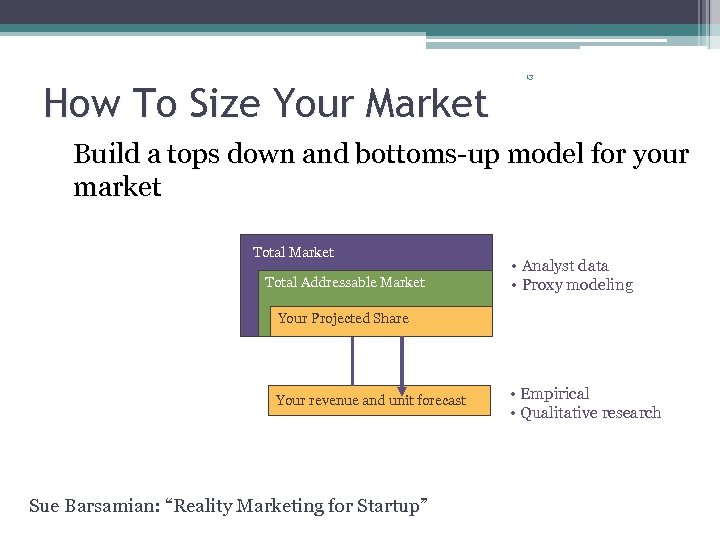 How To Size Your Market 13 Build a tops down and bottoms-up model for your market Total Market Total Addressable Market • Analyst data • Proxy modeling Your Projected Share Your revenue and unit forecast Sue Barsamian: “Reality Marketing for Startup” • Empirical • Qualitative research
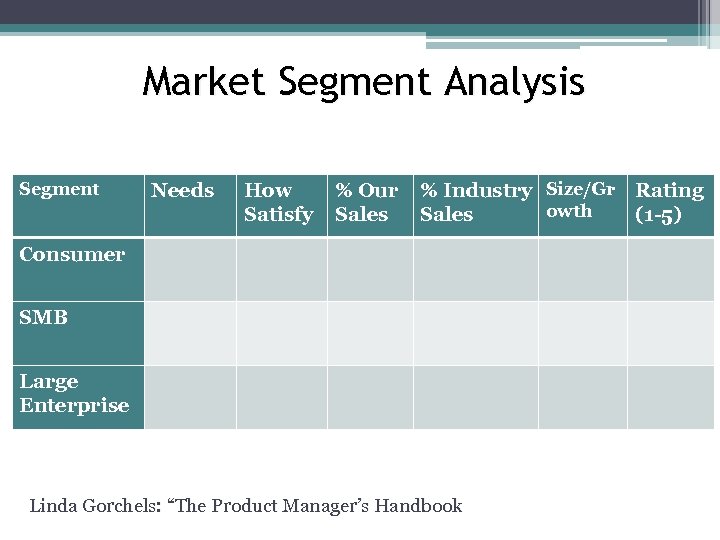 Market Segment Analysis Segment Needs How Satisfy % Our Sales % Industry Size/Gr Rating owth Sales (1 -5) Consumer SMB Large Enterprise Linda Gorchels: “The Product Manager’s Handbook
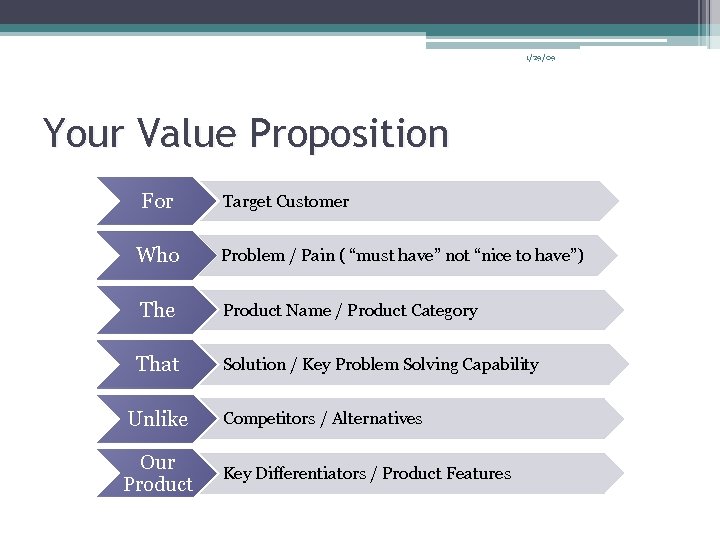 1/29/09 Your Value Proposition For Target Customer Who Problem / Pain ( “must have” not “nice to have”) The Product Name / Product Category That Solution / Key Problem Solving Capability Unlike Competitors / Alternatives Our Product Key Differentiators / Product Features
 Product • Sell Product as Being Built Provides critical feedback • Follow The Money To see what customers want To find company’s sweet spot Antony Awaida “Energize Your Go -to-Market Strategy”
 Price • What are success metrics / business plan? • Pricing models / schedules ▫ Per User, Per Concurrent User, Subscription, One Time License & On-going Maintenance, Freemium, Ad Supported, Combination • 4 C’s of Pricing – Alyssa Dver “Software Product Management Essentials” ▫ ▫ Cost: build, market, sell, support, etc. Customer: value proposition, value derives Competition: their pricing, your positioning (5 th “P”) Change: during lifecycle of product
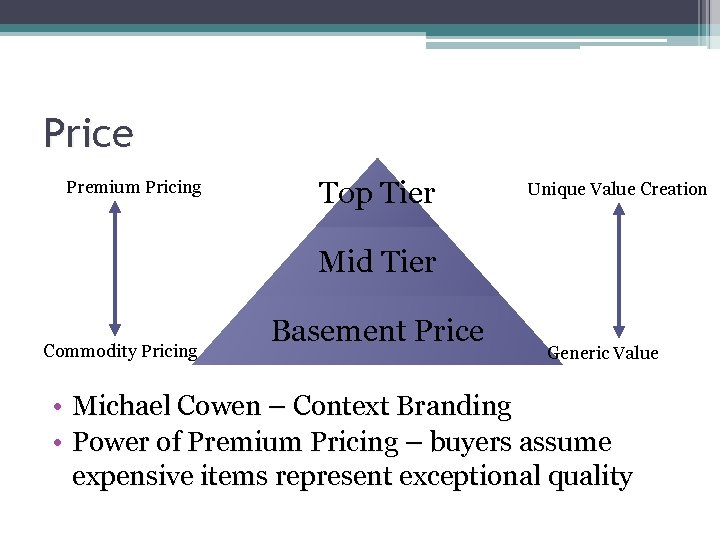 Price Premium Pricing Top Tier Unique Value Creation Mid Tier Commodity Pricing Basement Price Generic Value • Michael Cowen – Context Branding • Power of Premium Pricing – buyers assume expensive items represent exceptional quality
 Promotion Superchick Megaphone Girl Logo
 Promotion – Communicating with Your Customer • Know Customer Profile • Models to reach customer ▫ Advertising, direct marketing (mail/email), internet marketing, collateral, tradeshows, via channels, via partnerships • Demand Lead Generation • Public Relations Strategy ▫ Selection of PR Agency ▫ Aligning message across collaterals • Branding Strategy (term, symbol, design, packaging)
 Trademarks • Distinguishing attribute by which company easily identified ▫ Mark, Brand, Logo, Packaging, Color
 Promotion • Products are now discovered through a combination of blogs, search keyword- Ray Ozzie based advertising, online product marketing, and word-of-mouth. • Products must now embrace a “discover, learn, try, buy, recommend” cycle – sometimes with one of those phases being free,
 Web 2. 0 Marketing Using web-based tools to build social and business connections, share information and collaborate. … Tools like Used To Communicate with Your Customer • Product and Expert Blogs • Podcasts and Videocasts about Products • Blogs • Customer Forums and Communities • Wikis • Support Sites • Social Networking • Collaborative filtering • Digg. com, Del. icio. us • Viral Marketing via Twitter • RSS • Information and Positioning on • Podcasts Slide. Share. net • Virtual Worlds • Facebook Groups and Product Pages • On-line Communities • Virtual World Meetings and Exhibits • Online Advertising
 “Here’s the only secret you need to know: The web is a place where people with shared passions form communities around those passion” “Rex Hammock, Founder/CEO of the content marketing and media firm”
 Corporate Weblog Manifesto By Robert Schoble • Tell the truth, post fast on good news or bad • Be the authority on your product / company • Know who is talking about you • Talk to the grassroots and use a human voice • Underpromise and over deliver
 “The Secrets of Marketing in a Web 2. 0 World” WSJ Feb 24 2009 • Don’t talk to consumers – get them involved ▫ Forums, communities, wikis; but need moderator • Give customers reasons to participate ▫ Their own topics, rewards to registered users • Listen to – and join – the conversation outside of your site ▫ Watch Digg. com, Del. icio. us) • • Resist Temptation to Sell, Sell Don’t control, let it go. Find a “marketing technopologist” Embrace experimentation • Wall Street Journal 2/24/09 http: //s. wsj. net/article/SB 122884677205091919. html
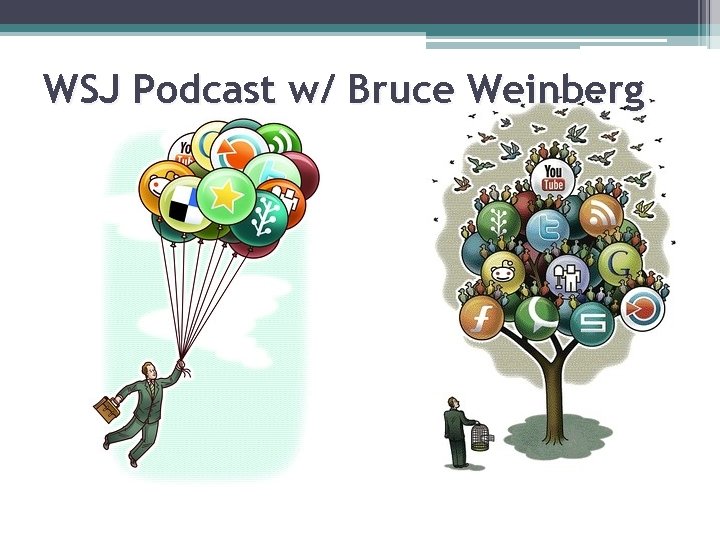 WSJ Podcast w/ Bruce Weinberg
 Enterprise 2. 0 But adapted for the enterprise • Improved document collaboration • Contextual knowledge management • Blogs • Virtual meeting spaces • Wikis • Contextual company directories • Social Networking • Prediction markets for identifying • Collaborative filtering and forecasting risks • RSS • Saa. S based business intelligence • Podcasts • Improved distributed project management (Autodesk's • Virtual Worlds • On-line Communities Project. Point™) … Tools like
 Place • Prominence on web (search engine rank) • Where in the online community should your brand engage • Channel Strategy (direct sales, via platform, via integrator (ISV), other partners (OEM)) • Widget or App on Platform
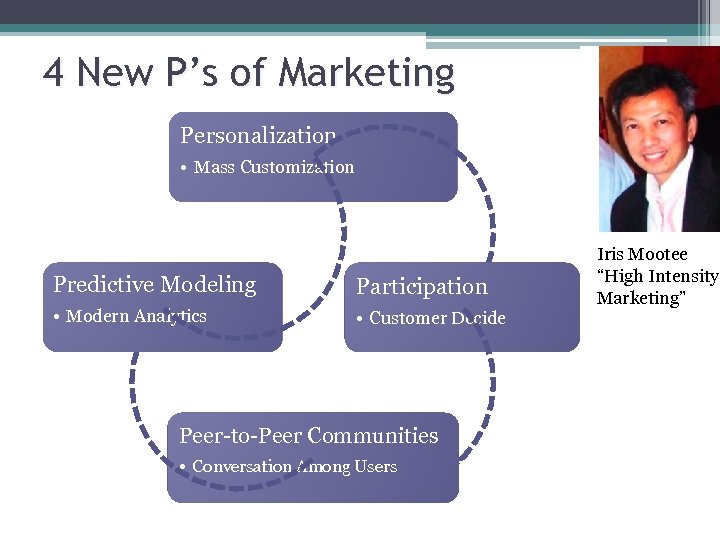 4 New P’s of Marketing Personalization • Mass Customization Predictive Modeling Participation • Modern Analytics • Customer Decide Peer-to-Peer Communities • Conversation Among Users Iris Mootee “High Intensity Marketing”
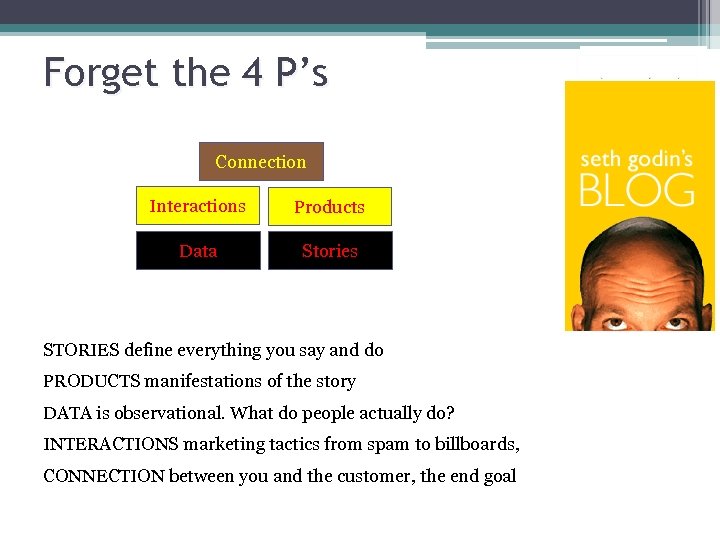 Forget the 4 P’s Connection Interactions Products Data Stories STORIES define everything you say and do PRODUCTS manifestations of the story DATA is observational. What do people actually do? INTERACTIONS marketing tactics from spam to billboards, CONNECTION between you and the customer, the end goal
 Other Launch Activities
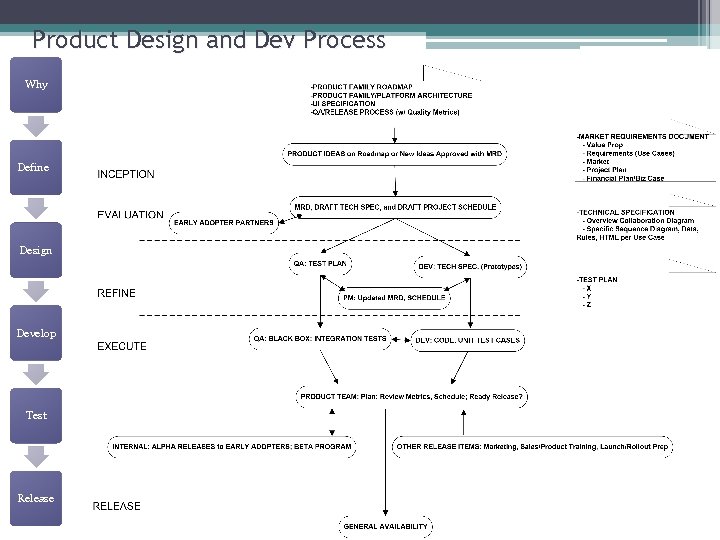 Product Design and Dev Process Why Define Design Develop Test Release
 Product Launch • Recommend 280 Group’s Product Launch Toolkit • So with apologies to Brian: Top Ten Product Launch Mistakes Common Errors to Avoid to Ensure Success A white paper by Brian Lawley
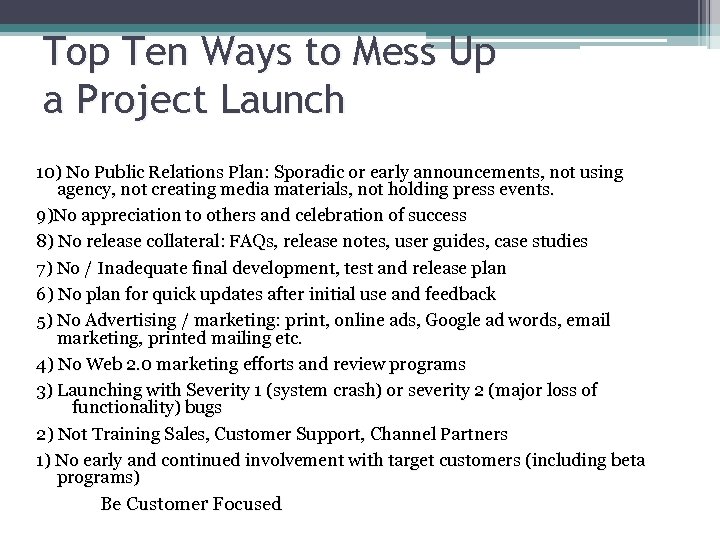 Top Ten Ways to Mess Up a Project Launch 10) No Public Relations Plan: Sporadic or early announcements, not using agency, not creating media materials, not holding press events. 9)No appreciation to others and celebration of success 8) No release collateral: FAQs, release notes, user guides, case studies 7) No / Inadequate final development, test and release plan 6) No plan for quick updates after initial use and feedback 5) No Advertising / marketing: print, online ads, Google ad words, email marketing, printed mailing etc. 4) No Web 2. 0 marketing efforts and review programs 3) Launching with Severity 1 (system crash) or severity 2 (major loss of functionality) bugs 2) Not Training Sales, Customer Support, Channel Partners 1) No early and continued involvement with target customers (including beta programs) Be Customer Focused