 Скачать презентацию 76 th ANDREW LAING LECTURE TANKER BUSINESS TODAY
5d04c60609e765e3bc743c6a6c93eac8.ppt
- Количество слайдов: 36



76 th. ANDREW LAING LECTURE “TANKER BUSINESS TODAY” 1 May 2008 Peter M Swift, MD INTERTANKO
“TANKER BUSINESS TODAY” • INTERTANKO • Industry Today – Fleet & Performance • Key Challenges
INTERTANKO Today 290 + members operating ca. 2950 ships > 80% of the independent oil tanker fleet and > 85% of the chemical carrier fleet 330 + associate members: in oil and chemical tanker related businesses 15 Committees – 5 Regional Panels Principal Offices – London and Oslo Representative Offices in US, Asia and Brussels Observer Status at IMO, IOPC, OECD and UNCTAD
INTERTANKO – The Voice of the Tanker Industry MISSION • To provide leadership to the Tanker Industry in serving the world with safe, environmentally sound and efficient seaborne transportation of oil, gas and chemical products. VISION FOR THE TANKER INDUSTRY • A responsible, sustainable, respected Tanker Industry, committed to continuous improvement and constructively influencing its future. ONE OF THE ASSOCIATION’S PRIMARY GOALS • Lead the continuous improvement of the Tanker Industry’s performance in striving to achieve the goals of: Zero fatalities, Zero pollution, Zero detentions
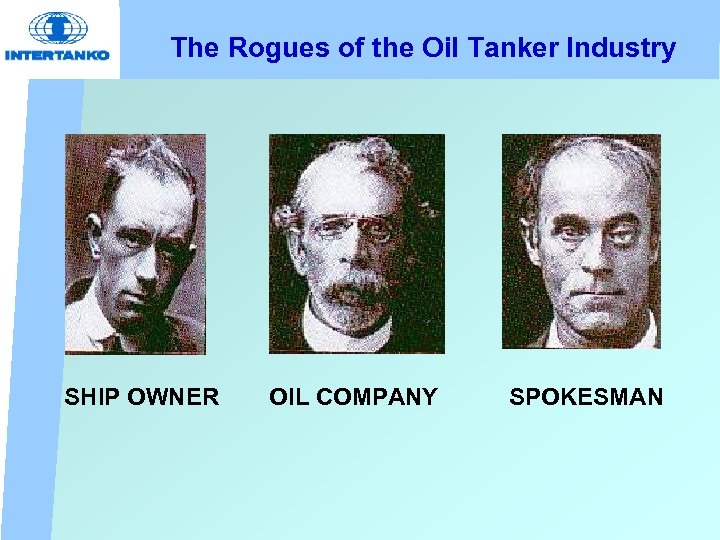
The Rogues of the Oil Tanker Industry SHIP OWNER OIL COMPANY SPOKESMAN
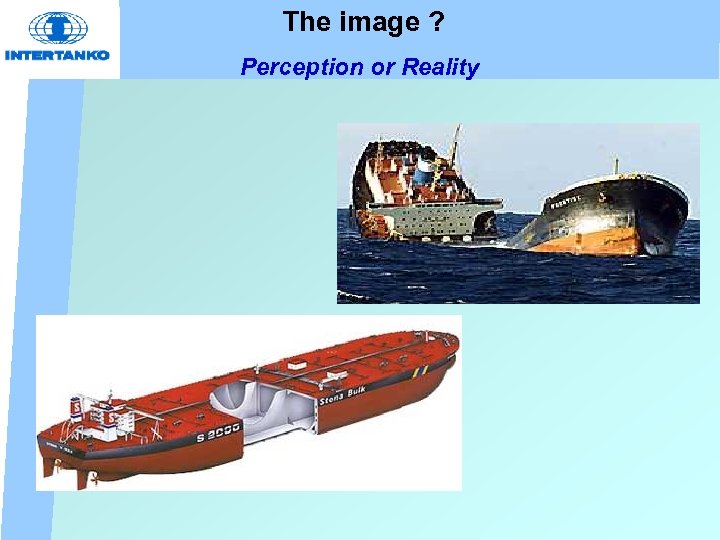
The image ? Perception or Reality
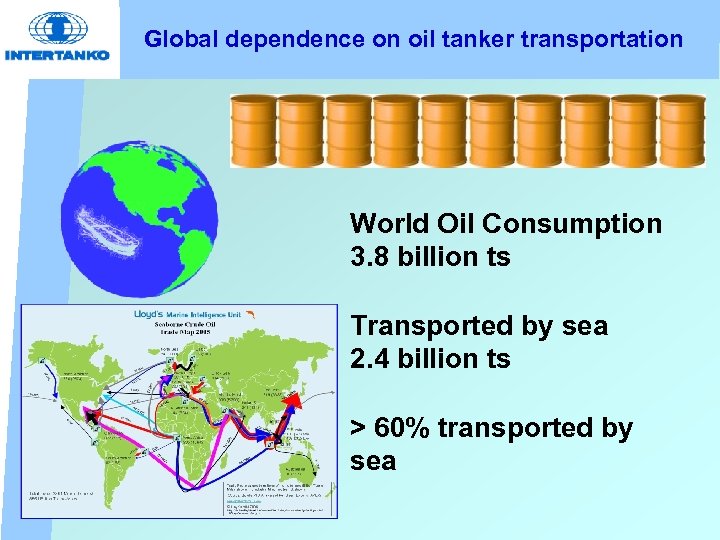
Global dependence on oil tanker transportation World Oil Consumption 3. 8 billion ts Transported by sea 2. 4 billion ts > 60% transported by sea
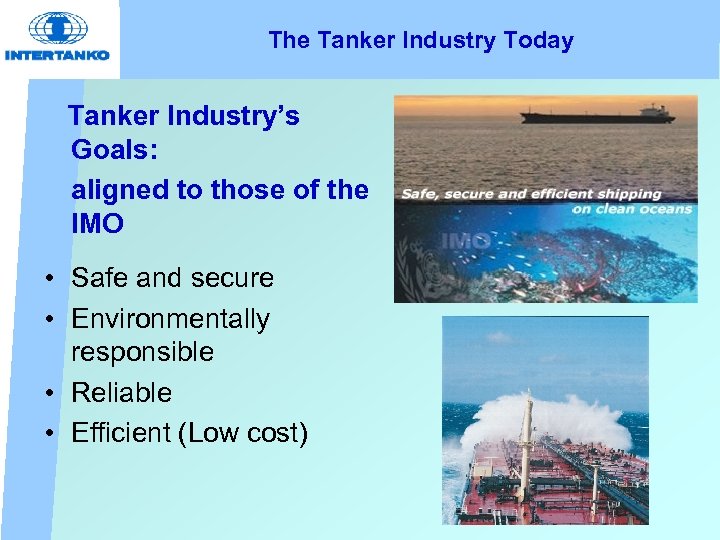
The Tanker Industry Today Tanker Industry’s Goals: aligned to those of the IMO • Safe and secure • Environmentally responsible • Reliable • Efficient (Low cost)
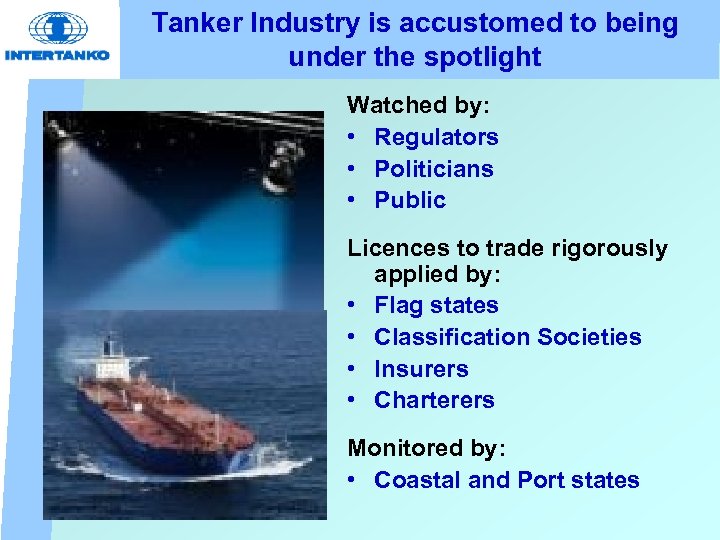
Tanker Industry is accustomed to being under the spotlight Watched by: • Regulators • Politicians • Public Licences to trade rigorously applied by: • Flag states • Classification Societies • Insurers • Charterers Monitored by: • Coastal and Port states
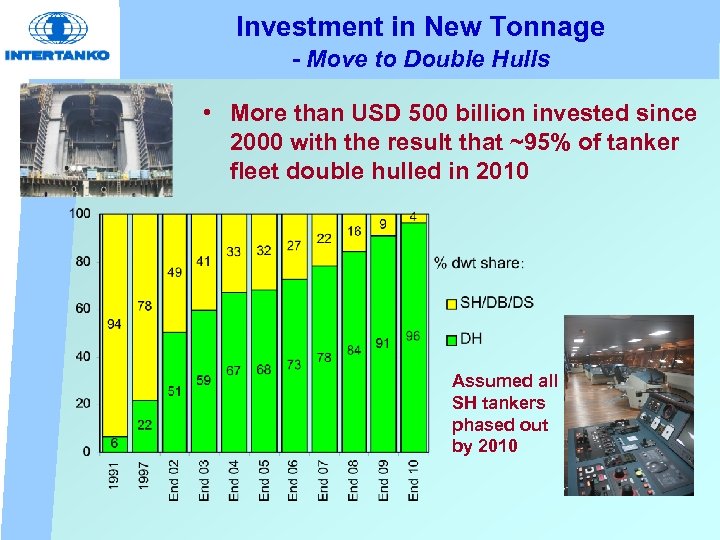
Investment in New Tonnage - Move to Double Hulls • More than USD 500 billion invested since 2000 with the result that ~95% of tanker fleet double hulled in 2010 Assumed all SH tankers phased out by 2010
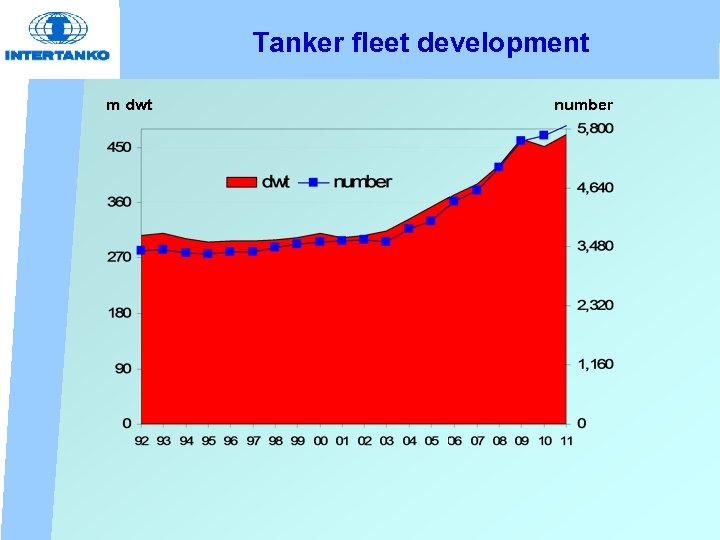
Tanker fleet development m dwt number
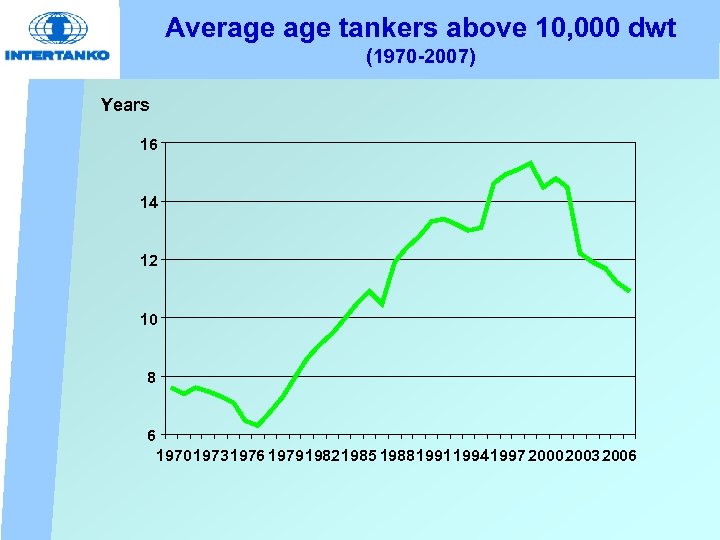
Average tankers above 10, 000 dwt (1970 -2007) Years 16 14 12 10 8 6 197019731976 197919821985 1988199119941997 200020032006
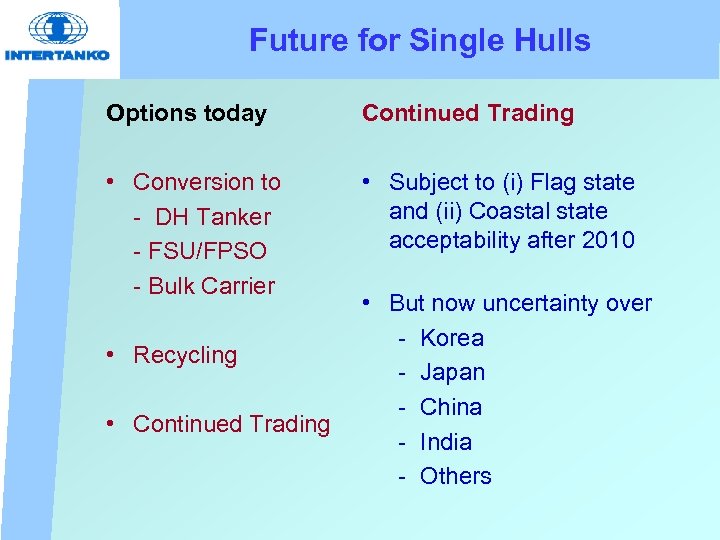
Future for Single Hulls Options today Continued Trading • Conversion to - DH Tanker - FSU/FPSO - Bulk Carrier • Subject to (i) Flag state and (ii) Coastal state acceptability after 2010 • Recycling • Continued Trading • But now uncertainty over - Korea - Japan - China - India - Others
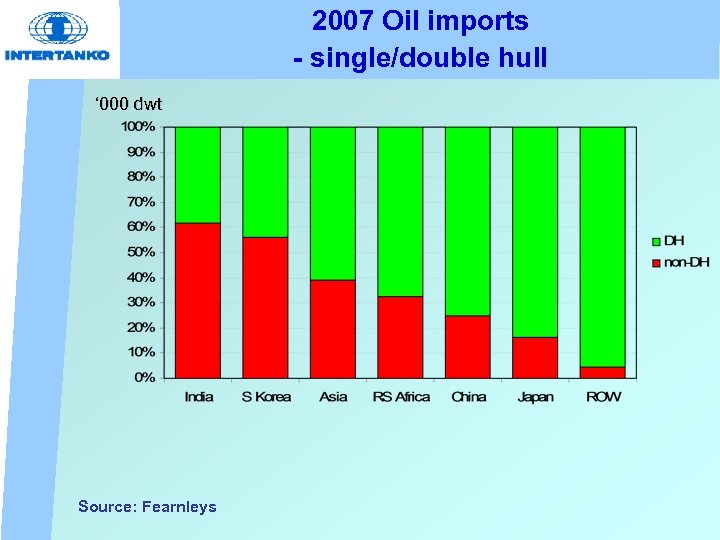
2007 Oil imports - single/double hull ‘ 000 dwt Source: Fearnleys
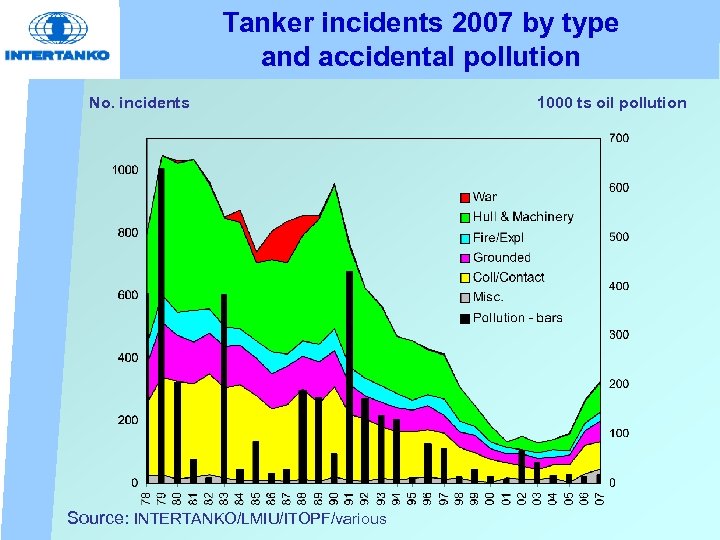
Tanker incidents 2007 by type and accidental pollution No. incidents Source: INTERTANKO/LMIU/ITOPF/various 1000 ts oil pollution
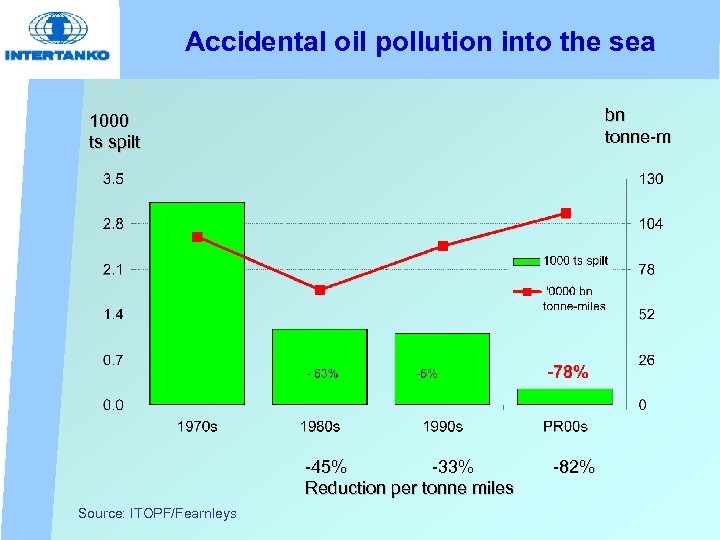
Accidental oil pollution into the sea bn tonne-m 1000 ts spilt -45% -33% Reduction per tonne miles Source: ITOPF/Fearnleys -82%
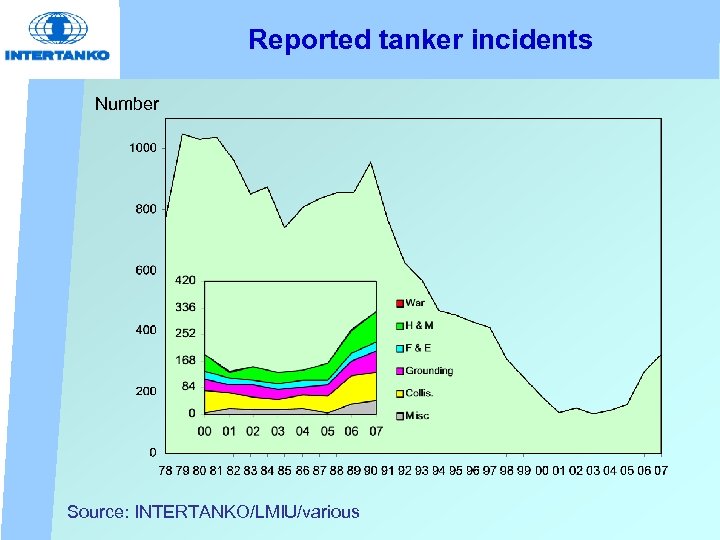
Reported tanker incidents Number Source: INTERTANKO/LMIU/various
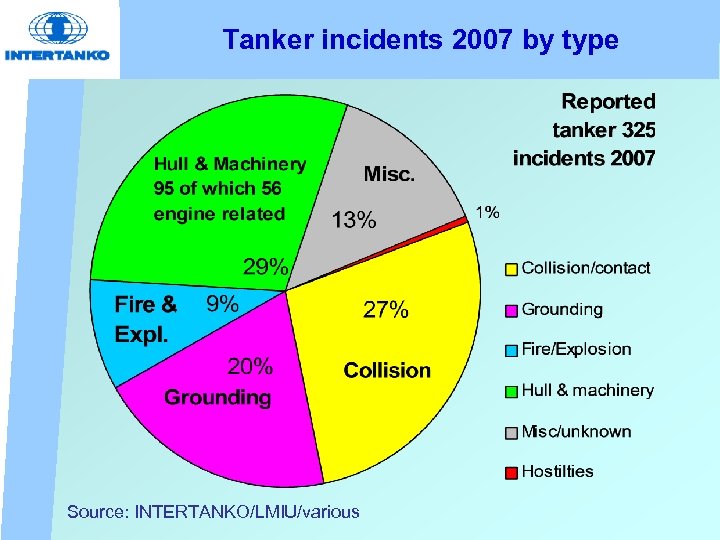
Tanker incidents 2007 by type Source: INTERTANKO/LMIU/various
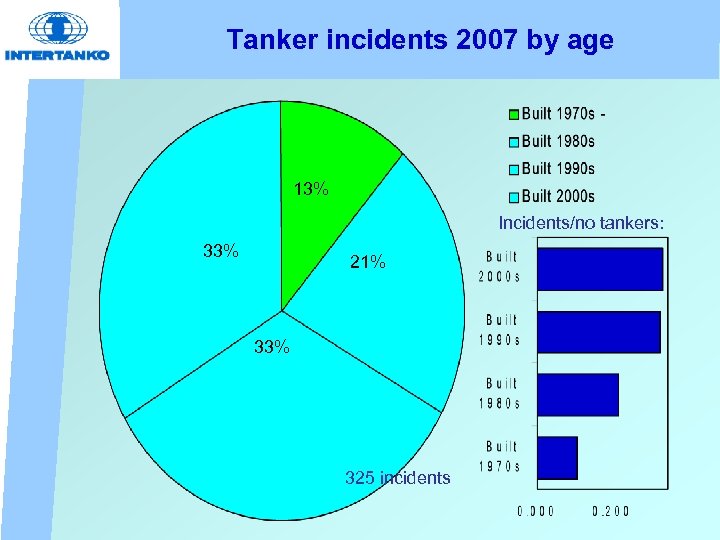
Tanker incidents 2007 by age 13% Incidents/no tankers: 33% 21% 33% 325 incidents
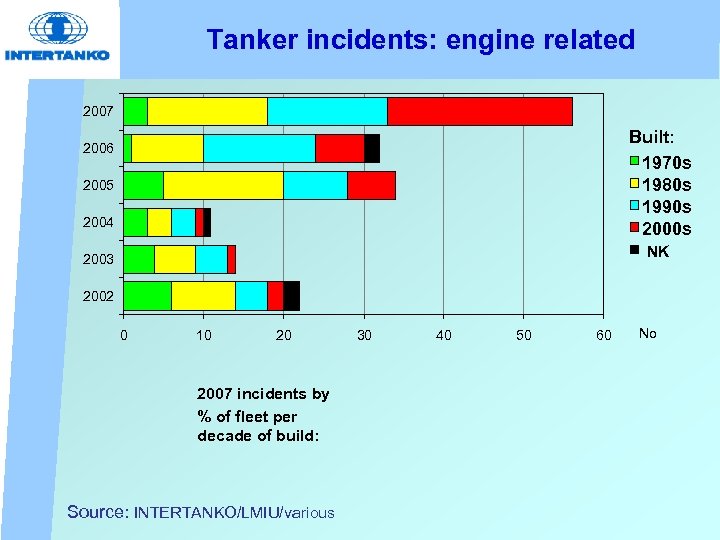
Tanker incidents: engine related 2007 Built: 1970 s 1980 s 1990 s 2006 2005 2004 NK 2003 2002 0 10 20 2007 incidents by % of fleet per decade of build: Source: INTERTANKO/LMIU/various 30 40 50 60 No
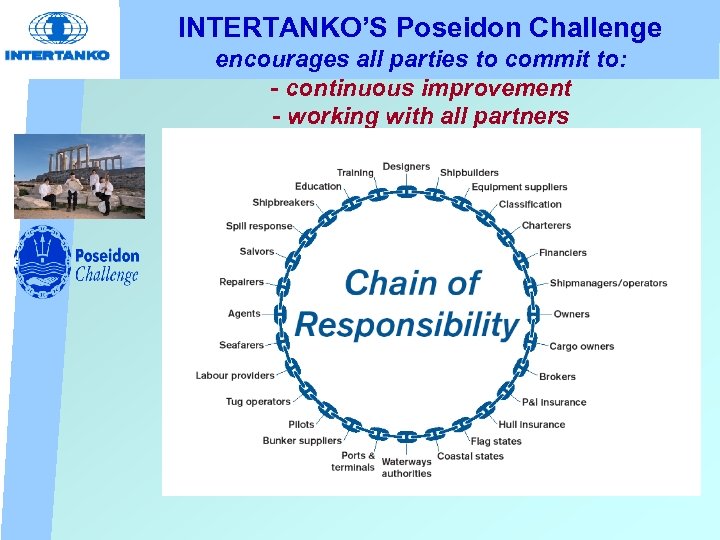
INTERTANKO’S Poseidon Challenge encourages all parties to commit to: - continuous improvement - working with all partners
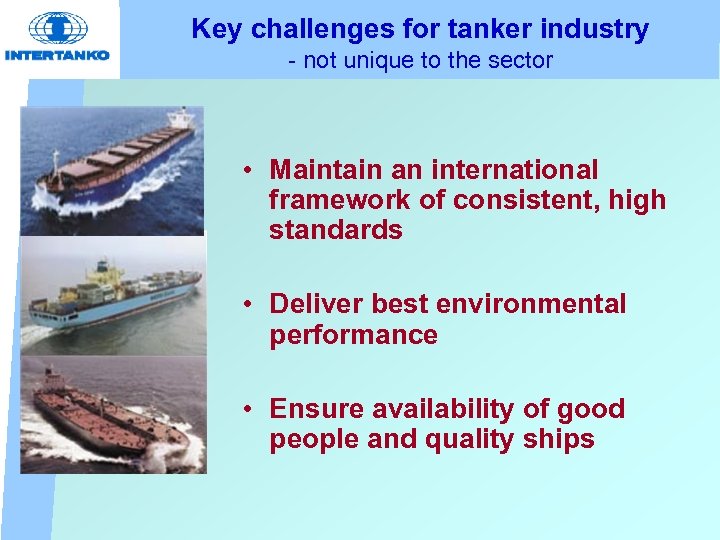
Key challenges for tanker industry - not unique to the sector • Maintain an international framework of consistent, high standards • Deliver best environmental performance • Ensure availability of good people and quality ships
Regulation vs. Self Regulation Acting in parallel ! • Promoting self-regulation Adopting “best practices” Producing industry guidelines Developing programmes, procedures, etc. • Support “effective” regulations
“Effective” Regulation • Developed at the global level, wherever appropriate (consistent with existing law) • Fit for purpose (provides solutions) • Properly considered (stakeholders involved) • Impact(s) fully assessed (economic and social) • If adopted, implemented uniformly and promptly
Upholding International Regulation and customary international law • Supporting IMO with active participation • Encouraging ratification of IMO (and ILO) Conventions • Also engaged in US (Washington), Europe (Brussels) and elsewhere
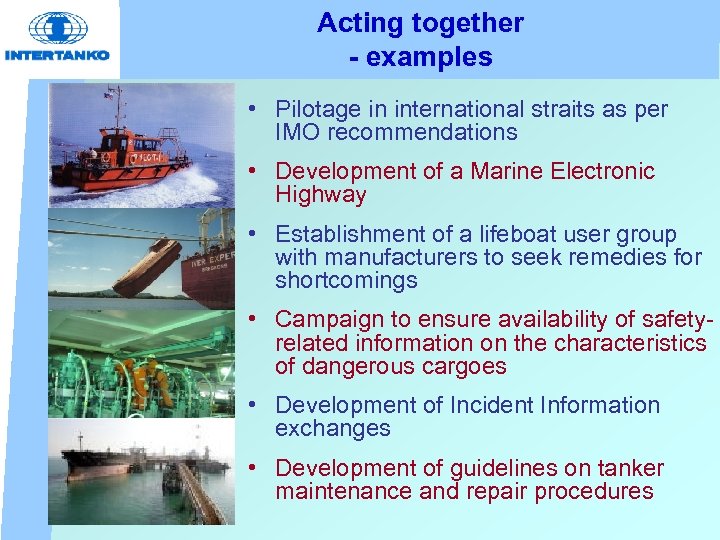
Acting together - examples • Pilotage in international straits as per IMO recommendations • Development of a Marine Electronic Highway • Establishment of a lifeboat user group with manufacturers to seek remedies for shortcomings • Campaign to ensure availability of safetyrelated information on the characteristics of dangerous cargoes • Development of Incident Information exchanges • Development of guidelines on tanker maintenance and repair procedures
Consistency in International Standards - examples • FLAGS Administrations - IMO Member State Audit scheme plus transparency in findings • Development of Common Structural Rules for Tankers • Tripartite dialogue between international shipbuilders, classification societies and shipowners • Harmonisation uniformity in procedures across Port State Control regimes
Tanker Industry’s Environmental Agenda - Highlights • • • • Anti-fouling Systems Ballast Water Management Biofouling Ship Recycling Port Reception Facilities Waste Management Marine Noise Pollution Whale Strikes Spill Prevention and Response Planning VOC reductions Atmospheric Pollution - Revision of MARPOL Annex VI Green House Gas Emissions Environmental Benchmarking
Green House Gas Emissions - issues • Reduction options Technical and commercial feasibility assessments • Carbon (CO 2) indexing Design Index (New); Operational Index (existing) • Market Mechanisms (Economic Instruments) Emissions Trading, Carbon Levy (Fuel tax), Incentive Schemes • Research New and existing ships, energy saving; hull, machinery One litre of fuel on a modern VLCC (Very Large Crude Carrier) moving one tonne of cargo more than 2, 500 kilometres - more than twice as far as 20 years ago
Environmental Benchmarking Establishing our Environmental Credentials Examples • Pollution to ocean – cargo, bunkers, lubes, etc. • Pollution to atmosphere – VOCs, bunker management • Management of wastes – including Annex V • • Ballast water management Antifouling usage Biofouling management Recyclability – Green Passport, HM List • Noise pollution • CO 2 performance
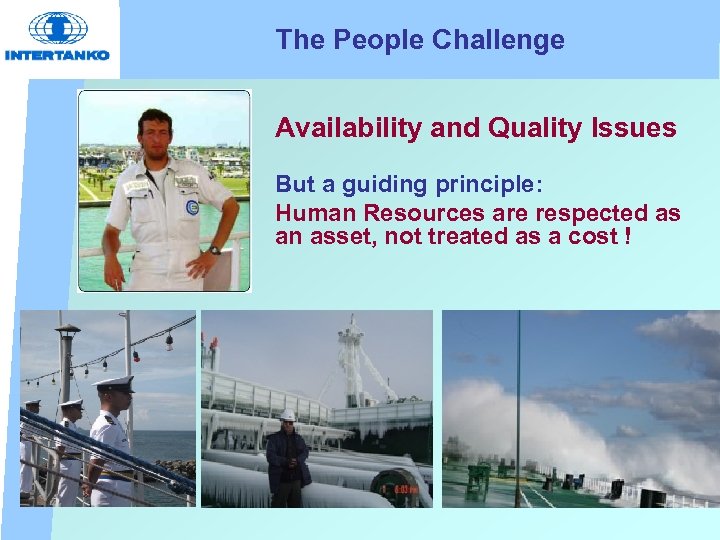
The People Challenge Availability and Quality Issues But a guiding principle: Human Resources are respected as an asset, not treated as a cost !
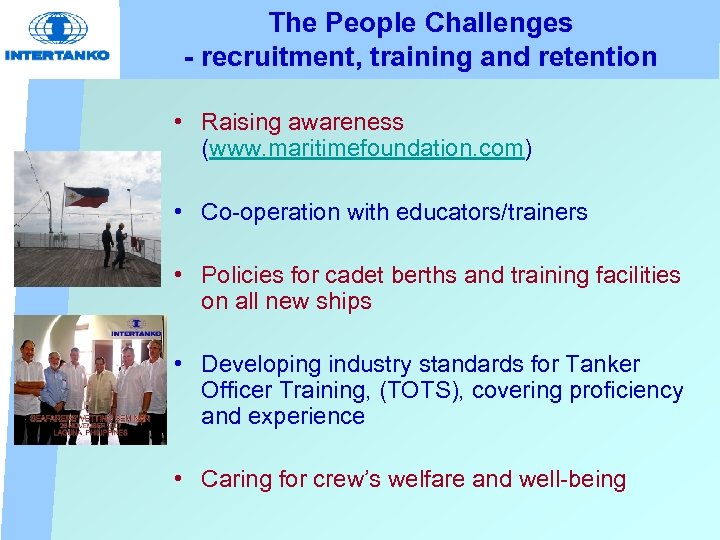
The People Challenges - recruitment, training and retention • Raising awareness (www. maritimefoundation. com) • Co-operation with educators/trainers • Policies for cadet berths and training facilities on all new ships • Developing industry standards for Tanker Officer Training, (TOTS), covering proficiency and experience • Caring for crew’s welfare and well-being
Our crew’s welfare and well-being • Speaking out against unjustified criminalisation • Campaigning for improved conditions for shore access when security constraints active • Working to reduce multiple and overlapping inspections • Promoting solutions to lessen technical and operational burden of equipment, systems and associated paperwork • Prepared guidelines for safe handling of cargoes and fuels, tank cleaning and entry, and more • Developed guidelines on implementing ILO Convention on “work and rest hours” • Promoting higher standards of accommodation as industry “norms”; (including e. g. broadband, etc. )
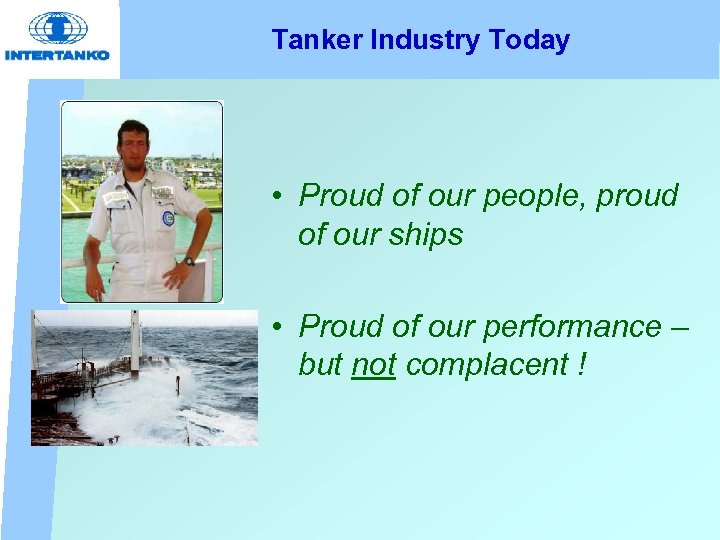
Tanker Industry Today • Proud of our people, proud of our ships • Proud of our performance – but not complacent !
THANK YOU “Proud of our people, Proud of our ships” For more information, please visit: www. intertanko. com www. poseidonchallenge. com www. shippingfacts. com www. maritimefoundation. com
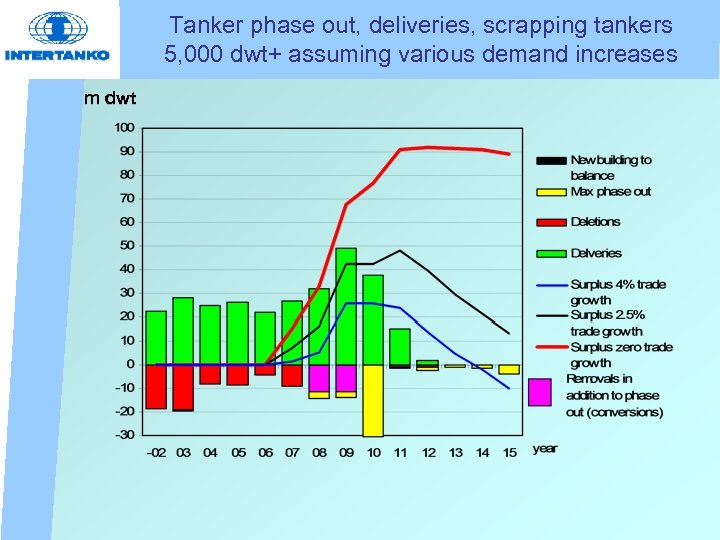
Tanker phase out, deliveries, scrapping tankers 5, 000 dwt+ assuming various demand increases m dwt
Скачать презентацию 76 th ANDREW LAING LECTURE TANKER BUSINESS TODAY
5d04c60609e765e3bc743c6a6c93eac8.ppt