


 Скачать презентацию 7 th SPC Heads of Fisheries Meeting Noumea
1b4c86b8dc62e2a83cdd69e053caa4d9.ppt
- Количество слайдов: 37
 7 th SPC Heads of Fisheries Meeting Noumea, New Caledonia 28 February - 4 March 2011 Collaborative Activities between FAO and SPC Masanami Izumi Fishery Officer FAO Sub-Regional Office for the Pacific Islands Samoa 1
 Collaborative Activities between FAO and SPC in Aquaculture Outline 1. Background 2. Regional Scoping Workshop (IP-5) 3. Technical Cooperation Programme project (IP-6) 4. Others: WP-1, WP-6, IP-3, IP-4 2
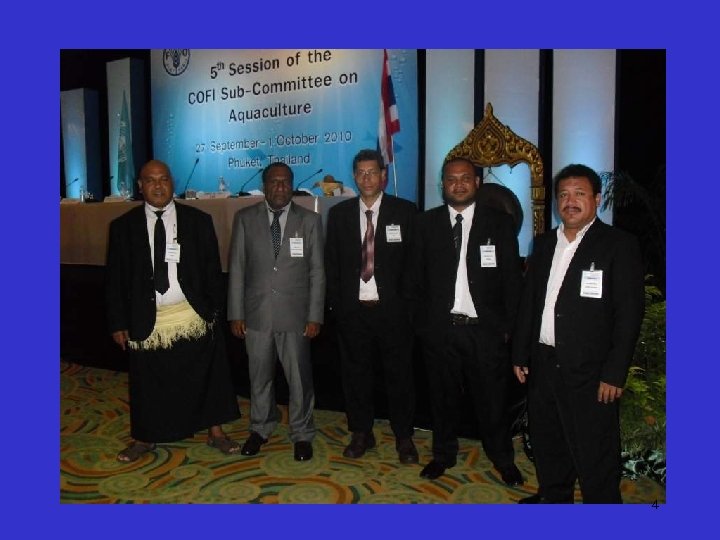
 Background § Global Conference on Aquaculture, Phuket, Thailand, 22 -25 Sept. 2010 q Cook Islands, Fiji, Nauru, PNG, Tonga, SPC q Side event “informal Pacific meeting”, 23/9/10 Ideas for: ü regional donor coordination workshop in 2011 ü regional/sub-regional networking ü regional aquatic biosecurity framework 3
 4
4
 Background (2) § FAO COFI Sub-Committee on Aquaculture, Phuket, Thailand, 27 Sept. -1 Oct. 2010 q Sub-Committee called for support to the least developed aquaculture countries in the Pacific § Tahiti Aquaculture Conference, Tahiti, 6 -11 Dec. 2010 q participation of Chief, Aquaculture Service/FAO q further discussion between FAO and SPC 5
 Background (3) § FAO Committee on Fisheries (COFI), Rome, 31 Jan. -4 Feb. 2011 q Cook Islands, Fiji, Nauru, Tonga, FFA, WCPFC q COFI recommended that more emphasis should be given to FAO’s work towards the development of aquaculture in Africa, Latin America, SIDS and Central Asia q Recommendations from GCA and SCA were adopted by COFI 6
 30 th Session of COFI: 9 -13 July 2012 See you in Rome 7
 IP 5: Regional Scoping Workshop Based on the outcome of the Informal Pacific meeting held during GCA in Sept. 2010 Objectives § To assess the needs and map out a coordinating strategy and actions for regional/international organizations and other stakeholders § To engage the governments and development partners active in the region Venue (tentative) --- Nadi Date --- towards the end of August 2011 8
 IP 6: Regional TCP Project Based on the outcome of the Informal Pacific meeting held during GCA in Sept. 2010 Proposed Project § Title: Improving food security and rural income through aquaculture development in selected PICs § Activities: q Capacity development on broodstock development, hatchery seed production of selected species q National capacity development for aquaculture information & statistics q National biosecurity frameworks 9
 Others § WP 1 (para 14: aquatic biosecurity) § WP 6 (introduced species) q Informal Pacific meeting during GCA § IP 4 (aquatic animal health management) q FAO-TCP/MAS/3101, TCP/RAS/3101, TCP/MIC/3201 q Regional biosecurity framework § IP 3 (Climate Change) q Regional Workshop in 2012 10
 Transboundary Aquatic Animal Diseases (TAADs) Example 1: International spread of white spot syndrome virus (WSSV); pandemic (global epizootic) Example 2: National spread of Koi herpes virus (KHV): case of Indonesia 11
 Example 1: National, regional and international spread of white spot syndrome virus (WSSV) § the most serious pathogen of cultivated shrimp in the world § shrimp viral disease epizootics show the range and distance that aquatic animal § pathogens can travel alongside the movement of their hosts § major pathway: movement of infected postlarvae and broodstock 12
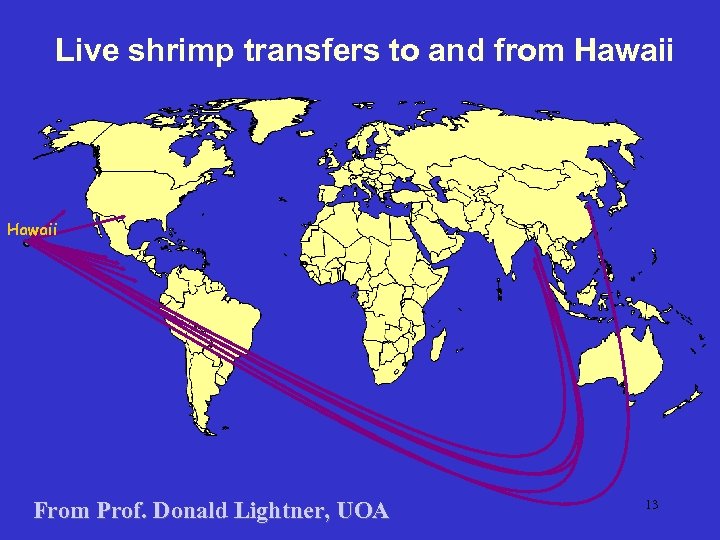 Live shrimp transfers to and from Hawaii From Prof. Donald Lightner, UOA 13
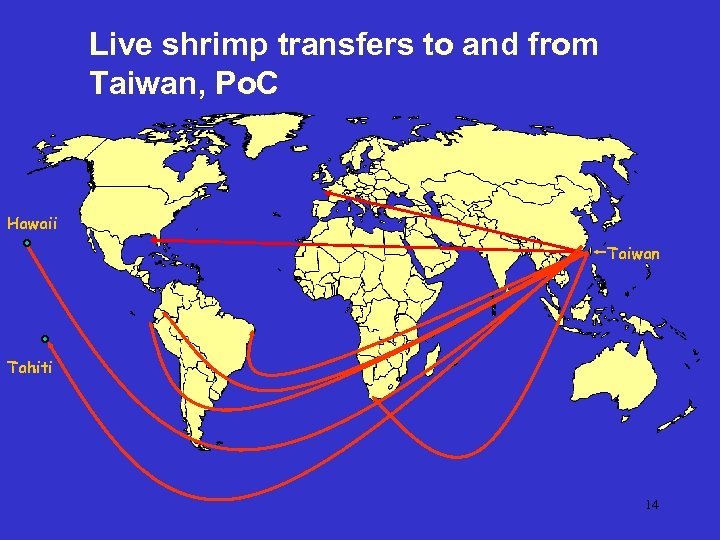 Live shrimp transfers to and from Taiwan, Po. C Hawaii Taiwan Tahiti 14
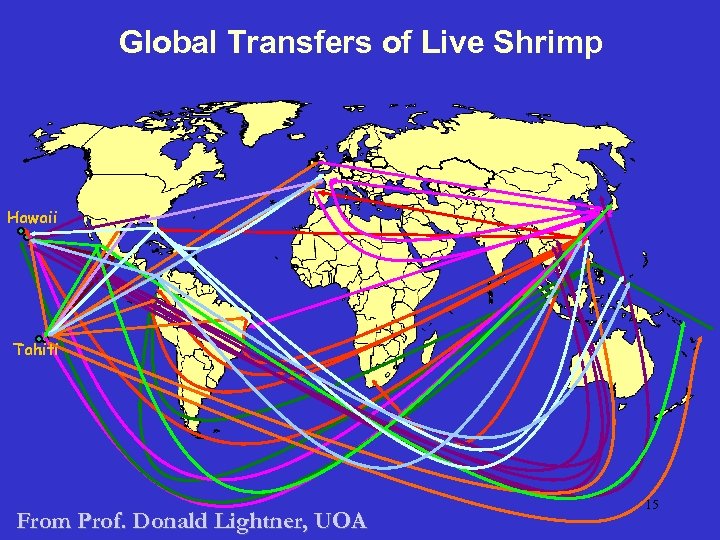 Global Transfers of Live Shrimp Hawaii Tahiti From Prof. Donald Lightner, UOA 15
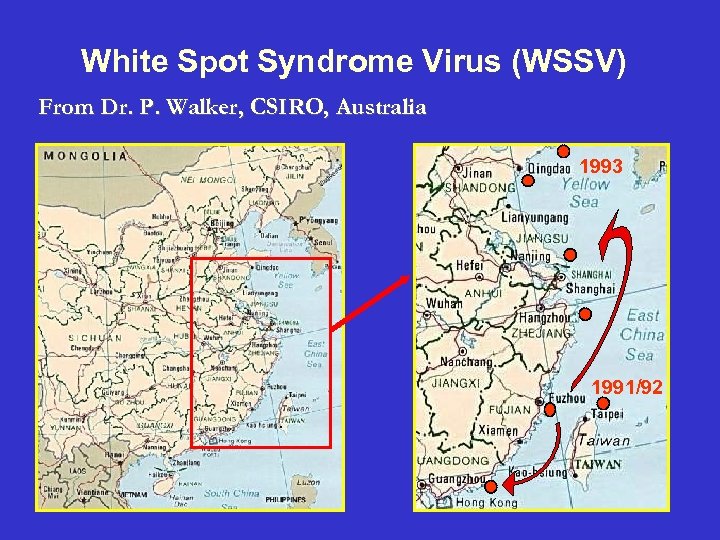 White Spot Syndrome Virus (WSSV) From Dr. P. Walker, CSIRO, Australia 1993 1991/92 16
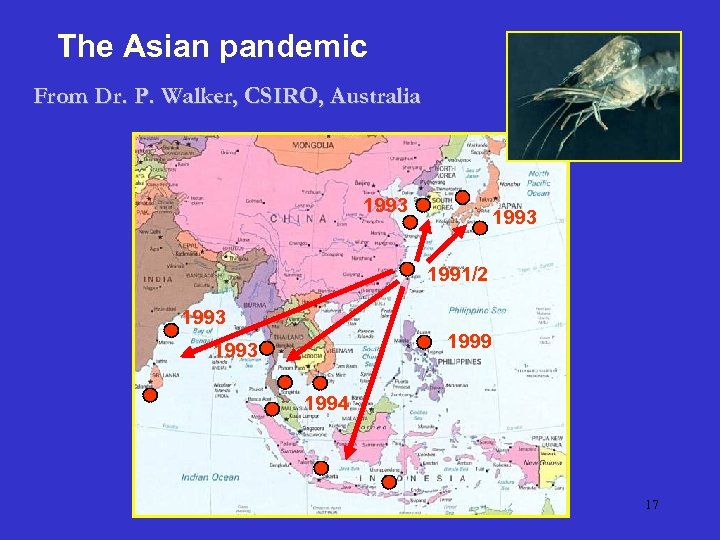 The Asian pandemic From Dr. P. Walker, CSIRO, Australia 1993 1991/2 1993 1999 1993 1994 17
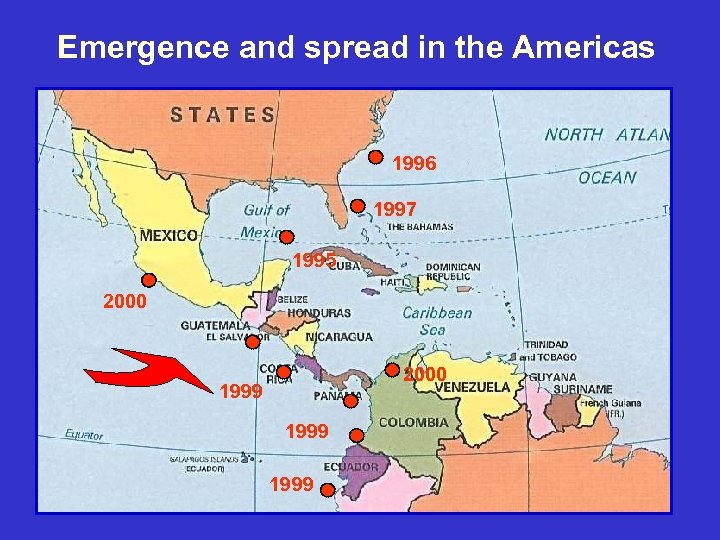 Emergence and spread in the Americas 1996 1997 1995 2000 1999 18
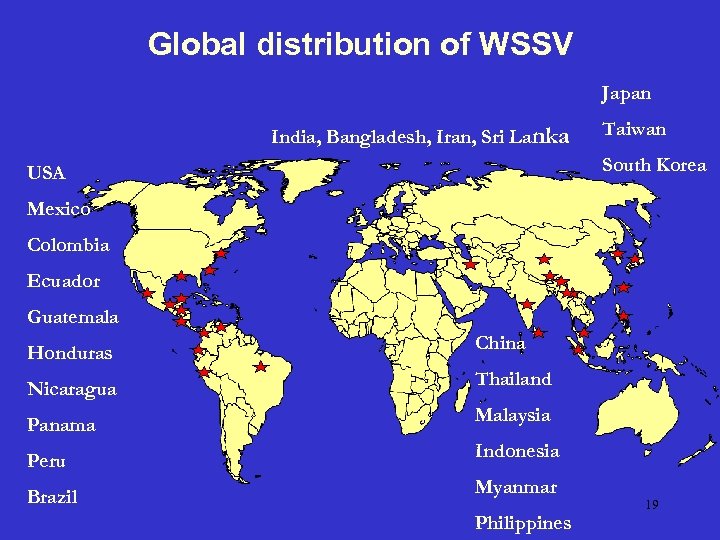 Global distribution of WSSV Japan India, Bangladesh, Iran, Sri Lanka Taiwan South Korea USA Mexico Colombia Ecuador Guatemala Honduras China Nicaragua Thailand Panama Malaysia Peru Indonesia Brazil Myanmar Philippines 19
 Example 2: National spread of Koi herpes virus (KHV): case of Indonesia § KHV is a classical example of a disease that originated from an ornamental fish to cultured fish to wild fisheries § A strong evidence of ornamental fish as a significant vector for viral diseases § Ornamental fish trade is unregulated; in the context of trade – change in current thinking - as how to deal with ornamentals § Effective or meaningful import health requirements 20
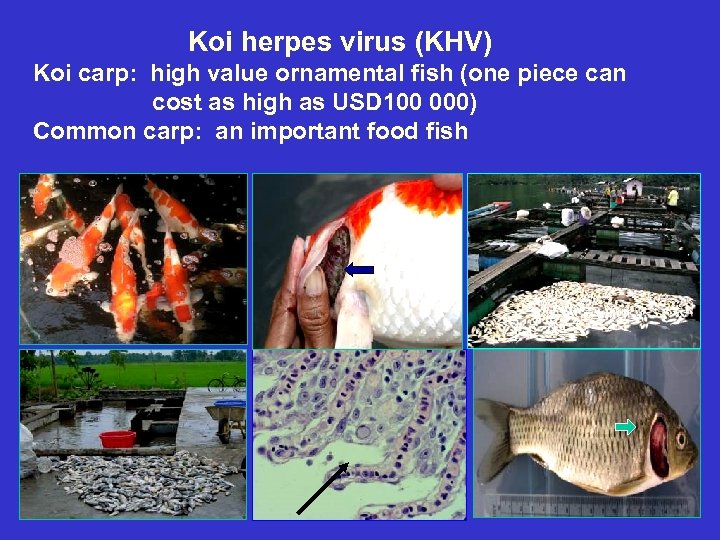 Koi herpes virus (KHV) Koi carp: high value ornamental fish (one piece can cost as high as USD 100 000) Common carp: an important food fish 21
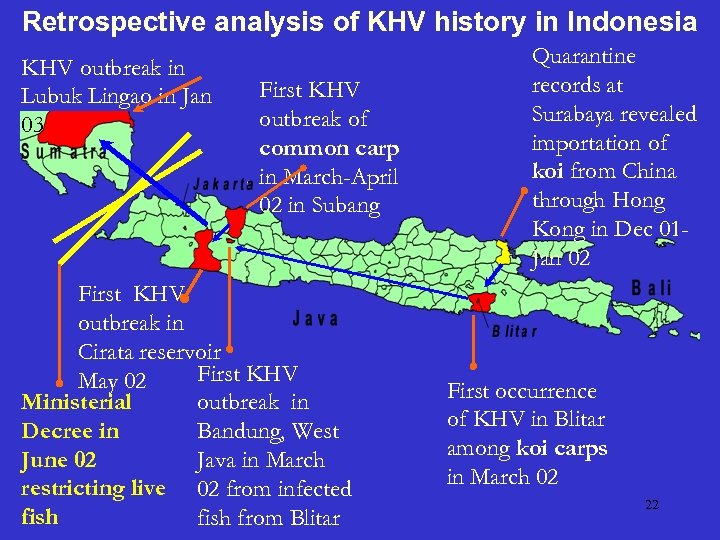 Retrospective analysis of KHV history in Indonesia KHV outbreak in Lubuk Lingao in Jan 03 First KHV outbreak of common carp in March-April 02 in Subang First KHV outbreak in Cirata reservoir First KHV May 02 Ministerial outbreak in Decree in Bandung, West June 02 Java in March restricting live 02 from infected fish from Blitar Quarantine records at Surabaya revealed importation of koi from China through Hong Kong in Dec 01 Jan 02 First occurrence of KHV in Blitar among koi carps in March 02 22
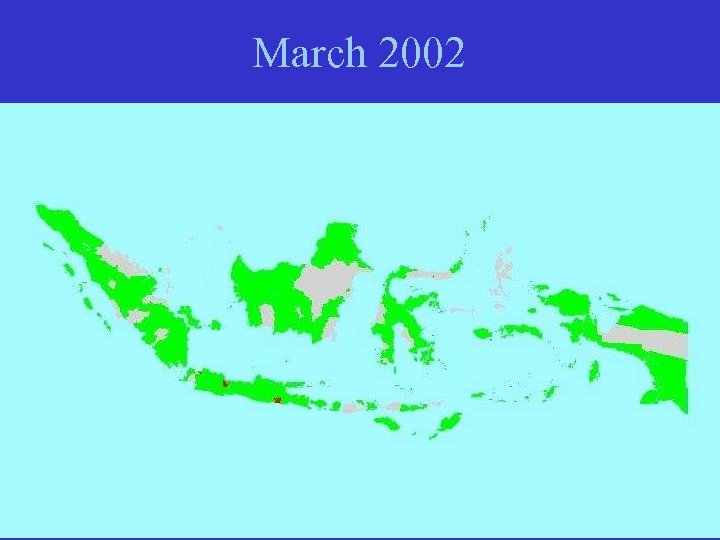 March 2002 23
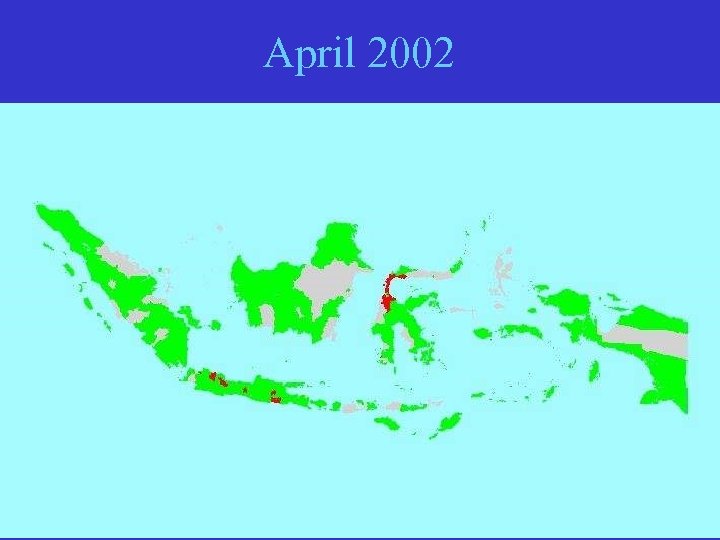 April 2002 24
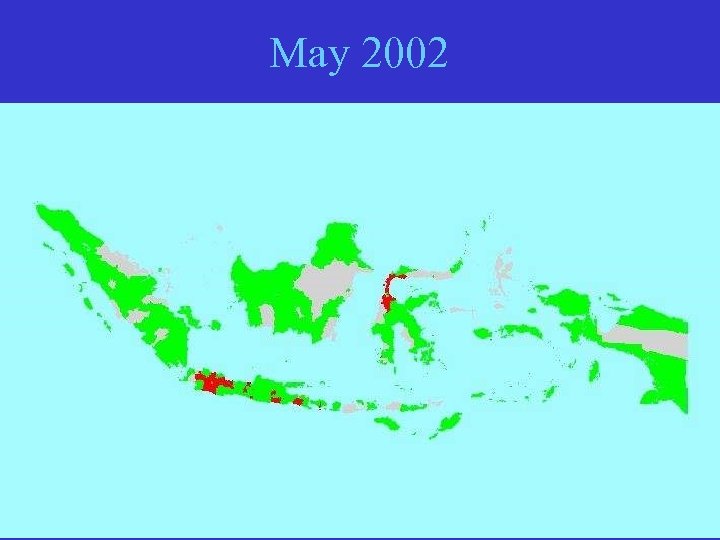 May 2002 25
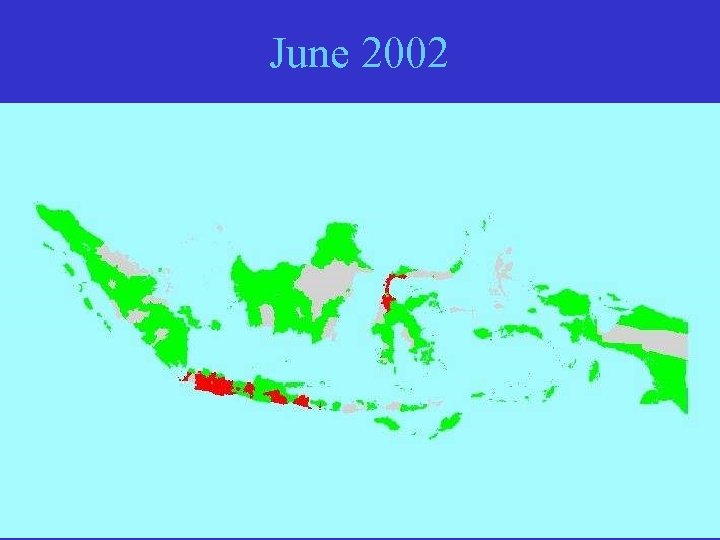 June 2002 26
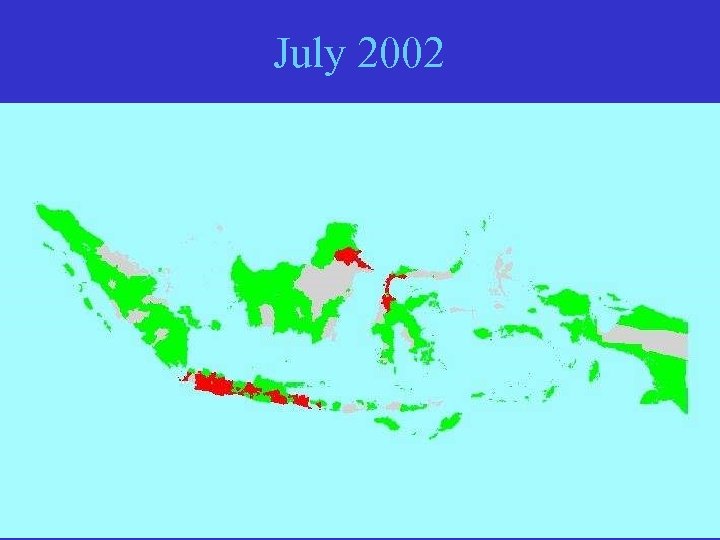 July 2002 27
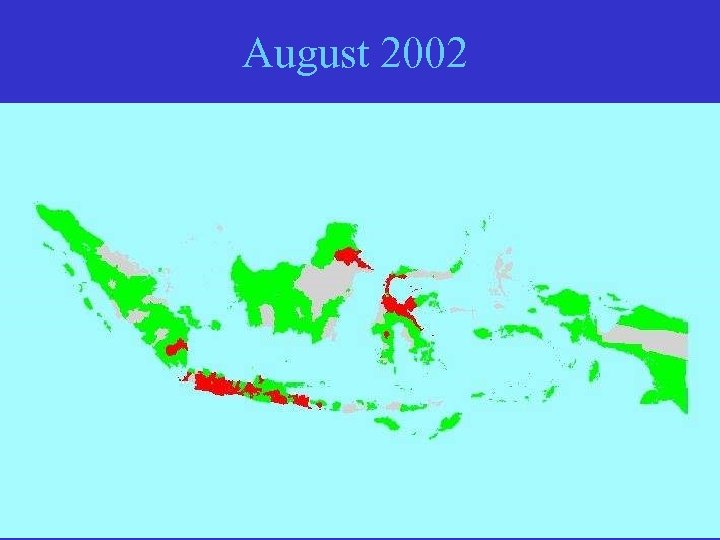 August 2002 28
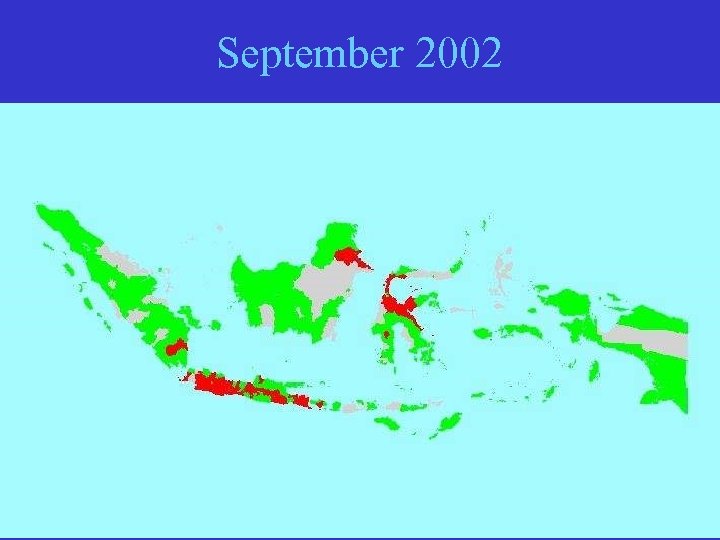 September 2002 29
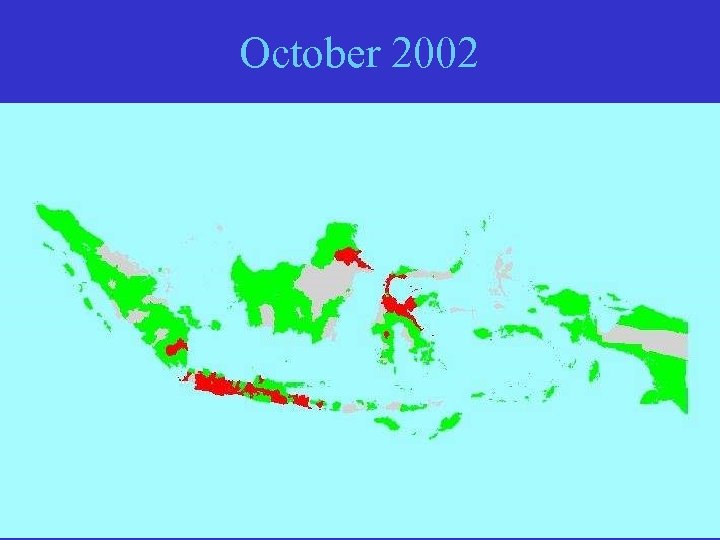 October 2002 30
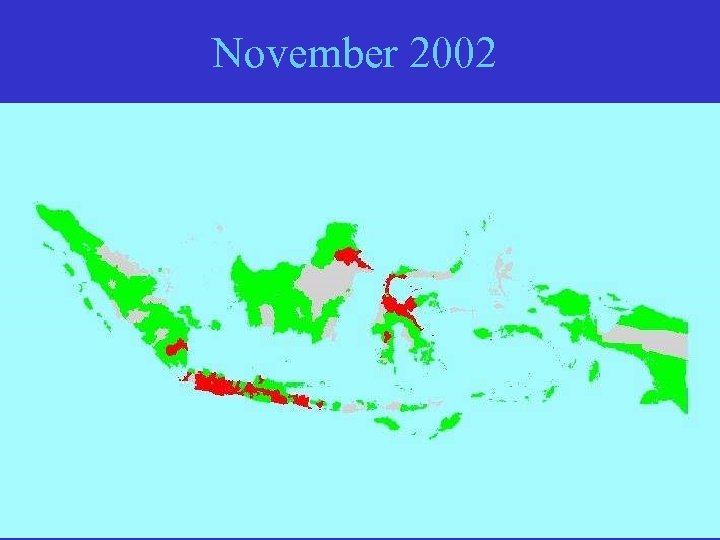 November 2002 31
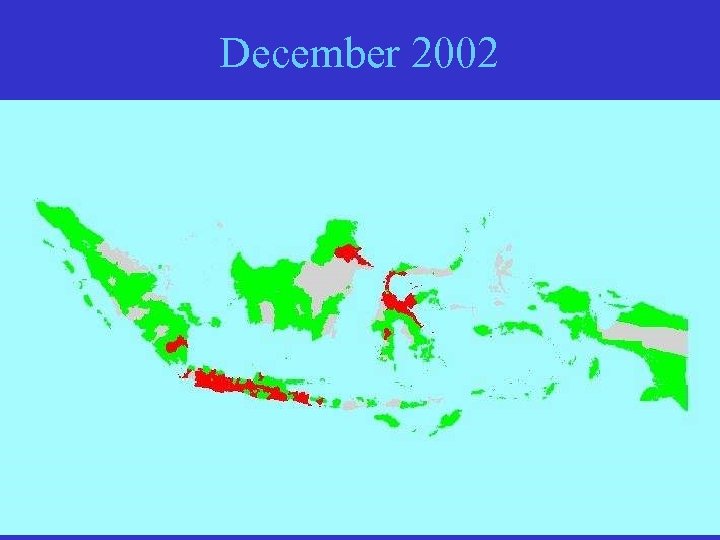 December 2002 32
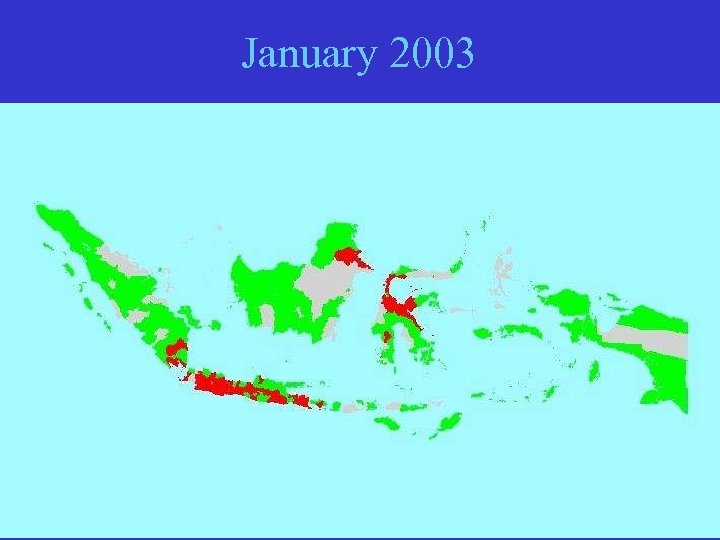 January 2003 33
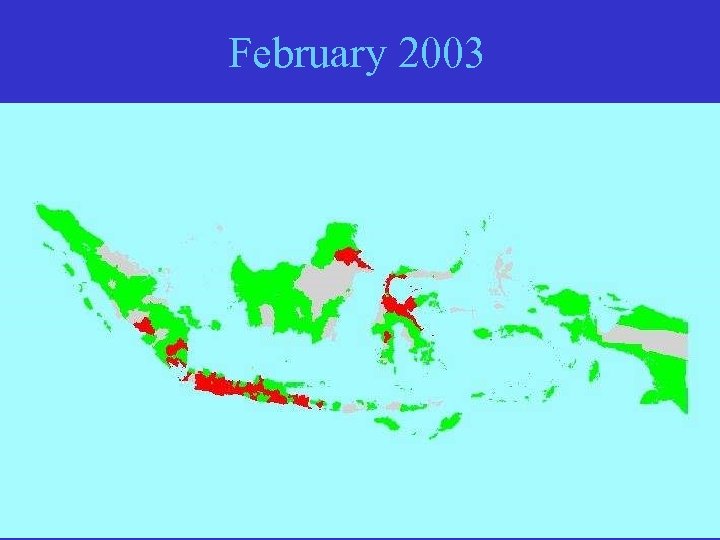 February 2003 34
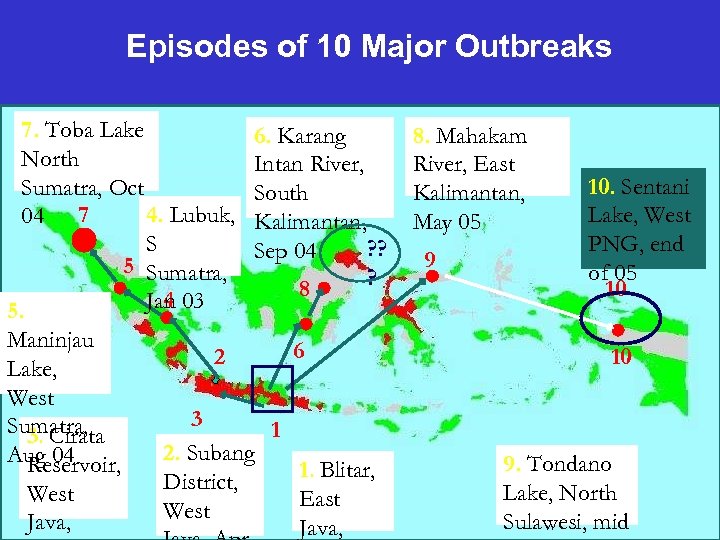 Episodes of 10 Major Outbreaks 7. Toba Lake North Sumatra, Oct 4. Lubuk, 04 7 S 5 Sumatra, 4 Jan 03 5. Maninjau Lake, West Sumatra, 3. Cirata Aug 04 Reservoir, West Java, 2 6. Karang Intan River, South Kalimantan, ? ? Sep 04 ? 8 6 3 1 2. Subang 1. Blitar, District, East West Java, 8. Mahakam River, East Kalimantan, May 05 9 10. Sentani Lake, West PNG, end of 05 10 10 9. Tondano Lake, North Sulawesi, mid 35
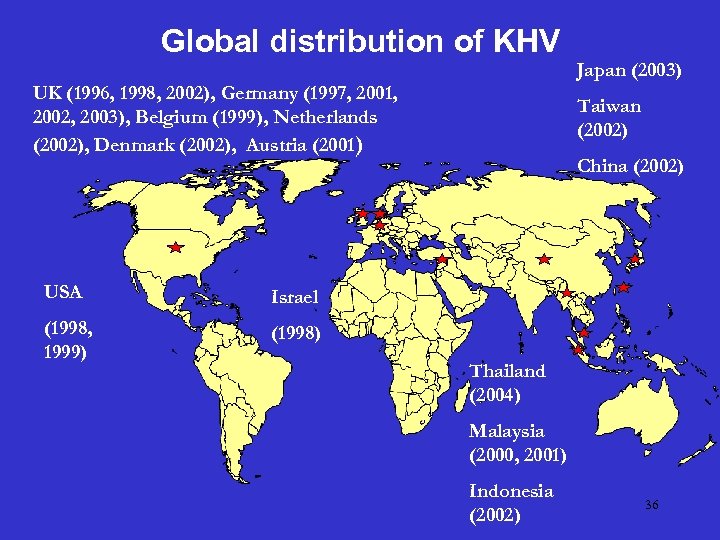 Global distribution of KHV Japan (2003) UK (1996, 1998, 2002), Germany (1997, 2001, 2002, 2003), Belgium (1999), Netherlands (2002), Denmark (2002), Austria (2001) USA China (2002) Israel (1998, 1999) Taiwan (2002) (1998) Thailand (2004) Malaysia (2000, 2001) Indonesia (2002) 36
 Thank you for your attention 37