 Скачать презентацию 7 th international Workshop on the Cross-border Disaster
a18c9cc3c4d2fb1649b59e15d24e9201.ppt
- Количество слайдов: 23



7 th international Workshop on the "Cross-border Disaster e. Response in the e. Region: Interoperability of Information Systems of the Organizations Involved" DIGITAL GEODETIC DATA, BASIS FOR SUCCESSFUL DISASTER MANAGEMENT Sonja Dimova, Ph. D Agency for Real Estate Cadastre May 04 -06 2009, Skopje 1
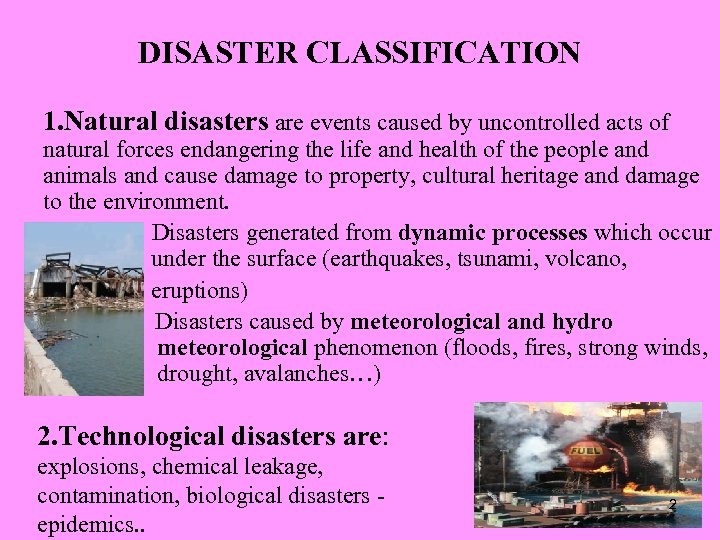
DISASTER CLASSIFICATION 1. Natural disasters are events caused by uncontrolled acts of natural forces endangering the life and health of the people and animals and cause damage to property, cultural heritage and damage to the environment. Disasters generated from dynamic processes which occur under the surface (earthquakes, tsunami, volcano, eruptions) Disasters caused by meteorological and hydro meteorological phenomenon (floods, fires, strong winds, drought, avalanches…) 2. Technological disasters are: explosions, chemical leakage, contamination, biological disasters epidemics. . 2
DISASTER/CRISIS MANAGEMENT (1)How to define? The disaster management is a discipline in which the involved parties are preparing for the disaster before it happens, during the disaster and the reconstruction after the disaster. (2)Successful management of the disasters highly depends from the availability , the dissemination and the effective use of the information. -Mechanism for providing services monitoring, warning and decrease of damages -adequate access to information avoiding overlap of different levels of users (3)Economic support adequate attention to risk from the disasters, protection as well as disaster management reducing the human and economic losses 3
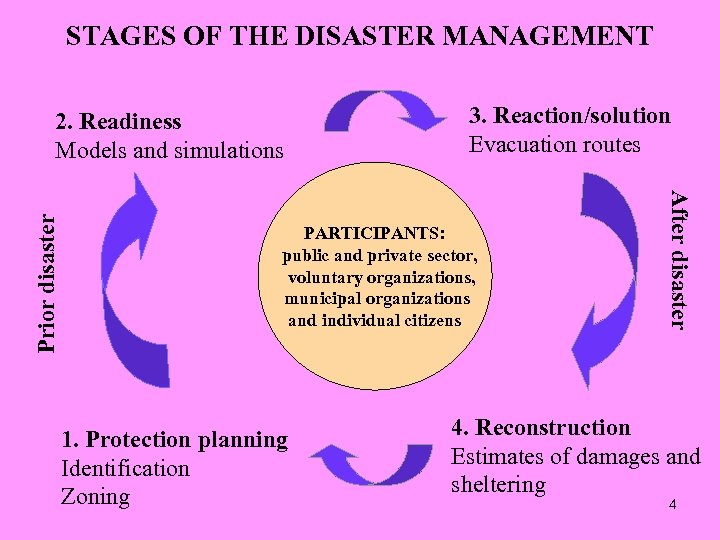
STAGES OF THE DISASTER MANAGEMENT 3. Reaction/solution Evacuation routes PARTICIPANTS: public and private sector, voluntary organizations, municipal organizations and individual citizens 1. Protection planning Identification Zoning After disaster Prior disaster 2. Readiness Models and simulations 4. Reconstruction Estimates of damages and sheltering 4
ology GEODESY AND DISASTER MANAGEMENT The establishment of safety measures which use advanced geodetic technologies contribute to the protection of the citizen, the land the property, as well as minimizing the losses. communication systems and satellite navigation play a significant role in the support of the disaster management, provide accurate and on-time information and communication support. -Geo-positioned information from : satellites, topographic maps, cadastre maps, combined with other relevant data into one information system have the objective to evaluate and decrease the disaster risk, -Monitoring the movement of the earth’s surface by geodetic surveys (example: damns, artificial accumulations) 5
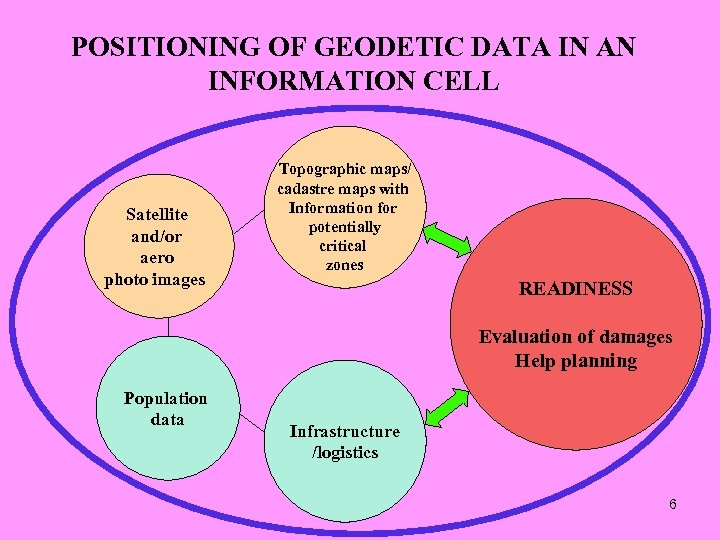
POSITIONING OF GEODETIC DATA IN AN INFORMATION CELL Satellite and/or aero photo images Topographic maps/ cadastre maps with Information for potentially critical zones READINESS Evaluation of damages Help planning Population data Infrastructure /logistics 6
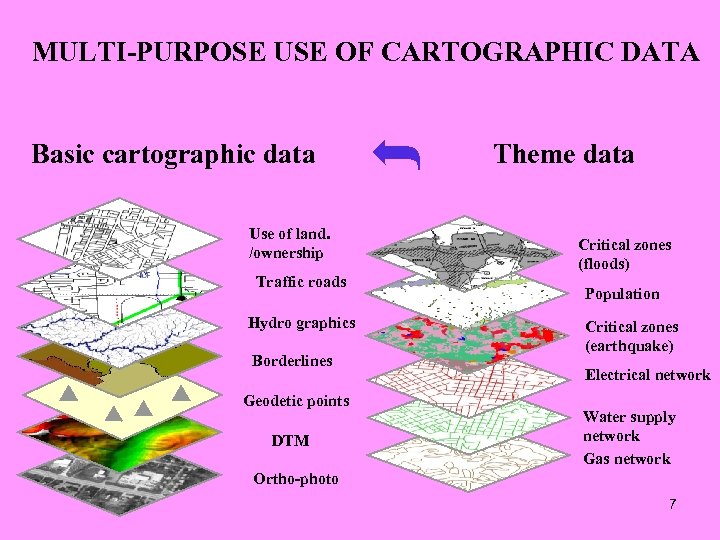
MULTI-PURPOSE USE OF CARTOGRAPHIC DATA Basic cartographic data Use of land. /ownership Traffic roads Hydro graphics Borderlines Geodetic points DTM Theme data Critical zones (floods) Population Critical zones (earthquake) Electrical network Water supply network Gas network Ortho-photo 7
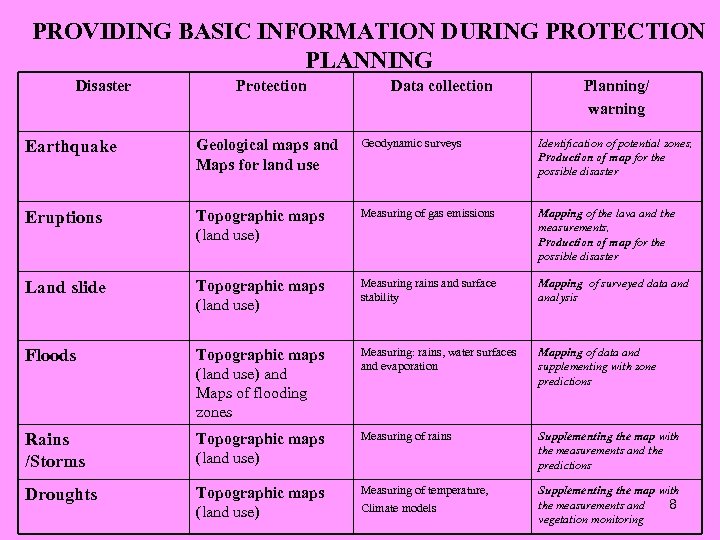
PROVIDING BASIC INFORMATION DURING PROTECTION PLANNING Disaster Protection Data collection Planning/ warning Earthquake Geological maps and Maps for land use Geodynamic surveys Identification of potential zones, Production of map for the possible disaster Eruptions Topographic maps (land use) Measuring of gas emissions Mapping of the lava and the measurements, Production of map for the possible disaster Land slide Topographic maps (land use) Measuring rains and surface stability Mapping of surveyed data and analysis Floods Topographic maps (land use) and Maps of flooding zones Measuring: rains, water surfaces and evaporation Mapping of data and supplementing with zone predictions Rains /Storms Topographic maps (land use) Measuring of rains Supplementing the map with the measurements and the predictions Droughts Topographic maps (land use) Measuring of temperature, Climate models Supplementing the map with the measurements and 8 vegetation monitoring
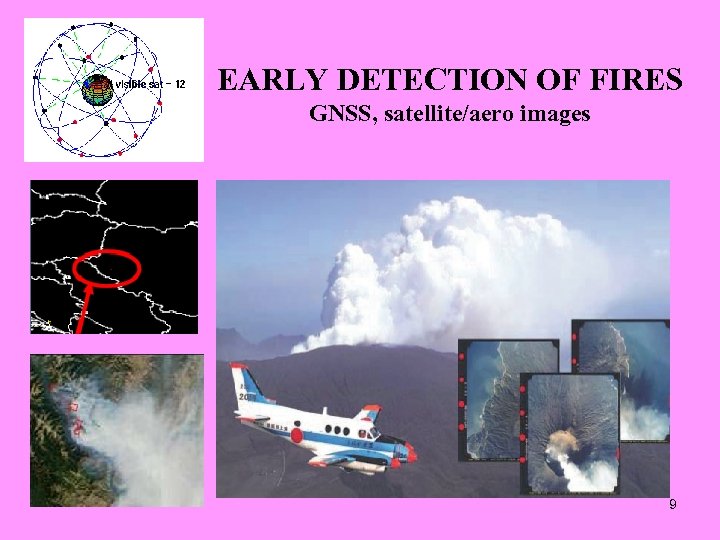
EARLY DETECTION OF FIRES GNSS, satellite/aero images 9
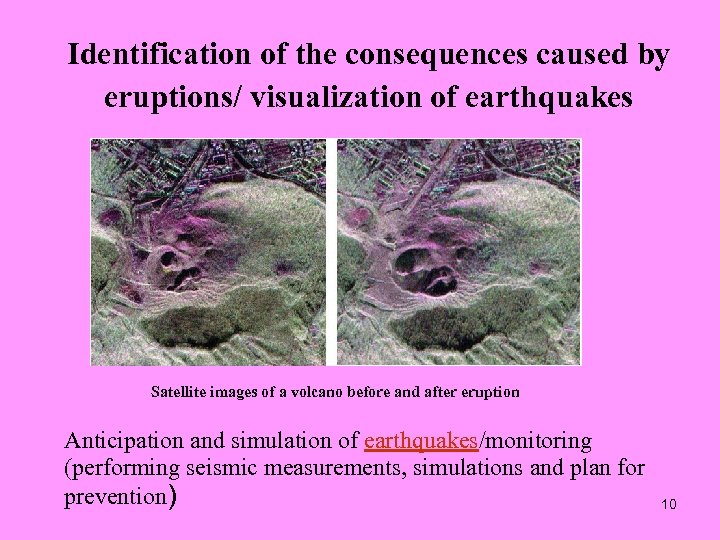
Identification of the consequences caused by eruptions/ visualization of earthquakes Satellite images of a volcano before and after eruption Anticipation and simulation of earthquakes/monitoring (performing seismic measurements, simulations and plan for prevention) 10
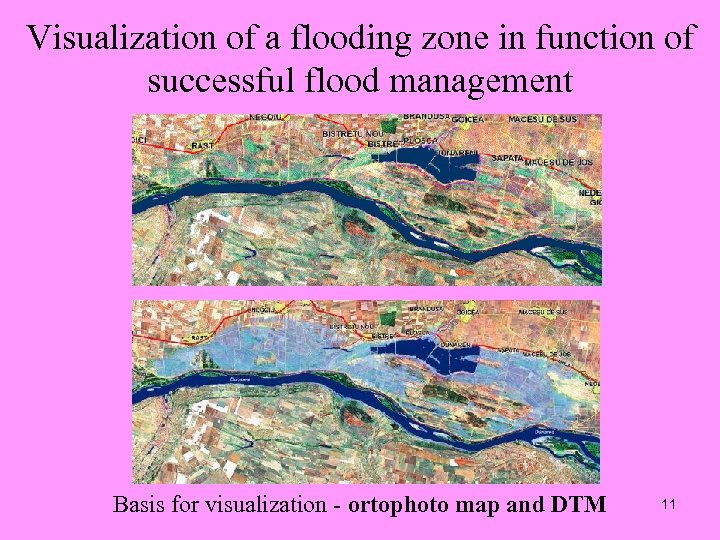
Visualization of a flooding zone in function of successful flood management Basis for visualization - ortophoto map and DTM 11
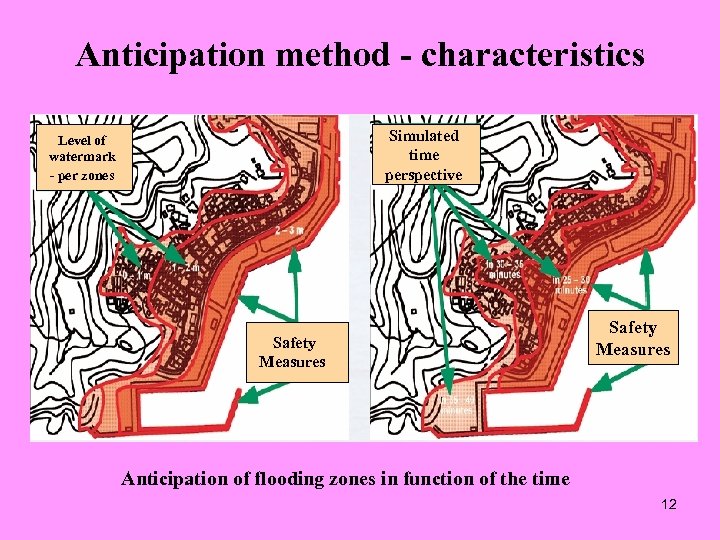
Anticipation method - characteristics Simulated time perspective Level of watermark - per zones Safety Measures Anticipation of flooding zones in function of the time 12
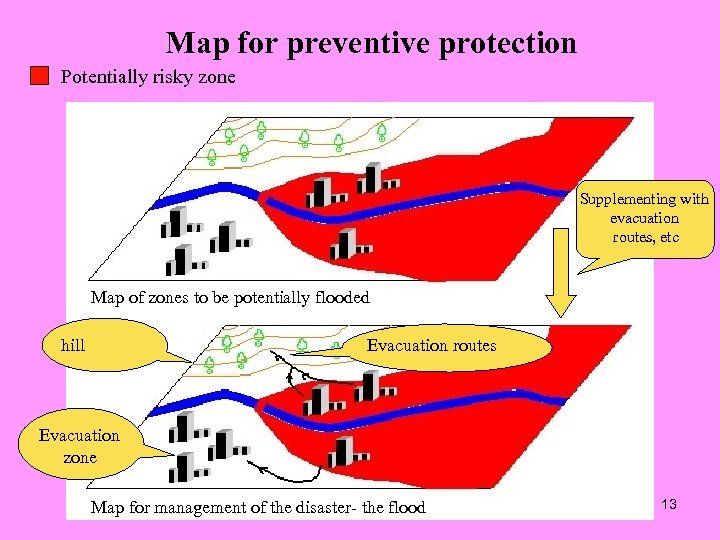
Map for preventive protection Potentially risky zone Supplementing with evacuation routes, etc Map of zones to be potentially flooded hill Evacuation routes Evacuation zone Map for management of the disaster- the flood 13
Quality of the geo-positioned information Weaknesses: lack of data, inadequate scale and type, updateness. . Role of the surveyors: survey and mapping expertise to obtain quality data necessary for the successfull disaster managment Data quality: Source - the data source; Positional accuracy - accuracy of X, Y i. e. X, Y, Z location (geometric) Attribute accuracy – is accuracy in a thematic, descriptive or numeral value assigned to the event Completeness – is the assessment of the level of data completeness - lack/excess Logical consistency – topology building – data synchronization Semantic accuracy – is the data description quality/the text accuracy Update – time when the data is collected 14
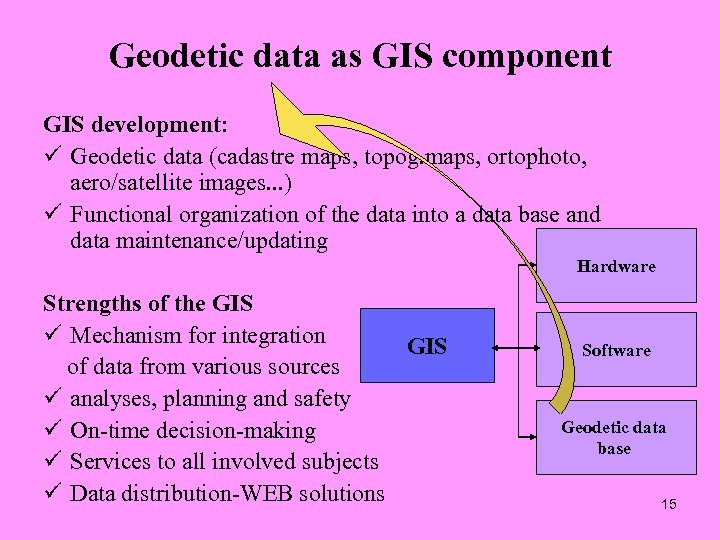
Geodetic data as GIS component GIS development: ü Geodetic data (cadastre maps, topog. maps, ortophoto, aero/satellite images. . . ) ü Functional organization of the data into a data base and data maintenance/updating Hardware Strengths of the GIS ü Mechanism for integration GIS of data from various sources ü analyses, planning and safety ü On-time decision-making ü Services to all involved subjects ü Data distribution-WEB solutions Software Geodetic data base 15
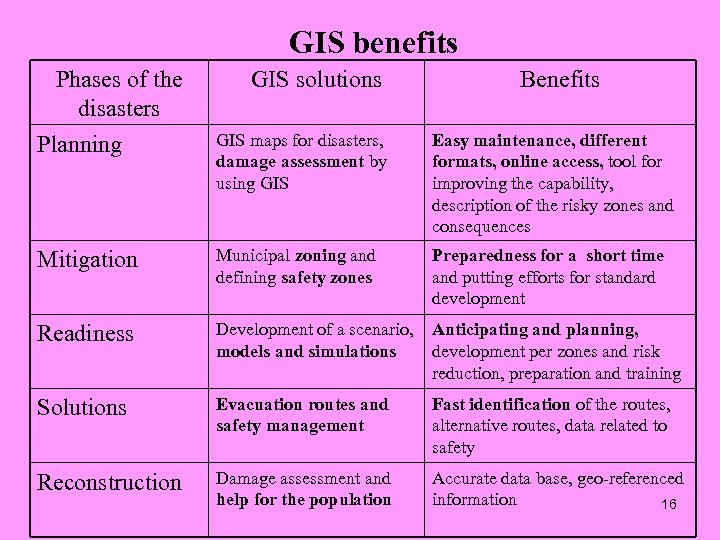
GIS benefits Phases of the disasters Planning GIS solutions Benefits GIS maps for disasters, damage assessment by using GIS Easy maintenance, different formats, online access, tool for improving the capability, description of the risky zones and consequences Mitigation Municipal zoning and defining safety zones Preparedness for a short time and putting efforts for standard development Readiness Development of a scenario, models and simulations Anticipating and planning, development per zones and risk reduction, preparation and training Solutions Evacuation routes and safety management Fast identification of the routes, alternative routes, data related to safety Reconstruction Damage assessment and help for the population Accurate data base, geo-referenced information 16
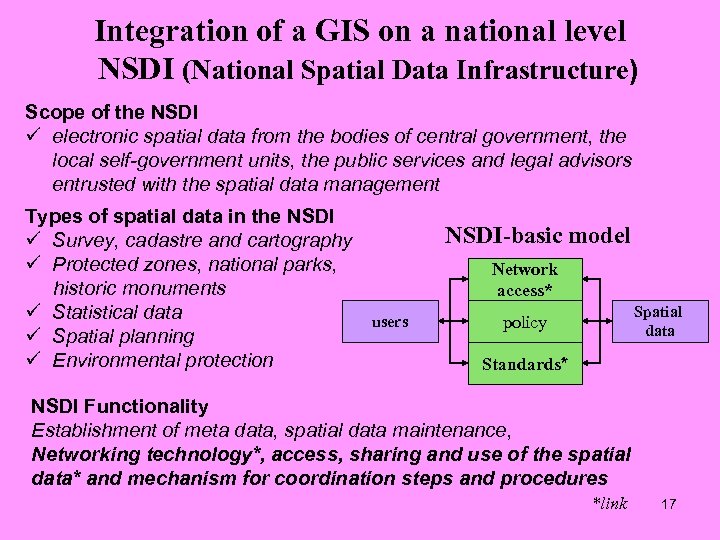
Integration of a GIS on a national level NSDI (National Spatial Data Infrastructure) Scope of the NSDI ü electronic spatial data from the bodies of central government, the local self-government units, the public services and legal advisors entrusted with the spatial data management Types of spatial data in the NSDI ü Survey, cadastre and cartography ü Protected zones, national parks, historic monuments ü Statistical data ü Spatial planning ü Environmental protection NSDI-basic model Network access* users Spatial data policy Standards* NSDI Functionality Establishment of meta data, spatial data maintenance, Networking technology*, access, sharing and use of the spatial data* and mechanism for coordination steps and procedures *link 17
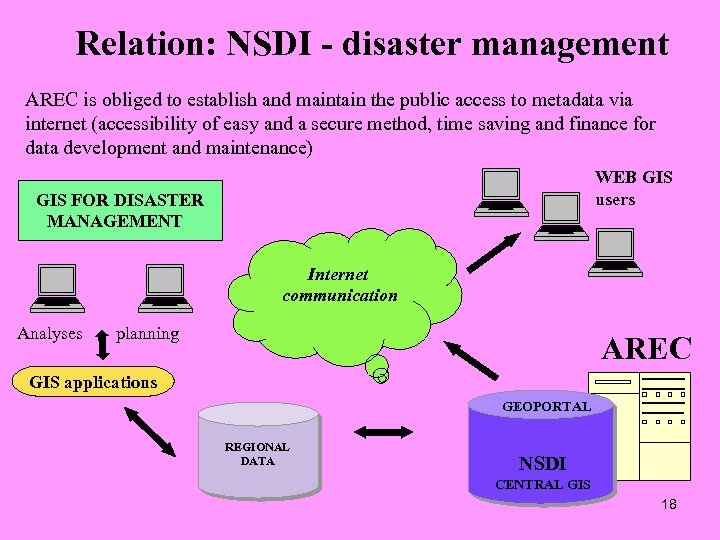
Relation: NSDI - disaster management AREC is obliged to establish and maintain the public access to metadata via internet (accessibility of easy and a secure method, time saving and finance for data development and maintenance) WEB GIS users GIS FOR DISASTER MANAGEMENT Internet communication Analyses planning AREC GIS applications GEOPORTAL REGIONAL DATA NSDI CENTRAL GIS 18
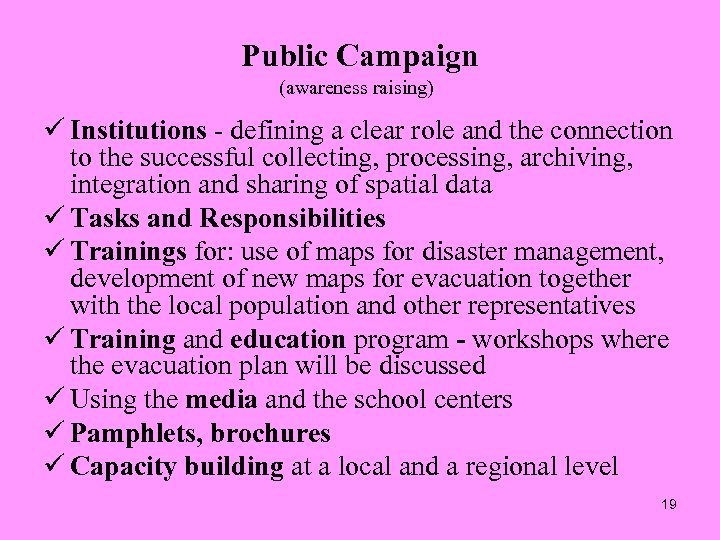
Public Campaign (awareness raising) ü Institutions - defining a clear role and the connection to the successful collecting, processing, archiving, integration and sharing of spatial data ü Tasks and Responsibilities ü Trainings for: use of maps for disaster management, development of new maps for evacuation together with the local population and other representatives ü Training and education program - workshops where the evacuation plan will be discussed ü Using the media and the school centers ü Pamphlets, brochures ü Capacity building at a local and a regional level 19
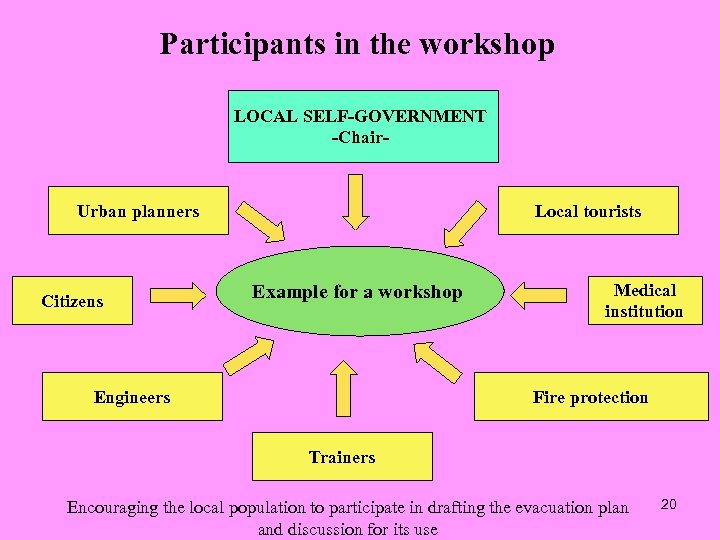
Participants in the workshop LOCAL SELF-GOVERNMENT -Chair- Urban planners Citizens Local tourists Example for a workshop Engineers Medical institution Fire protection Trainers Encouraging the local population to participate in drafting the evacuation plan and discussion for its use 20
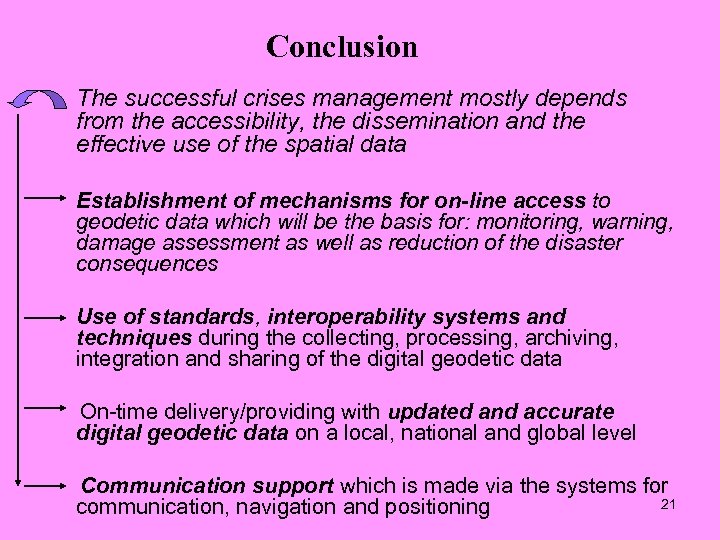
Conclusion The successful crises management mostly depends from the accessibility, the dissemination and the effective use of the spatial data Establishment of mechanisms for on-line access to geodetic data which will be the basis for: monitoring, warning, damage assessment as well as reduction of the disaster consequences Use of standards, interoperability systems and techniques during the collecting, processing, archiving, integration and sharing of the digital geodetic data On-time delivery/providing with updated and accurate digital geodetic data on a local, national and global level Communication support which is made via the systems for 21 communication, navigation and positioning

Thank you for the attention ! 22
Additional Information • • http: //www. gsi. go. jp http: //www. gdrc. org/uem/disasters http: //www. gisdevelopment. net http: //www. jma. go. jp http: //www. ocdi. or. jp http: //www. inmh. ro/images/Floods http: //earth. esa. int/ew/volcanoes 23
Скачать презентацию 7 th international Workshop on the Cross-border Disaster
a18c9cc3c4d2fb1649b59e15d24e9201.ppt