


 Скачать презентацию 7 th and 8 th Lecture on City
4234ec27a88bf25cd6a12f826a08d803.ppt
- Количество слайдов: 66
 7 th and 8 th Lecture on City Planning Philosophies into Practice K 127 - katedra sídel a regionů 1
 The Rationalists Marc Antoine Laugier in “Esais sur l’Architecture” (1753) claims to have drawn on natural sciences (just as Descartes) inspiration by Isaac Newton His aim was to establish the „true principles“ of architecture Laugier deduces that the essence of architecture consists of columns, beams and pedimented roofs There is, as he says, “no vault, no arch, no pedestals, no attic, not even a door or window” K 127 - katedra sídel a regionů 2
 Marc Antoine Laugier, cont. He develops such ideas in considerable detail, concluding that, of all known historical forms, the Greek temple – especially the Doric Temple, came nearest in form to the essential architecture he was seeking But he wanted to go somewhat further, towards: “something new, something from history which, at the same time, is uncommon”. Which, as he suggests, can be achieved: With the help of all the regular geometric figures From the circle to the most elongated ellipse From the triangle to the ultimate polygon K 127 - katedra sídel a regionů 3
 Marc Antoine Laugier - cont. Given these, one can “make up forms from straight lines and curves” which means it will be easy: “to vary the plans almost infinitely, giving to each a form which is nothing like the others and yet which is always regular” A Rationalist should advocate the use of pure geometric forms nor that those who implemented his theories should actually design in that way K 127 - katedra sídel a regionů 4
 Marc Antoine Laugier - cont. Having considered individual buildings in very considerable depth, Laugier goes on to discuss “the Embellishment of Towns” Laugier’s really is the first modern prescription for city planning At the heart of his approach there are his descriptions of town and forest to one or other of which most current theories of urban design still adhere K 127 - katedra sídel a regionů 5
 Marc Antoine Laugier and Paris He starts by assuming the planning of a walled town, as Paris was in his day, approached by wide avenues and penetrated by city gates The entries to the town must be free and unobstructed, numerous in proportion to the circumference of the wall and sufficiently ornate The avenues which approach them should be as wide as possible and beyond the city gates there should be squares from which wide streets fanned out en patte d’oie that is in the form of a goose’s foot The gates would take the form of triumphal arches K 127 - katedra sídel a regionů 6
 Marc Antoine Laugier - cont. “One must look at the town as a forest. The streets of the one are the roads on the other; and must be cut through in the same way. That which forms the essential beauty of a park is the multiplicity of roads, their width and their alignment” “The more variety, abundance, contrast and even disorder in this composition, the more piquant and delicious the beauties of the park…everything which is susceptible to beauty, demands invention and design is proper for the exercise of imagination, the fire, the verve of genius…” K 127 - katedra sídel a regionů 7
 Marc Antoine Laugier - cont. The uninspired, of course, can design a town with perfectly aligned streets but their boring accuracy and cold uniformity actually cause one to miss the disorder of towns like Paris which have no kind of alignment at all In the too-regular town: a large parallelogram traversed lengthwise and crosswise by lines at right angles: “one sees nothing but a boring repetition of the same objects, and all quarters look so much alike that one becomes mistaken and get lost” K 127 - katedra sídel a regionů 8
 Marc Antoine Laugier - cont. “above all, let us avoid excess of regularity and symmetry. When one dwells too long on deadens it. Whoever does not vary out pleasures will never get to the bottom of pleasing us” For Laugier therefore the art of planning a town consists of dividing the whole into an infinite number of beautiful, entirely different details One should hardly ever meet the same kind of object twice and, as one wanders from end to end of the city so one comes in every quarter across something new, unique, startling K 127 - katedra sídel a regionů 9
 Quatremére de Quincy made his contributions to architectural theory in his great Essay on “La Nature, le But et les Moyens de l’Imitation dans les Beaux Arts” ( The Nature, the Aims and the Means of Imitation in the Fine Arts) 1823 His Essay on Type have attracted the attention of later theorists and especially those, such as Aldo Rossi, who call themselves Rationalists K 127 - katedra sídel a regionů 10
 Quatremére de Quincy - cont. He says: “The word type presents an image of a thing to copy or to imitate completely, than the idea of an element which itself ought to serve as a rule or a model. Thus one never says that a statue or the composition of a complete and finished painting has served as type for the copy…But when a fragment, a sketch, the thought of a master, or a more or less vague description, has given birth to a work in the imagination of an artist, one can say that the type has given him this or that idea, this or that motif, this or that intention” K 127 - katedra sídel a regionů 11
 Quatremére de Quincy - cont. So: “The model, as understood in practical execution by an artist, is an object that should be repeated as it is; the type on the contrary is an object after which each (artist) can conceive works which may not be much like each other” And: “All is precise and more or less given in the model, all is more or less vague in the type” type K 127 - katedra sídel a regionů 12
 Ideal forms: Plato’s notion of ideal forms is developed in The Republic (Book XXXV) where Socrates, as usual, is in discussion with a group of friends We like to think, he says, that when a craftsman is making a table, a chair or a bed, he will have in mind the ideal form of the one or the other The problem, for Socrates, is knowing where that ideal form exists K 127 - katedra sídel a regionů 13
 Ideal forms: Plato – cont. Later writers such as Quatremére (and Aldo Rossi) have attached great importance to the notion of “type” but as we have seen from the way that Quatremére uses it, his notion of type is a rather fuzzy version of Plato’s ideal form K 127 - katedra sídel a regionů 14
 Boullée and Ledoux A number of architects tried to work out in practice theoretical ideas which Laugier had presented These included, in particular, Nicholas Claude Ledoux (1736 -1806) and Etienne-Louis Boullée (1728 -1799) Both of them worked out architectures of exceedingly pure geometry and, indeed, Ledoux built a great deal, including some 40 toll gates for the new City Wall of Paris (fig. 1) K 127 - katedra sídel a regionů 15
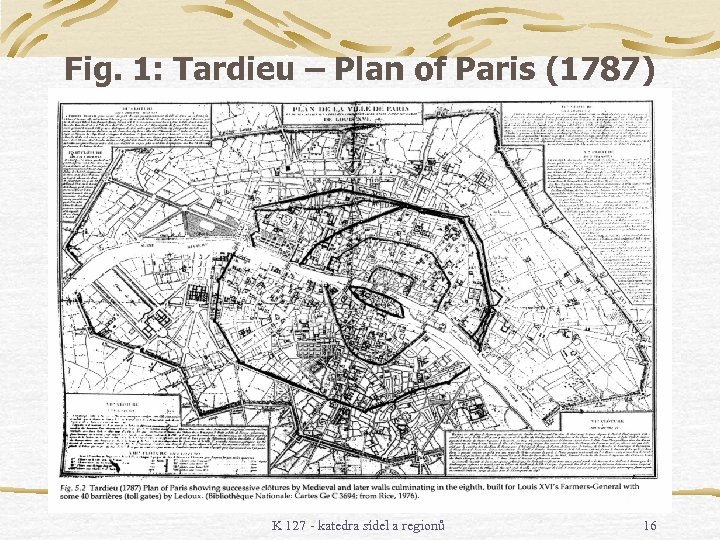 Fig. 1: Tardieu – Plan of Paris (1787) K 127 - katedra sídel a regionů 16
 Boullée and Ledoux – cont. Boullée built less but some of his propositions were even grander than Laugier’s – this included his vast King’s Library which, after the French revolution, became a National Library or a Library for a Great Nation But he, more than anyone else, defended the use of pure geometry in architecture Having asked why regular figures take precedence over irregular ones he says: K 127 - katedra sídel a regionů 17
 Boullée and Ledoux – cont. “…Because their forms are simple, their faces are regular and repeat themselves…their regularity and symmetry are the very image or order and this image is self-evident within them…” “…By the proportion of a body I mean an effect which is born in regularity, symmetry and in variety. Regularity produces in objects beauty of forms; symmetry their order and their beautiful harmony; variety faces which themselves are diversified to our eyes. So, by the bringing together and agreement resulting from all these properties, is born the harmony of the figure…” K 127 - katedra sídel a regionů 18
 Boullée and Ledoux – cont. “…For example, the sphere may be taken as bringing together all the properties of such figures. All the points of its surface are equally distant from the centre. From this unique advantage, the result is that from all the aspects that we can contemplate the figure, any effect of optics is unable to change the magnificent beauty of its form…” So for Boullée the sphere is the very image of perfection It brings together perfect symmetry, perfect regularity and the largest possible variety (fig. 2) K 127 - katedra sídel a regionů 19
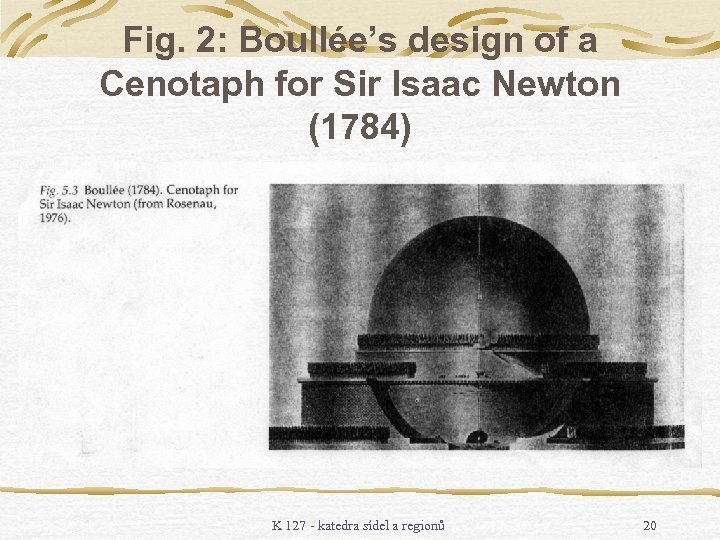 Fig. 2: Boullée’s design of a Cenotaph for Sir Isaac Newton (1784) K 127 - katedra sídel a regionů 20
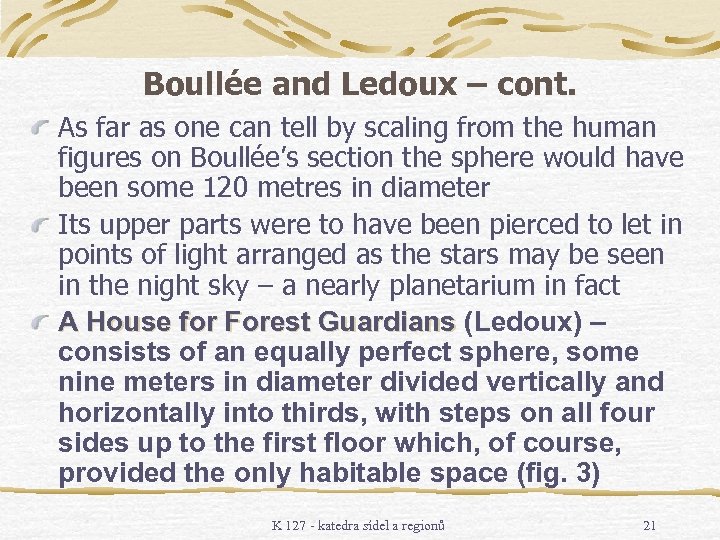 Boullée and Ledoux – cont. As far as one can tell by scaling from the human figures on Boullée’s section the sphere would have been some 120 metres in diameter Its upper parts were to have been pierced to let in points of light arranged as the stars may be seen in the night sky – a nearly planetarium in fact A House for Forest Guardians (Ledoux) – consists of an equally perfect sphere, some nine meters in diameter divided vertically and horizontally into thirds, with steps on all four sides up to the first floor which, of course, provided the only habitable space (fig. 3) K 127 - katedra sídel a regionů 21
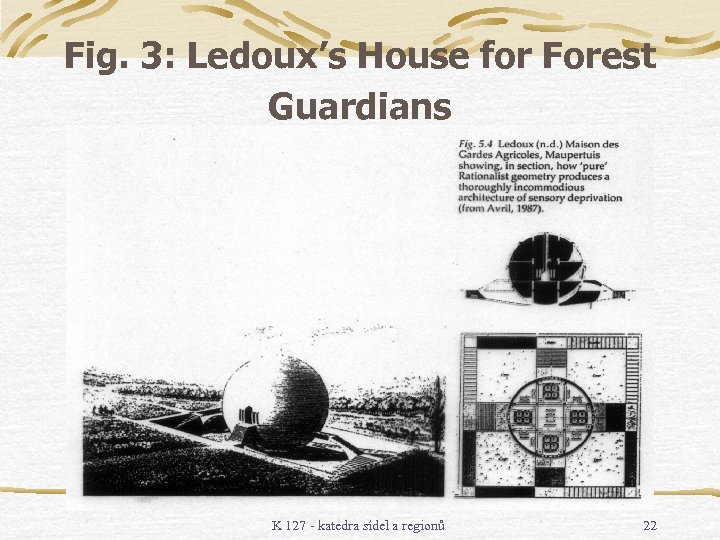 Fig. 3: Ledoux’s House for Forest Guardians K 127 - katedra sídel a regionů 22
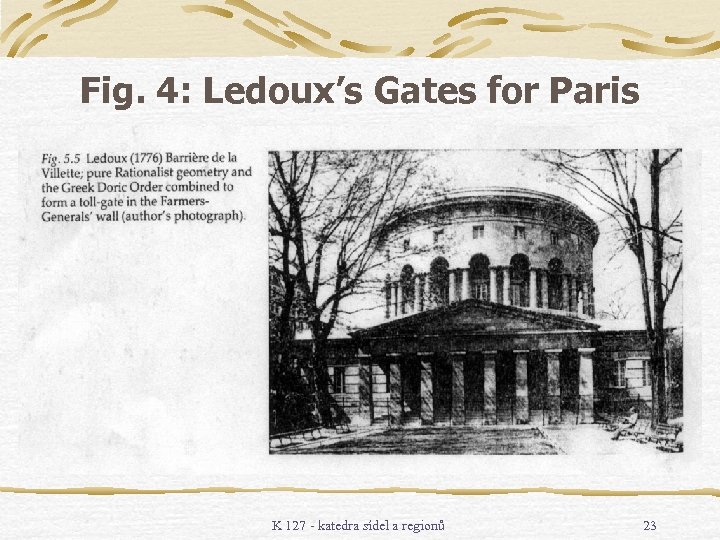 Fig. 4: Ledoux’s Gates for Paris K 127 - katedra sídel a regionů 23
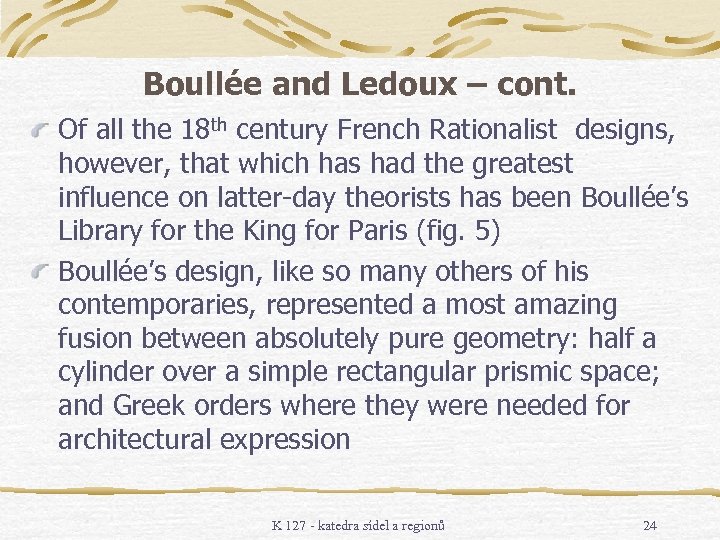 Boullée and Ledoux – cont. Of all the 18 th century French Rationalist designs, however, that which has had the greatest influence on latter-day theorists has been Boullée’s Library for the King for Paris (fig. 5) Boullée’s design, like so many others of his contemporaries, represented a most amazing fusion between absolutely pure geometry: half a cylinder over a simple rectangular prismic space; and Greek orders where they were needed for architectural expression K 127 - katedra sídel a regionů 24
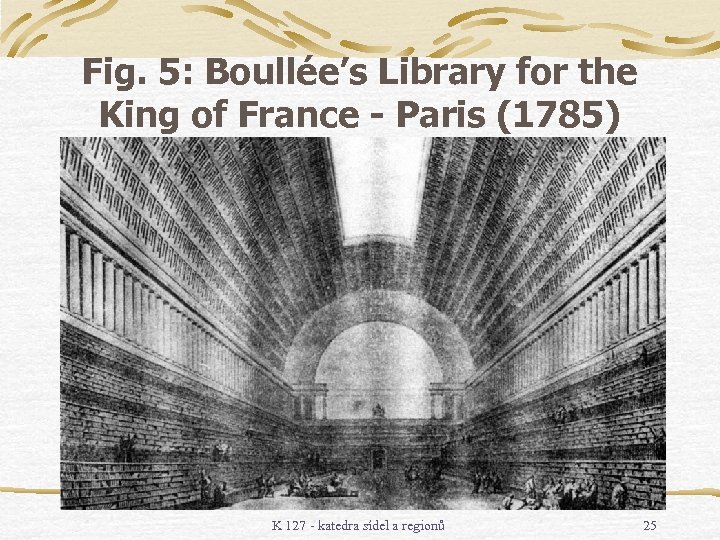 Fig. 5: Boullée’s Library for the King of France - Paris (1785) K 127 - katedra sídel a regionů 25
 The Empiricists Empiricism as a philosophy, had profound effects, not only on aesthetic theory but also on the practice of design in 18 th century England The first translation from philosophy into aesthetic theory was effected by a series of writers starting with Joseph Addison (1672 -1719) who wrote a series of essays “On the pleasures of the imagination” (1713) K 127 - katedra sídel a regionů 26
 Joseph Addison starts with the sense of seeing (the most perfect of the senses) He says that seeing gives us two kinds of pleasures: firstly those provided directly by objects as we see them which he calls the primary pleasures and secondly those we still enjoy when the objects which gave us pleasure are no longer there, giving us their enjoyment directly – we then have the pleasures of thinking about them, the pleasures of contemplation which he calls secondary pleasures K 127 - katedra sídel a regionů 27
 Joseph Addison – cont. To enjoy these secondary pleasures properly, however, we have to know how to be idle, something which, he says, the vulgar do not begin to understand (they are far too busy with other things such, presumably, as trying to scratch a living) If we take time to stand stare, we shall find that three kinds of things induce in us the pleasures of the imagination Addison calls them the Great, the Uncommon and the Beautiful K 127 - katedra sídel a regionů 28
 Joseph Addison – cont. Greatness, for him, is by no means a matter of size or bulk within a single object He sees it, rather, in amplitude and generosity of view such as we find in open countryside, in vast deserts, huge mountains etc. The imagination, according to Addison, loves to be filled, to be thrilled by things such as these which are simply too vast for it to comprehend K 127 - katedra sídel a regionů 29
 Joseph Addison – cont. As for the Uncommon, that delights us too “because it fills the soul with agreeable Surprise, gratifies the Curiosity, and gives it an Idea of which it was not before posses” The Uncommon thus diverts the mind, serves to refresh it, staves off boredom and satiety Which is why we enjoy fields and meadows in the spring, when everything is verdant, fresh and green. It is why we find water so fascinating, because it is in constant motion, and so on K 127 - katedra sídel a regionů 30
 Joseph Addison – cont. Beauty passes directly to the soul There are no universal standards “Beauty is a function of Nature herself and of things we have learned by experience” “The most beautiful of men, birds, animals or whatever are those which conform most closely to the recognized and observable standards of their kind” K 127 - katedra sídel a regionů 31
 Joseph Addison – cont. Our delight in the Great, the Uncommon and the Beautiful resides, ultimately, in the way that “the Supreme author of our being” has fashioned our very souls We will delight in the Great and Uncommon, they inspire us in the pursuit of knowledge As for the beautiful, that delights us for the very simple reason that, like all other living creatures, it encourages us to reproduce our kind Compared to Nature herself, according to Addison, Art is a second-rate pursuit K 127 - katedra sídel a regionů 32
 Joseph Addison – cont. Addison raises a curious point which was to perplex most of those who explored in directions which he had pointed out As he says, ugliness and suffering, by their nature are thoroughly repellent Yet when we see them in painting, sculpture, even theatre at secondhand they give us the most enormous pleasure, albeit secondary pleasure K 127 - katedra sídel a regionů 33
 Joseph Addison – cont. With Addison’s Essays the seeds were sown of an interest which was to preoccupy several generations of English gentlemen of leisure for the rest of the 18 th century, on and into the 19 th century: their inquiry into what it is we find most pleasing, pleasurable, in buildings, landscapes, paintings and other forms of art Some of the ideas are of crucial importance for what followed, and continues to follow The debate raged furiously at times and various contributions make highly entertaining reading K 127 - katedra sídel a regionů 34
 Edmund Burke He makes rather clearer distinctions between Addison’s three categories suggesting, for instance, that the Uncommon, or Novel, is different in kind from the other two, that the attractions which objects hold for us depend on other qualities These are bound up with our passions, some of which themselves are founded in our instinct for self-preservation K 127 - katedra sídel a regionů 35
 Edmund Burke – cont. Beauty, on the other hand, has the special function of directing sexual feeling towards particular individuals It is not a matter of proportion, or of fitness for purpose – it is a matter, rather, of certain qualities in bodies “acting mechanically on the human mind by the interventions of the senses” These qualities which make for Beauty are, in Burke’s view, smallness, smoothness, gradual variation, delicacy, variety of colours from those low in saturation to those of high brilliance K 127 - katedra sídel a regionů 36
 Edmund Burke – cont. What we need is to maintain our nerves “in proper order” that is neither too taut nor too relaxed To achieve this, he says, “they must be shaken and worked to a proper degree”, hence the pleasures of mild exercise K 127 - katedra sídel a regionů 37
 Archibald Alison Takes a firmly Empiricist line, drawing directly on the Associationism Alison criticized his predecessors on two grounds: firstly that the artists among them believed that our emotions were determined by original laws of nature, so that certain of our senses are appropriated for the perception of Beauty or Sublimity and secondly the philosophers among them tried to reduce taste into some more general law of our mental constitution K 127 - katedra sídel a regionů 38
 Archibald Alison – cont. Alison: the emotions of taste are extremely complex He analysed this complexity, concluding that the emotions of taste are felt “when the imagination is employed in the perception of a regular train of ideas of emotion” It is this regularity of ideas, associated with some particular emotion, that distinguishes such a train from other trains of ordinary thought within which each idea is merely connected to the next one K 127 - katedra sídel a regionů 39
 Payne Knight quite rejects the view that Beauty is nothing more than smoothness This view, he suggests, confuses a mere sensual sympathy with a more general principle The pleasures of touch do arise from irritation of sensors within the skin and the pleasures of seeing too depend on irritation of the sensors within the eye This irritation is a function of light and colour alone and we learn by association the crucial connections between these irritations and relationship in space of distance and magnitude K 127 - katedra sídel a regionů 40
 Payne Knight – cont. “Visible beauty consists in harmonious, but yet brilliant and contrasted combinations of light, shade and colours; blended, but not confused, and broken, but not cut, into masses: and it is not peculiarly (particularly) in straight or curve, taper or spiral, long or short, little or great objects, that we are to seek there; but in such as display to the eye intricacy of parts and variety of tint and surface” These are of course the distinguishing features of those objects which look good in paintings and Knight (and others) calls them picturesque K 127 - katedra sídel a regionů 41
 Payne Knight – cont. The error of imitations is that they: “…servilely copy the defects, which they see produced, instead of studying and adopting the principles, which guided the original artist in producing them; therefore they disregard all those local, temporary or accidental circumstances…” So the real authority of style lies in the trained vision of the great painter and for Knight, the greatest of them all is Claude Lorraine (1600 -1682) whose landscapes, together with those of Nicolas Poussin (1594 -1665), provide the finest conceivable style for Picturesque houses and landscapes K 127 - katedra sídel a regionů 42
 Payne Knight – cont. Certain matters depend entirely on sentiment, and cannot be directed by logic; they are too subtle for that There is no test of aesthetic excellence but feeling So instead of formal rules, we must use our judgement, which: “is commonly used to signify the talent of deciding justly and accurately in matters that do not admit of mathematical demonstration” K 127 - katedra sídel a regionů 43
 Humphrey Repton 18 th century England was indeed a rich seed-bed for the new aesthetics, based on Empirical philosophy, to grow. In addition to theorizing however much was achieved in the way of practical design There were the great landscape gardens such as Stowe (from 1734) – fig. 6 -9, Rousham (1739) and Stourhead (1741) – fig. 10 -16 K 127 - katedra sídel a regionů 44
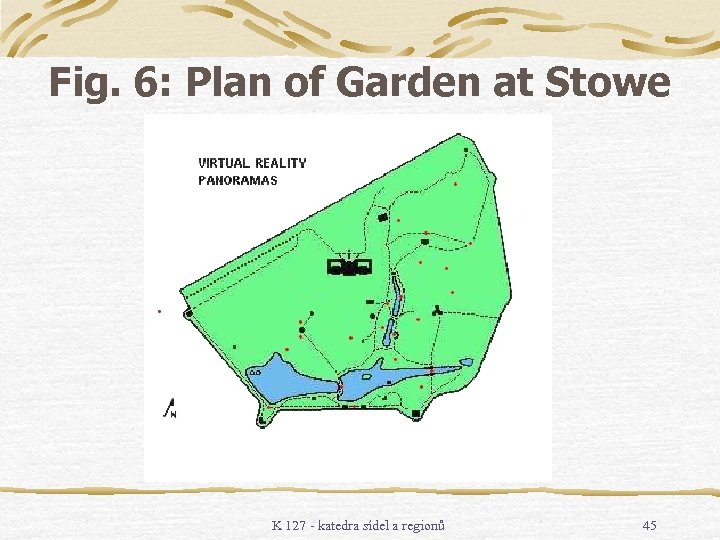 Fig. 6: Plan of Garden at Stowe K 127 - katedra sídel a regionů 45
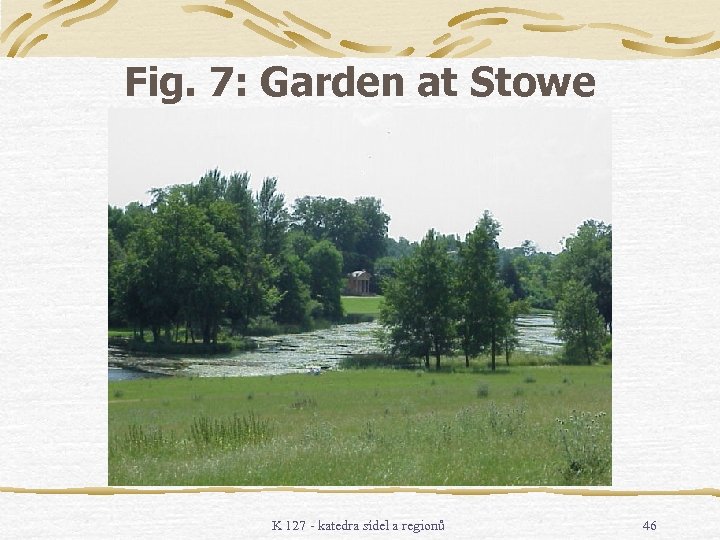 Fig. 7: Garden at Stowe K 127 - katedra sídel a regionů 46
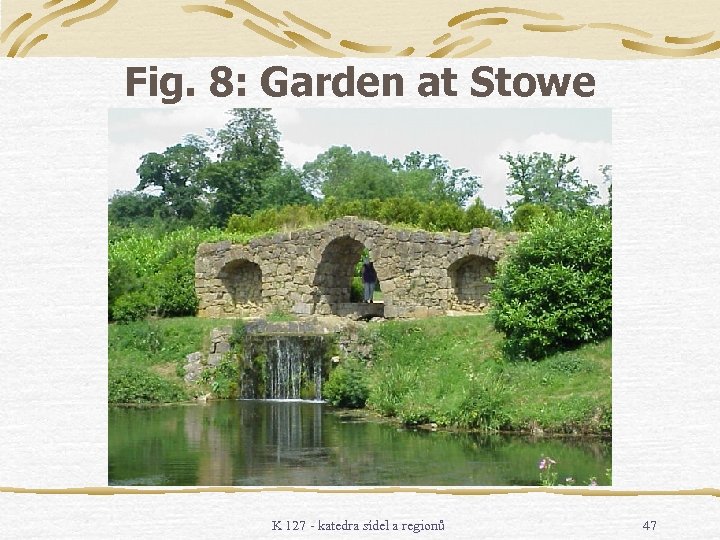 Fig. 8: Garden at Stowe K 127 - katedra sídel a regionů 47
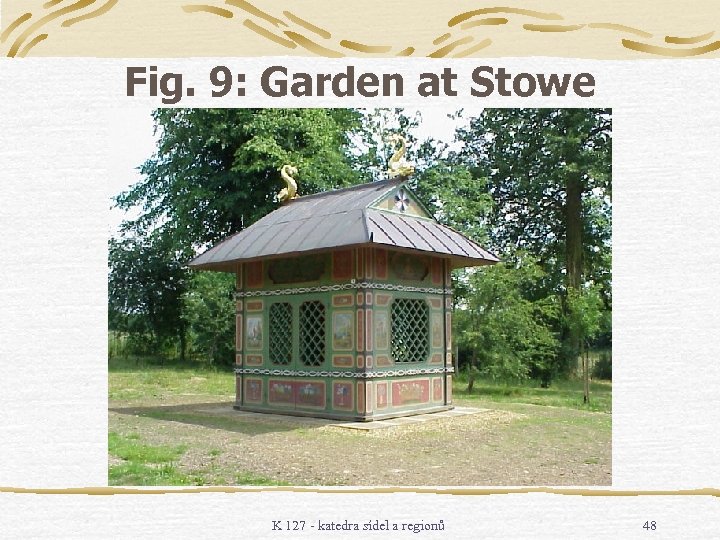 Fig. 9: Garden at Stowe K 127 - katedra sídel a regionů 48
 Garden at Stourhead (fig. 10 -16) Y-shaped, artificial lake is surrounded by wellwooded landscape within which Classical temples – somewhat in the manner of Claude – a rocky grotto and other features are grouped along a clearly defined route around the lake The owner, Henry Hoare, saw parallels between his own life and Aeneas’s travails in Virgil’s Aeneid Each temple and every other building in the original scheme, represents an incident in the Aeneid and therefore, metaphorically, in Hoare’s own life K 127 - katedra sídel a regionů 49
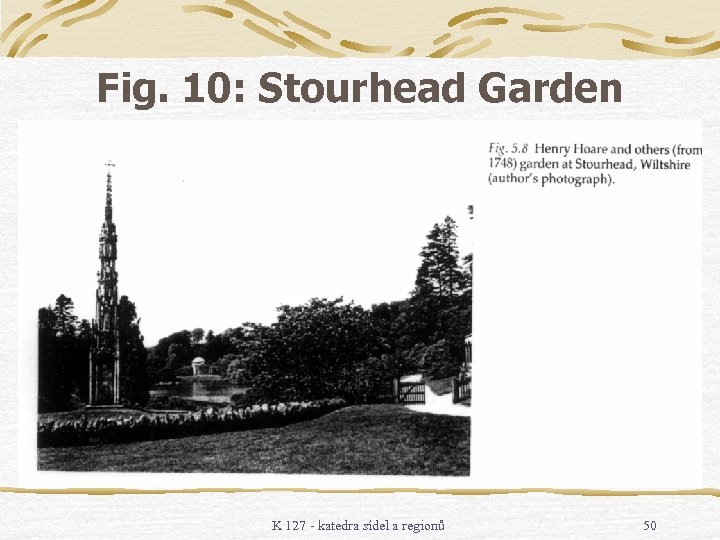 Fig. 10: Stourhead Garden K 127 - katedra sídel a regionů 50
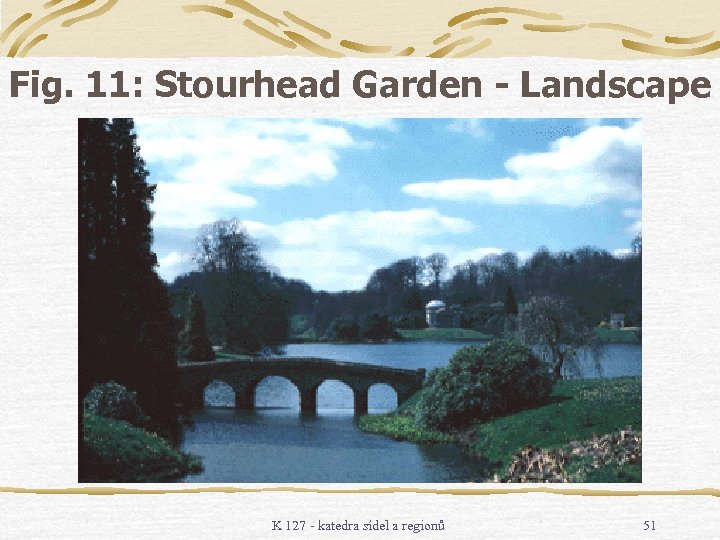 Fig. 11: Stourhead Garden - Landscape K 127 - katedra sídel a regionů 51
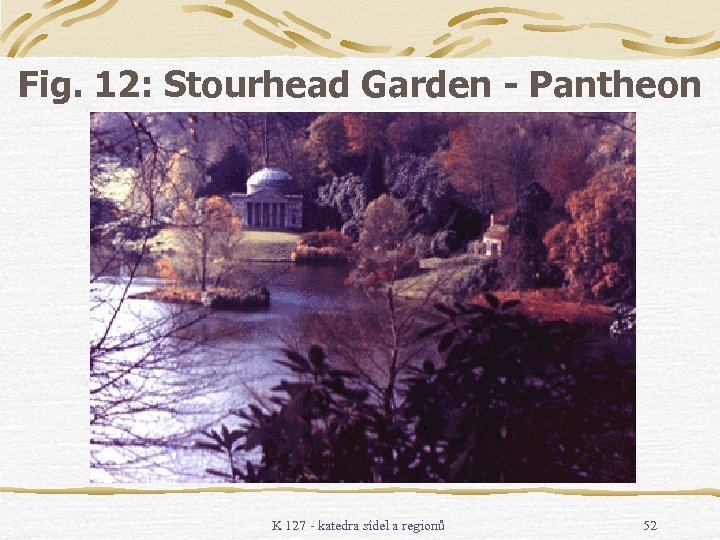 Fig. 12: Stourhead Garden - Pantheon K 127 - katedra sídel a regionů 52
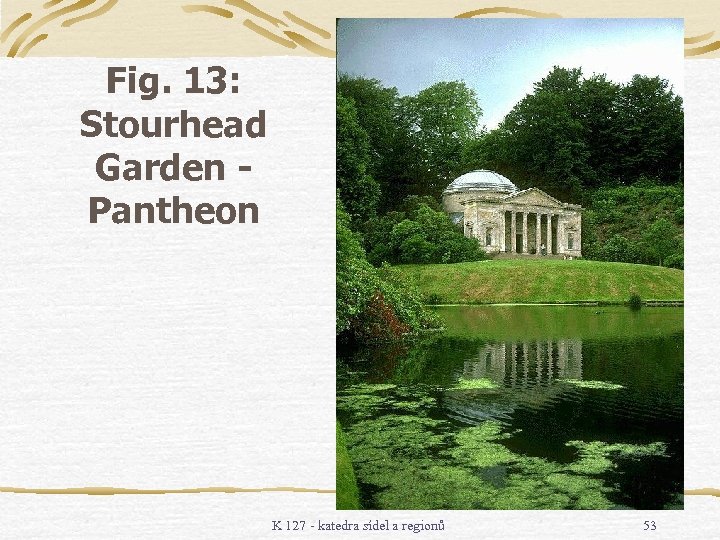 Fig. 13: Stourhead Garden Pantheon K 127 - katedra sídel a regionů 53
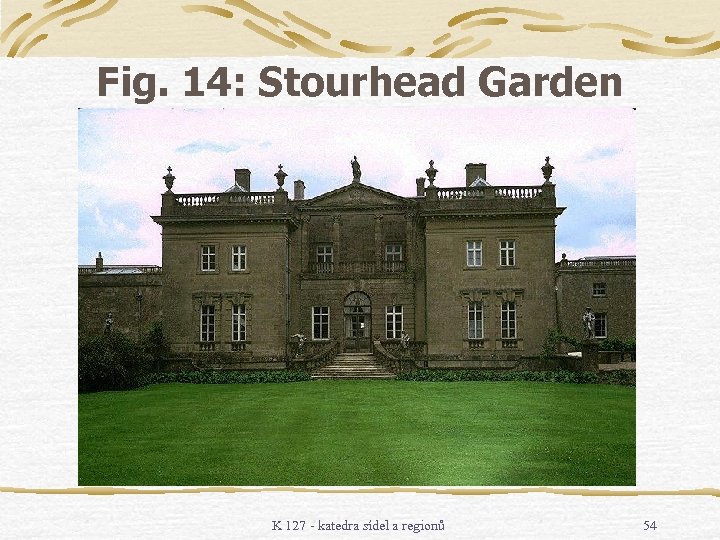 Fig. 14: Stourhead Garden K 127 - katedra sídel a regionů 54
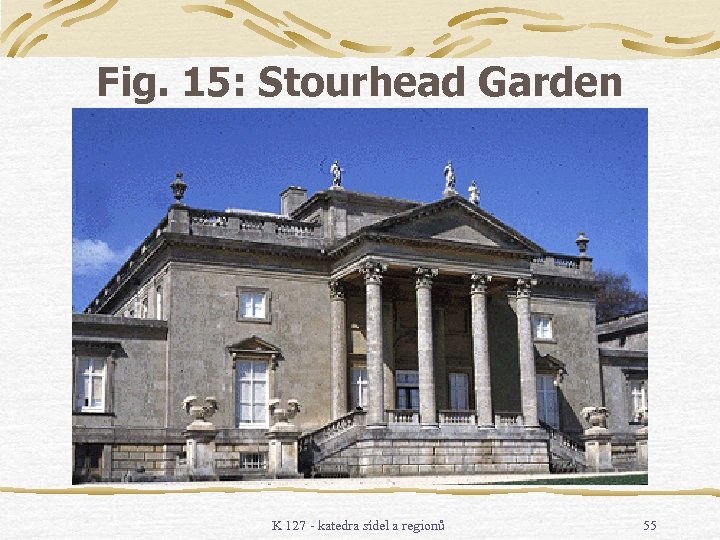 Fig. 15: Stourhead Garden K 127 - katedra sídel a regionů 55
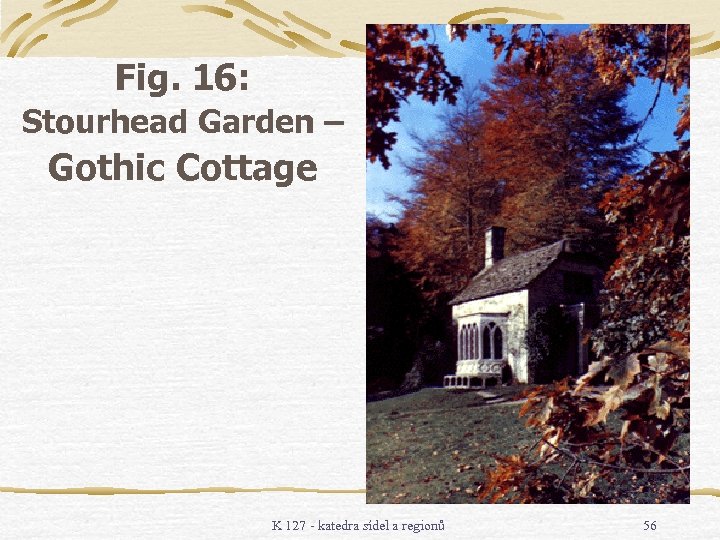 Fig. 16: Stourhead Garden – Gothic Cottage K 127 - katedra sídel a regionů 56
 Humphrey Repton – cont. So Stourhead is the most glorious of the practical results of converting Empiricist philosophy into a theory of landscape Repton’s “Sketches and Hints for Landscape Gardening” (1794) provided a practical manual for other landscape gardeners to follow His writings include rules for achieving the Picturesque both in landscape design and architecture K 127 - katedra sídel a regionů 57
 Humphrey Repton – cont. Repton’s “Sources of Pleasure for Landscape Gardening” (in Loudon, 1840) include, for instance: Congruity in the adaptation of the parts to the whole Utility, that is fitness for purpose Convenience Order Symmetry These clearly derive from the grand tradition of architectural theory going back to Vitruvius; K 127 - katedra sídel a regionů 58
 Humphrey Repton – cont. Picturesque effect – in terms of light and shade, the forms of groups, outlines, colouring, balance of composition, the occasional advantages of roughness and decay, the effects of time and age on materials; Intricacy, which is: “the disposition of objects, which, by a partial and uncertain concealment, excite and nourish curiosity”: Simplicity; Variety; Novelty; Contrast; Continuity; Association of ideas, historical or personal; Grandeur; Appropriation, which means displaying the extent of the owner’s estate; Animation – of water, vegetation, animals; Changes due to the seasons and times of day K 127 - katedra sídel a regionů 59
 Humphrey Repton – cont. The first three of these, he says: Utility, Convenience and Comfort, are by no means conductive to Picturesque beauty Repton, in fact, opposes in principle any idea that the landscape can be both ornamental and profitable Convenience is a matter of such things as using gravel paths to keep the owner’s shoes dry, a south-east aspect to catch the most favourable weather and so on Utility may be connected with aesthetic excellence but only by association K 127 - katedra sídel a regionů 60
 Humphrey Repton – cont. So, starting for our purposes at the scale of buildings, Repton naturally, has rules for sitting them His check-list amounts to four considerations: The aspect 2. The levels of the surrounding ground 3. Objects of convenience, such as water supply, space for offices (in the 18 th century sense), accessibility to roads and towns 4. The view from the house 1. Of these, he says, only the last has any real aesthetic connotations – the other three are matters of convenience and utility K 127 - katedra sídel a regionů 61
 Humphrey Repton – cont. As for the forms the buildings should take, first of all he states the choices available in this time: Gothic, or of old date Grecian, or modern Of these he advocated Gothic Greek architecture consists, predominantly, of horizontal lines whilst Gothic consists of vertical It is this difference, he says, which leads to incongruity when the two are mixed K 127 - katedra sídel a regionů 62
 Humphrey Repton – cont. He prescribes four rules for achieving Picturesque irregularity: The…great principle on which the picturesque effect of all Gothic edifices must depend…is irregularity of outline: “Firstly, at the top by towers and pinnacles, or chimneys” “Secondly, in the outlines of the faces, or elevations, by projections and recesses” “Thirdly, in the outlines of the apertures, by breaking the horizontal lines with windows of different forms and heights” K 127 - katedra sídel a regionů 63
 Humphrey Repton – cont. “Lastly, in the outline of the base, by the building being placed in ground of different levels” As for the landscape around the house, Repton distinguishes three distances, those of the Garden, the Park and the Forest The Garden, immediately around the house, should be fairly formal. Or it might consist of several small gardens with the most formal close to the house Beyond these, the Park should be landscaped in a much more natural way And beyond that again, the Forest should be left to its own wild devices K 127 - katedra sídel a regionů 64
 Humphrey Repton – cont. The perfection of Landscape Gardening consists in the four following requisites: “Firstly, it must display the natural beauties, and hide the natural defects, of every situation” “Secondly, it should give the appearance of extent and freedom, by carefully distinguishing or hiding the boundary” “Thirdly, it must studiously conceal every interference of art…making the whole appear the production of nature only” “Fourthly, all objects of mere convenience or comfort, if incapable of being made ornamental, or of becoming proper parts of the general scenery, must be removed or concealed…” K 127 - katedra sídel a regionů 65
 Humphrey Repton – cont. Repton’s Picturesque architecture for him in particular association is one of the main sources of aesthetic delight Repton, of course, was a gardener and most of the Picturesque theory which was built up in England during the 18 th and early 19 th centuries was concerned with the landscape natural or artificial Nevertheless, much of theory was translatable into an urban context as it was It was not until the end of the 19 th century that architects such as Camillo Sitte began to turn their attention to the development of picturesque principles for urban design K 127 - katedra sídel a regionů 66