 Скачать презентацию 6 Health-behavior change techniques Łukasz Kaczmarek IP UAM
6ffd4b62210ea31a04bbf0e61095c459.ppt
- Количество слайдов: 24



6. Health-behavior change techniques Łukasz Kaczmarek, IP UAM, 2010 -2011
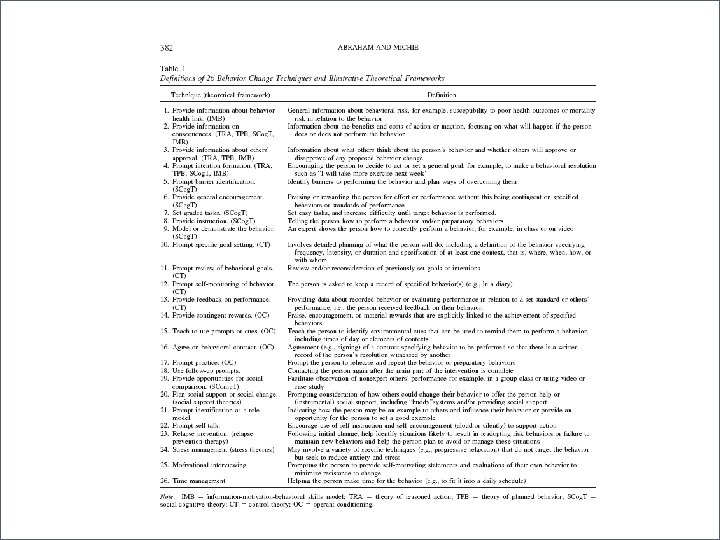
Provide information about behavior-health link Provide information on consequences General information that a behviour may be linked to poor health outcomes. Information about the benefits and costs of action or inaction, focusing on what will happen if the person does or does not perform the behavior
STOP SMOKING: Medical advice - methods Types of intervention: Minimal advice with 20 minut consultation + optional leaflet) < 20 minut Complete + 1 follow up visit Intensive Advice with longer consultation + leaflet + further resources (demonstrations, self-help manuals) + follow up
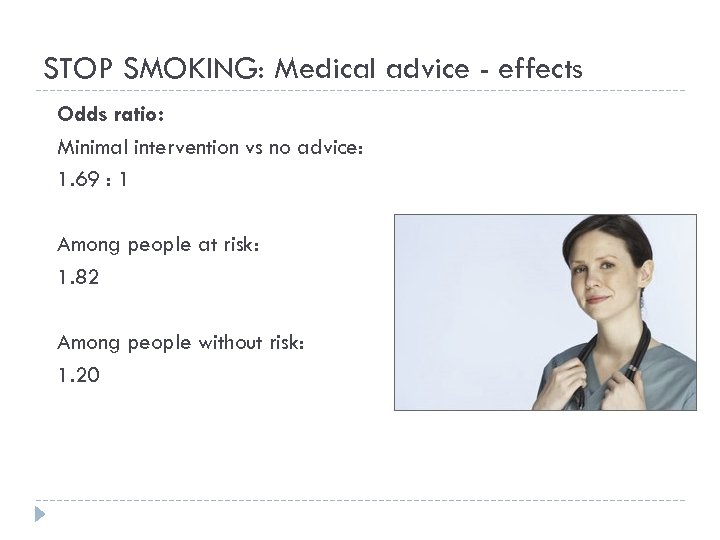
STOP SMOKING: Medical advice - effects Odds ratio: Minimal intervention vs no advice: 1. 69 : 1 Among people at risk: 1. 82 Among people without risk: 1. 20
STOP SMOKING: Intervention by nurses Verbal instruction to stop smoking (regardless of giving information about risk) Low intensity: advice + leaflet High intensity: contact > 10 minutes + further materials (manuals) + follow ups. Effective smoking cessation 1. 43 Most effective for patients with CHD 2. 14 No effect for patients with other somatic ilness
Provide information about others’ approval Prompt intention formation Information about what others think about the person’s behavior and whether others will approve or disapprove of any proposed behavior change Encouraging the person to decide to act or set a general goal, for example, to make a behavioral resolution such as “I will take more exercise next week‘
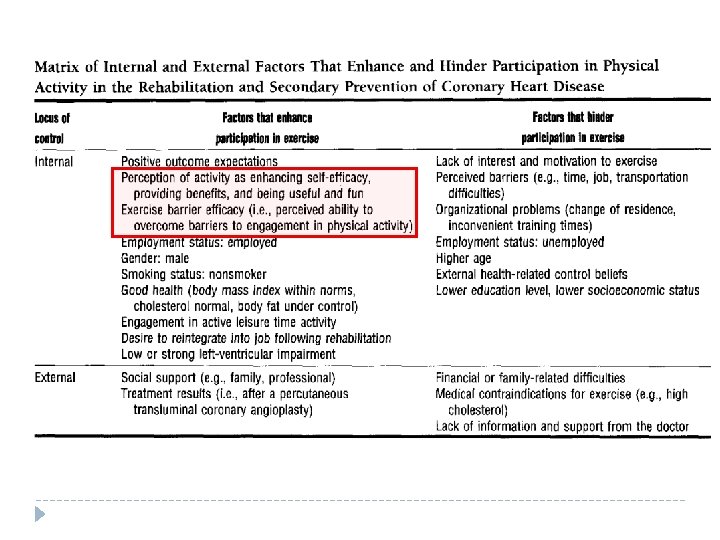
Prompt barrier identification Identify barriers to performing the behavior and plan ways of overcoming them Michie, S. , Abraham, Ch. (2008)
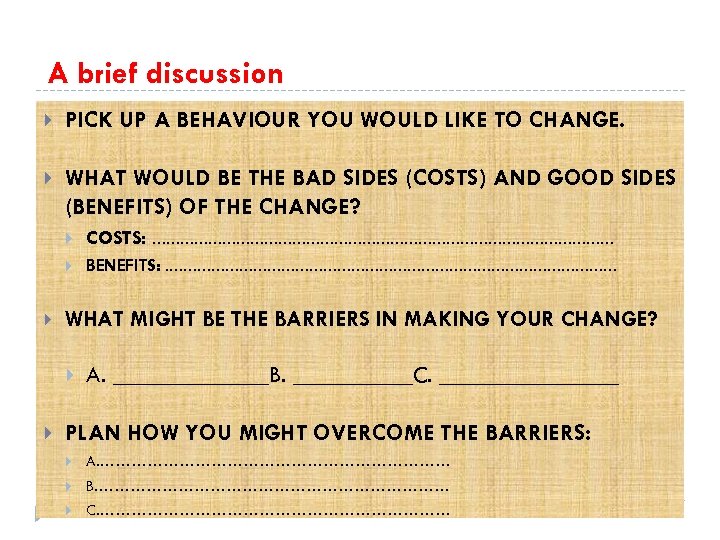
A brief discussion PICK UP A BEHAVIOUR YOU WOULD LIKE TO CHANGE. WHAT WOULD BE THE BAD SIDES (COSTS) AND GOOD SIDES (BENEFITS) OF THE CHANGE? COSTS: …………………………………………… BENEFITS: . ………………………………………… WHAT MIGHT BE THE BARRIERS IN MAKING YOUR CHANGE? A. _______B. _____C. ________ PLAN HOW YOU MIGHT OVERCOME THE BARRIERS: A. …………………………… B. …………………………… C. ……………………………
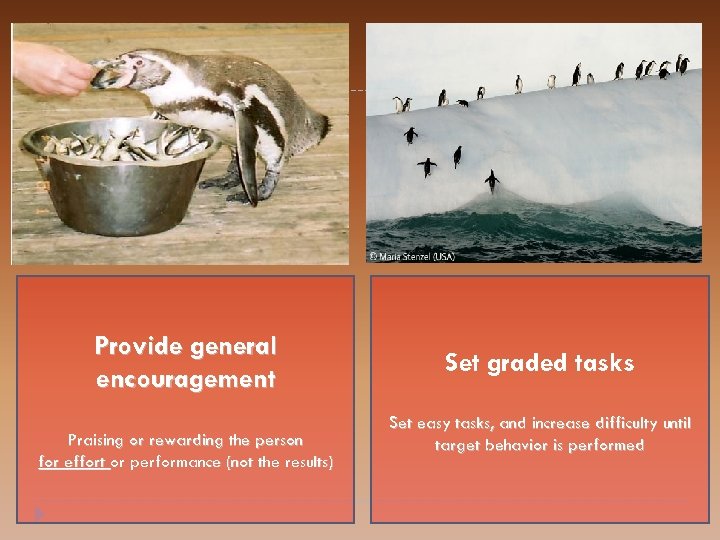
Provide general encouragement Praising or rewarding the person for effort or performance (not the results) Set graded tasks Set easy tasks, and increase difficulty until target behavior is performed
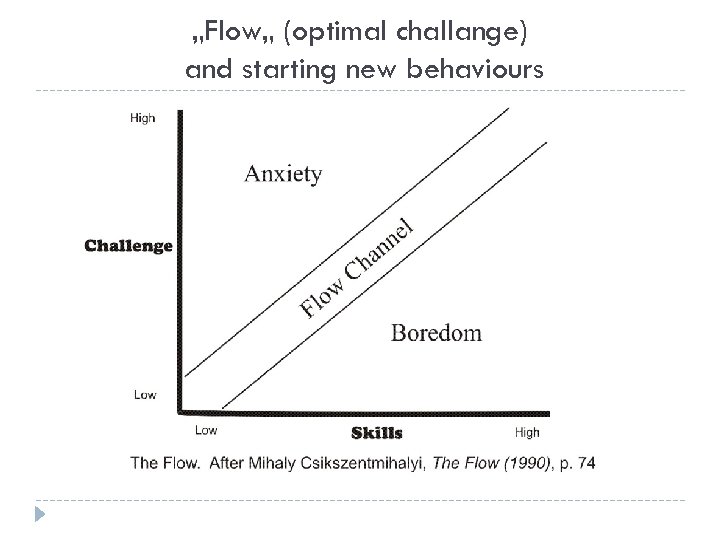
„Flow„ (optimal challange) and starting new behaviours
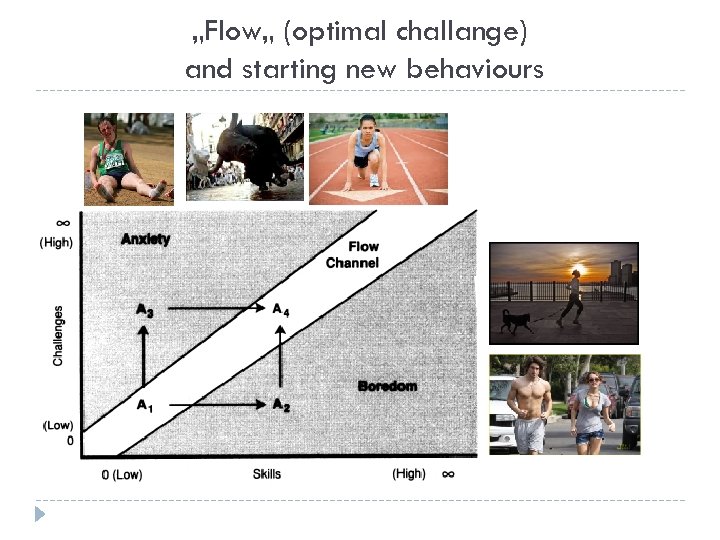
„Flow„ (optimal challange) and starting new behaviours
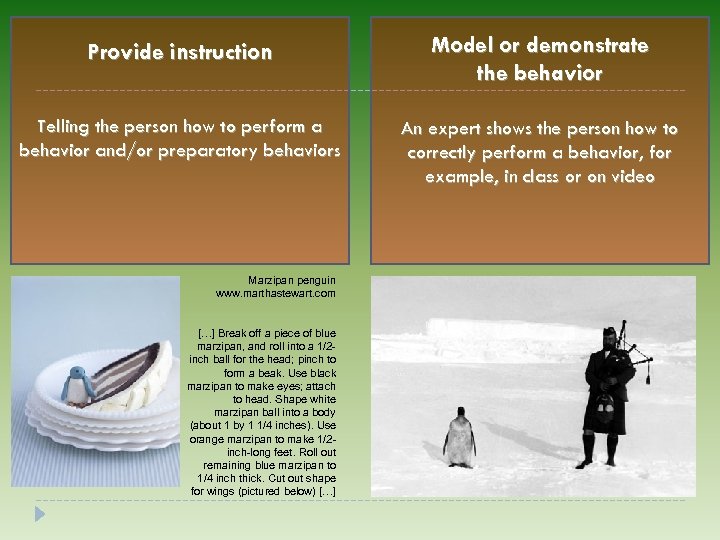
Provide instruction Model or demonstrate the behavior Telling the person how to perform a behavior and/or preparatory behaviors An expert shows the person how to correctly perform a behavior, for example, in class or on video Marzipan penguin www. marthastewart. com […] Break off a piece of blue marzipan, and roll into a 1/2 inch ball for the head; pinch to form a beak. Use black marzipan to make eyes; attach to head. Shape white marzipan ball into a body (about 1 by 1 1/4 inches). Use orange marzipan to make 1/2 inch-long feet. Roll out remaining blue marzipan to 1/4 inch thick. Cut out shape for wings (pictured below) […]
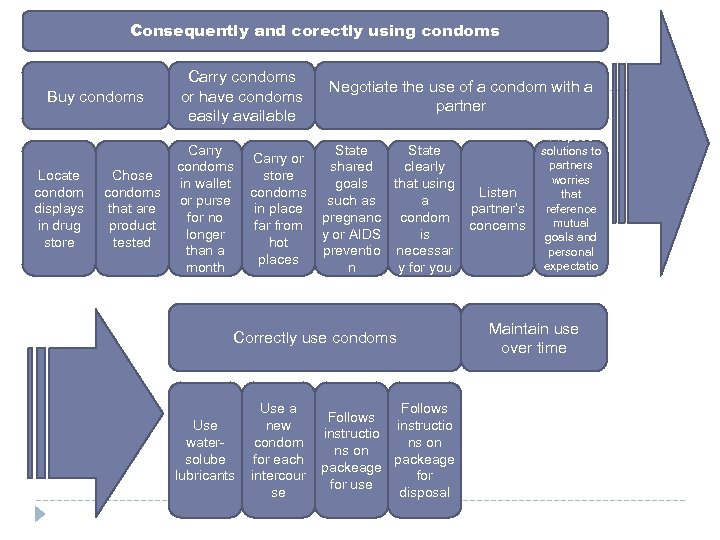
Consequently and corectly using condoms Buy condoms Locate condom displays in drug store Chose condoms that are product tested Carry condoms or have condoms easily available Carry condoms in wallet or purse for no longer than a month Carry or store condoms in place far from hot places Negotiate the use of a condom with a partner State shared clearly goals that using such as a pregnanc condom y or AIDS is preventio necessar n y for you Correctly use condoms Use watersolube lubricants Use a new condom for each intercour se Follows instructio ns on packeage for use disposal Listen partner’s concerns Propose solutions to partners worries that reference mutual goals and personal expectatio ns Maintain use over time
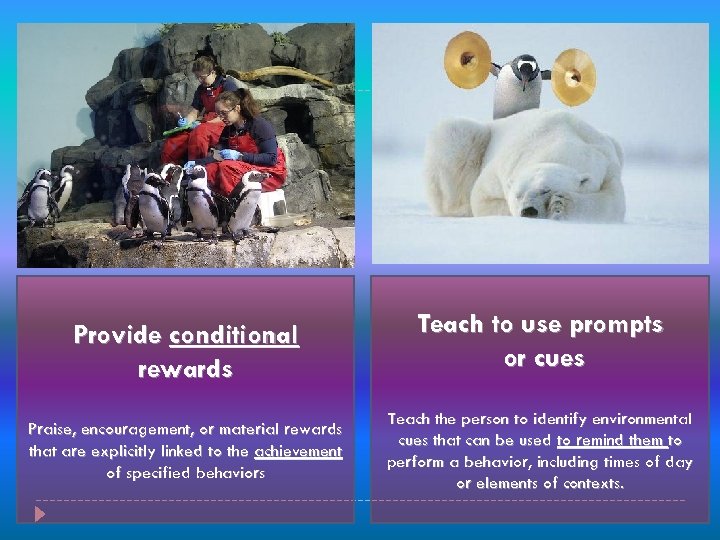
Provide conditional rewards Praise, encouragement, or material rewards that are explicitly linked to the achievement of specified behaviors Teach to use prompts or cues Teach the person to identify environmental cues that can be used to remind them to perform a behavior, including times of day or elements of contexts.
Agree on contract Prompt self-talk Agreement (e. g. , signing) of a contract specifying behavior to be performed so that there is a written record of the person’s resolution witnessed by another Encourage use of self-instruction and self-encouragement (aloud or silently) to support action
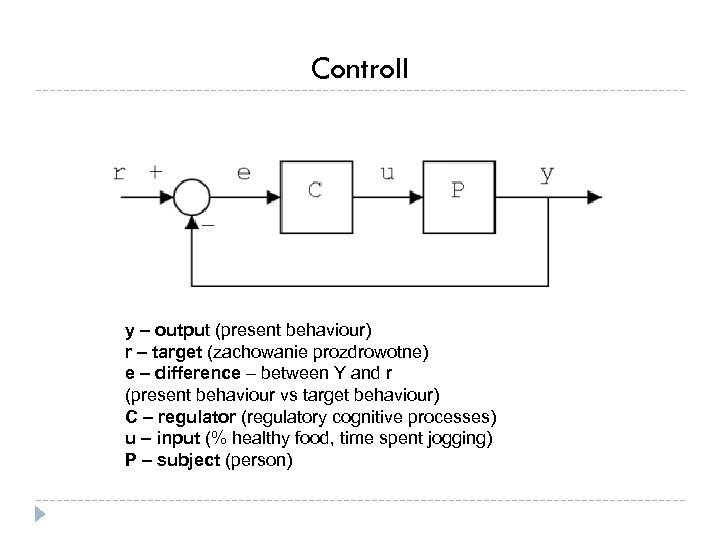
Controll y – output (present behaviour) r – target (zachowanie prozdrowotne) e – difference – between Y and r (present behaviour vs target behaviour) C – regulator (regulatory cognitive processes) u – input (% healthy food, time spent jogging) P – subject (person)
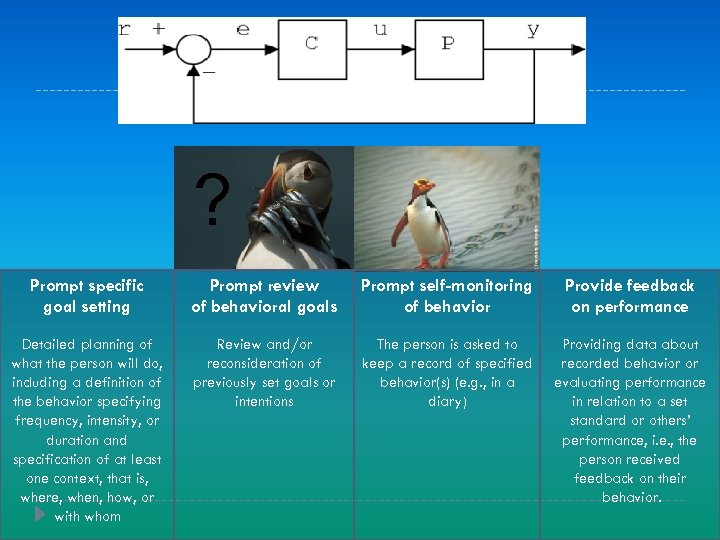
? Prompt specific goal setting Prompt review of behavioral goals Prompt self-monitoring of behavior Provide feedback on performance Detailed planning of what the person will do, including a definition of the behavior specifying frequency, intensity, or duration and specification of at least one context, that is, where, when, how, or with whom Review and/or reconsideration of previously set goals or intentions The person is asked to keep a record of specified behavior(s) (e. g. , in a diary) Providing data about recorded behavior or evaluating performance in relation to a set standard or others’ performance, i. e. , the person received feedback on their behavior.
Plan social support or social change Prompting consideration of how others could change their behavior to offer the person help Prompt identification as a role model Indicating how the person may be an example to others and influence their behavior or provide an opportunity for the person to set a good example
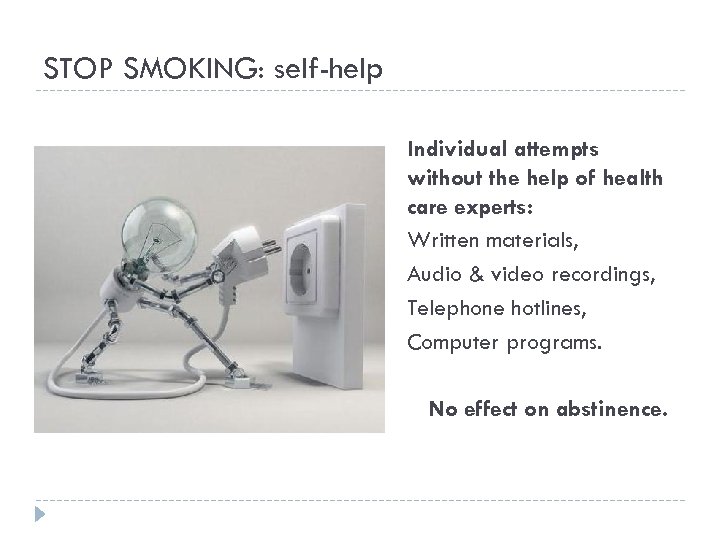
STOP SMOKING: self-help Individual attempts without the help of health care experts: Written materials, Audio & video recordings, Telephone hotlines, Computer programs. No effect on abstinence.
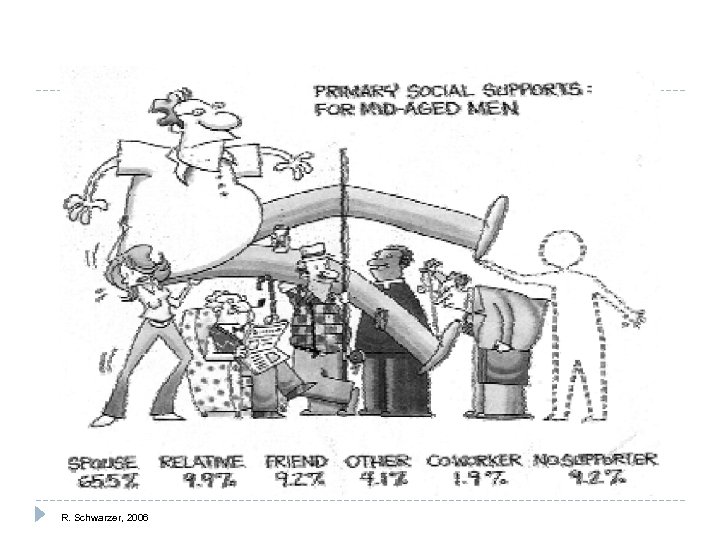
R. Schwarzer, 2006
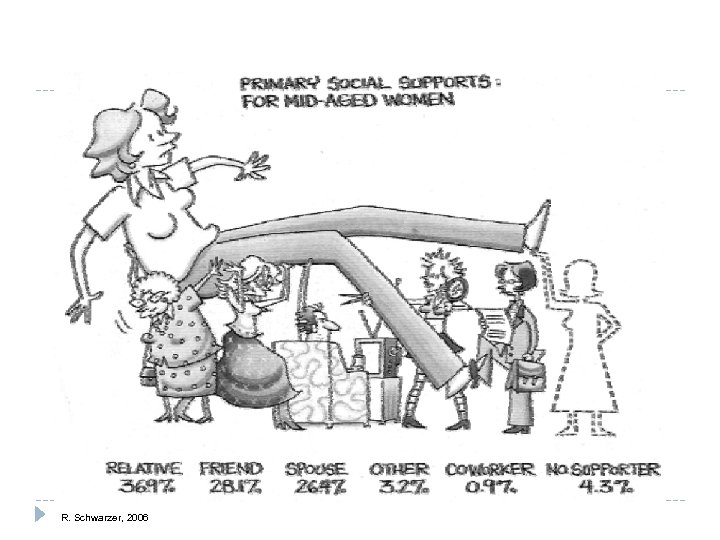
R. Schwarzer, 2006
Provide opportunities for social comparison. Facilitate observation of nonexpert others’ performance for example, in a group class or using video or case study
Скачать презентацию 6 Health-behavior change techniques Łukasz Kaczmarek IP UAM
6ffd4b62210ea31a04bbf0e61095c459.ppt