 Скачать презентацию 5 th Annual Banking Research Conference Sponsored by
0efcf9f1e7fbf2aa69e4f136594d344f.ppt
- Количество слайдов: 33



5 th Annual Banking Research Conference Sponsored by FDIC Center for Financial Research and the JFSR September 22, 2005 DETERMINANTS OF DEPOSITINSURANCE ADOPTION AND DESIGN Asli Demirgüç-Kunt, World Bank Edward J. Kane, Boston College Luc Laeven, World Bank 1
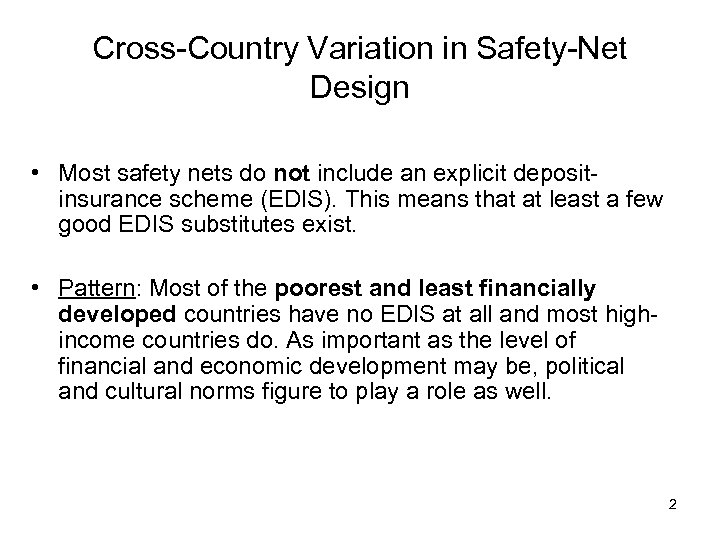
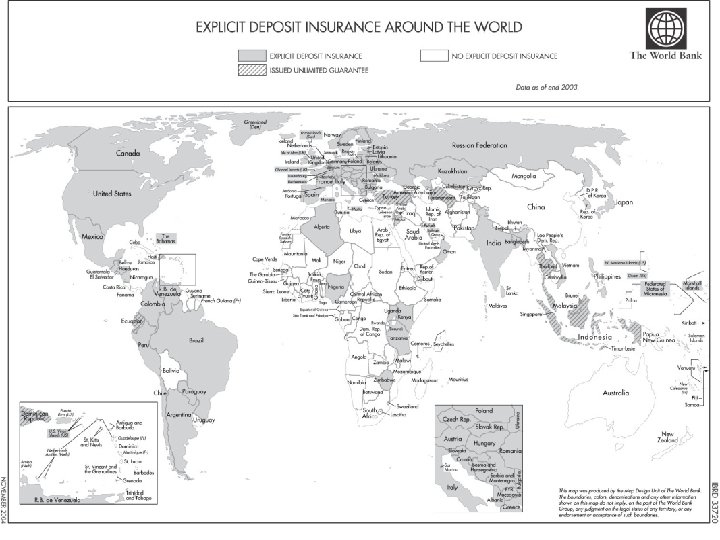
Cross-Country Variation in Safety-Net Design • Most safety nets do not include an explicit depositinsurance scheme (EDIS). This means that at least a few good EDIS substitutes exist. • Pattern: Most of the poorest and least financially developed countries have no EDIS at all and most highincome countries do. As important as the level of financial and economic development may be, political and cultural norms figure to play a role as well. 2
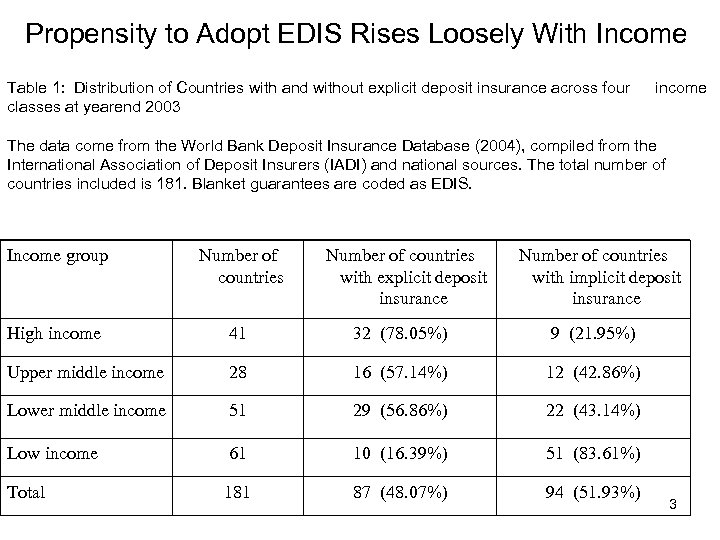
Propensity to Adopt EDIS Rises Loosely With Income Table 1: Distribution of Countries with and without explicit deposit insurance across four classes at yearend 2003 income The data come from the World Bank Deposit Insurance Database (2004), compiled from the International Association of Deposit Insurers (IADI) and national sources. The total number of countries included is 181. Blanket guarantees are coded as EDIS. Income group Number of countries with explicit deposit insurance Number of countries with implicit deposit insurance High income 41 32 (78. 05%) 9 (21. 95%) Upper middle income 28 16 (57. 14%) 12 (42. 86%) Lower middle income 51 29 (56. 86%) 22 (43. 14%) Low income 61 10 (16. 39%) 51 (83. 61%) Total 181 87 (48. 07%) 94 (51. 93%) 3
4
EDIS as a System of Incomplete Contracts • Imbedded contracts assign rights and obligations that coordinate sectoral stakes in banking systems across at least four sectors (counterparties): 1. Governments 2. Banks 3. Bank customers 4. Taxpayers • In each country, communal deal-making and subsequent patterns of enforcement distribute subsidies and burdens across these sectors. 5
Safety-Net Design is Classic Problem in Incomplete Contracting • Essence of contingent contracting is to create offsets to opportunistic incentives facing one’s counterparty. • To make EDIS contracting fair and efficient, conscientious officials must impose and enforce riskshifting controls on banks strong enough to keep the value of taxpayers’ multiperiod obligations (social costs) equal to social benefits • From a contracting perspective, taxpayers may be said to accept responsibility for catastrophic risks. In doing so, they provide market-completion services to banks and their customers. 6
Intersectoral Deal-Making is Fraught with Incentive Conflict Propensity to adopt EDIS is low for: 1. Very small population size (easier conflict resolution) 2. Location in Africa or Near East (especially hard conflict resolution, due to age-old tribal and sectarian conflict) 7
Our Research Program Has Two Parts • It uses logit regressions and hazard models to investigate the extent to which particular economic, political, and experiential variables other than per capita GDP help to explain whether and when a country can explicitly negotiate or impose the cross-sectoral obligations necessary to support a credible EDIS. • Treating the logit adoption model as a Heckman selection equation, we go on to estimate whether and how country characteristics shape the riskshifting controls that the scheme embodies. 8
Issue: Role of World Bank, IMF, and EU? • In recent years, some external experts promoted a presumption that an EDIS represents a hallmark of regulatory best practice that in some countries posed an important counterweight to strictly internal economic, institutional, and political counterforces. • To test this hypothesis, our strategy is to insert into a baseline model featuring domestic determinants of regulatory decisions, proxies for WB, IMF, and EU pressure and a proxy for “emulation, ” reflecting the spread of EDI systems. • “Emulation” is an accelerating trend variable, one to which we assign a potentially testable interpretation. Without a potentially testable interpretation, the word “trend” is an empty concept. 9
• We also test the complementary hypothesis that the very onset of a systemic financial crisis markedly changes intersectoral contracting possibilities: In or after a systemic crisis, authorities may be encouraged to erect an EDIS as either a myopic way of containing crises or an overly hopeful way of formally winding down crisis-generated blanket guarantees. • Leads to the further hypothesis that a crisisgenerated EDIS is apt to be poorly designed. 10
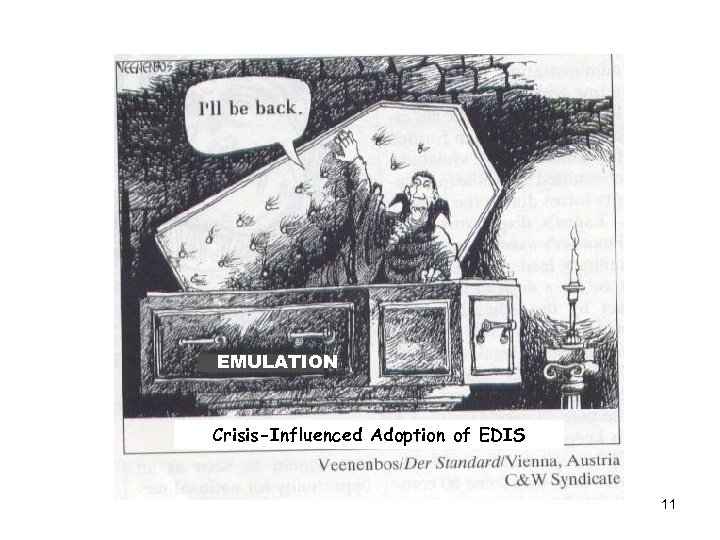
EMULATION Crisis-Influenced Adoption of EDIS 11
Hypothesis-Testing Strategy • As potential economic determinants, we include macroeconomic conditions, financial-crisis events, fiscal costs incurred in crises, and inefficiencies presumed to be associated with state-owned banks. • As potential institutional and political determinants, we include various features of the country’s private and public contracting environments as proxies for: – – Transparency (T) Deterrency (D) Bonding (B) Accountability (A) 12
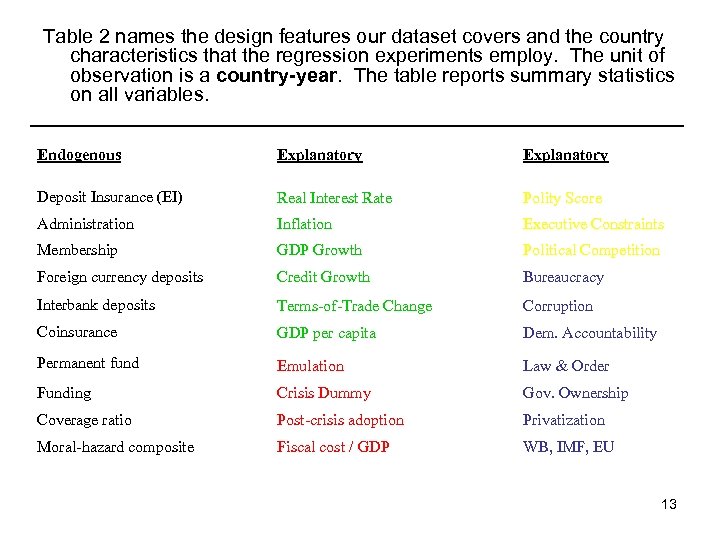
Table 2 names the design features our dataset covers and the country characteristics that the regression experiments employ. The unit of observation is a country-year. The table reports summary statistics on all variables. Endogenous Explanatory Deposit Insurance (EI) Real Interest Rate Polity Score Administration Inflation Executive Constraints Membership GDP Growth Political Competition Foreign currency deposits Credit Growth Bureaucracy Interbank deposits Terms-of-Trade Change Corruption Coinsurance GDP per capita Dem. Accountability Permanent fund Emulation Law & Order Funding Crisis Dummy Gov. Ownership Coverage ratio Post-crisis adoption Privatization Moral-hazard composite Fiscal cost / GDP WB, IMF, EU 13
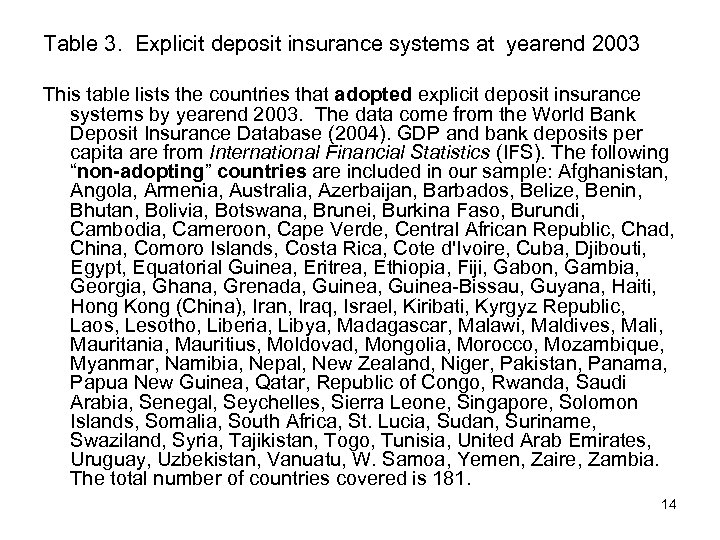
Table 3. Explicit deposit insurance systems at yearend 2003 This table lists the countries that adopted explicit deposit insurance systems by yearend 2003. The data come from the World Bank Deposit Insurance Database (2004). GDP and bank deposits per capita are from International Financial Statistics (IFS). The following “non-adopting” countries are included in our sample: Afghanistan, Angola, Armenia, Australia, Azerbaijan, Barbados, Belize, Benin, Bhutan, Bolivia, Botswana, Brunei, Burkina Faso, Burundi, Cambodia, Cameroon, Cape Verde, Central African Republic, Chad, China, Comoro Islands, Costa Rica, Cote d'Ivoire, Cuba, Djibouti, Egypt, Equatorial Guinea, Eritrea, Ethiopia, Fiji, Gabon, Gambia, Georgia, Ghana, Grenada, Guinea-Bissau, Guyana, Haiti, Hong Kong (China), Iran, Iraq, Israel, Kiribati, Kyrgyz Republic, Laos, Lesotho, Liberia, Libya, Madagascar, Malawi, Maldives, Mali, Mauritania, Mauritius, Moldovad, Mongolia, Morocco, Mozambique, Myanmar, Namibia, Nepal, New Zealand, Niger, Pakistan, Panama, Papua New Guinea, Qatar, Republic of Congo, Rwanda, Saudi Arabia, Senegal, Seychelles, Sierra Leone, Singapore, Solomon Islands, Somalia, South Africa, St. Lucia, Sudan, Suriname, Swaziland, Syria, Tajikistan, Togo, Tunisia, United Arab Emirates, Uruguay, Uzbekistan, Vanuatu, W. Samoa, Yemen, Zaire, Zambia. The total number of countries covered is 181. 14
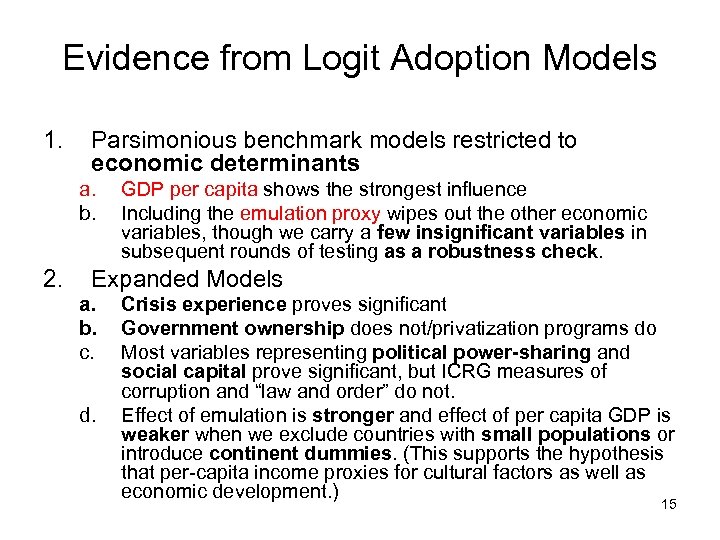
Evidence from Logit Adoption Models 1. Parsimonious benchmark models restricted to economic determinants a. b. 2. GDP per capita shows the strongest influence Including the emulation proxy wipes out the other economic variables, though we carry a few insignificant variables in subsequent rounds of testing as a robustness check. Expanded Models a. b. c. d. Crisis experience proves significant Government ownership does not/privatization programs do Most variables representing political power-sharing and social capital prove significant, but ICRG measures of corruption and “law and order” do not. Effect of emulation is stronger and effect of per capita GDP is weaker when we exclude countries with small populations or introduce continent dummies. (This supports the hypothesis that per-capita income proxies for cultural factors as well as economic development. ) 15
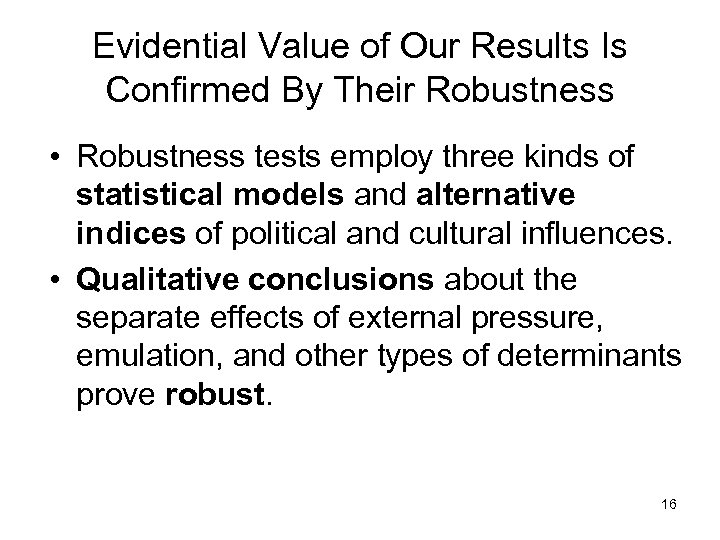
Evidential Value of Our Results Is Confirmed By Their Robustness • Robustness tests employ three kinds of statistical models and alternative indices of political and cultural influences. • Qualitative conclusions about the separate effects of external pressure, emulation, and other types of determinants prove robust. 16
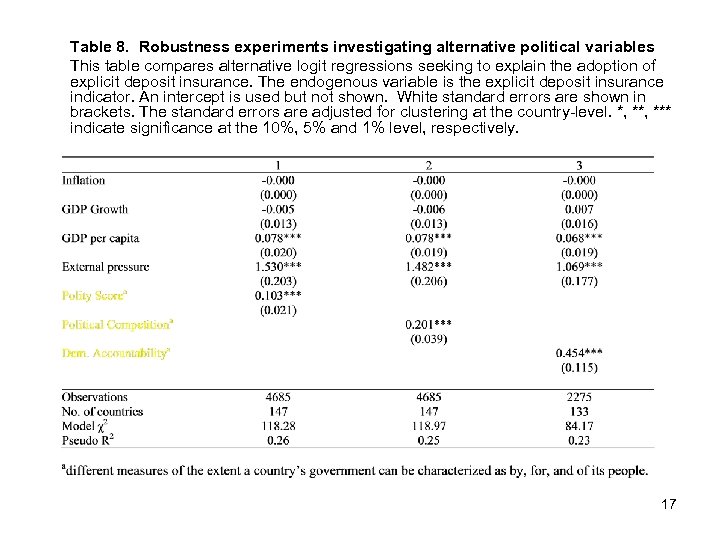
Table 8. Robustness experiments investigating alternative political variables This table compares alternative logit regressions seeking to explain the adoption of explicit deposit insurance. The endogenous variable is the explicit deposit insurance indicator. An intercept is used but not shown. White standard errors are shown in brackets. The standard errors are adjusted for clustering at the country-level. *, *** indicate significance at the 10%, 5% and 1% level, respectively. 17
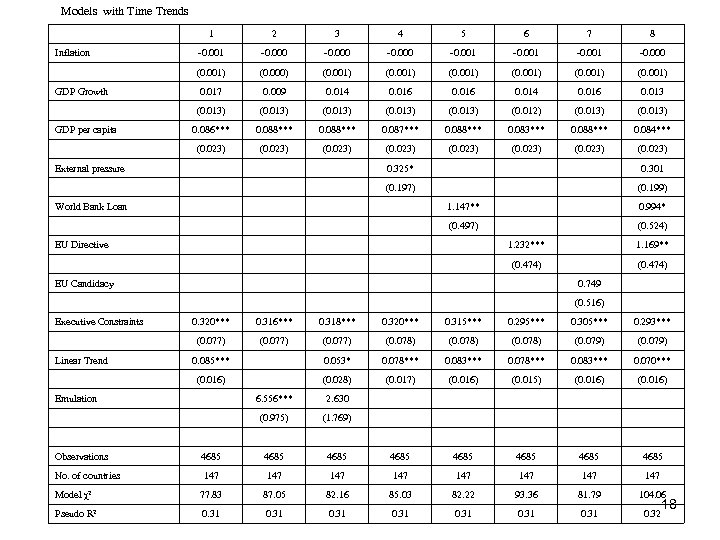
Models with Time Trends 1 5 6 7 8 -0. 001 -0. 000 (0. 000) (0. 001) 0. 017 0. 009 0. 014 0. 016 0. 013 (0. 013) (0. 012) (0. 013) 0. 086*** 0. 088*** 0. 087*** 0. 088*** 0. 083*** 0. 088*** 0. 084*** (0. 023) GDP per capita 4 (0. 013) GDP Growth 3 (0. 001) Inflation 2 (0. 023) (0. 023) External pressure 0. 325* 0. 301 (0. 197) (0. 199) World Bank Loan 1. 147** 0. 994* (0. 497) (0. 524) EU Directive 1. 232*** 1. 169** (0. 474) EU Candidacy 0. 749 (0. 516) Executive Constraints 0. 316*** 0. 318*** 0. 320*** 0. 315*** 0. 295*** 0. 305*** 0. 293*** (0. 077) (0. 078) (0. 079) 0. 085*** 0. 053* 0. 078*** 0. 083*** 0. 070*** (0. 016) Linear Trend 0. 320*** (0. 028) (0. 017) (0. 016) (0. 015) (0. 016) Emulation 6. 556*** 2. 630 (0. 975) (1. 769) Observations 4685 4685 No. of countries 147 147 Model χ2 77. 83 87. 05 82. 16 85. 03 82. 22 93. 36 81. 79 104. 06 Pseudo R 2 0. 31 0. 32 18
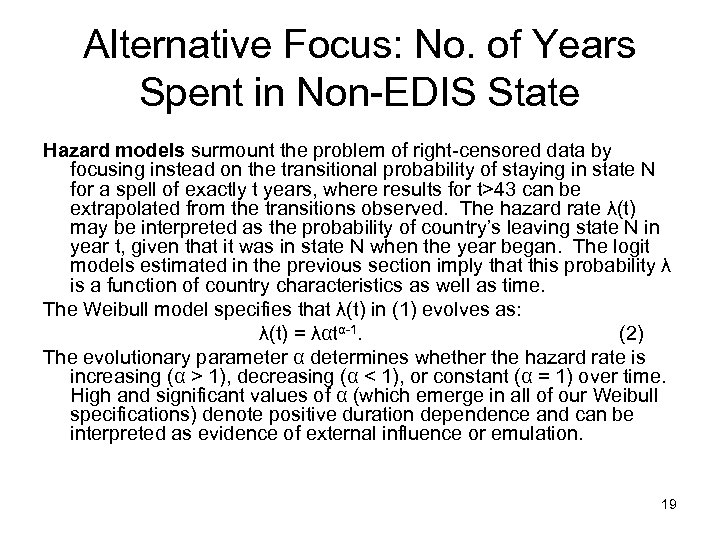
Alternative Focus: No. of Years Spent in Non-EDIS State Hazard models surmount the problem of right-censored data by focusing instead on the transitional probability of staying in state N for a spell of exactly t years, where results for t>43 can be extrapolated from the transitions observed. The hazard rate λ(t) may be interpreted as the probability of country’s leaving state N in year t, given that it was in state N when the year began. The logit models estimated in the previous section imply that this probability λ is a function of country characteristics as well as time. The Weibull model specifies that λ(t) in (1) evolves as: λ(t) = λαtα-1. (2) The evolutionary parameter α determines whether the hazard rate is increasing (α > 1), decreasing (α < 1), or constant (α = 1) over time. High and significant values of α (which emerge in all of our Weibull specifications) denote positive duration dependence and can be interpreted as evidence of external influence or emulation. 19
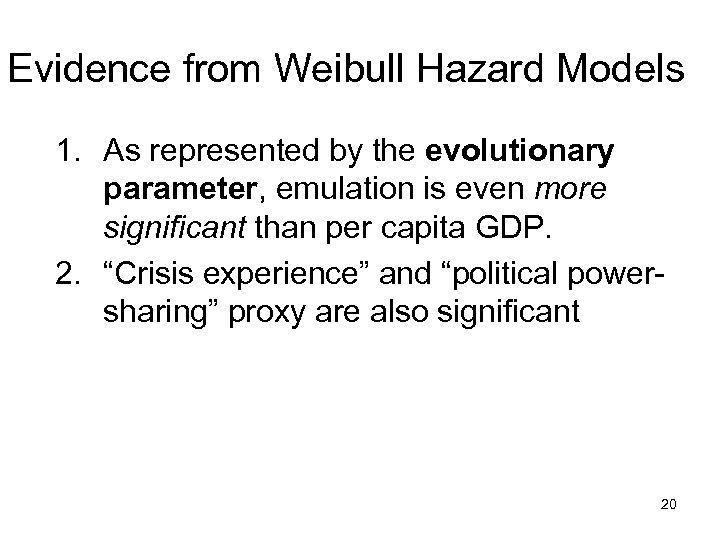
Evidence from Weibull Hazard Models 1. As represented by the evolutionary parameter, emulation is even more significant than per capita GDP. 2. “Crisis experience” and “political powersharing” proxy are also significant 20
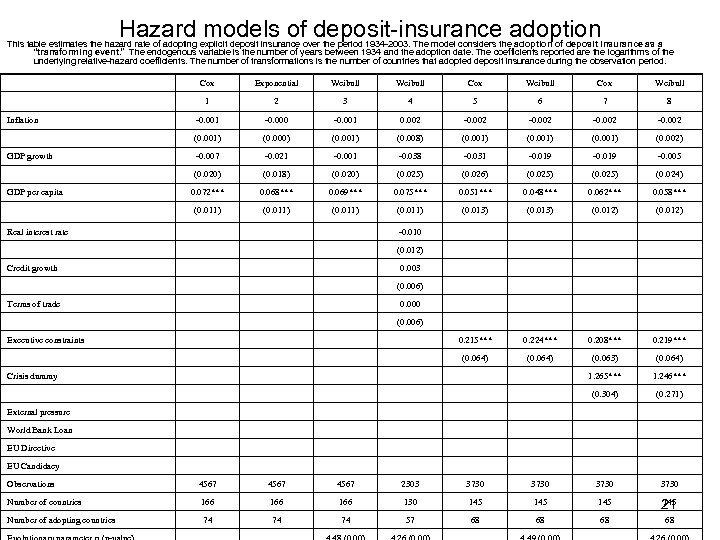
Hazard models of deposit-insurance adoption This table estimates the hazard rate of adopting explicit deposit insurance over the period 1934 -2003. The model considers the adoption of deposit insurance as a “transforming event. ” The endogenous variable is the number of years between 1934 and the adoption date. The coefficients reported are the logarithms of the underlying relative-hazard coefficients. The number of transformations is the number of countries that adopted deposit insurance during the observation period. Cox Weibull 2 3 4 5 6 7 8 -0. 001 -0. 000 -0. 001 0. 002 -0. 002 (0. 000) (0. 001) (0. 008) (0. 001) (0. 002) -0. 007 -0. 021 -0. 001 -0. 038 -0. 031 -0. 019 -0. 005 (0. 020) (0. 018) (0. 020) (0. 025) (0. 026) (0. 025) (0. 024) 0. 072*** 0. 068*** 0. 069*** 0. 075*** 0. 051*** 0. 048*** 0. 062*** 0. 058*** (0. 011) (0. 013) (0. 012) 0. 215*** 0. 224*** 0. 208*** 0. 219*** (0. 064) (0. 063) (0. 064) 1. 265*** 1. 246*** (0. 304) GDP per capita Weibull (0. 001) GDP growth Weibull 1 Inflation Exponential (0. 271) Real interest rate -0. 010 (0. 012) Credit growth 0. 003 (0. 006) Terms of trade 0. 000 (0. 006) Executive constraints Crisis dummy External pressure World Bank Loan EU Directive EU Candidacy Observations 4567 2303 3730 Number of countries 166 166 130 145 145 21 Number of adopting countries 74 74 74 57 68 68
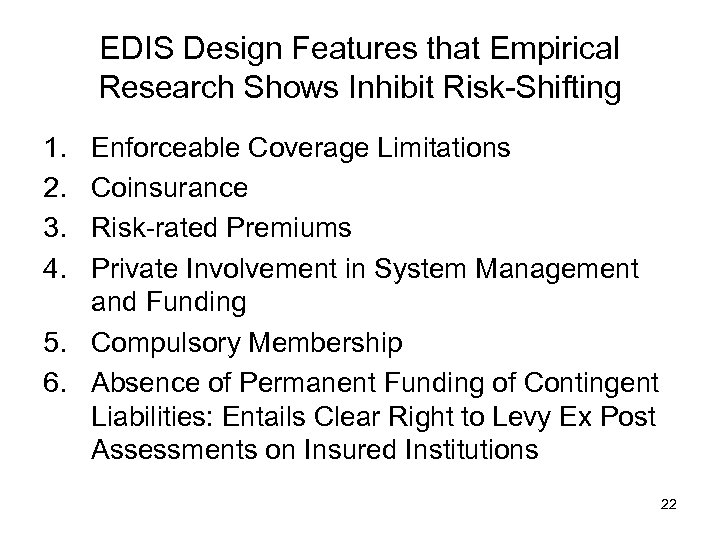
EDIS Design Features that Empirical Research Shows Inhibit Risk-Shifting 1. 2. 3. 4. Enforceable Coverage Limitations Coinsurance Risk-rated Premiums Private Involvement in System Management and Funding 5. Compulsory Membership 6. Absence of Permanent Funding of Contingent Liabilities: Entails Clear Right to Levy Ex Post Assessments on Insured Institutions 22
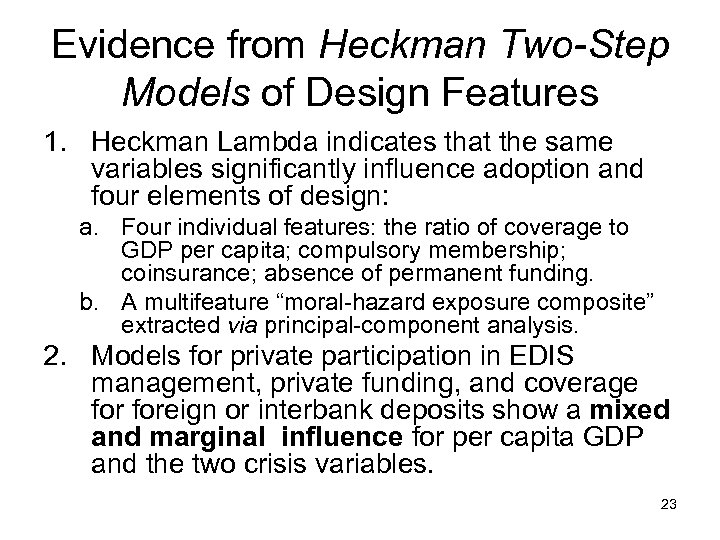
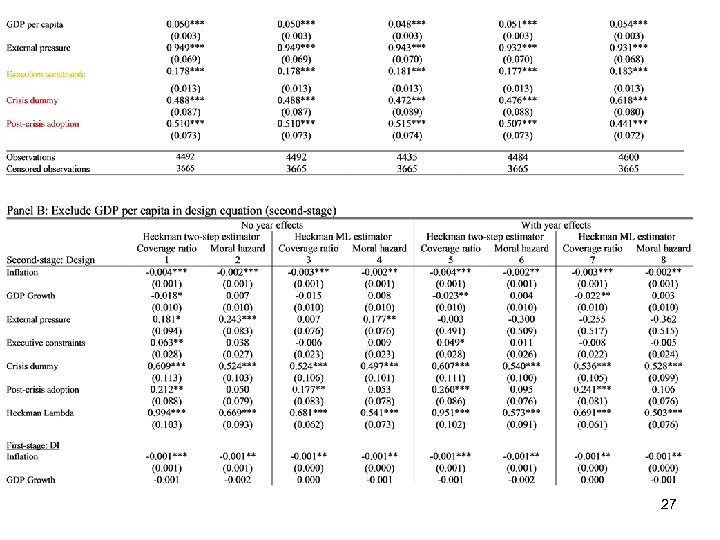
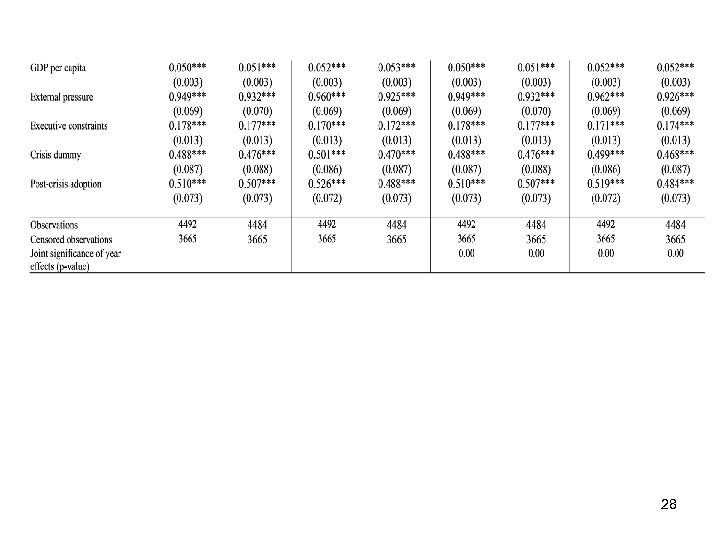
Evidence from Heckman Two-Step Models of Design Features 1. Heckman Lambda indicates that the same variables significantly influence adoption and four elements of design: a. Four individual features: the ratio of coverage to GDP per capita; compulsory membership; coinsurance; absence of permanent funding. b. A multifeature “moral-hazard exposure composite” extracted via principal-component analysis. 2. Models for private participation in EDIS management, private funding, and coverage foreign or interbank deposits show a mixed and marginal influence for per capita GDP and the two crisis variables. 23
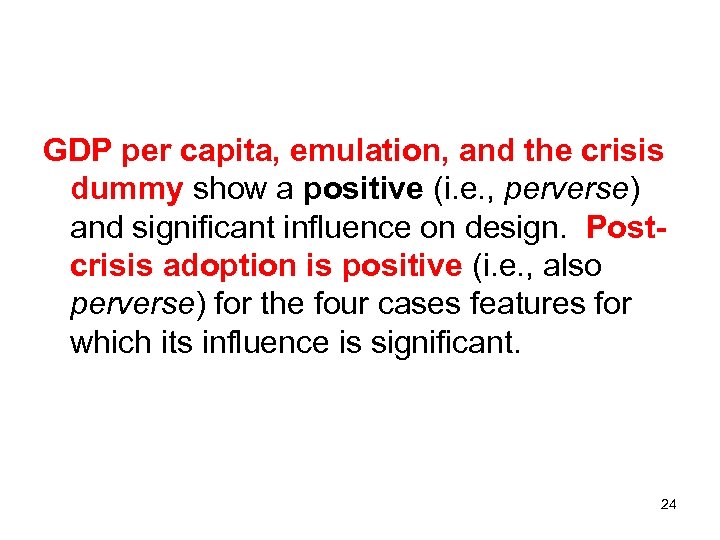
GDP per capita, emulation, and the crisis dummy show a positive (i. e. , perverse) and significant influence on design. Postcrisis adoption is positive (i. e. , also perverse) for the four cases features for which its influence is significant. 24
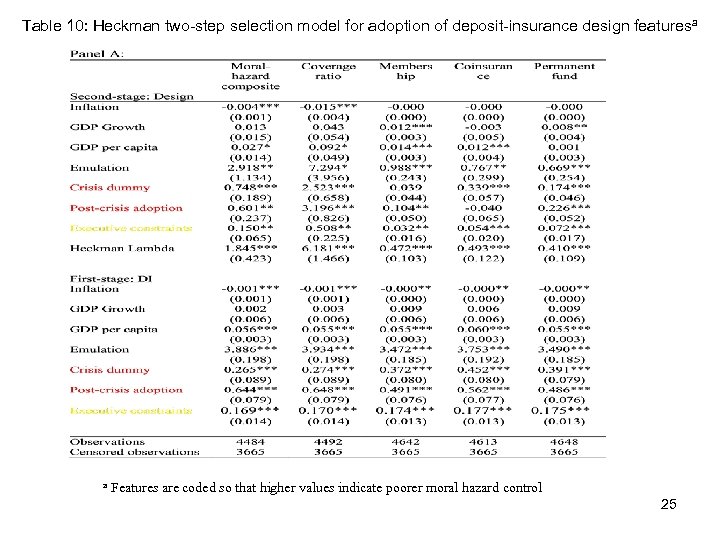
Table 10: Heckman two-step selection model for adoption of deposit-insurance design featuresa a Features are coded so that higher values indicate poorer moral hazard control 25
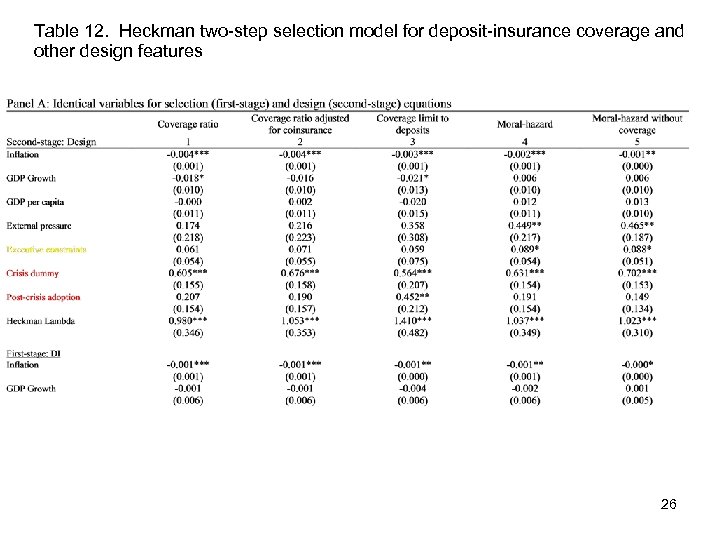
Table 12. Heckman two-step selection model for deposit-insurance coverage and other design features 26
27
28
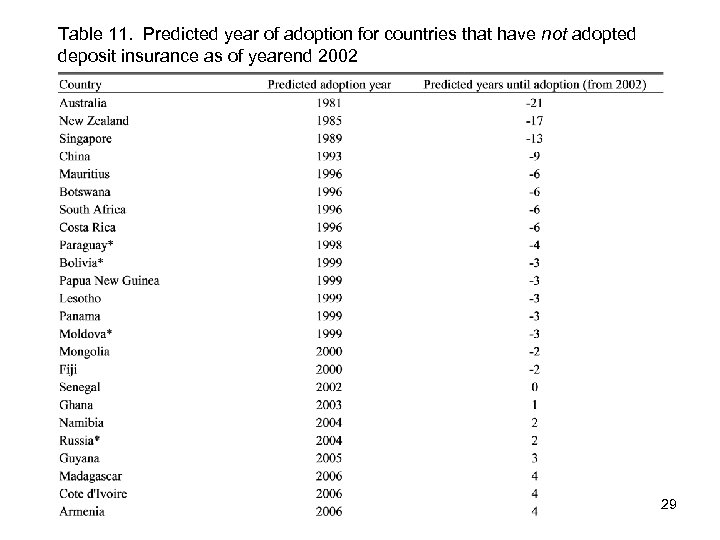
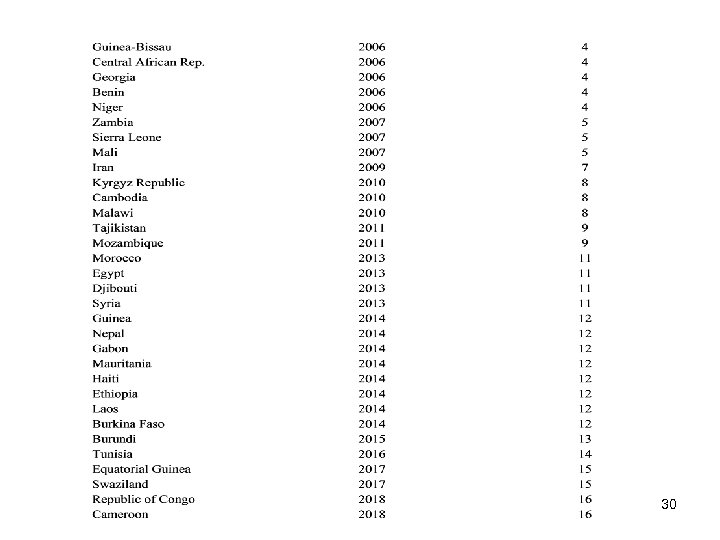
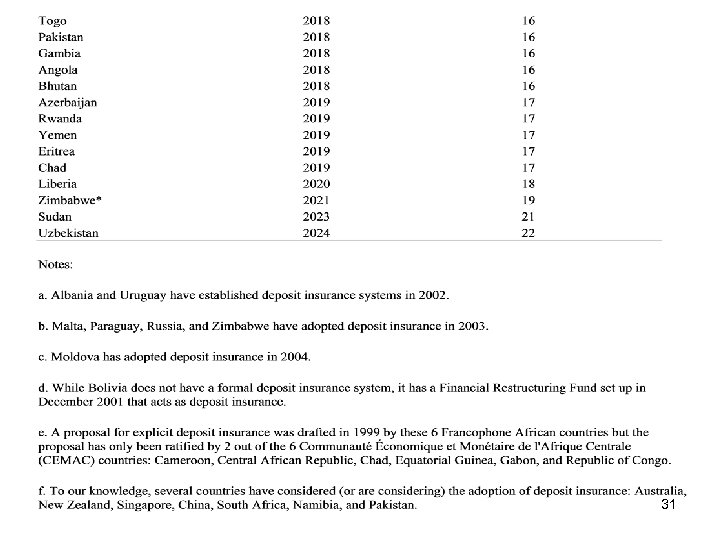
Table 11. Predicted year of adoption for countries that have not adopted deposit insurance as of yearend 2002 29
30
31
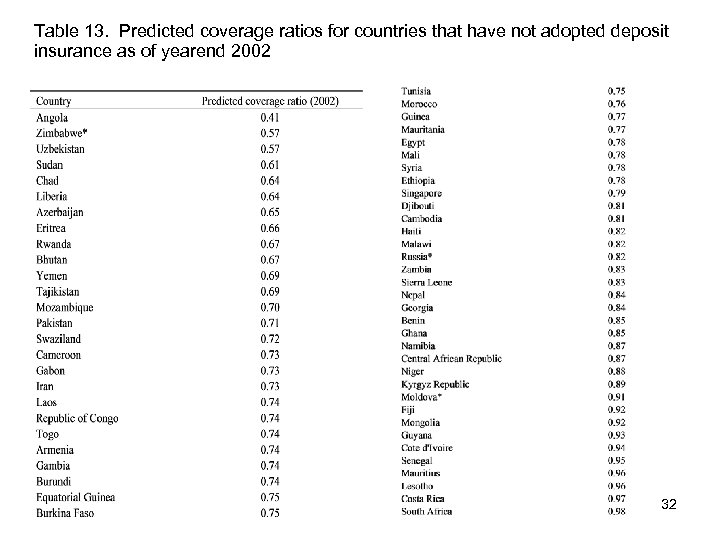
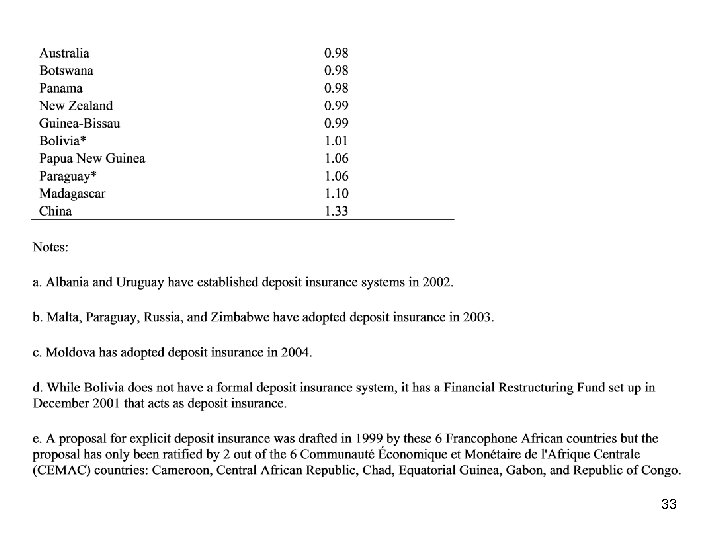
Table 13. Predicted coverage ratios for countries that have not adopted deposit insurance as of yearend 2002 32
33
Скачать презентацию 5 th Annual Banking Research Conference Sponsored by
0efcf9f1e7fbf2aa69e4f136594d344f.ppt