



 4. Migration from Source to Reservoir
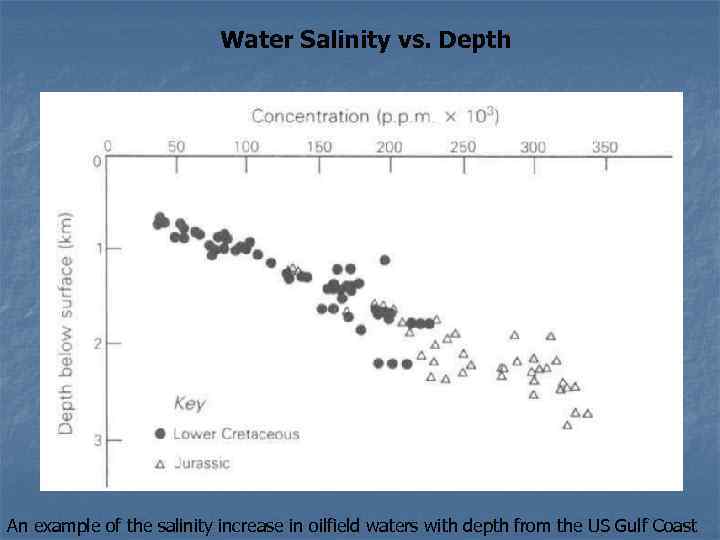 Water Salinity vs. Depth An example of the salinity increase in oilfield waters with depth from the US Gulf Coast
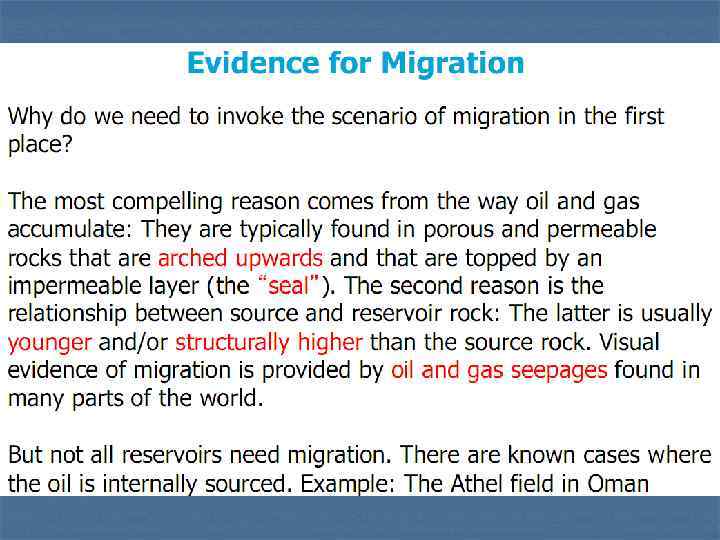
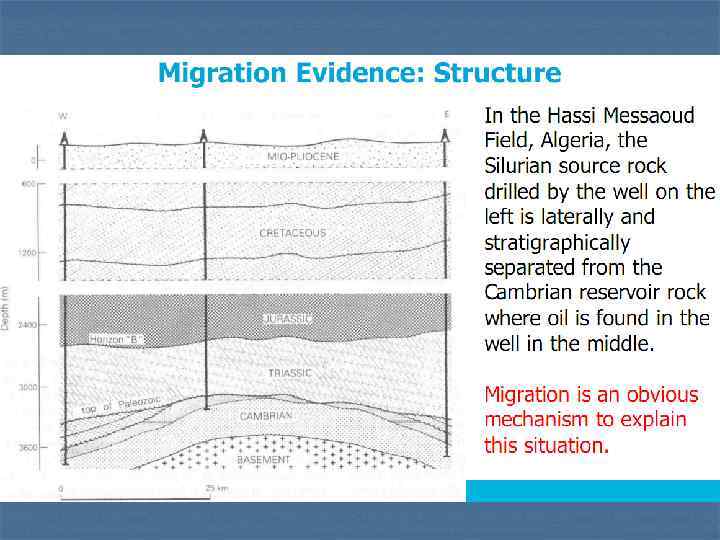
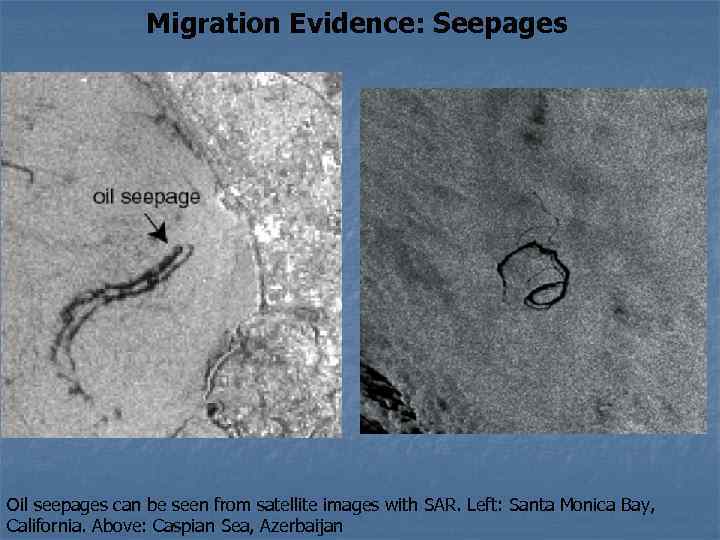 Migration Evidence: Seepages Oil seepages can be seen from satellite images with SAR. Left: Santa Monica Bay, California. Above: Caspian Sea, Azerbaijan
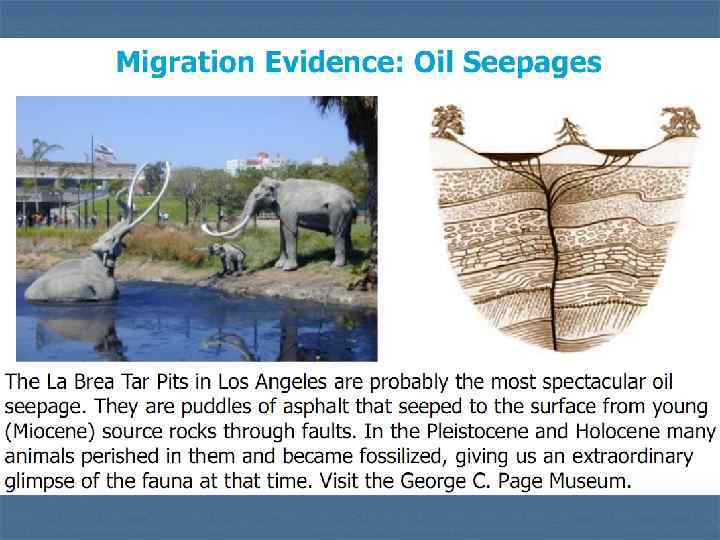
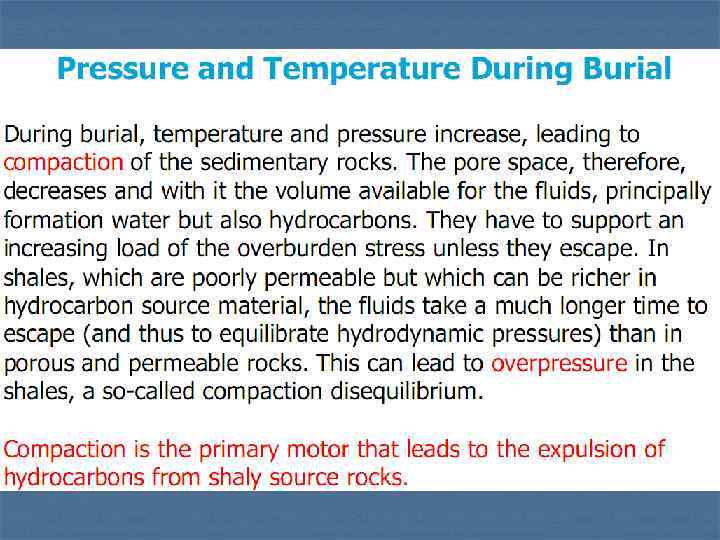
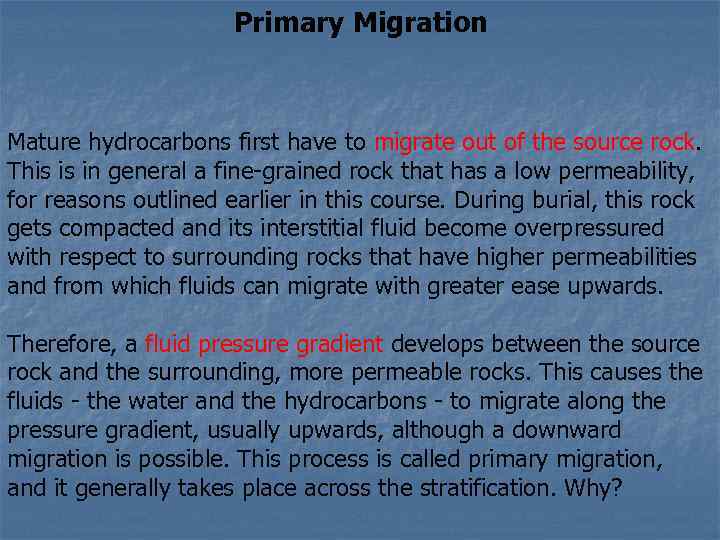 Primary Migration Mature hydrocarbons first have to migrate out of the source rock. This is in general a fine-grained rock that has a low permeability, for reasons outlined earlier in this course. During burial, this rock gets compacted and its interstitial fluid become overpressured with respect to surrounding rocks that have higher permeabilities and from which fluids can migrate with greater ease upwards. Therefore, a fluid pressure gradient develops between the source rock and the surrounding, more permeable rocks. This causes the fluids - the water and the hydrocarbons - to migrate along the pressure gradient, usually upwards, although a downward migration is possible. This process is called primary migration, and it generally takes place across the stratification. Why?
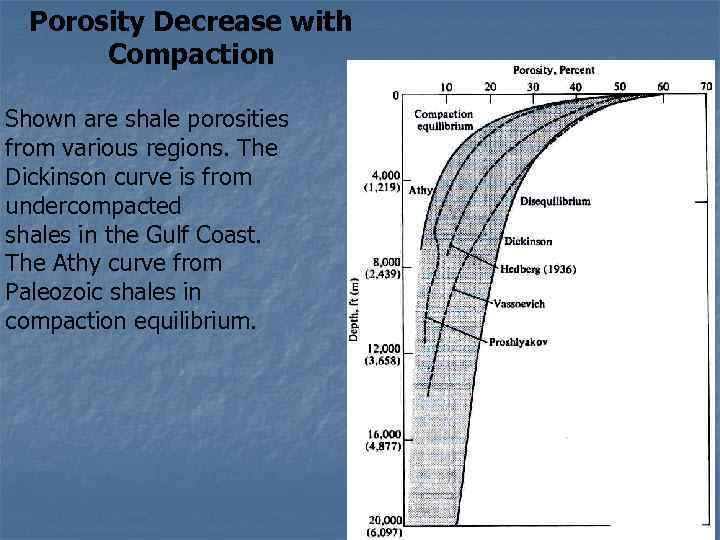 Porosity Decrease with Compaction Shown are shale porosities from various regions. The Dickinson curve is from undercompacted shales in the Gulf Coast. The Athy curve from Paleozoic shales in compaction equilibrium.
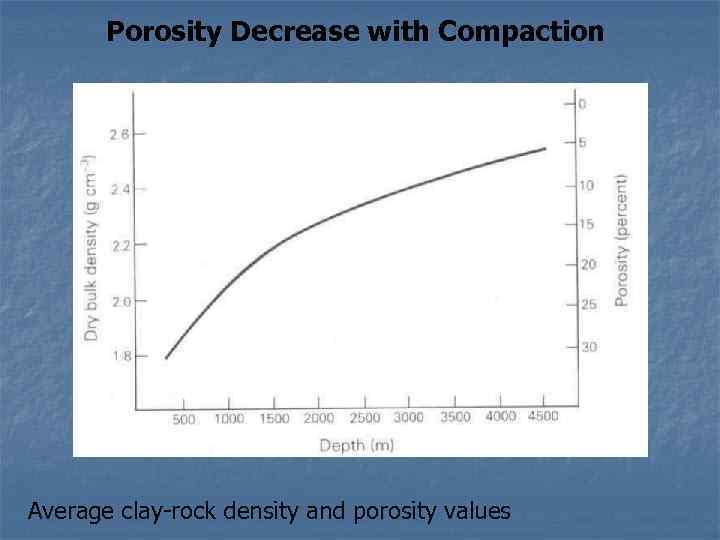 Porosity Decrease with Compaction Average clay-rock density and porosity values
 Primary Migration Controversy If we put the principal requirements for oil generation and migration together, we end up in a substantial dilemma: 1. Oil is generated at temperatures of 60° to 120 °C, which are typically found at depths of 2 to 4 km. 2. Source rocks at these depths are so compacted that their permeability is too low for efficient primary migration. This dilemma is not solved yet, but many ideas have been proposed to circumvent it. At the core of the problem is the question of how hydrocarbons migrate.
 Comments on Primary Migration Many oil fields have very large time gaps between the age of the source and reservoir rocks, and the formation of the trap (before which migration cannot occur). Most traps are, in fact, relatively young. This suggests that migration and accumulation may proceed in two or more different stages: An early migration in which permeabilities are relatively high and gas may be available to dissolve hydrocarbons, but where the hydrocarbon generation is inefficient, and a later stage at which oil generation is efficient but permeabilities are low.
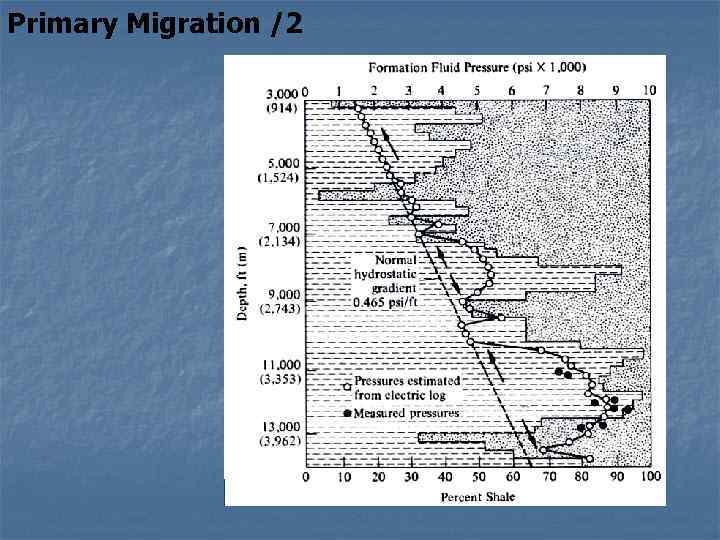 Primary Migration /2
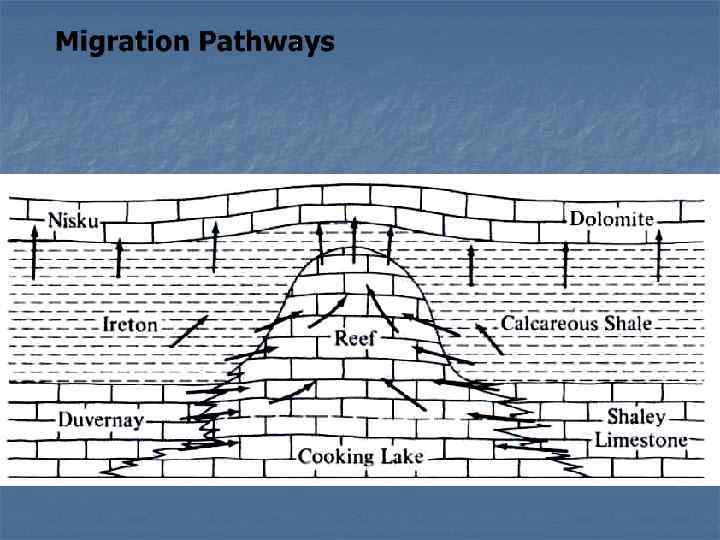
 Secondary Migration The process in which hydrocarbons move along a porous and permeable layer to its final accumulation is called secondary migration. It is much less controversial than primary migration, and it is almost entirely governed by buoyancy forces.
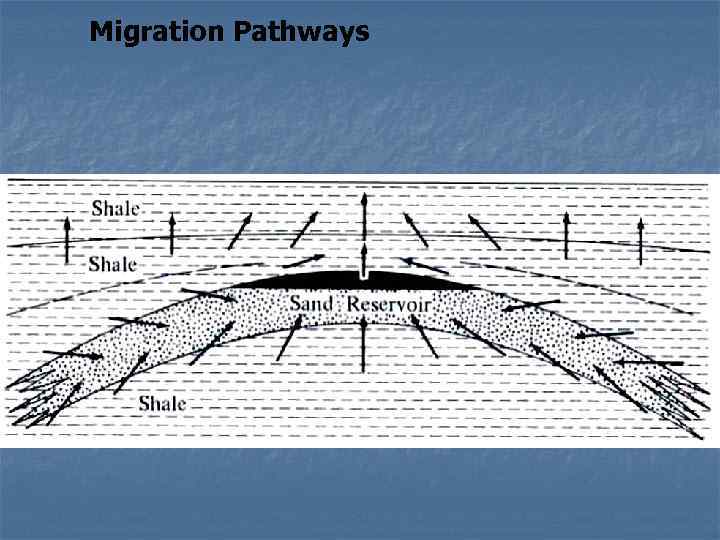
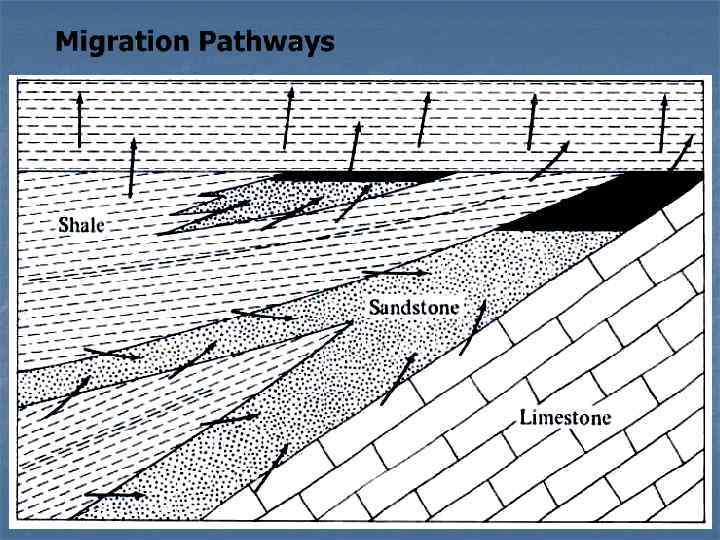
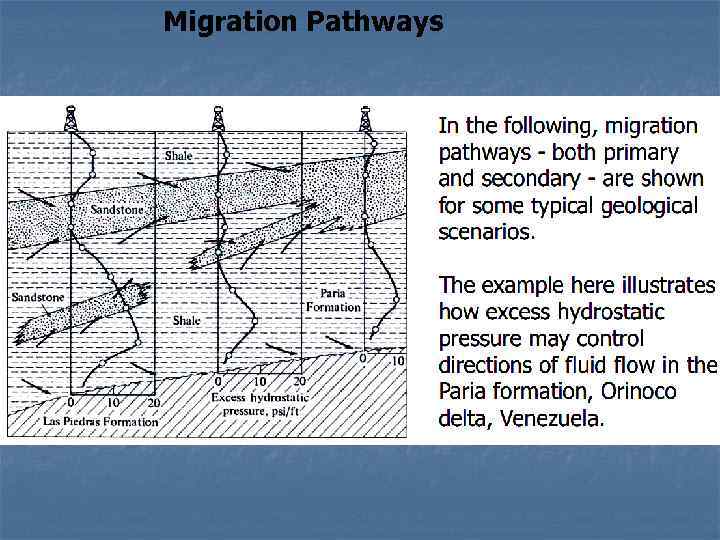 Migration Pathways
 Migration Pathways
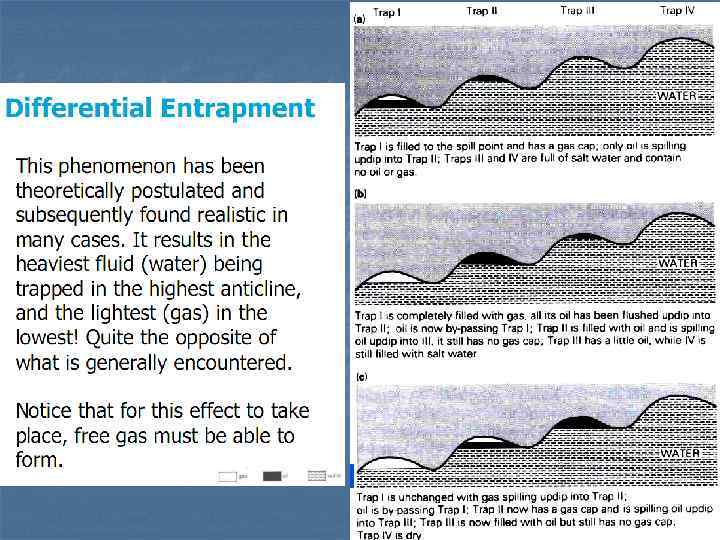
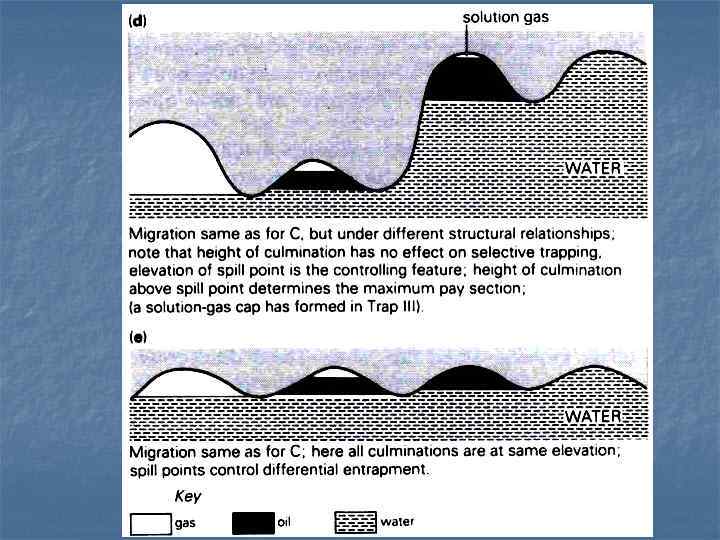
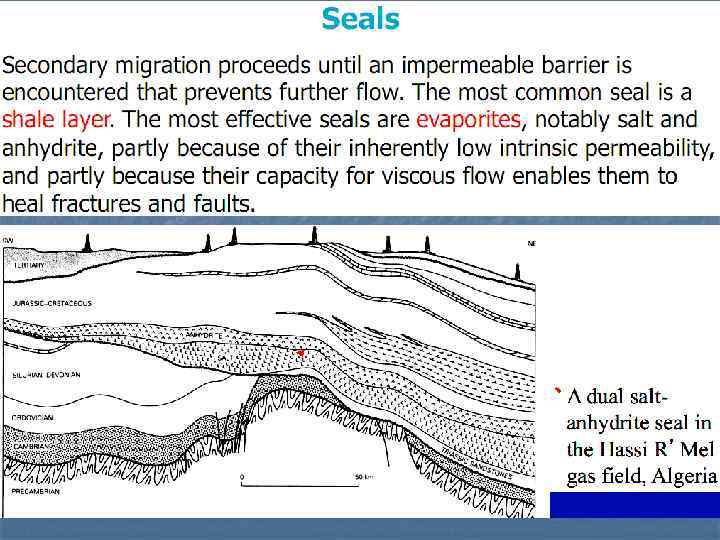
 Conclusions on Migration We distinguish primary and secondary migration. While primary migration is slow and proceeds over short distances, secondary migration is faster and can proceed over very long distances (more than one-hundred kilometers). There are several theories for primary migration, among which diffusion, oil-phase migration, micro-fracturing and migration in solution. Secondary migration is better understood and leads to the accumulation of hydrocarbon in traps where a seal prevents them from further migration.
 Study Task Calculate how much water is expelled from a shale layer 1 km thick and 10 × 10 km in area, as it is buried from 1 km to 3 km depth, assuming its compaction is in equilibrium. Assume now that this is a source rock with 600 ppm weight percent mature hydrocarbon, of which 15% get expulsed in primary migration. How much oil is generated? What is the average concentration of oil, in ppm, in the water that escapes from the shale?