 Скачать презентацию 4 D Model-based Analysis of Renovation Phasing Schedules
adbee07d725123ca29a4b312e912de86.ppt
- Количество слайдов: 46



4 D Model-based Analysis of Renovation Phasing Schedules Peggy Ho April 5, 2007 Advisor Martin Fischer Committee Members John Haymaker Calvin Kam
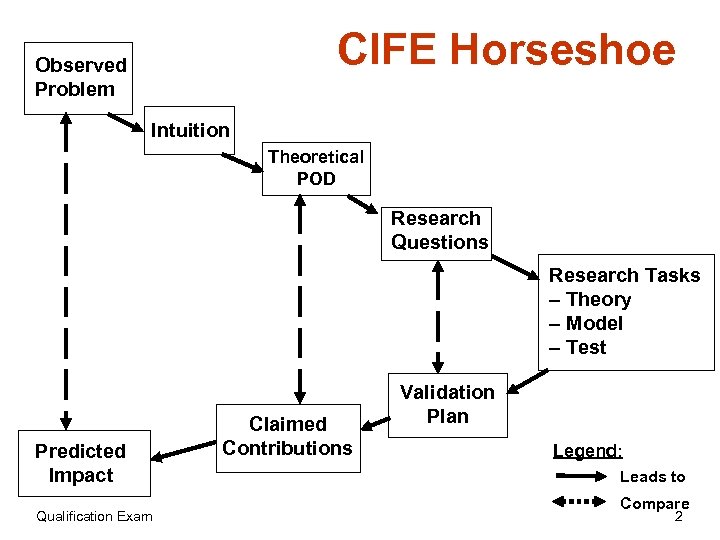
CIFE Horseshoe Observed Problem Intuition Theoretical POD Research Questions Research Tasks – Theory – Model – Test Predicted Impact Qualification Exam Claimed Contributions Validation Plan Legend: Leads to Compare 2
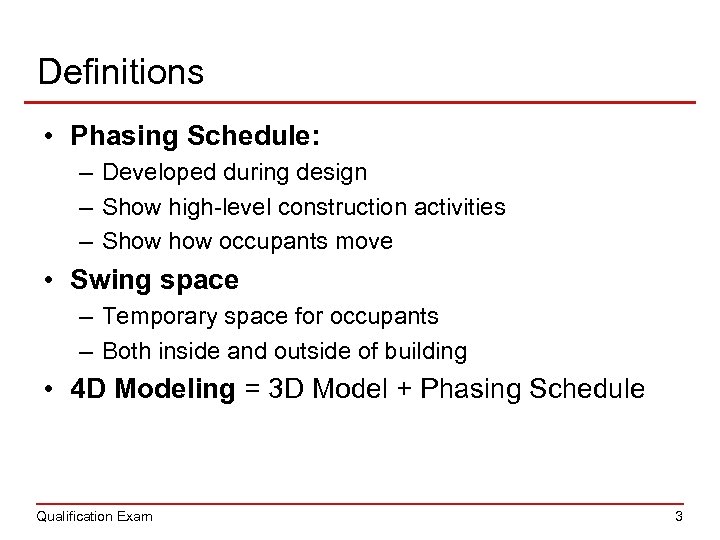
Definitions • Phasing Schedule: – Developed during design – Show high-level construction activities – Show occupants move • Swing space – Temporary space for occupants – Both inside and outside of building • 4 D Modeling = 3 D Model + Phasing Schedule Qualification Exam 3
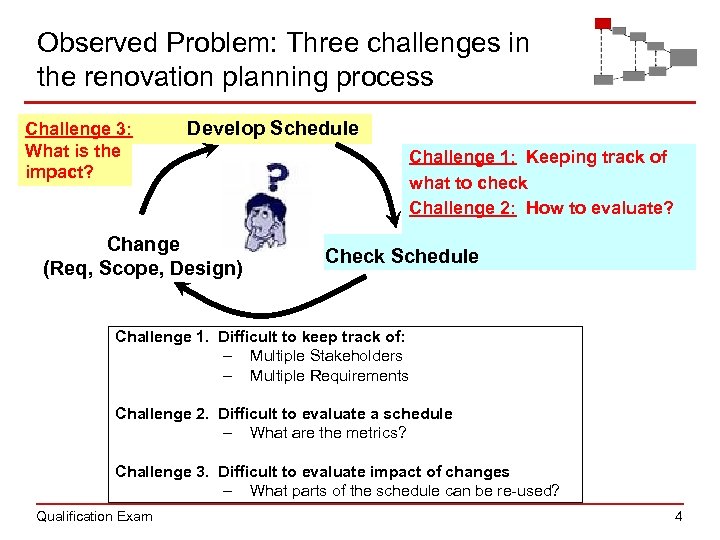
Observed Problem: Three challenges in the renovation planning process Challenge 3: What is the impact? Develop Schedule Change (Req, Scope, Design) Challenge 1: Keeping track of what to check Challenge 2: How to evaluate? Check Schedule Challenge 1. Difficult to keep track of: – Multiple Stakeholders – Multiple Requirements Challenge 2. Difficult to evaluate a schedule – What are the metrics? Challenge 3. Difficult to evaluate impact of changes – What parts of the schedule can be re-used? Qualification Exam 4
Observed Projects • Project A: Courthouse Renovation – Some courtrooms required to remain functional – Main concern with court-related occupants • Project B: 16 -story office-building project – Asbestos removal on some floors – Façade renovation • Project C: 17 -story office-building project – 23 occupants need to be moved – Construction occurs top-down due to façade renovation Qualification Exam 5
Project A. Oops, everyone does NOT fit in the building! Pictures Removed. Please contact Peggy (peggyhho@stanford. edu) directly for more information. Qualification Exam 6
Project A. How to compare these schedules? Pictures Removed. Please contact Peggy (peggyhho@stanford. edu) directly for more information. Qualification Exam 7
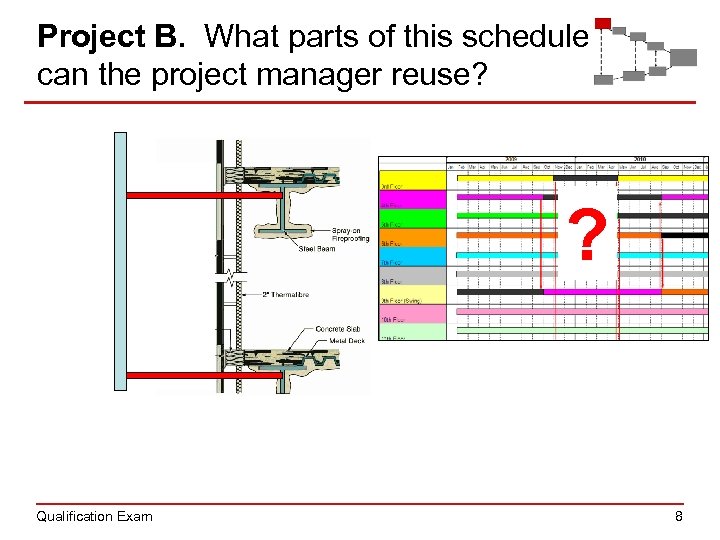
Project B. What parts of this schedule can the project manager reuse? ? Qualification Exam 8
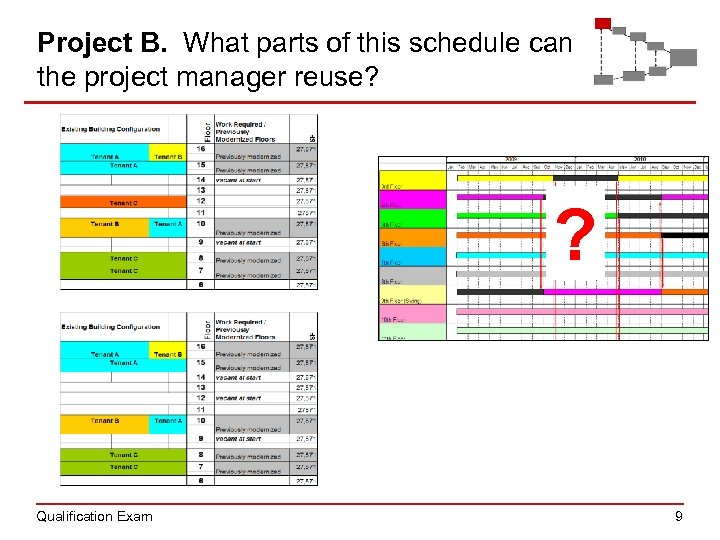
Project B. What parts of this schedule can the project manager reuse? ? Qualification Exam 9
Project C. 10 out of 23 tenants were affected by change in occupant requirement Pictures Removed. Please contact Peggy (peggyhho@stanford. edu) directly for more information. Qualification Exam 10
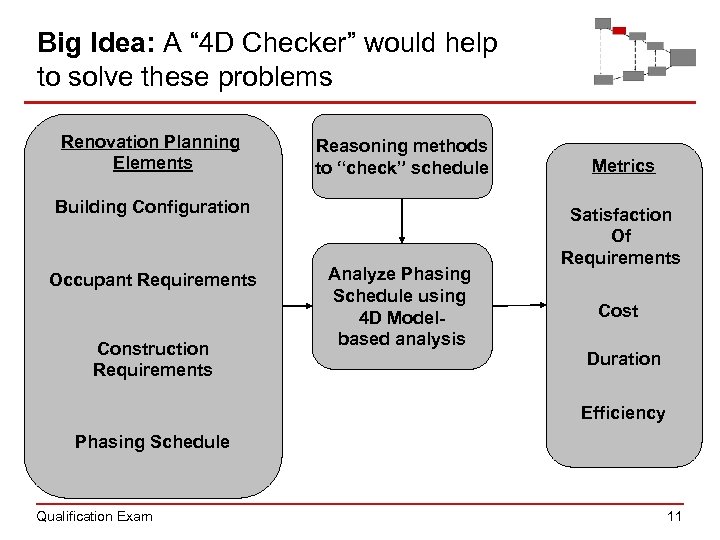
Big Idea: A “ 4 D Checker” would help to solve these problems Renovation Planning Elements Reasoning methods to “check” schedule Building Configuration Occupant Requirements Construction Requirements Analyze Phasing Schedule using 4 D Modelbased analysis Metrics Satisfaction Of Requirements Cost Duration Efficiency Phasing Schedule Qualification Exam 11
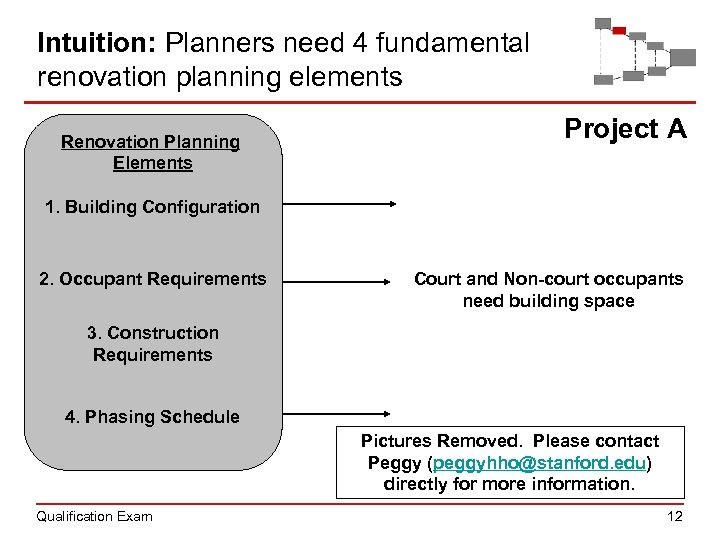
Intuition: Planners need 4 fundamental renovation planning elements Renovation Planning Elements Project A 1. Building Configuration 2. Occupant Requirements Court and Non-court occupants need building space 3. Construction Requirements 4. Phasing Schedule Pictures Removed. Please contact Peggy (peggyhho@stanford. edu) directly for more information. Qualification Exam 12
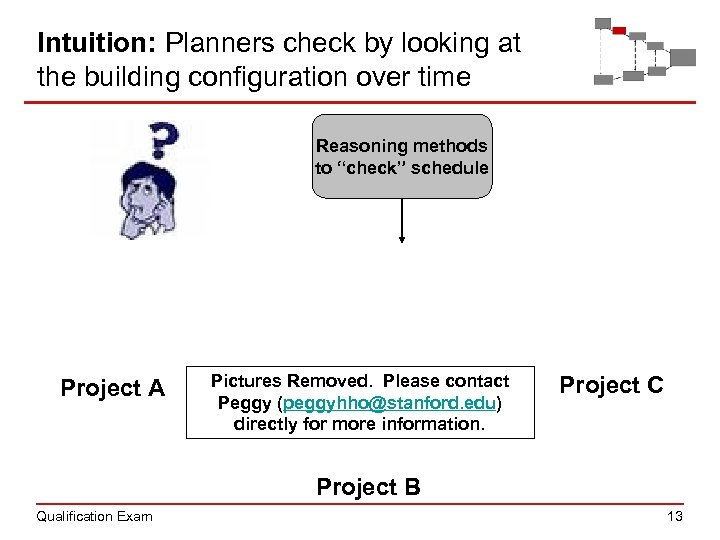
Intuition: Planners check by looking at the building configuration over time Reasoning methods to “check” schedule Project A Pictures Removed. Please contact Peggy (peggyhho@stanford. edu) directly for more information. Project C Project B Qualification Exam 13
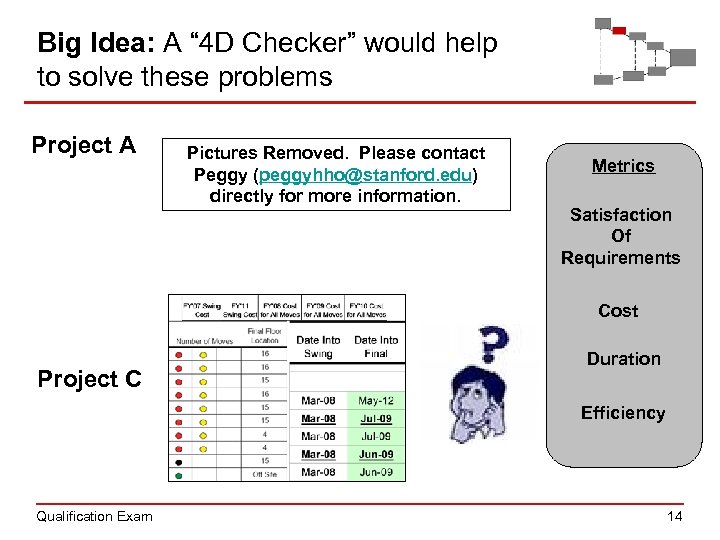
Big Idea: A “ 4 D Checker” would help to solve these problems Project A Pictures Removed. Please contact Peggy (peggyhho@stanford. edu) directly for more information. Metrics Satisfaction Of Requirements Cost Project C Duration Efficiency Qualification Exam 14
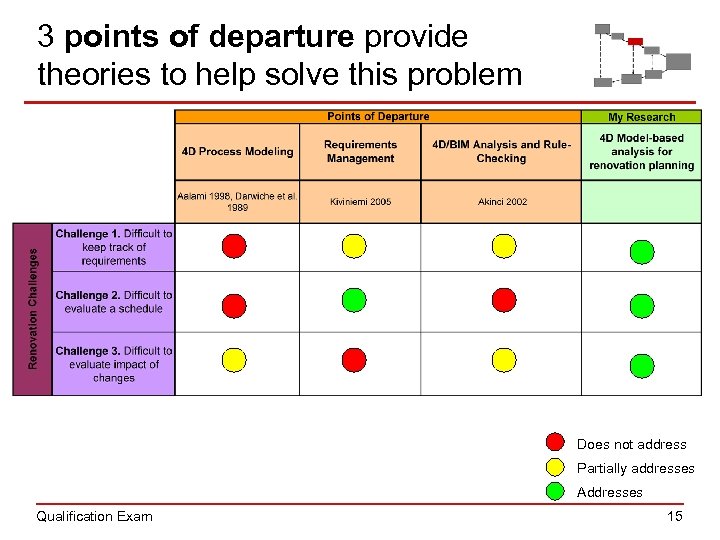
3 points of departure provide theories to help solve this problem Does not address Partially addresses Addresses Qualification Exam 15
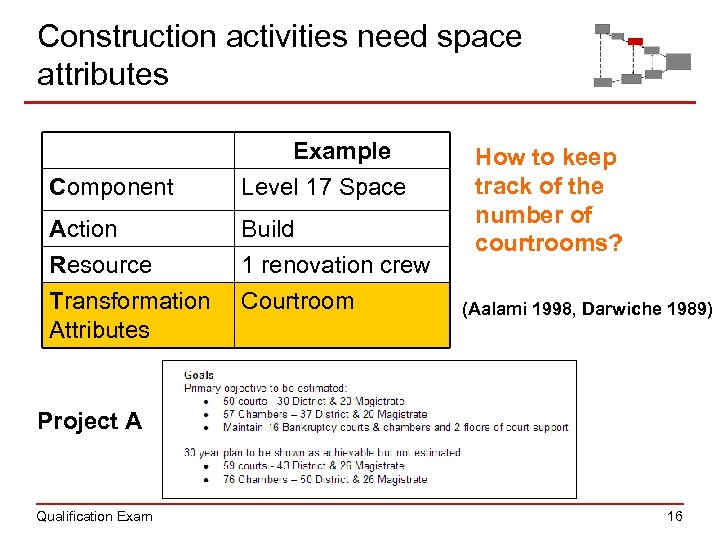
Construction activities need space attributes Component Example Level 17 Space Action Resource Build 1 renovation crew Transformation Attributes Courtroom How to keep track of the number of courtrooms? (Aalami 1998, Darwiche 1989) Project A Qualification Exam 16
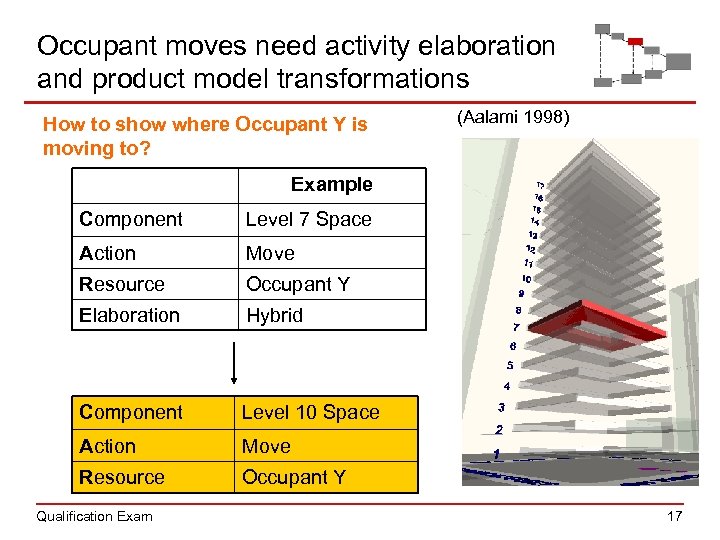
Occupant moves need activity elaboration and product model transformations How to show where Occupant Y is moving to? (Aalami 1998) Example Component Level 7 Space Action Move Resource Occupant Y Elaboration Hybrid Component Level 10 Space Action Move Resource Occupant Y Qualification Exam 17
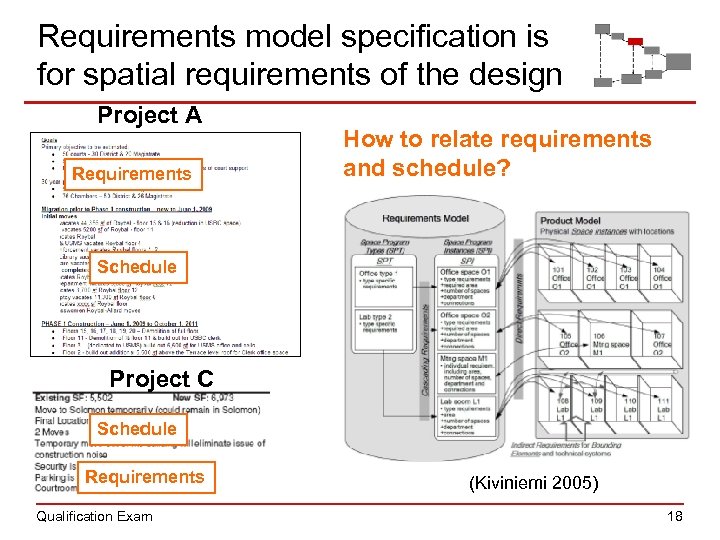
Requirements model specification is for spatial requirements of the design Project A Requirements How to relate requirements and schedule? Schedule Project C Schedule Requirements Qualification Exam (Kiviniemi 2005) 18
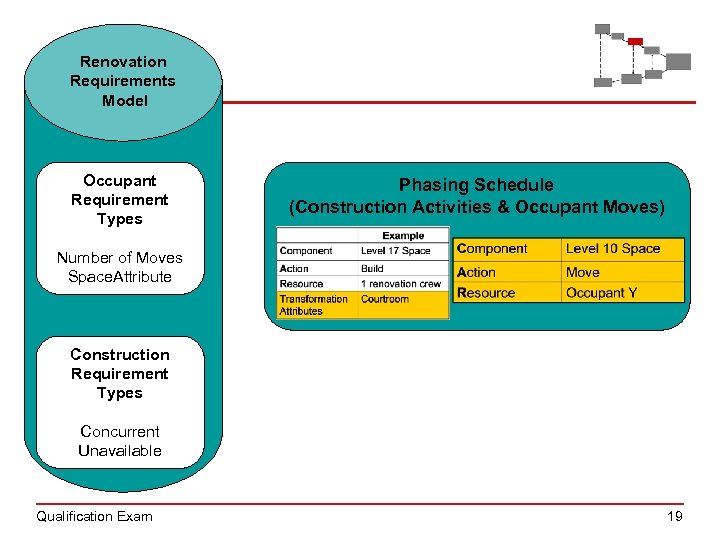
Renovation Requirements Model Occupant Requirement Types Phasing Schedule (Construction Activities & Occupant Moves) Number of Moves Space. Attribute Construction Requirement Types Concurrent Unavailable Qualification Exam 19
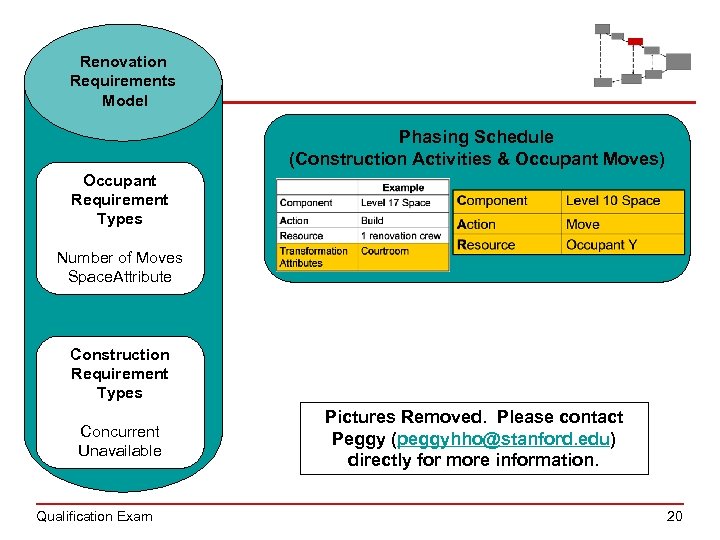
Renovation Requirements Model Phasing Schedule (Construction Activities & Occupant Moves) Occupant Requirement Types Number of Moves Space. Attribute Construction Requirement Types Concurrent Unavailable Qualification Exam Pictures Removed. Please contact Peggy (peggyhho@stanford. edu) directly for more information. 20
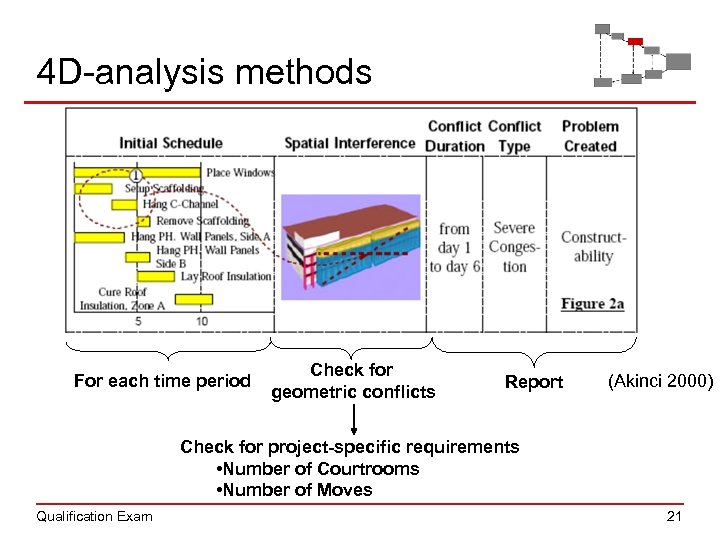
4 D-analysis methods For each time period Check for geometric conflicts Report (Akinci 2000) Check for project-specific requirements • Number of Courtrooms • Number of Moves Qualification Exam 21
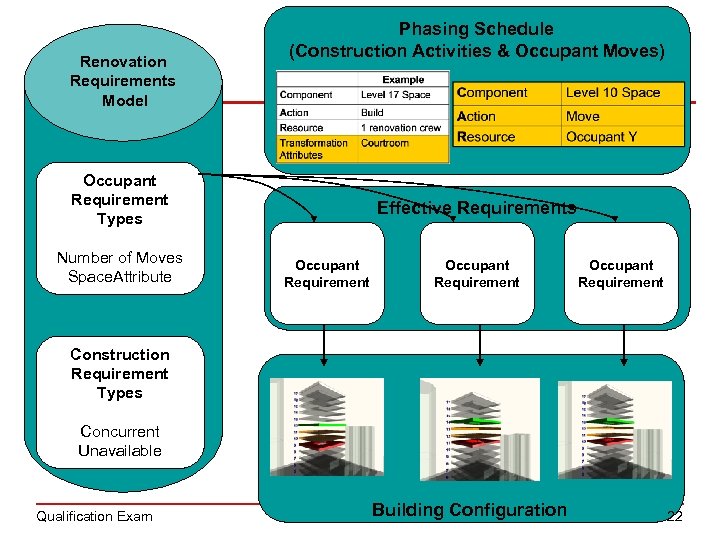
Renovation Requirements Model Phasing Schedule (Construction Activities & Occupant Moves) Occupant Requirement Types Number of Moves Space. Attribute Effective Requirements Occupant Requirement Construction Requirement Types Concurrent Unavailable Qualification Exam Building Configuration 22
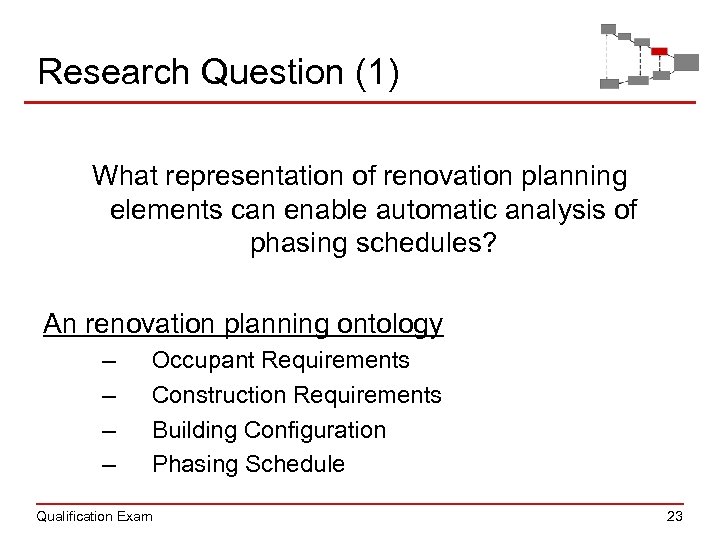
Research Question (1) What representation of renovation planning elements can enable automatic analysis of phasing schedules? An renovation planning ontology – – Occupant Requirements Construction Requirements Building Configuration Phasing Schedule Qualification Exam 23
Research Question (2) What method to enable planners to analyze phasing schedule quickly and comprehensively? – Analysis algorithms for requirements – Planning algorithms for phasing schedule Qualification Exam 24
More comprehensive analysis of projects can ease planner’s frustrations Project A Project B Project C Pictures Removed. Please contact Peggy (peggyhho@stanford. edu) directly for more information. Qualification Exam 25
Research Methodology & Tasks Perform retrospective case studies • Understand the current limitations of using 4 D • Gather specific metrics and requirements used by planners Develop the representation and reasoning methods • Best capture the information gathered • Find reasoning method that is able to be implemented Develop prototype system to test method • Use Commonpoint 4 D as development platform • Enlist CS student to help with actual programming (CIFE Seed Proposal) Qualification Exam 26
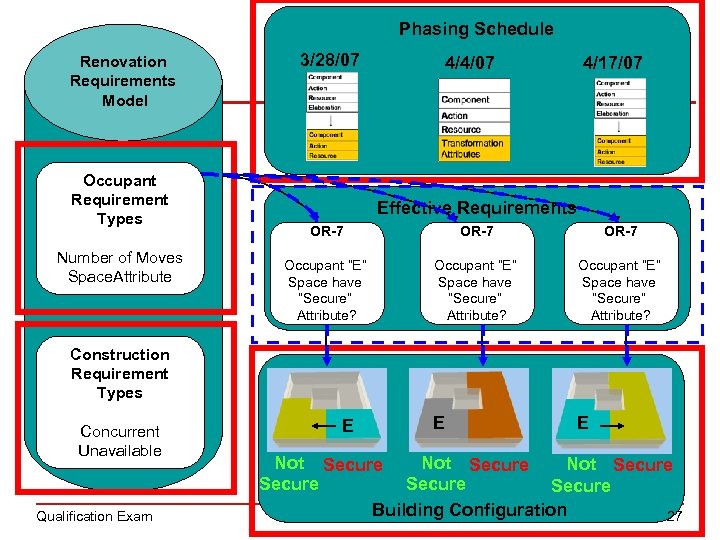
Phasing Schedule Renovation Requirements Model Occupant Requirement Types Number of Moves Space. Attribute 3/28/07 4/4/07 4/17/07 Effective Requirements OR-7 Occupant “E” Space have “Secure” Attribute? E E Construction Requirement Types Concurrent Unavailable Qualification Exam E Not Secure Secure Building Configuration 27
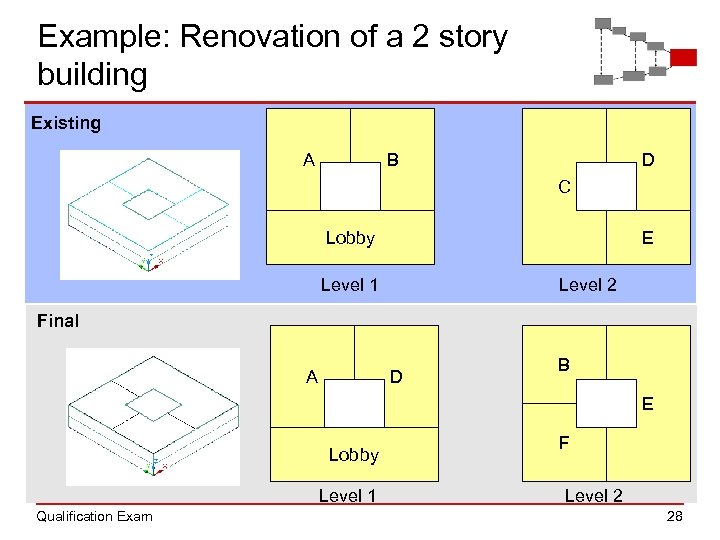
Example: Renovation of a 2 story building Existing A B D C Lobby E Level 1 Level 2 Final A D B E Lobby Level 1 Qualification Exam F Level 2 28
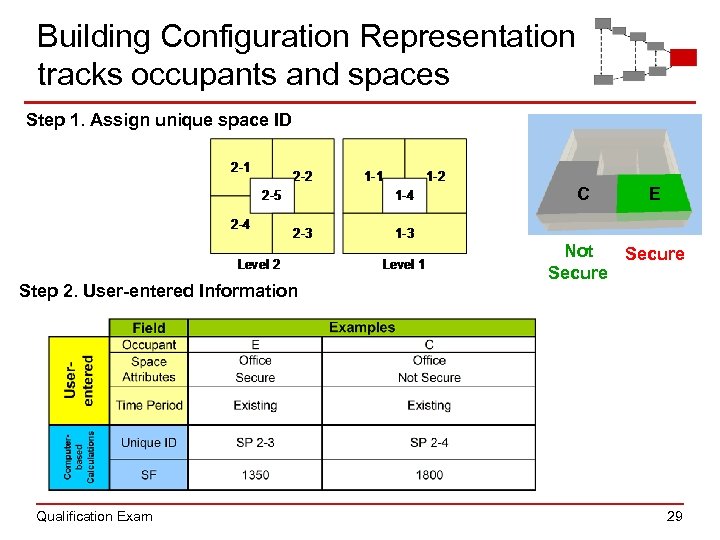
Building Configuration Representation tracks occupants and spaces Step 1. Assign unique space ID C Step 2. User-entered Information Qualification Exam E Not Secure 29
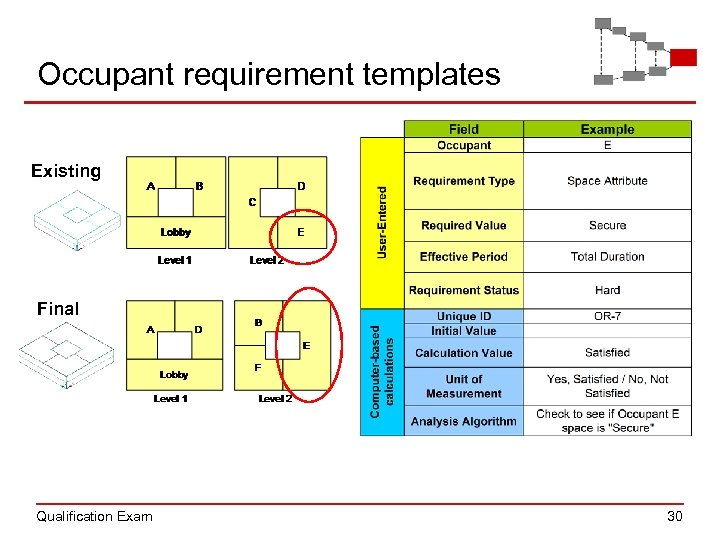
Occupant requirement templates Existing Final Qualification Exam 30
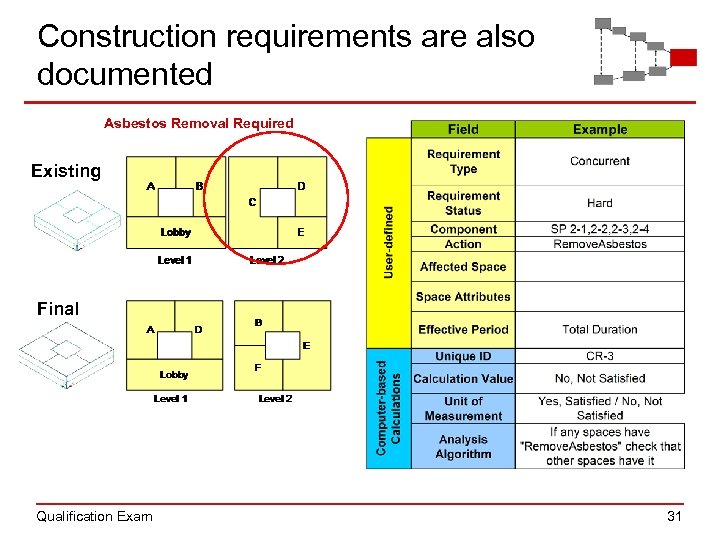
Construction requirements are also documented Asbestos Removal Required Existing Final Qualification Exam 31
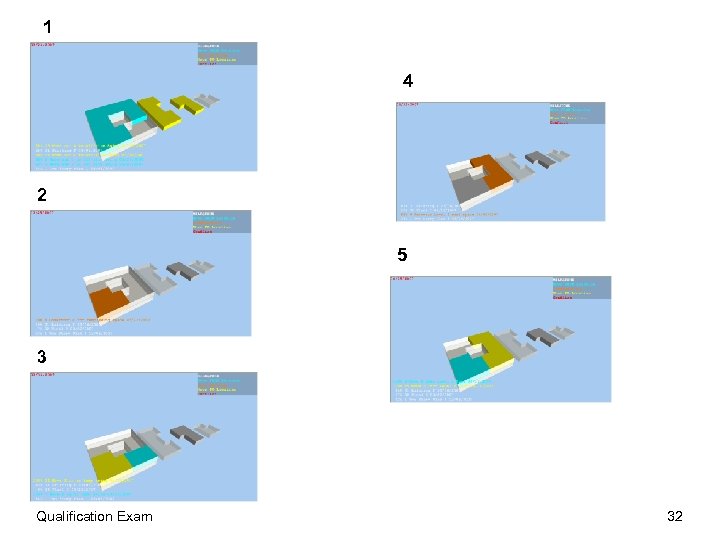
1 4 2 5 3 Qualification Exam 32
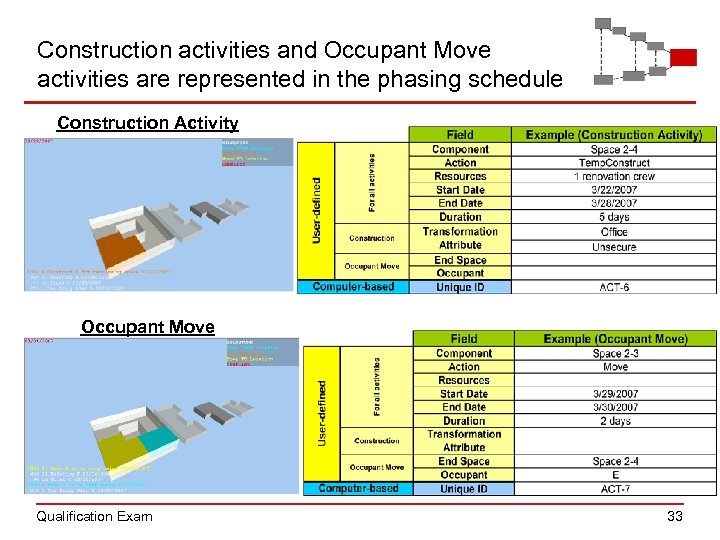
Construction activities and Occupant Move activities are represented in the phasing schedule Construction Activity Occupant Move Qualification Exam 33
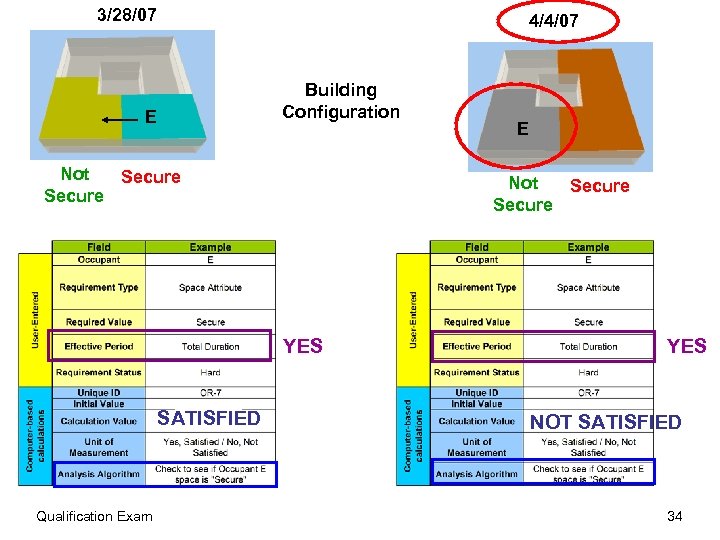
3/28/07 4/4/07 Building Configuration E Not Secure YES SATISFIED Qualification Exam E YES NOT SATISFIED 34
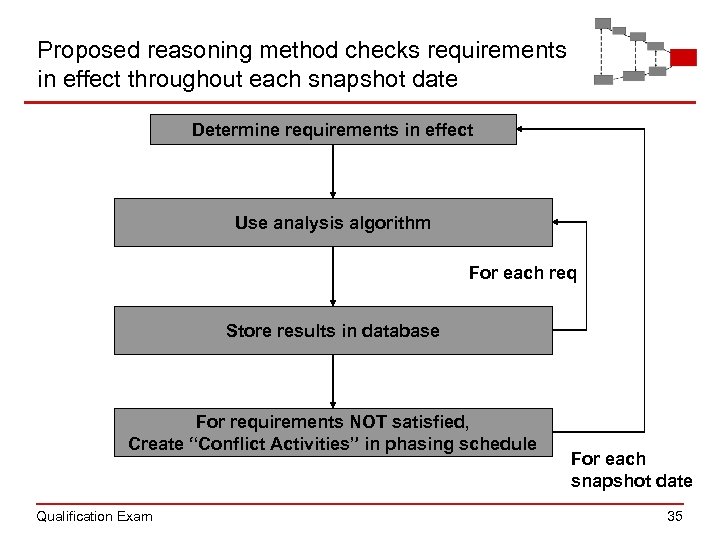
Proposed reasoning method checks requirements in effect throughout each snapshot date Determine requirements in effect Use analysis algorithm For each req Store results in database For requirements NOT satisfied, Create “Conflict Activities” in phasing schedule Qualification Exam For each snapshot date 35
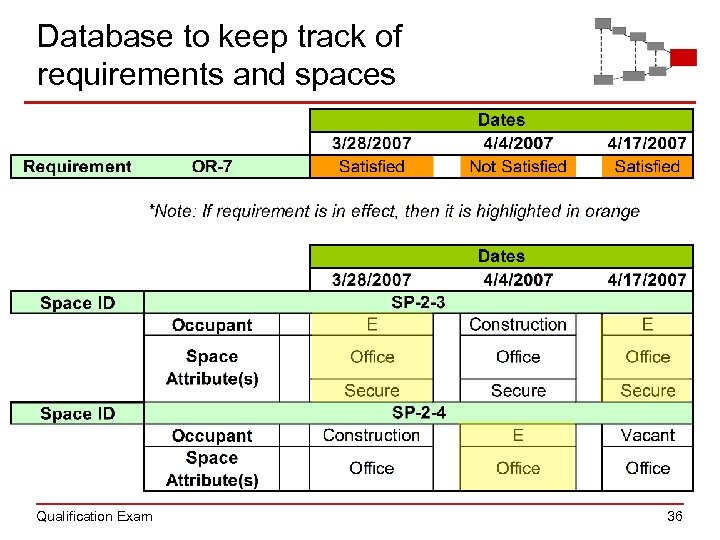
Database to keep track of requirements and spaces Qualification Exam 36
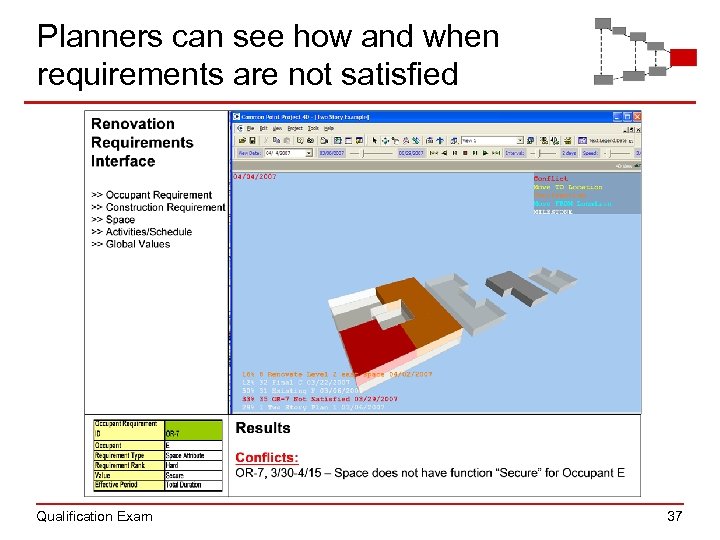
Planners can see how and when requirements are not satisfied Qualification Exam 37
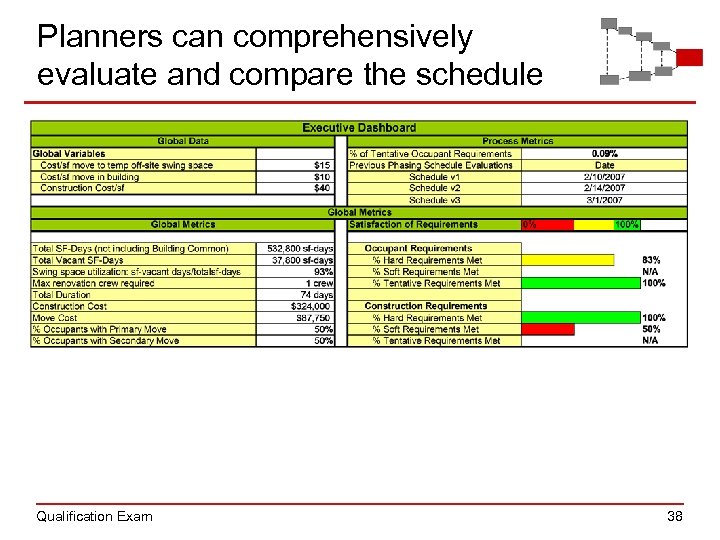
Planners can comprehensively evaluate and compare the schedule Qualification Exam 38
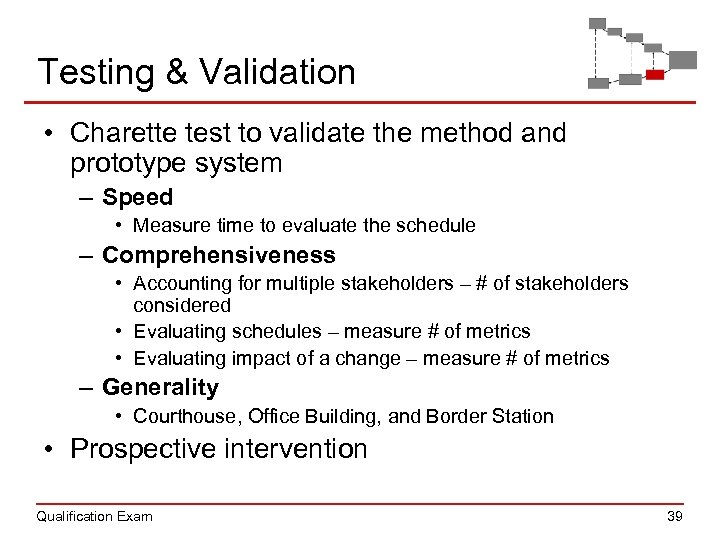
Testing & Validation • Charette test to validate the method and prototype system – Speed • Measure time to evaluate the schedule – Comprehensiveness • Accounting for multiple stakeholders – # of stakeholders considered • Evaluating schedules – measure # of metrics • Evaluating impact of a change – measure # of metrics – Generality • Courthouse, Office Building, and Border Station • Prospective intervention Qualification Exam 39
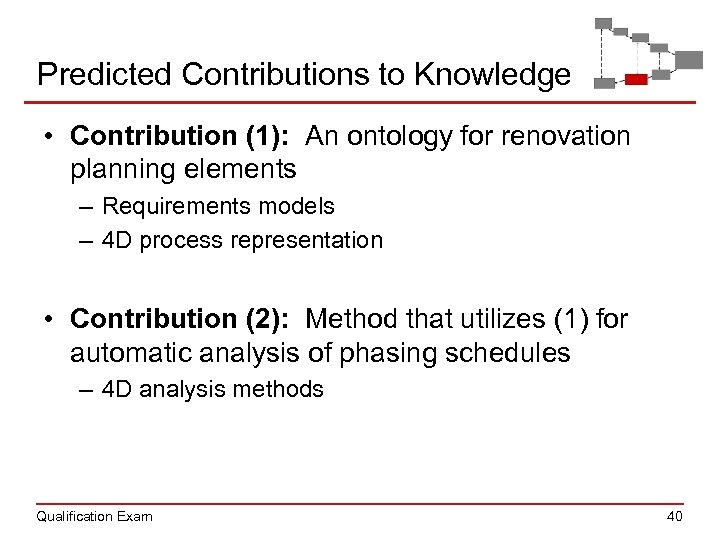
Predicted Contributions to Knowledge • Contribution (1): An ontology for renovation planning elements – Requirements models – 4 D process representation • Contribution (2): Method that utilizes (1) for automatic analysis of phasing schedules – 4 D analysis methods Qualification Exam 40
Practical Impacts Impact on Practice More comprehensive: • Tracking of requirements during renovation • Evaluation of schedules and impacts of changes Qualification Exam 41
More comprehensive analysis of projects can ease planner’s frustrations Project A Project B Project C Pictures Removed. Please contact Peggy (peggyhho@stanford. edu) directly for more information. Qualification Exam 42
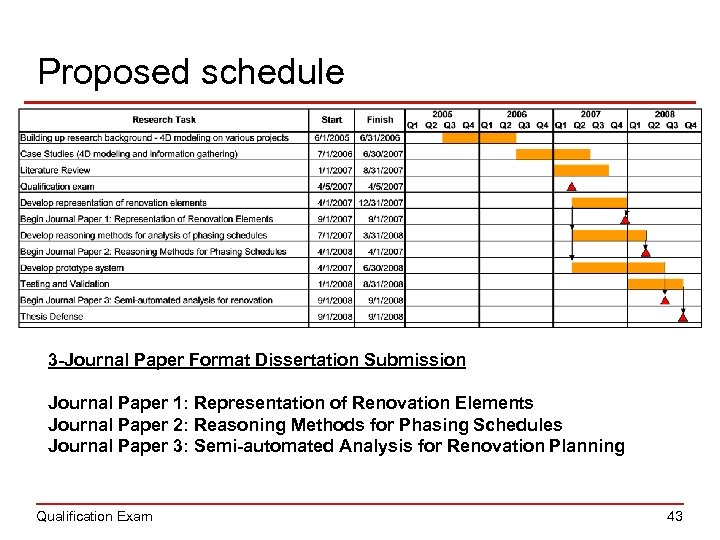
Proposed schedule 3 -Journal Paper Format Dissertation Submission Journal Paper 1: Representation of Renovation Elements Journal Paper 2: Reasoning Methods for Phasing Schedules Journal Paper 3: Semi-automated Analysis for Renovation Planning Qualification Exam 43
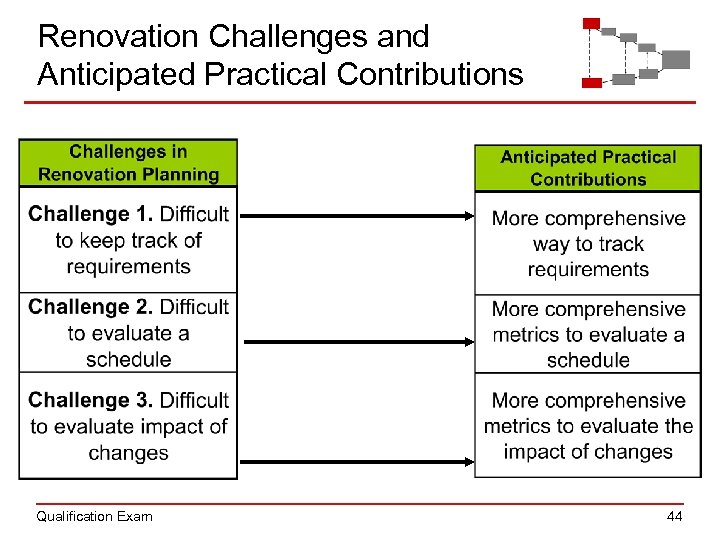
Renovation Challenges and Anticipated Practical Contributions Qualification Exam 44
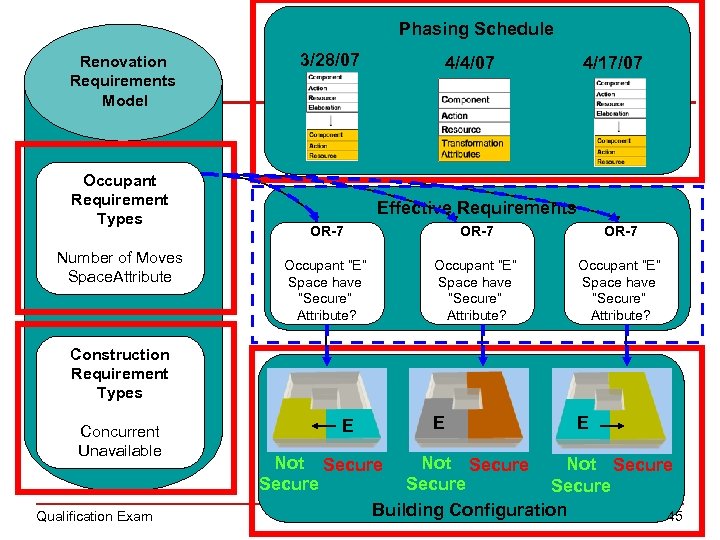
Phasing Schedule Renovation Requirements Model Occupant Requirement Types Number of Moves Space. Attribute 3/28/07 4/4/07 4/17/07 Effective Requirements OR-7 Occupant “E” Space have “Secure” Attribute? E E Construction Requirement Types Concurrent Unavailable Qualification Exam E Not Secure Secure Building Configuration 45
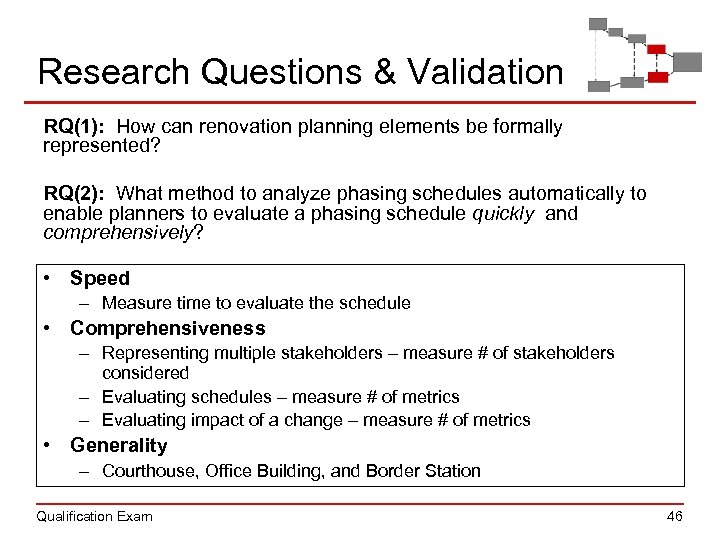
Research Questions & Validation RQ(1): How can renovation planning elements be formally represented? RQ(2): What method to analyze phasing schedules automatically to enable planners to evaluate a phasing schedule quickly and comprehensively? • Speed – Measure time to evaluate the schedule • Comprehensiveness – Representing multiple stakeholders – measure # of stakeholders considered – Evaluating schedules – measure # of metrics – Evaluating impact of a change – measure # of metrics • Generality – Courthouse, Office Building, and Border Station Qualification Exam 46
Скачать презентацию 4 D Model-based Analysis of Renovation Phasing Schedules
adbee07d725123ca29a4b312e912de86.ppt