


 Скачать презентацию 3100 A Ventilator 3100 A Ventilator
e1976ea1020b74bd109e31ea1469407d.ppt
- Количество слайдов: 24
 3100 A Ventilator
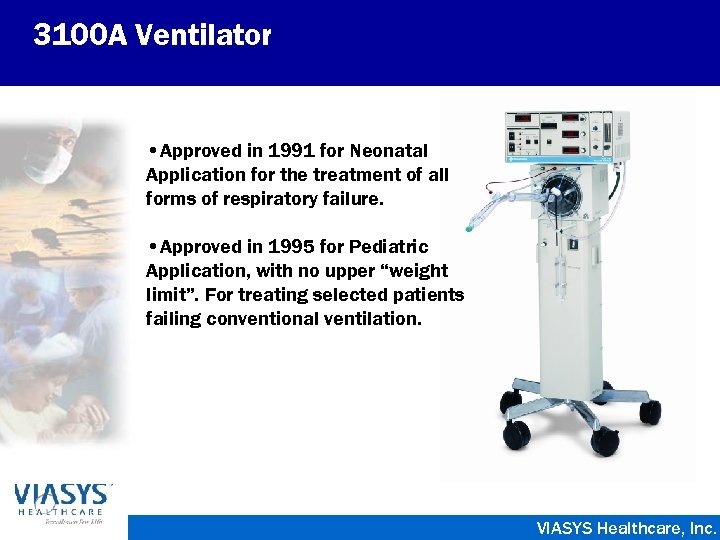 3100 A Ventilator • Approved in 1991 for Neonatal Application for the treatment of all forms of respiratory failure. • Approved in 1995 for Pediatric Application, with no upper “weight limit”. For treating selected patients failing conventional ventilation. VIASYS Healthcare, Inc.
 Theory of Operation • Oxygenation is primarily controlled by the Mean Airway Pressure (Paw) and the Fi. O 2 • Ventilation is primarily determined by the stroke volume (Delta-P) and the frequency of the ventilator. VIASYS Healthcare, Inc.
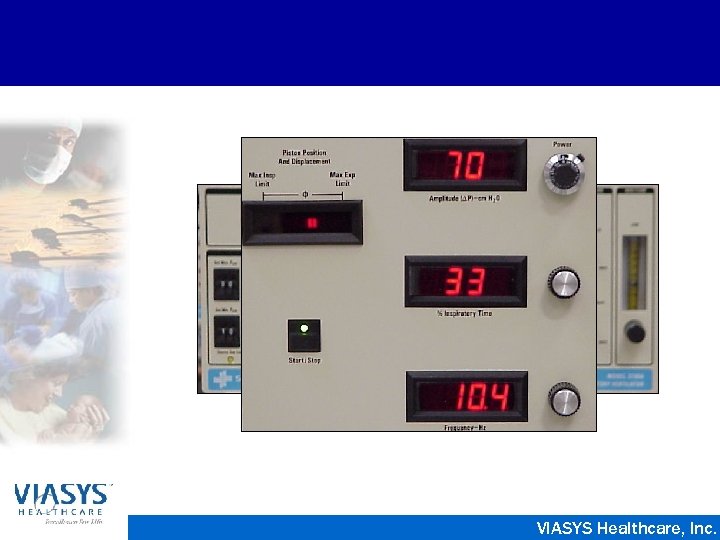
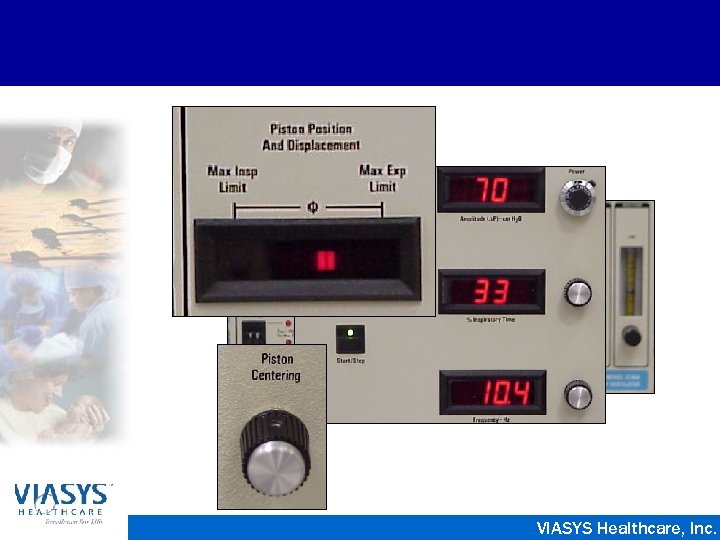
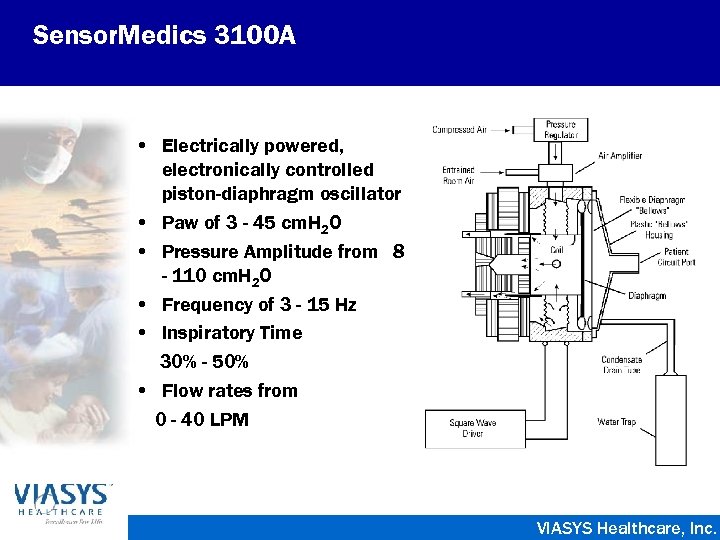 Sensor. Medics 3100 A • Electrically powered, electronically controlled piston-diaphragm oscillator • Paw of 3 - 45 cm. H 2 O • Pressure Amplitude from 8 - 110 cm. H 2 O • Frequency of 3 - 15 Hz • Inspiratory Time 30% - 50% • Flow rates from 0 - 40 LPM VIASYS Healthcare, Inc.
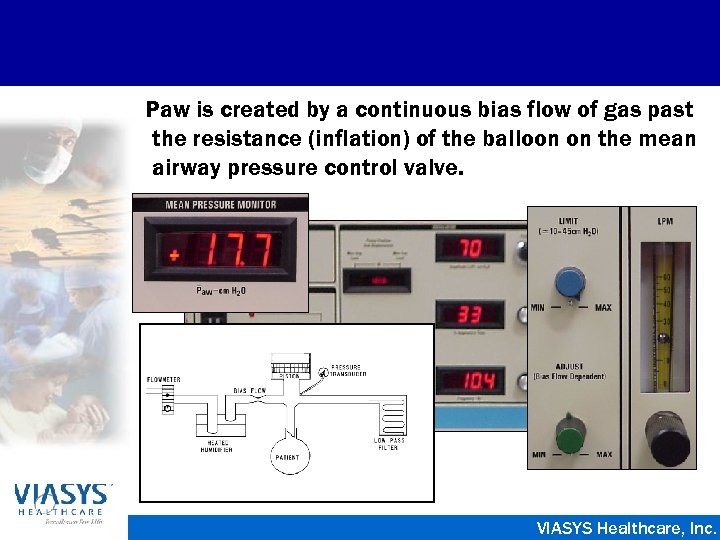 Paw is created by a continuous bias flow of gas past the resistance (inflation) of the balloon on the mean airway pressure control valve. VIASYS Healthcare, Inc.
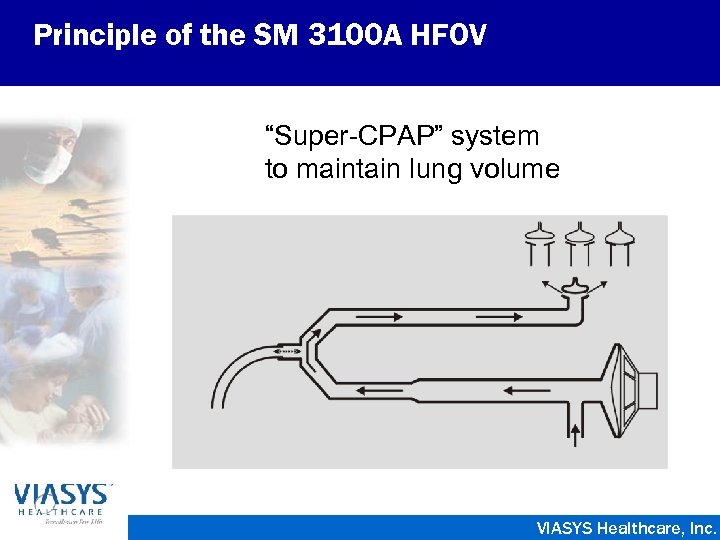 Principle of the SM 3100 A HFOV “Super-CPAP” system to maintain lung volume VIASYS Healthcare, Inc.
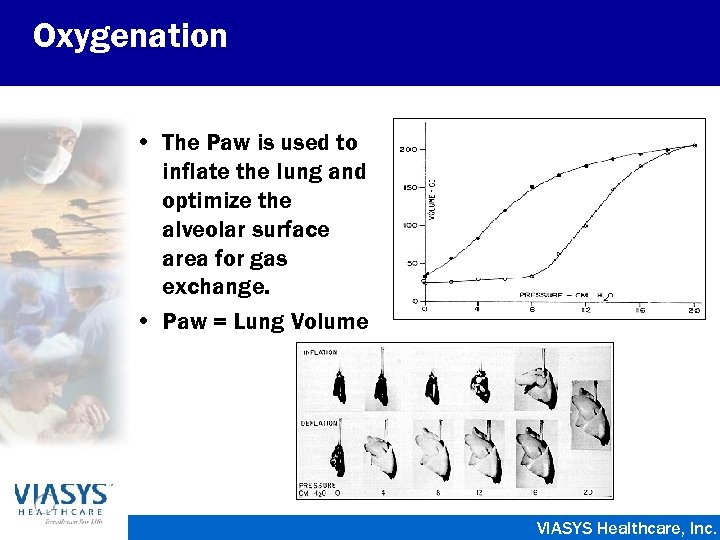 Oxygenation • The Paw is used to inflate the lung and optimize the alveolar surface area for gas exchange. • Paw = Lung Volume VIASYS Healthcare, Inc.
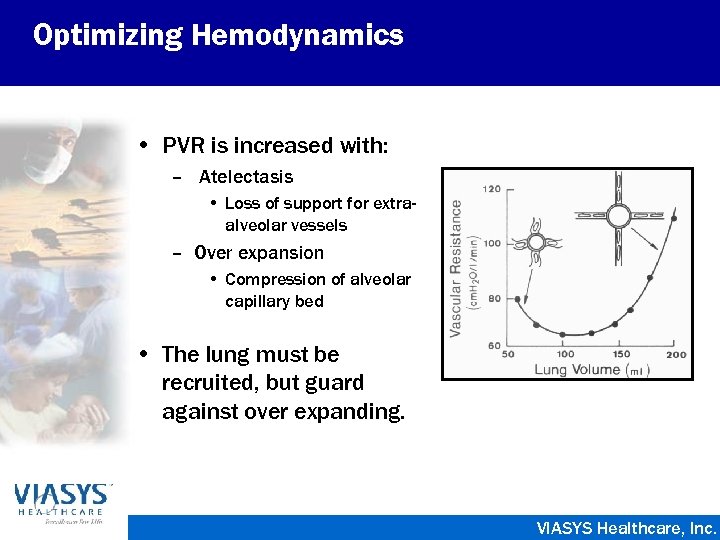 Optimizing Hemodynamics • PVR is increased with: – Atelectasis • Loss of support for extraalveolar vessels – Over expansion • Compression of alveolar capillary bed • The lung must be recruited, but guard against over expanding. VIASYS Healthcare, Inc.
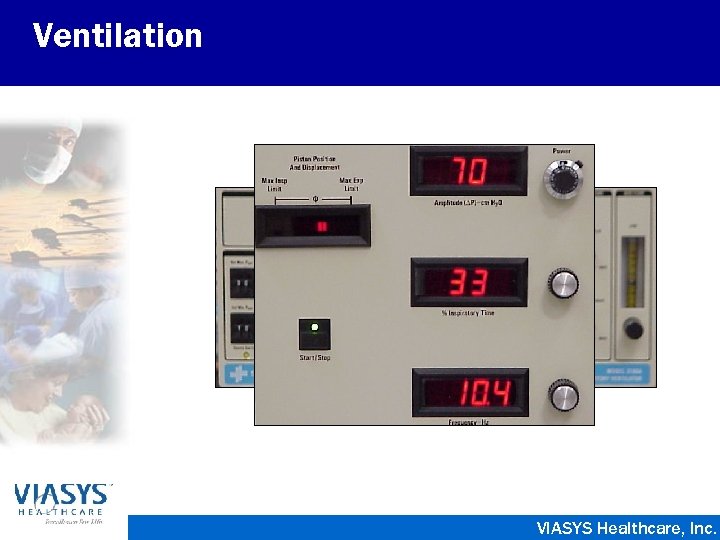 Ventilation VIASYS Healthcare, Inc.
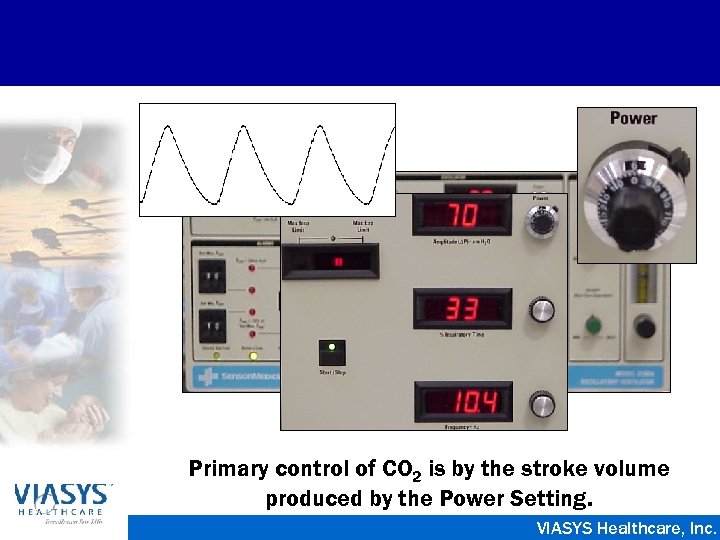 Primary control of CO 2 is by the stroke volume produced by the Power Setting. VIASYS Healthcare, Inc.
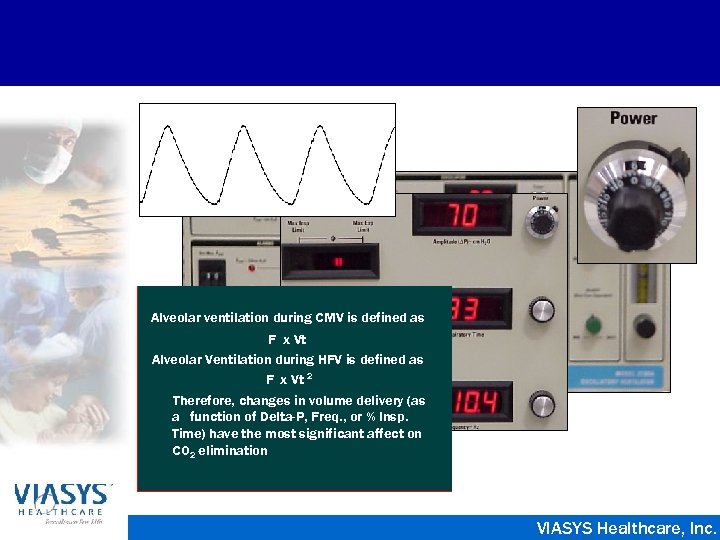 Alveolar ventilation during CMV is defined as F x Vt Alveolar Ventilation during HFV is defined as F x Vt 2 Therefore, changes in volume delivery (as a function of Delta-P, Freq. , or % Insp. Time) have the most significant affect on CO 2 elimination VIASYS Healthcare, Inc.
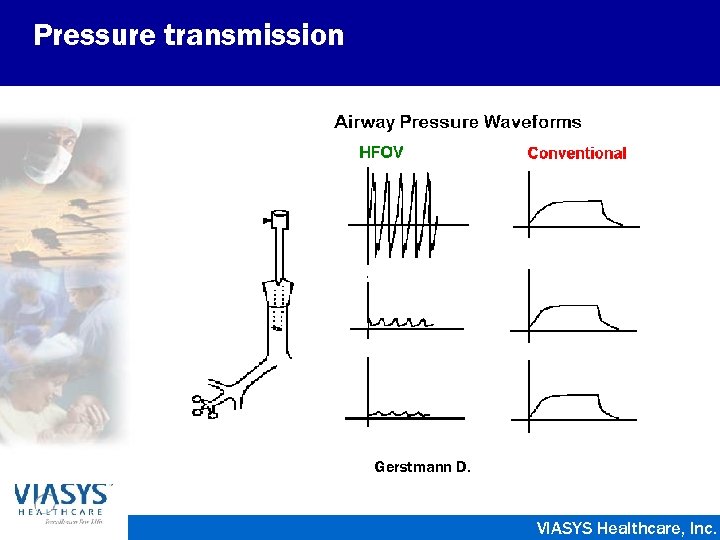 Pressure transmission Gerstmann D. VIASYS Healthcare, Inc.
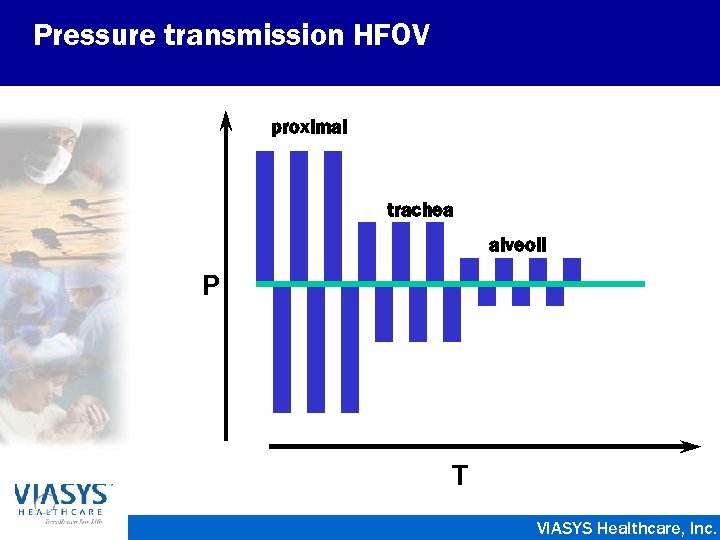 Pressure transmission HFOV proximal trachea alveoli P T VIASYS Healthcare, Inc.
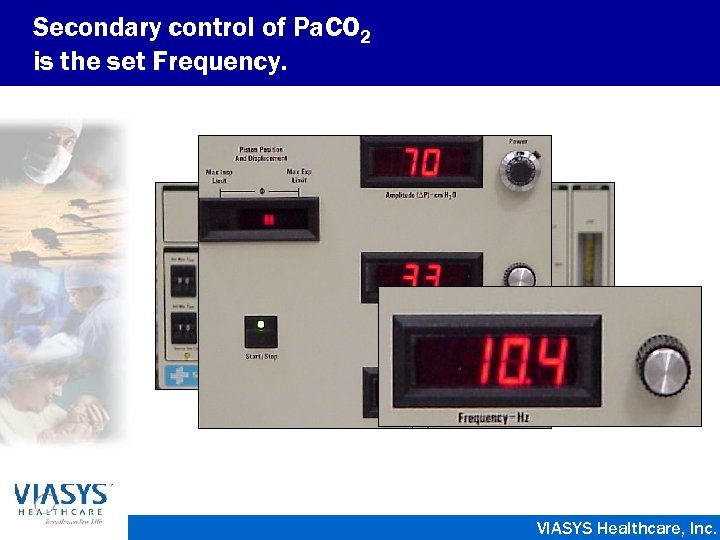 Secondary control of Pa. CO 2 is the set Frequency. VIASYS Healthcare, Inc.
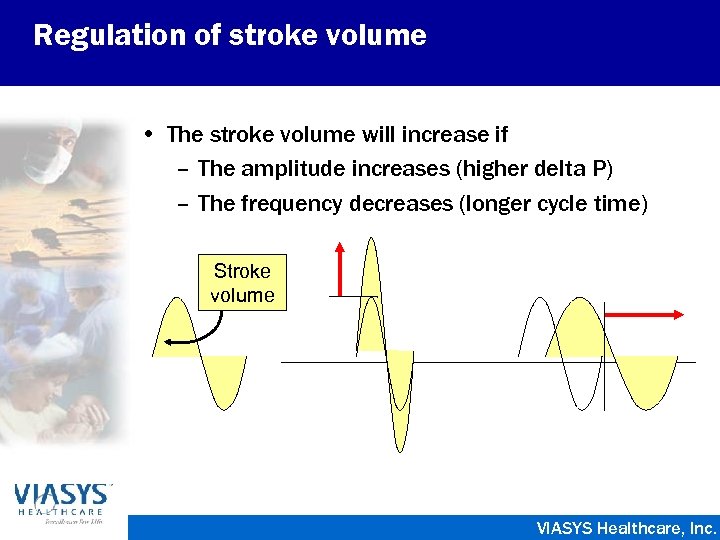 Regulation of stroke volume • The stroke volume will increase if – The amplitude increases (higher delta P) – The frequency decreases (longer cycle time) Stroke volume VIASYS Healthcare, Inc.
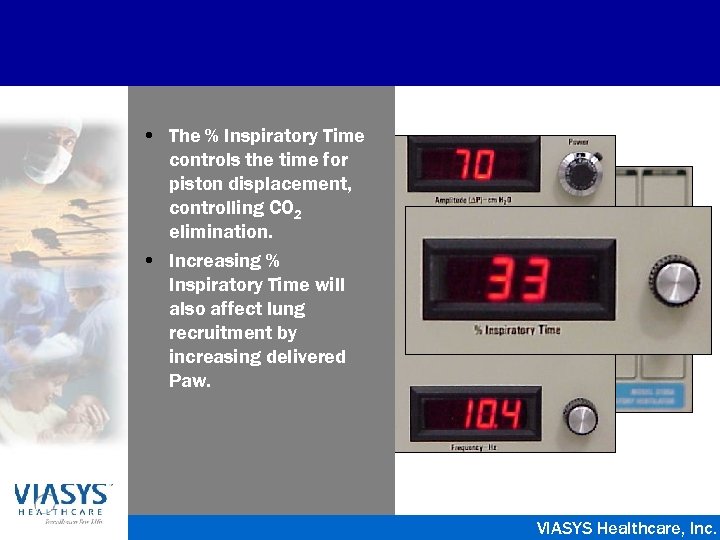 • The % Inspiratory Time controls the time for piston displacement, controlling CO 2 elimination. • Increasing % Inspiratory Time will also affect lung recruitment by increasing delivered Paw. VIASYS Healthcare, Inc.
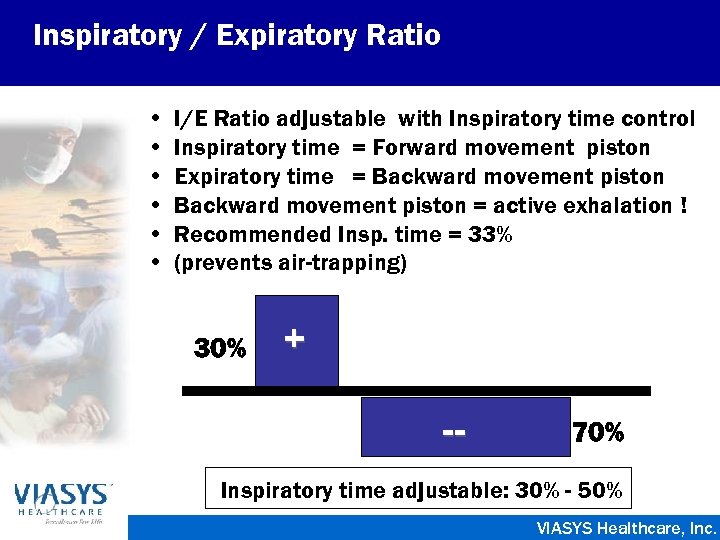 Inspiratory / Expiratory Ratio • • • I/E Ratio adjustable with Inspiratory time control Inspiratory time = Forward movement piston Expiratory time = Backward movement piston = active exhalation ! Recommended Insp. time = 33% (prevents air-trapping) 30% + -- 70% Inspiratory time adjustable: 30% - 50% VIASYS Healthcare, Inc.
 VIASYS Healthcare, Inc.
 VIASYS Healthcare, Inc.
 VIASYS Healthcare, Inc.
 VIASYS Healthcare, Inc.
 VIASYS Healthcare, Inc.
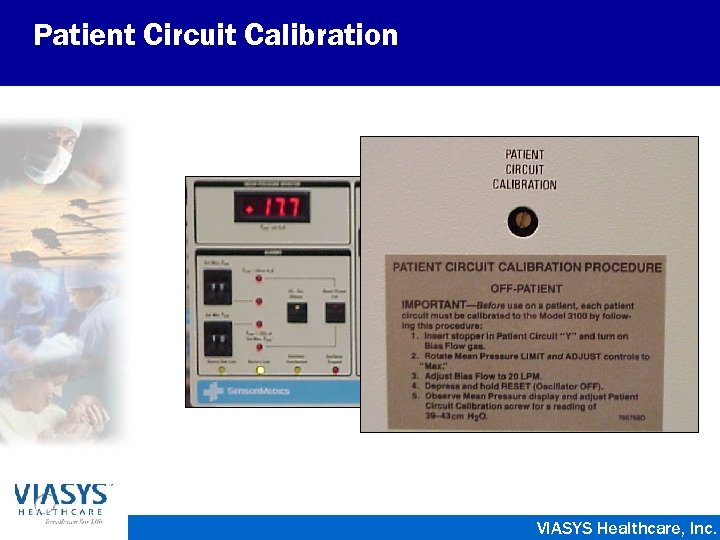 Patient Circuit Calibration VIASYS Healthcare, Inc.
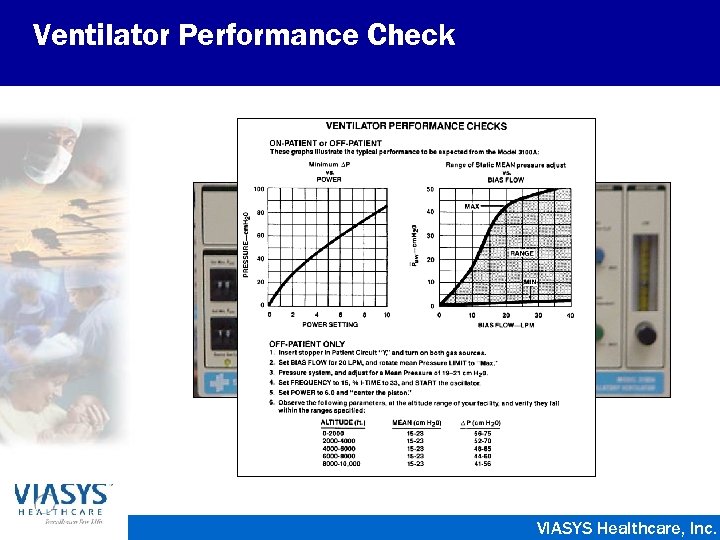 Ventilator Performance Check VIASYS Healthcare, Inc.