 Скачать презентацию 30 Fiscal Policy Deficits and Debt Mc Graw-Hill Irwin
Fiscal Policy, Deficits, and Debt.ppt
- Количество слайдов: 18



30 Fiscal Policy, Deficits, and Debt Mc. Graw-Hill/Irwin Copyright © 2012 by The Mc. Graw-Hill Companies, Inc. All rights reserved.
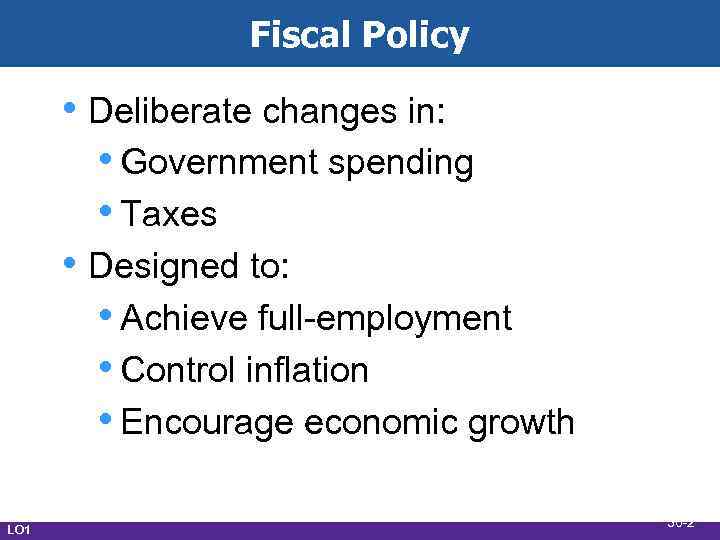
Fiscal Policy • Deliberate changes in: • Government spending • Taxes • Designed to: • Achieve full-employment • Control inflation • Encourage economic growth LO 1 30 -2
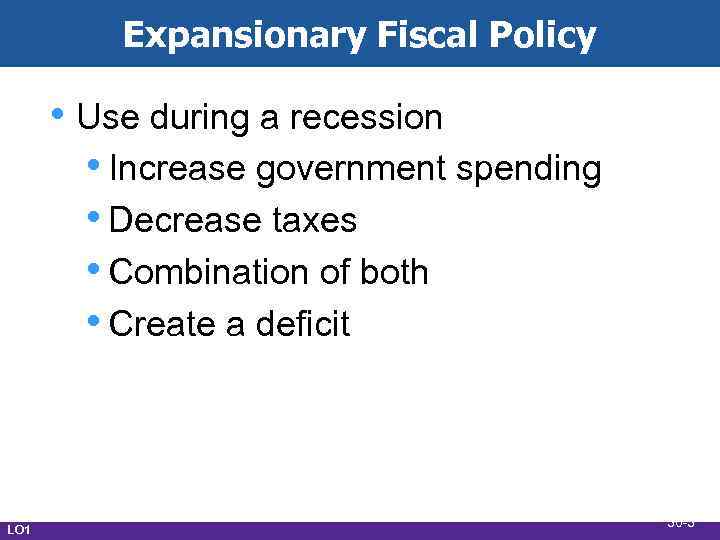
Expansionary Fiscal Policy • Use during a recession • Increase government spending • Decrease taxes • Combination of both • Create a deficit LO 1 30 -3
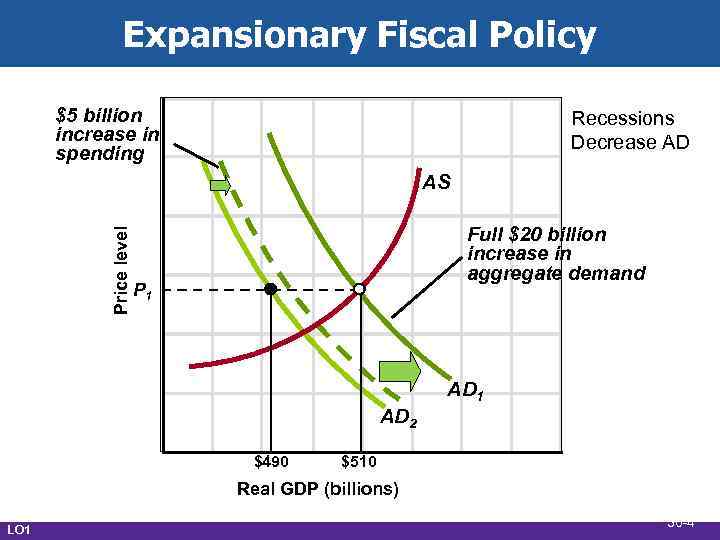
Expansionary Fiscal Policy $5 billion increase in spending Recessions Decrease AD Price level AS Full $20 billion increase in aggregate demand P 1 AD 2 $490 $510 Real GDP (billions) LO 1 30 -4
Contractionary Fiscal Policy • Use during demand-pull inflation • Decrease government spending • Increase taxes • Combination of both • Create a surplus LO 1 30 -5
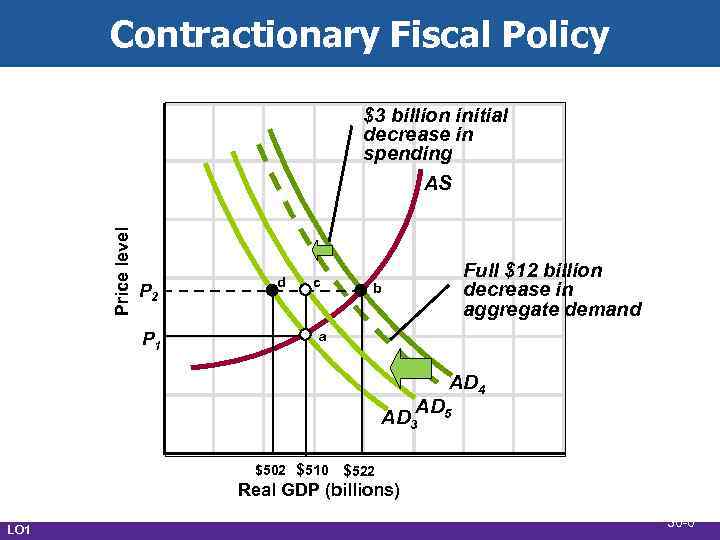
Contractionary Fiscal Policy Price level $3 billion initial decrease in spending AS P 2 P 1 d c Full $12 billion decrease in aggregate demand b a AD 4 AD AD 3 5 $502 $510 $522 Real GDP (billions) LO 1 30 -6
Policy Options: G or T? • To expand the size of government • If recession, then increase • LO 1 government spending • If inflation, then increase taxes To reduce the size of government • If recession, then decrease taxes • If inflation, then decrease government spending 30 -7
Built-In Stability • Automatic stabilizers • Taxes vary directly with GDP • Transfers vary inversely with GDP • Reduces severity of business • LO 2 fluctuations Tax progressivity • Progressive tax system • Proportional tax system • Regressive tax system 30 -8
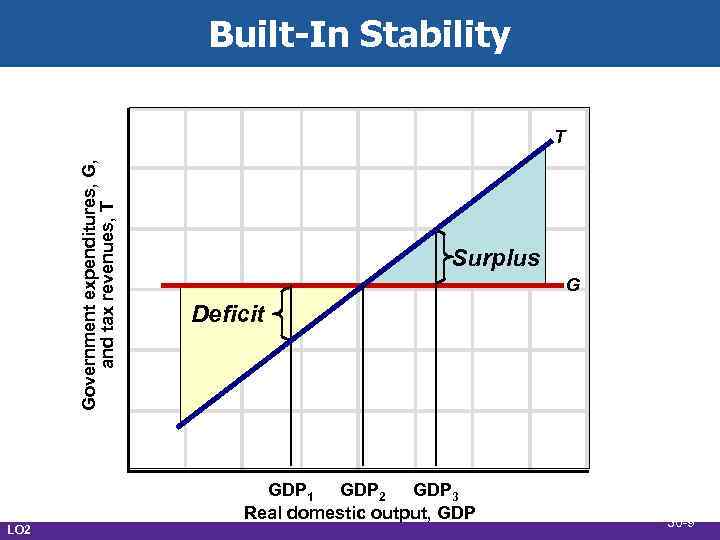
Built-In Stability Government expenditures, G, and tax revenues, T T Surplus G Deficit GDP 1 GDP 2 GDP 3 Real domestic output, GDP LO 2 30 -9
Fiscal Policy: The Great Recession • Financial market problems began in • • • LO 4 2007 Credit market freeze Pessimism spreads to the overall economy Recession officially began December 2007 and lasted 18 months 30 -10
Problems, Criticisms, & Complications • Problems of Timing • Recognition lag • Administrative lag • Operational lag • Political business cycles • Future policy reversals • Off-setting state and local finance • Crowding-out effect LO 4 30 -11
Current Thinking on Fiscal Policy • Let the Federal Reserve handle short • • • LO 4 term fluctuations Fiscal policy should be evaluated in terms of long-term effects Use tax cuts to enhance work effort, investment, and innovation Use government spending on public capital projects 30 -12
The U. S. Public Debt • $11. 9 trillion in 2009 • The accumulation of years of • LO 4 federal deficits and surpluses Owed to the holders of U. S. securities • Treasury bills • Treasury notes • Treasury bonds • U. S. savings bonds 30 -13
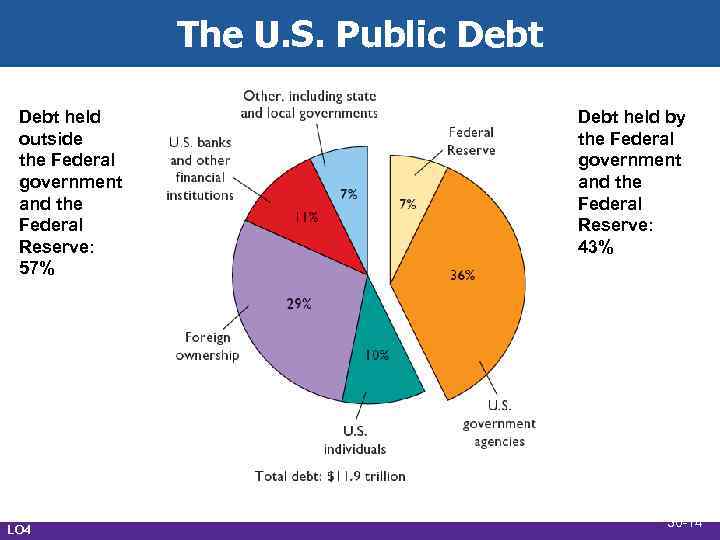
The U. S. Public Debt held outside the Federal government and the Federal Reserve: 57% LO 4 Debt held by the Federal government and the Federal Reserve: 43% 30 -14
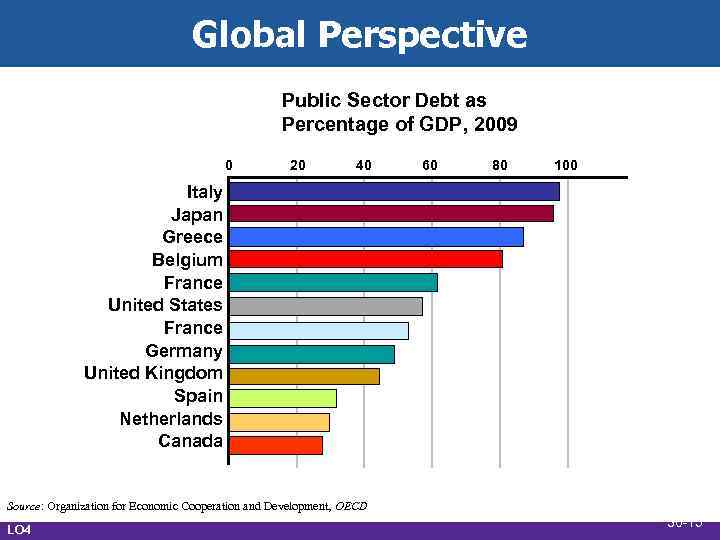
Global Perspective Public Sector Debt as Percentage of GDP, 2009 0 20 40 60 80 100 Italy Japan Greece Belgium France United States France Germany United Kingdom Spain Netherlands Canada Source: Organization for Economic Cooperation and Development, OECD LO 4 30 -15
The U. S. Public Debt • Interest charges on debt • Largest burden of the debt • 1. 3% of GDP in 2009 • False Concerns • Bankruptcy • Refinancing • Taxation • Burdening future generations LO 4 30 -16
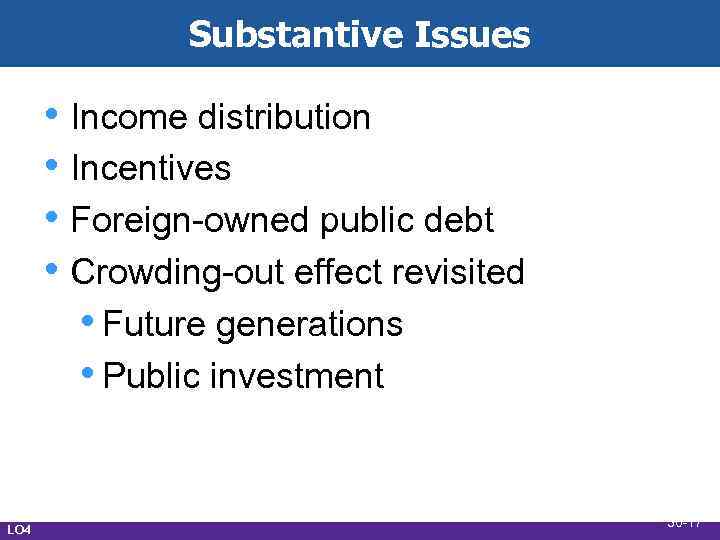
Substantive Issues • Income distribution • Incentives • Foreign-owned public debt • Crowding-out effect revisited • Future generations • Public investment LO 4 30 -17
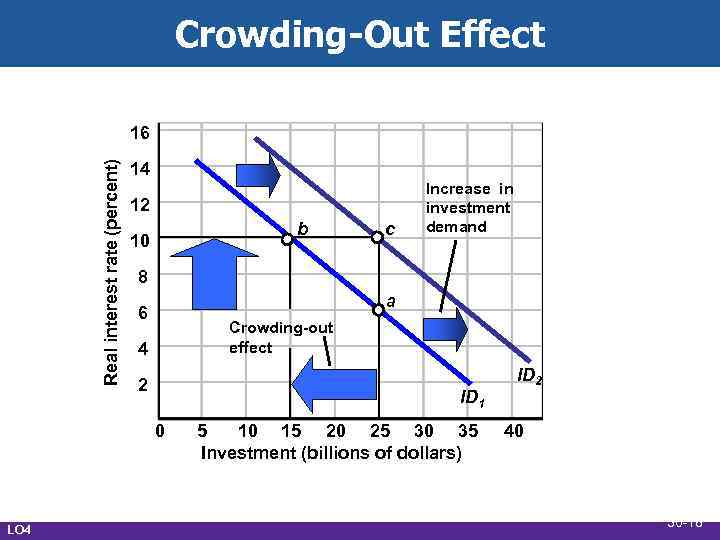
Crowding-Out Effect Real interest rate (percent) 16 14 12 b 10 8 a 6 Crowding-out effect 4 2 ID 1 0 LO 4 c Increase in investment demand 5 10 15 20 25 30 35 Investment (billions of dollars) ID 2 40 30 -18
Скачать презентацию 30 Fiscal Policy Deficits and Debt Mc Graw-Hill Irwin
Fiscal Policy, Deficits, and Debt.ppt