


 Скачать презентацию 3 rd OIE conference on Animal Welfare
f6c989e0eb9c51346c4d285539183e7b.ppt
- Количество слайдов: 30
 3 rd OIE conference on Animal Welfare – Implementing the OIE standards – addressing regional expectations Killing of animals for disease control Dr. Rebeca Garcia Pinillos, United Kingdom, DEFRA
 Acknowledgments • UK CVO, Nigel Gibbens • Animal Welfare Team DEFRA (Sue Ellis, Head of the AW Team, Geoff Webdale, AW slaughter and killing team) and AW researchers. • Gordon Hickman, Head of contingency planning, AHVLA;
 Acknowledgments
 Overview • Aim of killing for disease control – Why, how and when • Contingency planning • Methods: traditional / novel / improvements • Developments in the EU / Ethics / Human welfare • Conclusions
 Aim of killing for disease control Why ? How ? When ?
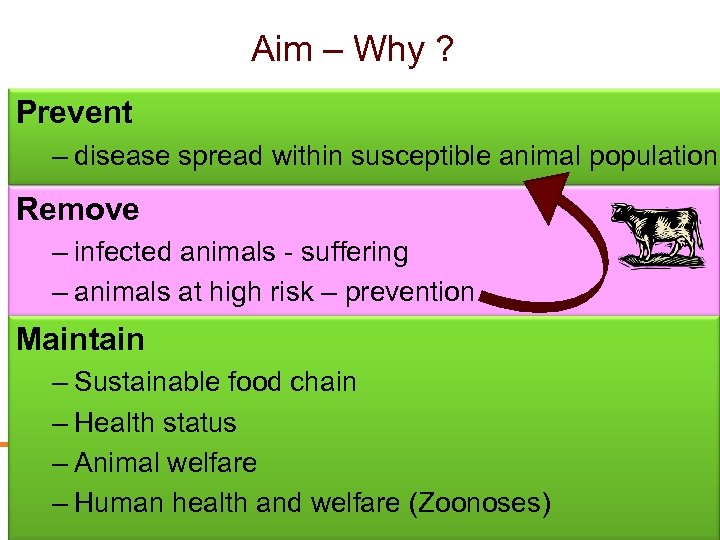 Aim – Why ? Prevent – disease spread within susceptible animal population Remove – infected animals - suffering – animals at high risk – prevention Maintain – Sustainable food chain – Health status – Animal welfare – Human health and welfare (Zoonoses)
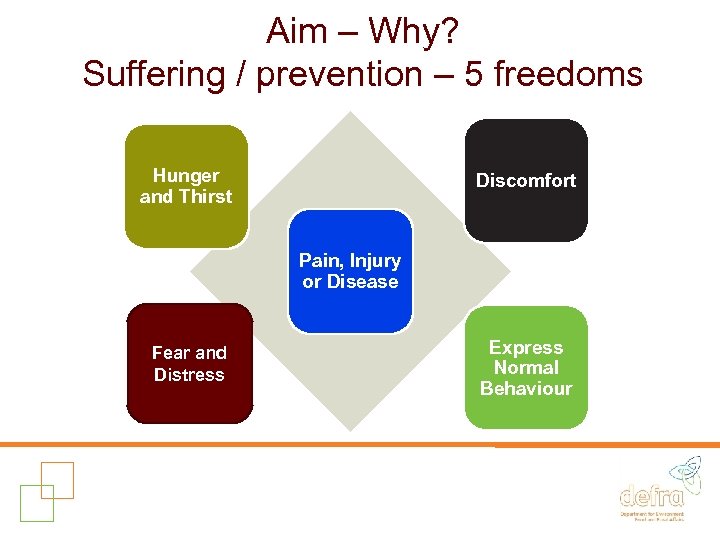 Aim – Why? Suffering / prevention – 5 freedoms Hunger and Thirst Discomfort Pain, Injury or Disease Fear and Distress Express Normal Behaviour
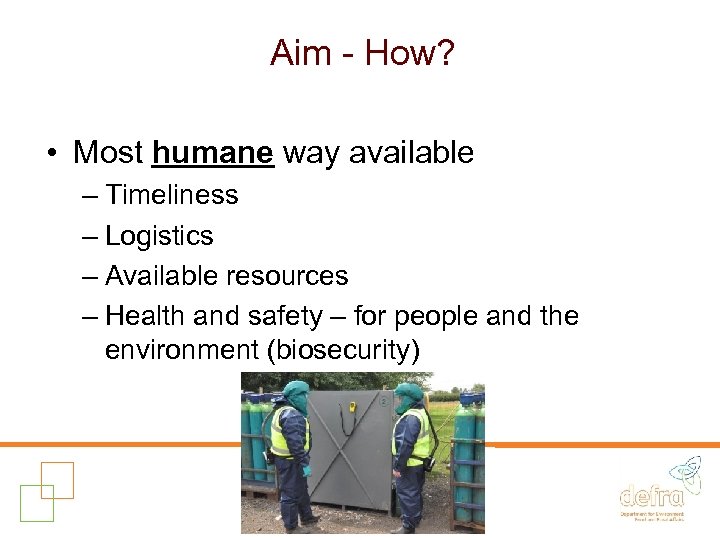 Aim - How? • Most humane way available – Timeliness – Logistics – Available resources – Health and safety – for people and the environment (biosecurity)
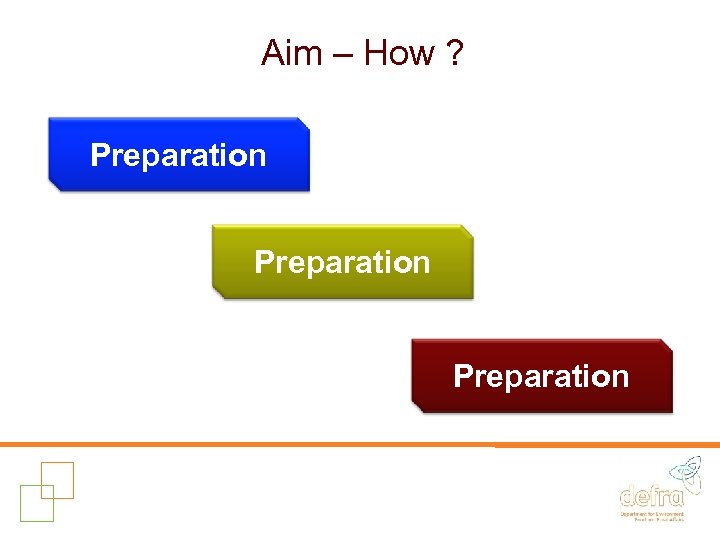 Aim – How ? Preparation
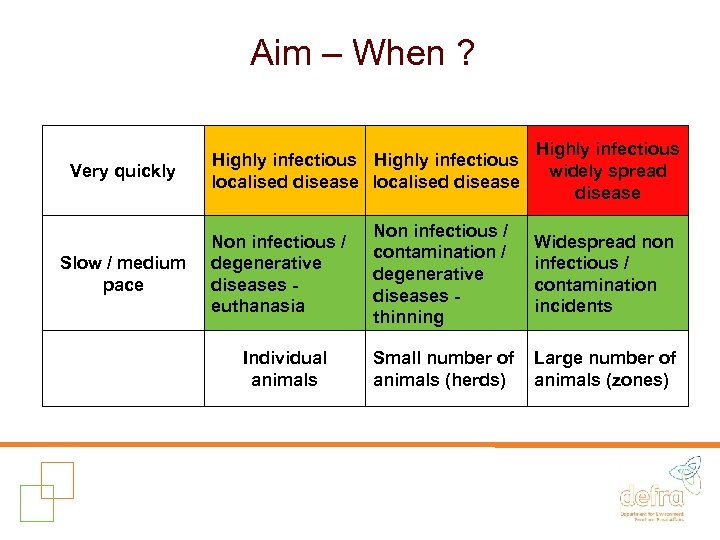 Aim – When ? Very quickly Slow / medium pace Highly infectious localised disease Non infectious / degenerative diseases euthanasia Individual animals Highly infectious widely spread disease Non infectious / contamination / degenerative diseases thinning Widespread non infectious / contamination incidents Small number of animals (herds) Large number of animals (zones)
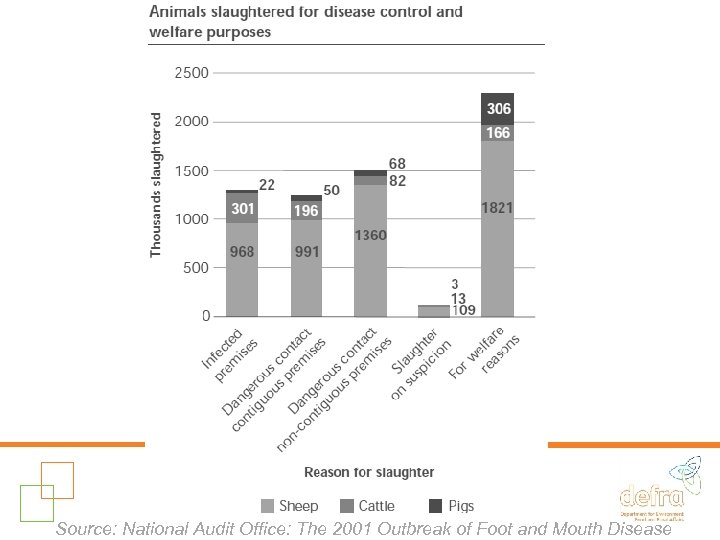 Aim – When ? Source: National Audit Office: The 2001 Outbreak of Foot and Mouth Disease
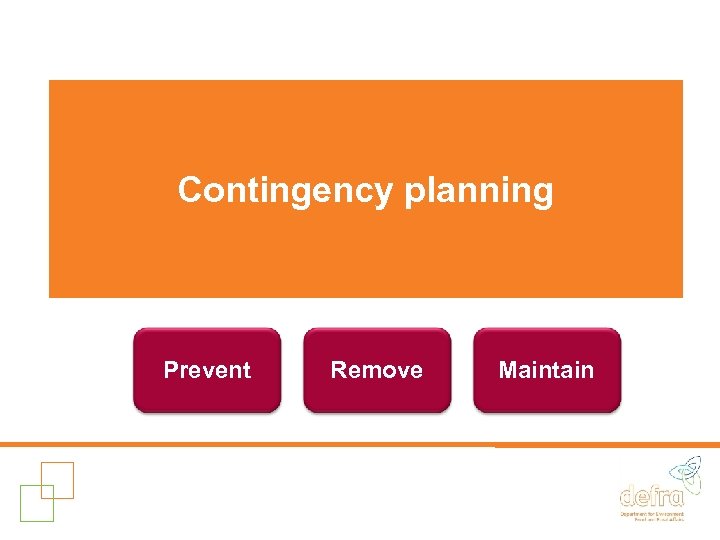 Contingency planning Prevent Remove Maintain
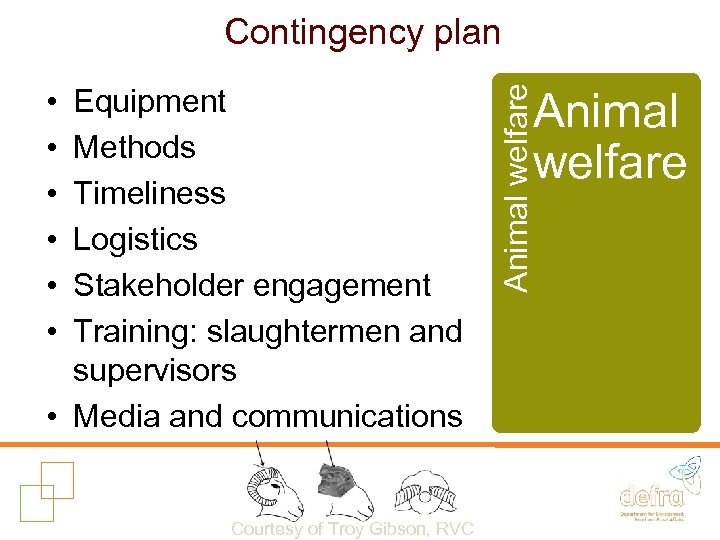 • • • Equipment Methods Timeliness Logistics Stakeholder engagement Training: slaughtermen and supervisors • Media and communications Courtesy of Troy Gibson, RVC Animal welfare Contingency plan Animal welfare
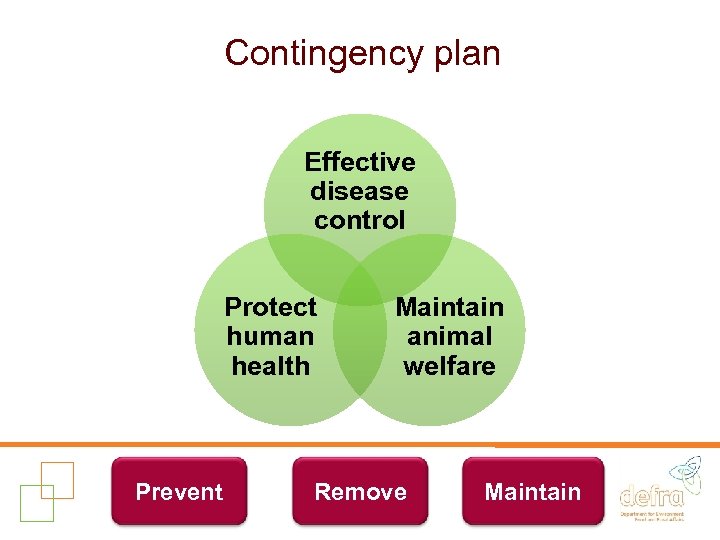 Contingency plan Effective disease control Protect human health Prevent Maintain animal welfare Remove Maintain
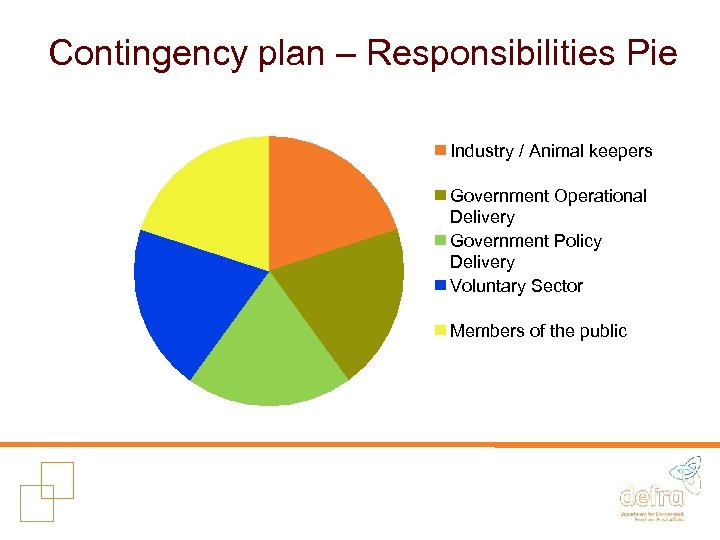 Contingency plan – Responsibilities Pie Industry / Animal keepers Government Operational Delivery Government Policy Delivery Voluntary Sector Members of the public
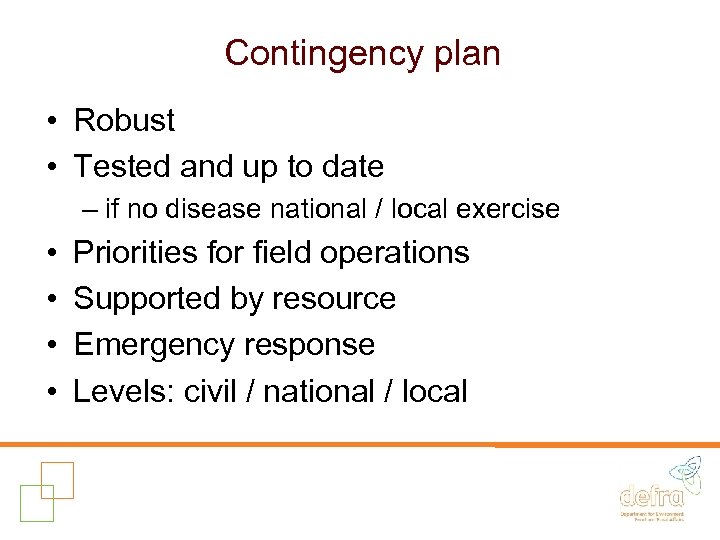 Contingency plan • Robust • Tested and up to date – if no disease national / local exercise • • Priorities for field operations Supported by resource Emergency response Levels: civil / national / local
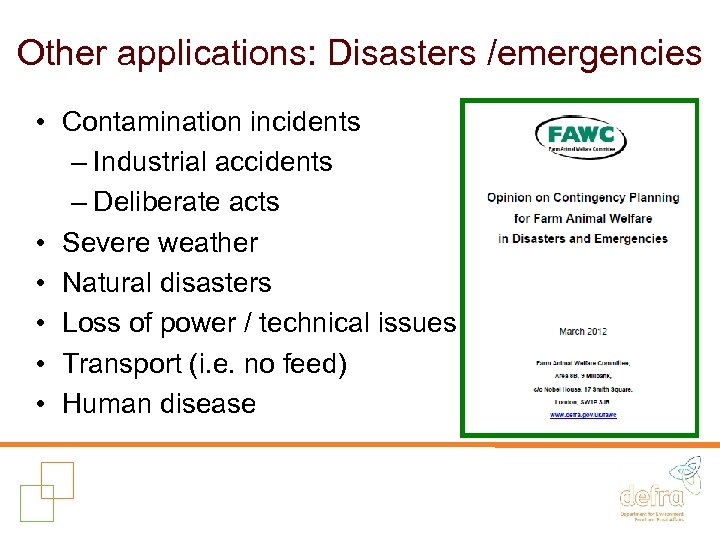 Other applications: Disasters /emergencies • Contamination incidents – Industrial accidents – Deliberate acts • Severe weather • Natural disasters • Loss of power / technical issues • Transport (i. e. no feed) • Human disease
 Stunning / killing methods Traditional use Room for improvement New Developments
 Methods • Humane – including animal behaviour and handling • • • Efficient Practical Safe for people and the environment Resilient – length of use Sustainable – cost / maintenance
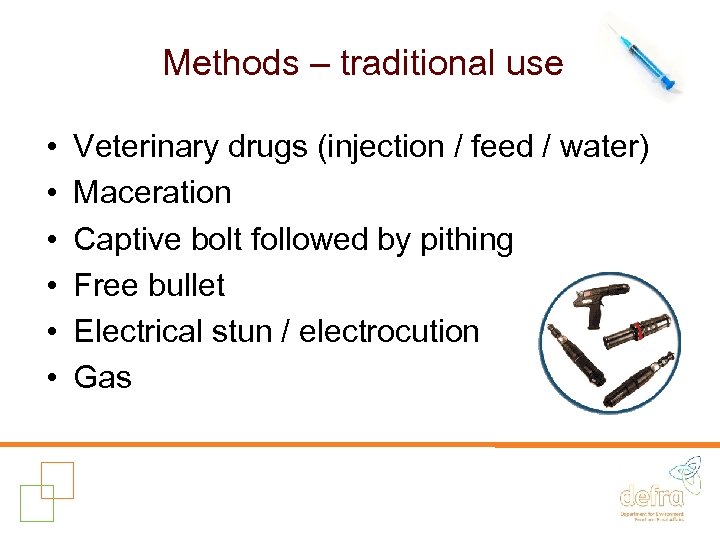 Methods – traditional use • • • Veterinary drugs (injection / feed / water) Maceration Captive bolt followed by pithing Free bullet Electrical stun / electrocution Gas
 Methods – room for improvement • Fire fighting foam – asphyxiation • Skips and waste bins – smothering • Cervical dislocation - operator fatigue / timings • Decapitation – time to unconsciousness • Aversive gases – CO 2, exhaust gases (impure CO), cyanide • Poisonous substances
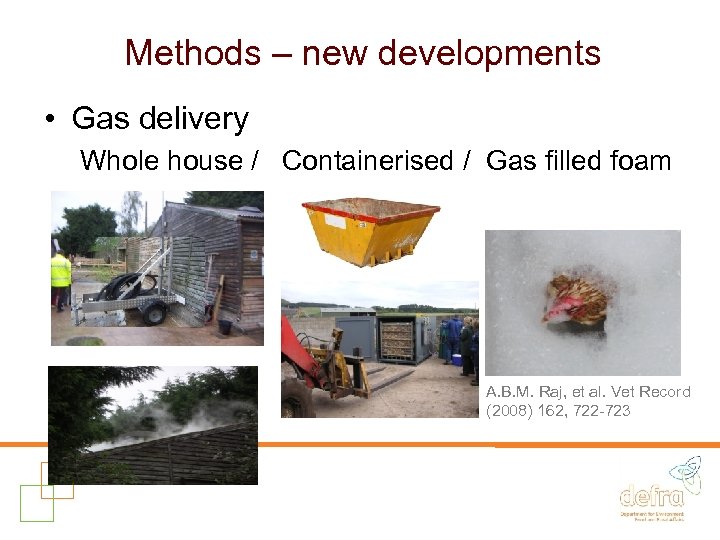 Methods – new developments • Gas delivery Whole house / Containerised / Gas filled foam A. B. M. Raj, et al. Vet Record (2008) 162, 722 -723
 Methods – new developments • Gas choices: • Ar/CO 2 – 80: 20 – welding gas • CO 2 - Controlled progressive injection of CO 2 instead of immersion in high aversive concentrations • Nitrogen • Validating concussion on piglets / kids
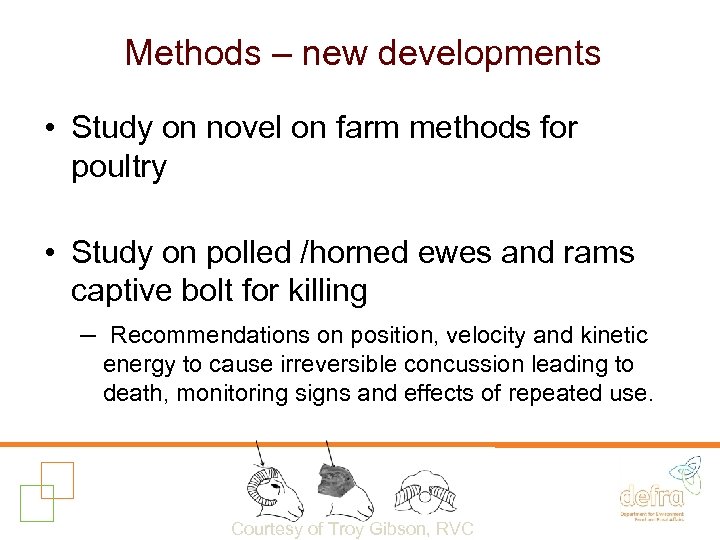 Methods – new developments • Study on novel on farm methods for poultry • Study on polled /horned ewes and rams captive bolt for killing – Recommendations on position, velocity and kinetic energy to cause irreversible concussion leading to death, monitoring signs and effects of repeated use. Courtesy of Troy Gibson, RVC
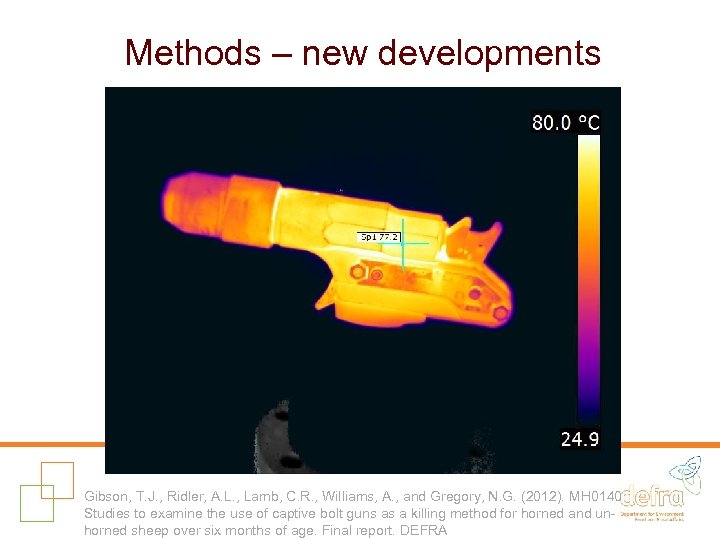 Methods – new developments Gibson, T. J. , Ridler, A. L. , Lamb, C. R. , Williams, A. , and Gregory, N. G. (2012). MH 0140 Studies to examine the use of captive bolt guns as a killing method for horned and unhorned sheep over six months of age. Final report. DEFRA
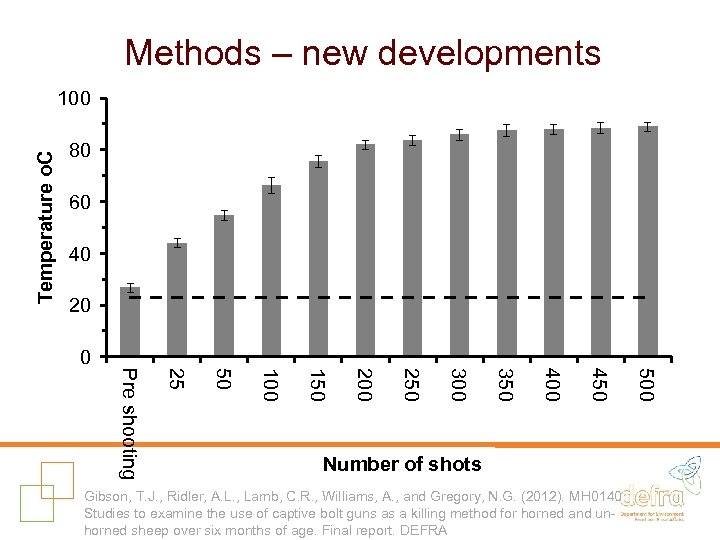 Methods – new developments Temperature o. C 100 80 60 40 20 Number of shots Gibson, T. J. , Ridler, A. L. , Lamb, C. R. , Williams, A. , and Gregory, N. G. (2012). MH 0140 Studies to examine the use of captive bolt guns as a killing method for horned and unhorned sheep over six months of age. Final report. DEFRA 500 450 400 350 300 250 200 150 100 50 25 Pre shooting 0
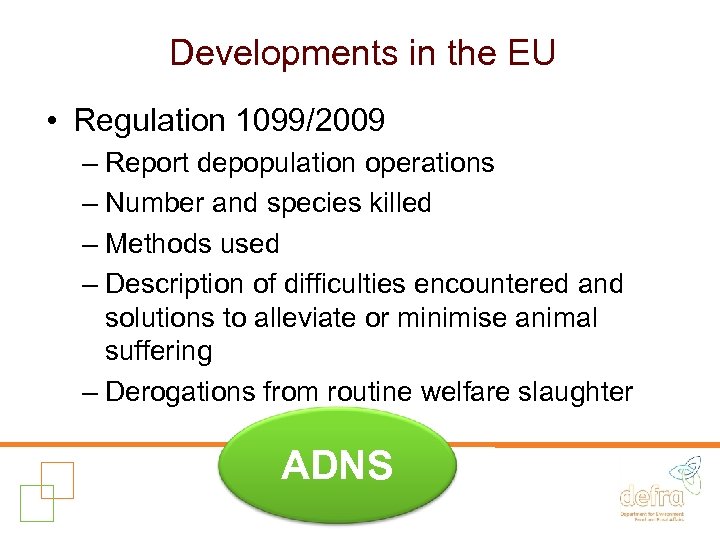 Developments in the EU • Regulation 1099/2009 – Report depopulation operations – Number and species killed – Methods used – Description of difficulties encountered and solutions to alleviate or minimise animal suffering – Derogations from routine welfare slaughter ADNS
 Ethics and human welfare links • “Moral duty to protect the welfare of farm animals and prevent unnecessary suffering, including in disasters and emergencies” (FAWC, 2012) • Human welfare – compromised if animal welfare is not protected – food security
 Conclusions • Animal Welfare – integral part of contingency plans for disease control killing • Most humane way available: – Timeliness – Logistics – Available resources • Contingency plans – expand to emergencies other than disease
 3 rd OIE conference on Animal Welfare – Implementing the OIE standards – addressing regional expectations Killing of animals for disease control Dr. Rebeca Garcia Pinillos United Kingdom, DEFRA • Dr. Rebeca Garcia Pinillos • rebeca. garcia@defra. gsi. gov. uk