


 Скачать презентацию 3 3 Pathogen reduction ens og collection treatment
6deec3d0e3b6eaa21dcc847cc9e23681.ppt
- Количество слайдов: 22
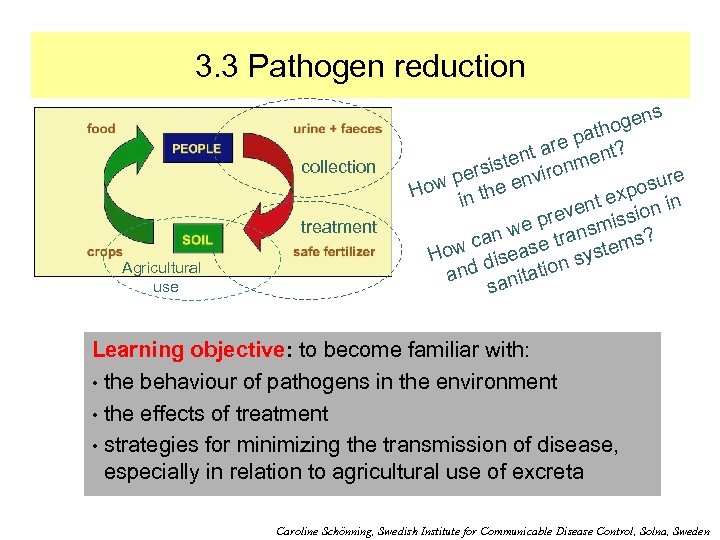 3. 3 Pathogen reduction ens og collection treatment Agricultural use th e pa t? ar tent onmen is pers envir w sure o Ho in the exp n in nt reve missio p we trans n ? w ca ease ystems Ho dis s nd nitation a sa Learning objective: to become familiar with: • the behaviour of pathogens in the environment • the effects of treatment • strategies for minimizing the transmission of disease, especially in relation to agricultural use of excreta Caroline Schönning, Swedish Institute for Communicable Disease Control, Solna, Sweden
 Transmission of infectious disease during reuse ¢ Mexico: untreated wastewater gives 33% higher risk of diarrhoeal diseases (Cifuentes et al. 1998) ¢ Israel (kibbutz): partially treated stabilization pond effluent gives two-fold excess risk of enteric disease in 0 -4 year-old age group (Fattal et al. 1986) ¢ No recorded incidents associated with ”appropriately treated” wastewater (Cooper & Olivieri 1998) ¢ National Research Council (NRC, USA, 2000) evaluated 23 studies: no proof for elevated or decreased risk when reusing sewage sludge ¢ Risk assessment a valuable tool Caroline Schönning, Swedish Institute for Communicable Disease Control, Solna, Sweden
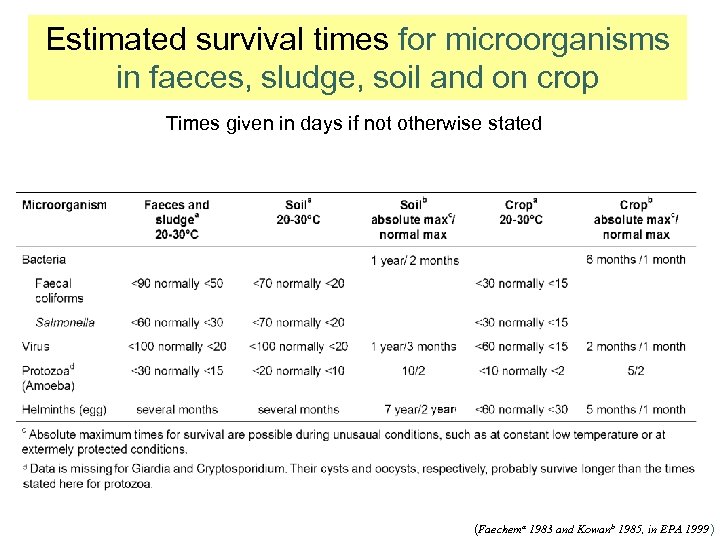 Estimated survival times for microorganisms in faeces, sludge, soil and on crop Times given in days if not otherwise stated (Faechema 1983 and Kowanb 1985, in EPA 1999)
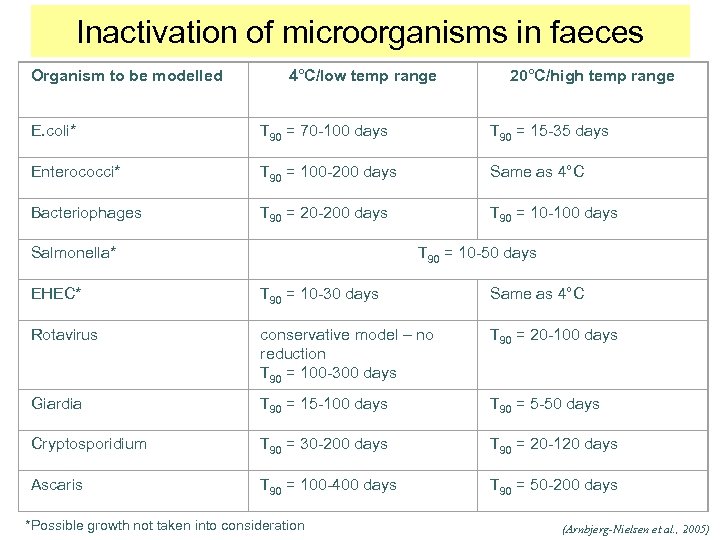 Inactivation of microorganisms in faeces Organism to be modelled 4°C/low temp range 20°C/high temp range E. coli* T 90 = 70 -100 days T 90 = 15 -35 days Enterococci* T 90 = 100 -200 days Same as 4°C Bacteriophages T 90 = 20 -200 days T 90 = 10 -100 days Salmonella* T 90 = 10 -50 days EHEC* T 90 = 10 -30 days Same as 4°C Rotavirus conservative model – no reduction T 90 = 100 -300 days T 90 = 20 -100 days Giardia T 90 = 15 -100 days T 90 = 5 -50 days Cryptosporidium T 90 = 30 -200 days T 90 = 20 -120 days Ascaris T 90 = 100 -400 days T 90 = 50 -200 days *Possible growth not taken into consideration (Arnbjerg-Nielsen et al. , 2005)
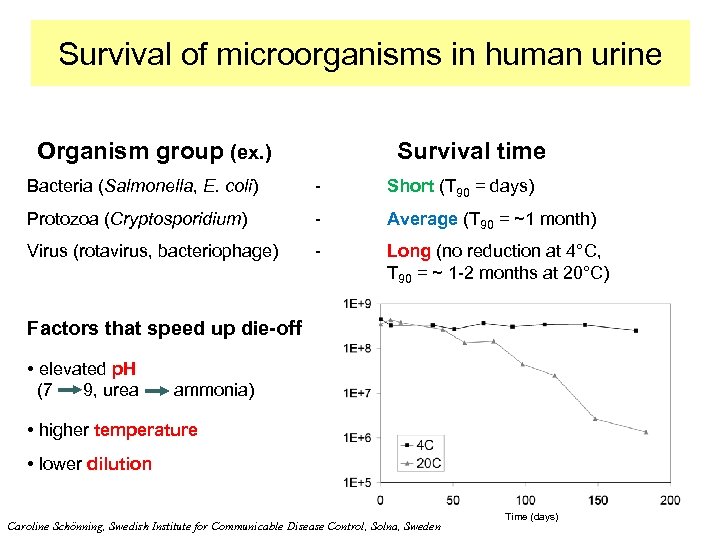 Survival of microorganisms in human urine Organism group (ex. ) Survival time Bacteria (Salmonella, E. coli) - Short (T 90 = days) Protozoa (Cryptosporidium) - Average (T 90 = ~1 month) Virus (rotavirus, bacteriophage) - Long (no reduction at 4°C, T 90 = ~ 1 -2 months at 20°C) Factors that speed up die-off • elevated p. H (7 9, urea ammonia) • higher temperature • lower dilution Caroline Schönning, Swedish Institute for Communicable Disease Control, Solna, Sweden Time (days)
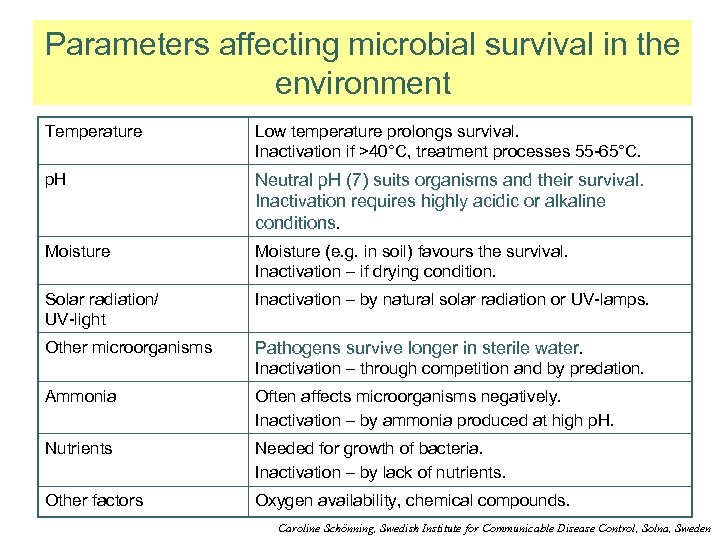 Parameters affecting microbial survival in the environment Temperature Low temperature prolongs survival. Inactivation if >40°C, treatment processes 55 -65°C. p. H Neutral p. H (7) suits organisms and their survival. Inactivation requires highly acidic or alkaline conditions. Moisture (e. g. in soil) favours the survival. Inactivation – if drying condition. Solar radiation/ UV-light Inactivation – by natural solar radiation or UV-lamps. Other microorganisms Pathogens survive longer in sterile water. Inactivation – through competition and by predation. Ammonia Often affects microorganisms negatively. Inactivation – by ammonia produced at high p. H. Nutrients Needed for growth of bacteria. Inactivation – by lack of nutrients. Other factors Oxygen availability, chemical compounds. Caroline Schönning, Swedish Institute for Communicable Disease Control, Solna, Sweden
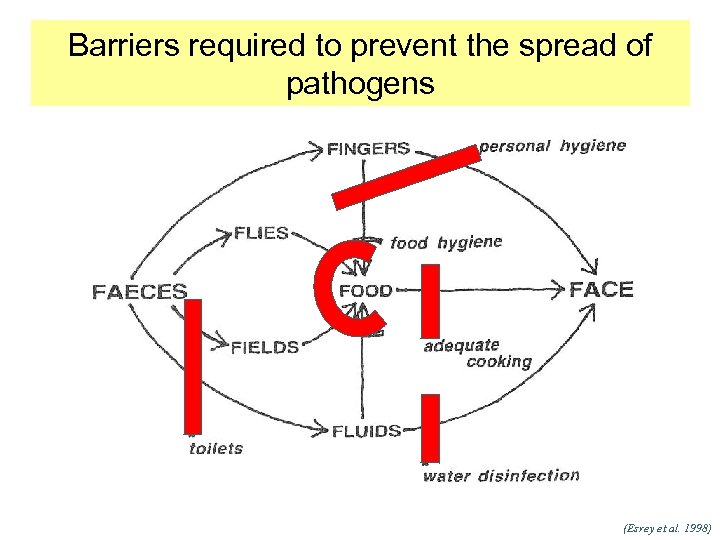 Barriers required to prevent the spread of pathogens (Esrey et al. 1998)
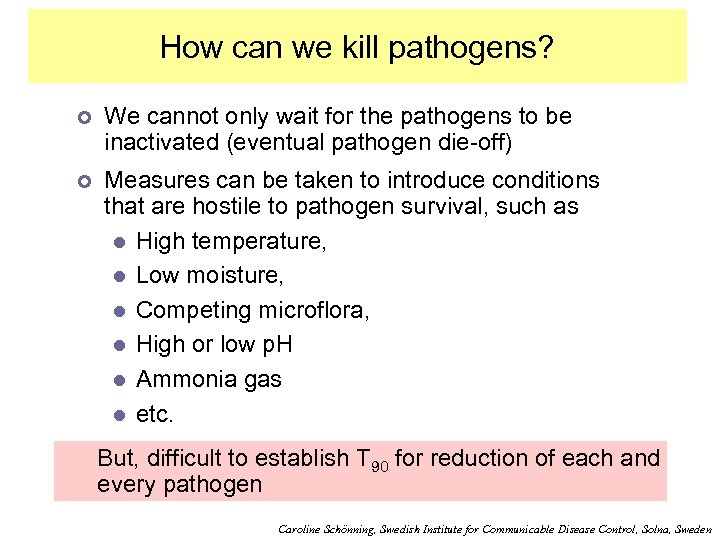 How can we kill pathogens? ¢ We cannot only wait for the pathogens to be inactivated (eventual pathogen die-off) ¢ Measures can be taken to introduce conditions that are hostile to pathogen survival, such as l High temperature, l Low moisture, l Competing microflora, l High or low p. H l Ammonia gas l etc. But, difficult to establish T 90 for reduction of each and every pathogen Caroline Schönning, Swedish Institute for Communicable Disease Control, Solna, Sweden
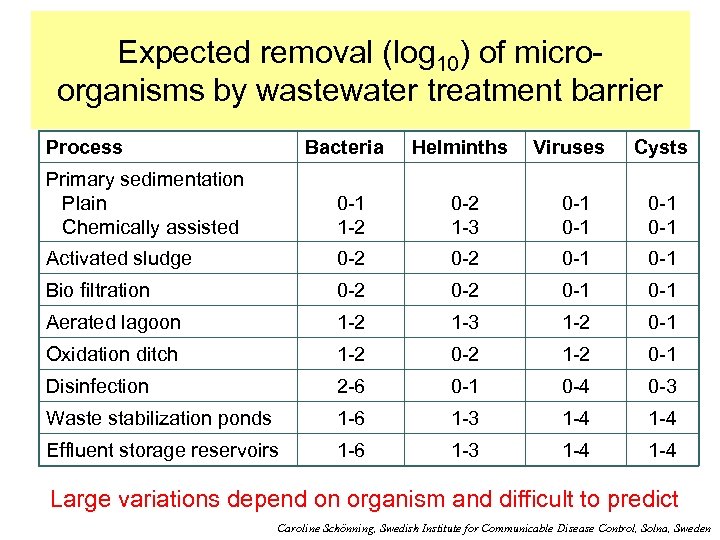 Expected removal (log 10) of microorganisms by wastewater treatment barrier Process Bacteria Helminths Viruses Cysts Primary sedimentation Plain Chemically assisted 0 -1 1 -2 0 -2 1 -3 0 -1 0 -1 Activated sludge 0 -2 0 -1 Bio filtration 0 -2 0 -1 Aerated lagoon 1 -2 1 -3 1 -2 0 -1 Oxidation ditch 1 -2 0 -2 1 -2 0 -1 Disinfection 2 -6 0 -1 0 -4 0 -3 Waste stabilization ponds 1 -6 1 -3 1 -4 Effluent storage reservoirs 1 -6 1 -3 1 -4 Large variations depend on organism and difficult to predict Caroline Schönning, Swedish Institute for Communicable Disease Control, Solna, Sweden
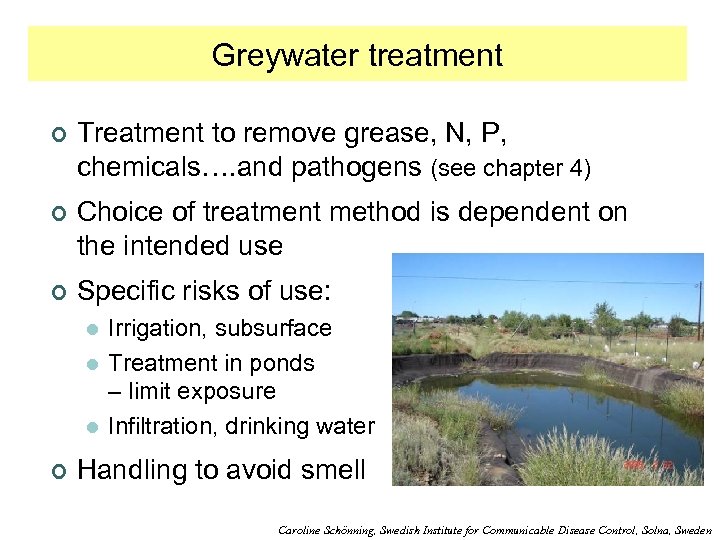 Greywater treatment ¢ Treatment to remove grease, N, P, chemicals…. and pathogens (see chapter 4) ¢ Choice of treatment method is dependent on the intended use ¢ Specific risks of use: l l l ¢ Irrigation, subsurface Treatment in ponds – limit exposure Infiltration, drinking water Handling to avoid smell Caroline Schönning, Swedish Institute for Communicable Disease Control, Solna, Sweden
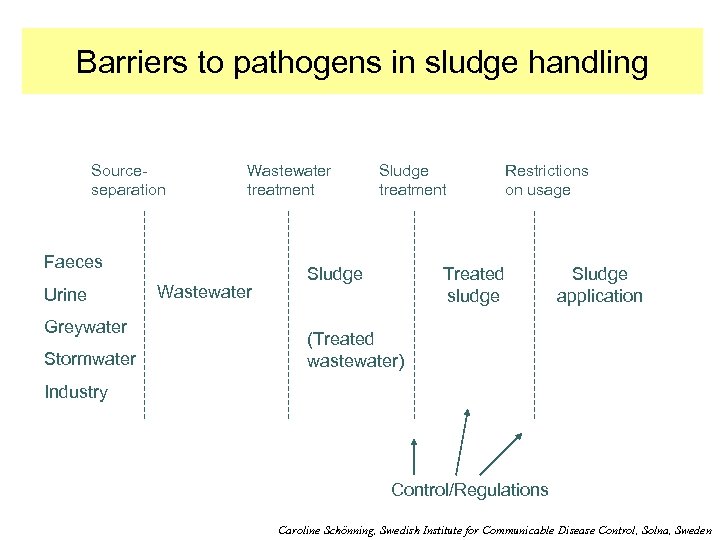 Barriers to pathogens in sludge handling Sourceseparation Wastewater treatment Faeces Urine Greywater Stormwater Wastewater Sludge treatment Sludge Restrictions on usage Treated sludge Sludge application (Treated wastewater) Industry Control/Regulations Caroline Schönning, Swedish Institute for Communicable Disease Control, Solna, Sweden
 Urine diversion in dry sanitation systems ¢ Will result in (compared to mixing of faeces and urine): l Less smell l Less volume (slower filling up, less to handle) l Prevention of dispersal of pathogen-containing material (spilling, leaching) l Safer and easier handling and use of excreta (volume, treatment) Less risk for disease transmission ¢ Urine diversion is therefore recommended Caroline Schönning, Swedish Institute for Communicable Disease Control, Solna, Sweden
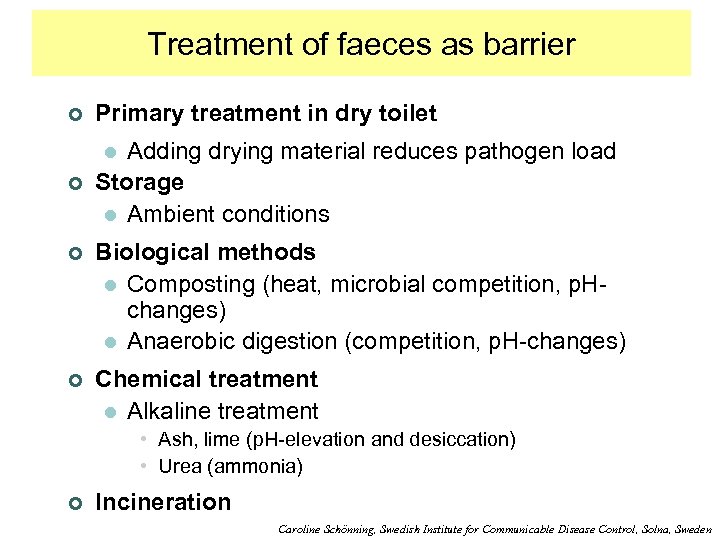 Treatment of faeces as barrier ¢ Primary treatment in dry toilet ¢ Adding drying material reduces pathogen load Storage l Ambient conditions l ¢ Biological methods l Composting (heat, microbial competition, p. Hchanges) l Anaerobic digestion (competition, p. H-changes) ¢ Chemical treatment l Alkaline treatment • Ash, lime (p. H-elevation and desiccation) • Urea (ammonia) ¢ Incineration Caroline Schönning, Swedish Institute for Communicable Disease Control, Solna, Sweden
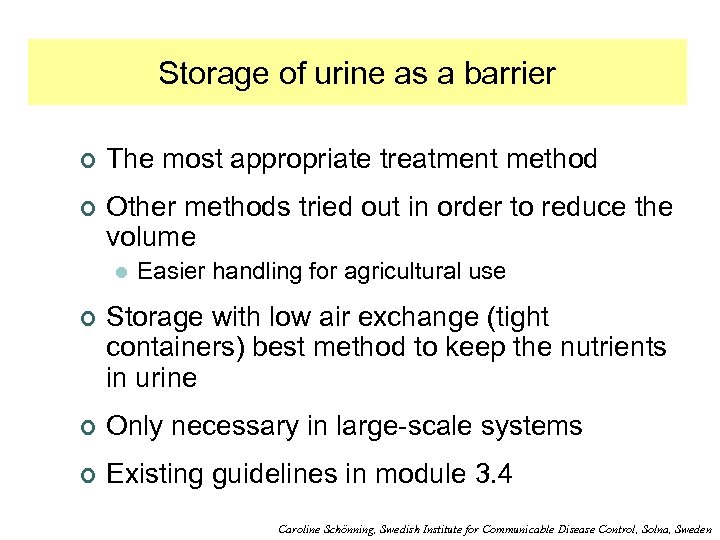 Storage of urine as a barrier ¢ The most appropriate treatment method ¢ Other methods tried out in order to reduce the volume l Easier handling for agricultural use ¢ Storage with low air exchange (tight containers) best method to keep the nutrients in urine ¢ Only necessary in large-scale systems ¢ Existing guidelines in module 3. 4 Caroline Schönning, Swedish Institute for Communicable Disease Control, Solna, Sweden
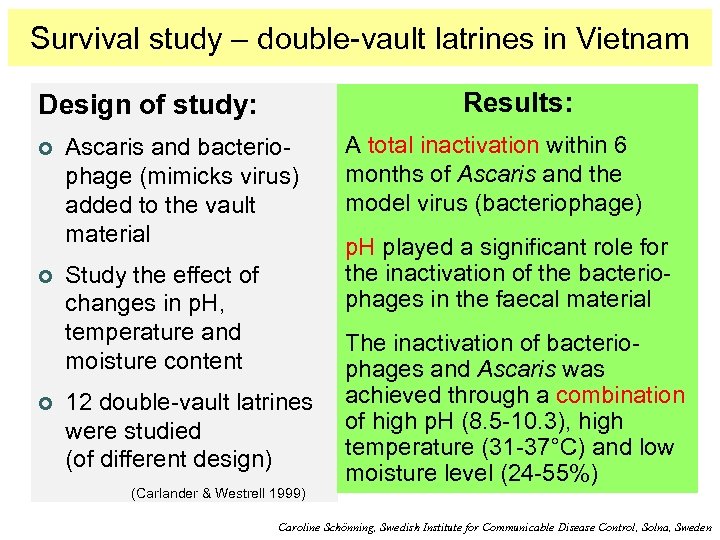 Survival study – double-vault latrines in Vietnam Results: Design of study: ¢ ¢ ¢ Ascaris and bacteriophage (mimicks virus) added to the vault material Study the effect of changes in p. H, temperature and moisture content 12 double-vault latrines were studied (of different design) A total inactivation within 6 months of Ascaris and the model virus (bacteriophage) p. H played a significant role for the inactivation of the bacteriophages in the faecal material The inactivation of bacteriophages and Ascaris was achieved through a combination of high p. H (8. 5 -10. 3), high temperature (31 -37°C) and low moisture level (24 -55%) (Carlander & Westrell 1999) Caroline Schönning, Swedish Institute for Communicable Disease Control, Solna, Sweden
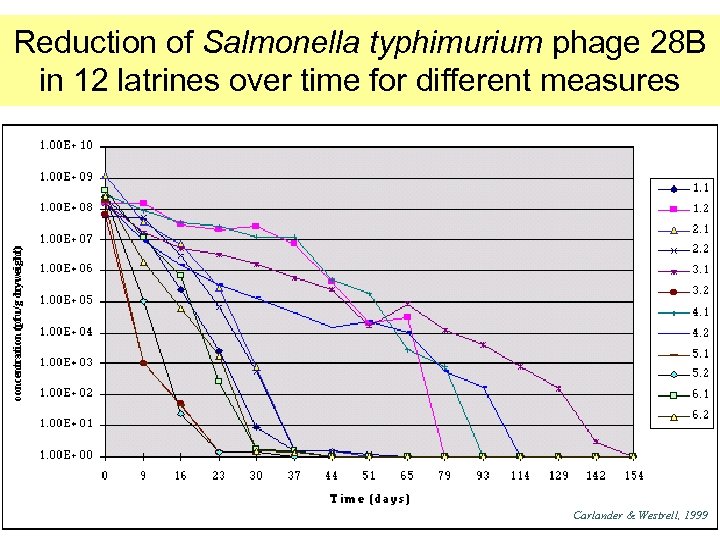 Reduction of Salmonella typhimurium phage 28 B in 12 latrines over time for different measures Carlander & Westrell, 1999
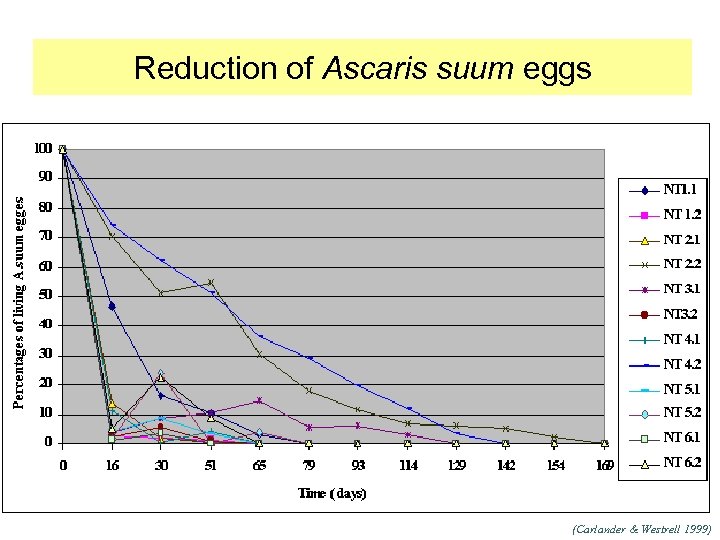 Reduction of Ascaris suum eggs (Carlander & Westrell 1999)
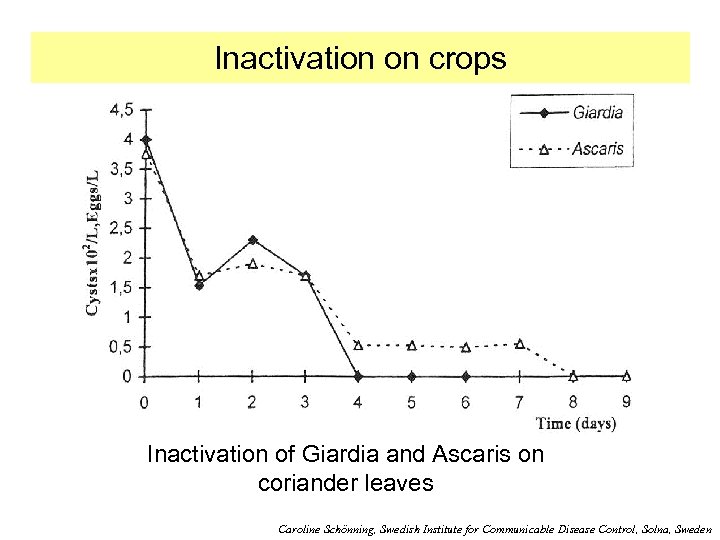 Inactivation on crops Inactivation of Giardia and Ascaris on coriander leaves Caroline Schönning, Swedish Institute for Communicable Disease Control, Solna, Sweden
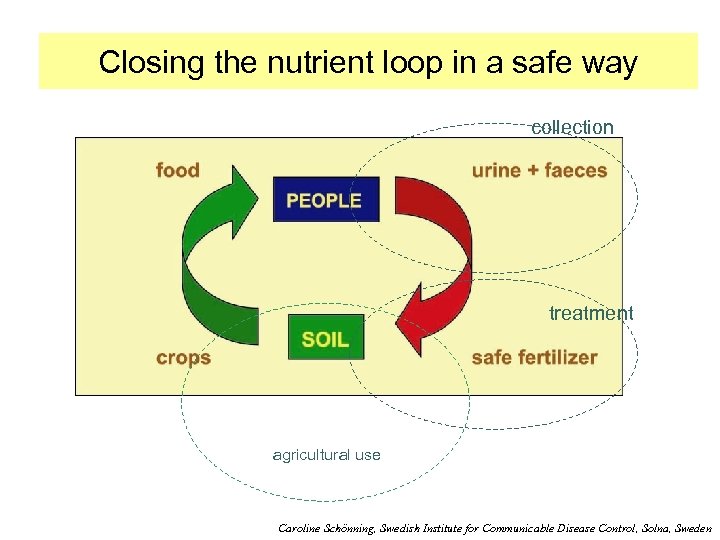 Closing the nutrient loop in a safe way collection treatment agricultural use Caroline Schönning, Swedish Institute for Communicable Disease Control, Solna, Sweden
 Treatment as a barrier A combination of barriers to decrease exposure of humans to excreta should be applied in order to reduce risks for disease transmission in ecological sanitation systems. Treatment of the excreta is considered as a necessary step for the subsequent use as fertiliser on (agricultural) land. (Eco. San. Res, 2004) ¢ The goal is to significantly reduce risks – zero risk is not possible l ”Minimise” risks (considering viable/practical/realistic measures) l Insignificant amounts of pathogens l No additional individuals inflicted by disease Caroline Schönning, Swedish Institute for Communicable Disease Control, Solna, Sweden
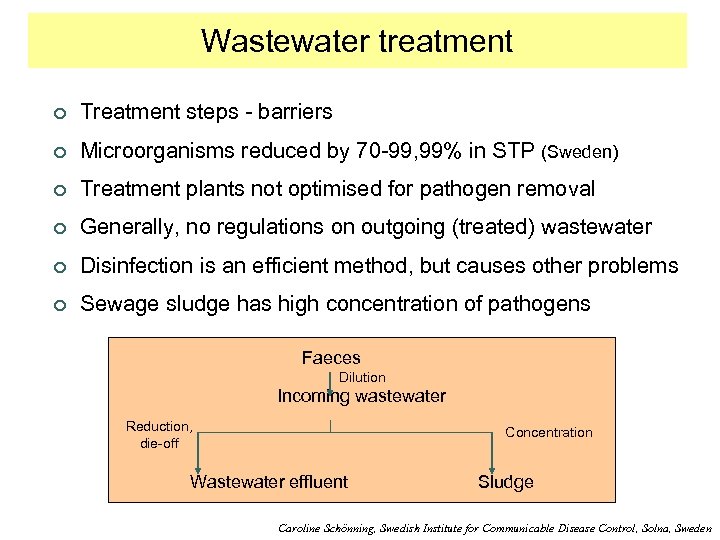 Wastewater treatment ¢ Treatment steps - barriers ¢ Microorganisms reduced by 70 -99, 99% in STP (Sweden) ¢ Treatment plants not optimised for pathogen removal ¢ Generally, no regulations on outgoing (treated) wastewater ¢ Disinfection is an efficient method, but causes other problems ¢ Sewage sludge has high concentration of pathogens Faeces Dilution Incoming wastewater Reduction, die-off Concentration Wastewater effluent Sludge Caroline Schönning, Swedish Institute for Communicable Disease Control, Solna, Sweden
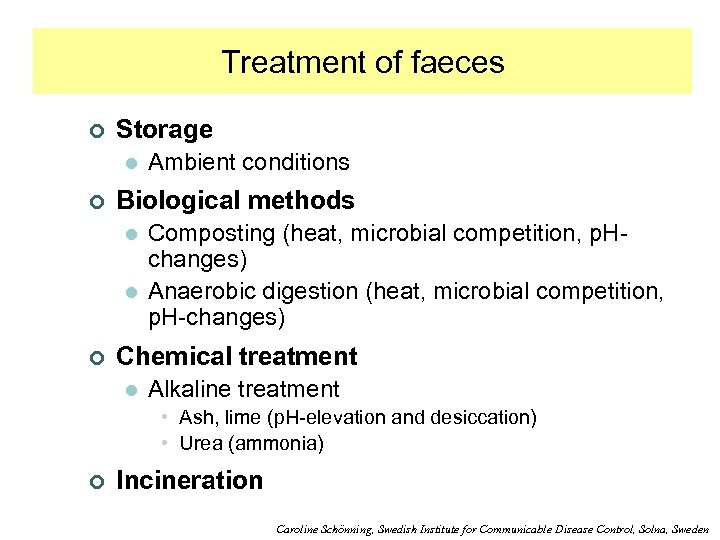 Treatment of faeces ¢ Storage l ¢ Biological methods l l ¢ Ambient conditions Composting (heat, microbial competition, p. Hchanges) Anaerobic digestion (heat, microbial competition, p. H-changes) Chemical treatment l Alkaline treatment • Ash, lime (p. H-elevation and desiccation) • Urea (ammonia) ¢ Incineration Caroline Schönning, Swedish Institute for Communicable Disease Control, Solna, Sweden