Скачать презентацию 24 TH TECHNICAL CONSULTATION AMOUNG REGIONAL PLANT PROTECTION
7c7a6e44b859599af53910c543e9e02c.ppt
- Количество слайдов: 32
 24 TH TECHNICAL CONSULTATION AMOUNG REGIONAL PLANT PROTECTION ORGANIZATIONS Nadi, Fiji, 27 th -31 st August, 2012
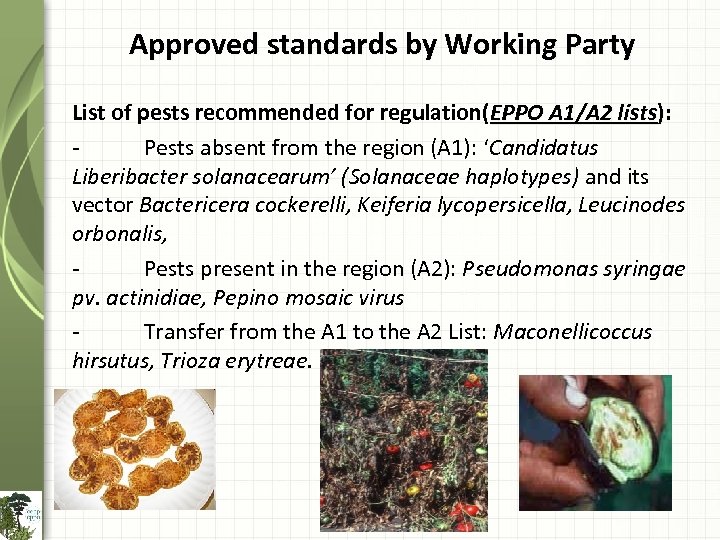 Approved standards by Working Party List of pests recommended for regulation(EPPO A 1/A 2 lists): Pests absent from the region (A 1): ‘Candidatus Liberibacter solanacearum’ (Solanaceae haplotypes) and its vector Bactericera cockerelli, Keiferia lycopersicella, Leucinodes orbonalis, Pests present in the region (A 2): Pseudomonas syringae pv. actinidiae, Pepino mosaic virus Transfer from the A 1 to the A 2 List: Maconellicoccus hirsutus, Trioza erytreae.
 Approved standards by Working Party Standards providing guidance on PRA: • Express PRA scheme for rapid decision making ü shorter PRA scheme to help NPPOs to make quicker scientifically-based decisions ü testing was performed in January 2012 ü feedback questionnaire will be posted on EPPO website ü a computer version of this Decision-Support Scheme will also be included within CAPRA
 Approved standards by Working Party Standards providing guidance on PRA: • EPPO prioritization process for invasive alien plants ü need to determine priorities because of huge amount of plants ü focused on species which are not widely distributed or are absent from the region ü cover plants for which efficient prevention, eradication or containment action can be undertaken ü determine which of these plants have the highest priority for Pest Risk Analysis.
 Approved standards by Working Party Diagnostic protocols: • Xanthomonas spp. (Xanthomonas euvesicatoria, Xanthomonas gardneri , Xanthomonas perforans , Xanthomonas vesicatoria) causing bacterial spot of tomato and sweet pepper • Erwinia amylovora • Clavibacter michiganensis subsp michiganensis • Fusarium foetens • Phytophthora kernoviae • Pepino Mosaic Virus • Bursaphelenchus xylophilus • Globodera rostochiensis • Globodera pallida
 Approved standards by Working Party Standards on Phytosanitary treatments: • Hot water treatment of grapevine to control Flavescence dorée • Hot water treatment of strawberry plants to control Aphelenchoides besseyi and A. fragariae • Phosphine fumigation of grapevine to control Viteus vitifoliae • Phosphine fumigation of stored products to control stored product insects in general • Phosphine fumigation of stored products to control Trogoderma granarium • Phosphine fumigation of dried fruits and nuts to control various stored product insects • Phosphine fumigation of empty storage areas to control stored product insects in general
 EPPO Alert List • Since 1999 • The purpose of the Alert List is to draw the attention of EPPO member countries to certain pests possibly presenting a risk to them and achieve early warning. • Pest are selected by EPPO members and the EPPO Secretariat • Contains short description of geographical distribution, hosts damage pathways • The Alert List is maintained on the EPPO Web site • Entries are not kept more than 3 years if no new information is found or if an interest exist
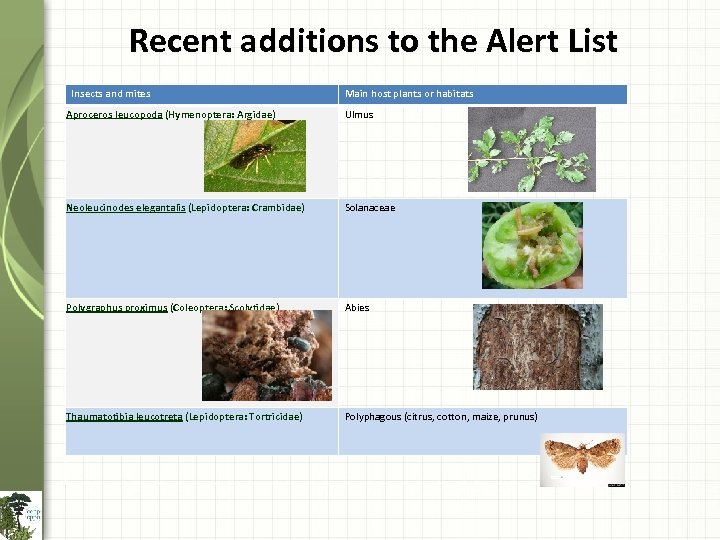 Recent additions to the Alert List Insects and mites Main host plants or habitats Aproceros leucopoda (Hymenoptera: Argidae) Ulmus Neoleucinodes elegantalis (Lepidoptera: Crambidae) Solanaceae Polygraphus proximus (Coleoptera: Scolytidae) Abies Thaumatotibia leucotreta (Lepidoptera: Tortricidae) Polyphagous (citrus, cotton, maize, prunus)
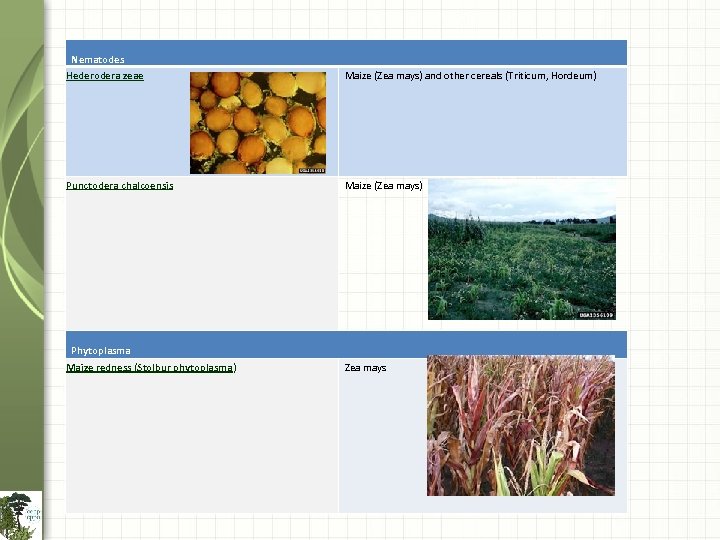 Nematodes Hederodera zeae Maize (Zea mays) and other cereals (Triticum, Hordeum) Punctodera chalcoensis Maize (Zea mays) Phytoplasma Maize redness (Stolbur phytoplasma) Zea mays
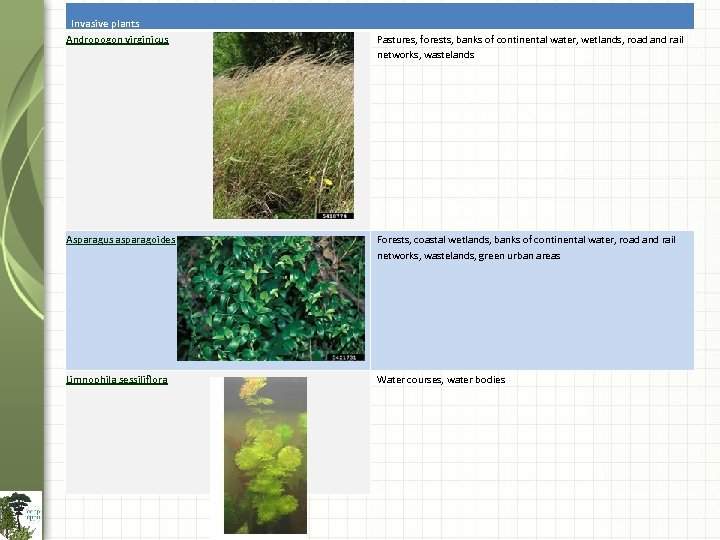 Invasive plants Andropogon virginicus Pastures, forests, banks of continental water, wetlands, road and rail networks, wastelands Asparagus asparagoides Forests, coastal wetlands, banks of continental water, road and rail networks, wastelands, green urban areas Limnophila sessiliflora Water courses, water bodies
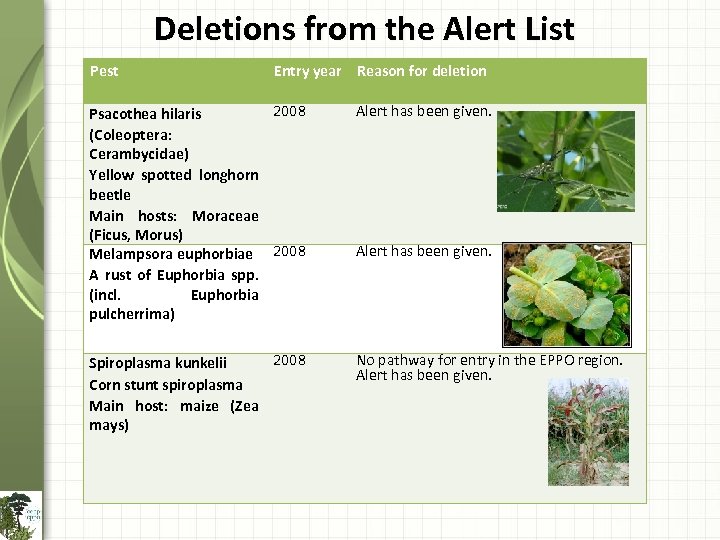 Deletions from the Alert List Pest Entry year Reason for deletion 2008 Psacothea hilaris (Coleoptera: Cerambycidae) Yellow spotted longhorn beetle Main hosts: Moraceae (Ficus, Morus) Melampsora euphorbiae 2008 A rust of Euphorbia spp. (incl. Euphorbia pulcherrima) Alert has been given. 2008 Spiroplasma kunkelii Corn stunt spiroplasma Main host: maize (Zea mays) No pathway for entry in the EPPO region. Alert has been given.
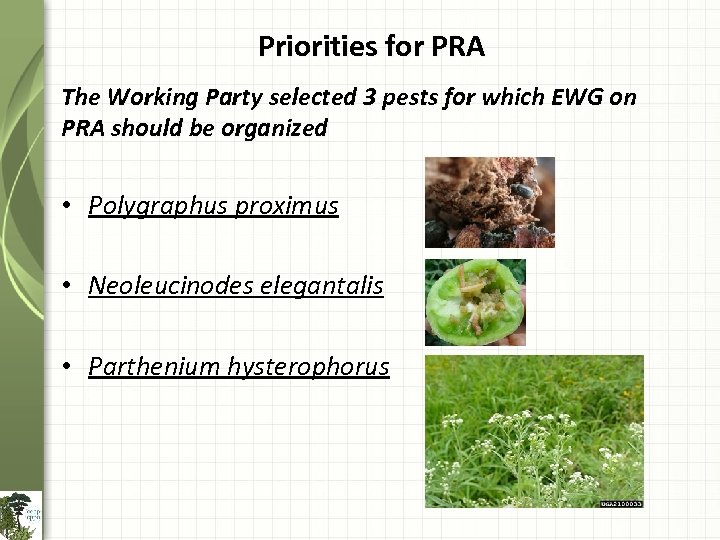 Priorities for PRA The Working Party selected 3 pests for which EWG on PRA should be organized • Polygraphus proximus • Neoleucinodes elegantalis • Parthenium hysterophorus
 Workshop for CIS countries and Eastern Countries on draft ISPM’s (2012 -07 -17/20, Moscow) • More than 40 Russian and English speaking experts from 19 countries, FAO, IPPC and EPPO attended the Workshop. • Main topics : ü Preparation of comments on the draft ISPM’s ü Using Online Commenting System ü Discussions on implementation of ISPMs No. 13 Guidelines for the notification of non-compliance and emergency action and No. 15 Regulation of wood packaging material in international trade
 Other Workshops organized by EPPO • Workshop for Heads of laboratories (2011 -10 -13/14, Vienna) • Workshop for Phytosanitary Inspectors (2011 -11 -16/18, Padova, IT) • EPPO/IOBC Workshop on the harmonized application procedures for the use of Biological Control Agents (1124/25, Rotterdam, NL) • EPPO/IOBC/FAO/NEPPO Joint International Symposium on management of Tuta absoluta (Agadir, MA, 2011 -11 -16/18) • EPPO/FAO Workshop on “Implementation of international and regional standards to ensure phytosanitary safety of international trade with plants for planting” (Tashkent, 2012 -04 -23/27) • QBOL/EPPO Conference on DNA barcoding and diagnostic methods for plant pests (2012 -05 -21/25, Haarlem, NL)
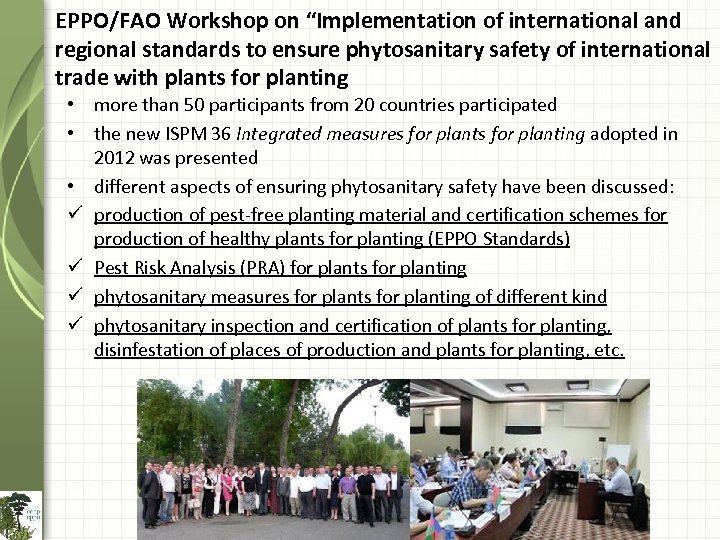 EPPO/FAO Workshop on “Implementation of international and regional standards to ensure phytosanitary safety of international trade with plants for planting • more than 50 participants from 20 countries participated • the new ISPM 36 Integrated measures for planting adopted in 2012 was presented • different aspects of ensuring phytosanitary safety have been discussed: ü production of pest-free planting material and certification schemes for production of healthy plants for planting (EPPO Standards) ü Pest Risk Analysis (PRA) for plants for planting ü phytosanitary measures for planting of different kind ü phytosanitary inspection and certification of plants for planting, disinfestation of places of production and plants for planting, etc.
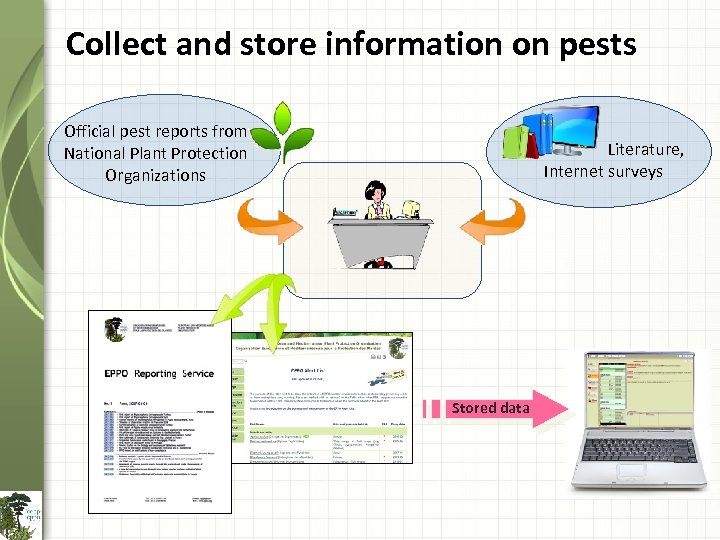 Collect and store information on pests Official pest reports from National Plant Protection Organizations Literature, Internet surveys Stored data
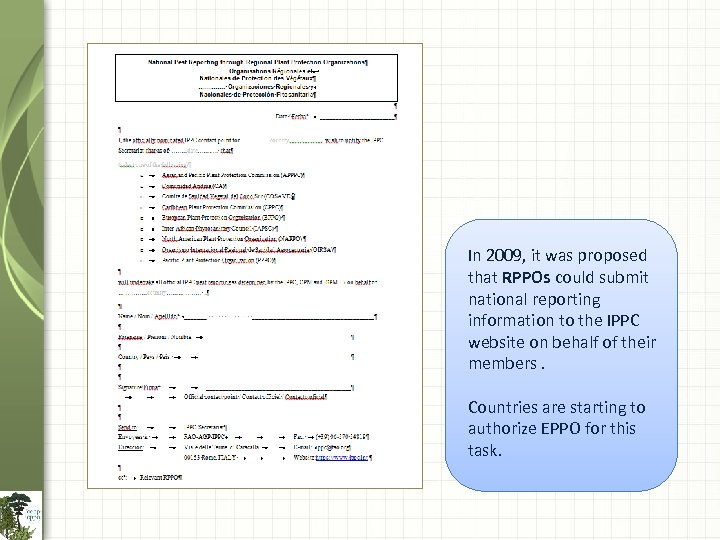 In 2009, it was proposed that RPPOs could submit national reporting information to the IPPC website on behalf of their members. Countries are starting to authorize EPPO for this task.
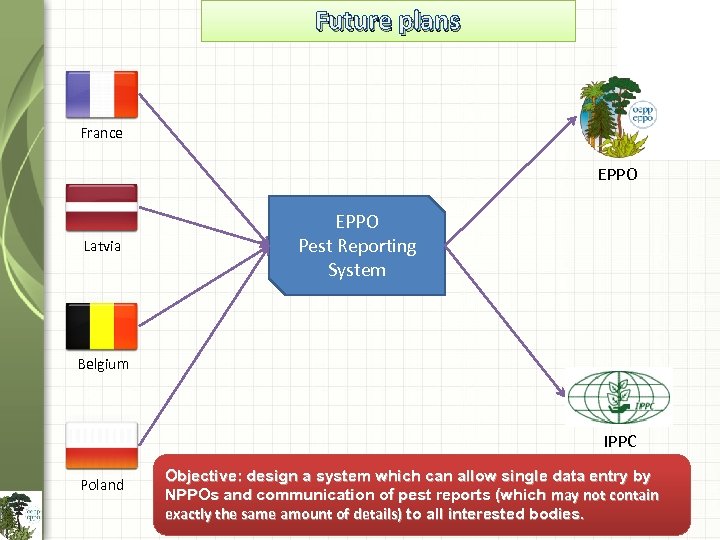 Future plans France EPPO Latvia EPPO Pest Reporting System Belgium IPPC Poland Objective: design a system which can allow single data entry by NPPOs and communication of pest reports (which may not contain exactly the same amount of details) to all interested bodies.
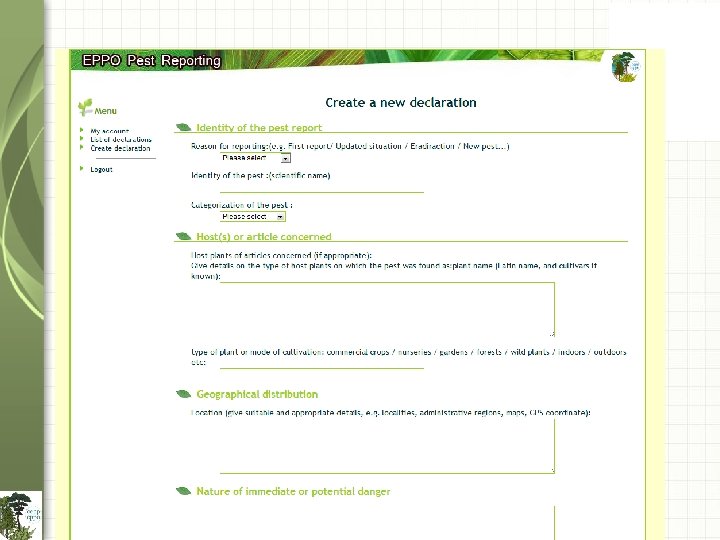
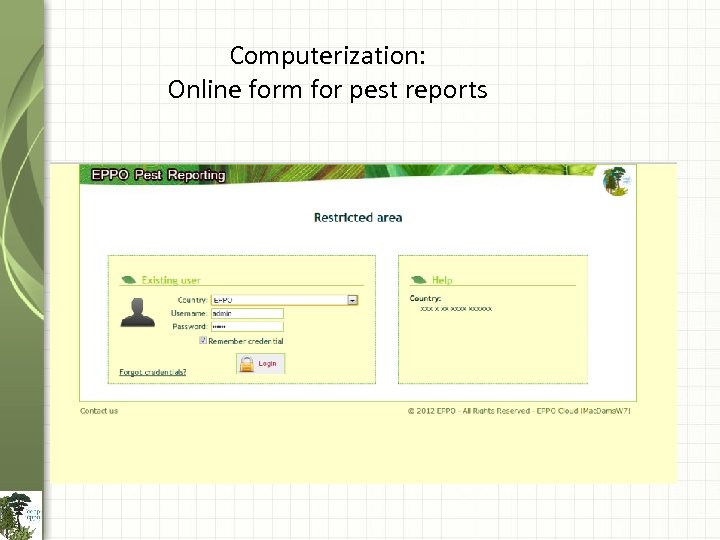 Computerization: Online form for pest reports
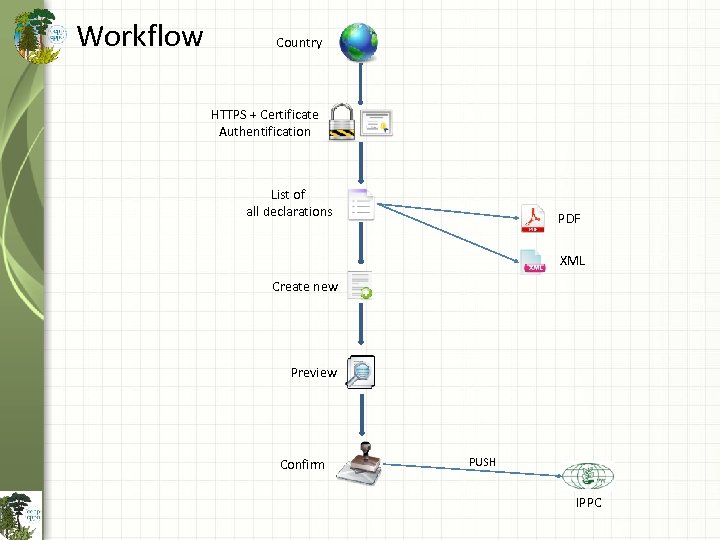 Workflow Country HTTPS + Certificate Authentification List of all declarations PDF XML Create new Preview Confirm PUSH IPPC
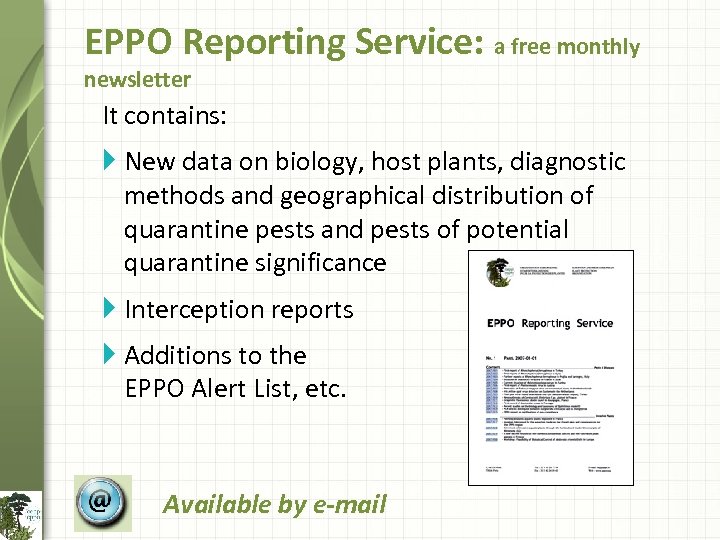 EPPO Reporting Service: a free monthly newsletter It contains: } New data on biology, host plants, diagnostic methods and geographical distribution of quarantine pests and pests of potential quarantine significance } Interception reports } Additions to the EPPO Alert List, etc. Available by e-mail
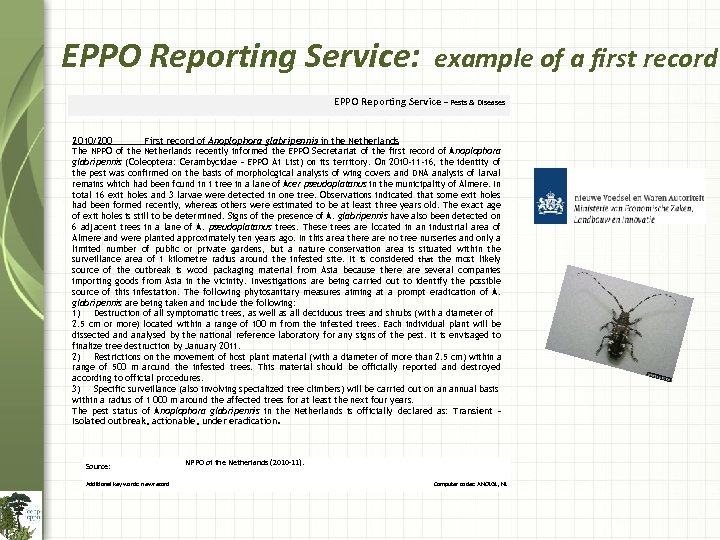 EPPO Reporting Service: example of a first record EPPO Reporting Service – Pests & Diseases 2010/200 First record of Anoplophora glabripennis in the Netherlands The NPPO of the Netherlands recently informed the EPPO Secretariat of the first record of Anoplophora glabripennis (Coleoptera: Cerambycidae – EPPO A 1 List) on its territory. On 2010 -11 -16, the identity of the pest was confirmed on the basis of morphological analysis of wing covers and DNA analysis of larval remains which had been found in 1 tree in a lane of Acer pseudoplatanus in the municipality of Almere. In total 16 exit holes and 3 larvae were detected in one tree. Observations indicated that some exit holes had been formed recently, whereas others were estimated to be at least three years old. The exact age of exit holes is still to be determined. Signs of the presence of A. glabripennis have also been detected on 6 adjacent trees in a lane of A. pseudoplatanus trees. These trees are located in an industrial area of Almere and were planted approximately ten years ago. In this area there are no tree nurseries and only a limited number of public or private gardens, but a nature conservation area is situated within the surveillance area of 1 kilometre radius around the infested site. It is considered that the most likely source of the outbreak is wood packaging material from Asia because there are several companies importing goods from Asia in the vicinity. Investigations are being carried out to identify the possible source of this infestation. The following phytosanitary measures aiming at a prompt eradication of A. glabripennis are being taken and include the following: 1) Destruction of all symptomatic trees, as well as all deciduous trees and shrubs (with a diameter of 2. 5 cm or more) located within a range of 100 m from the infested trees. Each individual plant will be dissected analysed by the national reference laboratory for any signs of the pest. It is envisaged to finalize tree destruction by January 2011. 2) Restrictions on the movement of host plant material (with a diameter of more than 2. 5 cm) within a range of 500 m around the infested trees. This material should be officially reported and destroyed according to official procedures. 3) Specific surveillance (also involving specialized tree climbers) will be carried out on an annual basis within a radius of 1 000 m around the affected trees for at least the next four years. The pest status of Anoplophora glabripennis in the Netherlands is officially declared as: Transient – Isolated outbreak, actionable, under eradication. Source: Additional key words: new record NPPO of the Netherlands (2010 -11). Computer codes: ANOLGL, NL
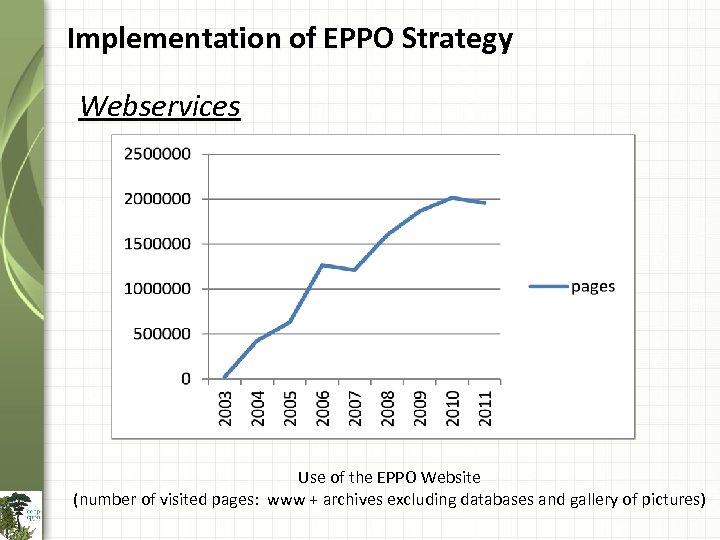 Implementation of EPPO Strategy Webservices Use of the EPPO Website (number of visited pages: www + archives excluding databases and gallery of pictures)
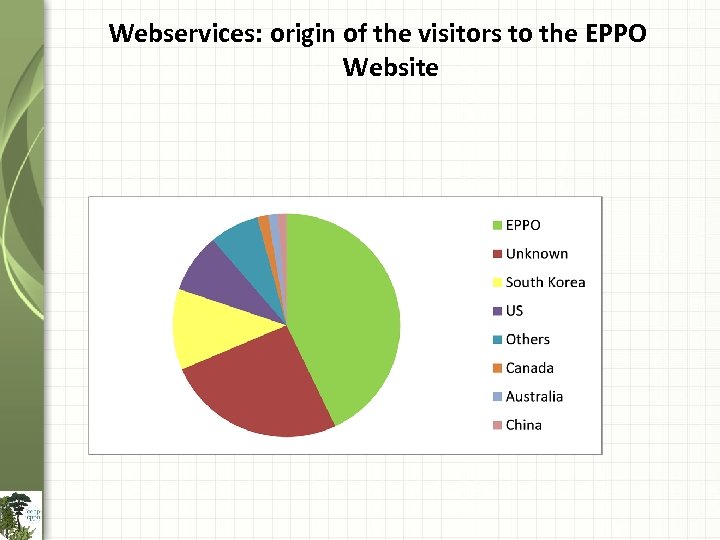 Webservices: origin of the visitors to the EPPO Website
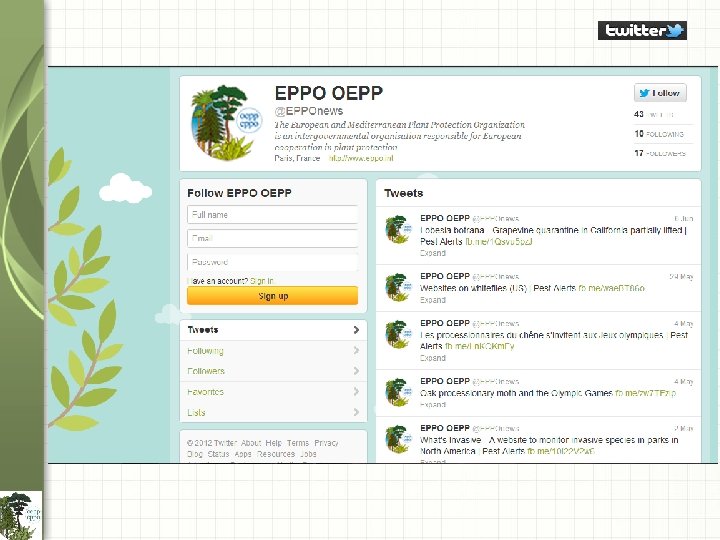
 EPPO new activities in communication Three main directions of activities has been identified: • participate in social networks (e. g. Twitter, Facebook); • develop a platform of information exchange for Heads of diagnostic laboratories, which could be used as a pilot project for the creation of other EPPO forums; • prepare a poster to be displayed in airports/seaports to inform travellers about the risks of moving plant material.
 EPPO on Facebook
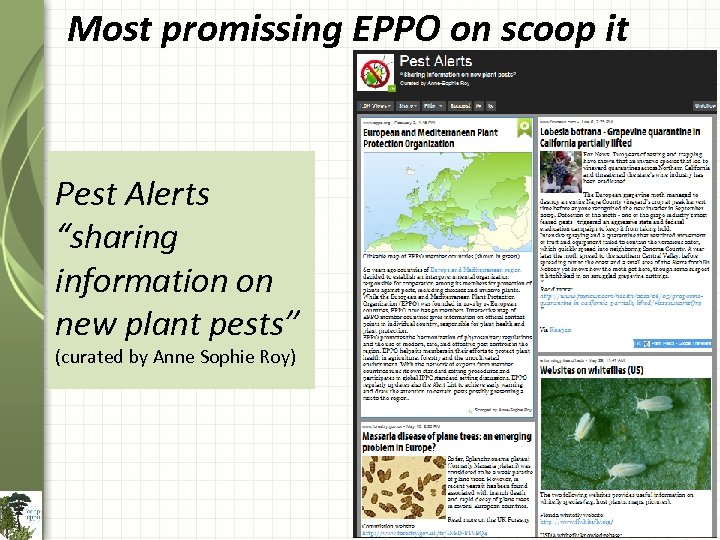 Most promissing EPPO on scoop it Pest Alerts “sharing information on new plant pests” (curated by Anne Sophie Roy)
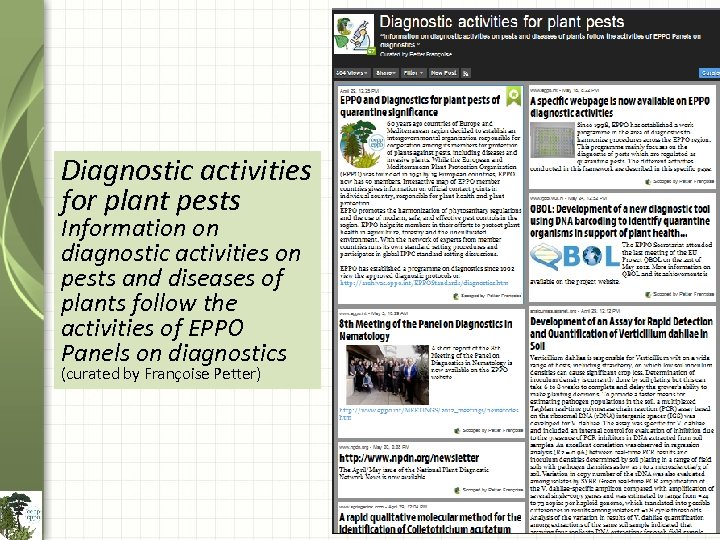 Diagnostic activities for plant pests Information on diagnostic activities on pests and diseases of plants follow the activities of EPPO Panels on diagnostics (curated by Françoise Petter)
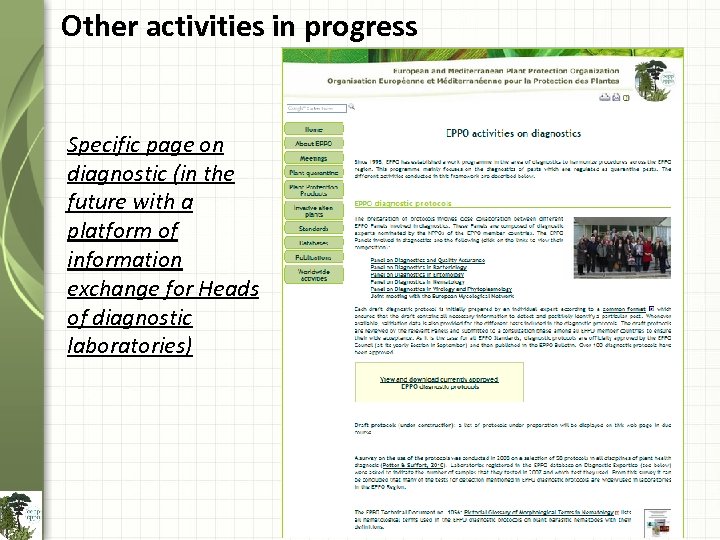 Other activities in progress Specific page on diagnostic (in the future with a platform of information exchange for Heads of diagnostic laboratories)