


 Скачать презентацию 2009 Using Innovative Assessment Models to Improve Reemployment
efea03ad1674d7b4d60bdc9b370339bd.ppt
- Количество слайдов: 32
 2009 Using Innovative Assessment Models to Improve Reemployment Outcomes Moderator: Pam Frugoli O*NET/Competency Assessment Team Lead US Department of Labor, ETA
 Goals • Assist you in making better assessment decisions for your customers – Provide basic assessment information – Discuss two scenarios – Interact with panel of state officials responsible for the use of assessment • Provide resources that could assist you as you work with customers • Share what you are doing with your customers • Discussion
 Agenda • Introduction (Pam Frugoli) • Selecting the Right Test (Janet Wall, Sage Solutions) • Scenarios for Discussion (Lauren Fairley-Wright, Workforce Analyst, ETA) • Panel Discussion and Audience Interaction – Douglas Reamer, Director, Workforce Innovation, New York State Department of Labor – Glenda Owen, Chief Workforce Service Division, Oklahoma Employment Security Commission 3
 2009 Selecting the Right Test Presenter: Dr. Janet Wall President and Founder Sage Solutions
 Topics and Organization • • • focus on customer measurement need type and quality of assessment selection factors administration considerations interpretation and use
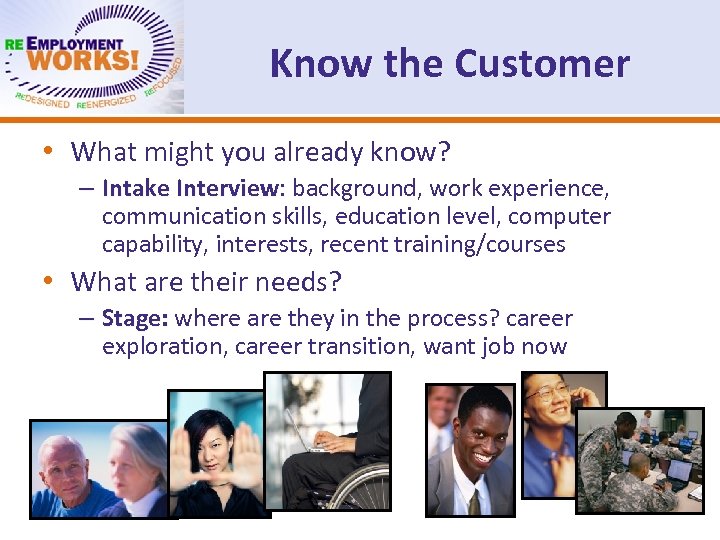 Know the Customer • What might you already know? – Intake Interview: background, work experience, communication skills, education level, computer capability, interests, recent training/courses • What are their needs? – Stage: where are they in the process? career exploration, career transition, want job now
 Information Needs • What do you want/needs to know about the customer? – Interests, skills, tool/technology capability, math ability, language skills, writing, work readiness, teamwork • Is any of this already available, credible, current? – From education institutions (educational tests, grades, employer evaluations, training records)
 Decision Considerations • What are the stakes? (low or high) • Low stakes – decisions not “life changing” – Inspires communication and self knowledge – Can use informal assessment (free or low cost) • High stakes – critical decisions – Selection into training and educational programs – Employment selection – Pertinent for dislocated workers
 General Considerations • Reading level • Primary language capability • Mode of administration – Paper/pencil, computer • Administrator qualifications
 Technical Considerations • For high stakes decisions – Reliability – Validity (depends on use) – Interpretation – Bias and adverse impact • Sources of information – Technical reports – Journal articles – Other users – Your own research and records
 Resource Considerations • Administration Time • Cost – Consider partnerships • Administration requirements – Standardization – Equipment needs – Room condition • Scoring – Self, staff, automated, in or out house
 Interpretation Considerations • Self or staff interpretation? – Staff qualifications • • Clarity of score report Research support of interpretation Danger of over interpretation Measurement error
 Other Considerations • • Respect of copyright Test security Privacy of results Storage Space – Paper files, electronic
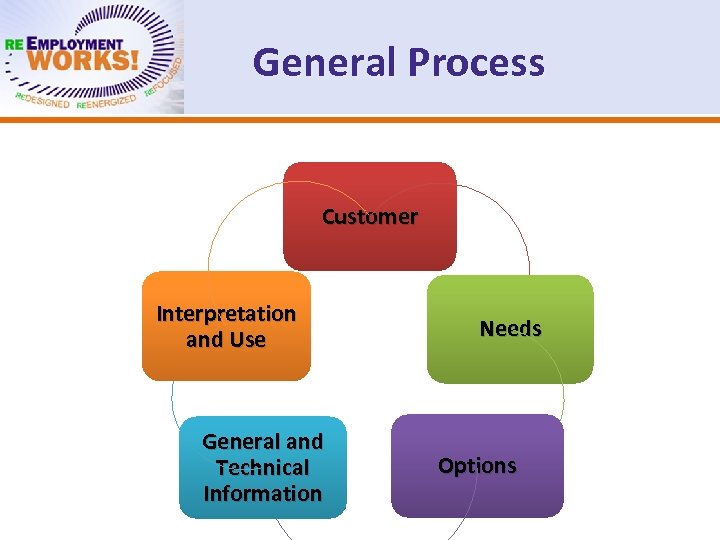 General Process Customer Interpretation and Use General and Technical Information Needs Options
 Useful Resources • Counselors Guide to Career Development Instruments (NCDA) • Measuring Up: Assessment Resources for Teachers, Counselors, and Administrators (Pro. Ed, Inc) • Assessment Resources: http: //assessmentresources. pbwiki. com
 O*NET Guides • O*NET Testing and Assessment Guides: http: //www. onetcenter. org/guides. html – Testing and Assessment: A Guide to Good Practices for Workforce Investment Professionals (http: //wdr. doleta. gov/directives/corr_doc. cfm? DOCN=25 65) – Tests and Other Assessments: Helping You Make Better Career Decisions – Testing and Assessment: An Employer’s Guide to Good Practices
 2009 Scenarios For Discussion Presenter: Lauren Fairley-Wright Manpower Analyst US Department of Labor, ETA
 The Case of Ynez Legal immigrant from Guatemala (8 yrs in the U. S) Occupation = home health aide Education – HS graduate Recent work experience – 4 yrs part-time with most recent employer; no prior work history available • Husband recently dislocated; Ynez needs full-time work with benefits • Ynez visits the local one-stop for assistance • •
 Challenges to Consider • Language limitations – Ynez’s primary language is Spanish • Limited to exposure/knowledge of career options • No formal training after High School • No records available for review
 Questions to Consider • What additional information do you need to know about this customer in order to assist her? • How would you obtain this information – what tools would you use – what are your options considering the challenges that exist? • Are formal assessments necessary? Why or why not? • Would you recommend self-administered assessment tools? How do you determine this? • In selecting the appropriate assessment tools for Ynez, what are some of the “considerations” that are important?
 Toolbox/Product Box • What’s in your toolbox or product box of assessments? – Examples: Intake Interview Template/Form, Virtual One Stop Assessment Tools, Records Review Template, Collaboration with Community College for Specialized Assessments
 The Case of Eugene • Civilian recently BRACed from a local military installation • Occupation = Budget Analyst • Education – Bachelor’s Degree • Recent work experience – 4 yrs tenure at most recent employer; 7 yrs at prior employer • Eugene visits a local one-stop for assistance • Eugene is considering new occupations in a new industry – but is willing to consider remaining in the same occupation depending on opportunities
 Challenges to Consider • Large number of customers needing assistance – major regional layoffs in financial, retail and hospitality industries. • Dwindling one stop center resources (staff, time, financial) • State/local government furloughs and hiring freezes • Limited federal government opportunities in the region. • Eugene does not wish to relocate.
 Questions to Consider • What additional information do you need to know about this customer in order to assist him? • How would you obtain this information – what tools would you use, what records would you review – why? • Considering Eugene’s background - are formal assessments necessary? Why or why not? • Would you recommend self-administered assessment tools? How do you determine this?
 Toolbox/Product Box • What’s in your toolbox or product box of assessments? – Examples: Intake Interview Template/Form, Virtual One Stop Assessment Tools, Records Review Template, Collaboration with Community College for Specialized Assessments
 2009 New York’s Assessment Strategy Presenter: Douglas Reamer Director of Workforce Innovation NY State Department of Labor
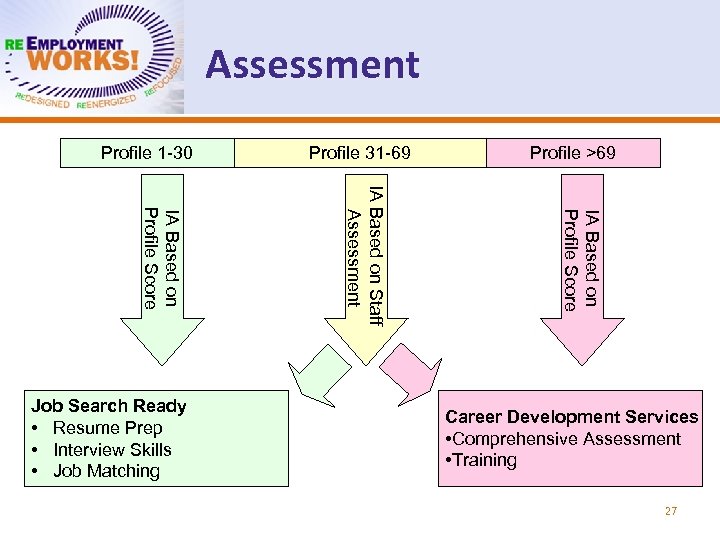 Assessment Profile 1 -30 Profile >69 IA Based on Profile Score IA Based on Staff Assessment IA Based on Profile Score Job Search Ready • Resume Prep • Interview Skills • Job Matching Profile 31 -69 Career Development Services • Comprehensive Assessment • Training 27
 Assessment
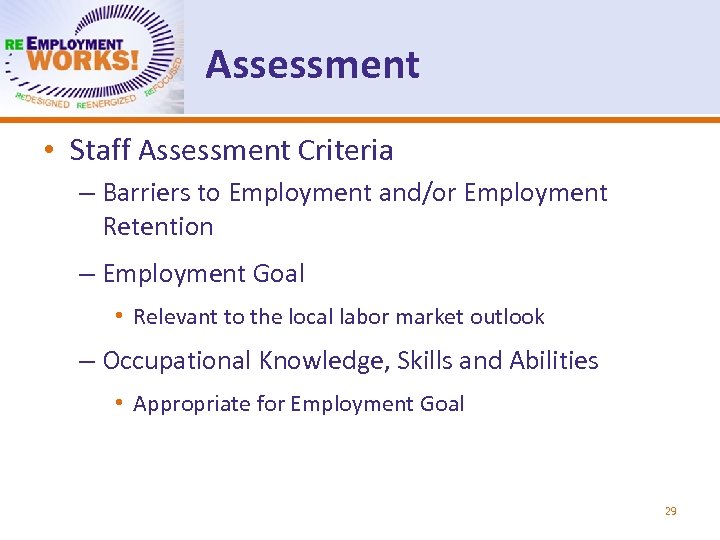 Assessment • Staff Assessment Criteria – Barriers to Employment and/or Employment Retention – Employment Goal • Relevant to the local labor market outlook – Occupational Knowledge, Skills and Abilities • Appropriate for Employment Goal 29
 Assessment • Comprehensive Assessment – Identify “Barriers to Employment” (beyond skills development) which impede the customer’s ability to search for, accept, and/or retain employment. – Identify an “Employment / Occupation Goal” that is available in the local labor market. – Identify “Proficiency in the Occupational Knowledge, Skills and Abilities” associated with the Employment Goal.
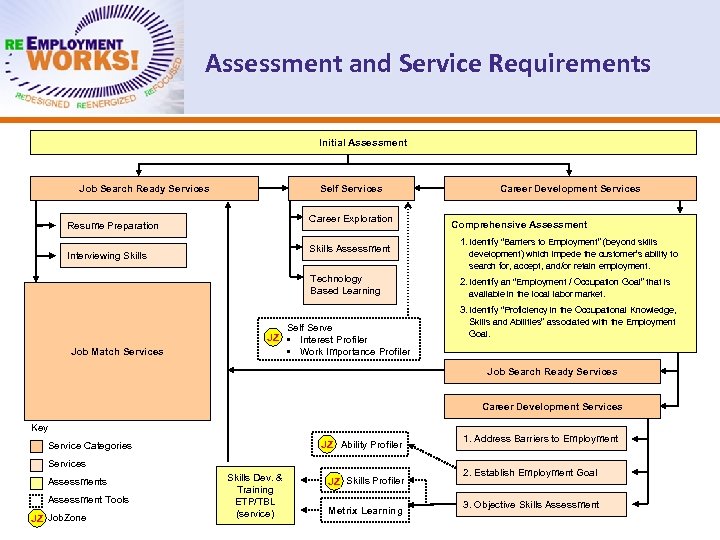 Assessment and Service Requirements Initial Assessment Job Search Ready Services Self Services Career Exploration Resume Preparation Skills Assessment Interviewing Skills Technology Based Learning Career Development Services Comprehensive Assessment 1. Identify “Barriers to Employment” (beyond skills development) which impede the customer’s ability to search for, accept, and/or retain employment. 2. Identify an “Employment / Occupation Goal” that is available in the local labor market. 3. Identify “Proficiency in the Occupational Knowledge, Job Match Services Self Serve JZ • Interest Profiler • Work Importance Profiler Skills and Abilities” associated with the Employment Goal. Job Search Ready Services Career Development Services Key JZ Ability Profiler Service Categories Services Assessment Tools JZ Job. Zone Skills Dev. & Training ETP/TBL (service) JZ Skills Profiler Metrix Learning 1. Address Barriers to Employment 2. Establish Employment Goal 3. Objective Skills Assessment
 2009 Oklahoma’s Assessment Strategy Presenter: Glenda Owen Chief, Workforce Service Division OK Employment Security Commission