


 Скачать презентацию 2009 ECONOMIC AND SOCIAL COUNCIL ANNUAL MINISTERIAL REVIEW
a5f6c30830223c737d0df48413abe504.ppt
- Количество слайдов: 23
 2009 ECONOMIC AND SOCIAL COUNCIL ANNUAL MINISTERIAL REVIEW HIV in Latin America and the Caribbean Implementing agreed goals and commitments César Antonio Núñez - UNAIDS Montego Bay, Jamaica, 5 -6 June 2009
 Halfway between UNGASS (2001) and the Millennium Development Goals (2015) HIV in Latin America and The Caribbean
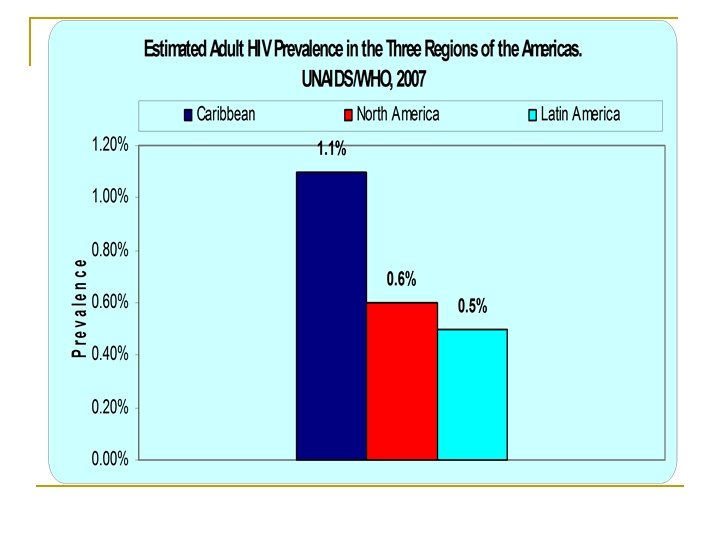
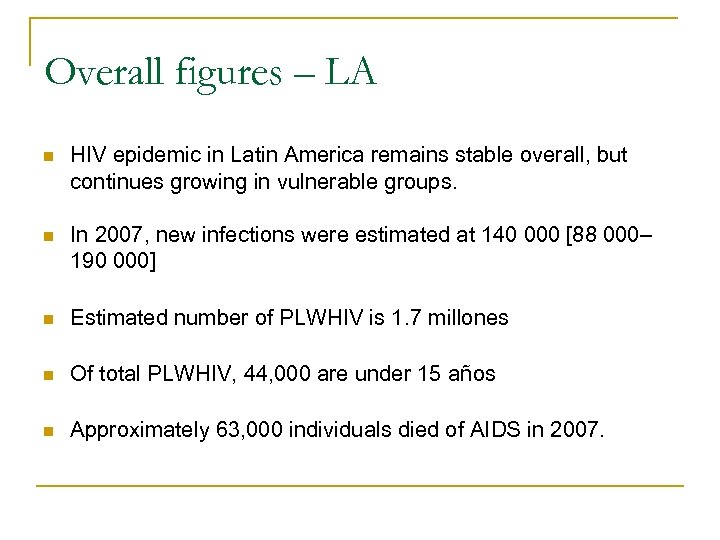 Overall figures – LA n HIV epidemic in Latin America remains stable overall, but continues growing in vulnerable groups. n In 2007, new infections were estimated at 140 000 [88 000– 190 000] n Estimated number of PLWHIV is 1. 7 millones n Of total PLWHIV, 44, 000 are under 15 años n Approximately 63, 000 individuals died of AIDS in 2007.
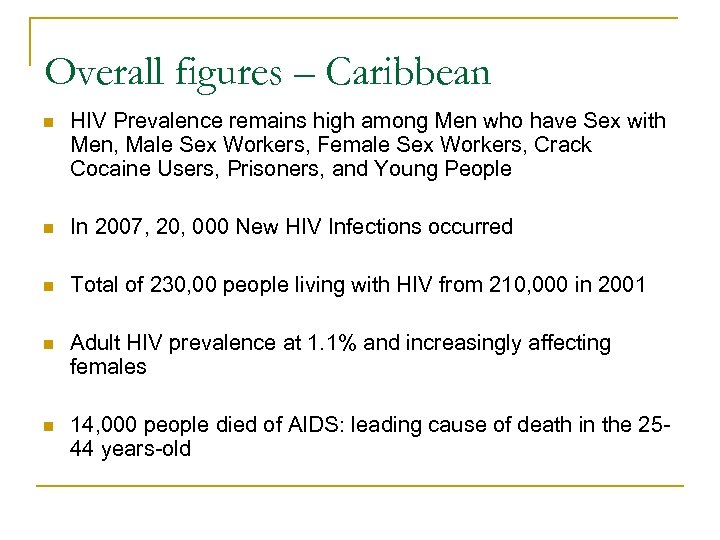 Overall figures – Caribbean n HIV Prevalence remains high among Men who have Sex with Men, Male Sex Workers, Female Sex Workers, Crack Cocaine Users, Prisoners, and Young People n In 2007, 20, 000 New HIV Infections occurred n Total of 230, 00 people living with HIV from 210, 000 in 2001 n Adult HIV prevalence at 1. 1% and increasingly affecting females n 14, 000 people died of AIDS: leading cause of death in the 2544 years-old
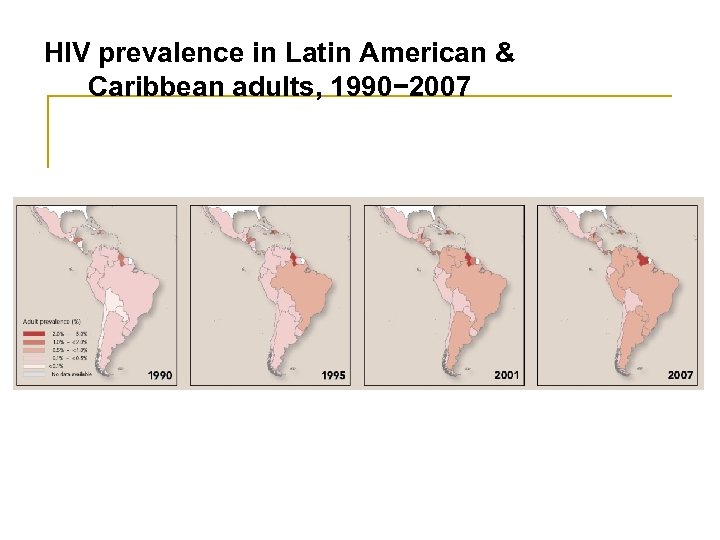 HIV prevalence in Latin American & Caribbean adults, 1990− 2007
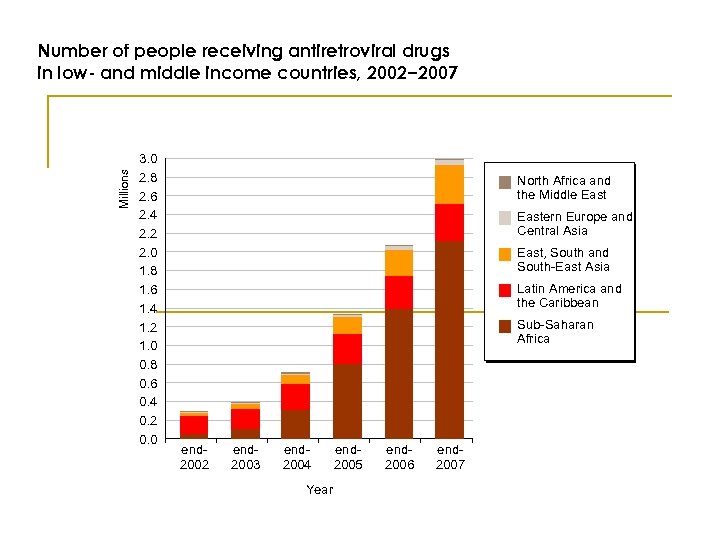 Millions Number of people receiving antiretroviral drugs in low- and middle income countries, 2002− 2007 3. 0 2. 8 2. 6 2. 4 2. 2 2. 0 1. 8 1. 6 1. 4 1. 2 1. 0 0. 8 0. 6 0. 4 0. 2 0. 0 North Africa and the Middle Eastern Europe and Central Asia East, South and South-East Asia Latin America and the Caribbean Sub-Saharan Africa end 2002 end 2003 end 2004 Year end 2005 end 2006 end 2007
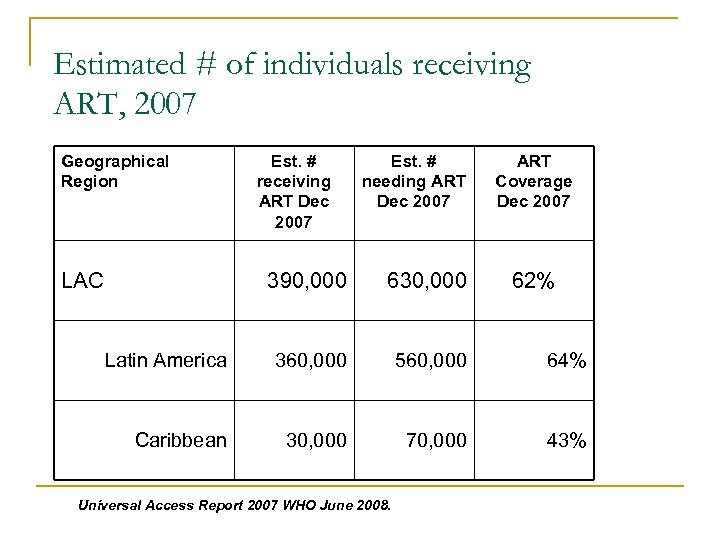 Estimated # of individuals receiving ART, 2007 Geographical Region LAC Est. # receiving ART Dec 2007 Est. # needing ART Dec 2007 ART Coverage Dec 2007 390, 000 630, 000 Latin America 360, 000 560, 000 64% Caribbean 30, 000 70, 000 43% Universal Access Report 2007 WHO June 2008. 62%
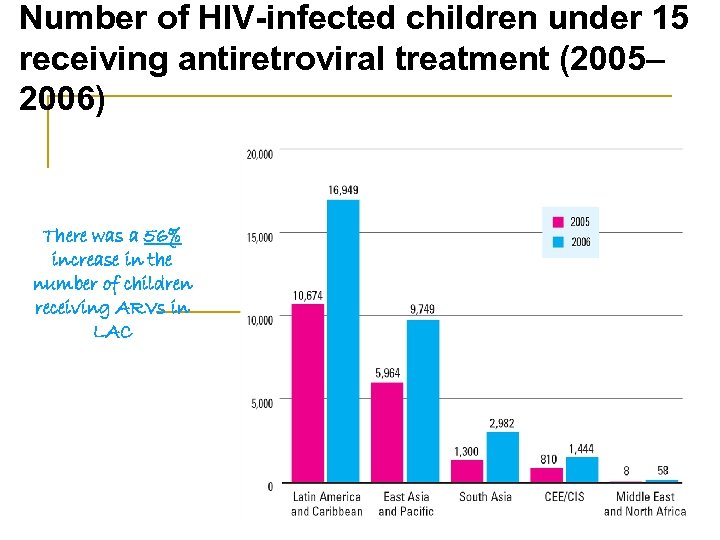 Number of HIV-infected children under 15 receiving antiretroviral treatment (2005– 2006) There was a 56% increase in the number of children receiving ARVs in LAC
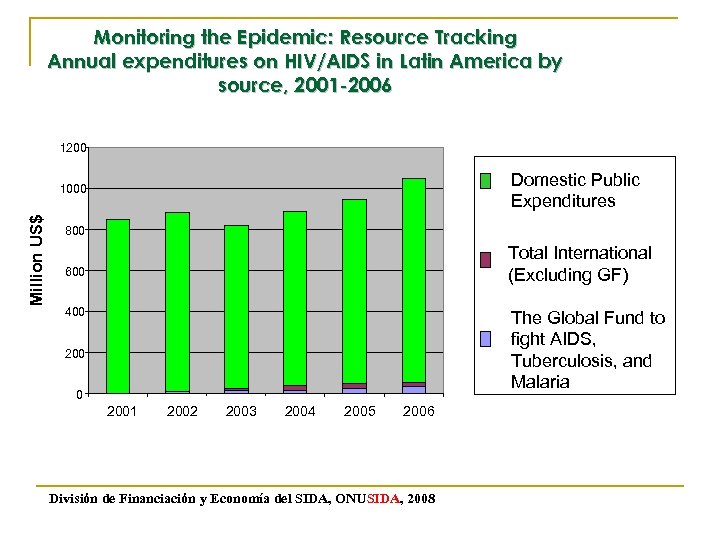 Monitoring the Epidemic: Resource Tracking Annual expenditures on HIV/AIDS in Latin America by source, 2001 -2006 1200 Domestic Public Expenditures Million US$ 1000 800 Total International (Excluding GF) 600 400 The Global Fund to fight AIDS, Tuberculosis, and Malaria 200 0 2001 2002 2003 2004 2005 2006 División de Financiación y Economía del SIDA, ONUSIDA, 2008
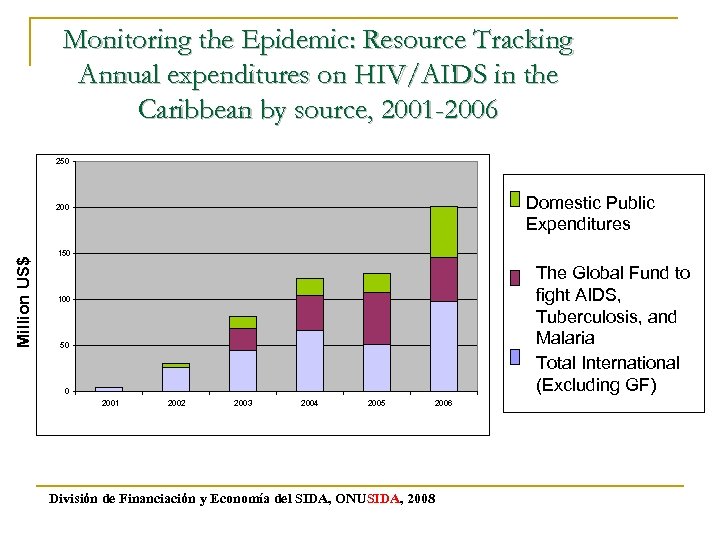 Monitoring the Epidemic: Resource Tracking Annual expenditures on HIV/AIDS in the Caribbean by source, 2001 -2006 250 Domestic Public Expenditures Million US$ 200 150 The Global Fund to fight AIDS, Tuberculosis, and Malaria Total International (Excluding GF) 100 50 0 2001 2002 2003 2004 2005 2006 División de Financiación y Economía del SIDA, ONUSIDA, 2008
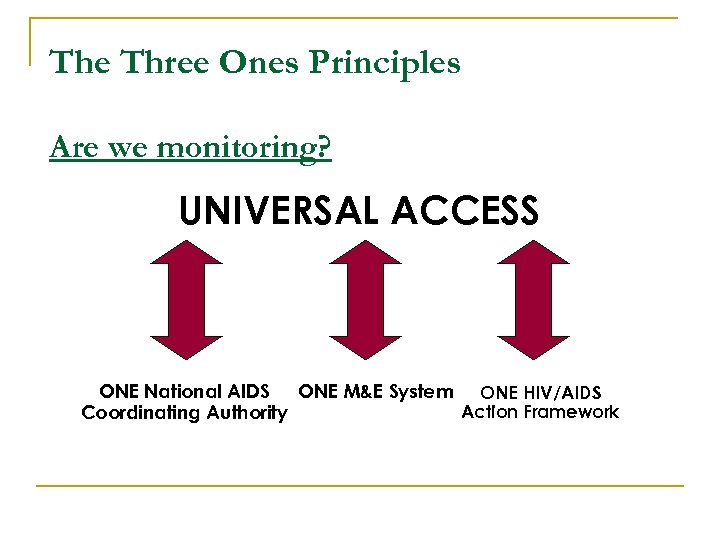 The Three Ones Principles Are we monitoring? UNIVERSAL ACCESS ONE National AIDS ONE M&E System ONE HIV/AIDS Action Framework Coordinating Authority
 Gaps and challenges in the response to HIV
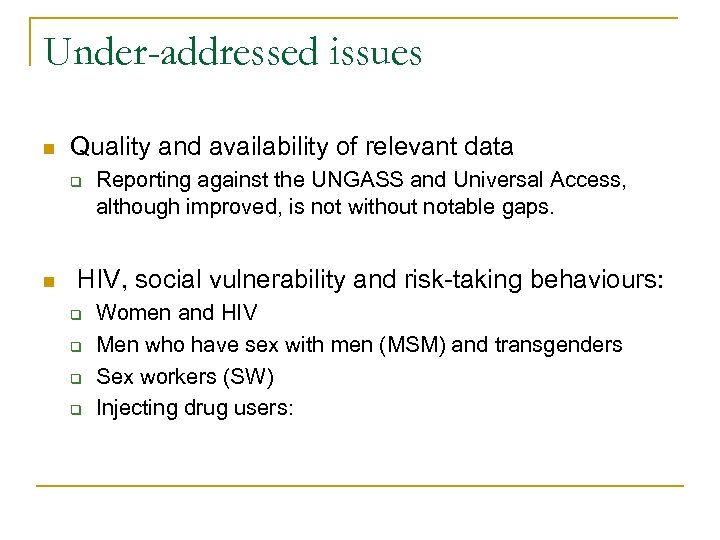 Under-addressed issues n Quality and availability of relevant data q n Reporting against the UNGASS and Universal Access, although improved, is not without notable gaps. HIV, social vulnerability and risk-taking behaviours: q q Women and HIV Men who have sex with men (MSM) and transgenders Sex workers (SW) Injecting drug users:
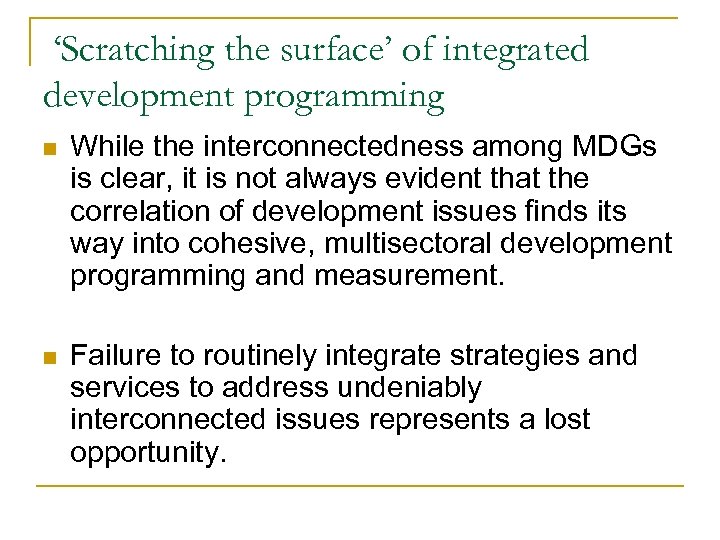 ‘Scratching the surface’ of integrated development programming n While the interconnectedness among MDGs is clear, it is not always evident that the correlation of development issues finds its way into cohesive, multisectoral development programming and measurement. n Failure to routinely integrate strategies and services to address undeniably interconnected issues represents a lost opportunity.
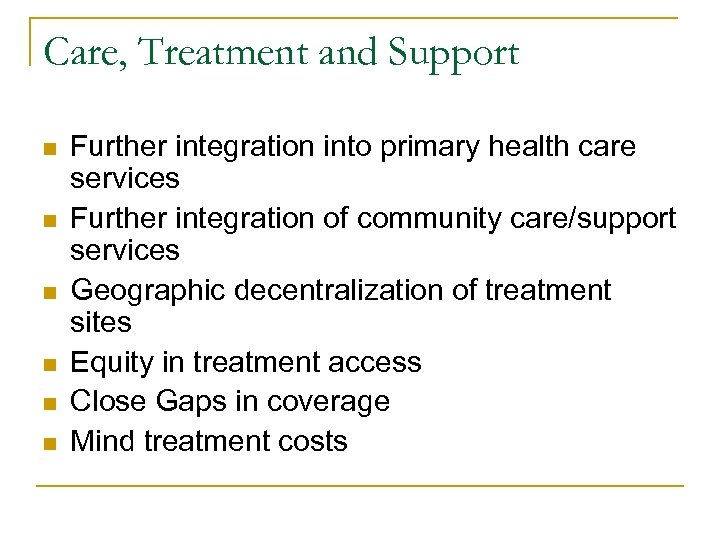 Care, Treatment and Support n n n Further integration into primary health care services Further integration of community care/support services Geographic decentralization of treatment sites Equity in treatment access Close Gaps in coverage Mind treatment costs
 Stigma and Discrimination “. . . In most countries, discrimination remains legal against women, men who have sex with men, sex workers, drug users and ethnic minorities. This must change. . [I]n countries with legal protection and protection of human rights for these people. . . , there are fewer deaths. Not only is it unethical not to protect these groups: it makes no sense from a public health perspective. It hurts us all. ” Ban Ki-moon UN Secretary General – August 2008
 Institutional Response n Monitoring and evaluation n Availability of resources n Integrated Public Health Delivery Systems
 The Way Forward: Meeting the Internationally Agreed Development Goals (IADGs)
 Maintaining interest in HIV n n n Continue to provide community, national and regional leadership and to keep HIV on national and regional agenda Maintain and/or increase, as far as possible, current national investments in HIV (with a focus on integrated development approaches). Stronger and more visible national leadership on difficult challenges such as stigma
 Maintaining strategic investment in HIV n n n Improved data Right allocation of current and future investments: Strengthening of Health Systems Human rights and social justice programming Strengthening programs to address social vulnerability and risk: q q n n Gender inequity Most-at-risk populations Prevention: increasing coverage and comprehensiveness. Improving and enhancing collaborative responses for HIV/TB co-infection
 Scaling up HIV Prevention n For each new person put on ART, two new persons become HIV+ n Combination HIV prevention programmes must be widely implemented at country and regional levels q q q Biomedical interventions (ABC, Circumcision, STI prevention. . . ) Education programmes, including sexuality education in youth Enabling environment interventions based on human rights Legislations to stop all forms of criminalization related to HIV Creating a movement of social change Expanding access to treatment as a contribution to prevention
 Take-home messages n Significant progress – but is it enough? Prevention is lagging behind and needs strengthening n Increasing progress on civil society involvement n Stigma and discrimination remain huge challenges n Sustainability of funding Lack of strategic information Strengthen political will n n n