


 Скачать презентацию 2004 National Pool Fencing Forum Hassall I
a3d360204707e4abe560ebe04c086f38.ppt
- Количество слайдов: 25
 2004 National Pool Fencing Forum
 Hassall, I. (1989) Thirty-six consecutive under 5 year old domestic swimming pool drownings. Australian Paediatric Journal, 25, 143 -146.
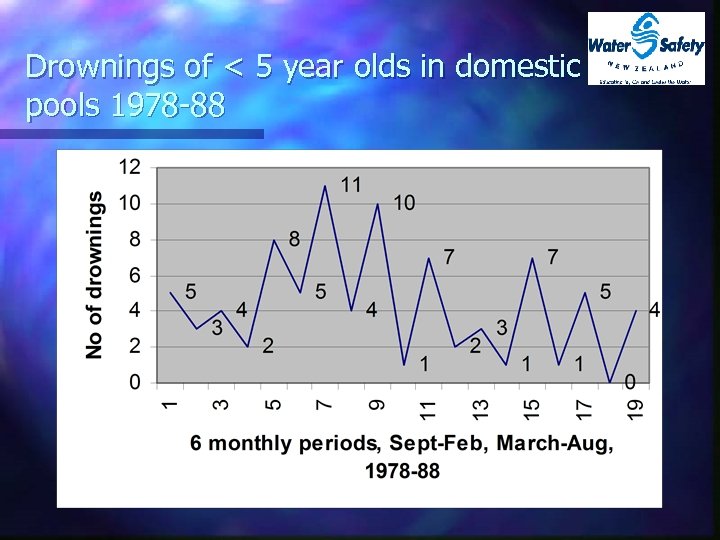 Drownings of < 5 year olds in domestic pools 1978 -88
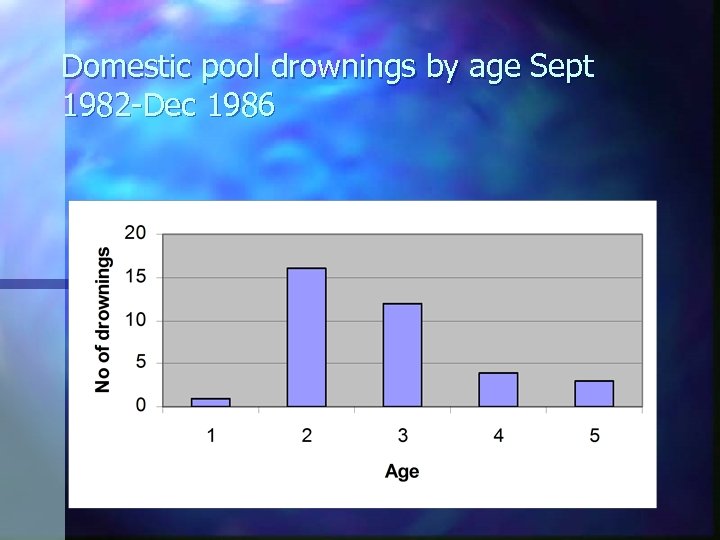 Domestic pool drownings by age Sept 1982 -Dec 1986
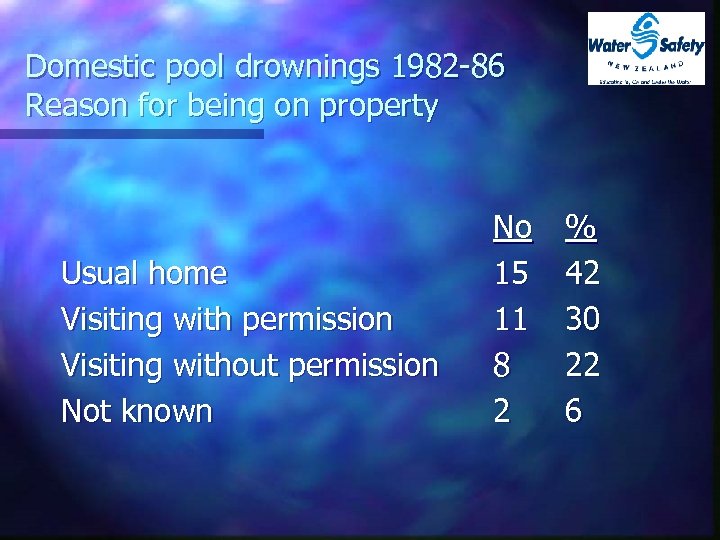 Domestic pool drownings 1982 -86 Reason for being on property Usual home Visiting with permission Visiting without permission Not known No 15 11 8 2 % 42 30 22 6
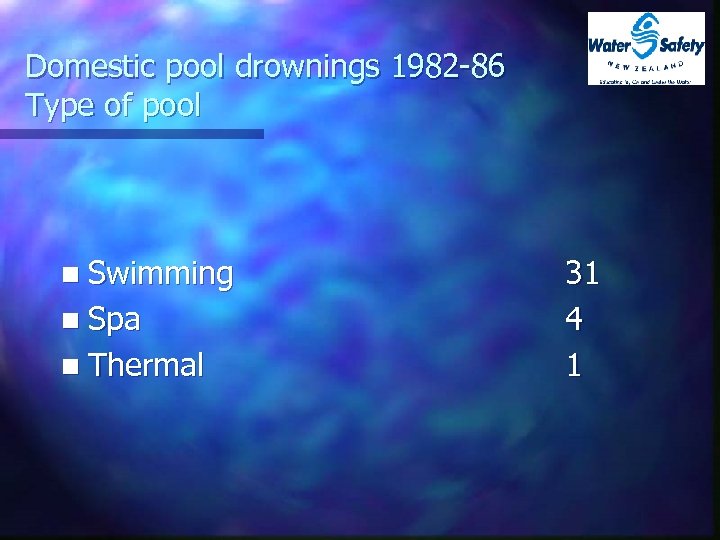 Domestic pool drownings 1982 -86 Type of pool n Swimming n Spa n Thermal 31 4 1
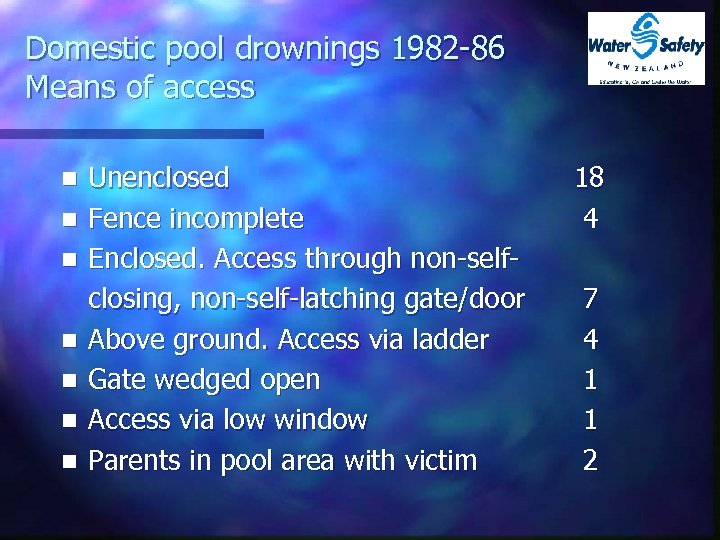 Domestic pool drownings 1982 -86 Means of access n n n n Unenclosed Fence incomplete Enclosed. Access through non-selfclosing, non-self-latching gate/door Above ground. Access via ladder Gate wedged open Access via low window Parents in pool area with victim 18 4 7 4 1 1 2
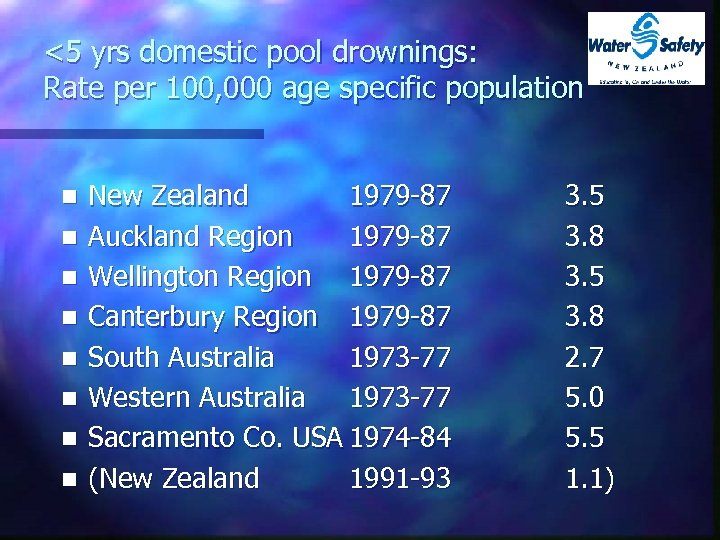 <5 yrs domestic pool drownings: Rate per 100, 000 age specific population n n n n New Zealand 1979 -87 Auckland Region 1979 -87 Wellington Region 1979 -87 Canterbury Region 1979 -87 South Australia 1973 -77 Western Australia 1973 -77 Sacramento Co. USA 1974 -84 (New Zealand 1991 -93 3. 5 3. 8 2. 7 5. 0 5. 5 1. 1)
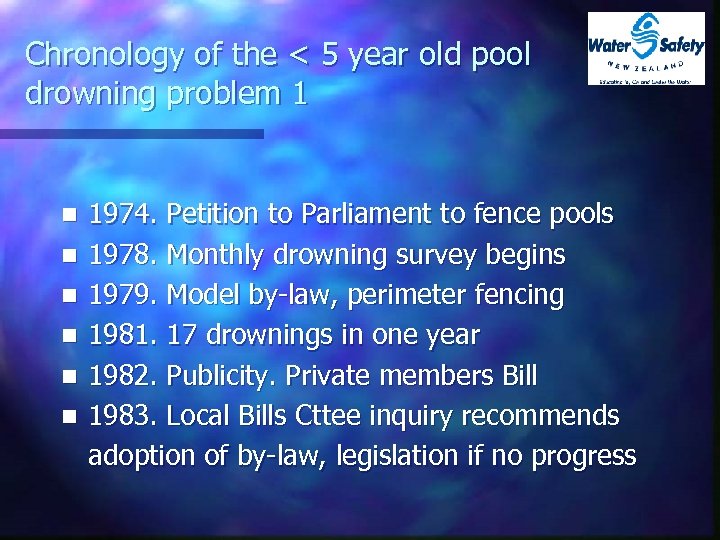 Chronology of the < 5 year old pool drowning problem 1 n n n 1974. Petition to Parliament to fence pools 1978. Monthly drowning survey begins 1979. Model by-law, perimeter fencing 1981. 17 drownings in one year 1982. Publicity. Private members Bill 1983. Local Bills Cttee inquiry recommends adoption of by-law, legislation if no progress
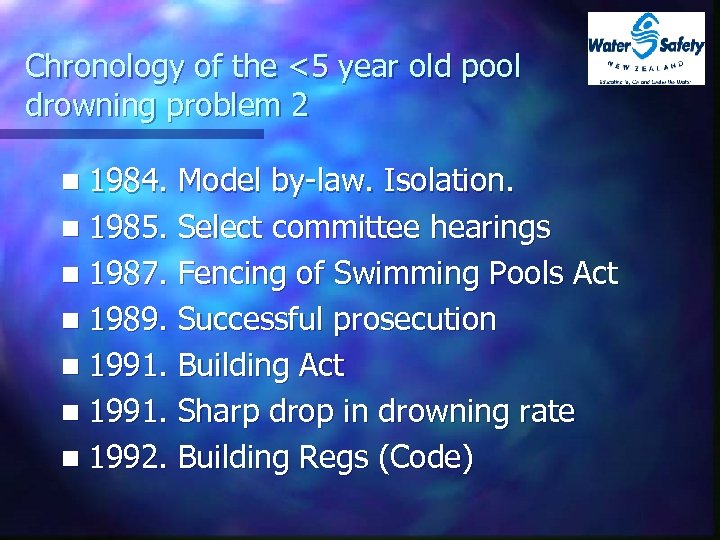 Chronology of the <5 year old pool drowning problem 2 n 1984. Model by-law. Isolation. n 1985. Select committee hearings n 1987. Fencing of Swimming Pools Act n 1989. Successful prosecution n 1991. Building Act n 1991. Sharp drop in drowning rate n 1992. Building Regs (Code)
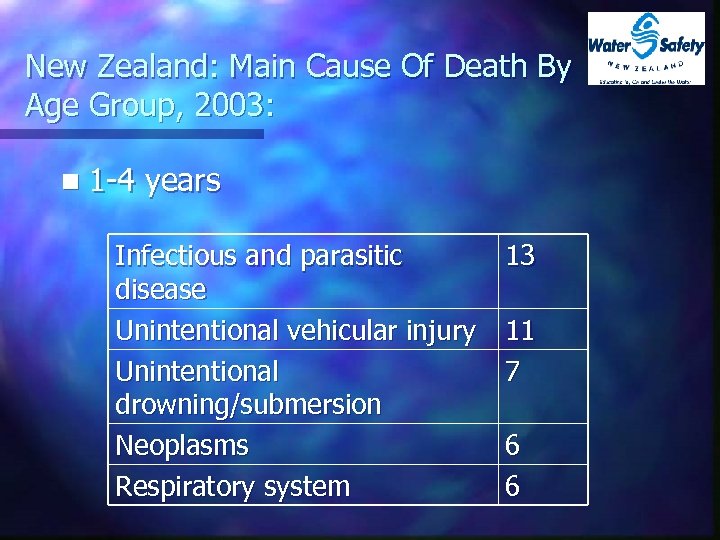 New Zealand: Main Cause Of Death By Age Group, 2003: n 1 -4 years Infectious and parasitic disease Unintentional vehicular injury Unintentional drowning/submersion Neoplasms Respiratory system 13 11 7 6 6
 If the unnecessarily restrictive interpretation of the pool area had been continued, more and more people would have been tempted to supervise the child from outside the swimming pool fence with the consequent loss of ability to act quickly to forestall accidents Letter to NZ Herald 13/10/04
 The suspicion remains that home pools were subjected to more rigorous rules than comparable hazards simply because safety campaigners believed the pools presented an easy target. NZ Herald 5 October, 2004
 Young children who drown in home swimming pools probably simply walk into the water unaware of any danger.
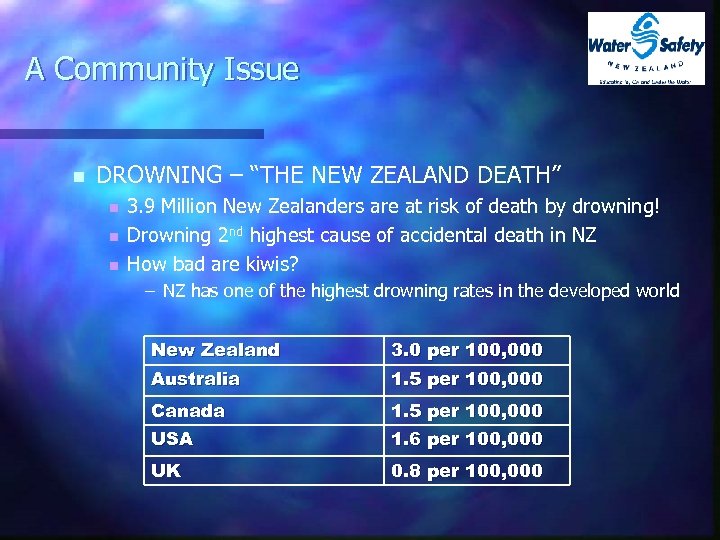 A Community Issue n DROWNING – “THE NEW ZEALAND DEATH” n n n 3. 9 Million New Zealanders are at risk of death by drowning! Drowning 2 nd highest cause of accidental death in NZ How bad are kiwis? – NZ has one of the highest drowning rates in the developed world New Zealand 3. 0 per 100, 000 Australia 1. 5 per 100, 000 Canada 1. 5 per 100, 000 USA 1. 6 per 100, 000 UK 0. 8 per 100, 000
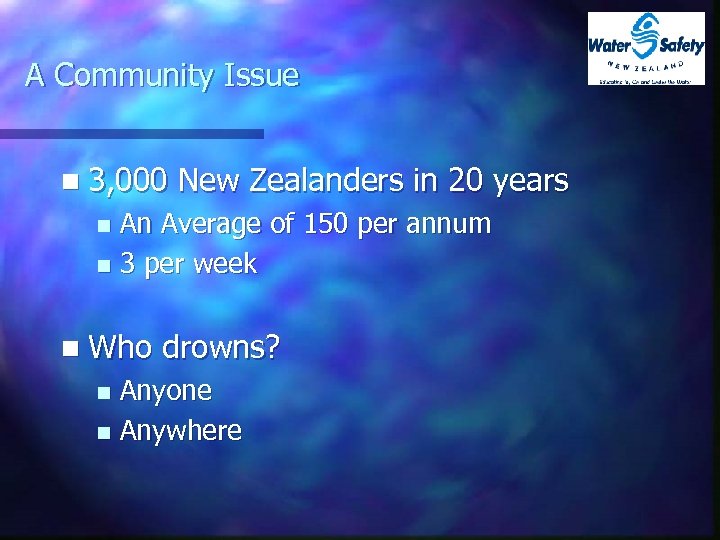 A Community Issue n 3, 000 New Zealanders in 20 years An Average of 150 per annum n 3 per week n n Who drowns? Anyone n Anywhere n
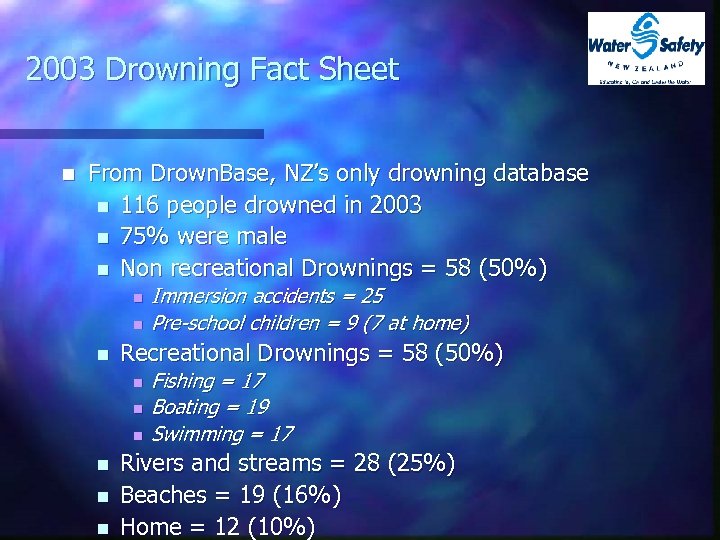 2003 Drowning Fact Sheet n From Drown. Base, NZ’s only drowning database n 116 people drowned in 2003 n 75% were male n Non recreational Drownings = 58 (50%) n n n Recreational Drownings = 58 (50%) n n n Immersion accidents = 25 Pre-school children = 9 (7 at home) Fishing = 17 Boating = 19 Swimming = 17 Rivers and streams = 28 (25%) Beaches = 19 (16%) Home = 12 (10%)
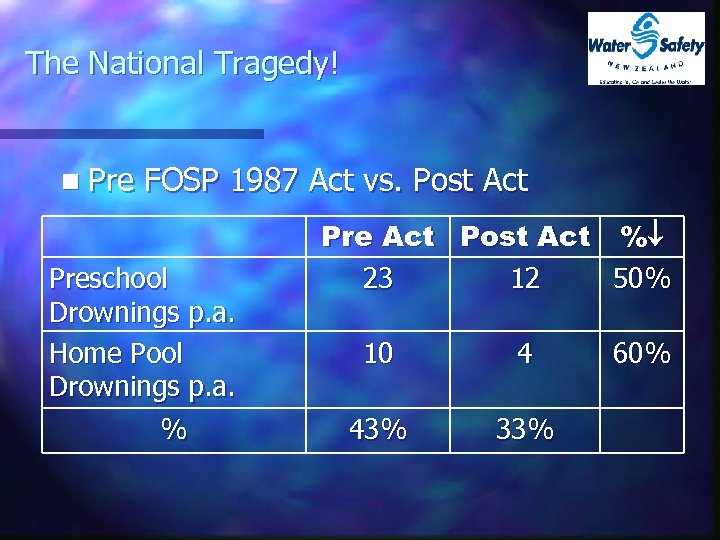 The National Tragedy! n Pre FOSP 1987 Act vs. Post Act Preschool Drownings p. a. Home Pool Drownings p. a. % Pre Act Post Act % 23 12 50% 10 4 43% 33% 60%
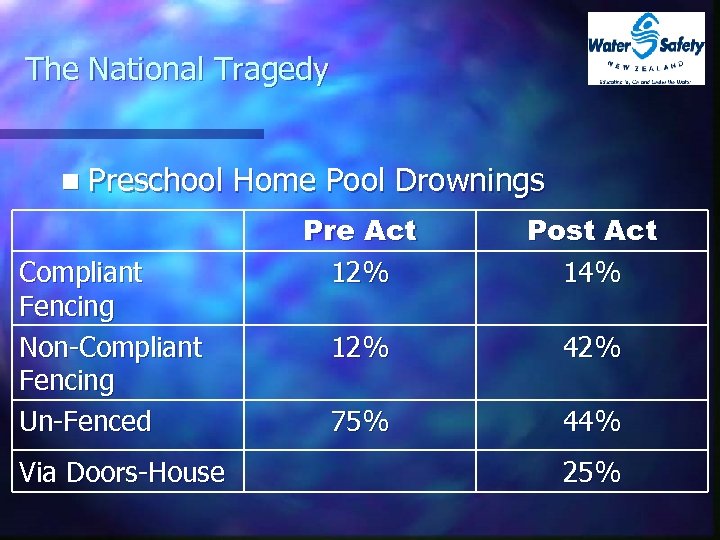 The National Tragedy n Preschool Home Pool Drownings Compliant Fencing Non-Compliant Fencing Un-Fenced Via Doors-House Pre Act 12% Post Act 14% 12% 42% 75% 44% 25%
 Department of Building & Housing Hamish Handley
 1. The new Building Act was published in August 2004. It does not cover the fencing of swimming pools specifically. However, a pool fence is defined in the Act as a ‘building’ so that a consent is needed to construct a pool fence.
 2. The Ministry of Economic Development (MED) considered incorporating the Fencing of Swimming Pools Act into the new Act. The decision was made that pool fencing did not fit with the Building Act because of: § The ongoing compliance requirement of the FOSP Act that the Building Act does not have for housing. The retrospective nature of the FOSP Act. It applies to pools whenever they were built. The Building Act does not apply to existing houses.
 3. The MED recognised that the Schedule to the FOSP Act and Clause F 4 of the Code are out of date. The MED identified 3 options to ensure more flexibility and better enforcement: n n n A new Clause F 4 as part of the Code review under the new Act. Change the Schedule to the FOSP Act. Amend the FOSP Act to introduce the concept of ‘barrier’ rather than ‘fence’.
 The 3 options could all be followed: § § § It is possible there will be a separate Clause for pool ‘barriers’ in the new Code. A new Standard could be developed that would describe how pools are to be protected that would replace the Schedule. The FOSP could be amended to remove the term ‘fence’.
 The key to this programme is the development of new Standard. That could take up to 2 years. § It could incorporate the latest thinking here and overseas on pool protection. § It could include drawings and photographs. The Standard would be developed by a representative committee along with public consultation. §