


 Скачать презентацию 2 Los mandatos de nosotros as Repaso Introducción al
9abad4c31ffdda9bfcab15cf98bd368f.ppt
- Количество слайдов: 27
 2*. Los mandatos de nosotros/as Repaso: Introducción al subjuntivo: El subjuntivo en cláusulas nominativas 4. El subjuntivo con verbos de volición *These numbers refer to the chunks of the chapter
 2 Los mandatos de nosotros/as 2 Capítulo 2 l 05/15/12
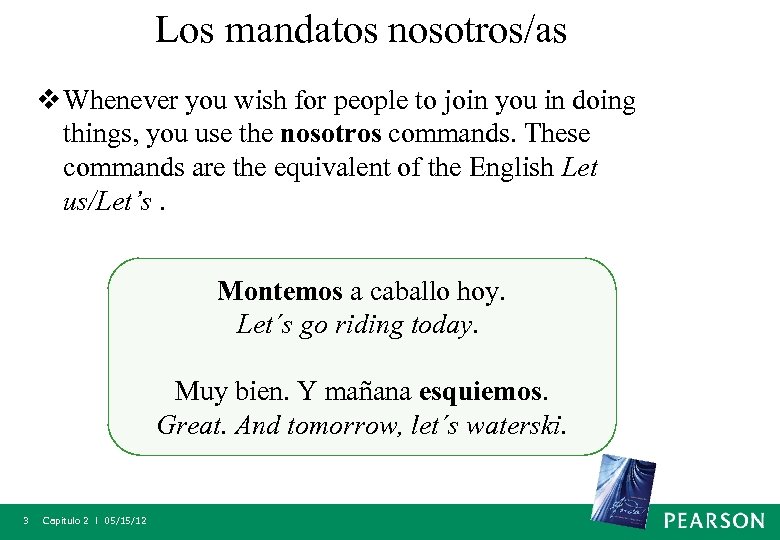 Los mandatos nosotros/as v Whenever you wish for people to join you in doing things, you use the nosotros commands. These commands are the equivalent of the English Let us/Let’s. Montemos a caballo hoy. Let´s go riding today. Muy bien. Y mañana esquiemos. Great. And tomorrow, let´s waterski. 3 Capítulo 2 l 05/15/12
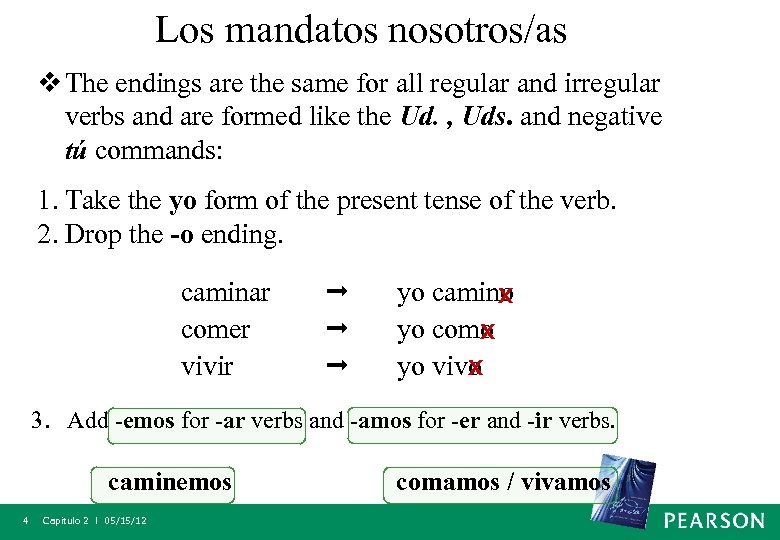 Los mandatos nosotros/as v The endings are the same for all regular and irregular verbs and are formed like the Ud. , Uds. and negative tú commands: 1. Take the yo form of the present tense of the verb. 2. Drop the -o ending. caminar comer vivir yo camino x yo como x yo vivo x 3. Add -emos for -ar verbs and -amos for -er and -ir verbs. caminemos 4 Capítulo 2 l 05/15/12 comamos / vivamos
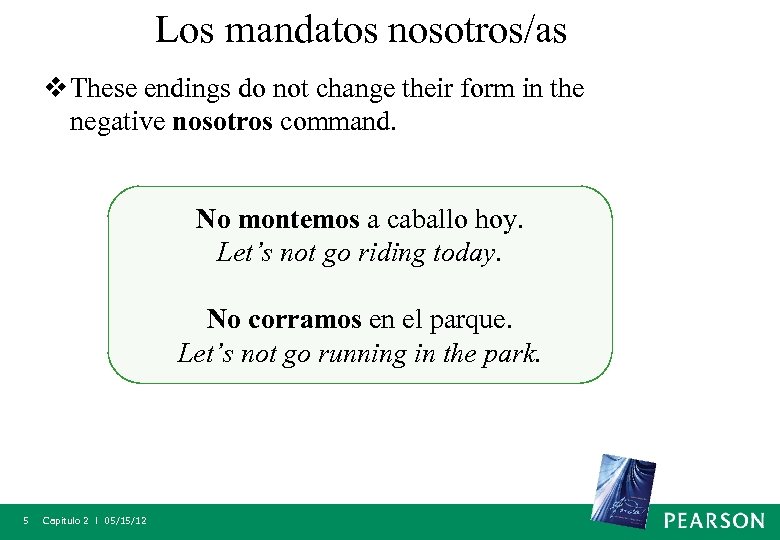 Los mandatos nosotros/as v These endings do not change their form in the negative nosotros command. No montemos a caballo hoy. Let’s not go riding today. No corramos en el parque. Let’s not go running in the park. 5 Capítulo 2 l 05/15/12
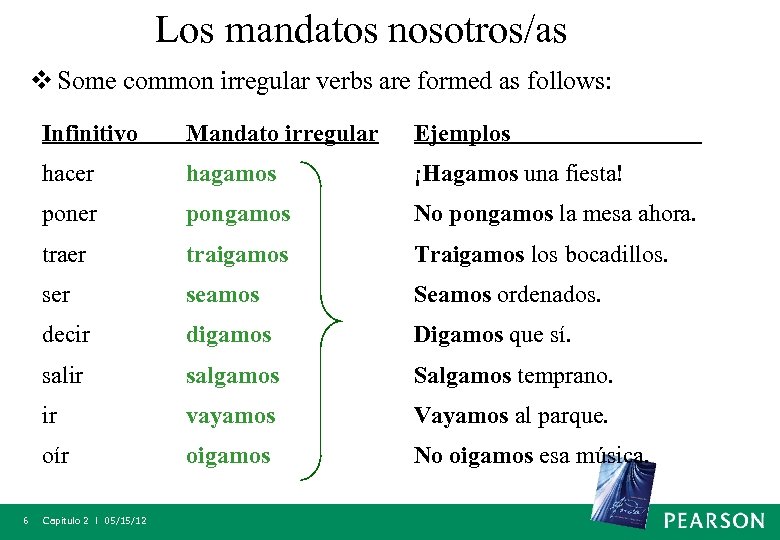 Los mandatos nosotros/as v Some common irregular verbs are formed as follows: Infinitivo Ejemplos hacer hagamos ¡Hagamos una fiesta! poner pongamos No pongamos la mesa ahora. traer traigamos Traigamos los bocadillos. ser seamos Seamos ordenados. decir digamos Digamos que sí. salir salgamos Salgamos temprano. ir vayamos Vayamos al parque. oír 6 Mandato irregular oigamos No oigamos esa música. Capítulo 2 l 05/15/12
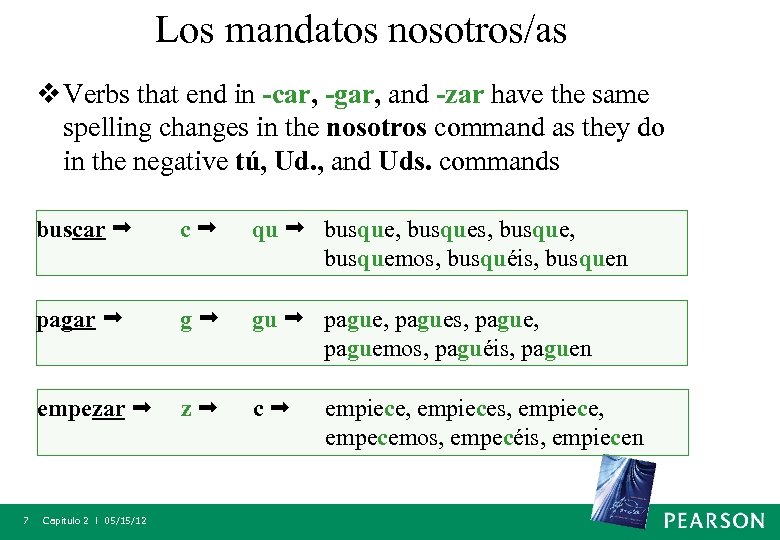 Los mandatos nosotros/as v Verbs that end in -car, -gar, and -zar have the same spelling changes in the nosotros command as they do in the negative tú, Ud. , and Uds. commands buscar qu busque, busques, busquemos, busquéis, busquen pagar g gu pague, pagues, paguemos, paguéis, paguen empezar 7 c z c Capítulo 2 l 05/15/12 empiece, empieces, empiece, empecemos, empecéis, empiecen
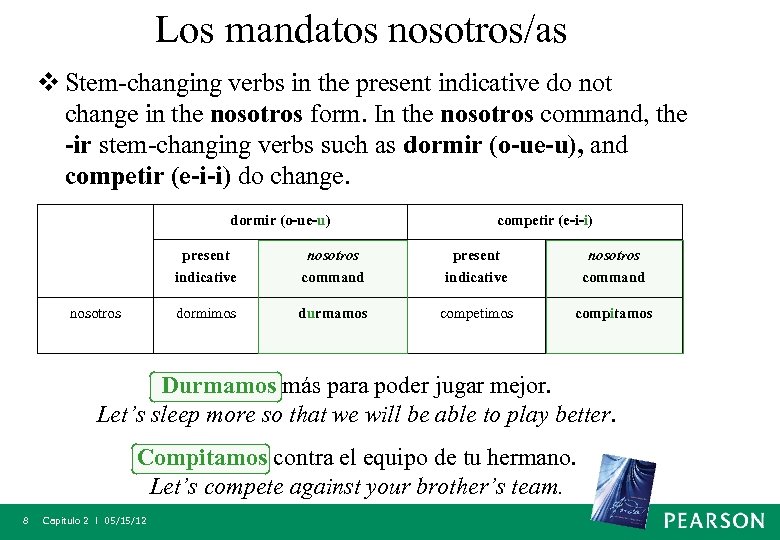 Los mandatos nosotros/as v Stem-changing verbs in the present indicative do not change in the nosotros form. In the nosotros command, the -ir stem-changing verbs such as dormir (o-ue-u), and competir (e-i-i) do change. dormir (o-ue-u) competir (e-i-i) present indicative nosotros command dormimos nosotros command durmamos competimos compitamos Durmamos más para poder jugar mejor. Let’s sleep more so that we will be able to play better. Compitamos contra el equipo de tu hermano. Let’s compete against your brother’s team. 8 Capítulo 2 l 05/15/12
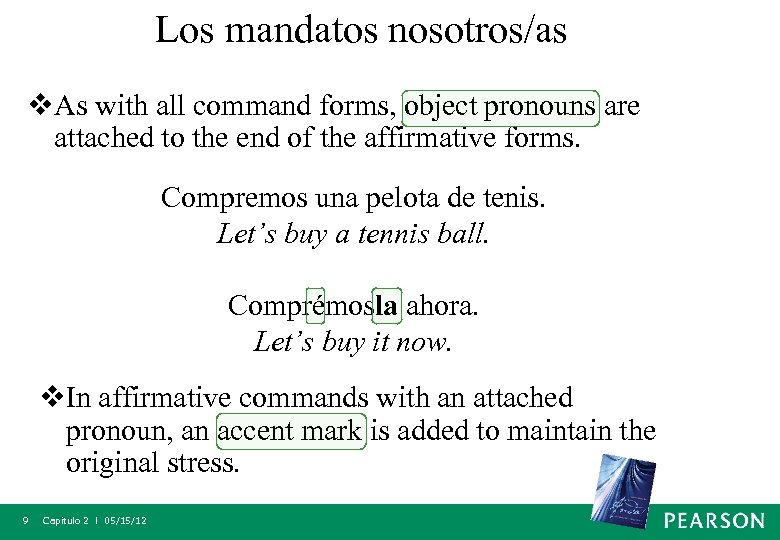 Los mandatos nosotros/as v. As with all command forms, object pronouns are attached to the end of the affirmative forms. Compremos una pelota de tenis. Let’s buy a tennis ball. Comprémosla ahora. Let’s buy it now. v. In affirmative commands with an attached pronoun, an accent mark is added to maintain the original stress. 9 Capítulo 2 l 05/15/12
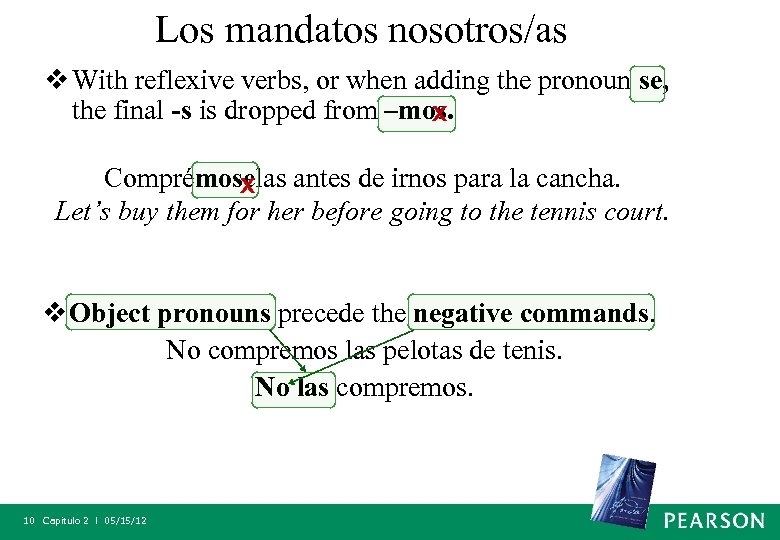 Los mandatos nosotros/as v With reflexive verbs, or when adding the pronoun se, the final -s is dropped from –mos. x Comprémoselas antes de irnos para ella. Compremos unas pelotas de tenis la cancha. x Let’s buyher before going to the tennis court. them for some tennis balls for her. v Object pronouns precede the negative commands. No compremos las pelotas de tenis. No las compremos. 10 Capítulo 2 l 05/15/12
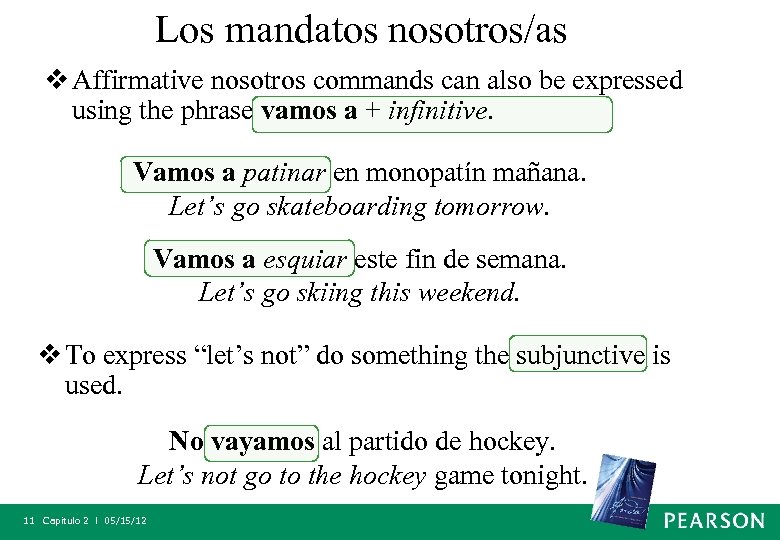 Los mandatos nosotros/as v Affirmative nosotros commands can also be expressed using the phrase vamos a + infinitive. Vamos a patinar en monopatín mañana. Let’s go skateboarding tomorrow. Vamos a esquiar este fin de semana. Let’s go skiing this weekend. v To express “let’s not” do something the subjunctive is used. No vayamos al partido de hockey. Let’s not go to the hockey game tonight. 11 Capítulo 2 l 05/15/12
 Repaso Introducción al subjuntivo: El subjuntivo en cláusulas nominativas 12 Capítulo 2 l 05/15/12
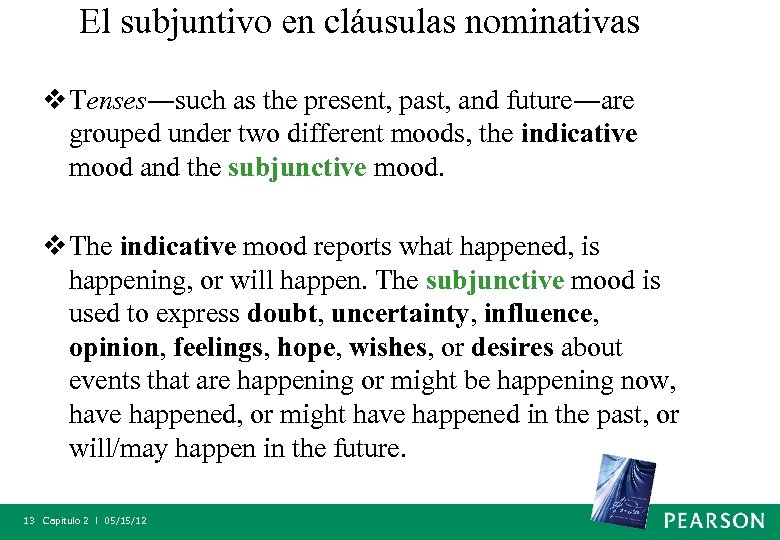 El subjuntivo en cláusulas nominativas v Tenses―such as the present, past, and future―are grouped under two different moods, the indicative mood and the subjunctive mood. v The indicative mood reports what happened, is happening, or will happen. The subjunctive mood is used to express doubt, uncertainty, influence, opinion, feelings, hope, wishes, or desires about events that are happening or might be happening now, have happened, or might have happened in the past, or will/may happen in the future. 13 Capítulo 2 l 05/15/12
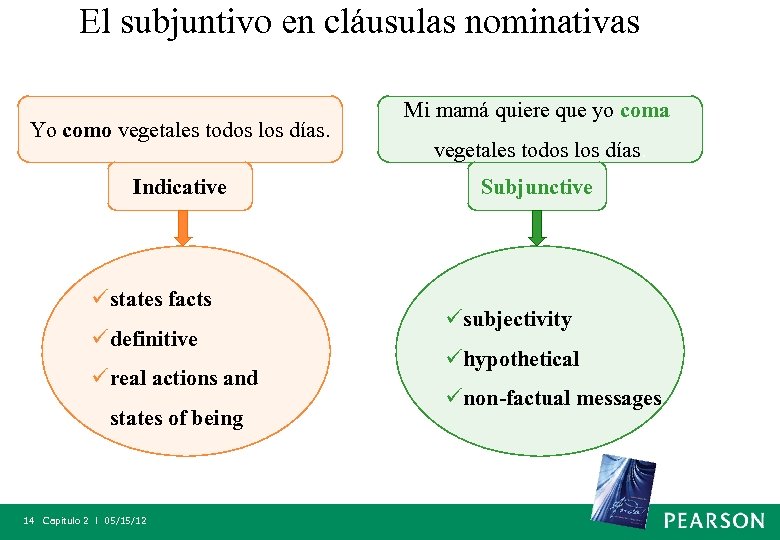 El subjuntivo en cláusulas nominativas Yo como vegetales todos los días. Indicative üstates facts üdefinitive üreal actions and states of being 14 Capítulo 2 l 05/15/12 Mi mamá quiere que yo coma vegetales todos los días. Subjunctive üsubjectivity ühypothetical ünon-factual messages
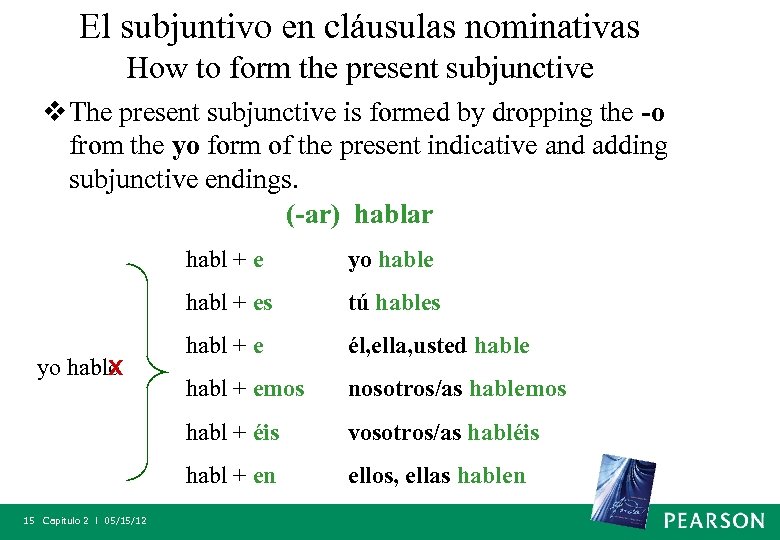 El subjuntivo en cláusulas nominativas How to form the present subjunctive v The present subjunctive is formed by dropping the -o from the yo form of the present indicative and adding subjunctive endings. (-ar) hablar habl + es habl + e él, ella, usted hable habl + emos nosotros/as hablemos vosotros/as habléis habl + en 15 Capítulo 2 l 05/15/12 tú hables habl + éis x yo hablo yo hable ellos, ellas hablen
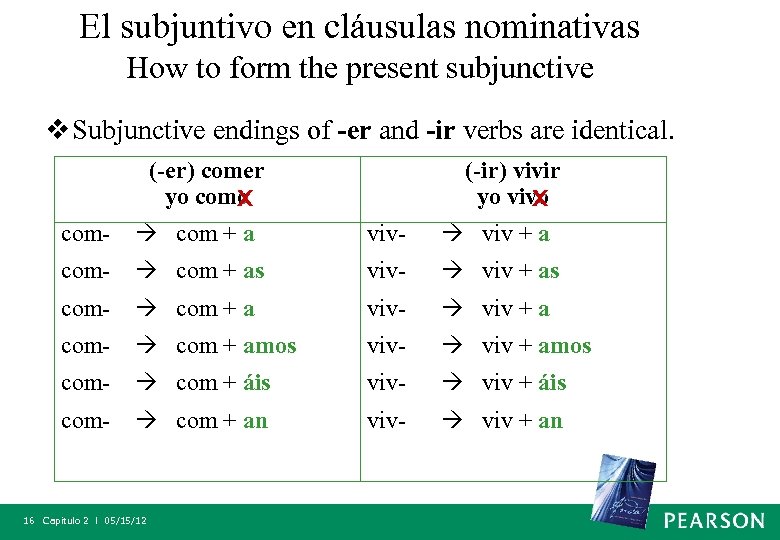 El subjuntivo en cláusulas nominativas How to form the present subjunctive v Subjunctive endings of -er and -ir verbs are identical. (-er) comer yo como x (-ir) vivir yo vivo x com- com + a viv- viv + a com- com + as viv- viv + as com- com + a viv- viv + a com- com + amos viv- viv + amos com- com + áis viv- viv + áis com- com + an viv- viv + an 16 Capítulo 2 l 05/15/12
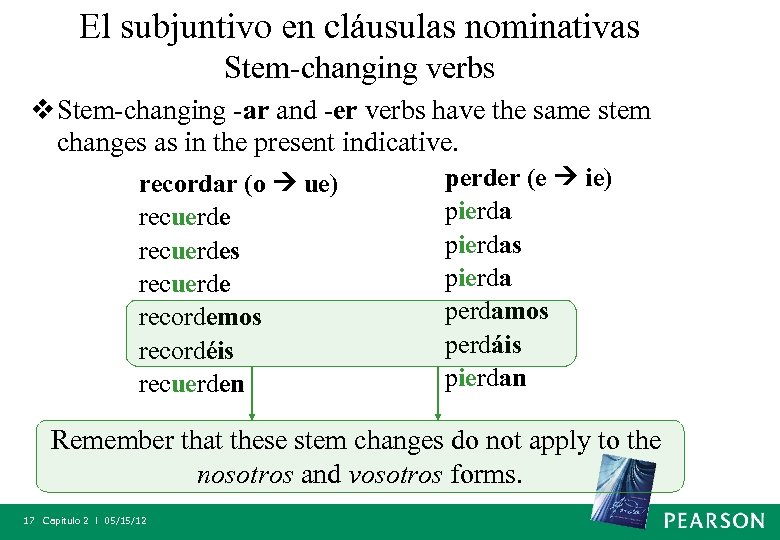 El subjuntivo en cláusulas nominativas Stem-changing verbs v Stem-changing -ar and -er verbs have the same stem changes as in the present indicative. recordar (o ue) recuerdes recuerde recordemos recordéis recuerden perder (e ie) pierdas pierda perdamos perdáis pierdan Remember that these stem changes do not apply to the nosotros and vosotros forms. 17 Capítulo 2 l 05/15/12
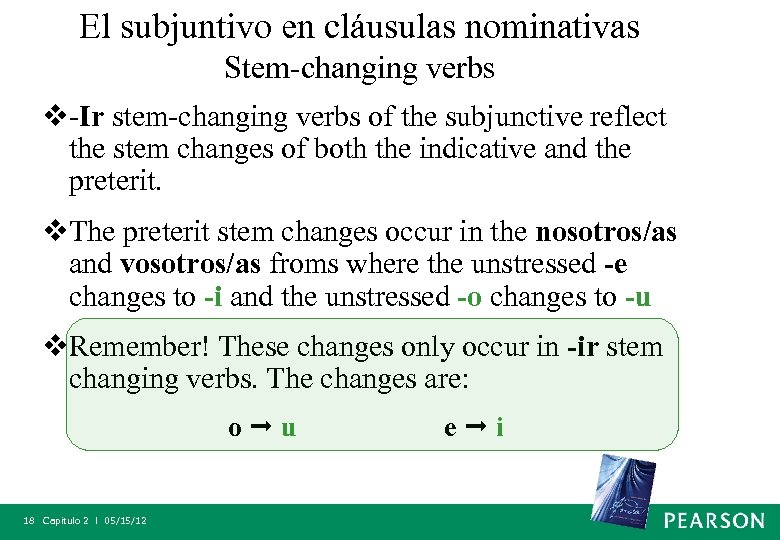 El subjuntivo en cláusulas nominativas Stem-changing verbs v-Ir stem-changing verbs of the subjunctive reflect the stem changes of both the indicative and the preterit. v. The preterit stem changes occur in the nosotros/as and vosotros/as froms where the unstressed -e changes to -i and the unstressed -o changes to -u v. Remember! These changes only occur in -ir stem changing verbs. The changes are: o u 18 Capítulo 2 l 05/15/12 e i
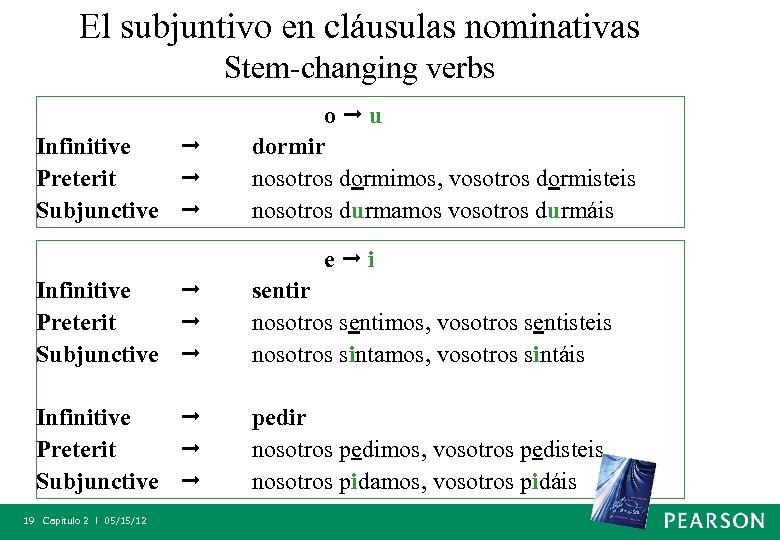 El subjuntivo en cláusulas nominativas Stem-changing verbs Infinitive Preterit Subjunctive o u dormir nosotros dormimos, vosotros dormisteis nosotros durmamos vosotros durmáis e i Infinitive Preterit Subjunctive sentir nosotros sentimos, vosotros sentisteis nosotros sintamos, vosotros sintáis Infinitive Preterit Subjunctive pedir nosotros pedimos, vosotros pedisteis nosotros pidamos, vosotros pidáis 19 Capítulo 2 l 05/15/12
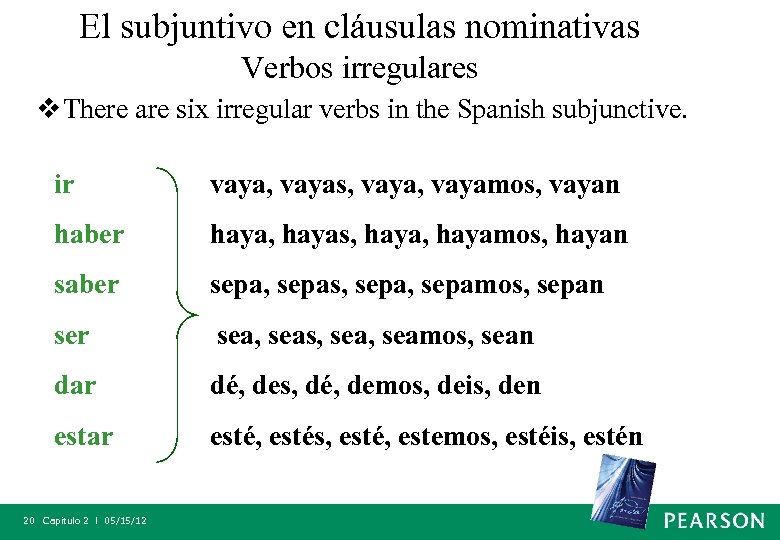 El subjuntivo en cláusulas nominativas Verbos irregulares v There are six irregular verbs in the Spanish subjunctive. ir vaya, vayas, vayamos, vayan haber haya, hayas, hayamos, hayan saber sepa, sepas, sepamos, sepan ser sea, seas, seamos, sean dar dé, des, dé, demos, deis, den estar esté, estés, esté, estemos, estéis, estén 20 Capítulo 2 l 05/15/12
 4 El subjuntivo para expresar pedidos (requests), mandatos y deseos 21 Capítulo 2 l 05/15/12
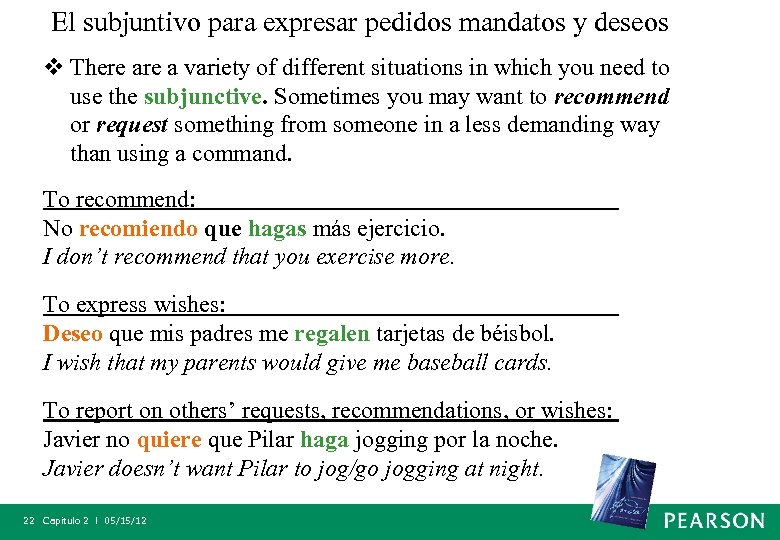 El subjuntivo para expresar pedidos mandatos y deseos v There a variety of different situations in which you need to use the subjunctive. Sometimes you may want to recommend or request something from someone in a less demanding way than using a command. To recommend: No recomiendo que hagas más ejercicio. I don’t recommend that you exercise more. To express wishes: Deseo que mis padres me regalen tarjetas de béisbol. I wish that my parents would give me baseball cards. To report on others’ requests, recommendations, or wishes: Javier no quiere que Pilar haga jogging por la noche. Javier doesn’t want Pilar to jog/go jogging at night. 22 Capítulo 2 l 05/15/12
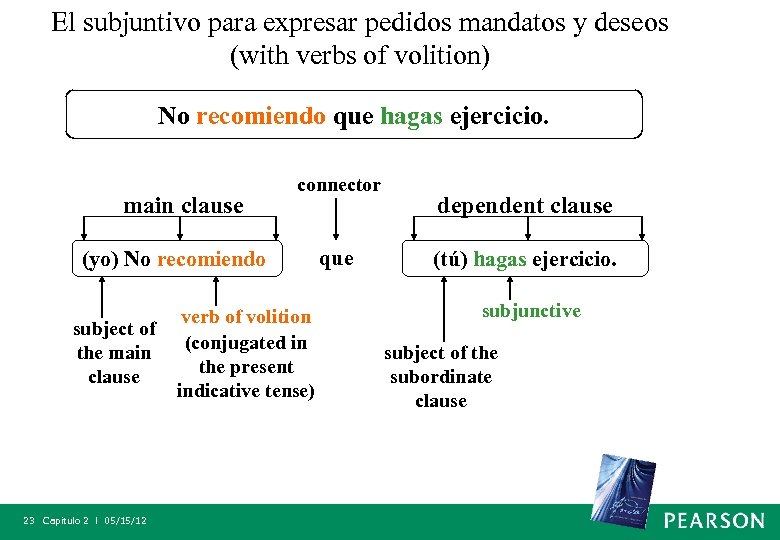 El subjuntivo para expresar pedidos mandatos y deseos (with verbs of volition) No recomiendo que hagas ejercicio. main clause connector (yo) No recomiendo subject of the main clause 23 Capítulo 2 l 05/15/12 verb of volition (conjugated in the present indicative tense) que dependent clause (tú) hagas ejercicio subjunctive subject of the subordinate clause
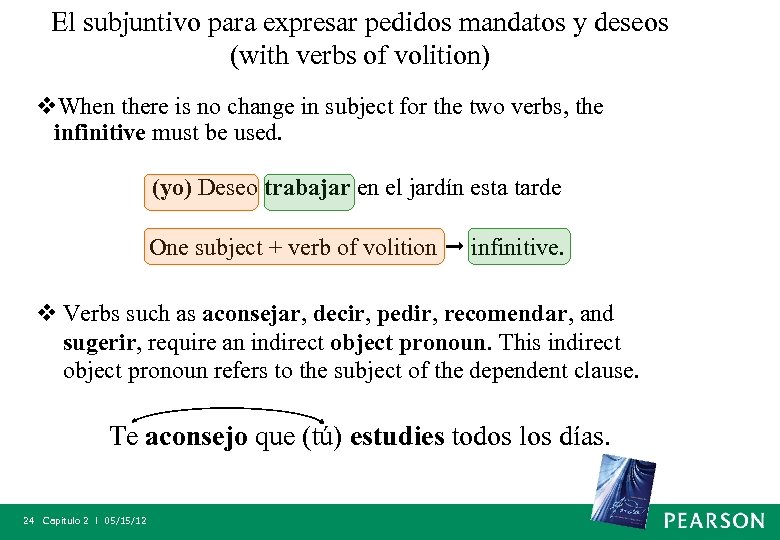 El subjuntivo para expresar pedidos mandatos y deseos (with verbs of volition) v. When there is no change in subject for the two verbs, the infinitive must be used. (yo) Deseo trabajar en el jardín esta tarde. One subject + verb of volition infinitive. v Verbs such as aconsejar, decir, pedir, recomendar, and sugerir, require an indirect object pronoun. This indirect object pronoun refers to the subject of the dependent clause. Te aconsejo que (tú) estudies todos los días. 24 Capítulo 2 l 05/15/12
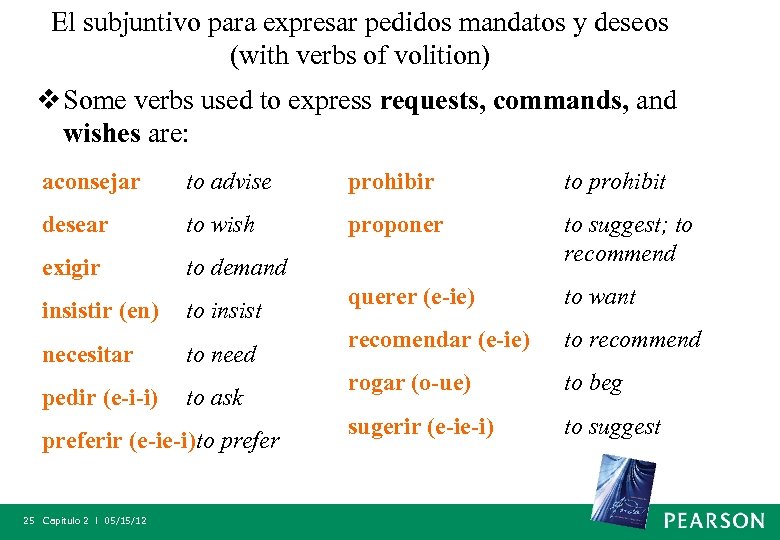 El subjuntivo para expresar pedidos mandatos y deseos (with verbs of volition) v Some verbs used to express requests, commands, and wishes are: aconsejar to advise prohibir to prohibit desear to wish proponer exigir to demand to suggest; to recommend querer (e-ie) to want recomendar (e-ie) to recommend rogar (o-ue) to beg sugerir (e-ie-i) to suggest insistir (en) necesitar pedir (e-i-i) to insist to need to ask preferir (e-ie-i)to prefer 25 Capítulo 2 l 05/15/12
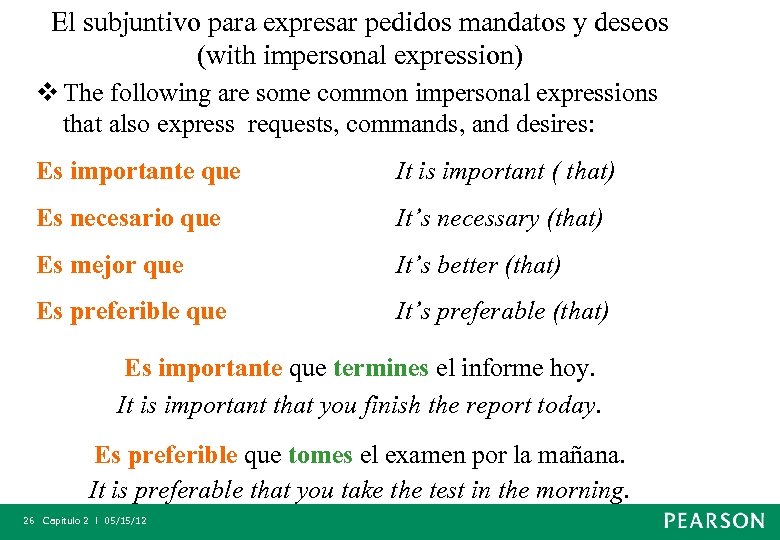 El subjuntivo para expresar pedidos mandatos y deseos (with impersonal expression) v The following are some common impersonal expressions that also express requests, commands, and desires: Es importante que It is important ( that) Es necesario que It’s necessary (that) Es mejor que It’s better (that) Es preferible que It’s preferable (that) Es importante que termines el informe hoy. It is important that you finish the report today. Es preferible que tomes el examen por la mañana. It is preferable that you take the test in the morning. 26 Capítulo 2 l 05/15/12
 FIN 27 Capítulo 2 l 05/15/12