Скачать презентацию 1911 — 92 Years Ago Dynastic Rule
fbfaf4c06a036a58a2cd87285be0b1fd.ppt
- Количество слайдов: 26
 1911 - 92 Years Ago – Dynastic Rule Overthrown 1911 -1949 - 39 Years of Turmoil & Civil War 1949 -1976 – 27 Years Consolidation of Revolution, Ideological Struggles, Bureaucratic In-fighting 1976 -1990 14 Years Consolidation of Reforms & Opening Up Economy/Society to World 1990 13 Years Ago – First Capital Market Open in China since 1949 (41 years hiatus)
 1990 Zhengzhou Wheat Exchange established. 1993 Nearly 40 exchanges & 1000 brokerage firms 1993 Scandals in oil and beans due to price manipulation in illiquid contracts. Little regulation. Firms go bust. Real people lose real money – welcome to capitalism! The comrades are not happy. 1994 Government crackdown. Speculation causing inflation. Bans contracts on index linked & FX, Sugar, Steel, Coal, Gasoline, Diesel, Oil and Cotton. Trading on foreign futures exchanges banned. Hot money moves to bond trading – 75% of volume on SSE is bond futures – no position limits or margin controls in place.
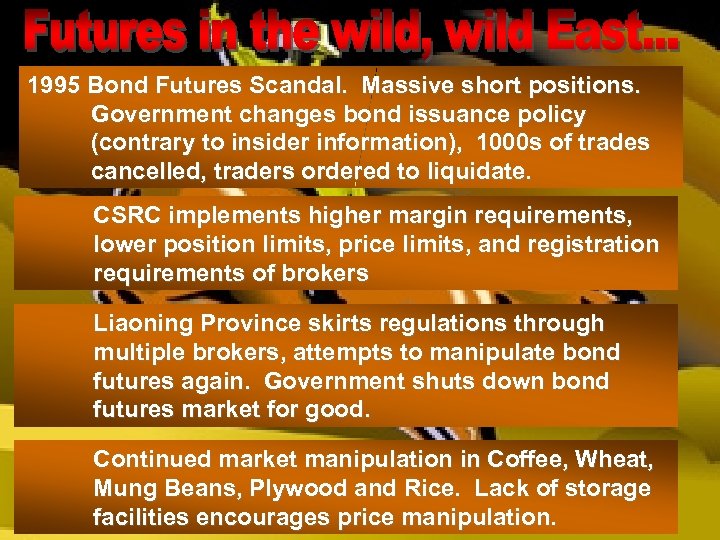 1995 Bond Futures Scandal. Massive short positions. Government changes bond issuance policy (contrary to insider information), 1000 s of trades cancelled, traders ordered to liquidate. CSRC implements higher margin requirements, lower position limits, price limits, and registration requirements of brokers Liaoning Province skirts regulations through multiple brokers, attempts to manipulate bond futures again. Government shuts down bond futures market for good. Continued market manipulation in Coffee, Wheat, Mung Beans, Plywood and Rice. Lack of storage facilities encourages price manipulation.
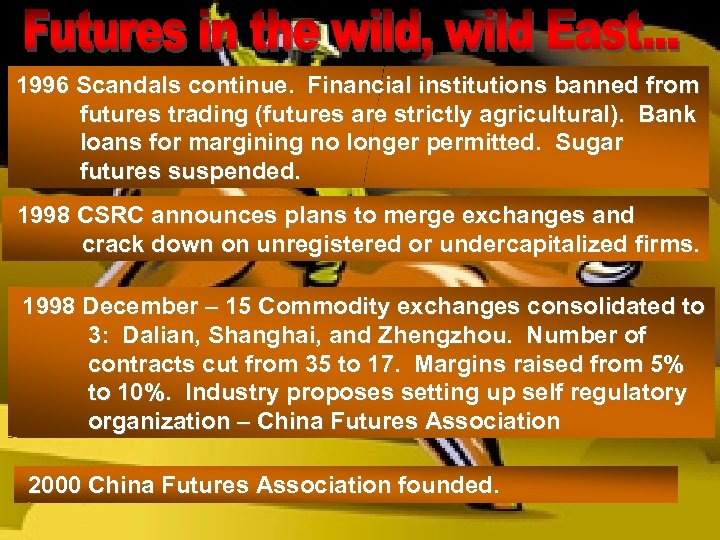 1996 Scandals continue. Financial institutions banned from futures trading (futures are strictly agricultural). Bank loans for margining no longer permitted. Sugar futures suspended. 1998 CSRC announces plans to merge exchanges and crack down on unregistered or undercapitalized firms. 1998 December – 15 Commodity exchanges consolidated to 3: Dalian, Shanghai, and Zhengzhou. Number of contracts cut from 35 to 17. Margins raised from 5% to 10%. Industry proposes setting up self regulatory organization – China Futures Association 2000 China Futures Association founded.
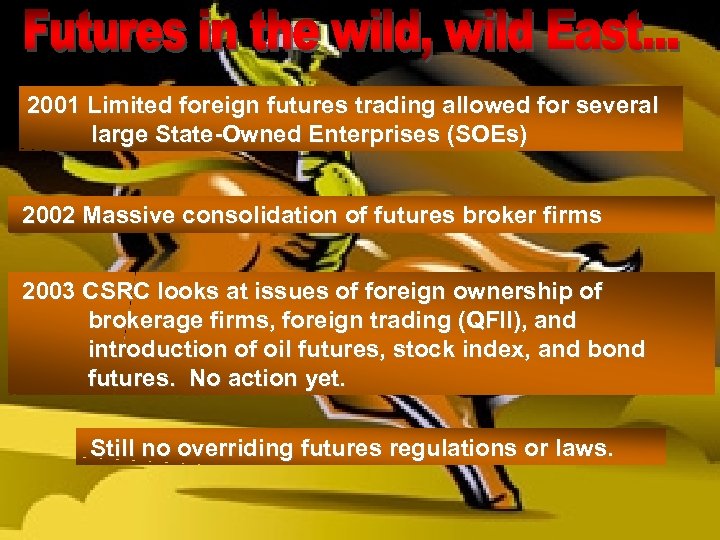 2001 Limited foreign futures trading allowed for several large State-Owned Enterprises (SOEs) 2002 Massive consolidation of futures broker firms 2003 CSRC looks at issues of foreign ownership of brokerage firms, foreign trading (QFII), and introduction of oil futures, stock index, and bond futures. No action yet. Still no overriding futures regulations or laws.
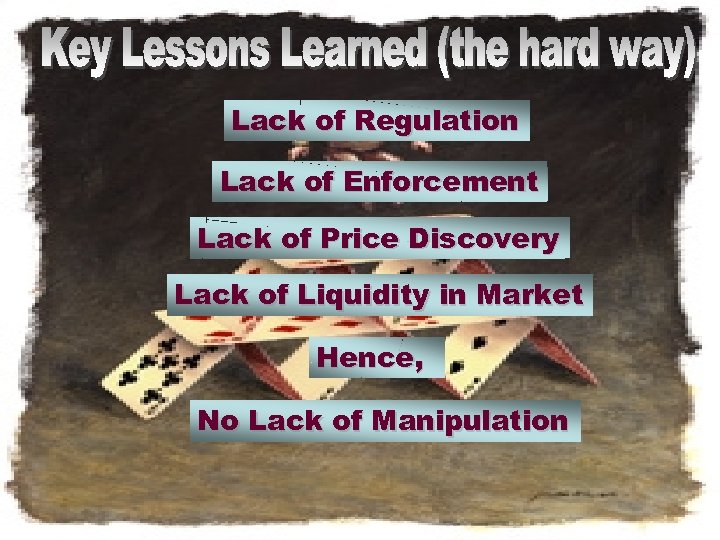 Lack of Regulation Lack of Enforcement Lack of Price Discovery Lack of Liquidity in Market Hence, No Lack of Manipulation
 Crude Risk Controls – Haphazard margin methods & collateral tracking, mark-to-market & variation margin not implemented uniformly. No sophisticated performance bond calculation. Lack of Delivery Functionality – Spot & Futures Markets disconnected. Crude delivery/storage setups. Fragmentation of Clearing – Tracking customers and large position reporting nonexistent. No backoffice services and customer reporting.
 Counter-party Risk – Exchanges do not function as primary counter-party and no procedures for orderly liquidation of markets when counterparty fails. New Product Introduction not Systematic – Exchanges do not explore demand for hedge products, availability of underlying markets, or appropriate speculator design. Underlying Markets Subject to Large Player Concentration – No regulation of competition, price setting, bond issuance, manipulation in local markets except those influenced by world prices.
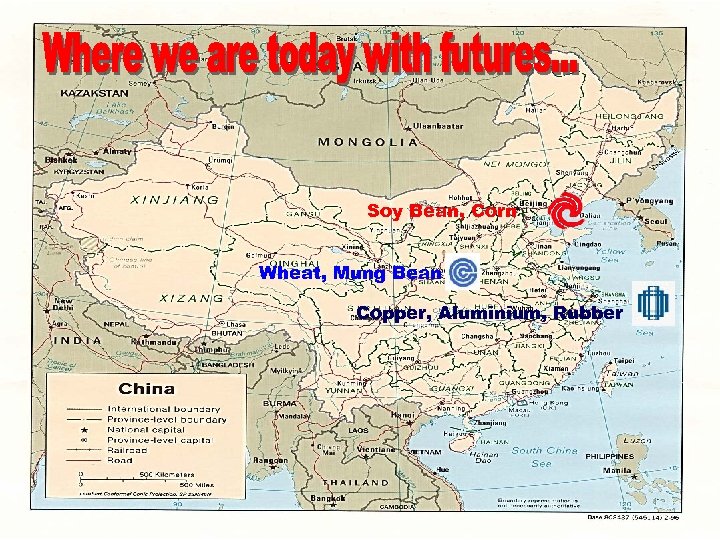 Soy Bean, Corn Wheat, Mung Bean Copper, Aluminium, Rubber
 National Market with country-wide access & low level of fragmentation Transparent Automated Trading System Sound, Robust and Safe Market Infrastructure Rapid and Speedier Price Dissemination Efficient Warehouse Receipt System Integrated Clearing & Settlement System & linkages with warehouse receipt system Heterogeneity & Capital Adequacy of Market Participants Institution of centralized national level Clearing Corporation on lines of Options Clearing Corporation OCC in USA
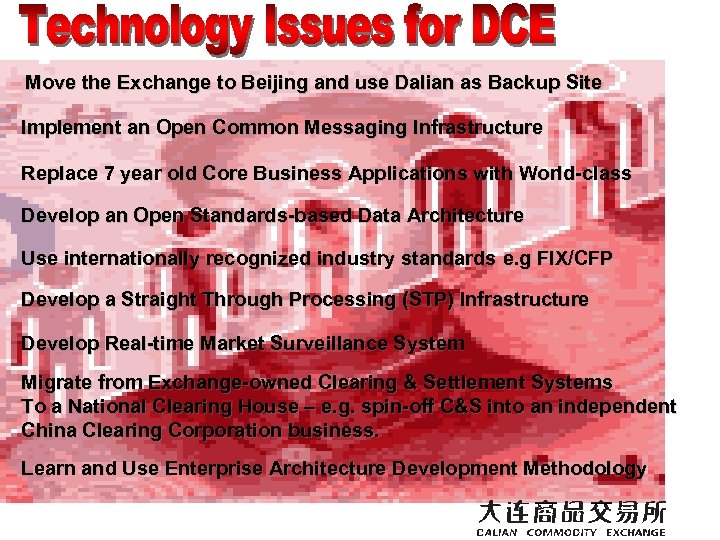 Move the Exchange to Beijing and use Dalian as Backup Site Implement an Open Common Messaging Infrastructure Replace 7 year old Core Business Applications with World-class Develop an Open Standards-based Data Architecture Use internationally recognized industry standards e. g FIX/CFP Develop a Straight Through Processing (STP) Infrastructure Develop Real-time Market Surveillance System Migrate from Exchange-owned Clearing & Settlement Systems To a National Clearing House – e. g. spin-off C&S into an independent China Clearing Corporation business. Learn and Use Enterprise Architecture Development Methodology
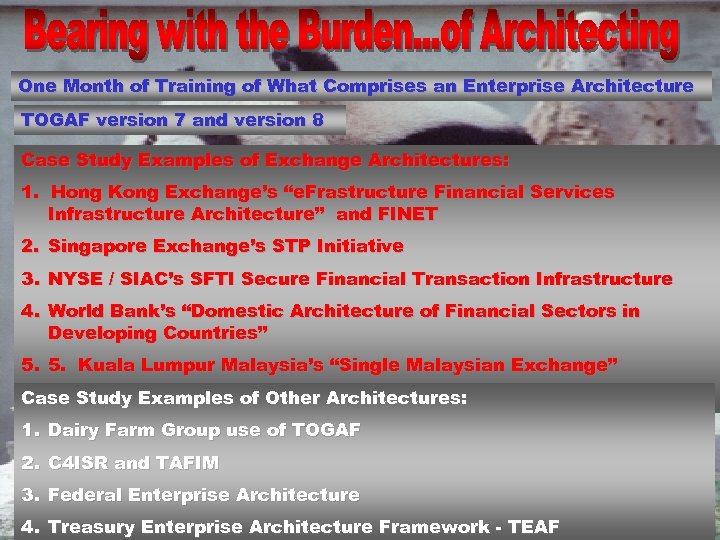 One Month of Training of What Comprises an Enterprise Architecture TOGAF version 7 and version 8 Case Study Examples of Exchange Architectures: 1. Hong Kong Exchange’s “e. Frastructure Financial Services Infrastructure Architecture” and FINET 2. Singapore Exchange’s STP Initiative 3. NYSE / SIAC’s SFTI Secure Financial Transaction Infrastructure 4. World Bank’s “Domestic Architecture of Financial Sectors in Developing Countries” 5. 5. Kuala Lumpur Malaysia’s “Single Malaysian Exchange” Case Study Examples of Other Architectures: 1. Dairy Farm Group use of TOGAF 2. C 4 ISR and TAFIM 3. Federal Enterprise Architecture 4. Treasury Enterprise Architecture Framework - TEAF
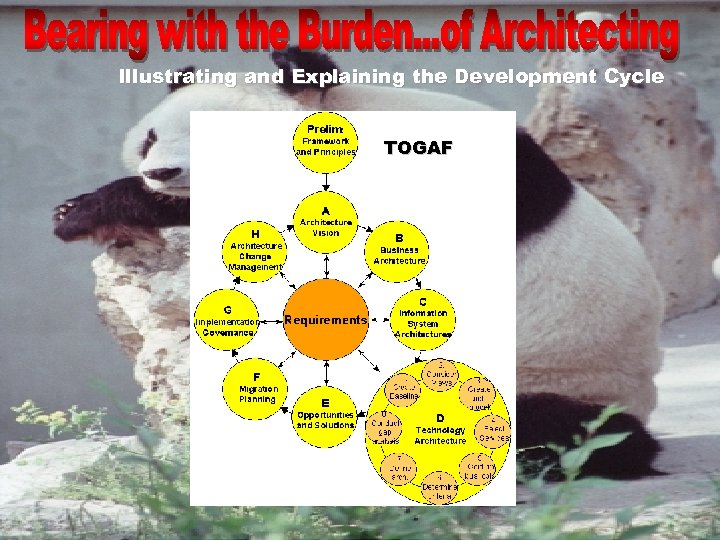 Illustrating and Explaining the Development Cycle TOGAF
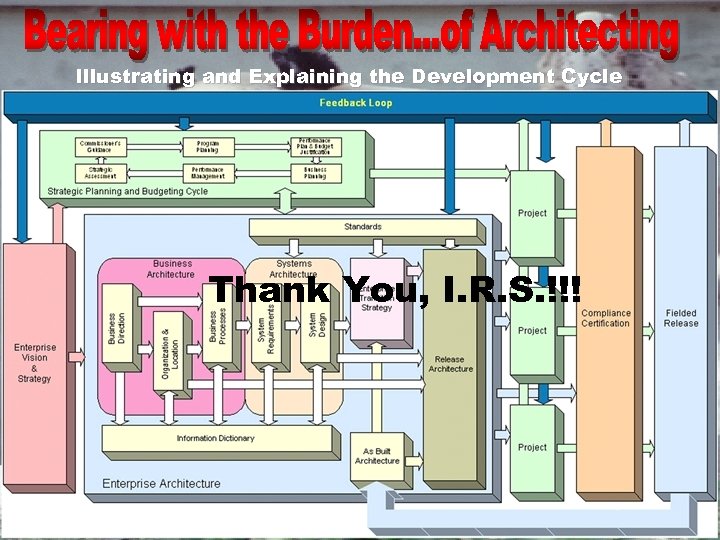 Illustrating and Explaining the Development Cycle Thank You, I. R. S. !!!
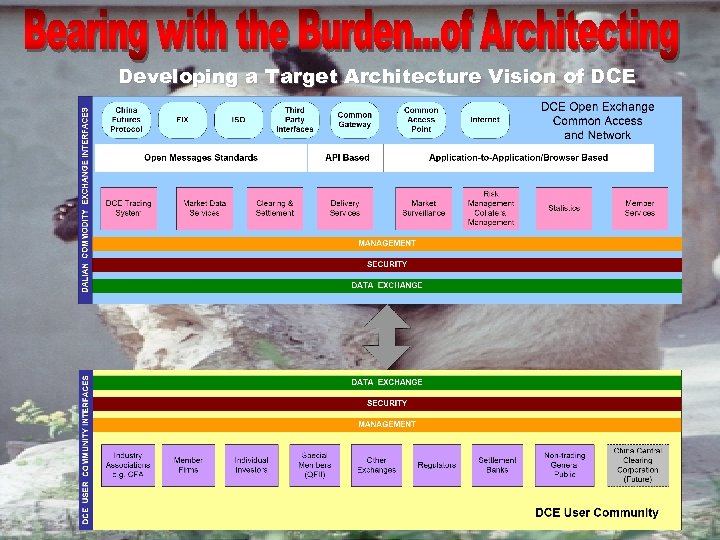 Developing a Target Architecture Vision of DCE
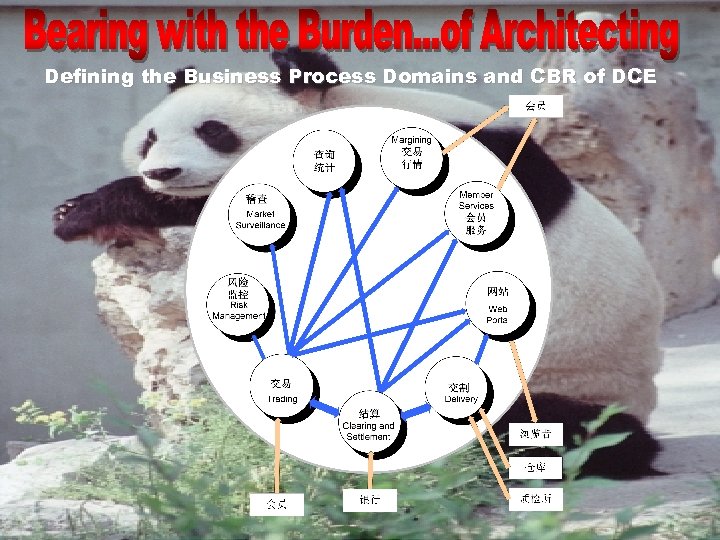 Defining the Business Process Domains and CBR of DCE
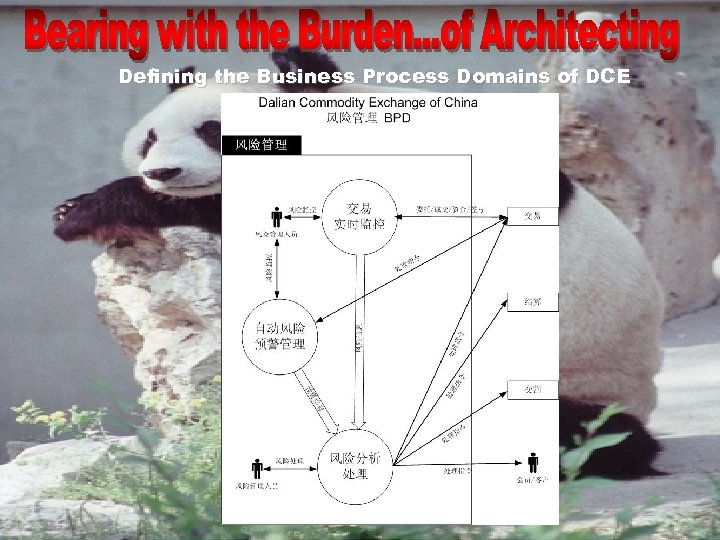 Defining the Business Process Domains of DCE
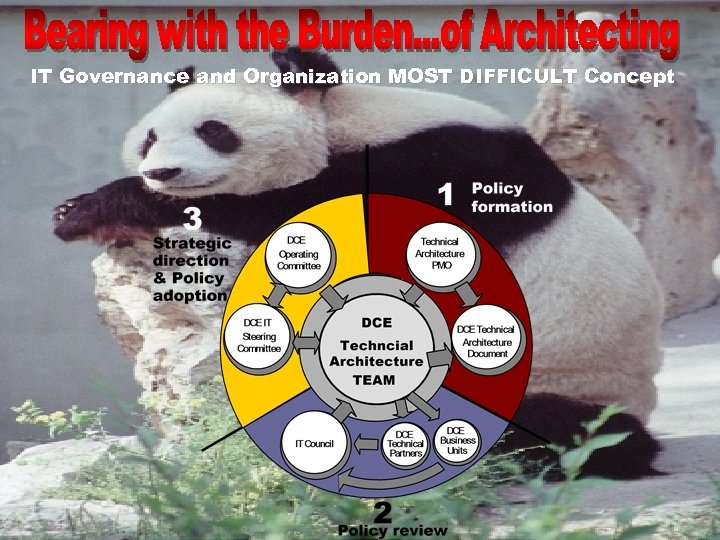 IT Governance and Organization MOST DIFFICULT Concept
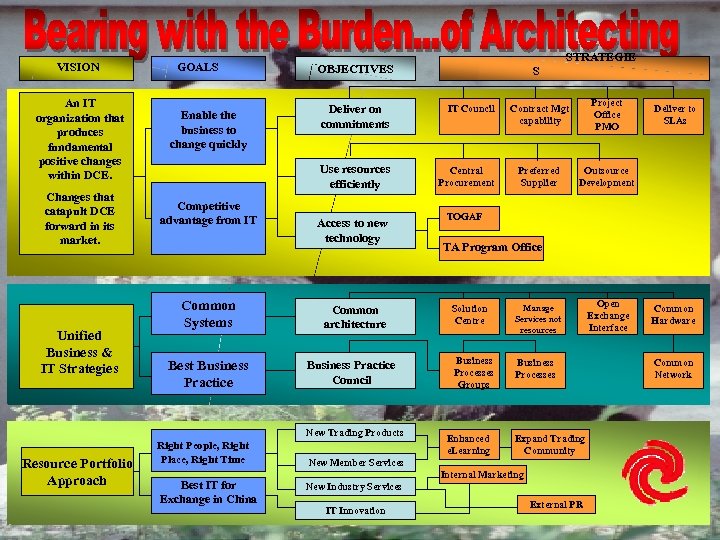 VISION An IT organization that produces fundamental positive changes within DCE. Changes that catapult DCE forward in its market. Unified Business & IT Strategies GOALS S Competitive advantage from IT Common Systems Best Business Practice Deliver on commitments IT Council Use resources efficiently Enable the business to change quickly Central Procurement Access to new technology Common architecture Business Practice Council New Trading Products Resource Portfolio Approach STRATEGIE OBJECTIVES Right People, Right Place, Right Time Best IT for Exchange in China Contract Mgt capability Project Office PMO Preferred Supplier Outsource Development TOGAF TA Program Office Solution Centre Manage Services not resources Business Processes Groups Business Processes Enhanced e. Learning Expand Trading Community New Member Services Internal Marketing New Industry Services IT Innovation Deliver to SLAs External PR Open Exchange Interface Common Hardware Common Network
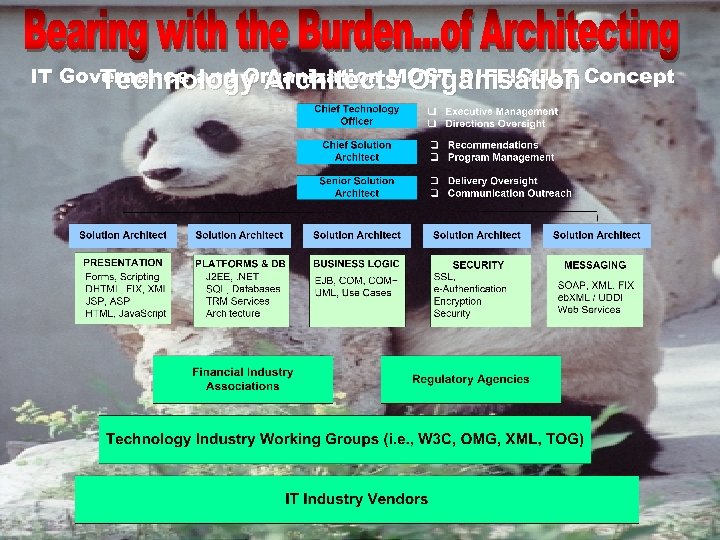 IT Governance and Organization MOST DIFFICULT Concept Technology Architects Organisation
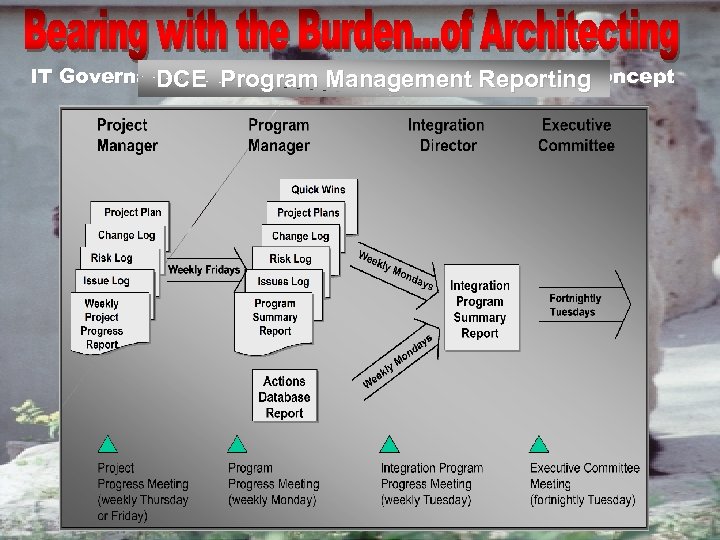 IT Governance and Organization MOST DIFFICULT Concept DCE Program Management Reporting
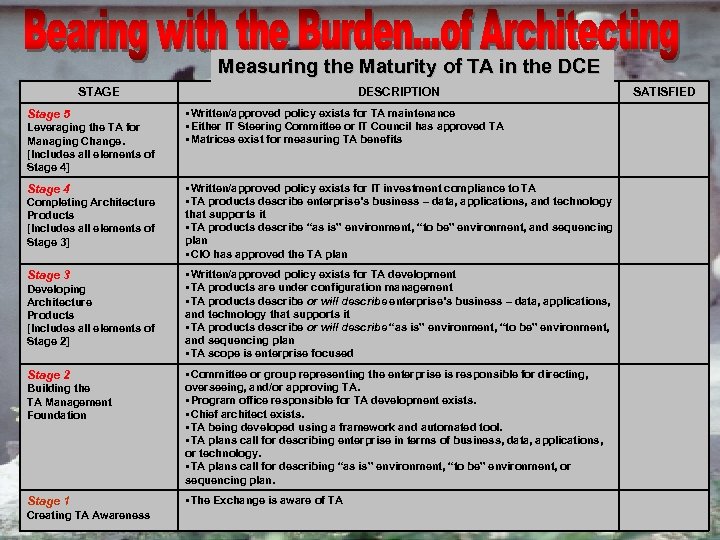 Measuring the Maturity of TA in the DCE STAGE Stage 5 Leveraging the TA for Managing Change. [Includes all elements of Stage 4] Stage 4 Completing Architecture Products [Includes all elements of Stage 3] Stage 3 Developing Architecture Products [Includes all elements of Stage 2] Stage 2 Building the TA Management Foundation Stage 1 Creating TA Awareness DESCRIPTION Written/approved policy exists for TA maintenance Either IT Steering Committee or IT Council has approved TA Matrices exist for measuring TA benefits Written/approved policy exists for IT investment compliance to TA TA products describe enterprise’s business – data, applications, and technology that supports it TA products describe “as is” environment, “to be” environment, and sequencing plan CIO has approved the TA plan Written/approved policy exists for TA development TA products are under configuration management TA products describe or will describe enterprise’s business – data, applications, and technology that supports it TA products describe or will describe “as is” environment, “to be” environment, and sequencing plan TA scope is enterprise focused Committee or group representing the enterprise is responsible for directing, overseeing, and/or approving TA. Program office responsible for TA development exists. Chief architect exists. TA being developed using a framework and automated tool. TA plans call for describing enterprise in terms of business, data, applications, or technology. TA plans call for describing “as is” environment, “to be” environment, or sequencing plan. The Exchange is aware of TA SATISFIED
 Managing highly-developed electronic systems to support the services and functions of DCE Constantly enhancing the technological infrastructure to ensure DCE leads in innovation and open systems in China and be ready to plug-in to the global arena Creating an open Application Program Interface (API) to trading & clearing platforms to facilitate Straight Through Processing (STP) Balancing IT resources with business needs with a customer driven focus Blending in-house development and strategic outsourcing to yield cost-effective and efficient solutions