 Скачать презентацию 18 O D H Analysis of Solids by
eedbbc0fef0943b63f1a8809a5dddcd5.ppt
- Количество слайдов: 23



18 O & D/H Analysis of Solids by TC/EA-IRMS
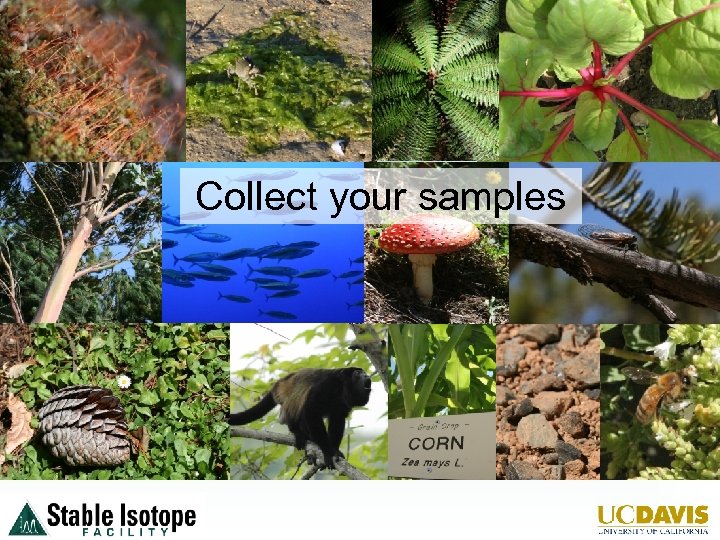
Collect your samples
Sample Preparation Material needs to be dry and homogenous Organisms can be analyzed whole if small enough Separate samples are required for hydrogen and oxygen
Sample Weights Sample should contain: 400 µg oxygen 80 µg hydrogen
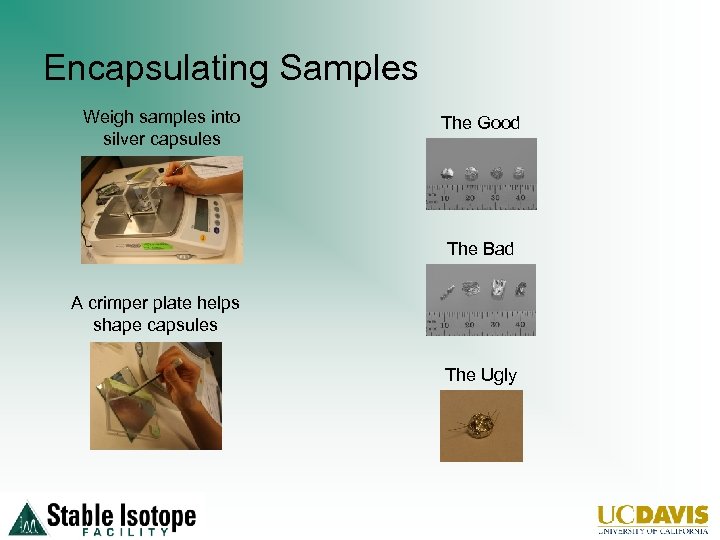
Encapsulating Samples Weigh samples into silver capsules The Good The Bad A crimper plate helps shape capsules The Ugly
Organizing Trays Load samples across rows of 96 -wells trays Do not leave empty wells between samples Label trays uniquely and clearly Place samples for different analyses in different trays
Sealing trays For small samples, place an index card or parafilm between tray and lid before sealing Tape lid securely to tray – use lab tape
International Shipments Use a shipping company that brokers their own packages (such as Fedex or DHL) Customs documents Specify plant genus and species Specify for “chemical analysis” Permits are required for bird feathers Email SIF@ucdavis. edu for the appropriate permit
Paperwork Complete an Analysis Order Form for each analysis type Complete a sample list for each Analysis Order From Email forms to sif@ucdavis. edu Include printed copies with samples
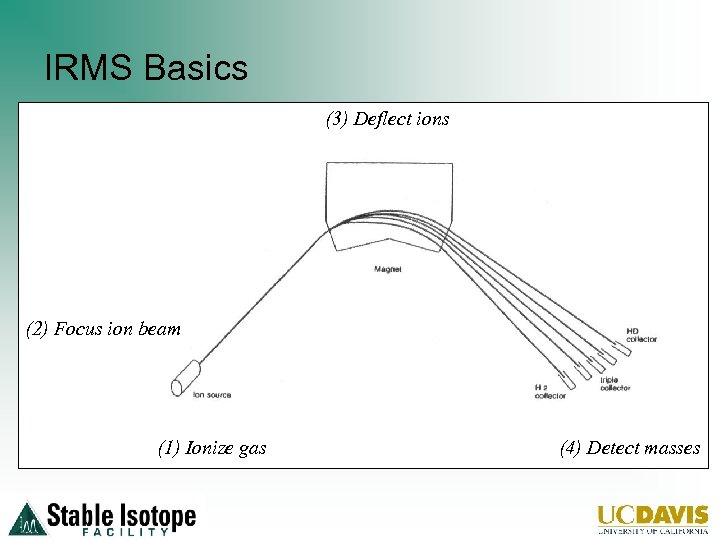
IRMS Basics (3) Deflect ions (2) Focus ion beam (1) Ionize gas (4) Detect masses
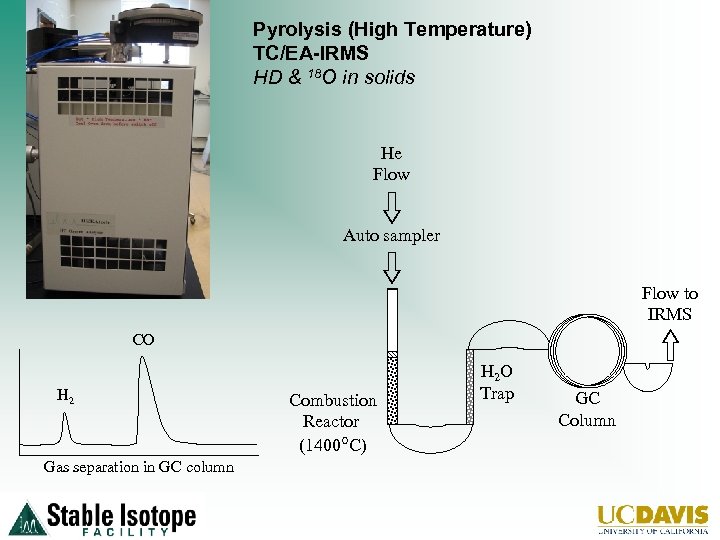
Pyrolysis (High Temperature) TC/EA-IRMS HD & 18 O in solids He Flow Auto sampler Flow to IRMS CO H 2 Gas separation in GC column Combustion Reactor (1400°C) H 2 O Trap GC Column
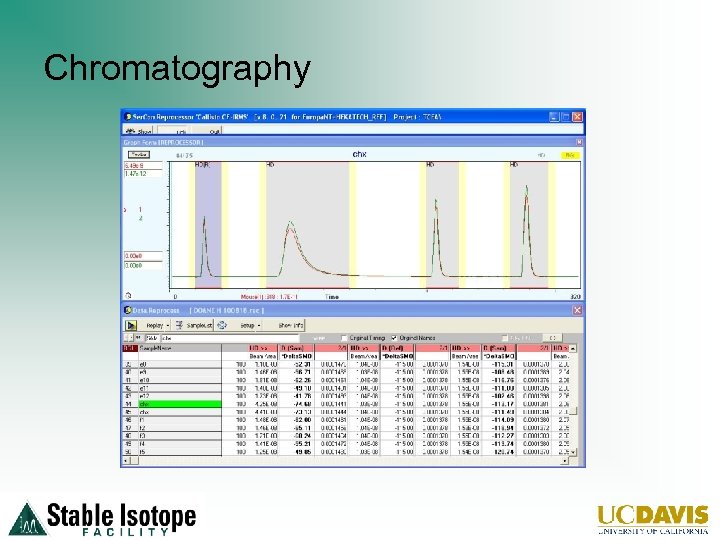
Chromatography
Standards - Hydrogen International standard (IAEA-CH-7) and inter-laboratory keratin standards are included in all runs In-house standards have been calibrated against same standards All results are expressed with respect to VSMOW
Standards - Oxygen International standards (IAEA-601, IAEA 602, USGS-8568) are included in all runs In-house standards have been calibrated against same standards All results are expressed with respect to VSMOW
Raw Data Reviewed in reprocessor Poor chromatography Evaluate reference gas values Confirm placement of standards
Hydrogen Corrections All corrections are performed on raw ratios Memory, if needed Drift over time H 3+ / Size correction Scale expansion
Oxygen Corrections Memory Drift Size Scale expansion
Exchangeable hydrogen Carboxyl and hydroxyl groups will exchange hydrogen atoms with water vapor Results in shift of deuterium value
Exchangeable Hydrogen - Keratin Accepted keratin standards allow measurement of keratin samples by “like treatment” Standards and samples equilibrate with lab atmosphere and are analyzed together
Exchangeable Hydrogen - Keratin Correcting to known values of keratin standards determines value of nonexchangeable hydrogen of keratin samples Only works for keratin
Exchangeable Hydrogen For non-keratin samples, percent of exchangeable hydrogen must be calculated
Dual-Equilibration By equilibrating a material with waters of different deuterium values, the percent of exchangeable hydrogen and deuterium value for the non-exchangeable fraction can be determined
Oxygen – Memory effect Oxygen is prone to carryover from one sample to the next Varies with age of reactor and ash accumulation Can be corrected for by mass balance Best precaution – run replicates
Скачать презентацию 18 O D H Analysis of Solids by
eedbbc0fef0943b63f1a8809a5dddcd5.ppt