


 Скачать презентацию 17 -Hydroxyprogesterone Caproate Injection 250 mg m L NDA
f3a1312c04ce844e8435aa1643d52be8.ppt
- Количество слайдов: 131
 17 -Hydroxyprogesterone Caproate Injection, 250 mg/m. L NDA 21 -945 Adeza Biomedical Advisory Committee Meeting Reproductive Health Drugs August 29, 2006 1
 Durlin E Hickok, MD, MPH Vice President, Medical Affairs Adeza Biomedical 2
 Presentation Adeza Biomedical Medical Need Clinical Review – Efficacy – Safety Benefit / Risk 3
 Presenters Durlin E Hickok, MD, MPH Vice President, Medical Affairs Adeza Biomedical Michael P. Nageotte, MD Professor, Obstetrics and Gynecology University of California, Irvine 4
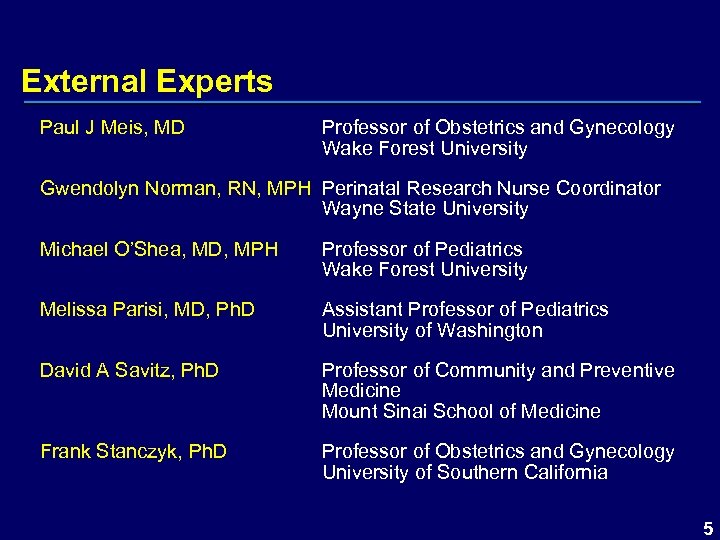 External Experts Paul J Meis, MD Professor of Obstetrics and Gynecology Wake Forest University Gwendolyn Norman, RN, MPH Perinatal Research Nurse Coordinator Wayne State University Michael O’Shea, MD, MPH Professor of Pediatrics Wake Forest University Melissa Parisi, MD, Ph. D Assistant Professor of Pediatrics University of Washington David A Savitz, Ph. D Professor of Community and Preventive Medicine Mount Sinai School of Medicine Frank Stanczyk, Ph. D Professor of Obstetrics and Gynecology University of Southern California 5
 Adeza Biomedical Medical technology company Focused on pregnancy-related and female reproductive disorders – preterm birth – infertility Submitted NDA for FDA approval to market 17 P in the US for the prevention of recurrent preterm birth 6
 Nomenclature 17 -HPC – 17 α-hydroxyprogesterone caproate 17 P – Clinical study formulation of 17 -HPC for injection used in the NICHD Study Gestiva™ – Adeza’s proposed trade name for 17 P Delalutin® – Trade name of previously marketed 17 -HPC 7
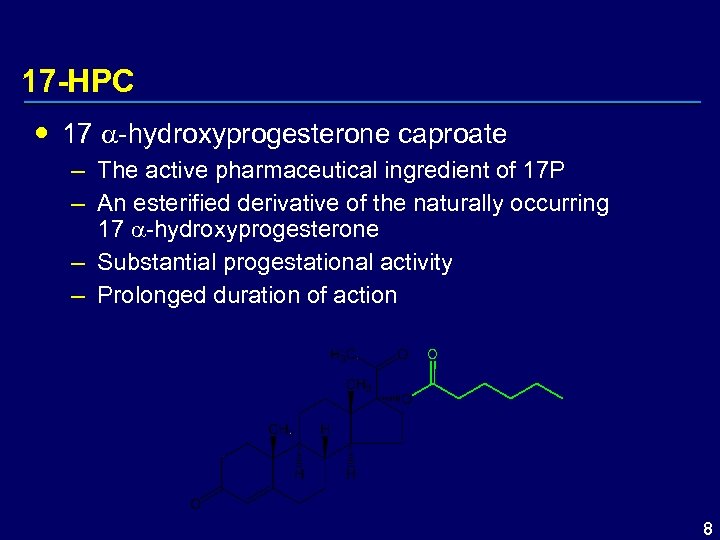 17 -HPC 17 -hydroxyprogesterone caproate – The active pharmaceutical ingredient of 17 P – An esterified derivative of the naturally occurring 17 -hydroxyprogesterone – Substantial progestational activity – Prolonged duration of action O 8
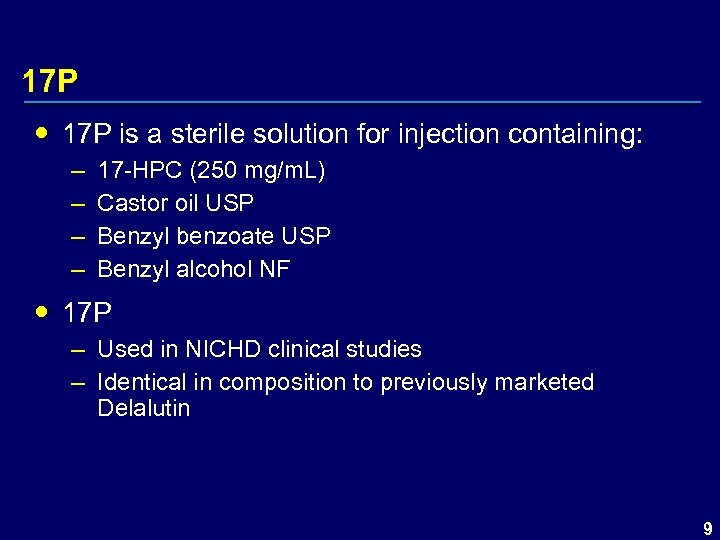 17 P is a sterile solution for injection containing: – – 17 -HPC (250 mg/m. L) Castor oil USP Benzyl benzoate USP Benzyl alcohol NF 17 P – Used in NICHD clinical studies – Identical in composition to previously marketed Delalutin 9
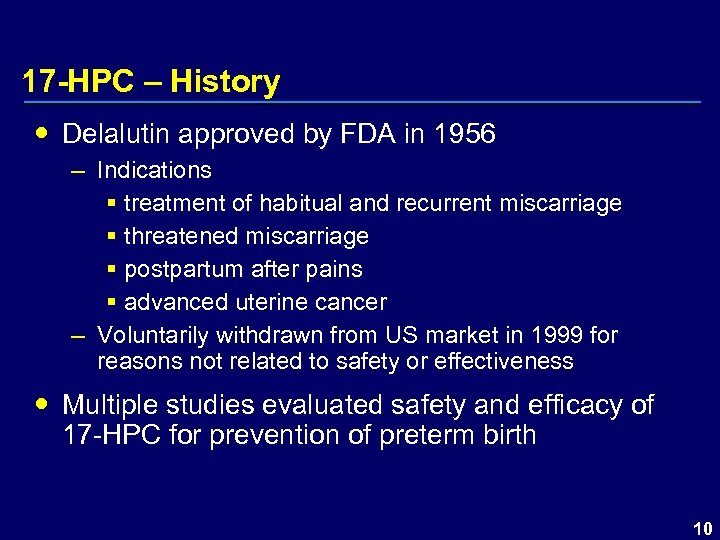 17 -HPC – History Delalutin approved by FDA in 1956 – Indications § treatment of habitual and recurrent miscarriage § threatened miscarriage § postpartum after pains § advanced uterine cancer – Voluntarily withdrawn from US market in 1999 for reasons not related to safety or effectiveness Multiple studies evaluated safety and efficacy of 17 -HPC for prevention of preterm birth 10
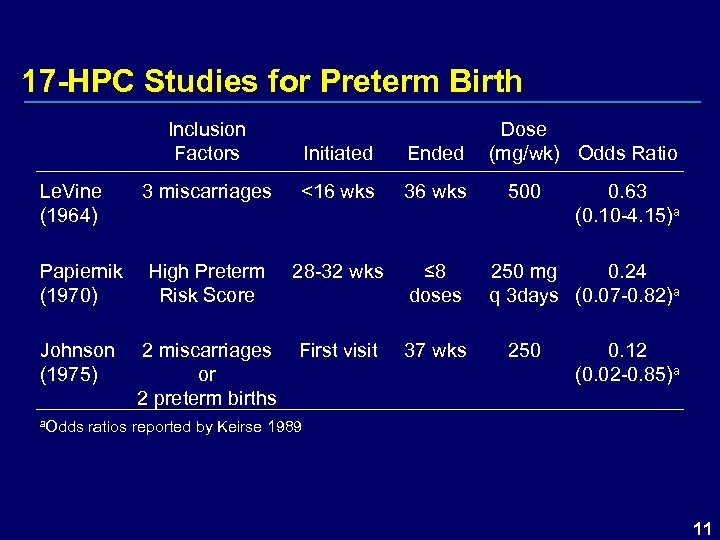 17 -HPC Studies for Preterm Birth Inclusion Factors Le. Vine (1964) Initiated Ended 3 miscarriages <16 wks 36 wks 28 -32 wks ≤ 8 doses First visit 37 wks Papiernik High Preterm (1970) Risk Score Johnson (1975) 2 miscarriages or 2 preterm births Dose (mg/wk) Odds Ratio 500 0. 63 (0. 10 -4. 15)a 250 mg 0. 24 q 3 days (0. 07 -0. 82)a 250 0. 12 (0. 02 -0. 85)a a. Odds ratios reported by Keirse 1989 11
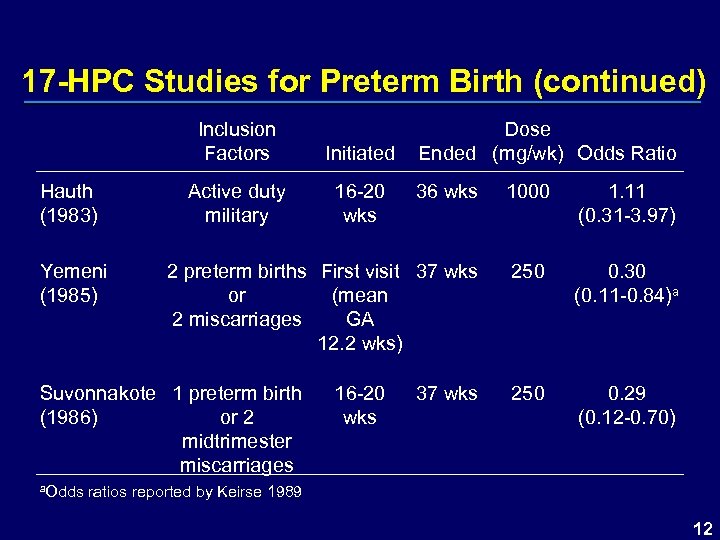 17 -HPC Studies for Preterm Birth (continued) Inclusion Factors Hauth (1983) Yemeni (1985) Initiated Active duty military 16 -20 wks Dose Ended (mg/wk) Odds Ratio 36 wks 1000 1. 11 (0. 31 -3. 97) 2 preterm births First visit 37 wks or (mean 2 miscarriages GA 12. 2 wks) 250 0. 30 (0. 11 -0. 84)a 250 0. 29 (0. 12 -0. 70) Suvonnakote 1 preterm birth (1986) or 2 midtrimester miscarriages 16 -20 wks 37 wks a. Odds ratios reported by Keirse 1989 12
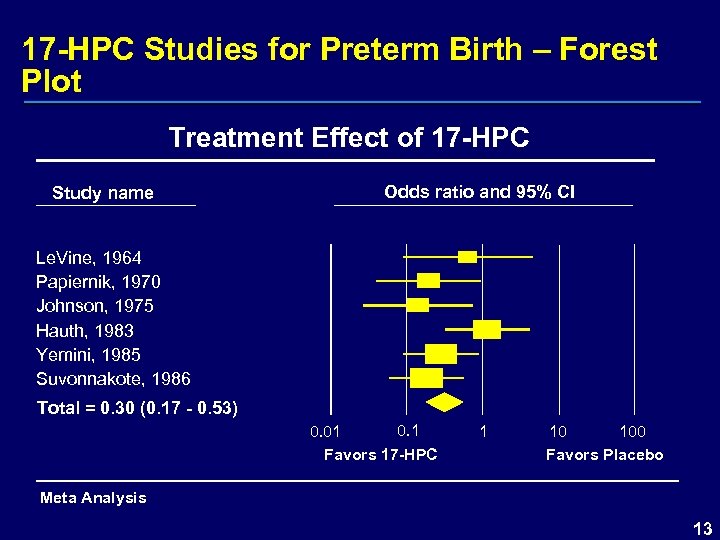 17 -HPC Studies for Preterm Birth – Forest Plot Treatment Effect of 17 -HPC Study name Odds ratio and 95% CI Le. Vine, 1964 Papiernik, 1970 Johnson, 1975 Hauth, 1983 Yemini, 1985 Suvonnakote, 1986 Total = 0. 30 (0. 17 - 0. 53) 0. 1 0. 01 Favors 17 -HPC 1 10 100 Favors Placebo Meta Analysis 13
 Development of 17 P NDA Submission NICHD conducted controlled clinical study evaluating 17 P for prevention of recurrent preterm birth Results published in New England Journal of Medicine, 2003 Adeza allowed access to clinical database 14
 Development of 17 P NDA Submission Results from NICHD study provide primary basis for efficacy claim of Adeza’s NDA submission for 17 P – – Large, multicenter study Highly statistically significant efficacy findings Study stopped early by DSMC for efficacy Results consistent across subsets of patients 15
 Proposed Indication for Gestiva (17 P) “Gestiva is indicated for the prevention of preterm birth in pregnant women with a history of at least one spontaneous preterm birth. ” 16
 Medical Need Michael P Nageotte, MD Professor, Obstetrics & Gynecology University of California, Irvine Immediate Past President Society for Maternal-Fetal Medicine 17
 Definition of Preterm Birth Preterm birth is defined as birth before the 37 th week of gestation 18
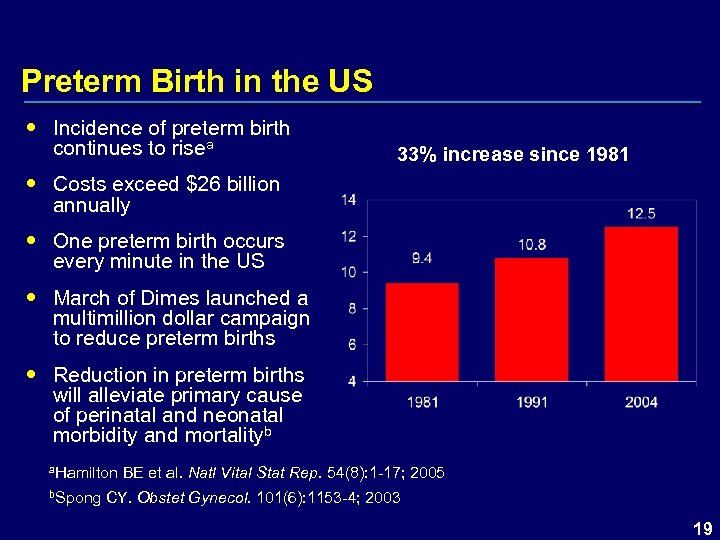 Preterm Birth in the US Incidence of preterm birth continues to risea 33% increase since 1981 Costs exceed $26 billion annually One preterm birth occurs every minute in the US March of Dimes launched a multimillion dollar campaign to reduce preterm births Reduction in preterm births will alleviate primary cause of perinatal and neonatal morbidity and mortalityb a. Hamilton BE et al. Natl b. Spong CY. Obstet Vital Stat Rep. 54(8): 1 -17; 2005 Gynecol. 101(6): 1153 -4; 2003 19
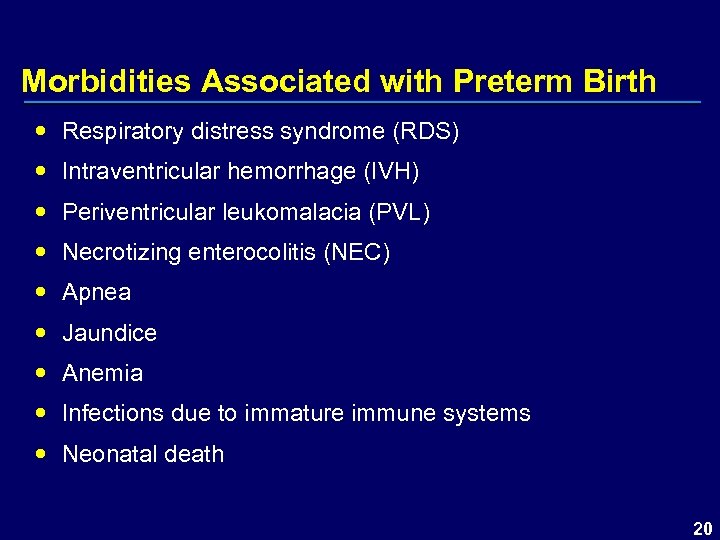 Morbidities Associated with Preterm Birth Respiratory distress syndrome (RDS) Intraventricular hemorrhage (IVH) Periventricular leukomalacia (PVL) Necrotizing enterocolitis (NEC) Apnea Jaundice Anemia Infections due to immature immune systems Neonatal death 20
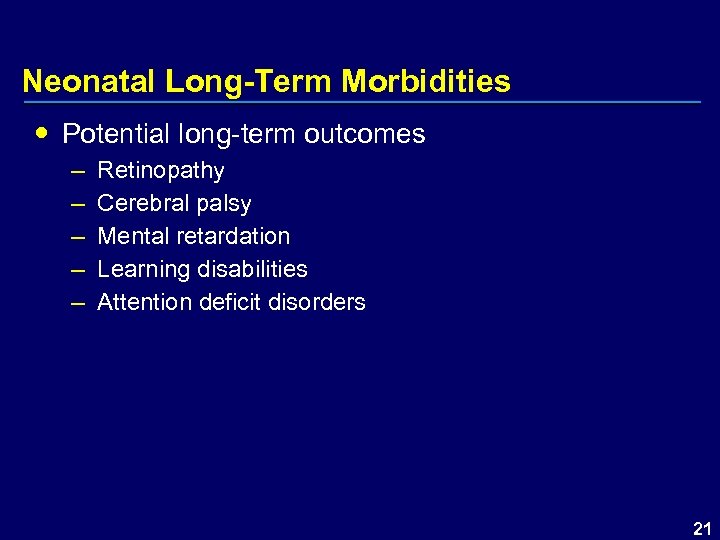 Neonatal Long-Term Morbidities Potential long-term outcomes – – – Retinopathy Cerebral palsy Mental retardation Learning disabilities Attention deficit disorders 21
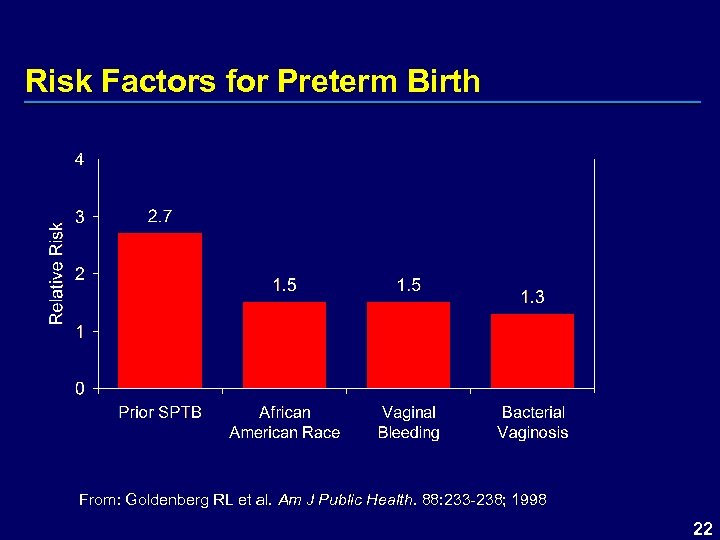 Risk Factors for Preterm Birth From: Goldenberg RL et al. Am J Public Health. 88: 233 -238; 1998 22
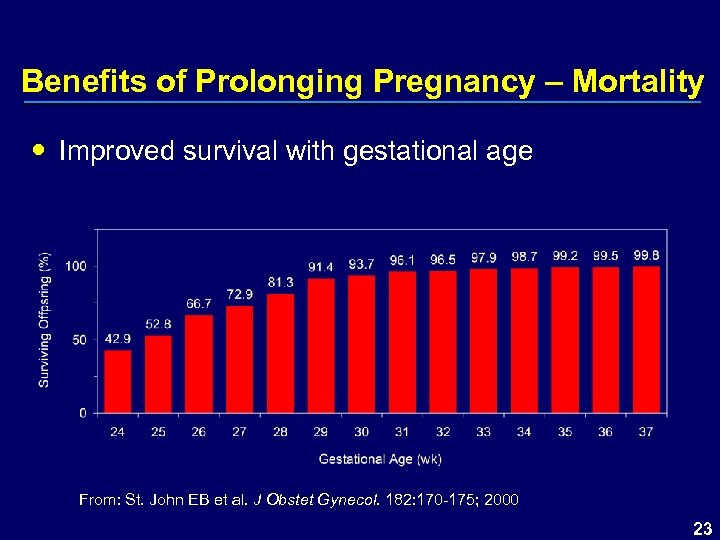 Benefits of Prolonging Pregnancy – Mortality Improved survival with gestational age From: St. John EB et al. J Obstet Gynecol. 182: 170 -175; 2000 23
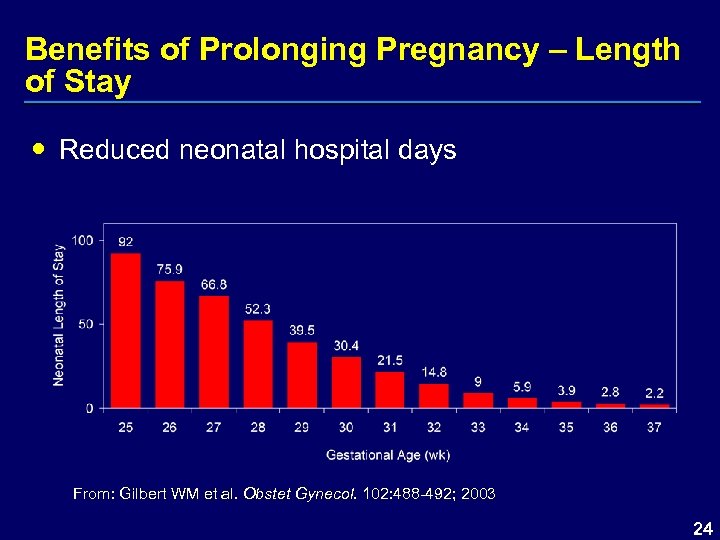 Benefits of Prolonging Pregnancy – Length of Stay Reduced neonatal hospital days From: Gilbert WM et al. Obstet Gynecol. 102: 488 -492; 2003 24
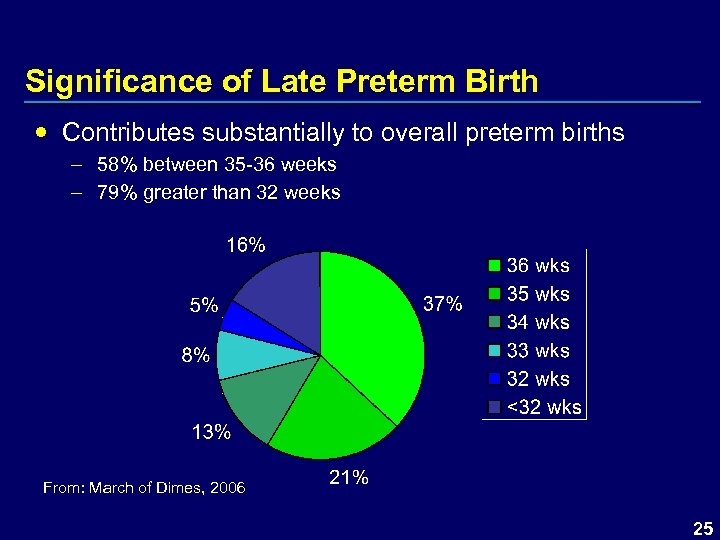 Significance of Late Preterm Birth Contributes substantially to overall preterm births – 58% between 35 -36 weeks – 79% greater than 32 weeks From: March of Dimes, 2006 25
 Significance of Late Preterm Birth Increased mortalitya – Mortality risk approximately 3 -fold higher at 35 -36 weeks Increased morbiditiesb, c – – – Respiratory distress requiring O 2 Temperature instability Hypoglycemia Jaundice Attention deficit disorders Increased hospitalizations and associated costsb, c – Initial hospitalization costs approximately 3 -fold higher – Risk for rehospitalization from 2 weeks to 6 months post discharge increased a. Kramer MS et al. JAMA. 284: 843 -9; 2000 b. Wang ML et al. Pediatrics. 114: 372 -6; 2004 c. Escobar GJ et al. Semin Perinatol. 30(1): 28 -33; 2006 26
 Available Treatments Treatment of preterm labor – Tocolytics effective for short-term prolongation after onset of labor Prevention of preterm birth – No effective treatments identified prior to 17 P – American College of Obstetricians and Gynecologists (ACOG) recommends use to prevent recurrent preterm birth in 2003 after publication of the NICHD studya, b – 17 P currently in use among Ob/Gyn community for prevention of recurrent preterm birth a. ACOG News Release, 2003 b. ACOG Committee Opinion. Obstet Gynecol. 102(5 pt 1): 1115 -6; 2003 27
 Current Availability of 17 P Available only from compounding pharmacies – No consistent labeling/prescribing information – Limited FDA oversight – No regulations ensuring consistency of products between compounding pharmacies – No federal regulations requiring reporting of AE/SAEs (Med. Watch) 28
 Conclusions Compelling need to address rising incidence of preterm birth and associated costs and morbidities Benefits of prolonging pregnancy at any gestation – Prevention of early preterm births – Prevention of late preterm births Need for FDA-approved product 29
 Clinical Review 30
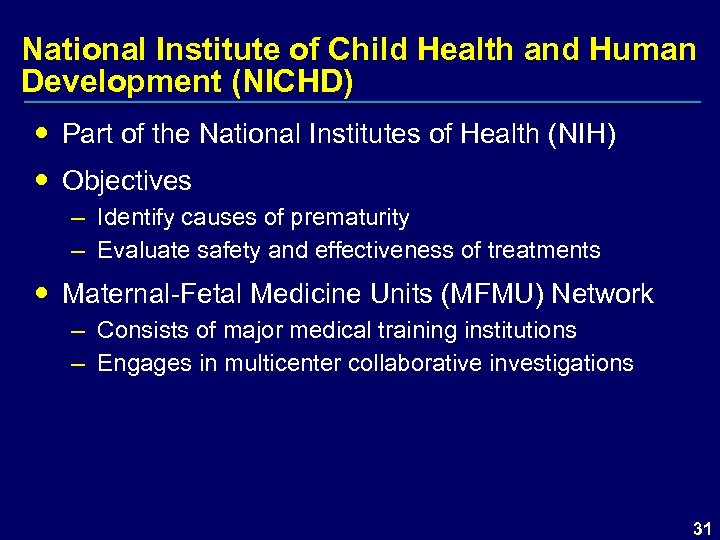 National Institute of Child Health and Human Development (NICHD) Part of the National Institutes of Health (NIH) Objectives – Identify causes of prematurity – Evaluate safety and effectiveness of treatments Maternal-Fetal Medicine Units (MFMU) Network – Consists of major medical training institutions – Engages in multicenter collaborative investigations 31
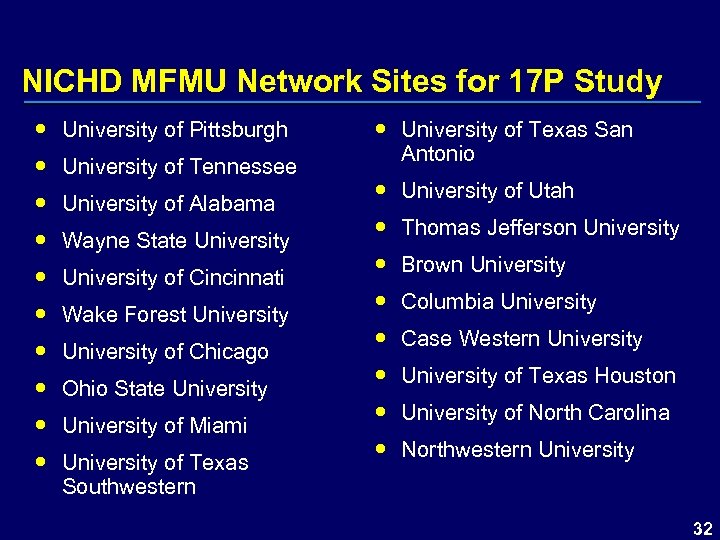 NICHD MFMU Network Sites for 17 P Study University of Pittsburgh University of Tennessee University of Alabama Wayne State University of Cincinnati Wake Forest University of Chicago Ohio State University of Miami University of Texas Southwestern University of Texas San Antonio University of Utah Thomas Jefferson University Brown University Columbia University Case Western University of Texas Houston University of North Carolina Northwestern University 32
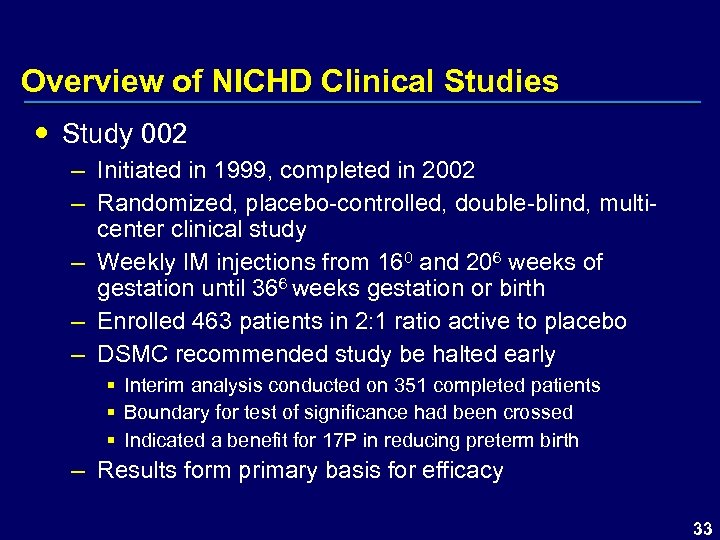 Overview of NICHD Clinical Studies Study 002 – Initiated in 1999, completed in 2002 – Randomized, placebo-controlled, double-blind, multicenter clinical study – Weekly IM injections from 160 and 206 weeks of gestation until 366 weeks gestation or birth – Enrolled 463 patients in 2: 1 ratio active to placebo – DSMC recommended study be halted early § Interim analysis conducted on 351 completed patients § Boundary for test of significance had been crossed § Indicated a benefit for 17 P in reducing preterm birth – Results form primary basis for efficacy 33
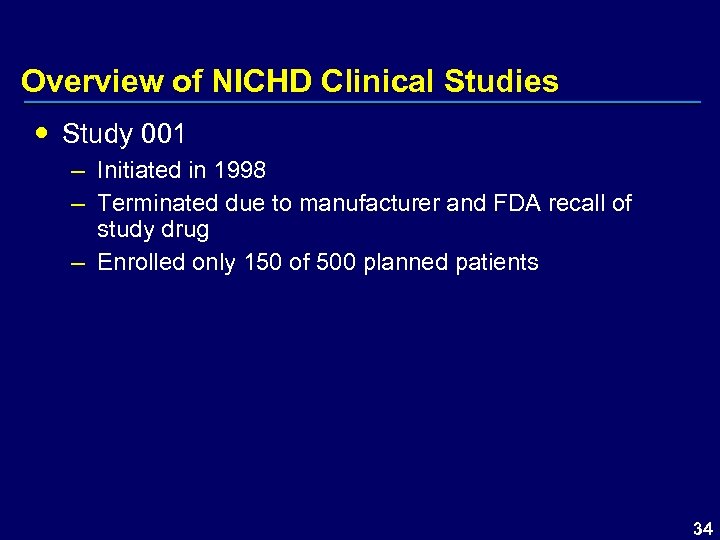 Overview of NICHD Clinical Studies Study 001 – Initiated in 1998 – Terminated due to manufacturer and FDA recall of study drug – Enrolled only 150 of 500 planned patients 34
 Overview of NICHD Clinical Studies Follow-Up Study – Observational follow-up safety study to assess the long term safety outcome of infants exposed to 17 P in utero – Examined health and development of infants born during Study 002 – Conducted at 15 MFMU Network study centers – Enrolled 278 children 35
 Efficacy and Safety Databases Efficacy Assessment Study 002 Safety Assessment Study 002 Study 001 Follow-Up Study 36
 Efficacy 37
 Enrollment Criteria Pregnant women with documented history of previous singleton spontaneous preterm delivery (SPTD) Gestational age of 160 to 206 weeks at randomization Exclusion criteria: – – – Multifetal gestation Known major fetal anomaly or fetal demise Prior progesterone treatment during current pregnancy Prior heparin therapy during current pregnancy History of thromboembolic disease History of maternal medical/obstetrical complications (eg current or planned cerclage, HTN requiring medications, seizure disorder) 38
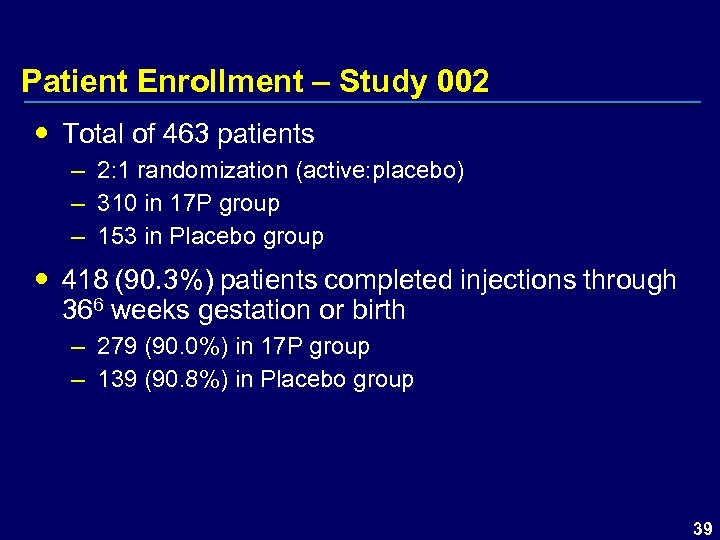 Patient Enrollment – Study 002 Total of 463 patients – 2: 1 randomization (active: placebo) – 310 in 17 P group – 153 in Placebo group 418 (90. 3%) patients completed injections through 366 weeks gestation or birth – 279 (90. 0%) in 17 P group – 139 (90. 8%) in Placebo group 39
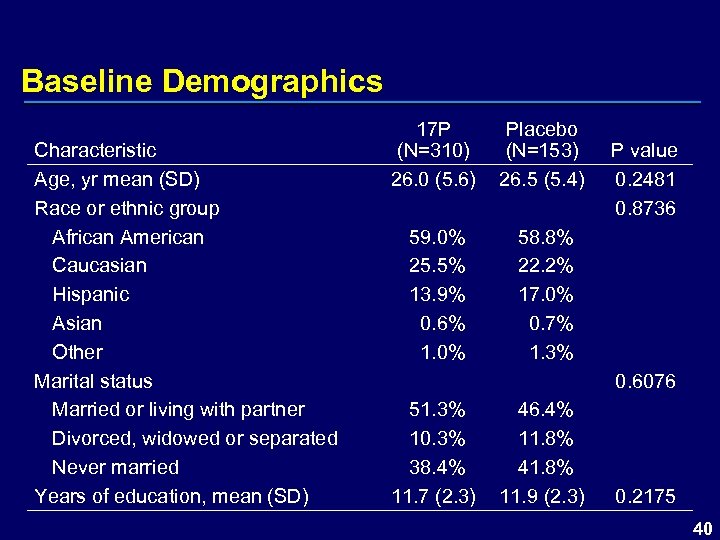 Baseline Demographics Characteristic Age, yr mean (SD) Race or ethnic group African American Caucasian Hispanic Asian Other Marital status Married or living with partner Divorced, widowed or separated Never married Years of education, mean (SD) 17 P (N=310) 26. 0 (5. 6) Placebo (N=153) 26. 5 (5. 4) 59. 0% 25. 5% 13. 9% 0. 6% 1. 0% 58. 8% 22. 2% 17. 0% 0. 7% 1. 3% P value 0. 2481 0. 8736 0. 6076 51. 3% 10. 3% 38. 4% 11. 7 (2. 3) 46. 4% 11. 8% 41. 8% 11. 9 (2. 3) 0. 2175 40
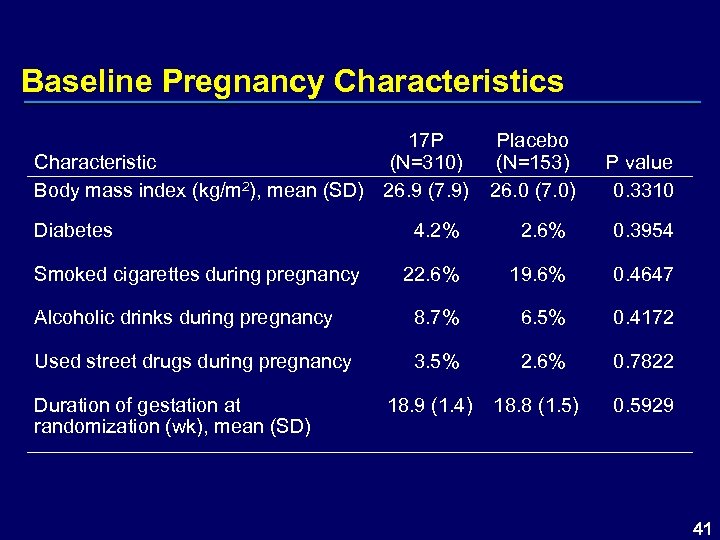 Baseline Pregnancy Characteristics 17 P Characteristic (N=310) Body mass index (kg/m 2), mean (SD) 26. 9 (7. 9) Diabetes Placebo (N=153) 26. 0 (7. 0) P value 0. 3310 4. 2% 2. 6% 0. 3954 22. 6% 19. 6% 0. 4647 Alcoholic drinks during pregnancy 8. 7% 6. 5% 0. 4172 Used street drugs during pregnancy 3. 5% 2. 6% 0. 7822 Smoked cigarettes during pregnancy Duration of gestation at randomization (wk), mean (SD) 18. 9 (1. 4) 18. 8 (1. 5) 0. 5929 41
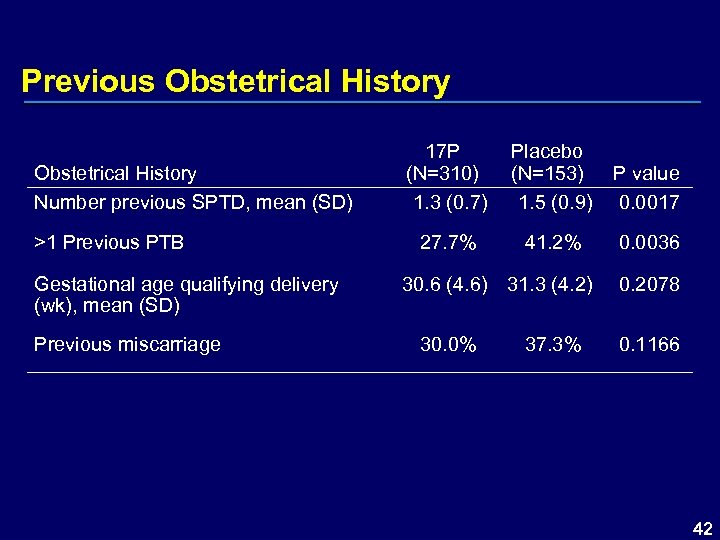 Previous Obstetrical History Number previous SPTD, mean (SD) >1 Previous PTB Gestational age qualifying delivery (wk), mean (SD) Previous miscarriage 17 P (N=310) 1. 3 (0. 7) Placebo (N=153) 1. 5 (0. 9) P value 0. 0017 27. 7% 41. 2% 0. 0036 30. 6 (4. 6) 31. 3 (4. 2) 30. 0% 37. 3% 0. 2078 0. 1166 42
 Efficacy Endpoints – Primary Preterm birth <37 weeks 43
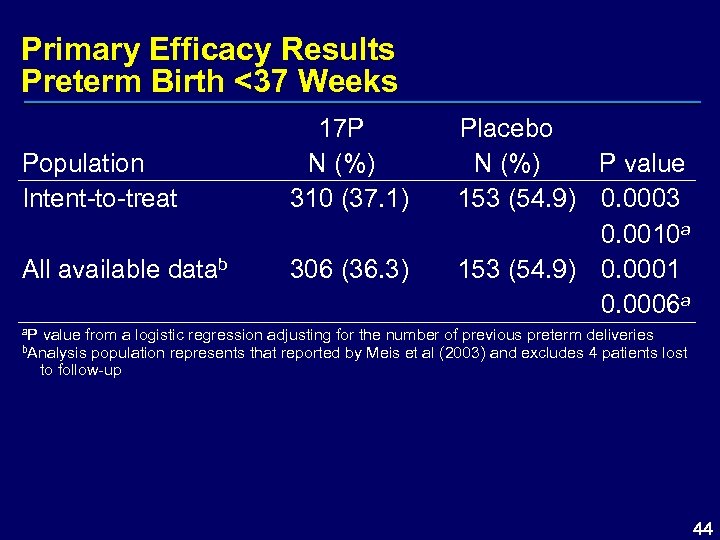 Primary Efficacy Results Preterm Birth <37 Weeks Population Intent-to-treat 17 P N (%) 310 (37. 1) All available datab 306 (36. 3) Placebo N (%) P value 153 (54. 9) 0. 0003 0. 0010 a 153 (54. 9) 0. 0001 0. 0006 a a. P value from a logistic regression adjusting for the number of previous preterm deliveries b. Analysis population represents that reported by Meis et al (2003) and excludes 4 patients lost to follow-up 44
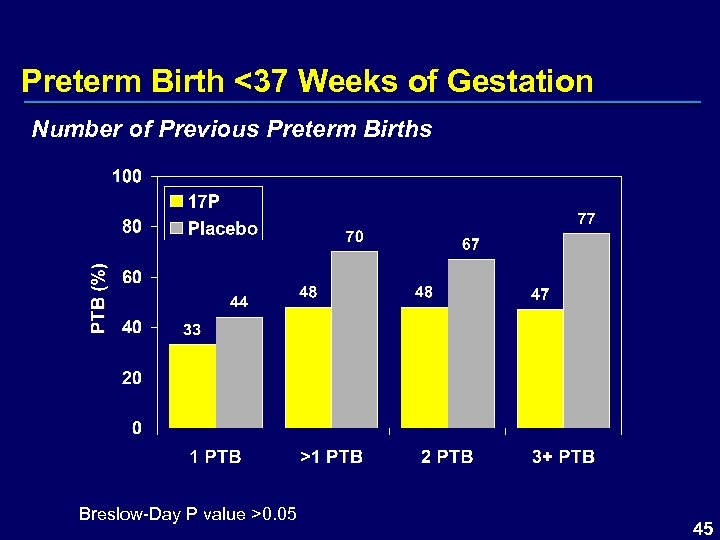 Preterm Birth <37 Weeks of Gestation Number of Previous Preterm Births Breslow-Day P value >0. 05 45
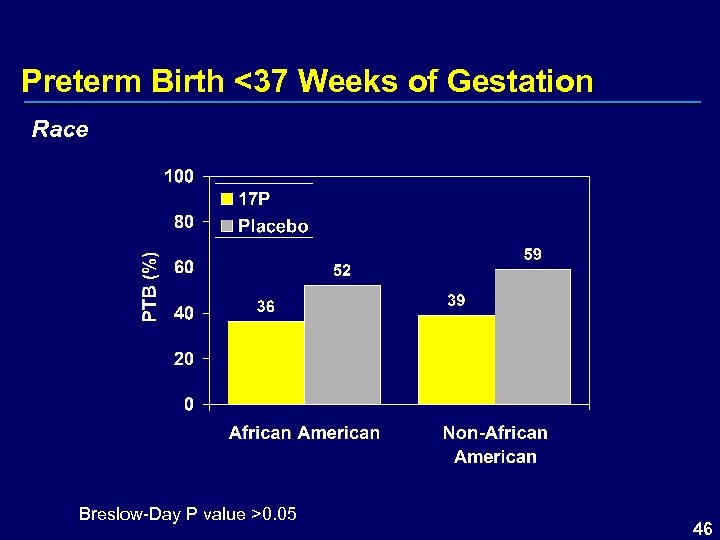 Preterm Birth <37 Weeks of Gestation Race Breslow-Day P value >0. 05 46
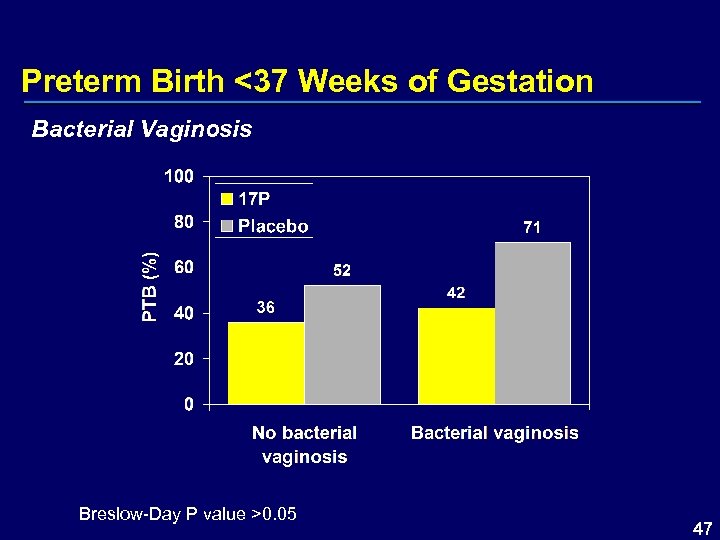 Preterm Birth <37 Weeks of Gestation Bacterial Vaginosis Breslow-Day P value >0. 05 47
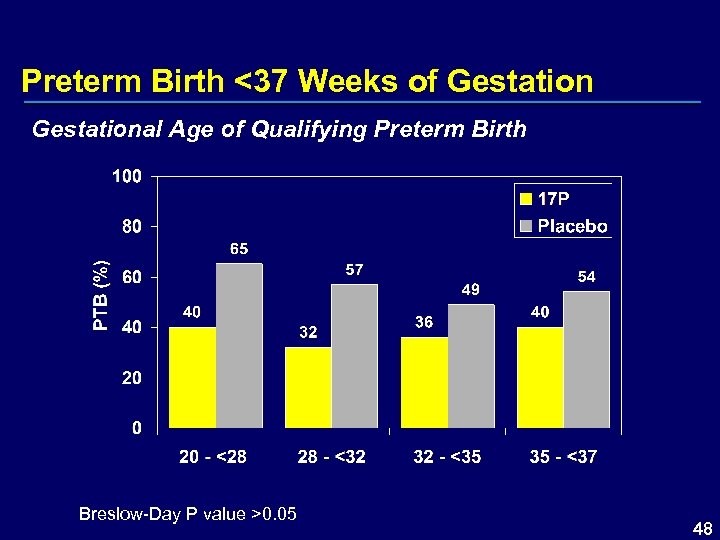 Preterm Birth <37 Weeks of Gestational Age of Qualifying Preterm Birth Breslow-Day P value >0. 05 48
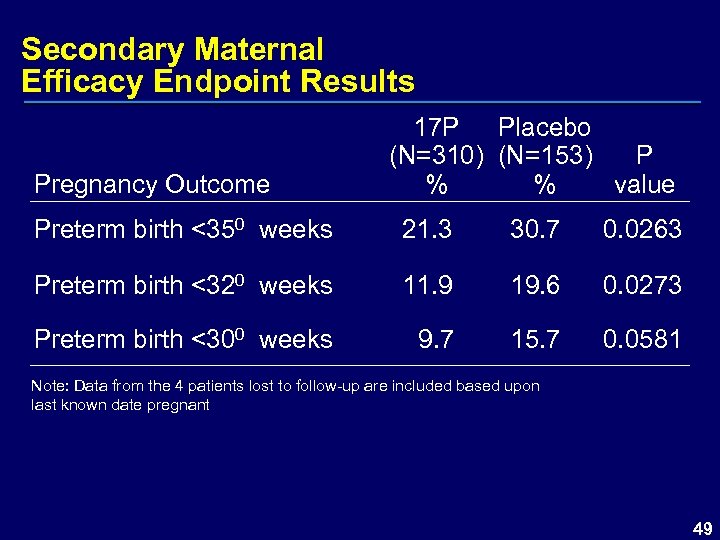 Secondary Maternal Efficacy Endpoint Results Pregnancy Outcome 17 P Placebo (N=310) (N=153) P % % value Preterm birth <350 weeks 21. 3 30. 7 0. 0263 Preterm birth <320 weeks 11. 9 19. 6 0. 0273 Preterm birth <300 weeks 9. 7 15. 7 0. 0581 Note: Data from the 4 patients lost to follow-up are included based upon last known date pregnant 49
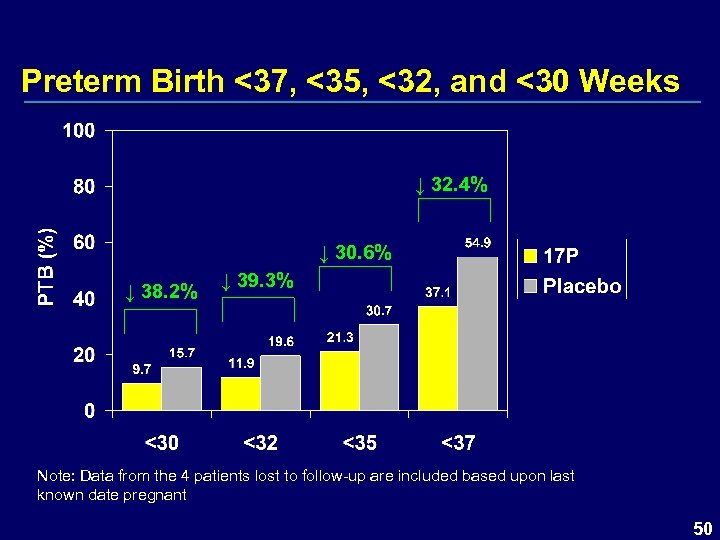 Preterm Birth <37, <35, <32, and <30 Weeks ↓ 32. 4% ↓ 30. 6% ↓ 38. 2% ↓ 39. 3% Note: Data from the 4 patients lost to follow-up are included based upon last known date pregnant 50
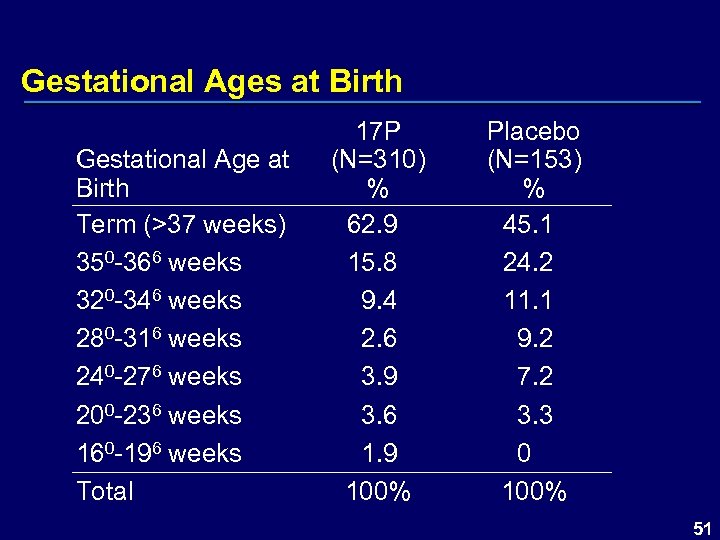 Gestational Ages at Birth Gestational Age at Birth Term (>37 weeks) 350 -366 weeks 320 -346 weeks 280 -316 weeks 240 -276 weeks 200 -236 weeks 160 -196 weeks Total 17 P (N=310) % 62. 9 15. 8 9. 4 2. 6 3. 9 3. 6 1. 9 100% Placebo (N=153) % 45. 1 24. 2 11. 1 9. 2 7. 2 3. 3 0 100% 51
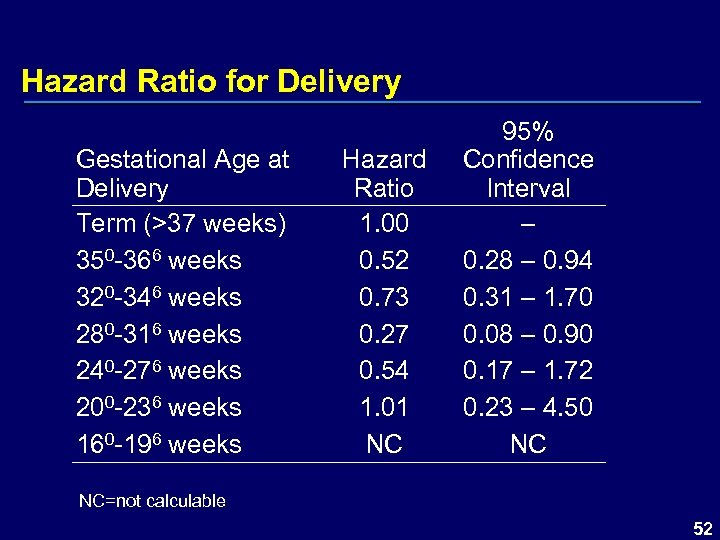 Hazard Ratio for Delivery Gestational Age at Delivery Term (>37 weeks) 350 -366 weeks 320 -346 weeks 280 -316 weeks 240 -276 weeks 200 -236 weeks 160 -196 weeks Hazard Ratio 1. 00 0. 52 0. 73 0. 27 0. 54 1. 01 NC 95% Confidence Interval – 0. 28 – 0. 94 0. 31 – 1. 70 0. 08 – 0. 90 0. 17 – 1. 72 0. 23 – 4. 50 NC NC=not calculable 52
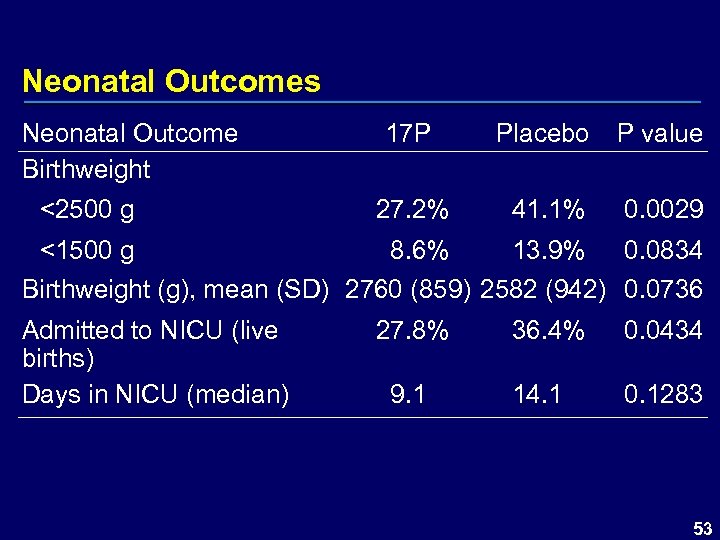 Neonatal Outcomes Neonatal Outcome Birthweight <2500 g 17 P Placebo P value 27. 2% 41. 1% 0. 0029 <1500 g 8. 6% 13. 9% 0. 0834 Birthweight (g), mean (SD) 2760 (859) 2582 (942) 0. 0736 Admitted to NICU (live births) Days in NICU (median) 27. 8% 9. 1 36. 4% 0. 0434 14. 1 0. 1283 53
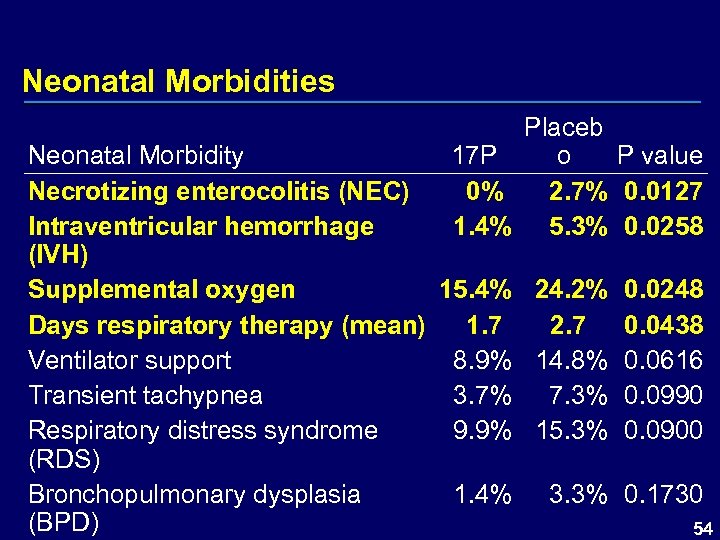 Neonatal Morbidities Placeb 17 P o P value 0% 2. 7% 0. 0127 1. 4% 5. 3% 0. 0258 Neonatal Morbidity Necrotizing enterocolitis (NEC) Intraventricular hemorrhage (IVH) Supplemental oxygen 15. 4% 24. 2% 0. 0248 Days respiratory therapy (mean) 1. 7 2. 7 0. 0438 Ventilator support 8. 9% 14. 8% 0. 0616 Transient tachypnea 3. 7% 7. 3% 0. 0990 Respiratory distress syndrome 9. 9% 15. 3% 0. 0900 (RDS) Bronchopulmonary dysplasia 1. 4% 3. 3% 0. 1730 (BPD) 54
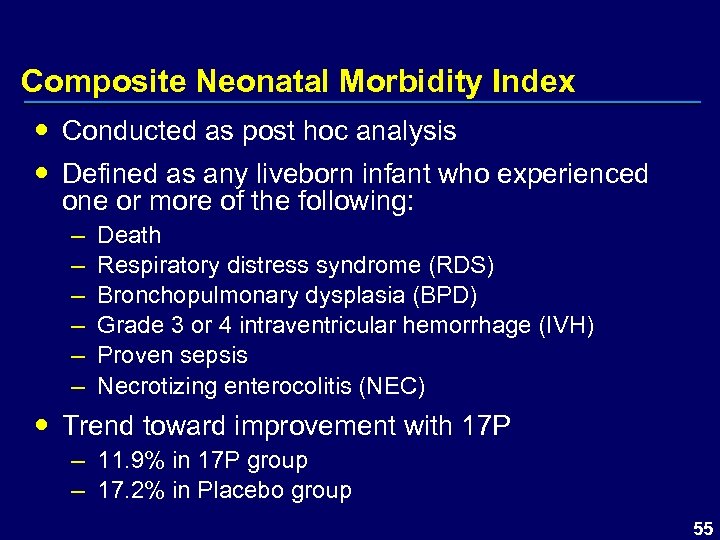 Composite Neonatal Morbidity Index Conducted as post hoc analysis Defined as any liveborn infant who experienced one or more of the following: – – – Death Respiratory distress syndrome (RDS) Bronchopulmonary dysplasia (BPD) Grade 3 or 4 intraventricular hemorrhage (IVH) Proven sepsis Necrotizing enterocolitis (NEC) Trend toward improvement with 17 P – 11. 9% in 17 P group – 17. 2% in Placebo group 55
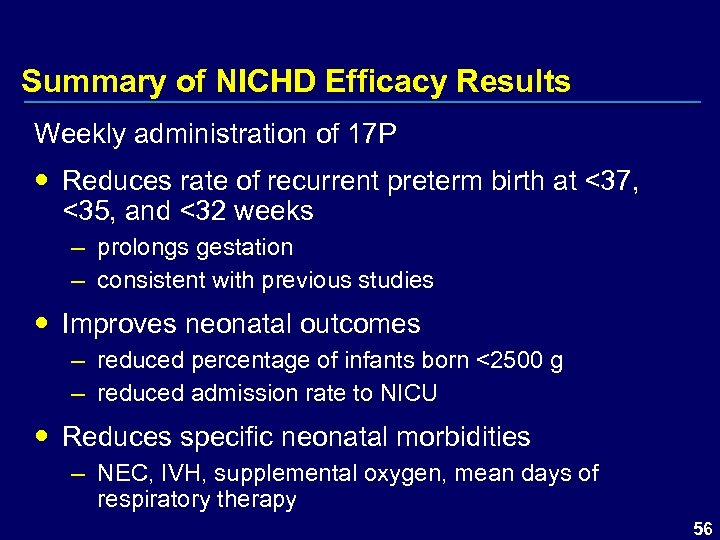 Summary of NICHD Efficacy Results Weekly administration of 17 P Reduces rate of recurrent preterm birth at <37, <35, and <32 weeks – prolongs gestation – consistent with previous studies Improves neonatal outcomes – reduced percentage of infants born <2500 g – reduced admission rate to NICU Reduces specific neonatal morbidities – NEC, IVH, supplemental oxygen, mean days of respiratory therapy 56
 Safety 57
 Safety Database Study 002 Study 001 Follow-Up Study 58
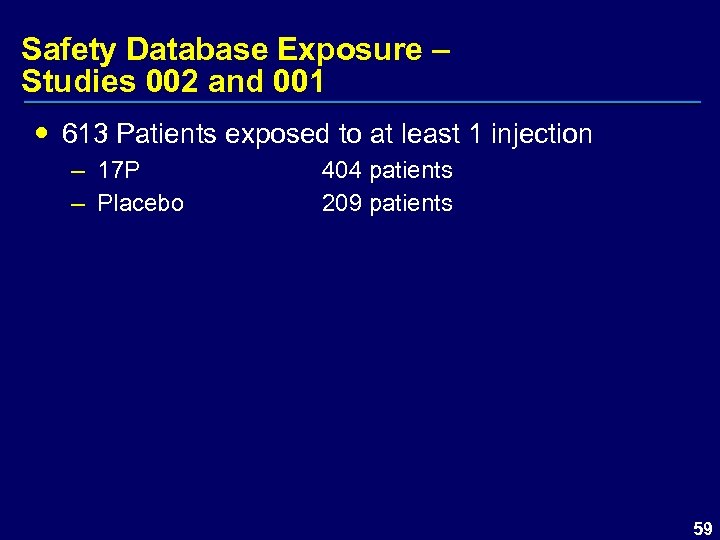 Safety Database Exposure – Studies 002 and 001 613 Patients exposed to at least 1 injection – 17 P – Placebo 404 patients 209 patients 59
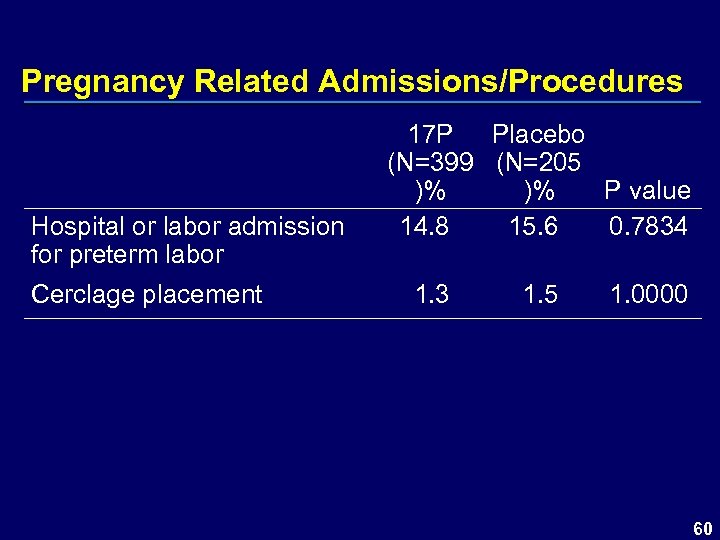 Pregnancy Related Admissions/Procedures Hospital or labor admission for preterm labor Cerclage placement 17 P Placebo (N=399 (N=205 )% )% P value 14. 8 15. 6 0. 7834 1. 3 1. 5 1. 0000 60
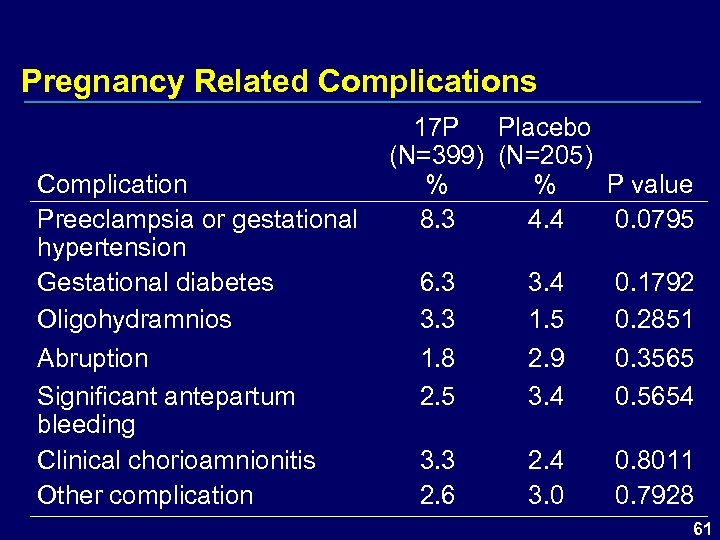 Pregnancy Related Complications 17 P Placebo (N=399) (N=205) Complication % % P value Preeclampsia or gestational 8. 3 4. 4 0. 0795 hypertension Gestational diabetes 6. 3 3. 4 0. 1792 Oligohydramnios 3. 3 1. 5 0. 2851 Abruption 1. 8 2. 9 0. 3565 Significant antepartum 2. 5 3. 4 0. 5654 bleeding Clinical chorioamnionitis 3. 3 2. 4 0. 8011 Other complication 2. 6 3. 0 0. 7928 61
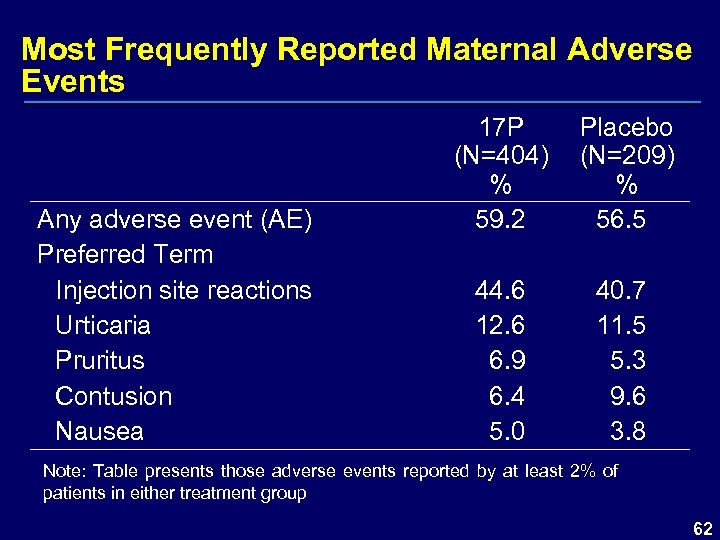 Most Frequently Reported Maternal Adverse Events Any adverse event (AE) Preferred Term Injection site reactions Urticaria Pruritus Contusion Nausea 17 P (N=404) % 59. 2 44. 6 12. 6 6. 9 6. 4 5. 0 Placebo (N=209) % 56. 5 40. 7 11. 5 5. 3 9. 6 3. 8 Note: Table presents those adverse events reported by at least 2% of patients in either treatment group 62
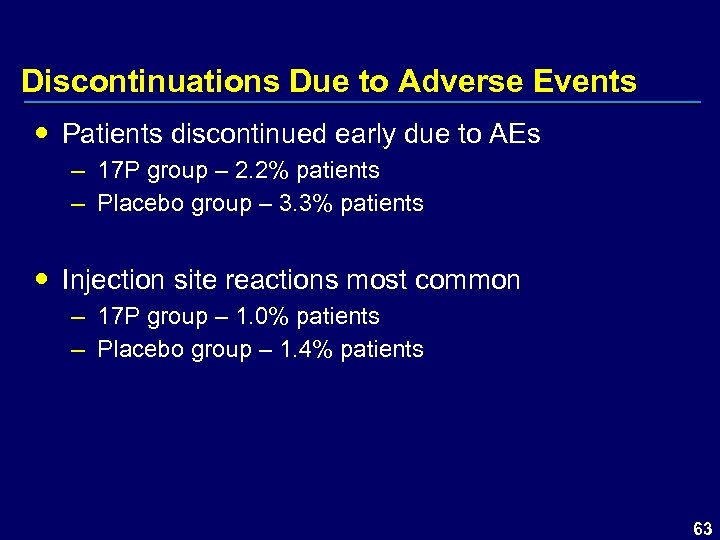 Discontinuations Due to Adverse Events Patients discontinued early due to AEs – 17 P group – 2. 2% patients – Placebo group – 3. 3% patients Injection site reactions most common – 17 P group – 1. 0% patients – Placebo group – 1. 4% patients 63
 Serious Adverse Events SAEs collected according to NICHD standardized procedures – All deaths (maternal, neonatal, fetal) – Other serious and unexpected AEs Analysis also included congenital anomalies 64
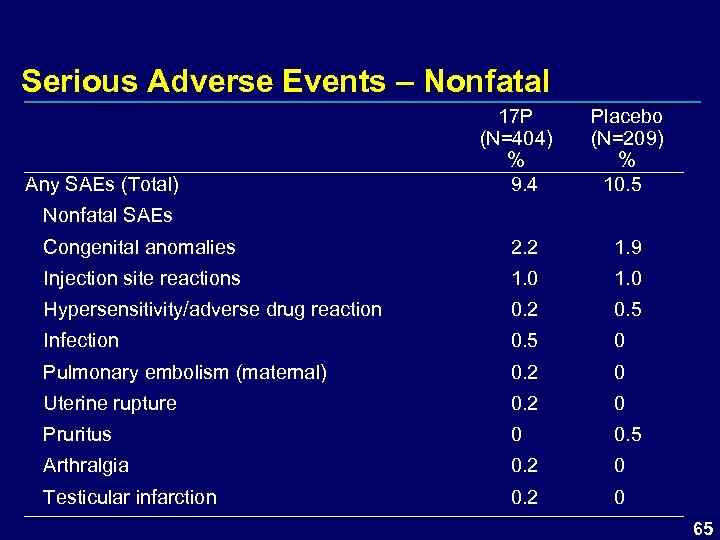 Serious Adverse Events – Nonfatal Any SAEs (Total) 17 P (N=404) % 9. 4 Nonfatal SAEs Placebo (N=209) % 10. 5 Congenital anomalies 2. 2 1. 9 Injection site reactions 1. 0 Hypersensitivity/adverse drug reaction 0. 2 0. 5 Infection 0. 5 0 Pulmonary embolism (maternal) 0. 2 0 Uterine rupture 0. 2 0 Pruritus 0 0. 5 Arthralgia 0. 2 0 Testicular infarction 0. 2 0 65
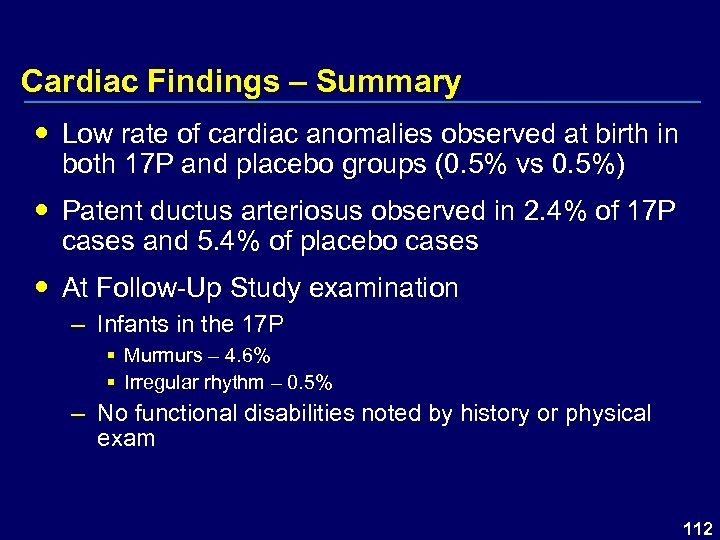
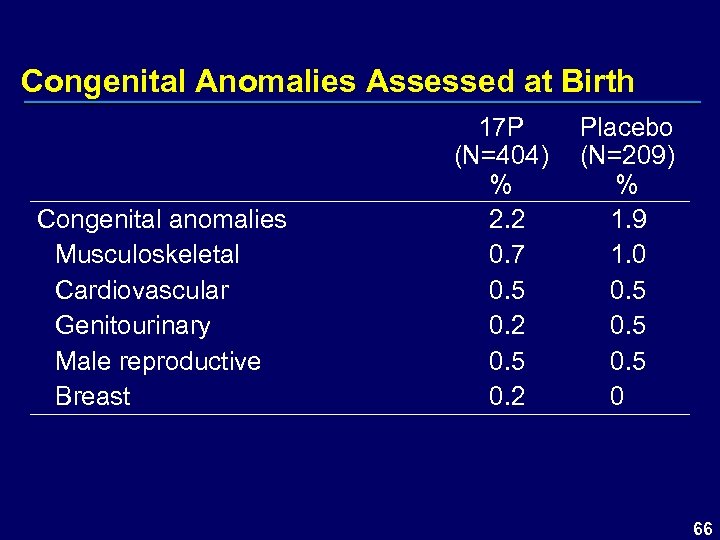 Congenital Anomalies Assessed at Birth Congenital anomalies Musculoskeletal Cardiovascular Genitourinary Male reproductive Breast 17 P (N=404) % 2. 2 0. 7 0. 5 0. 2 Placebo (N=209) % 1. 9 1. 0 0. 5 0 66
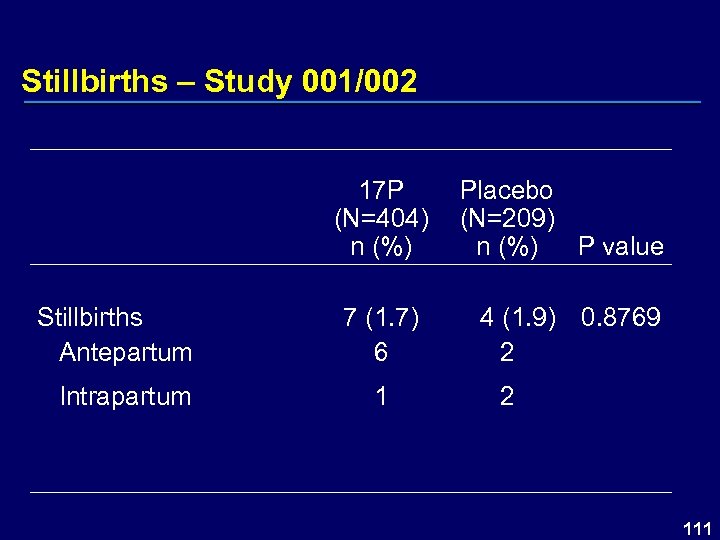
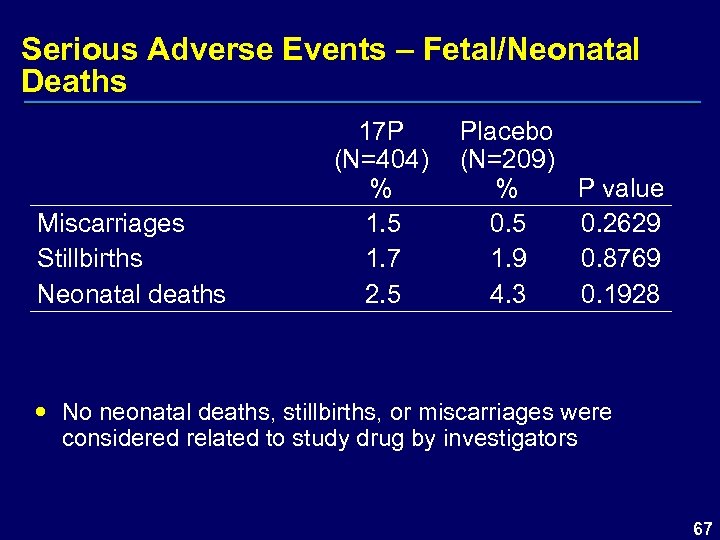 Serious Adverse Events – Fetal/Neonatal Deaths Miscarriages Stillbirths Neonatal deaths 17 P (N=404) % 1. 5 1. 7 2. 5 Placebo (N=209) % P value 0. 5 0. 2629 1. 9 0. 8769 4. 3 0. 1928 No neonatal deaths, stillbirths, or miscarriages were considered related to study drug by investigators 67
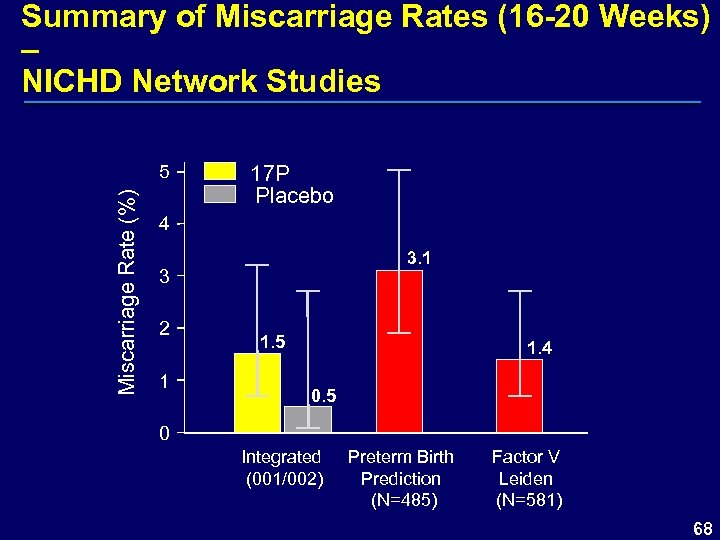 Summary of Miscarriage Rates (16 -20 Weeks) – NICHD Network Studies Miscarriage Rate (%) 5 17 P Placebo 4 3. 1 3 2 1 1. 5 1. 4 0. 5 0 Integrated (001/002) Preterm Birth Prediction (N=485) Factor V Leiden (N=581) 68
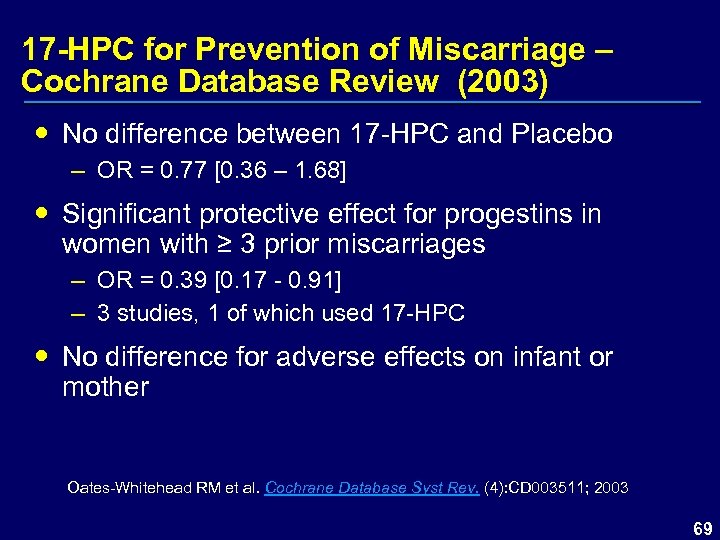 17 -HPC for Prevention of Miscarriage – Cochrane Database Review (2003) No difference between 17 -HPC and Placebo – OR = 0. 77 [0. 36 – 1. 68] Significant protective effect for progestins in women with ≥ 3 prior miscarriages – OR = 0. 39 [0. 17 - 0. 91] – 3 studies, 1 of which used 17 -HPC No difference for adverse effects on infant or mother Oates-Whitehead RM et al. Cochrane Database Syst Rev. (4): CD 003511; 2003 69
 Safety Conclusions – Studies 002 and 001 The safety results demonstrate that weekly administration of 17 P was Safe and well tolerated by pregnant women Safe for the developing fetus and neonate • Comparable rates of stillbirths, miscarriages, and neonatal deaths • Rates of congenital anomalies similar to general population rate of 2 -3% 70
 17 P Follow-Up Study Assessed long-term impact of in utero exposure to 17 P – Observational safety study – Based on surveys and physical examinations Enrolled 278 children born to women enrolled in Study 002 – 17 P Group – 194 infants (68% of births) – Placebo Group – 84 infants (59% of births) Age range from 30 -64 months 71
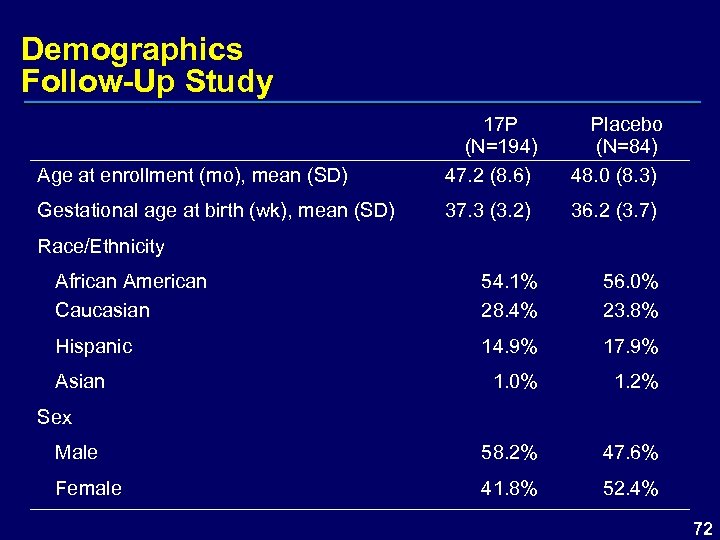 Demographics Follow-Up Study Age at enrollment (mo), mean (SD) 17 P (N=194) 47. 2 (8. 6) Placebo (N=84) 48. 0 (8. 3) Gestational age at birth (wk), mean (SD) 37. 3 (3. 2) 36. 2 (3. 7) Race/Ethnicity African American Caucasian 54. 1% 28. 4% 56. 0% 23. 8% Hispanic 14. 9% 17. 9% 1. 0% 1. 2% Asian Sex Male 58. 2% 47. 6% Female 41. 8% 52. 4% 72
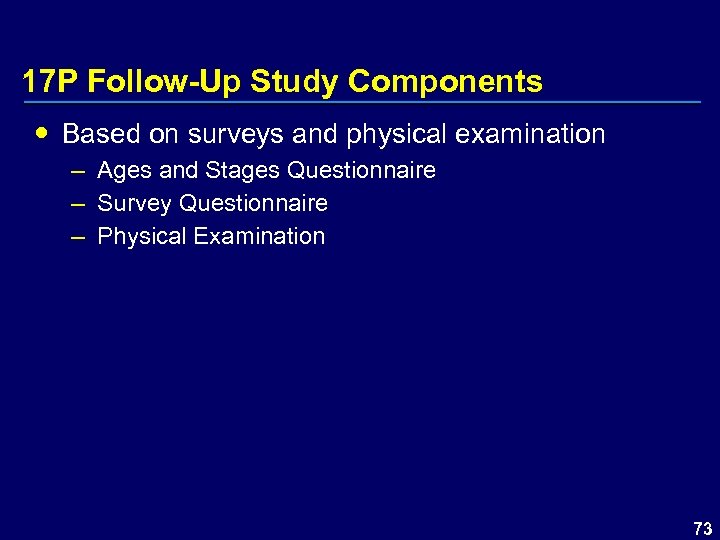 17 P Follow-Up Study Components Based on surveys and physical examination – Ages and Stages Questionnaire – Survey Questionnaire – Physical Examination 73
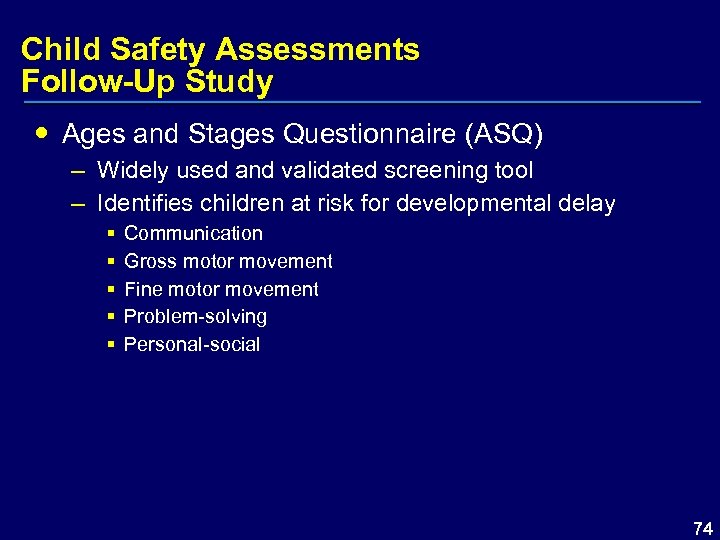 Child Safety Assessments Follow-Up Study Ages and Stages Questionnaire (ASQ) – Widely used and validated screening tool – Identifies children at risk for developmental delay § § § Communication Gross motor movement Fine motor movement Problem-solving Personal-social 74
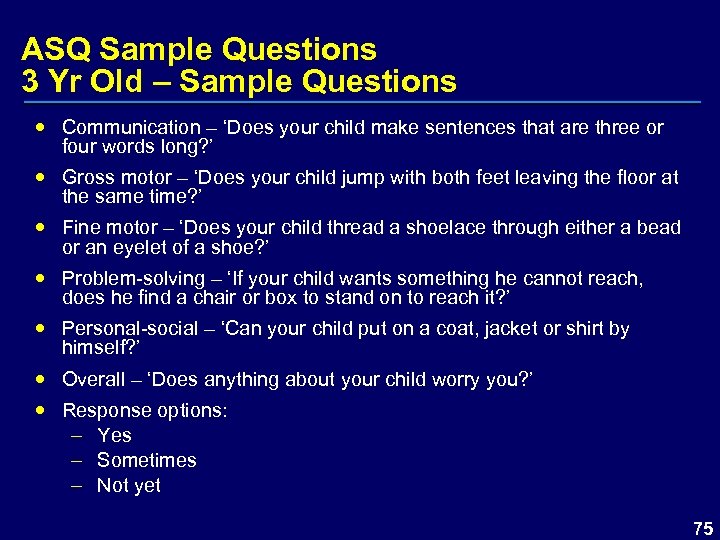 ASQ Sample Questions 3 Yr Old – Sample Questions Communication – ‘Does your child make sentences that are three or four words long? ’ Gross motor – ‘Does your child jump with both feet leaving the floor at the same time? ’ Fine motor – ‘Does your child thread a shoelace through either a bead or an eyelet of a shoe? ’ Problem-solving – ‘If your child wants something he cannot reach, does he find a chair or box to stand on to reach it? ’ Personal-social – ‘Can your child put on a coat, jacket or shirt by himself? ’ Overall – ‘Does anything about your child worry you? ’ Response options: – Yes – Sometimes – Not yet 75
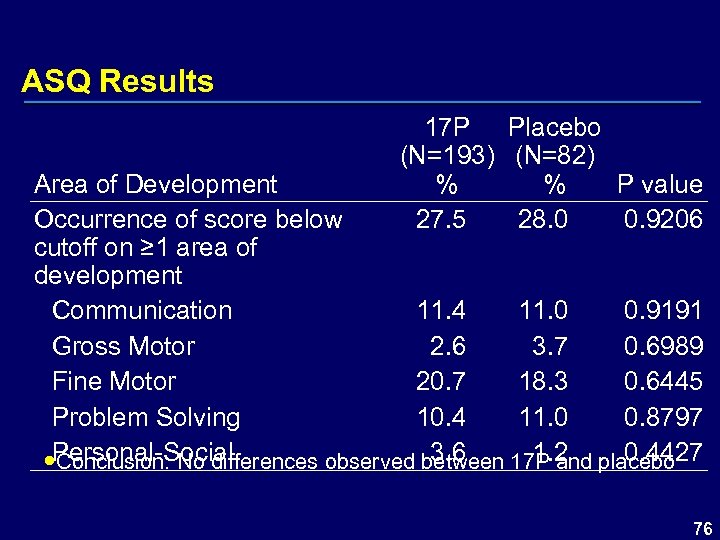 ASQ Results 17 P Placebo (N=193) (N=82) % % P value 27. 5 28. 0 0. 9206 Area of Development Occurrence of score below cutoff on ≥ 1 area of development Communication 11. 4 11. 0 0. 9191 Gross Motor 2. 6 3. 7 0. 6989 Fine Motor 20. 7 18. 3 0. 6445 Problem Solving 10. 4 11. 0 0. 8797 3. 6 1. 2 0. 4427 Personal-Social Conclusion: No differences observed between 17 P and placebo 76
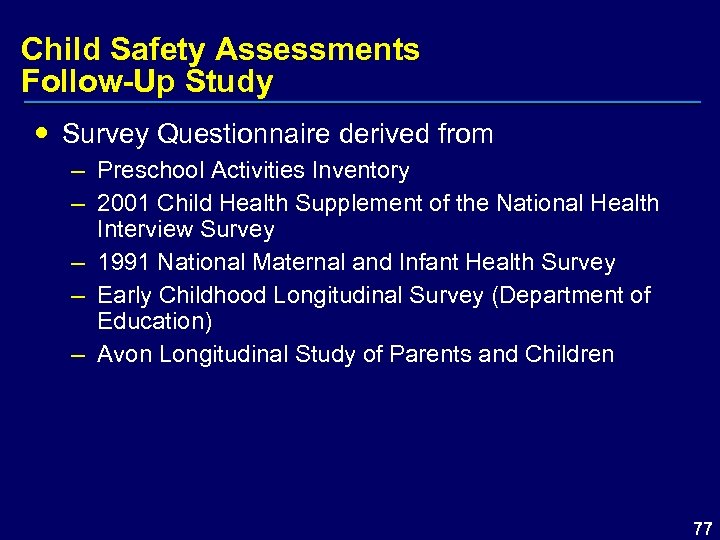 Child Safety Assessments Follow-Up Study Survey Questionnaire derived from – Preschool Activities Inventory – 2001 Child Health Supplement of the National Health Interview Survey – 1991 National Maternal and Infant Health Survey – Early Childhood Longitudinal Survey (Department of Education) – Avon Longitudinal Study of Parents and Children 77
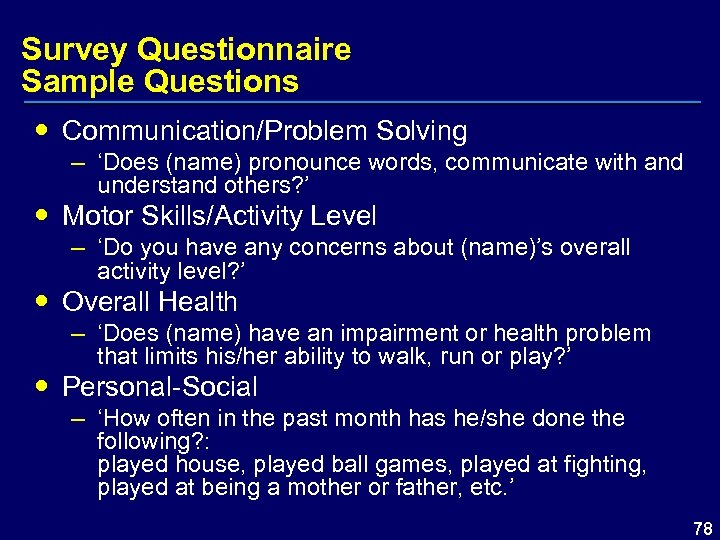 Survey Questionnaire Sample Questions Communication/Problem Solving – ‘Does (name) pronounce words, communicate with and understand others? ’ Motor Skills/Activity Level – ‘Do you have any concerns about (name)’s overall activity level? ’ Overall Health – ‘Does (name) have an impairment or health problem that limits his/her ability to walk, run or play? ’ Personal-Social – ‘How often in the past month has he/she done the following? : played house, played ball games, played at fighting, played at being a mother or father, etc. ’ 78
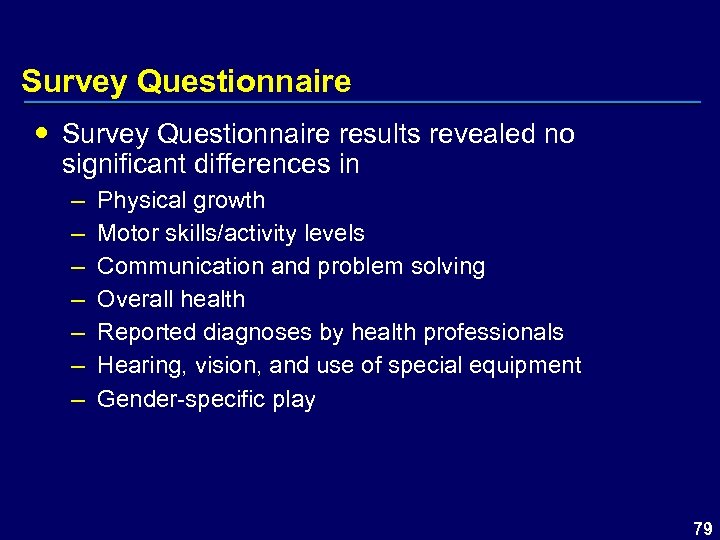 Survey Questionnaire results revealed no significant differences in – – – – Physical growth Motor skills/activity levels Communication and problem solving Overall health Reported diagnoses by health professionals Hearing, vision, and use of special equipment Gender-specific play 79
 Physical Examination General examination of body systems Documentation of any major abnormalities Specific identification of genital anomalies 80
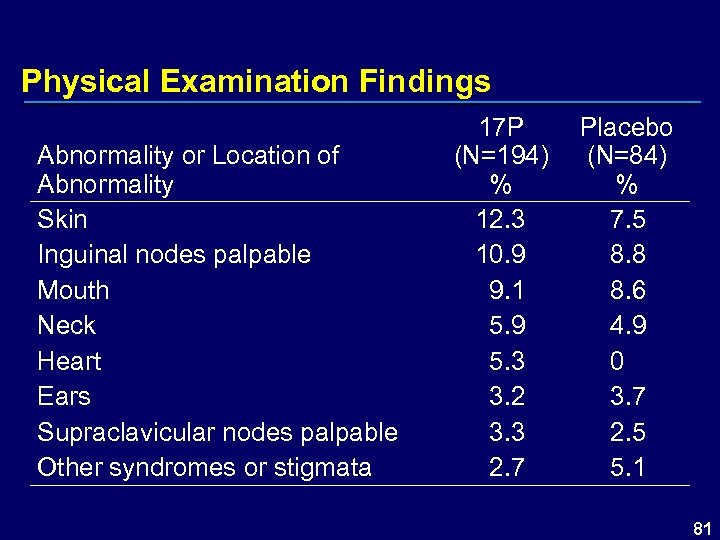 Physical Examination Findings Abnormality or Location of Abnormality Skin Inguinal nodes palpable Mouth Neck Heart Ears Supraclavicular nodes palpable Other syndromes or stigmata 17 P (N=194) % 12. 3 10. 9 9. 1 5. 9 5. 3 3. 2 3. 3 2. 7 Placebo (N=84) % 7. 5 8. 8 8. 6 4. 9 0 3. 7 2. 5 5. 1 81
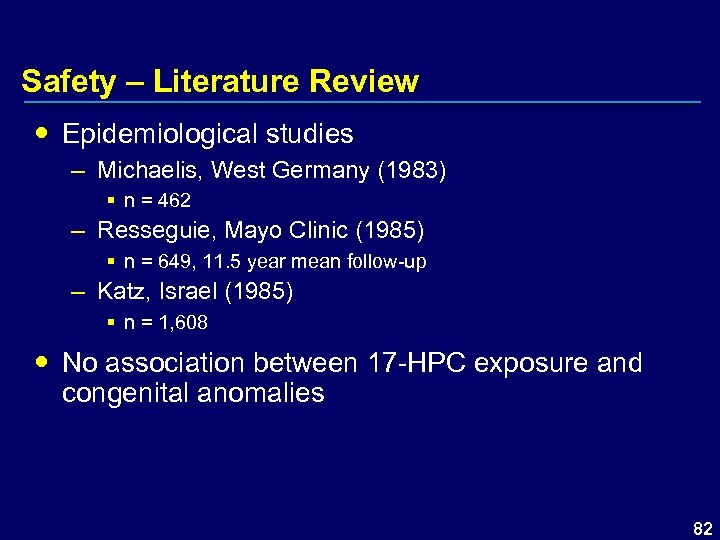 Safety – Literature Review Epidemiological studies – Michaelis, West Germany (1983) § n = 462 – Resseguie, Mayo Clinic (1985) § n = 649, 11. 5 year mean follow-up – Katz, Israel (1985) § n = 1, 608 No association between 17 -HPC exposure and congenital anomalies 82
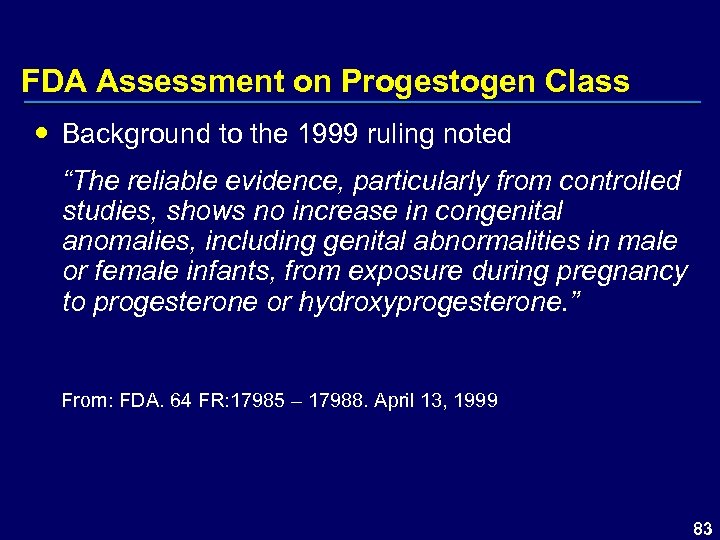 FDA Assessment on Progestogen Class Background to the 1999 ruling noted “The reliable evidence, particularly from controlled studies, shows no increase in congenital anomalies, including genital abnormalities in male or female infants, from exposure during pregnancy to progesterone or hydroxyprogesterone. ” From: FDA. 64 FR: 17985 – 17988. April 13, 1999 83
 Overall Safety Conclusions – NICHD Studies and Literature Review 17 P considered safe based on: NICHD studies – Safe and well tolerated in pregnant women – Safe for the developing fetus and neonate based on § Comparable percentage of surviving offspring § Rates of congenital anomalies similar to general population rates of 2 -3% – Safe for the child as evidenced by the lack of untoward effects on developmental milestones or physical health on follow-up safety assessments Literature review FDA assessment on progestogen class 84
 Benefit / Risk Preterm birth is major unmet medical need – Leading cause of perinatal and neonatal mortality and morbidity – 33% increase in incidence of preterm birth since 1981 – $26 billion annual cost associated with treating preterm infants – Staggering financial, social, and emotional costs associated with both early and late preterm birth 85
 Benefit / Risk 17 P has been shown to reduce the incidence of preterm birth – Significant efficacy demonstrated <37, <35, and <32 weeks of gestation § 32% reduction at <37 weeks § 31% reduction at <35 weeks § 39% reduction at <32 weeks – Results applicable irrespective of § Race of the mother § Number of previous preterm births § Gestational age of previous preterm birth 86
 Benefit / Risk 17 P treatment leads to healthier neonates – Lengthens mean gestational age at birth – Results in fewer infants under 2500 grams § 34% reduction – Reduces admissions to NICU § 24% reduction – Reduces important neonatal morbidities § Respiratory therapy § Necrotizing enterocolitis § Intraventricular hemorrhage 87
 Benefit / Risk 17 P administration was safe for pregnant women – Well tolerated – No increase in rates of complications or procedures No identified risk for fetus and neonate – Comparable rates of neonatal deaths, miscarriages, and stillbirths – No evidence of teratogenicity § Congenital anomalies at similar rates § Confirmed by 1999 FDA assessment § Second trimester administration No identified risk for the child – No association with developmental delays or other issues in children between 30 and 64 months of age 88
 Proposed Indication “Gestiva is indicated for the prevention of preterm birth in pregnant women with a history of at least one spontaneous preterm birth. ” 89
 All Back Up Slides Presented During Q&A Not in any specific order
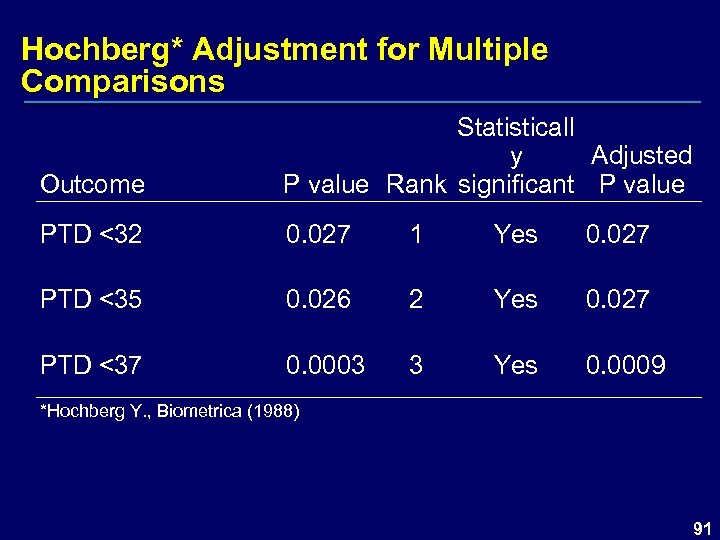 Hochberg* Adjustment for Multiple Comparisons Outcome Statisticall y Adjusted P value Rank significant P value PTD <32 0. 027 1 Yes 0. 027 PTD <35 0. 026 2 Yes 0. 027 PTD <37 0. 0003 3 Yes 0. 0009 *Hochberg Y. , Biometrica (1988) 91
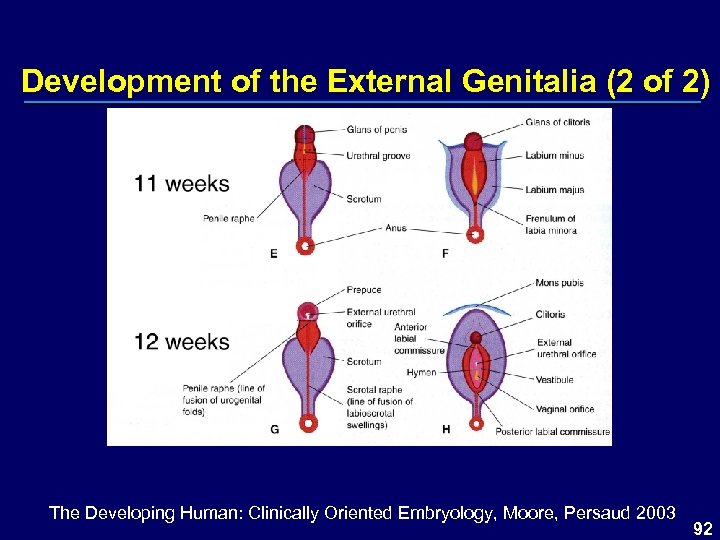 Development of the External Genitalia (2 of 2) The Developing Human: Clinically Oriented Embryology, Moore, Persaud 2003 92
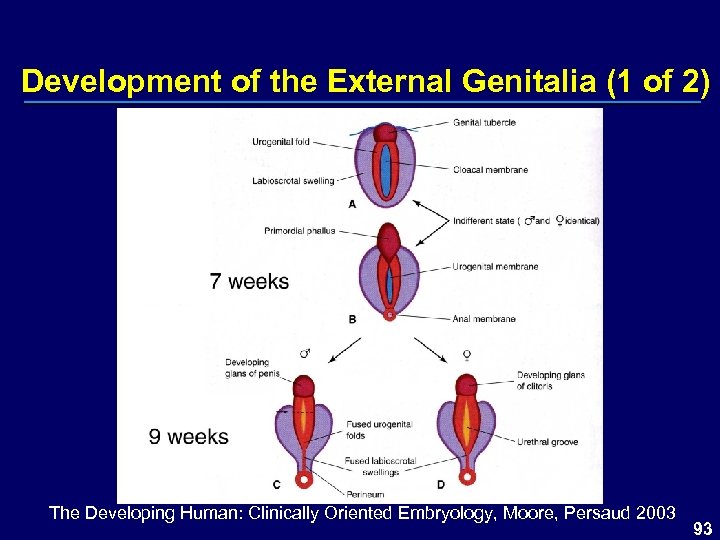 Development of the External Genitalia (1 of 2) The Developing Human: Clinically Oriented Embryology, Moore, Persaud 2003 93
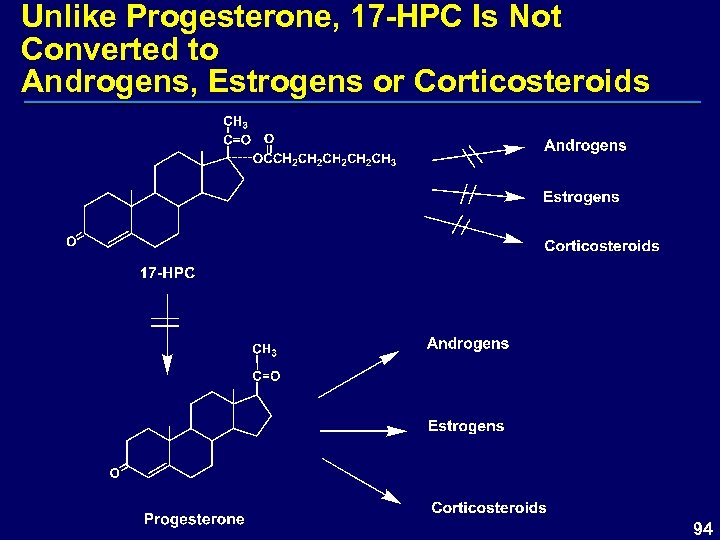 Unlike Progesterone, 17 -HPC Is Not Converted to Androgens, Estrogens or Corticosteroids 94
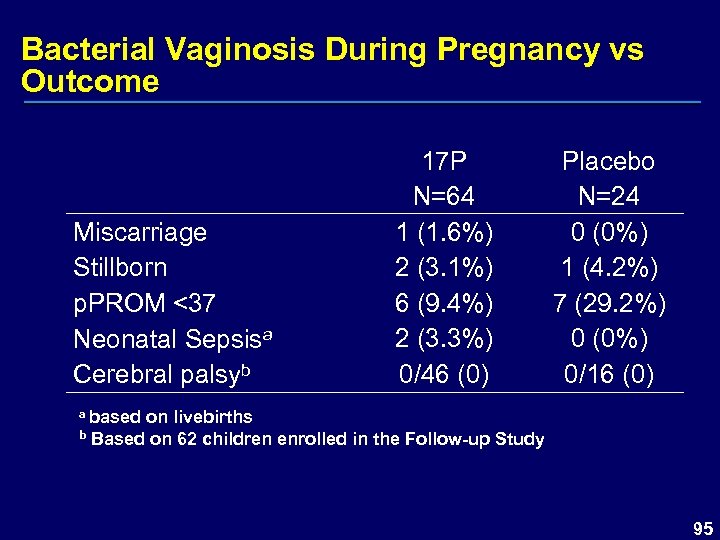 Bacterial Vaginosis During Pregnancy vs Outcome Miscarriage Stillborn p. PROM <37 Neonatal Sepsisa Cerebral palsyb 17 P N=64 1 (1. 6%) 2 (3. 1%) 6 (9. 4%) 2 (3. 3%) 0/46 (0) Placebo N=24 0 (0%) 1 (4. 2%) 7 (29. 2%) 0 (0%) 0/16 (0) a based on livebirths b Based on 62 children enrolled in the Follow-up Study 95
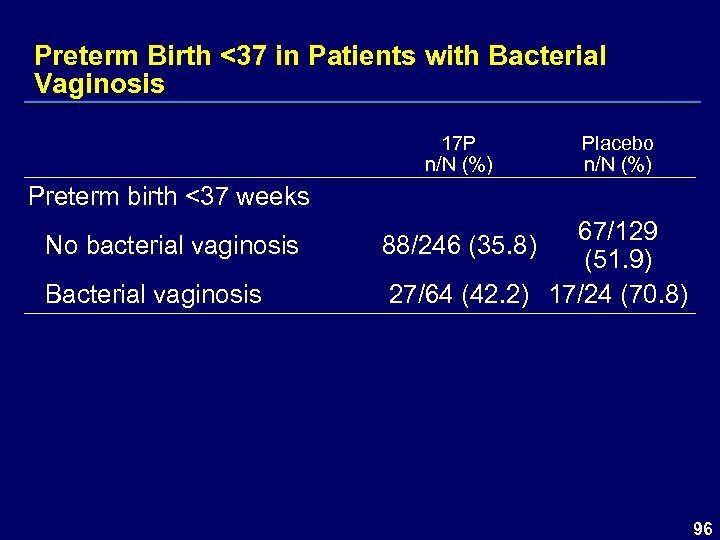 Preterm Birth <37 in Patients with Bacterial Vaginosis 17 P n/N (%) Placebo n/N (%) Preterm birth <37 weeks No bacterial vaginosis Bacterial vaginosis 67/129 (51. 9) 27/64 (42. 2) 17/24 (70. 8) 88/246 (35. 8) 96
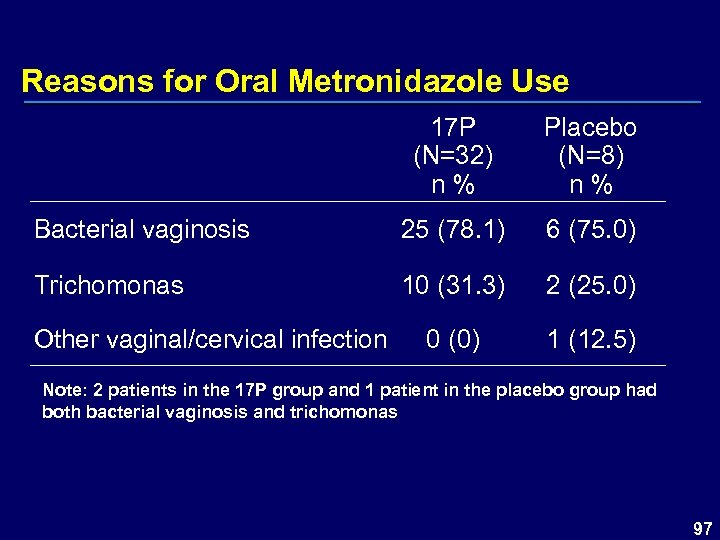 Reasons for Oral Metronidazole Use 17 P (N=32) n % Placebo (N=8) n % Bacterial vaginosis 25 (78. 1) 6 (75. 0) Trichomonas 10 (31. 3) 2 (25. 0) 0 (0) 1 (12. 5) Other vaginal/cervical infection Note: 2 patients in the 17 P group and 1 patient in the placebo group had both bacterial vaginosis and trichomonas 97
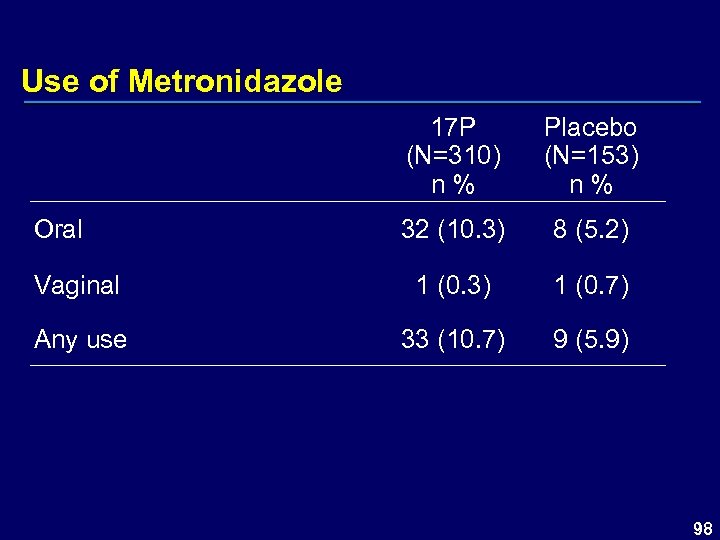 Use of Metronidazole 17 P (N=310) n % Placebo (N=153) n % 32 (10. 3) 8 (5. 2) Vaginal 1 (0. 3) 1 (0. 7) Any use 33 (10. 7) 9 (5. 9) Oral 98
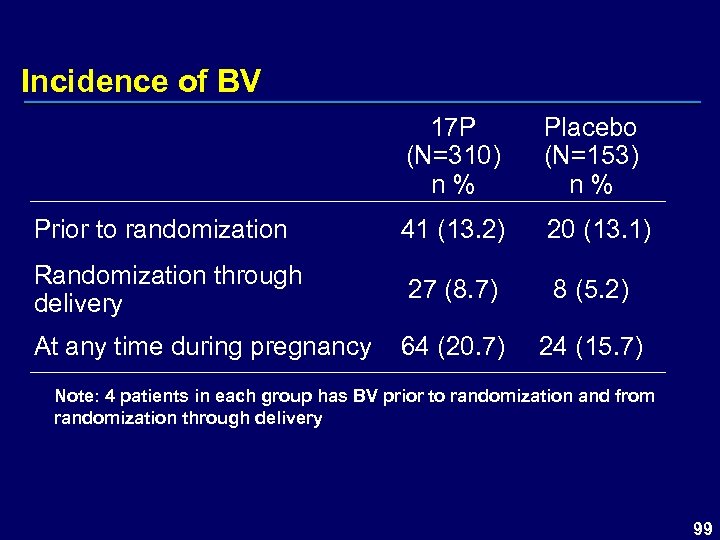 Incidence of BV 17 P (N=310) n % Placebo (N=153) n % Prior to randomization 41 (13. 2) 20 (13. 1) Randomization through delivery 27 (8. 7) 8 (5. 2) At any time during pregnancy 64 (20. 7) 24 (15. 7) Note: 4 patients in each group has BV prior to randomization and from randomization through delivery 99
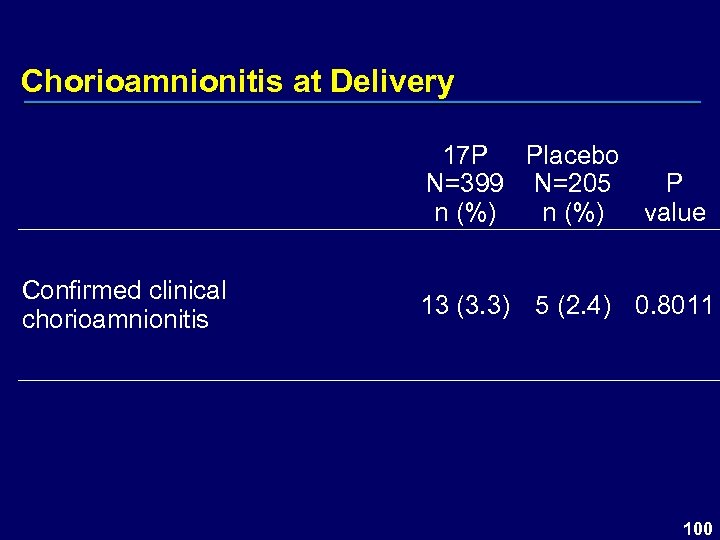 Chorioamnionitis at Delivery 17 P Placebo N=399 N=205 P n (%) value Confirmed clinical chorioamnionitis 13 (3. 3) 5 (2. 4) 0. 8011 100
 Infections – BV and Trichomonas Collected on CRF at 2 time points: – At baseline, patient report and record review – During study, the CRF for “Record of Antibiotic Use” included the reason for administration of antibiotic Clinical chorioamnionitis – Collected on the labor and delivery summary CRF Diagnosed by treating physician based on methods and criteria based at the local site 101
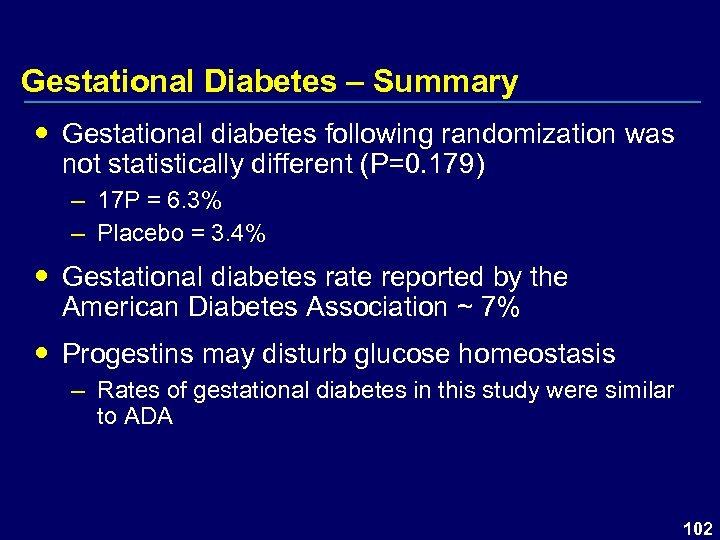 Gestational Diabetes – Summary Gestational diabetes following randomization was not statistically different (P=0. 179) – 17 P = 6. 3% – Placebo = 3. 4% Gestational diabetes rate reported by the American Diabetes Association ~ 7% Progestins may disturb glucose homeostasis – Rates of gestational diabetes in this study were similar to ADA 102
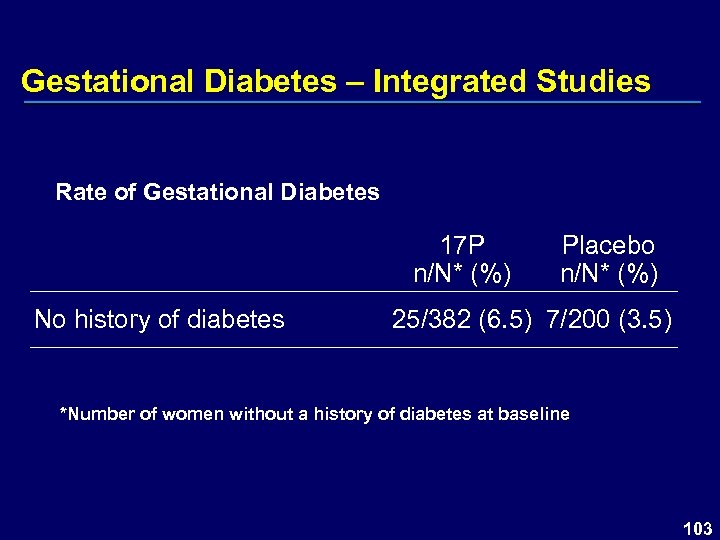 Gestational Diabetes – Integrated Studies Rate of Gestational Diabetes 17 P n/N* (%) No history of diabetes Placebo n/N* (%) 25/382 (6. 5) 7/200 (3. 5) *Number of women without a history of diabetes at baseline 103
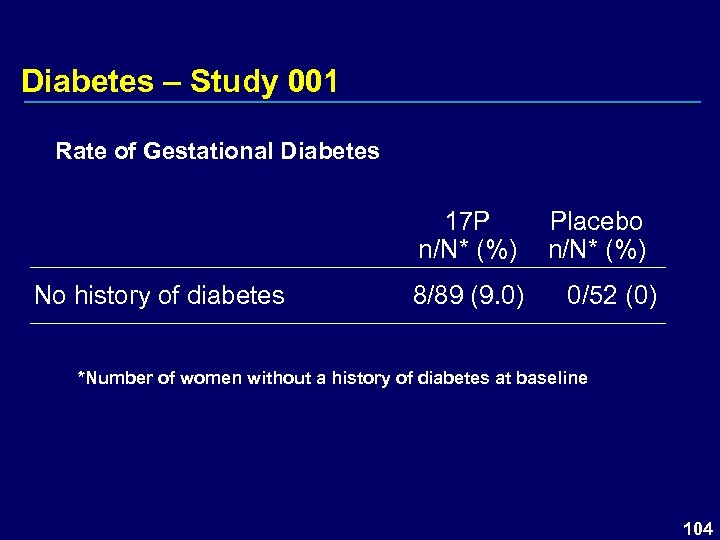 Diabetes – Study 001 Rate of Gestational Diabetes 17 P n/N* (%) No history of diabetes 8/89 (9. 0) Placebo n/N* (%) 0/52 (0) *Number of women without a history of diabetes at baseline 104
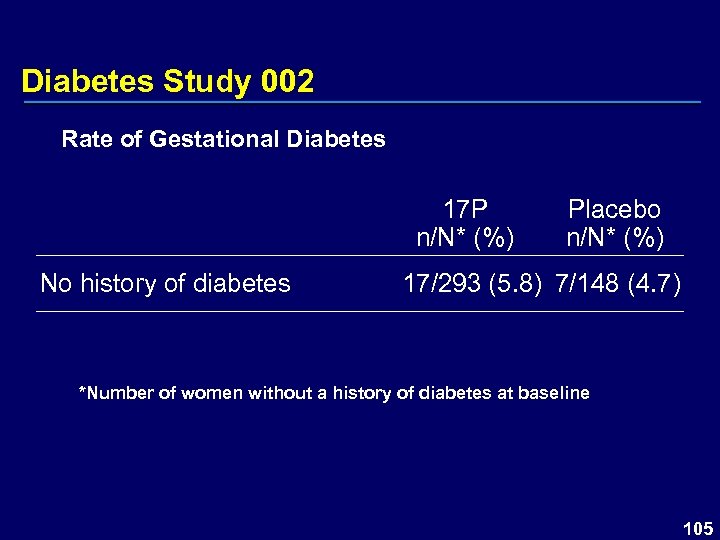 Diabetes Study 002 Rate of Gestational Diabetes 17 P n/N* (%) No history of diabetes Placebo n/N* (%) 17/293 (5. 8) 7/148 (4. 7) *Number of women without a history of diabetes at baseline 105
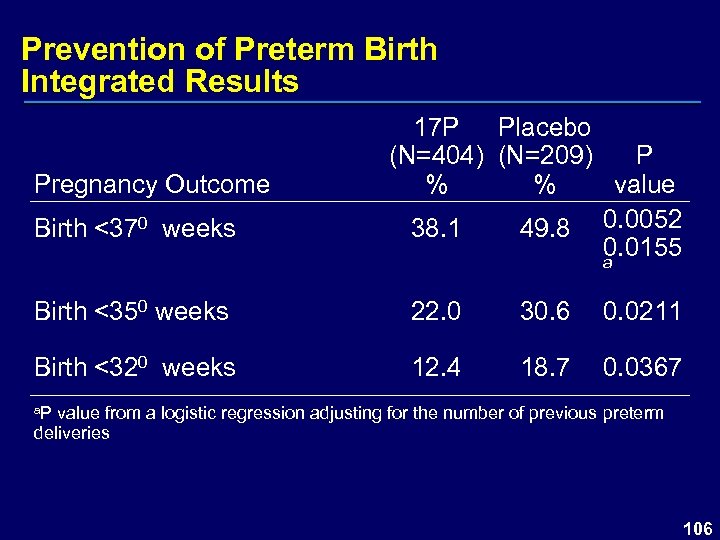 Prevention of Preterm Birth Integrated Results Pregnancy Outcome Birth <370 weeks 17 P Placebo (N=404) (N=209) P % % value 38. 1 49. 8 0. 0052 0. 0155 a Birth <350 weeks 22. 0 30. 6 0. 0211 Birth <320 weeks 12. 4 18. 7 0. 0367 a. P value from a logistic regression adjusting for the number of previous preterm deliveries 106
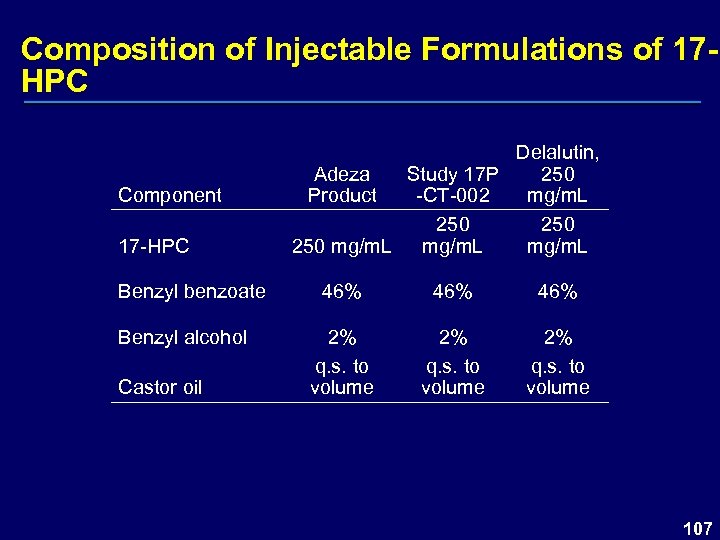 Composition of Injectable Formulations of 17 HPC Component 17 -HPC Benzyl benzoate Benzyl alcohol Castor oil Delalutin, Adeza Study 17 P 250 Product -CT-002 mg/m. L 250 250 mg/m. L 46% 46% 2% q. s. to volume 107
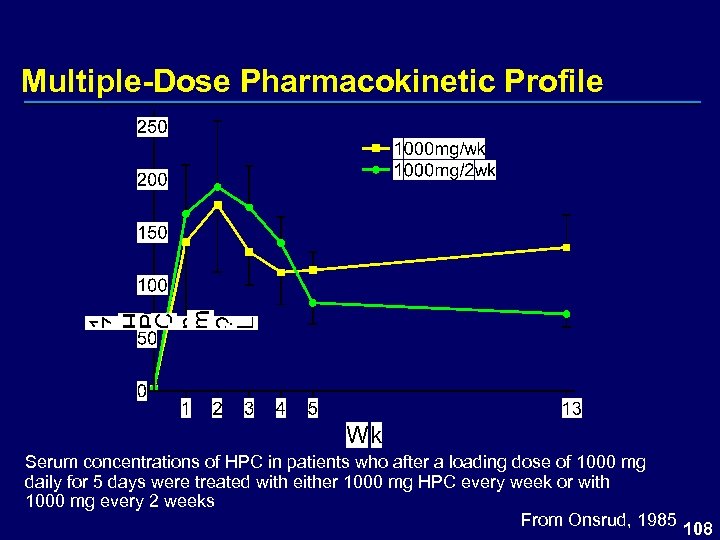 Multiple-Dose Pharmacokinetic Profile Serum concentrations of HPC in patients who after a loading dose of 1000 mg daily for 5 days were treated with either 1000 mg HPC every week or with 1000 mg every 2 weeks From Onsrud, 1985 108
 Tocolytic Use – Study 002 17 P (N=310) % Tocolytic use 12. 9 Placebo (N=153) % 11. 8 109
 Stillbirth Rates 110
 Stillbirths – Study 001/002 17 P (N=404) n (%) Stillbirths Antepartum Intrapartum Placebo (N=209) P value n (%) 7 (1. 7) 6 4 (1. 9) 0. 8769 2 111
 Cardiac Findings – Summary Low rate of cardiac anomalies observed at birth in both 17 P and placebo groups (0. 5% vs 0. 5%) Patent ductus arteriosus observed in 2. 4% of 17 P cases and 5. 4% of placebo cases At Follow-Up Study examination – Infants in the 17 P § Murmurs – 4. 6% § Irregular rhythm – 0. 5% – No functional disabilities noted by history or physical exam 112
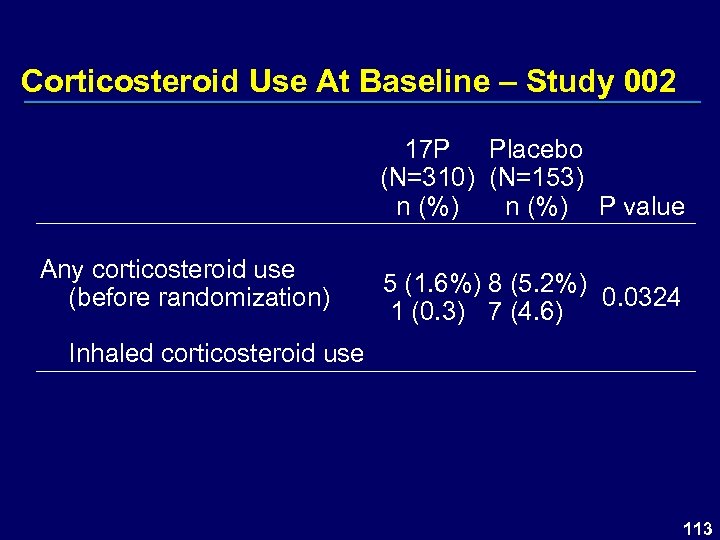 Corticosteroid Use At Baseline – Study 002 17 P Placebo (N=310) (N=153) n (%) P value Any corticosteroid use (before randomization) 5 (1. 6%) 8 (5. 2%) 0. 0324 1 (0. 3) 7 (4. 6) Inhaled corticosteroid use 113
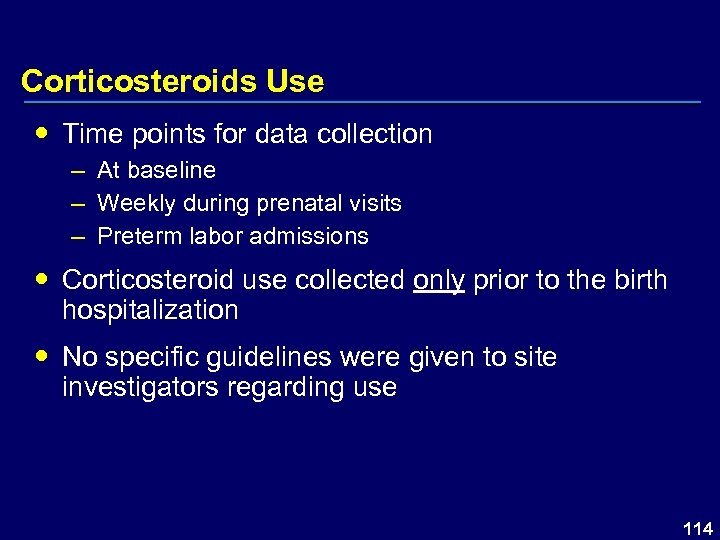 Corticosteroids Use Time points for data collection – At baseline – Weekly during prenatal visits – Preterm labor admissions Corticosteroid use collected only prior to the birth hospitalization No specific guidelines were given to site investigators regarding use 114
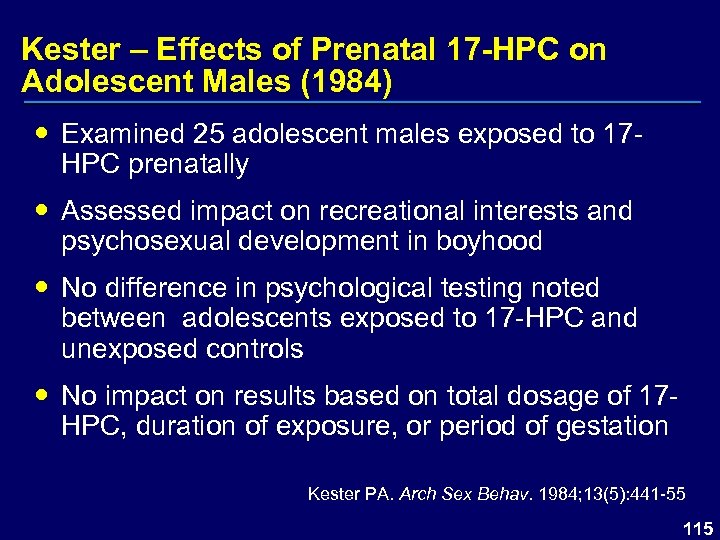 Kester – Effects of Prenatal 17 -HPC on Adolescent Males (1984) Examined 25 adolescent males exposed to 17 HPC prenatally Assessed impact on recreational interests and psychosexual development in boyhood No difference in psychological testing noted between adolescents exposed to 17 -HPC and unexposed controls No impact on results based on total dosage of 17 HPC, duration of exposure, or period of gestation Kester PA. Arch Sex Behav. 1984; 13(5): 441 -55 115
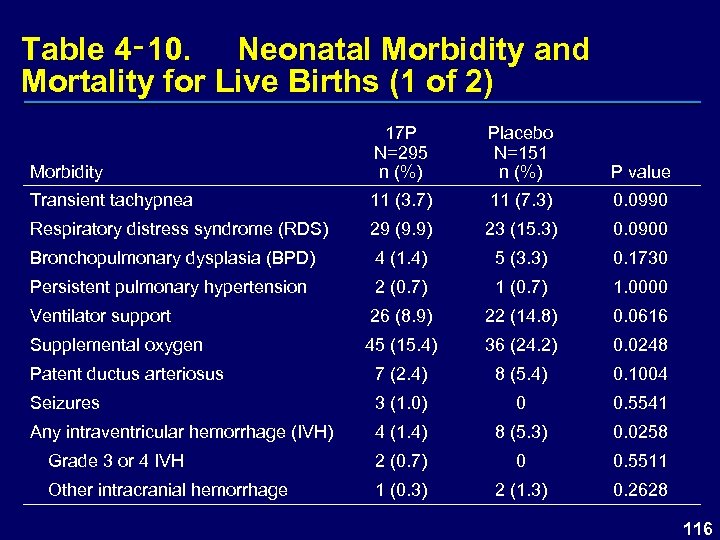 Table 4‑ 10. Neonatal Morbidity and Mortality for Live Births (1 of 2) Morbidity 17 P N=295 n (%) Placebo N=151 n (%) P value Transient tachypnea 11 (3. 7) 11 (7. 3) 0. 0990 Respiratory distress syndrome (RDS) 29 (9. 9) 23 (15. 3) 0. 0900 Bronchopulmonary dysplasia (BPD) 4 (1. 4) 5 (3. 3) 0. 1730 Persistent pulmonary hypertension 2 (0. 7) 1. 0000 Ventilator support 26 (8. 9) 22 (14. 8) 0. 0616 Supplemental oxygen 45 (15. 4) 36 (24. 2) 0. 0248 Patent ductus arteriosus 7 (2. 4) 8 (5. 4) 0. 1004 Seizures 3 (1. 0) 0 0. 5541 Any intraventricular hemorrhage (IVH) 4 (1. 4) 8 (5. 3) 0. 0258 Grade 3 or 4 IVH 2 (0. 7) 0 0. 5511 Other intracranial hemorrhage 1 (0. 3) 2 (1. 3) 0. 2628 116
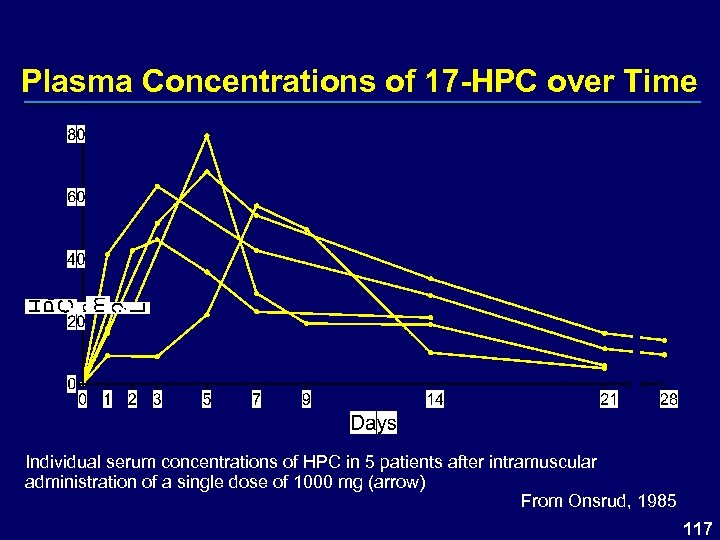 Plasma Concentrations of 17 -HPC over Time Individual serum concentrations of HPC in 5 patients after intramuscular administration of a single dose of 1000 mg (arrow) From Onsrud, 1985 117
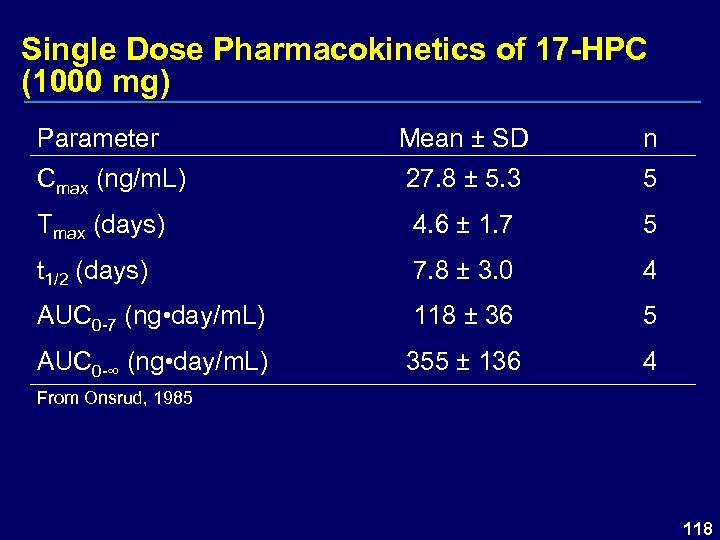 Single Dose Pharmacokinetics of 17 -HPC (1000 mg) Parameter Mean ± SD n Cmax (ng/m. L) 27. 8 ± 5. 3 5 Tmax (days) 4. 6 ± 1. 7 5 t 1/2 (days) 7. 8 ± 3. 0 4 AUC 0 -7 (ng • day/m. L) 118 ± 36 5 AUC 0 -∞ (ng • day/m. L) 355 ± 136 4 From Onsrud, 1985 118
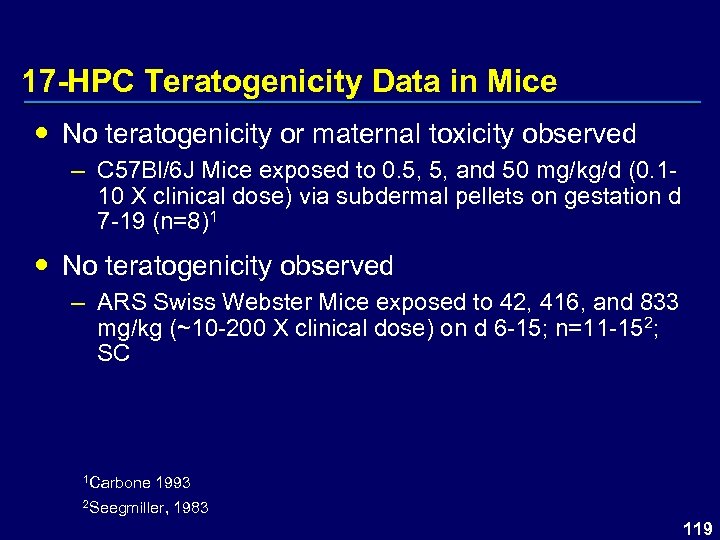 17 -HPC Teratogenicity Data in Mice No teratogenicity or maternal toxicity observed – C 57 Bl/6 J Mice exposed to 0. 5, 5, and 50 mg/kg/d (0. 110 X clinical dose) via subdermal pellets on gestation d 7 -19 (n=8)1 No teratogenicity observed – ARS Swiss Webster Mice exposed to 42, 416, and 833 mg/kg (~10 -200 X clinical dose) on d 6 -15; n=11 -152; SC 1 Carbone 1993 2 Seegmiller, 1983 119
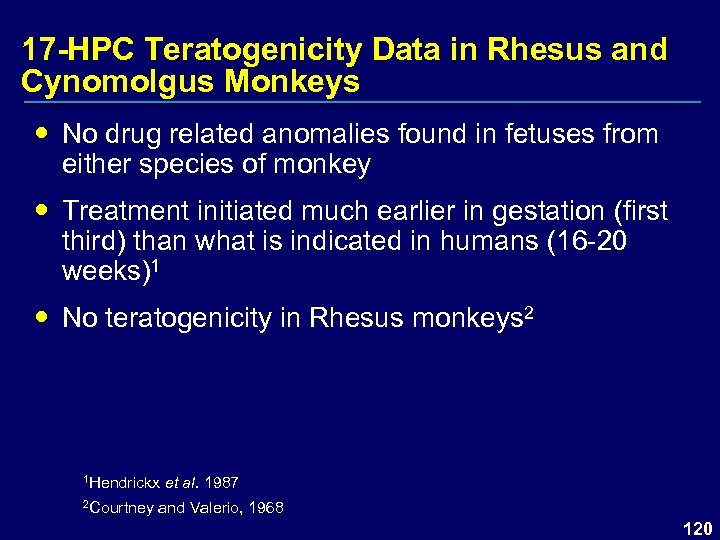 17 -HPC Teratogenicity Data in Rhesus and Cynomolgus Monkeys No drug related anomalies found in fetuses from either species of monkey Treatment initiated much earlier in gestation (first third) than what is indicated in humans (16 -20 weeks)1 No teratogenicity in Rhesus monkeys 2 1 Hendrickx et al. 1987 2 Courtney and Valerio, 1968 120
 17 -HPC Mechanism of Action In vitro receptor binding studies show 17 -HPC: – Better than either progesterone or 17 -α-hydroxyprogesterone at inducing progesterone-responsive gene transcription 1 – Comparable to progesterone in binding affinity for progesterone receptor 2 – Displays greater selectivity for receptor isoform B (transcriptional activator) compared to isoform A (transcriptional repressor) 1 Zeleznik et al. (abstract), 2006 2 Attardi et al. (abstract), 2006 121
 Proposed Genomic and Nongenomic Mechanisms of Progesterone Modulates progesterone receptor activity Reduces estrogen receptor activity Blocks oxytocin induced uterine contractility Enhances tocolytic response Promotes local antiinflammatory effects Inhibits myometrial gap junctions 122
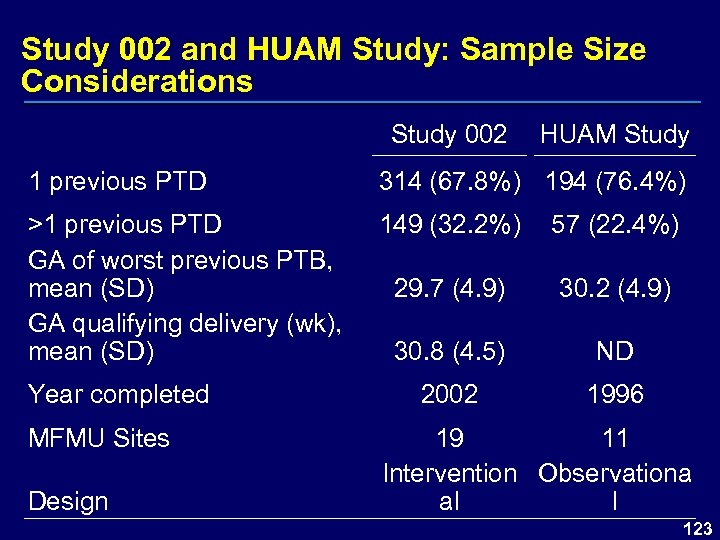 Study 002 and HUAM Study: Sample Size Considerations Study 002 HUAM Study 1 previous PTD 314 (67. 8%) 194 (76. 4%) >1 previous PTD GA of worst previous PTB, mean (SD) GA qualifying delivery (wk), mean (SD) 149 (32. 2%) 57 (22. 4%) 29. 7 (4. 9) 30. 2 (4. 9) 30. 8 (4. 5) ND 2002 1996 Year completed MFMU Sites Design 19 11 Intervention Observationa al l 123
 17 -HPC Mechanism of Action Not known – Multiple pathways possible May be distinct from progesterone, though pharmacologically similar Progesterone inhibits myometrial contractility through – Non-genomic mechanisms – Genomic mechanisms 124
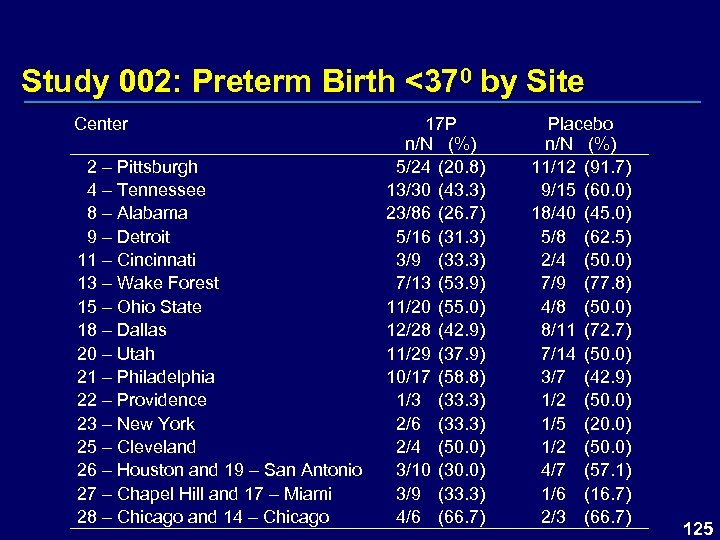 Study 002: Preterm Birth <370 by Site Center 2 – Pittsburgh 4 – Tennessee 8 – Alabama 9 – Detroit 11 – Cincinnati 13 – Wake Forest 15 – Ohio State 18 – Dallas 20 – Utah 21 – Philadelphia 22 – Providence 23 – New York 25 – Cleveland 26 – Houston and 19 – San Antonio 27 – Chapel Hill and 17 – Miami 28 – Chicago and 14 – Chicago 17 P n/N (%) 5/24 (20. 8) 13/30 (43. 3) 23/86 (26. 7) 5/16 (31. 3) 3/9 (33. 3) 7/13 (53. 9) 11/20 (55. 0) 12/28 (42. 9) 11/29 (37. 9) 10/17 (58. 8) 1/3 (33. 3) 2/6 (33. 3) 2/4 (50. 0) 3/10 (30. 0) 3/9 (33. 3) 4/6 (66. 7) Placebo n/N (%) 11/12 (91. 7) 9/15 (60. 0) 18/40 (45. 0) 5/8 (62. 5) 2/4 (50. 0) 7/9 (77. 8) 4/8 (50. 0) 8/11 (72. 7) 7/14 (50. 0) 3/7 (42. 9) 1/2 (50. 0) 1/5 (20. 0) 1/2 (50. 0) 4/7 (57. 1) 1/6 (16. 7) 2/3 (66. 7) 125
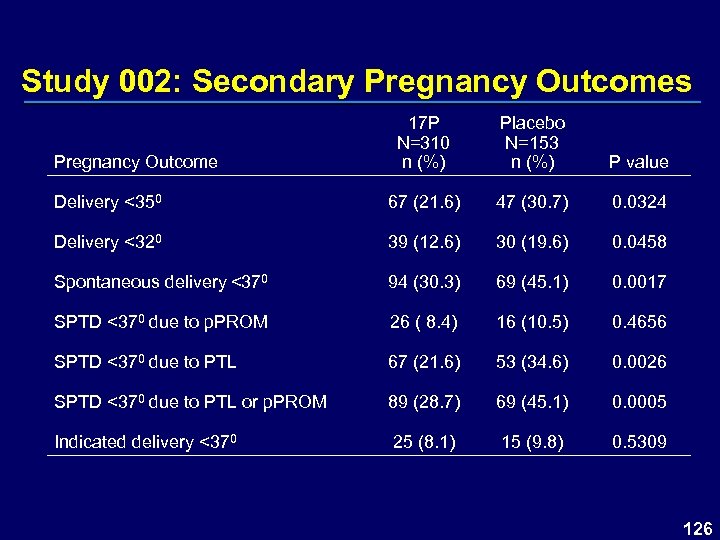 Study 002: Secondary Pregnancy Outcomes 17 P N=310 n (%) Placebo N=153 n (%) P value Delivery <350 67 (21. 6) 47 (30. 7) 0. 0324 Delivery <320 39 (12. 6) 30 (19. 6) 0. 0458 Spontaneous delivery <370 94 (30. 3) 69 (45. 1) 0. 0017 SPTD <370 due to p. PROM 26 ( 8. 4) 16 (10. 5) 0. 4656 SPTD <370 due to PTL 67 (21. 6) 53 (34. 6) 0. 0026 SPTD <370 due to PTL or p. PROM 89 (28. 7) 69 (45. 1) 0. 0005 Indicated delivery <370 25 (8. 1) 15 (9. 8) 0. 5309 Pregnancy Outcome 126
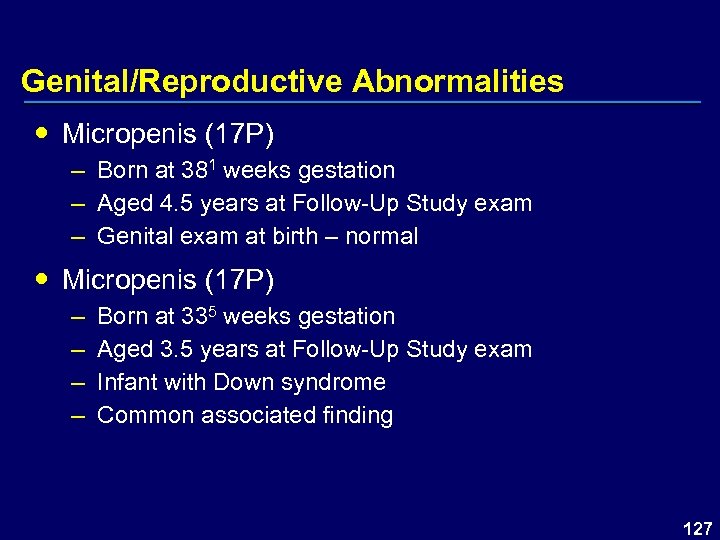 Genital/Reproductive Abnormalities Micropenis (17 P) – Born at 381 weeks gestation – Aged 4. 5 years at Follow-Up Study exam – Genital exam at birth – normal Micropenis (17 P) – – Born at 335 weeks gestation Aged 3. 5 years at Follow-Up Study exam Infant with Down syndrome Common associated finding 127
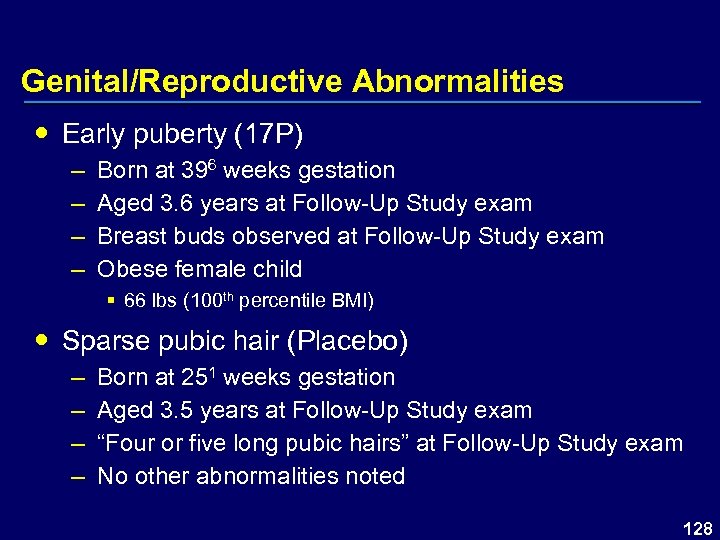 Genital/Reproductive Abnormalities Early puberty (17 P) – – Born at 396 weeks gestation Aged 3. 6 years at Follow-Up Study exam Breast buds observed at Follow-Up Study exam Obese female child § 66 lbs (100 th percentile BMI) Sparse pubic hair (Placebo) – – Born at 251 weeks gestation Aged 3. 5 years at Follow-Up Study exam “Four or five long pubic hairs” at Follow-Up Study exam No other abnormalities noted 128
 Reproductive & Genitourinary Anomalies Infant 020 -023 (17 P) – – – Born at 381 weeks gestation Aged 5 years at Follow-Up Study exam Labia “fused together” at Follow-Up Study exam Genital exam at birth – normal Multiple infant exams between 1 week and 3 years with normal exams – Urogenital sinus fuses at 12 weeks of gestation – Represents benign labial adhesions rather than labioscrotal fusion 129
 Reproductive & Genitourinary Anomalies Infant 018 -032 – – Born at 381 weeks gestation Aged 4 years at Follow-Up Study exam Genital exam at birth – normal Infant was reexamined 4 months later § Same examiner § Reported to be normal § “Clitoris <5 mm in transverse diameter” 130
 Physical Examination – Genital Abnormalities Genital/reproductive abnormalities – 17 P group – 1. 5% – Placebo group – 1. 2% Abnormalities identified were – Breast buds § 17 P female, 100% BMI – Sparse pubic hair § Placebo female, no other abnormalities – Micropenis § 17 P male, genital exam at birth, normal § 17 P male, Down syndrome 131