


 Скачать презентацию 16 Managing Retailing Wholesaling and Logistics Marketing Management
cfab0a4e03e7b60622dc21ac0cd3608c.ppt
- Количество слайдов: 37
 16 Managing Retailing, Wholesaling, and Logistics Marketing Management, 13 th ed
 Chapter Questions • What major types of marketing intermediaries occupy this sector? • What marketing decisions do these marketing intermediaries make? • What are the major trends with marketing intermediaries? Copyright © 2009 Pearson Education, Inc. Publishing as Prentice Hall 16 -2
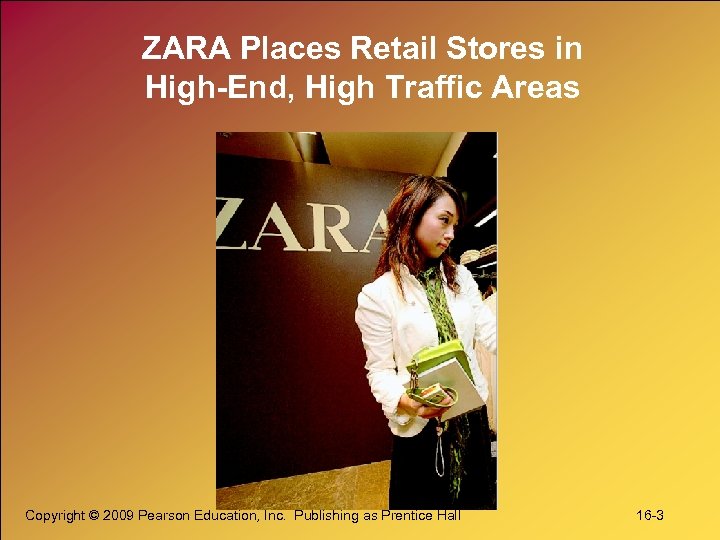 ZARA Places Retail Stores in High-End, High Traffic Areas Copyright © 2009 Pearson Education, Inc. Publishing as Prentice Hall 16 -3
 What is Retailing? Retailing includes all the activities involved in selling goods or services directly to final consumers for personal, nonbusiness use. Copyright © 2009 Pearson Education, Inc. Publishing as Prentice Hall 16 -4
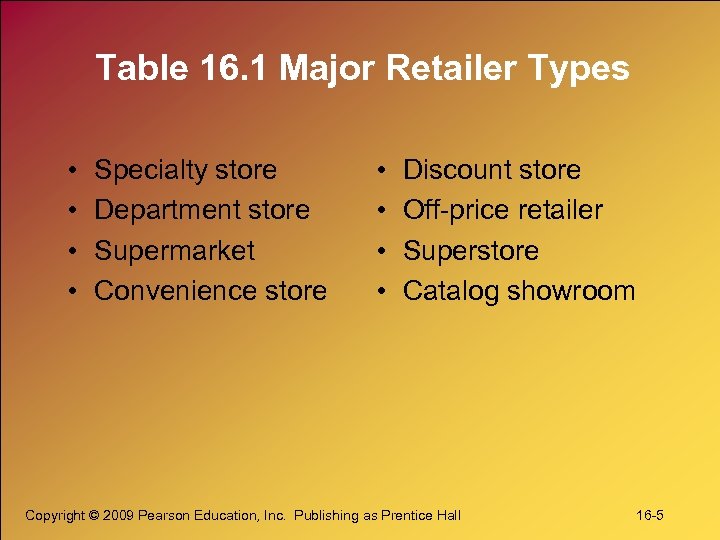 Table 16. 1 Major Retailer Types • • Specialty store Department store Supermarket Convenience store • • Discount store Off-price retailer Superstore Catalog showroom Copyright © 2009 Pearson Education, Inc. Publishing as Prentice Hall 16 -5
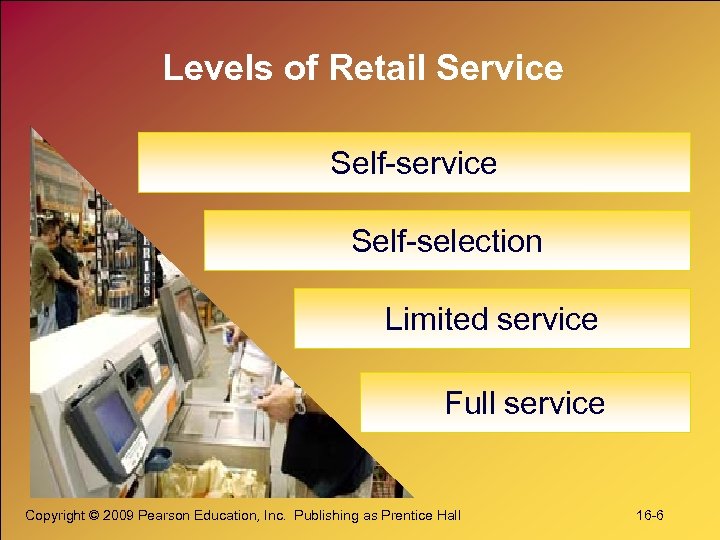 Levels of Retail Service Self-selection Limited service Full service Copyright © 2009 Pearson Education, Inc. Publishing as Prentice Hall 16 -6
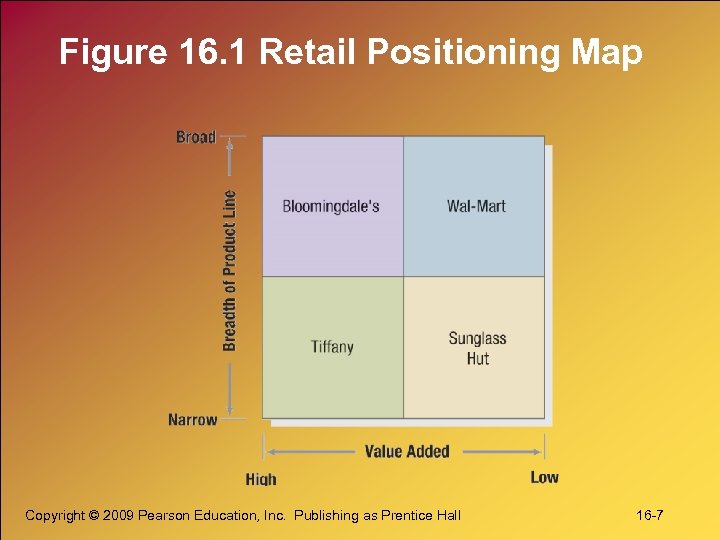 Figure 16. 1 Retail Positioning Map Copyright © 2009 Pearson Education, Inc. Publishing as Prentice Hall 16 -7
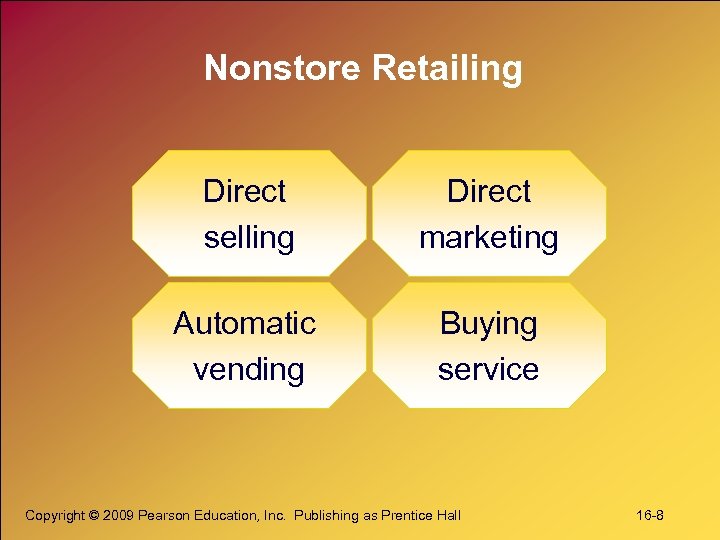 Nonstore Retailing Direct selling Direct marketing Automatic vending Buying service Copyright © 2009 Pearson Education, Inc. Publishing as Prentice Hall 16 -8
 Table 16. 2 Major Types of Corporate Retail Organizations • • • Corporate chain store Voluntary chain Retailer cooperative Consumer cooperative Franchise organization Merchandising conglomerate Copyright © 2009 Pearson Education, Inc. Publishing as Prentice Hall 16 -9
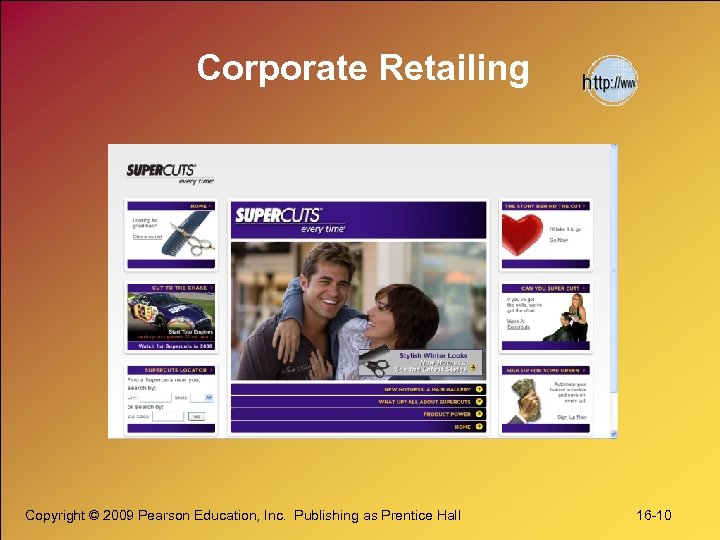 Corporate Retailing Copyright © 2009 Pearson Education, Inc. Publishing as Prentice Hall 16 -10
 What is a Franchising System? A franchising system is a system of individual franchisees, a tightly knit group of enterprises whose systematic operations are planned, directed, and controlled by the operation’s franchisor. Copyright © 2009 Pearson Education, Inc. Publishing as Prentice Hall 16 -11
 Characteristics of Franchises • The franchisor owns a trade or service mark and licenses it to franchisees in return for royalty payments • The franchisee pays for the right to be part of the system • The franchisor provides its franchisees with a system for doing business Copyright © 2009 Pearson Education, Inc. Publishing as Prentice Hall 16 -12
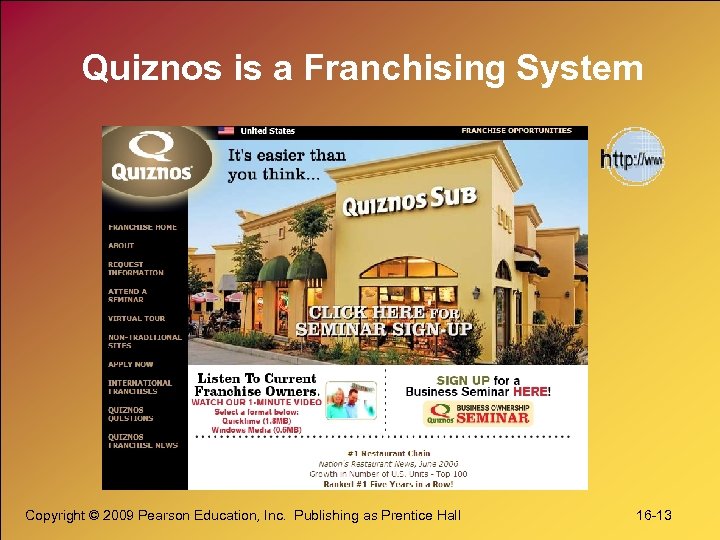 Quiznos is a Franchising System Copyright © 2009 Pearson Education, Inc. Publishing as Prentice Hall 16 -13
 Changes in the Retail Environment • New retail forms and combinations • Growth of intertype competition • Competition between store-based and non-store-based retailing • Growth of giant retailers • Decline of middle market retailers • Growing investment in technology • Global profile of major retailers Copyright © 2009 Pearson Education, Inc. Publishing as Prentice Hall 16 -14
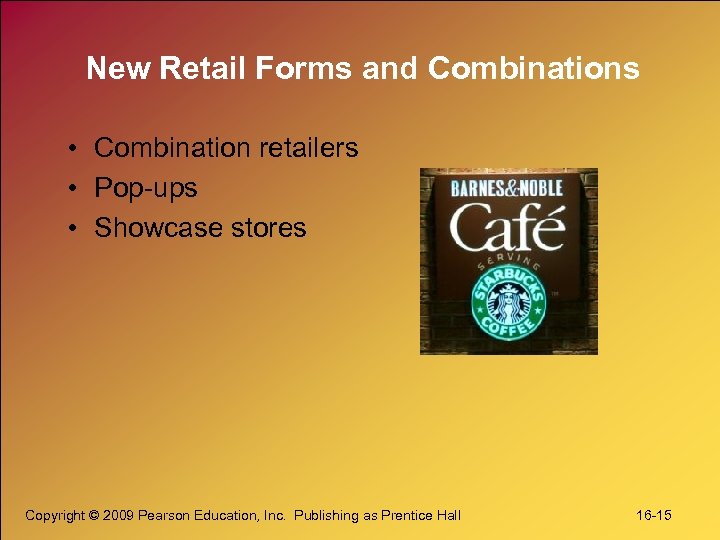 New Retail Forms and Combinations • Combination retailers • Pop-ups • Showcase stores Copyright © 2009 Pearson Education, Inc. Publishing as Prentice Hall 16 -15
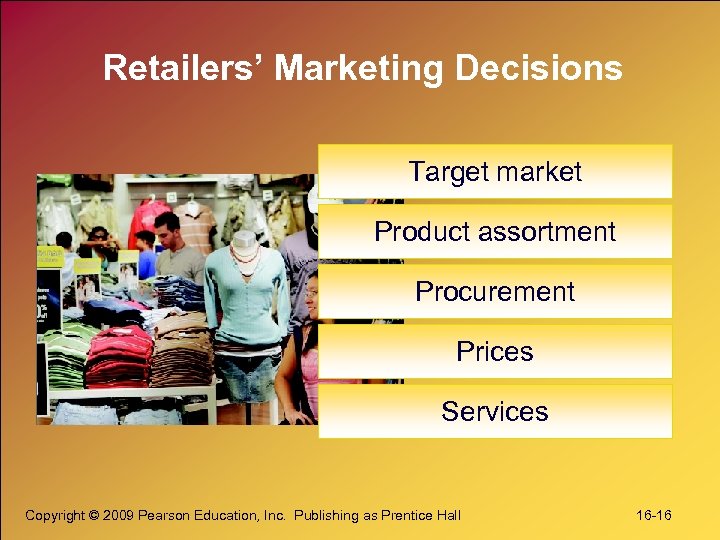 Retailers’ Marketing Decisions Target market Product assortment Procurement Prices Services Copyright © 2009 Pearson Education, Inc. Publishing as Prentice Hall 16 -16
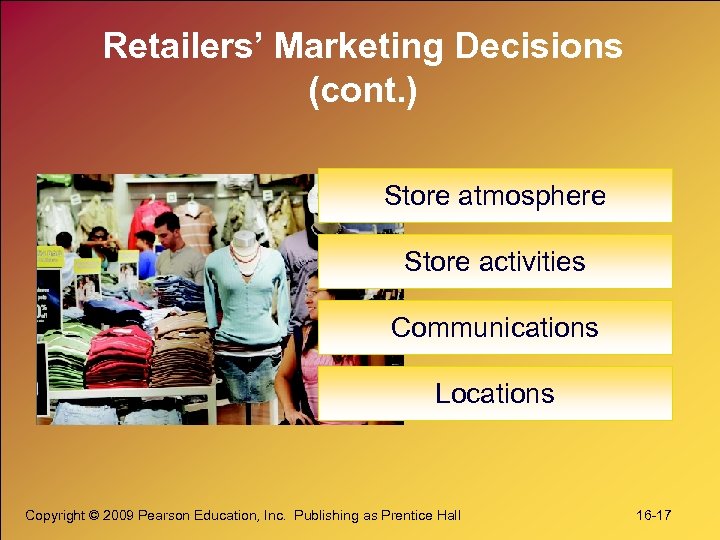 Retailers’ Marketing Decisions (cont. ) Store atmosphere Store activities Communications Locations Copyright © 2009 Pearson Education, Inc. Publishing as Prentice Hall 16 -17
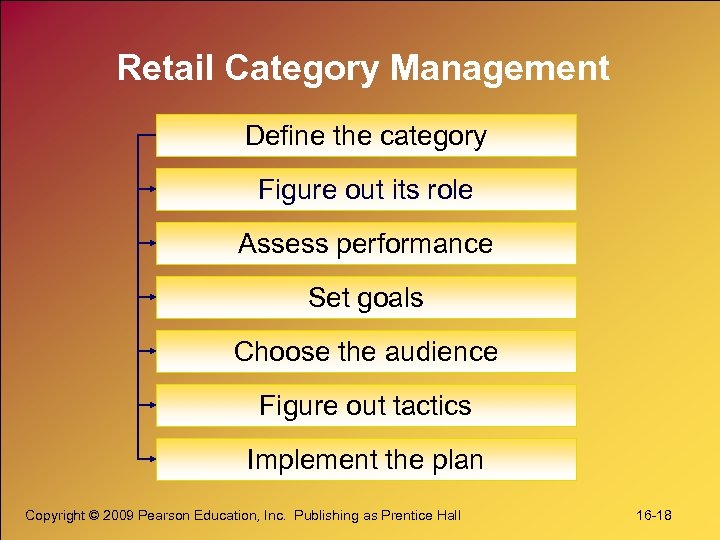 Retail Category Management Define the category Figure out its role Assess performance Set goals Choose the audience Figure out tactics Implement the plan Copyright © 2009 Pearson Education, Inc. Publishing as Prentice Hall 16 -18
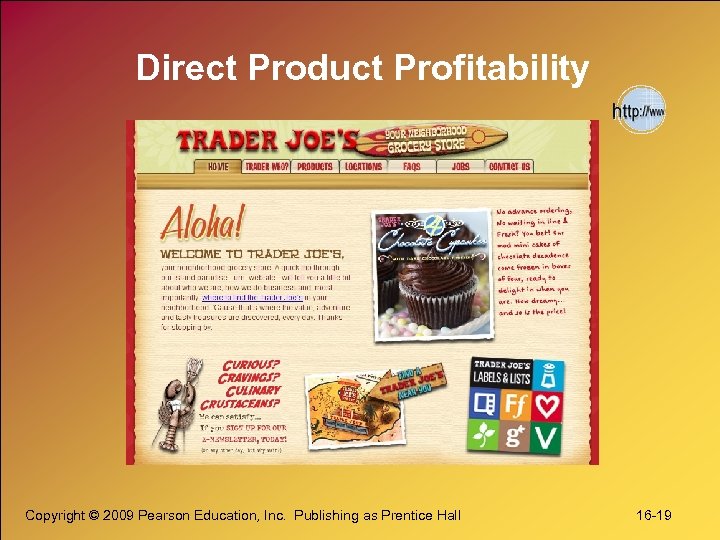 Direct Product Profitability Copyright © 2009 Pearson Education, Inc. Publishing as Prentice Hall 16 -19
 Retailer Services Mix Prepurchase services Postpurchase services Ancillary services Copyright © 2009 Pearson Education, Inc. Publishing as Prentice Hall 16 -20
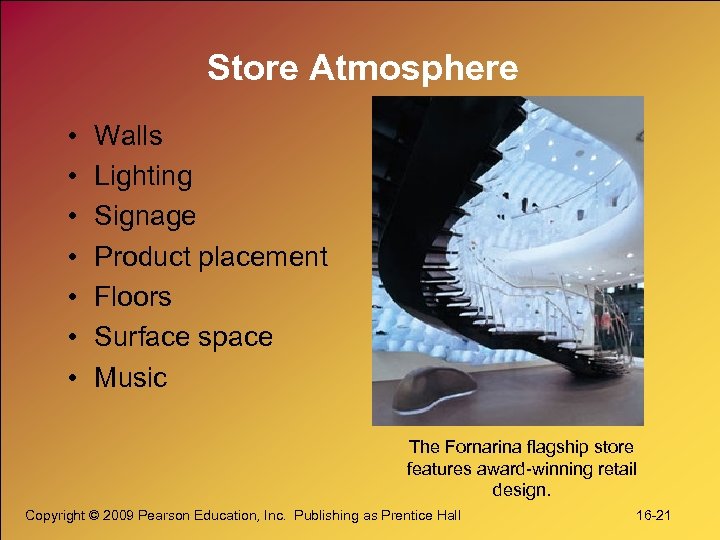 Store Atmosphere • • Walls Lighting Signage Product placement Floors Surface space Music The Fornarina flagship store features award-winning retail design. Copyright © 2009 Pearson Education, Inc. Publishing as Prentice Hall 16 -21
 Tips for Increasing Sales in Retail Space • • Keep shoppers in the store Honor the transition zone Don’t make them hunt Make merchandise available to the reach and touch • Note that men do not ask questions • Remember women need space • Make checkout easy Copyright © 2009 Pearson Education, Inc. Publishing as Prentice Hall 16 -22
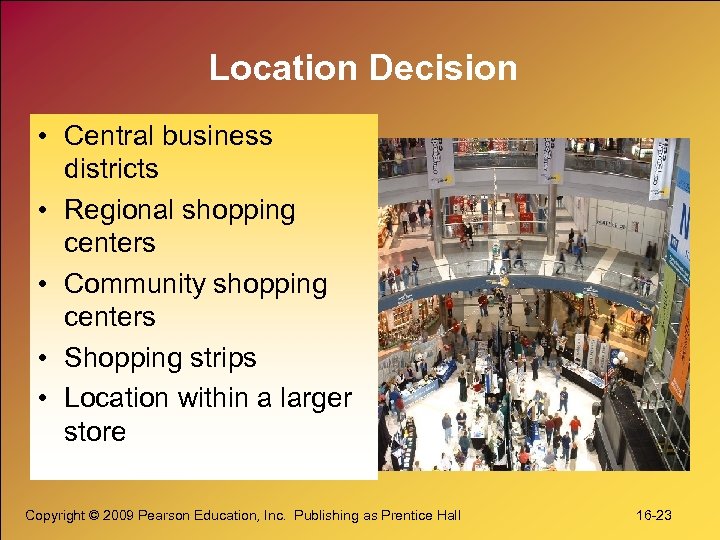 Location Decision • Central business districts • Regional shopping centers • Community shopping centers • Shopping strips • Location within a larger store Copyright © 2009 Pearson Education, Inc. Publishing as Prentice Hall 16 -23
 Indicators of Sales Effectiveness Number of people passing by % who enter store % of those who buy Average amount spent per sale Copyright © 2009 Pearson Education, Inc. Publishing as Prentice Hall 16 -24
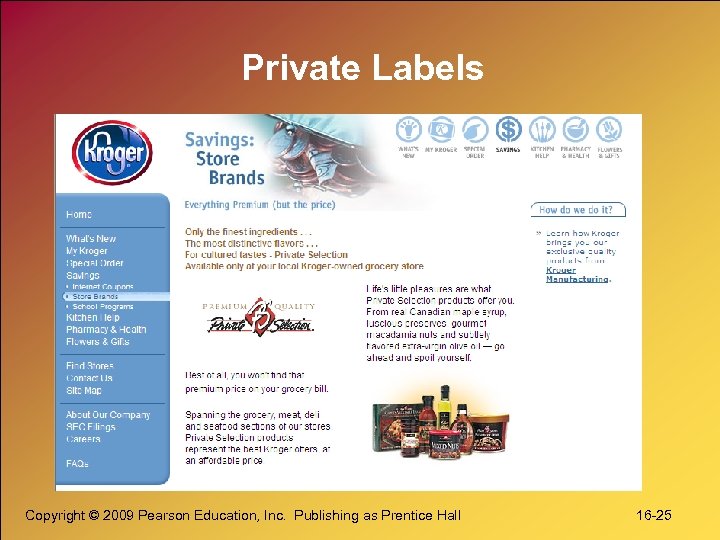 Private Labels Copyright © 2009 Pearson Education, Inc. Publishing as Prentice Hall 16 -25
 Private Label Brands • Private labels are ubiquitous • Consumers accepts private labels • Private-label buyers come from all socioeconomic strata • Private labels are not a recessionary phenomenon • Consumer loyalty shifts from manufacturers to retailers Copyright © 2009 Pearson Education, Inc. Publishing as Prentice Hall 16 -26
 Wholesaling Functions • Selling and promoting • Buying and assortment building • Bulk breaking • Warehousing • • • Transportation Financing Risk bearing Market information Management services and counseling Copyright © 2009 Pearson Education, Inc. Publishing as Prentice Hall 16 -27
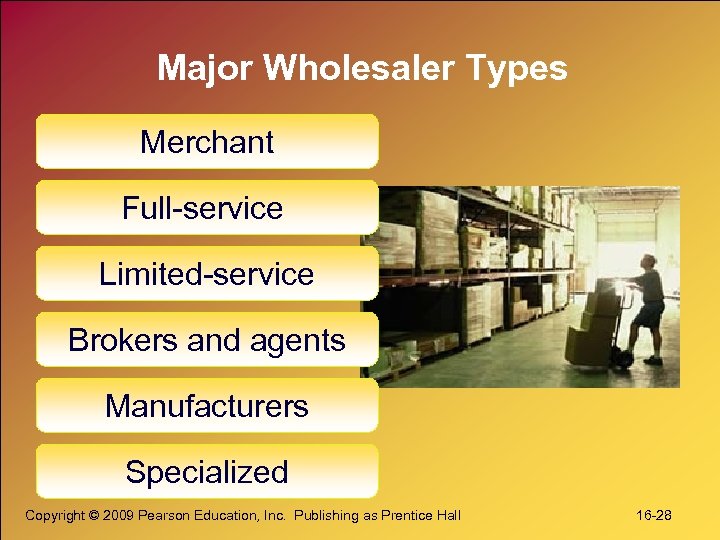 Major Wholesaler Types Merchant Full-service Limited-service Brokers and agents Manufacturers Specialized Copyright © 2009 Pearson Education, Inc. Publishing as Prentice Hall 16 -28
 Market Logistics Planning • Deciding on the company’s value proposition to its customers • Deciding on the best channel design and network strategy • Developing operational excellence • Implementing the solution Copyright © 2009 Pearson Education, Inc. Publishing as Prentice Hall 16 -29
 What are Integrated Logistics Systems? An integrated logistics system (ILS) includes materials management, material flow systems, and physical distribution, aided by information technology. Copyright © 2009 Pearson Education, Inc. Publishing as Prentice Hall 16 -30
 Market Logistics • Sales forecasting • Distribution scheduling • Production plans • Finished-goods inventory decisions • Packaging • In-plant warehousing • Shipping-room processing • Outbound transportation • Field warehousing • Customer delivery and servicing Copyright © 2009 Pearson Education, Inc. Publishing as Prentice Hall 16 -31
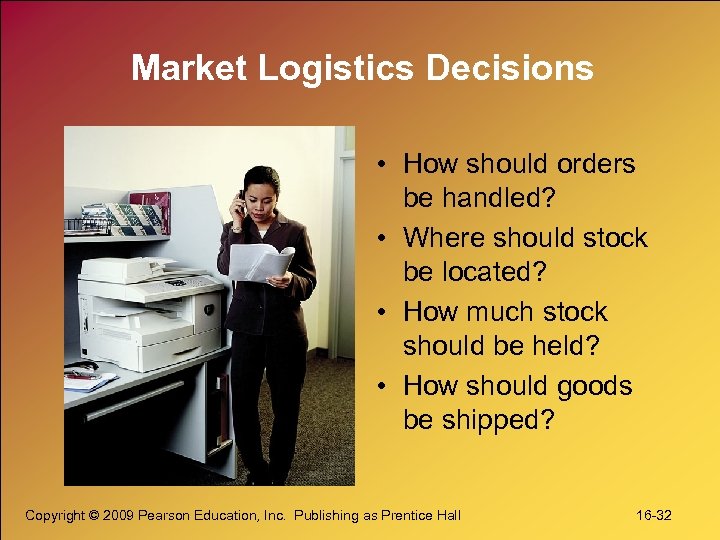 Market Logistics Decisions • How should orders be handled? • Where should stock be located? • How much stock should be held? • How should goods be shipped? Copyright © 2009 Pearson Education, Inc. Publishing as Prentice Hall 16 -32
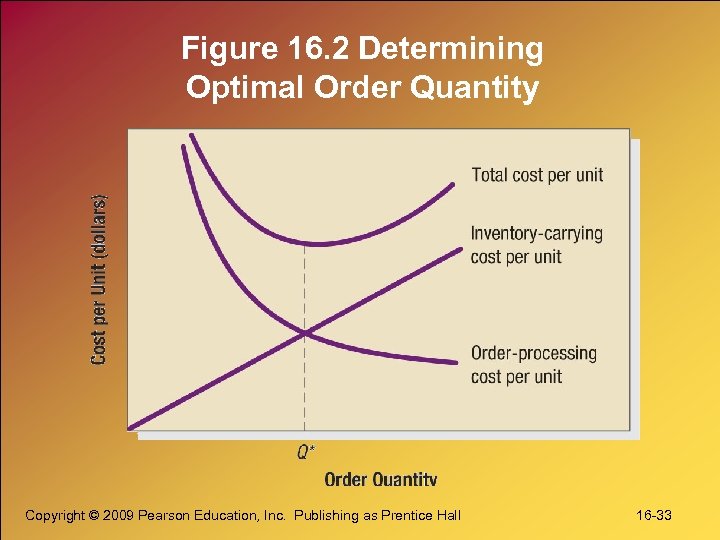 Figure 16. 2 Determining Optimal Order Quantity Copyright © 2009 Pearson Education, Inc. Publishing as Prentice Hall 16 -33
 Transportation Factors • • Speed Frequency Dependability Capability Availability Traceability Cost Copyright © 2009 Pearson Education, Inc. Publishing as Prentice Hall 16 -34
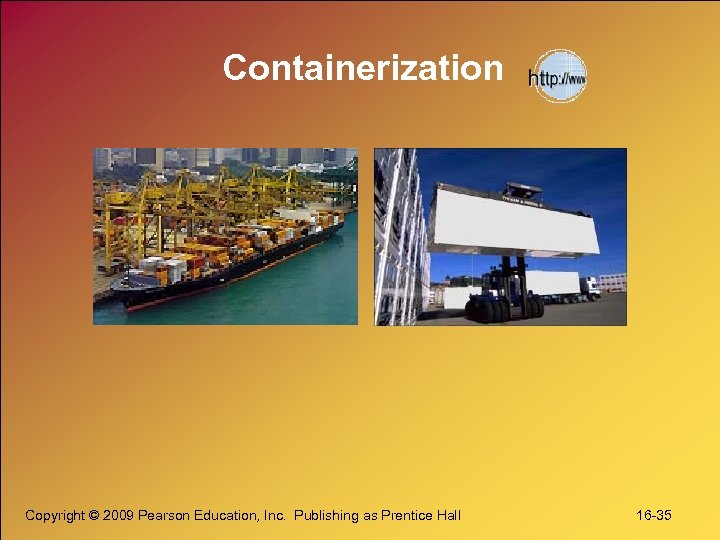 Containerization Copyright © 2009 Pearson Education, Inc. Publishing as Prentice Hall 16 -35
 Marketing Debate ü Should national brand manufacturers also supply private label brands? Take a position: 1. Manufacturers should feel free to sell 2. private labels as a source of revenue. 3. or 4. 2. National manufacturers should never get 5. involved with private labels. Copyright © 2009 Pearson Education, Inc. Publishing as Prentice Hall 16 -36
 Marketing Discussion ü Think of your favorite stores. ü What do they do that encourages your loyalty? ü What do you like about the in-store experience? Copyright © 2009 Pearson Education, Inc. Publishing as Prentice Hall 16 -37