


 Скачать презентацию 15 er t C ap h Copyright
3acf502e41c0961ca7d54be42a7a73de.ppt
- Количество слайдов: 34
 15 er t C ap h Copyright © 2015 Pearson Education
 Chapter 15 Learning Objectives 15. 1 To understand the meaning and importance of marketing ethics and social responsibility. 15. 2 To understand how marketers can exploit consumers by targeting children and encouraging overeating and other forms of irresponsible buying. 15. 3 To understand ethically questionable practices such as covert marketing, manipulative exposure to advertising, and truth-in advertising issues. Copyright © 2015 Pearson Education Slide 2 of 34
 Chapter 15 Learning Objectives 15. 4 To understand the nature and consequences of provocative advertisements. 15. 5 To understand how marketers abuse consumers’ privacy and the measures that can stop such practices. 15. 6 To understand how marketers can advance society’s interests by advocating socially beneficial conduct and discouraging adverse behavior. Copyright © 2015 Pearson Education Slide 3 of 34
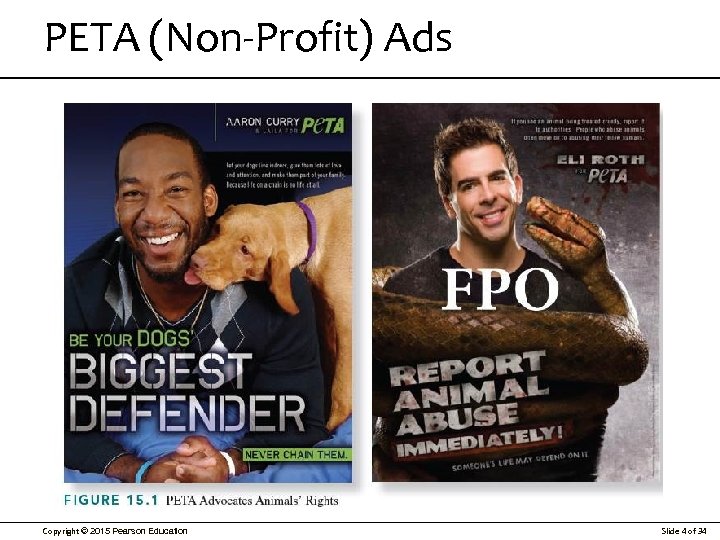 PETA (Non-Profit) Ads Copyright © 2015 Pearson Education Slide 4 of 34
 Learning Objective 15. 1 To understand the meaning and importance of marketing ethics and social responsibility. Copyright © 2015 Pearson Education Slide 5 of 34
 e D ed fin Societal Marketing Concept Calls upon all marketers to satisfy the needs and wants of their target markets in ways that preserve and enhance the well-being of consumers and society as a whole, while also fulfilling the profit objectives of their organizations. Copyright © 2015 Pearson Education Slide 6 of 34
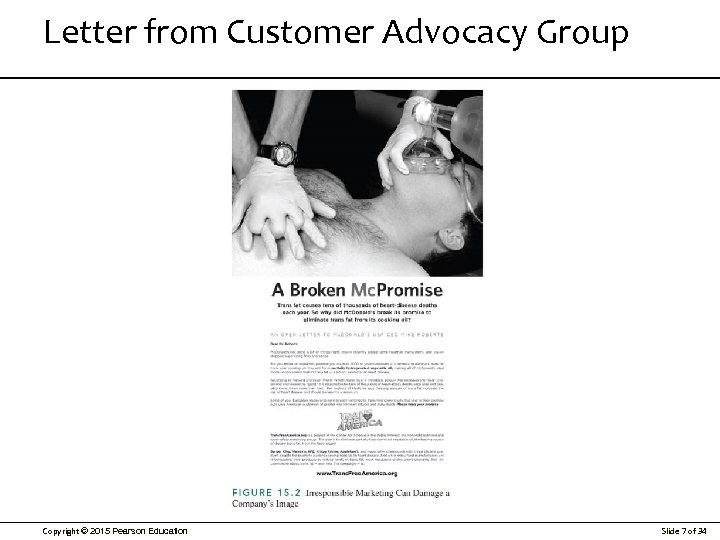 Letter from Customer Advocacy Group Copyright © 2015 Pearson Education Slide 7 of 34
 Learning Objective 15. 2 To understand how marketers can exploit consumers by targeting children and encouraging overeating and other forms of irresponsible buying. Copyright © 2015 Pearson Education Slide 8 of 34
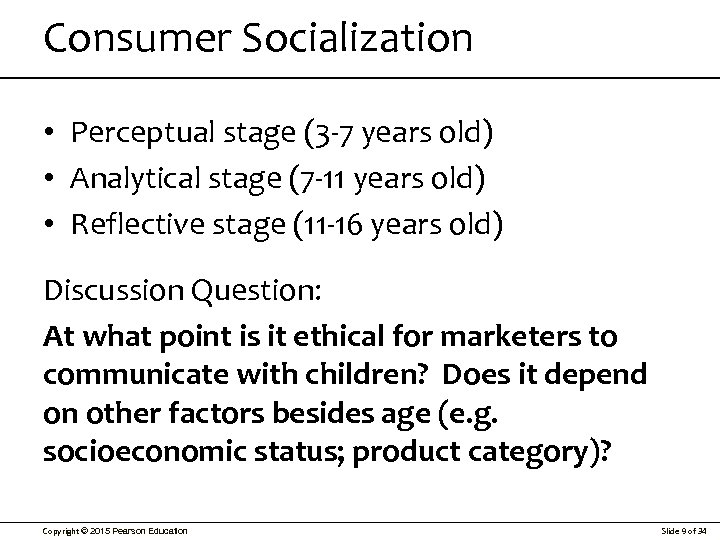 Consumer Socialization • Perceptual stage (3 -7 years old) • Analytical stage (7 -11 years old) • Reflective stage (11 -16 years old) Discussion Question: At what point is it ethical for marketers to communicate with children? Does it depend on other factors besides age (e. g. socioeconomic status; product category)? Copyright © 2015 Pearson Education Slide 9 of 34
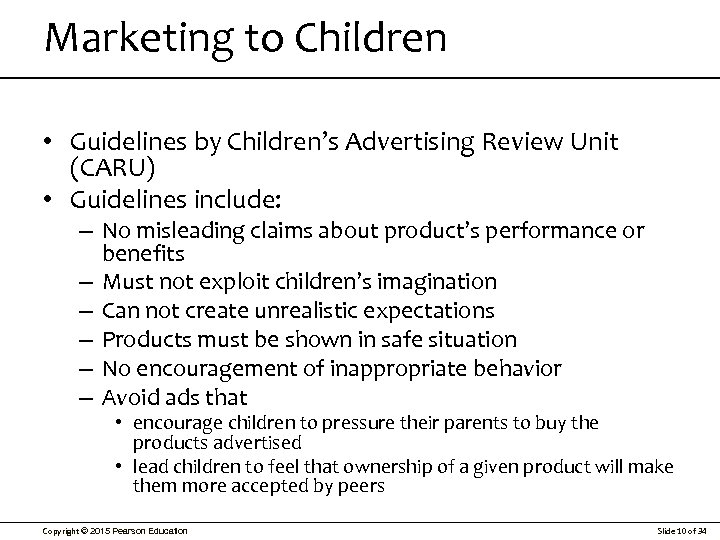 Marketing to Children • Guidelines by Children’s Advertising Review Unit (CARU) • Guidelines include: – No misleading claims about product’s performance or benefits – Must not exploit children’s imagination – Can not create unrealistic expectations – Products must be shown in safe situation – No encouragement of inappropriate behavior – Avoid ads that • encourage children to pressure their parents to buy the products advertised • lead children to feel that ownership of a given product will make them more accepted by peers Copyright © 2015 Pearson Education Slide 10 of 34
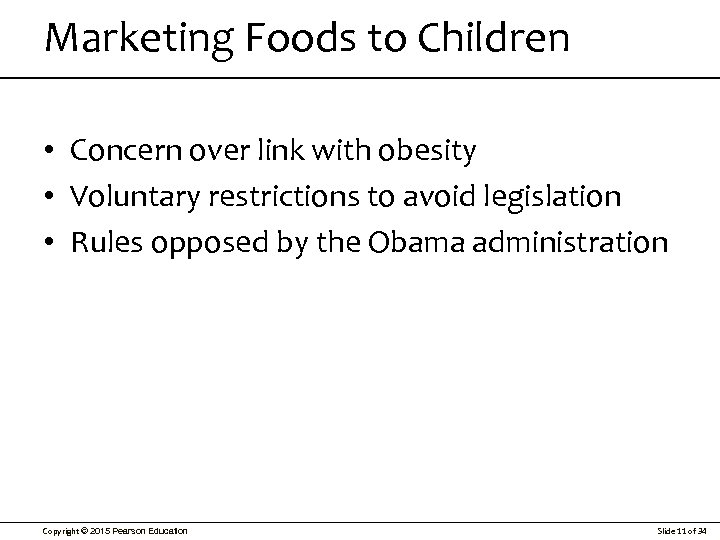 Marketing Foods to Children • Concern over link with obesity • Voluntary restrictions to avoid legislation • Rules opposed by the Obama administration Copyright © 2015 Pearson Education Slide 11 of 34
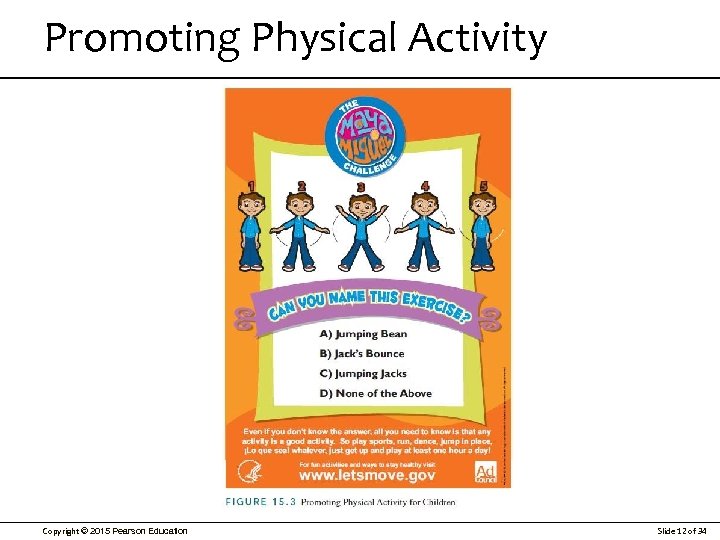 Promoting Physical Activity Copyright © 2015 Pearson Education Slide 12 of 34
 Inspiring Overeating and Irresponsible Spending • Cold grocery stores • Moving displays to encourage wandering • Targeting online shoppers who have been drinking • Designing foods that encourage overeating • Granting easy credit Copyright © 2015 Pearson Education Slide 13 of 34
 Packaging to Increase Consumption • Short, wide glasses • Clear candy jars • Transparent sandwich wrap • Visible, aromatic food • Organized food presentation Copyright © 2015 Pearson Education • Multiple offerings • Minimal variations in serving bowl size • Not tracking consumption • Large inventories • Bundling small packages Slide 14 of 34
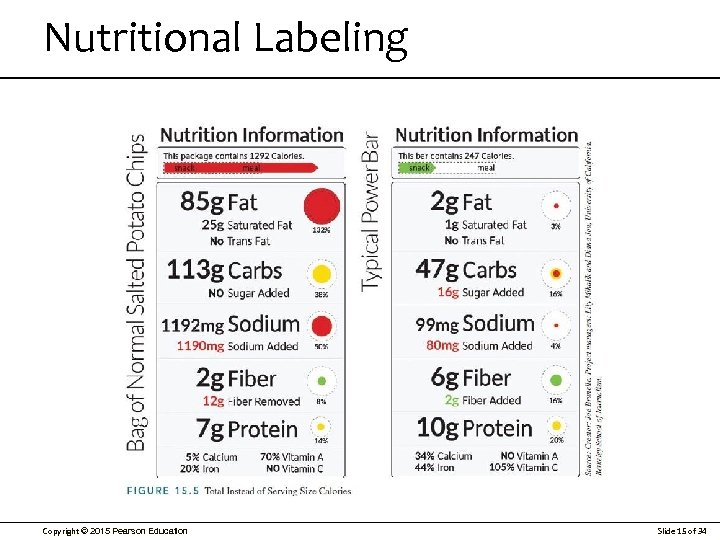 Nutritional Labeling Copyright © 2015 Pearson Education Slide 15 of 34
 Pharmaceutical Advertising • Voluntary restrictions – Direct-to-Consumer • Two-year moratorium proposed in Senate • Online search engine complications (risk information) • Extending life of favorite products Discussion Question: What are the advantages and disadvantages of marketing pharmaceuticals directly to consumers? Copyright © 2015 Pearson Education Slide 16 of 34
 Learning Objective 15. 3 To understand ethically questionable practices such as covert marketing, manipulative exposure to advertising, and truth-in advertising issues. Copyright © 2015 Pearson Education Slide 17 of 34
 Manipulating Products and Messages • Context effects, JND • Covert marketing • Product placement, advertorials and infomercials Copyright © 2015 Pearson Education Slide 18 of 34
 Discussion Questions • Do you think covert marketing is wrong? • Why might others have a different opinion from you? Copyright © 2015 Pearson Education Slide 19 of 34
 False or Misleading Advertising • • • Puffery Truth-in-advertising laws Deceptive advertising; FTC guidelines Corrective advertising Promotional violations in drug marketing – Unsubstantiated effectiveness claims – Omitted risk information – Unsubstantiated superiority claims Copyright © 2015 Pearson Education Slide 20 of 34
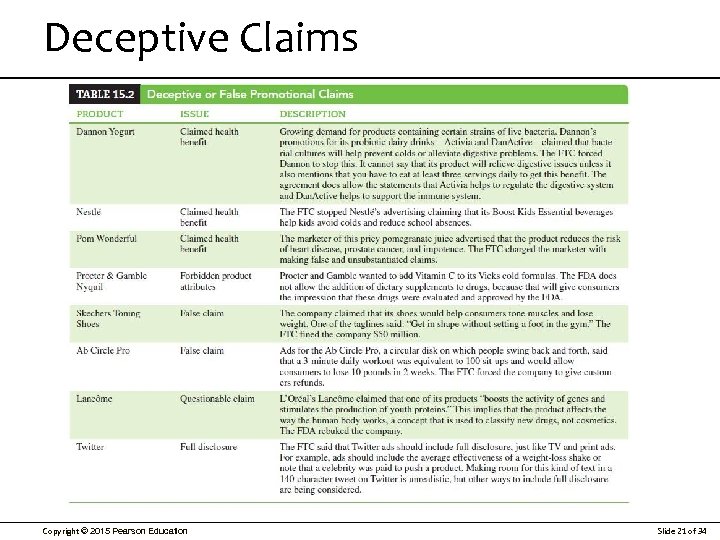 Deceptive Claims Copyright © 2015 Pearson Education Slide 21 of 34
 Learning Objective 15. 4 To understand the nature and consequences of provocative advertisements. Copyright © 2015 Pearson Education Slide 22 of 34
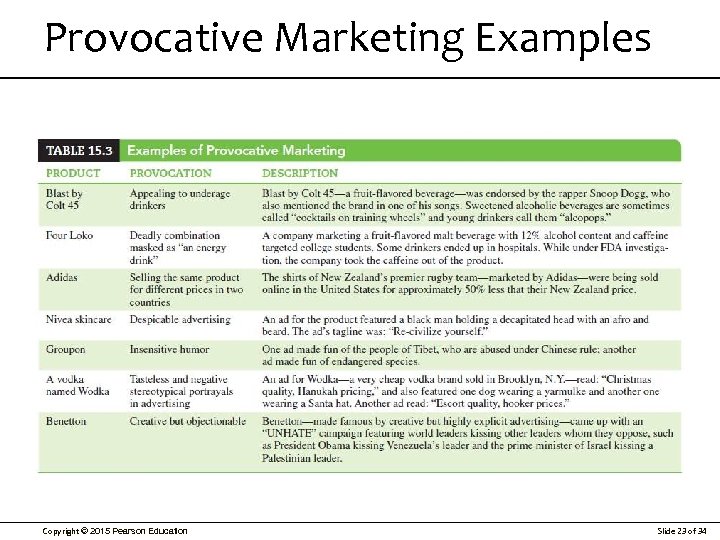 Provocative Marketing Examples Copyright © 2015 Pearson Education Slide 23 of 34
 Learning Objective 15. 5 To understand how marketers abuse consumers’ privacy and the measures that can stop such practices. Copyright © 2015 Pearson Education Slide 24 of 34
 Privacy Issues • Using Wi-Fi signals from smartphones to track consumers in stores • E-Scores: undisclosed digital calculations of people’s buying power and value as consumers • FTC “do not track” mechanism • Regulation of data brokers • Opt-in for monitoring • Turquoise triangle Copyright © 2015 Pearson Education Slide 25 of 34
 Discussion Questions • Should online privacy by self-regulated or governed by legislation? Why or why not? • Should stores be allowed to track your emotions and behavior using your smartphone? Why or why not? Copyright © 2015 Pearson Education Slide 26 of 34
 Learning Objective 15. 6 To understand how marketers can advance society’s interests by advocating socially beneficial conduct and discouraging adverse behavior. Copyright © 2015 Pearson Education Slide 27 of 34
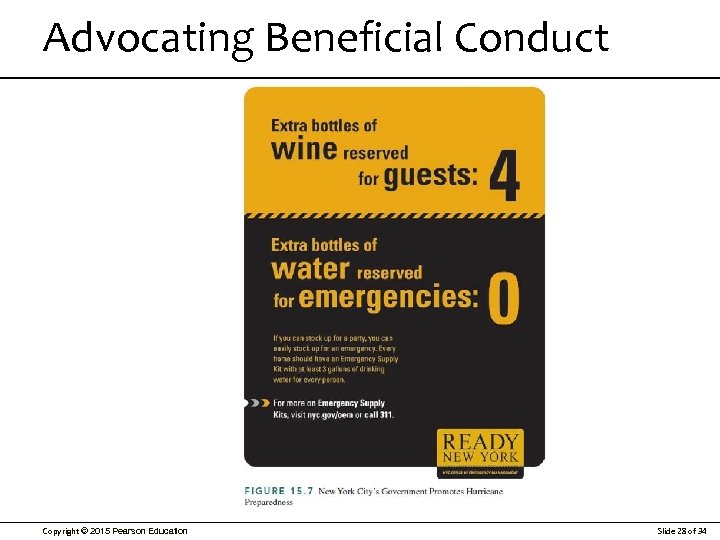 Advocating Beneficial Conduct Copyright © 2015 Pearson Education Slide 28 of 34
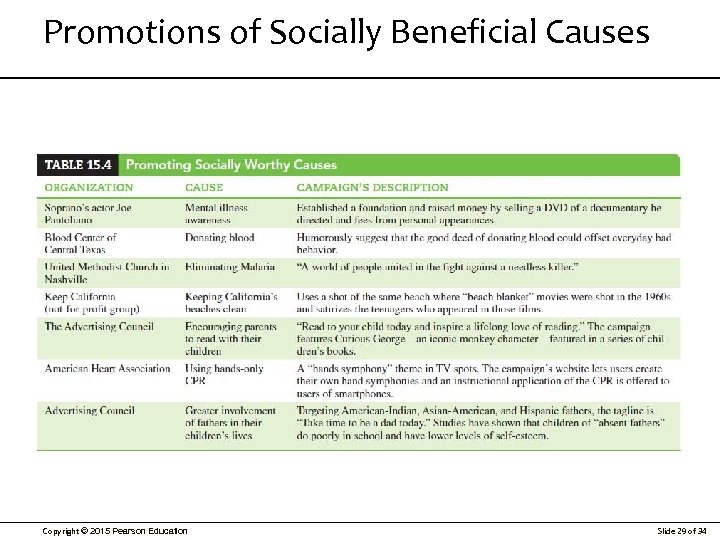 Promotions of Socially Beneficial Causes Copyright © 2015 Pearson Education Slide 29 of 34
 e D ed fin Cause-Related Marketing Firms contribute a portion of the revenues they receive from selling certain products to causes that are socially desirable and supported by the American public. Copyright © 2015 Pearson Education Slide 30 of 34
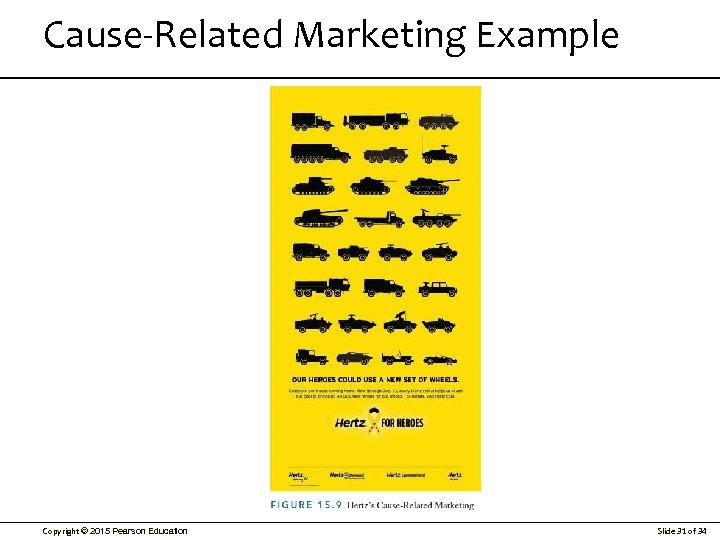 Cause-Related Marketing Example Copyright © 2015 Pearson Education Slide 31 of 34
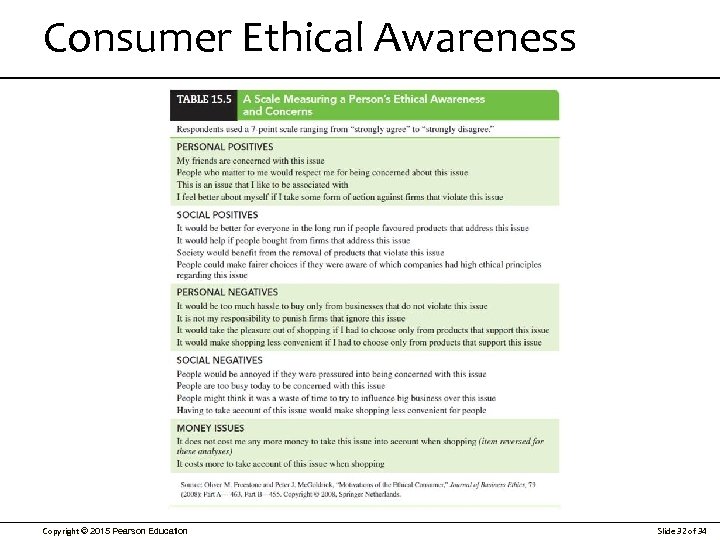 Consumer Ethical Awareness Copyright © 2015 Pearson Education Slide 32 of 34
 Consumer Ethics • Consumer returns • Software piracy Discussion Question: Do you think creative consumer practices that avoid baggage fees and charge airlines falsely are ethical? Why or why not? Copyright © 2015 Pearson Education Slide 33 of 34
 All rights reserved. No part of this publication may be reproduced, stored in a retrieval system, or transmitted, in any form or by any means, electronic, mechanical, photocopying, recording, or otherwise, without the prior written permission of the publisher. Printed in the United States of America. Copyright © 2015 Pearson Education Slide 34 of 34