


 Скачать презентацию 14 Supply Chain Management Professor Close Learning
99660d19a403a33ee3ab93539bff4f35.ppt
- Количество слайдов: 46
 14 Supply Chain Management Professor Close
 Learning Outcomes LO 1 Define the terms supply chain and supply chain management, and discuss the benefits of supply chain management LO 2 Discuss the concept of supply chain integration and explain why each of the six types of integration is important LO 3 Identify the eight key processes of excellent supply chain management and discuss how each of these processes impacts the end customer
 Learning Outcomes LO 4 Discuss the key strategic decisions supply chain managers must make when designing their companies’ supply chains LO 5 Discuss new technology and emerging trends in supply chain management
 Supply Chains and Supply Chain Management Define the terms supply chain and supply chain management, and discuss the benefits of supply chain management
 Supply Chains Supply Chain The connected chain of all of the business entities, both internal and external to the company, that perform or support the logistics function
 Supply Chains Supply Chain Management A management system that coordinates and integrates all of the activities performed by supply chain members into a seamless process, from the source to the point of consumption, resulting in enhanced customer and economic value
 Supply Chain Managers The philosophy behind supply chain management is that by visualizing the entire supply chain, supply chain managers can maximize strengths and efficiencies at each level of the process to create a highly competitive, customer-driven supply system that is able to respond immediately to changes in supply and demand.
 Supply Chain Management Communicator of customer demand from point of sale to supplier Physical flow process that engineers the movement of goods
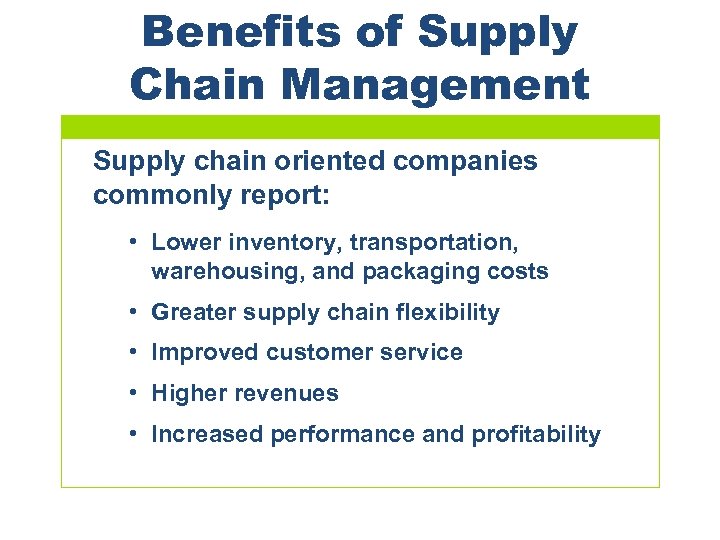 Benefits of Supply Chain Management Supply chain oriented companies commonly report: • Lower inventory, transportation, warehousing, and packaging costs • Greater supply chain flexibility • Improved customer service • Higher revenues • Increased performance and profitability
 Supply Chain Integration Discuss the concept of supply chain integration and explain why each of the six types of integration is important
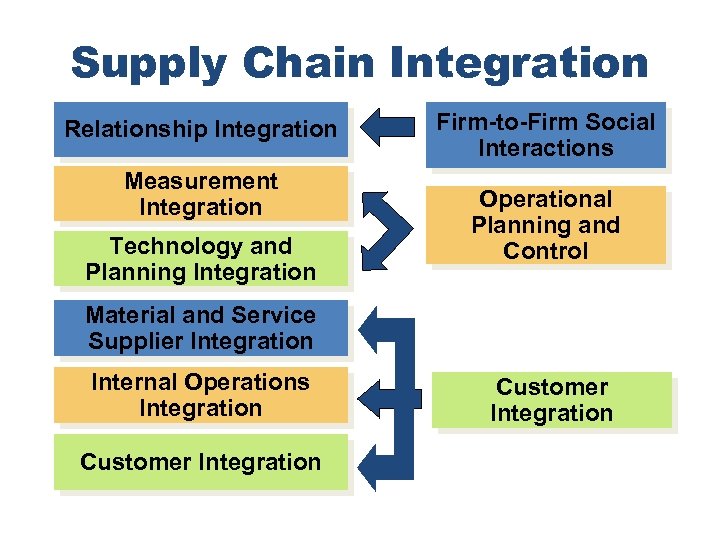 Supply Chain Integration Relationship Integration Measurement Integration Technology and Planning Integration Firm-to-Firm Social Interactions Operational Planning and Control Material and Service Supplier Integration Internal Operations Integration Customer Integration
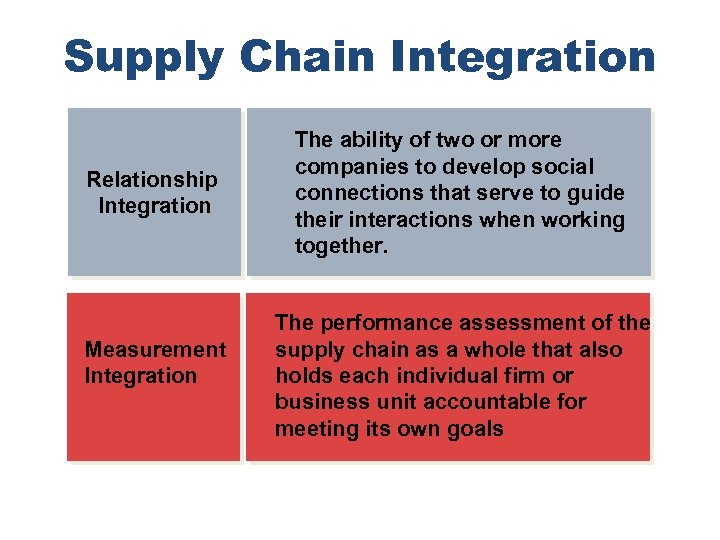 Supply Chain Integration Relationship Integration Measurement Integration The ability of two or more companies to develop social connections that serve to guide their interactions when working together. The performance assessment of the supply chain as a whole that also holds each individual firm or business unit accountable for meeting its own goals
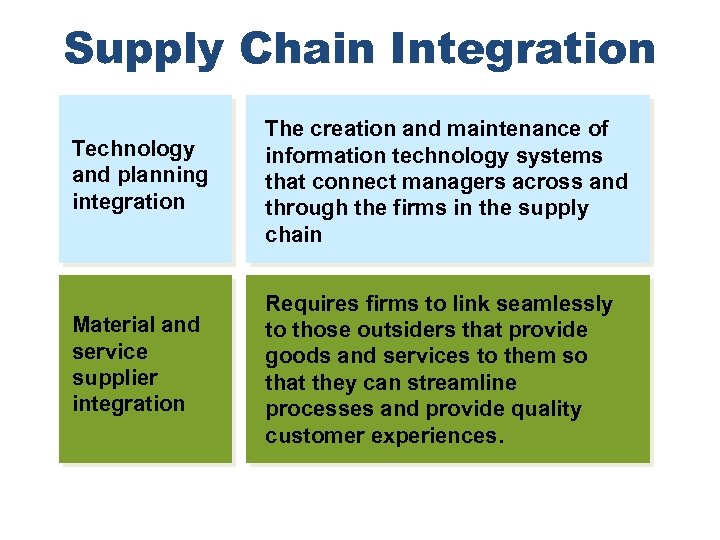 Supply Chain Integration Technology and planning integration The creation and maintenance of information technology systems that connect managers across and through the firms in the supply chain Material and service supplier integration Requires firms to link seamlessly to those outsiders that provide goods and services to them so that they can streamline processes and provide quality customer experiences.
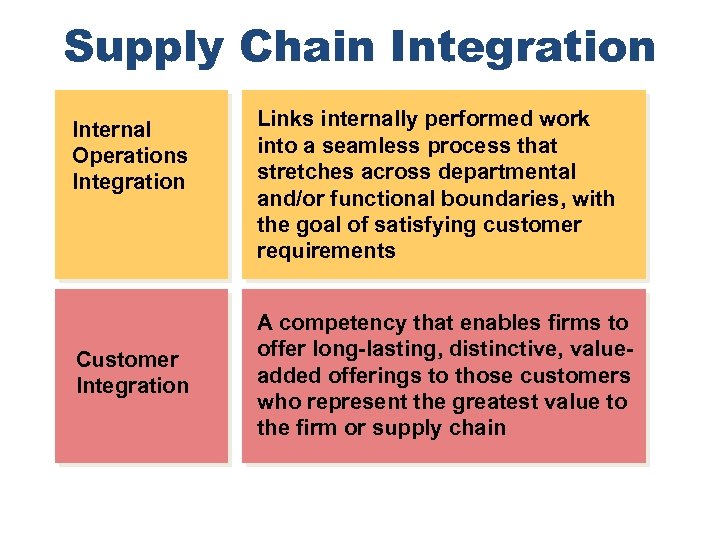 Supply Chain Integration Internal Operations Integration Customer Integration Links internally performed work into a seamless process that stretches across departmental and/or functional boundaries, with the goal of satisfying customer requirements A competency that enables firms to offer long-lasting, distinctive, valueadded offerings to those customers who represent the greatest value to the firm or supply chain
 Key Processes of Supply Chain Management Identify the eight key processes of excellent supply chain management and discuss how each of these processes impacts the end customer
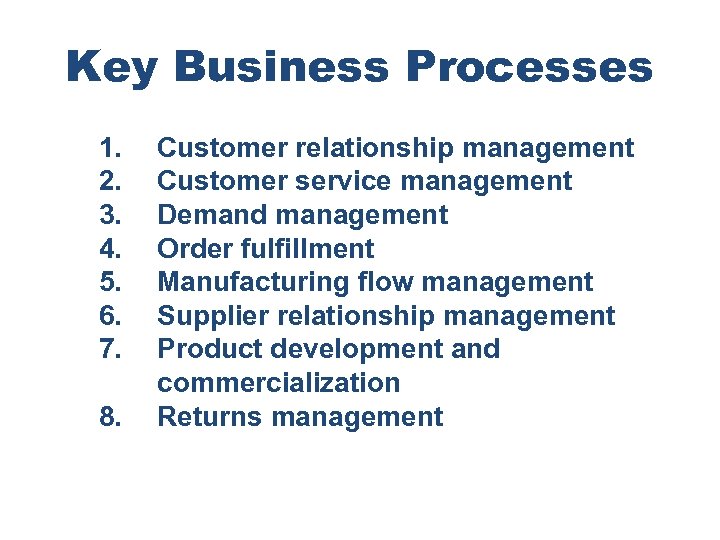 Key Business Processes 1. 2. 3. 4. 5. 6. 7. 8. Customer relationship management Customer service management Demand management Order fulfillment Manufacturing flow management Supplier relationship management Product development and commercialization Returns management
 Customer Relationship Management (CRM) Process Allows companies to prioritize their marketing focus on different customer groups according to each group’s long -term value to the company or supply chain
 Customer Service Management Process Presents a multi-company, unified response system to the customer whenever complaints, concerns, questions, or comments are voiced
 Demand Management Process Seeks to align supply and demand throughout the supply chain by anticipating customer requirements at each level and create demand-related plans of action prior to actual customer purchasing behavior
 Order Fulfillment Process a highly integrated process, often requiring persons from multiple companies and multiple functions to come together and coordinate to create customer satisfaction at a given place and time
 Manufacturing Flow Management Process Concerned with ensuring that firms in the supply chain have the needed resources to manufacture with flexibility and to move products through a multi-stage production process
 Supplier Relationship Management Process Closely related to the manufacturing flow management process and contains several characteristics that parallel the customer relationship management process
 Product Development and Commercialization Process Includes the group activities that facilitates the joint development and marketing of new offerings among a group of supply chain partner firms
 Returns Management Process Enables firms to manage volumes of returned product efficiently, while minimizing returns-related costs and maximizing the value of the returned assets to the firms in the supply chain
 Managing the Logistical Components of the Supply Chain Discuss the key strategic decisions supply chain managers must make when designing their companies’ supply chains
 Logistics is… the process of strategically managing the efficient flow and storage of raw materials, in-process inventory, and finished goods from point of origin to point of consumption.
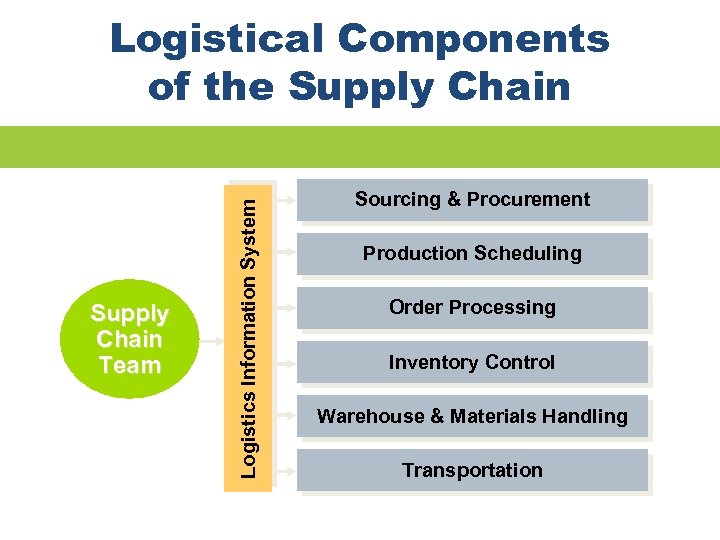 Supply Chain Team Logistics Information System Logistical Components of the Supply Chain Sourcing & Procurement Production Scheduling Order Processing Inventory Control Warehouse & Materials Handling Transportation
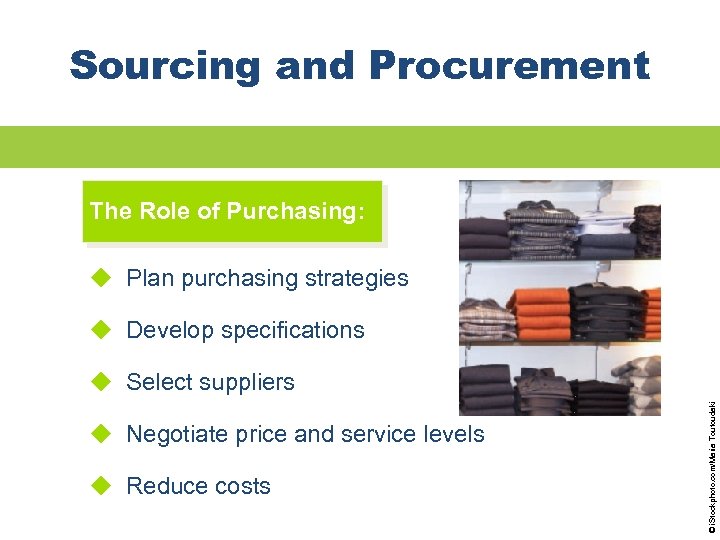 Sourcing and Procurement The Role of Purchasing: u Plan purchasing strategies u Develop specifications u Negotiate price and service levels u Reduce costs © i. Stockphoto. com/Maria Toutoudaki u Select suppliers
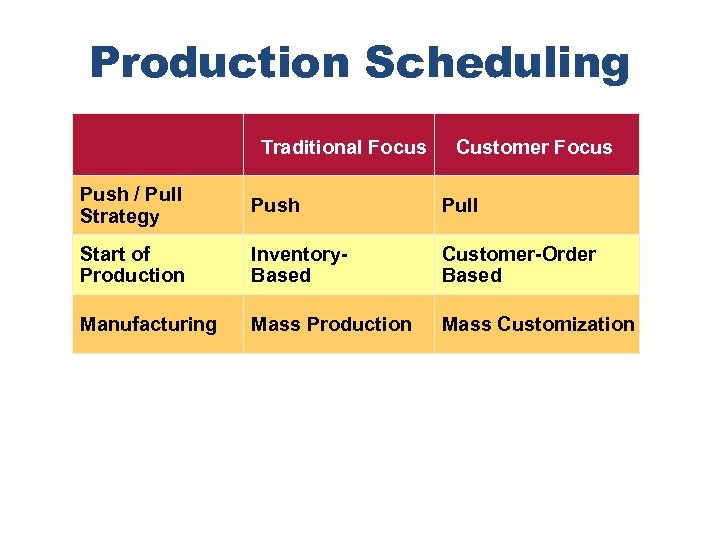 Production Scheduling Traditional Focus Customer Focus Push / Pull Strategy Push Pull Start of Production Inventory. Based Customer-Order Based Manufacturing Mass Production Mass Customization
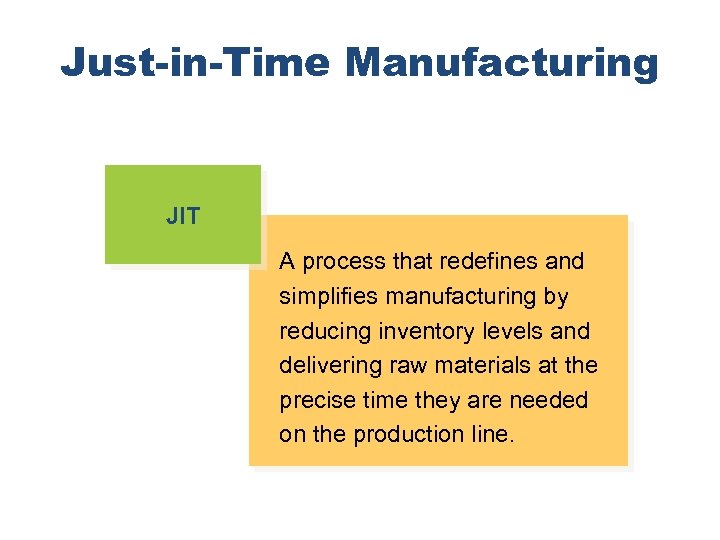 Just-in-Time Manufacturing JIT A process that redefines and simplifies manufacturing by reducing inventory levels and delivering raw materials at the precise time they are needed on the production line.
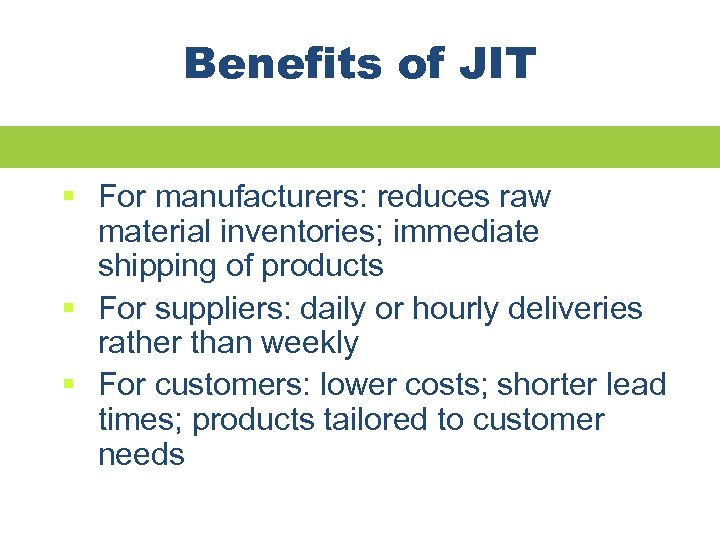 Benefits of JIT § For manufacturers: reduces raw material inventories; immediate shipping of products § For suppliers: daily or hourly deliveries rather than weekly § For customers: lower costs; shorter lead times; products tailored to customer needs
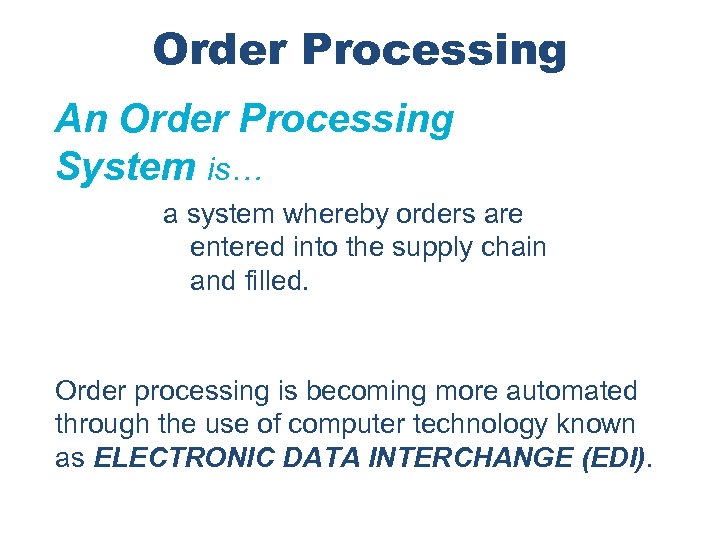 Order Processing An Order Processing System is… a system whereby orders are entered into the supply chain and filled. Order processing is becoming more automated through the use of computer technology known as ELECTRONIC DATA INTERCHANGE (EDI).
 Inventory Control System A method of developing and maintaining an adequate assortment of materials or products to meet a manufacturer’s or a customer’s demand
 Inventory Control Tools for managing inventory include: materials requirement planning (MRP) or materials management – supplier to manufacturer distribution resource planning (DRP) – manufacturer to end user automatic replenishment programs – minimal forecasting
 Warehousing and Materials Handling A Materials-Handling System is… a method of moving inventory into, within, and out of the warehouse. Most manufacturers today have moved to AUTOMATED materials-handling systems to minimize the amount of handling.
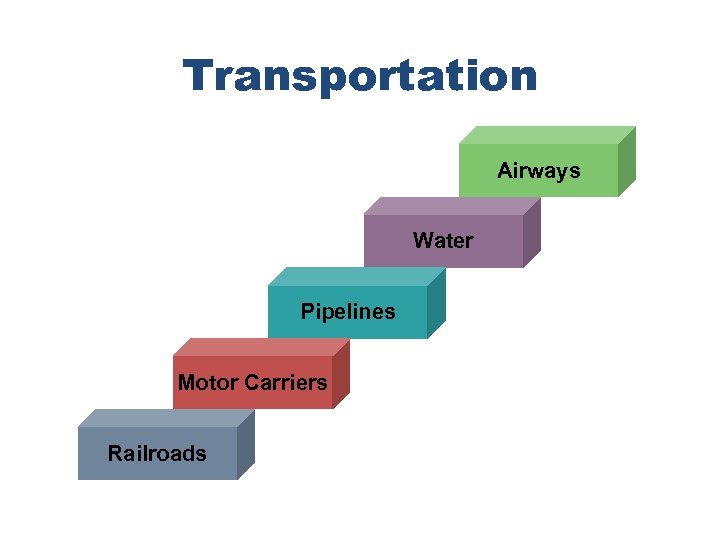 Transportation Airways Water Pipelines Motor Carriers Railroads
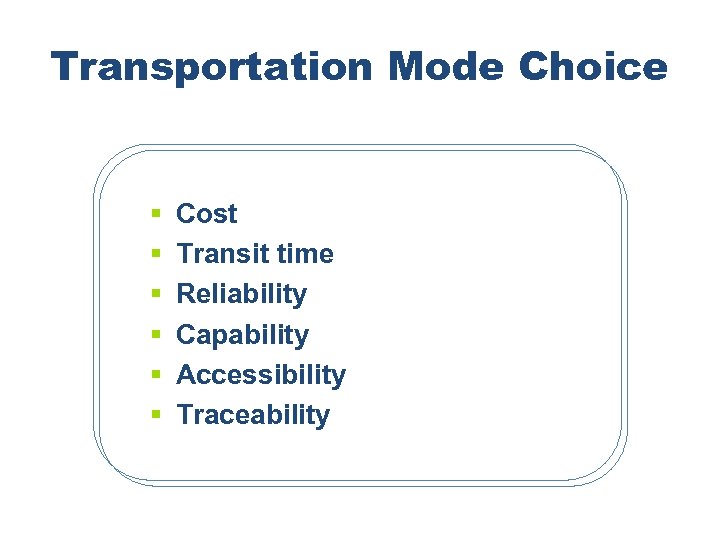 Transportation Mode Choice § § § Cost Transit time Reliability Capability Accessibility Traceability
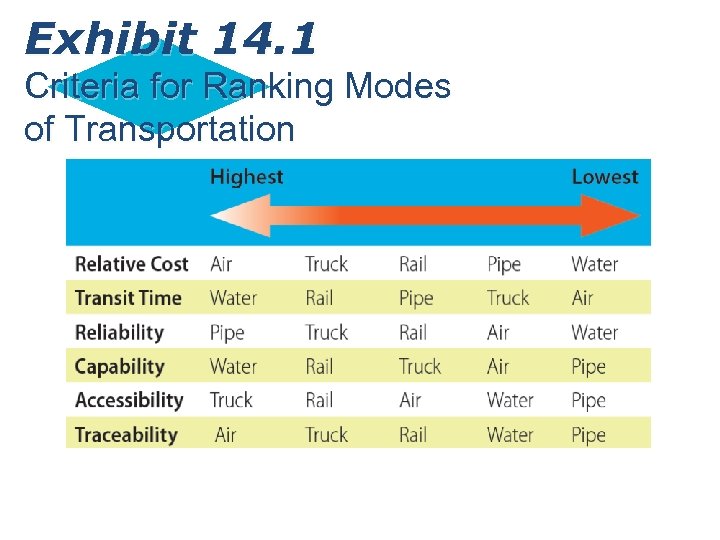 Exhibit 14. 1 Criteria for Ranking Modes of Transportation
 Trends in Supply Chain Management Discuss new technology and emerging trends in supply chain management
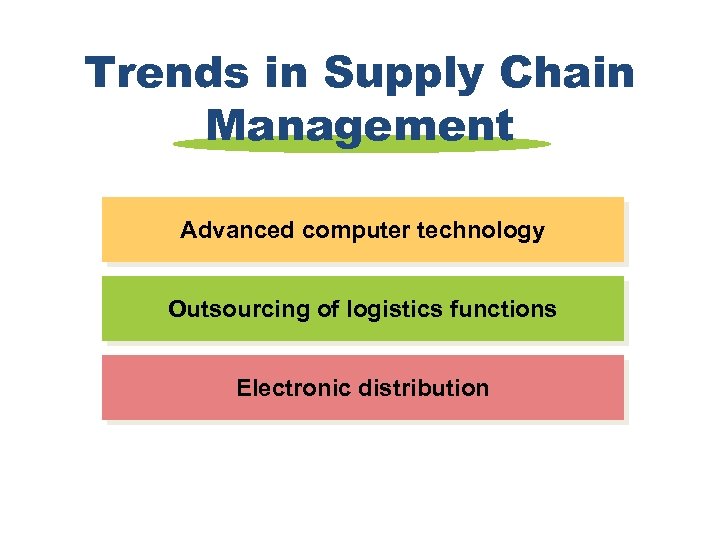 Trends in Supply Chain Management Advanced computer technology Outsourcing of logistics functions Electronic distribution
 Advanced Computer Technology u Automatic identification systems - Bar coding - Radio frequency technology u Communications technology u Supply chain software systems
 Outsourcing Logistics Functions Outsourcing Benefits u Reduce inventories u Locate stock at fewer plants and distribution centers u Provide same or better levels of service
 Electronic Distribution is… a distribution technique that includes any kind of product or service that can be distributed electronically, whether over traditional forms such as fiber-optic cable or through satellite transmission of electronic signals.
 Green Supply Chain Management • Requires integrating green thinking into all phases of the supply chain – Green materials sourcing – Environmental impact of packaging, shipment, use – Incorporate end-of-life management • Recycling • Clean disposal
 Global Logistics and Supply Chain Management Logistical challenges of global markets: • Understanding and coping with the legalities of trade in other countries • Uncertainty regarding shipping
 Beyond the Book Chapter 14 Videos Sephora – Supply Chain Management How does Sephora manage its supply chain? What information goes into deciding which suppliers become incorporated? http: //www. cengage. com/marketing/boo k_content/1439039429_lamb/company_c lips/ch 14. html