


 Скачать презентацию 14 — 1 Fundamentals of Corporate Finance Sixth
125dadd1f50cf22d1a1412f1e22b5d86.ppt
- Количество слайдов: 19
 14 - 1 Fundamentals of Corporate Finance Sixth Edition Chapter 14 Introduction to Corporate Financing Richard A. Brealey Stewart C. Myers Alan J. Marcus Slides by Matthew Will Mc. Graw Hill/Irwin Copyright © 2009 by The Mc. Graw-Hill Companies, Inc. All rights reserved
 14 - 2 Topics Covered w Creating Value with Financing Decisions w Common Stock w Preferred Stock w Corporate Debt w Convertible Securities w Patterns of Corporate Financing
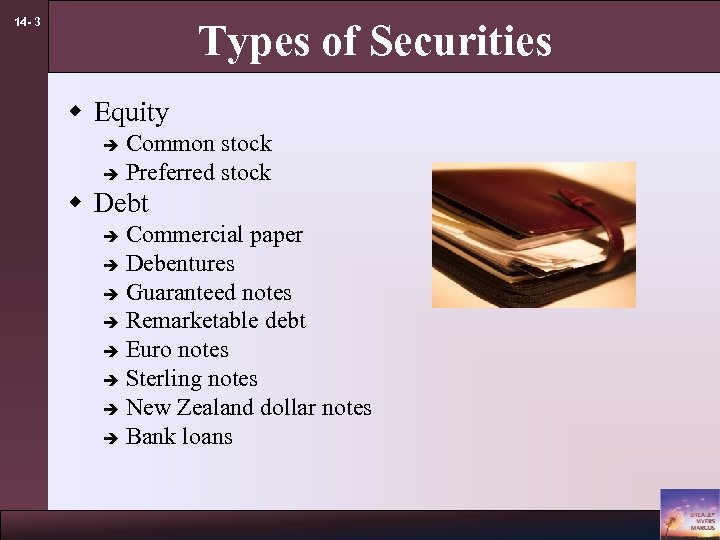 14 - 3 Types of Securities w Equity Common stock è Preferred stock è w Debt Commercial paper è Debentures è Guaranteed notes è Remarketable debt è Euro notes è Sterling notes è New Zealand dollar notes è Bank loans è
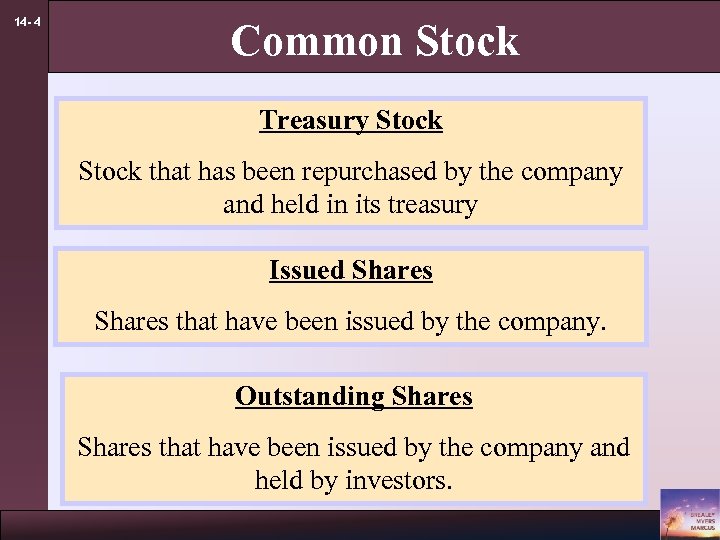 14 - 4 Common Stock Treasury Stock that has been repurchased by the company and held in its treasury Issued Shares that have been issued by the company. Outstanding Shares that have been issued by the company and held by investors.
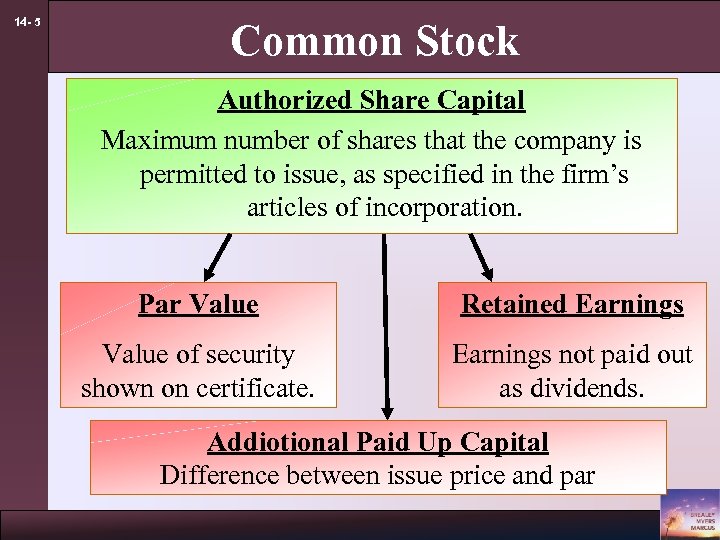 14 - 5 Common Stock Authorized Share Capital Maximum number of shares that the company is permitted to issue, as specified in the firm’s articles of incorporation. Par Value Retained Earnings Value of security shown on certificate. Earnings not paid out as dividends. Addiotional Paid Up Capital Difference between issue price and par
 14 - 6 Common Stock Book Value vs. Market Value Book value is a backward looking measure. It tells us how much capital the firm has raised from shareholders in the past. It does not measure the value that shareholders place on those shares today. The market value of the firm is forward looking, it depends on the future dividends that shareholders expect to receive.
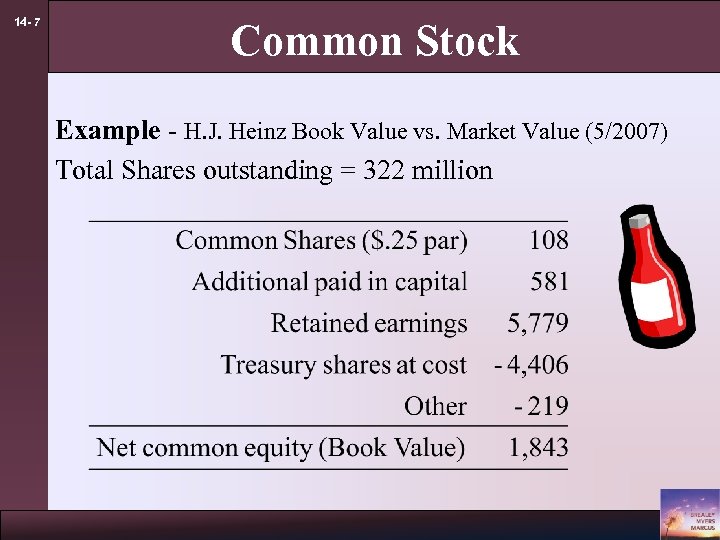 14 - 7 Common Stock Example - H. J. Heinz Book Value vs. Market Value (5/2007) Total Shares outstanding = 322 million
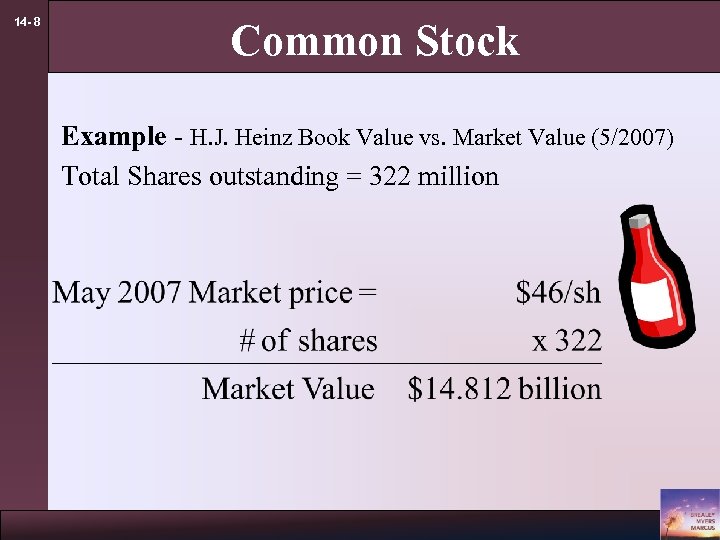 14 - 8 Common Stock Example - H. J. Heinz Book Value vs. Market Value (5/2007) Total Shares outstanding = 322 million
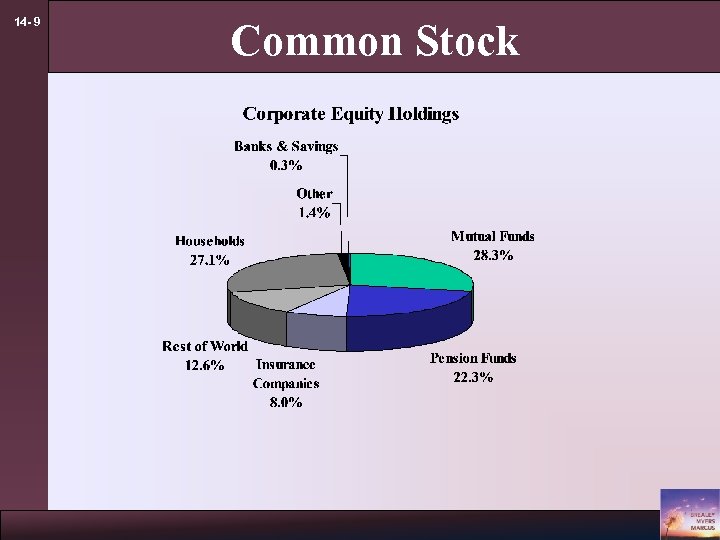 14 - 9 Common Stock
 14 - 10 Preferred Stock - Stock that takes priority over common stock in regards to dividends. Net Worth - Book value of common shareholder’s equity plus preferred stock. Floating-Rate Preferred - Preferred stock paying dividends that vary with short term interest rates.
 14 - 11 Corporate Debt w Debt has the unique feature of allowing the borrowers to walk away from their obligation to pay, in exchange for the assets of the company. w “Default Risk” is the term used to describe the likelihood that a firm will walk away from its obligation, either voluntarily or involuntarily. w “Bond Ratings”are issued on debt instruments to help investors assess the default risk of a firm.
 14 - 12 Corporate Debt Prime Rate - Benchmark interest rate charged by banks. Funded Debt - Debt with more than 1 year remaining to maturity. Sinking Fund - Fund established to retire debt before maturity. Callable Bond - Bond that may be repurchased by firm before maturity at specified call price.
 14 - 13 Corporate Debt Subordinate Debt - Debt that may be repaid in bankruptcy only after senior debt is repaid. Secured Debt - Debt that has first claim on specified collateral in the event of default. Investment Grade - Bonds rated Baa or above by Moody’s or BBB or above by S&P. Junk Bond - Bond with a rating below Baa or BBB.
 14 - 14 Corporate Debt Eurodollars - Dollars held on deposit in a bank outside the United States. Eurobond - Bond that is marketed internationally. Private Placement - Sale of securities to a limited number of investors without a public offering. Protective Covenants - Restriction on a firm to protect bondholders. Lease - Long-term rental agreement.
 14 - 15 Convertible Securities Warrant - Right to buy shares from a company at a stipulated price before a set date. Convertible Bond - Bond that the holder may exchange for a specified amount of another security. Convertibles are a combined security, consisting of both a bond a call option.
 14 - 16 Patterns of Corporate Financing w Firms may raise funds from external sources or plowback profits rather than distribute them to shareholders. w Should a firm elect external financing, they may choose between debt or equity sources.
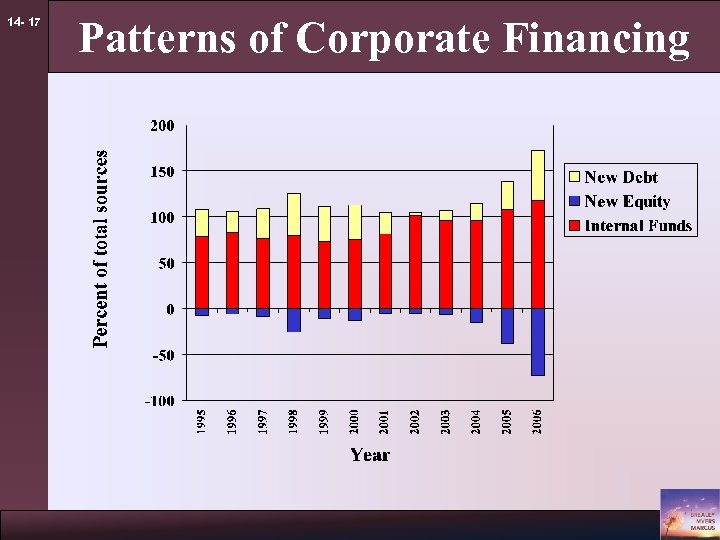 14 - 17 Patterns of Corporate Financing
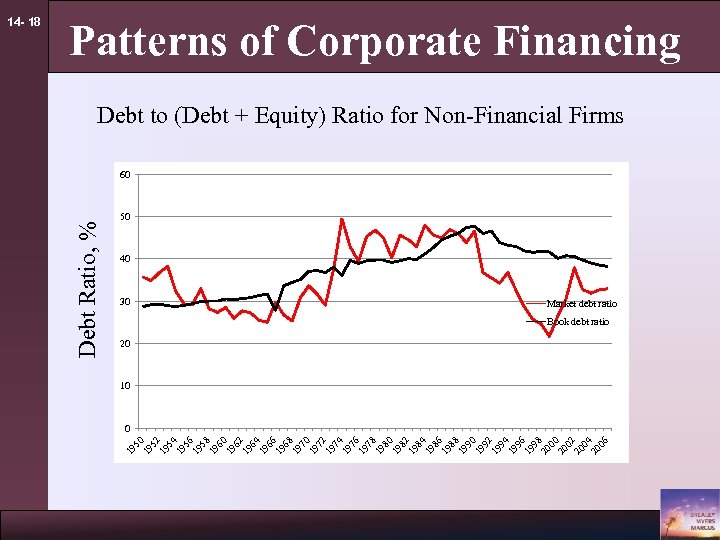 Patterns of Corporate Financing Debt to (Debt + Equity) Ratio for Non-Financial Firms 60 50 40 30 Market debt ratio Book debt ratio 20 10 50 19 52 19 54 19 56 19 58 19 60 19 62 19 64 19 66 19 68 19 70 19 72 19 74 19 76 19 78 19 80 19 82 19 84 19 86 19 88 19 90 19 92 19 94 19 96 19 98 20 00 20 02 20 04 20 06 0 19 Debt Ratio, % 14 - 18
 14 - 19 Web Resources www. federalreserve. gov/releases/z 1/ www. census. gov/csd/qfr