 Скачать презентацию 13 February 2015 University of Sheffield Higher education
9ccb4a4e0d3a283937dbdabe472f604e.ppt
- Количество слайдов: 22



13 February 2015, University of Sheffield Higher education research: global, national local? Simon Marginson UCL Institute of Education
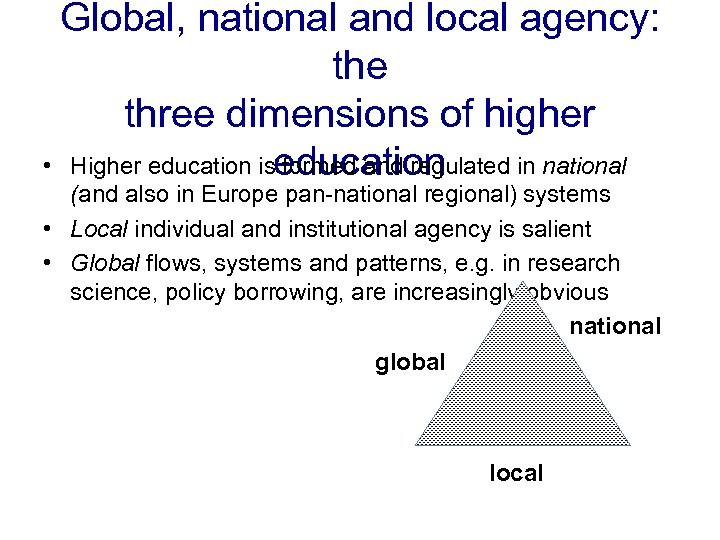
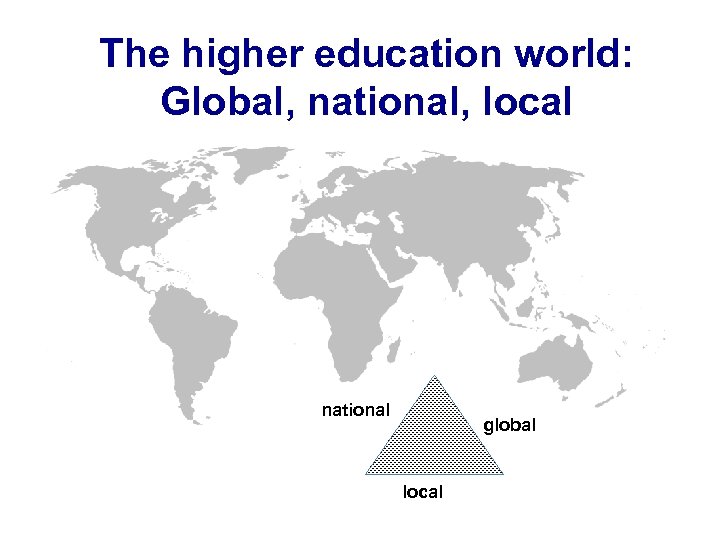
Global, national and local agency: the three dimensions of higher • Higher education iseducation formed and regulated in national (and also in Europe pan-national regional) systems • Local individual and institutional agency is salient • Global flows, systems and patterns, e. g. in research science, policy borrowing, are increasingly obvious national global local
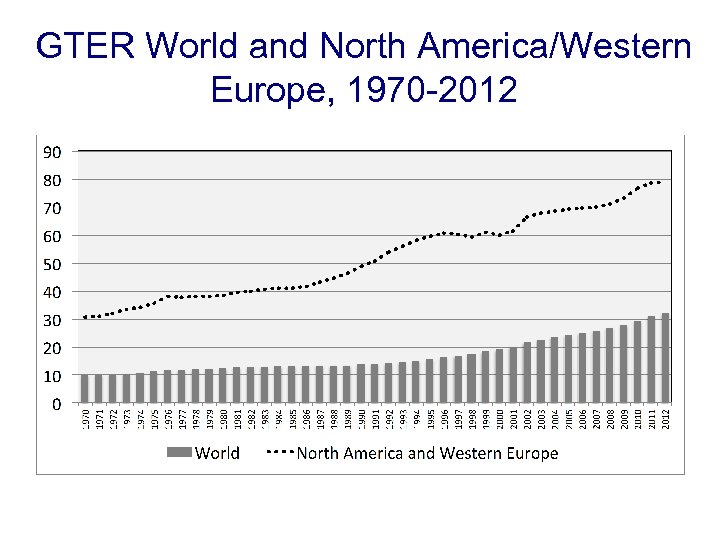
GTER World and North America/Western Europe, 1970 -2012
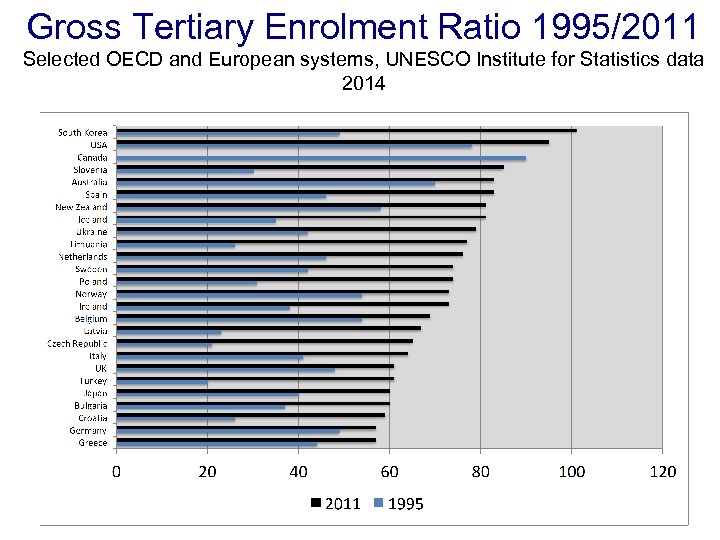
Gross Tertiary Enrolment Ratio 1995/2011 Selected OECD and European systems, UNESCO Institute for Statistics data 2014
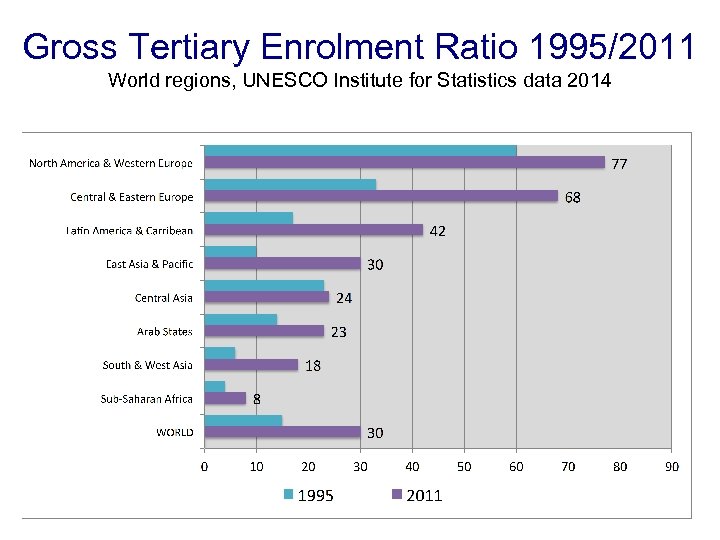
Gross Tertiary Enrolment Ratio 1995/2011 World regions, UNESCO Institute for Statistics data 2014
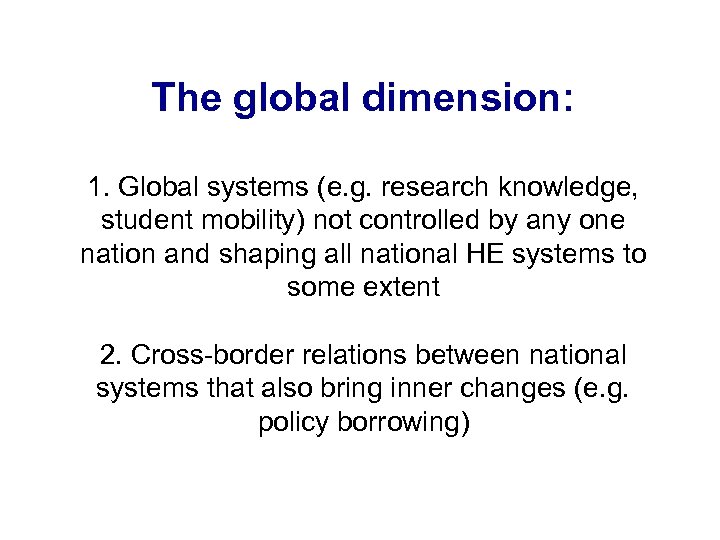
The global dimension: 1. Global systems (e. g. research knowledge, student mobility) not controlled by any one nation and shaping all national HE systems to some extent 2. Cross-border relations between national systems that also bring inner changes (e. g. policy borrowing)
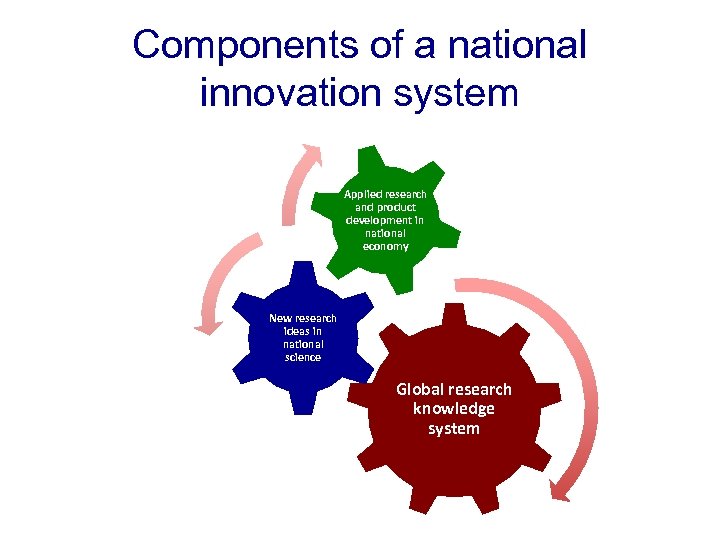
Components of a national innovation system Applied research and product development in national economy New research ideas in national science Global research knowledge system
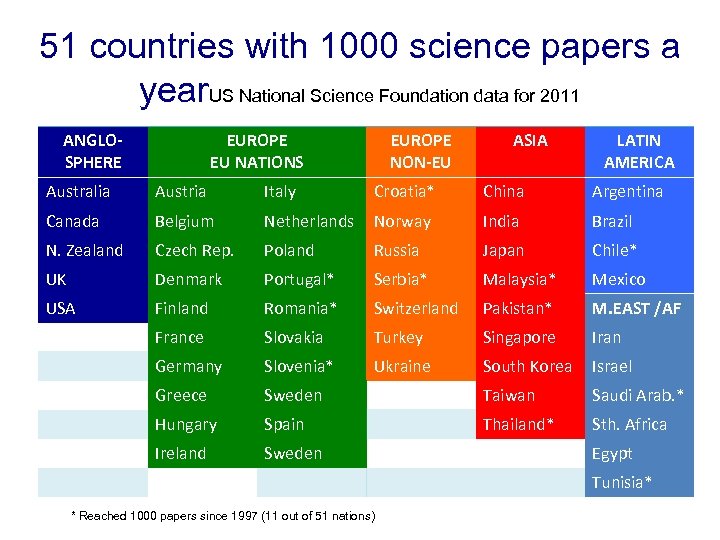
51 countries with 1000 science papers a year. US National Science Foundation data for 2011 ANGLOSPHERE EUROPE EU NATIONS EUROPE NON-EU ASIA LATIN AMERICA Australia Austria Italy Croatia* China Argentina Canada Belgium Netherlands Norway India Brazil N. Zealand Czech Rep. Poland Russia Japan Chile* UK Denmark Portugal* Serbia* Malaysia* Mexico USA Finland Romania* Switzerland Pakistan* M. EAST /AF France Slovakia Turkey Singapore Iran Germany Slovenia* Ukraine South Korea Israel Greece Sweden Taiwan Saudi Arab. * Hungary Spain Thailand* Sth. Africa Ireland Sweden Egypt Tunisia* * Reached 1000 papers since 1997 (11 out of 51 nations)
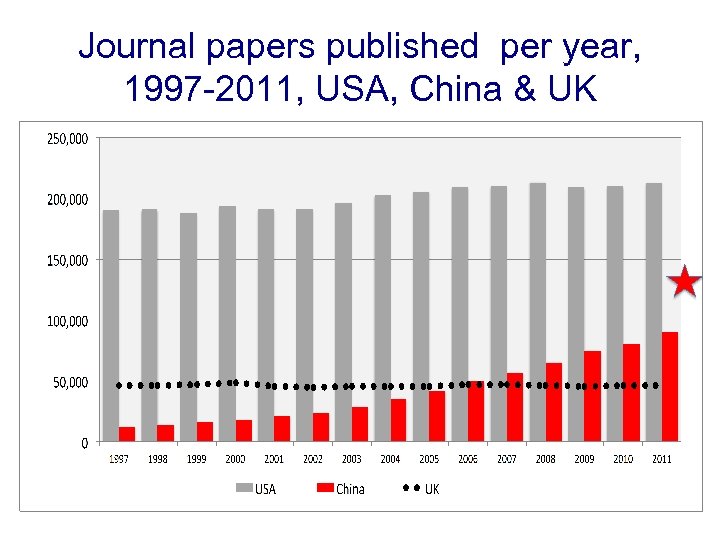
Journal papers published per year, 1997 -2011, USA, China & UK
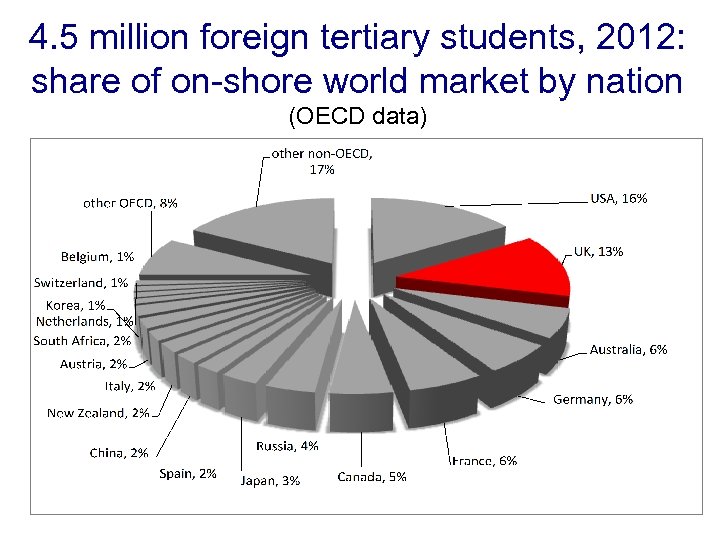
4. 5 million foreign tertiary students, 2012: share of on-shore world market by nation (OECD data)
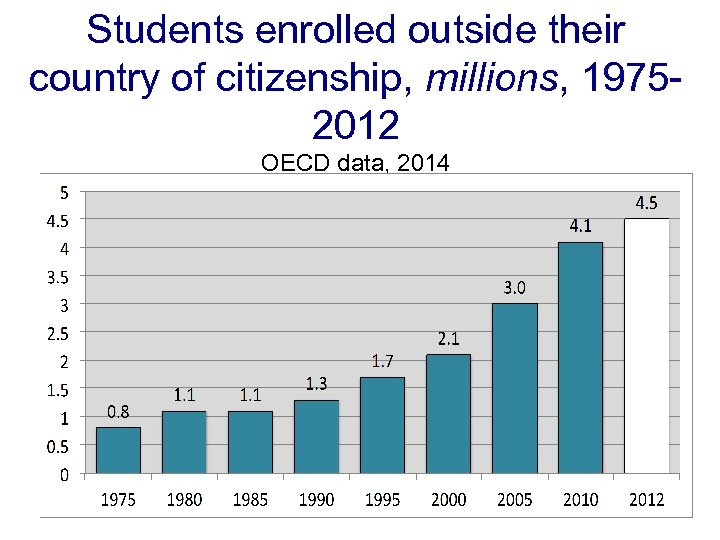
Students enrolled outside their country of citizenship, millions, 19752012 OECD data, 2014
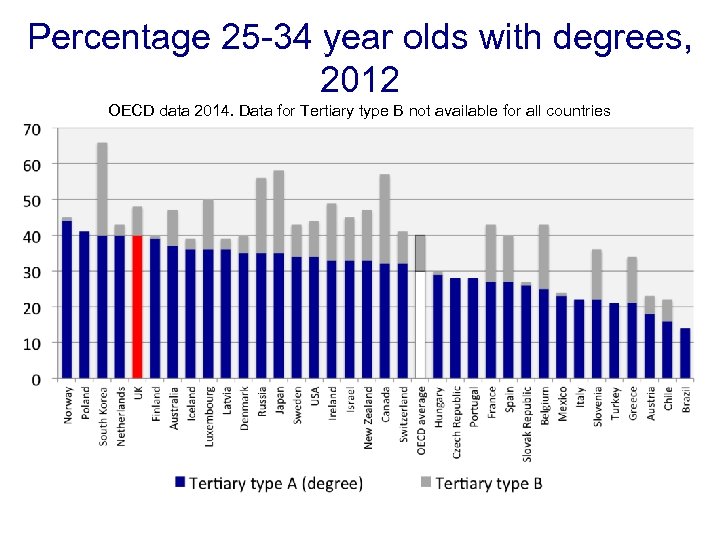
Percentage 25 -34 year olds with degrees, 2012 OECD data 2014. Data for Tertiary type B not available for all countries
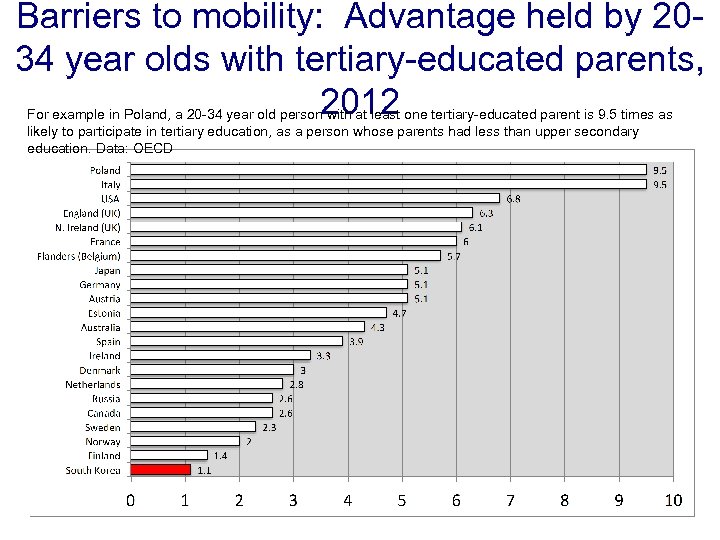
Barriers to mobility: Advantage held by 2034 year olds with tertiary-educated parents, 2012 For example in Poland, a 20 -34 year old person with at least one tertiary-educated parent is 9. 5 times as likely to participate in tertiary education, as a person whose parents had less than upper secondary education. Data: OECD
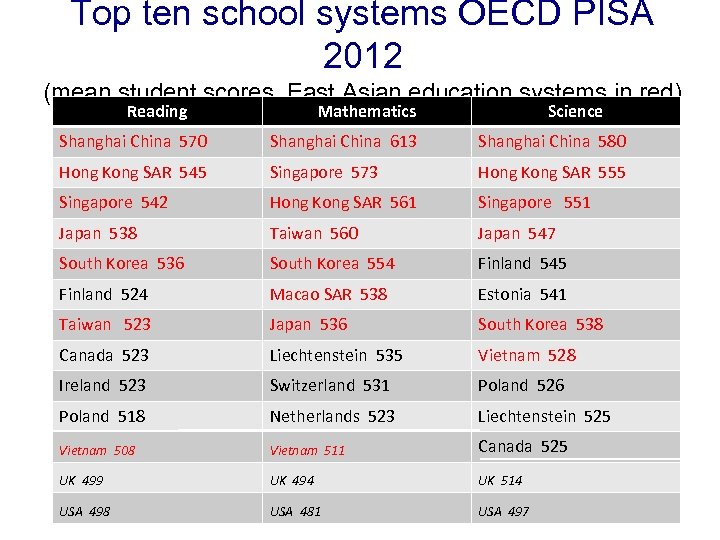
Top ten school systems OECD PISA 2012 (mean student scores, East Asian education systems in red) Reading Mathematics Science Shanghai China 570 Shanghai China 613 Shanghai China 580 Hong Kong SAR 545 Singapore 573 Hong Kong SAR 555 Singapore 542 Hong Kong SAR 561 Singapore 551 Japan 538 Taiwan 560 Japan 547 South Korea 536 South Korea 554 Finland 545 Finland 524 Macao SAR 538 Estonia 541 Taiwan 523 Japan 536 South Korea 538 Canada 523 Liechtenstein 535 Vietnam 528 Ireland 523 Switzerland 531 Poland 526 Poland 518 Netherlands 523 Liechtenstein 525 Vietnam 508 Vietnam 511 Canada 525 UK 499 UK 494 UK 514 USA 498 USA 481 USA 497
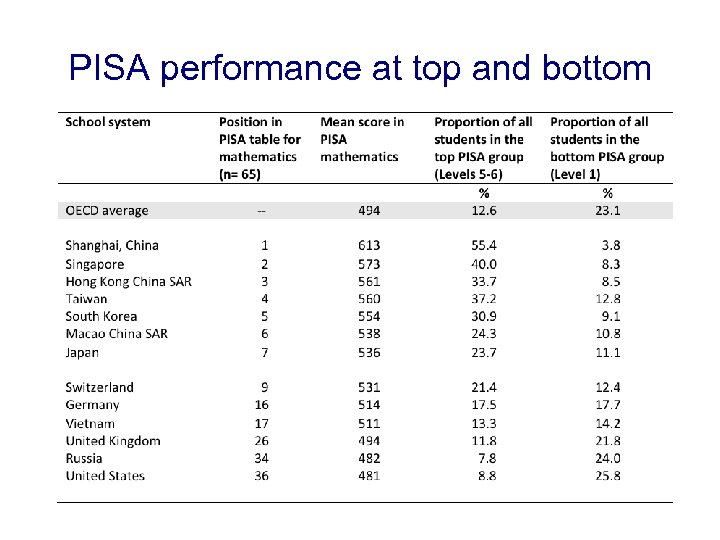
PISA performance at top and bottom
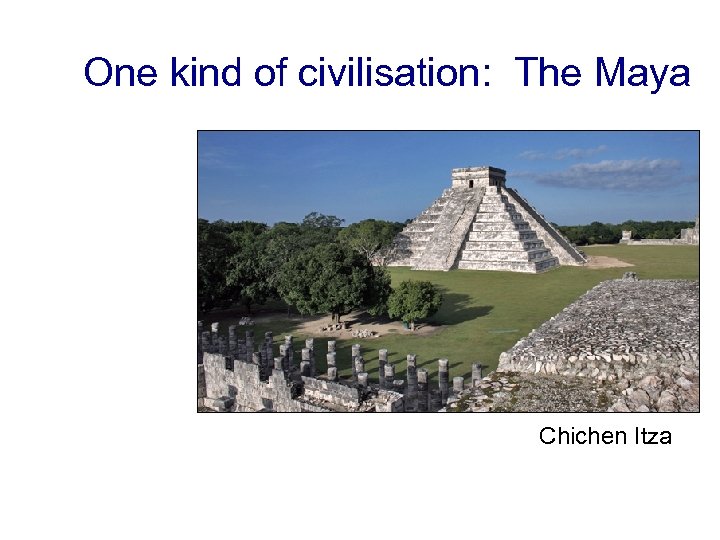
One kind of civilisation: The Maya Chichen Itza
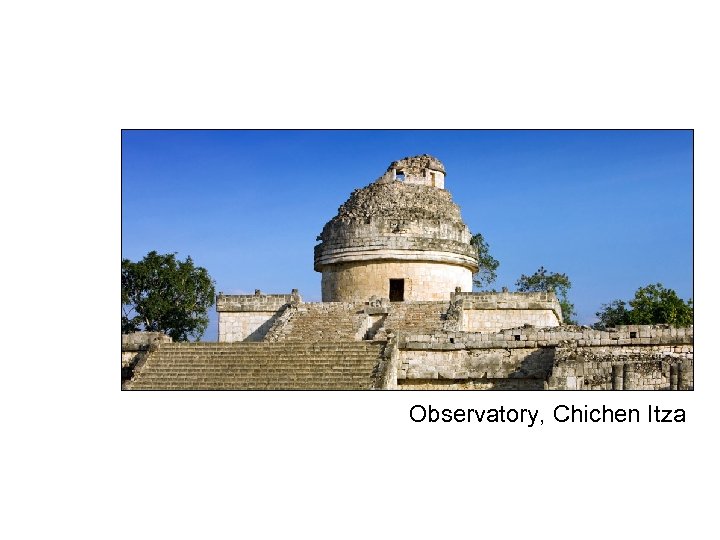
Observatory, Chichen Itza
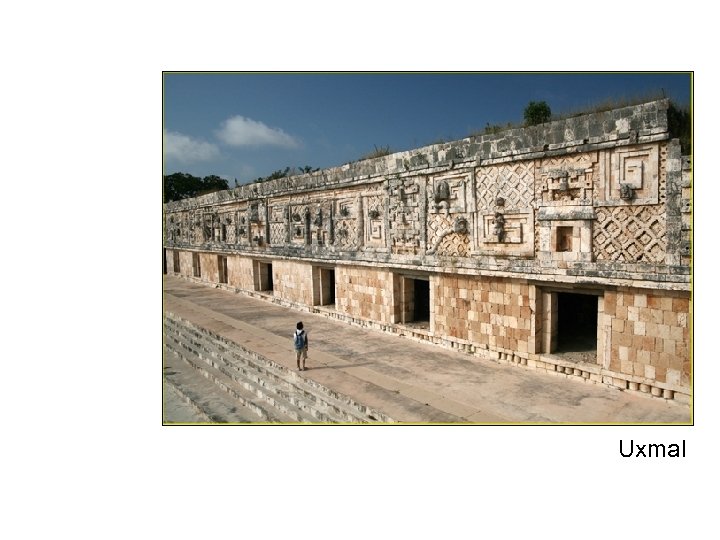
Uxmal
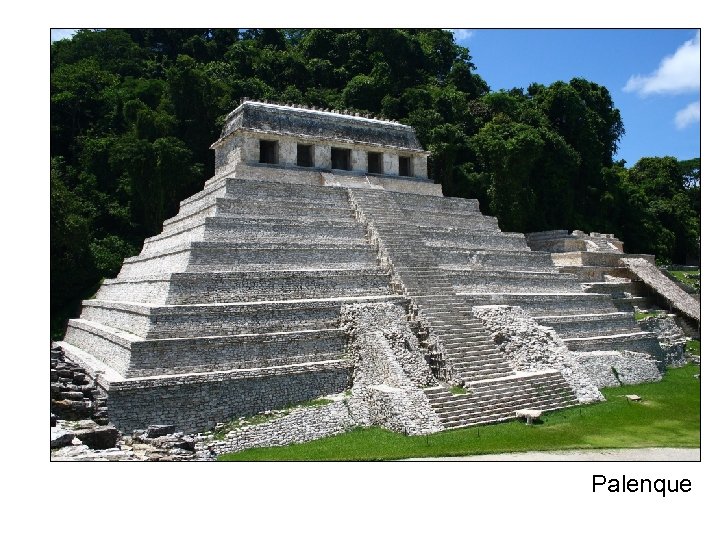
Palenque
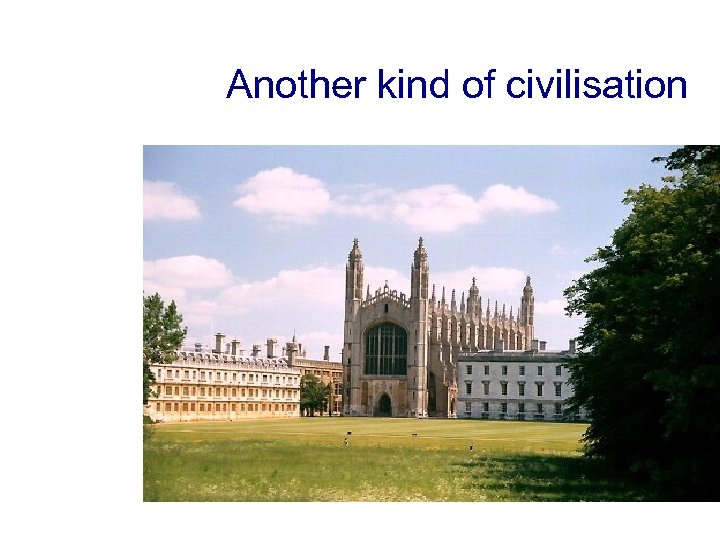
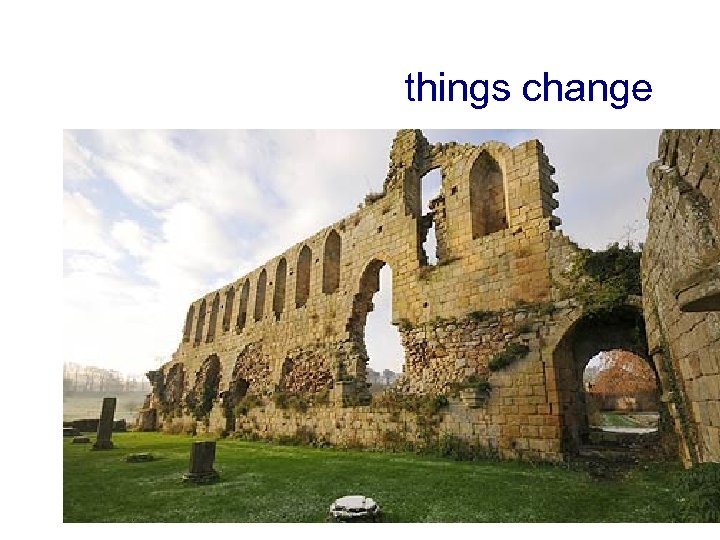
Another kind of civilisation
things change
The higher education world: Global, national, local national global local
Скачать презентацию 13 February 2015 University of Sheffield Higher education
9ccb4a4e0d3a283937dbdabe472f604e.ppt