 Скачать презентацию 13 4 Food Chains And Food Webs KEY
1c32cc65ba6365b95354fa49568f11b2.ppt
- Количество слайдов: 10



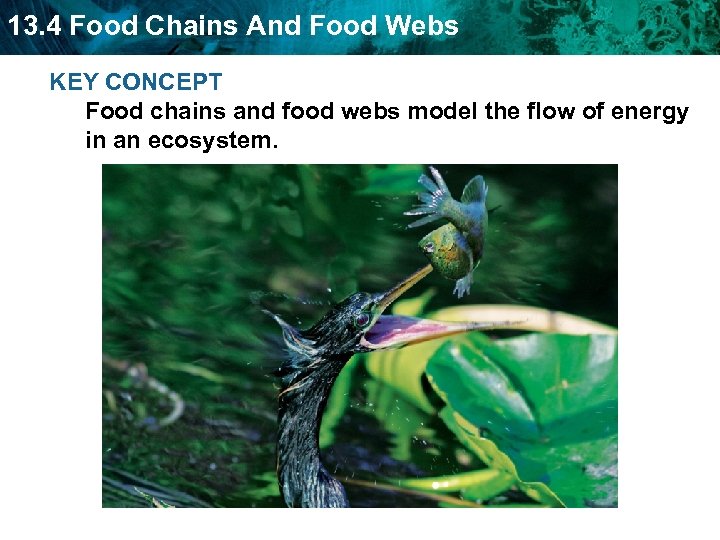
13. 4 Food Chains And Food Webs KEY CONCEPT Food chains and food webs model the flow of energy in an ecosystem.
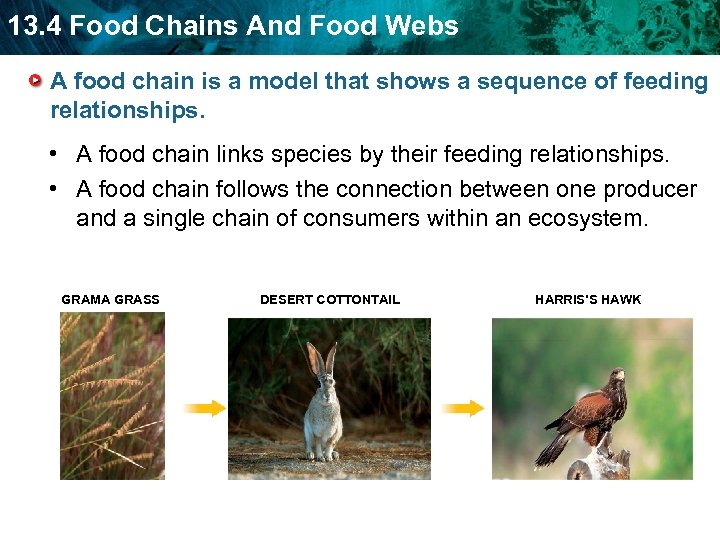
13. 4 Food Chains And Food Webs A food chain is a model that shows a sequence of feeding relationships. • A food chain links species by their feeding relationships. • A food chain follows the connection between one producer and a single chain of consumers within an ecosystem. GRAMA GRASS DESERT COTTONTAIL HARRIS’S HAWK
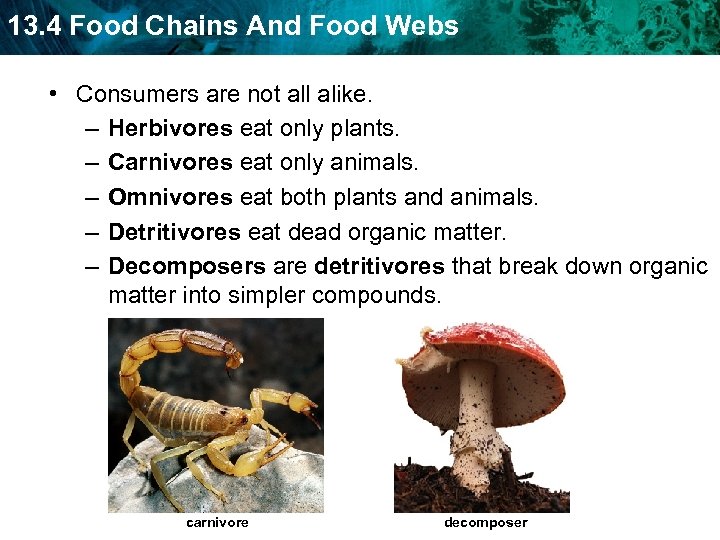
13. 4 Food Chains And Food Webs • Consumers are not all alike. – Herbivores eat only plants. – Carnivores eat only animals. – Omnivores eat both plants and animals. – Detritivores eat dead organic matter. – Decomposers are detritivores that break down organic matter into simpler compounds. carnivore decomposer
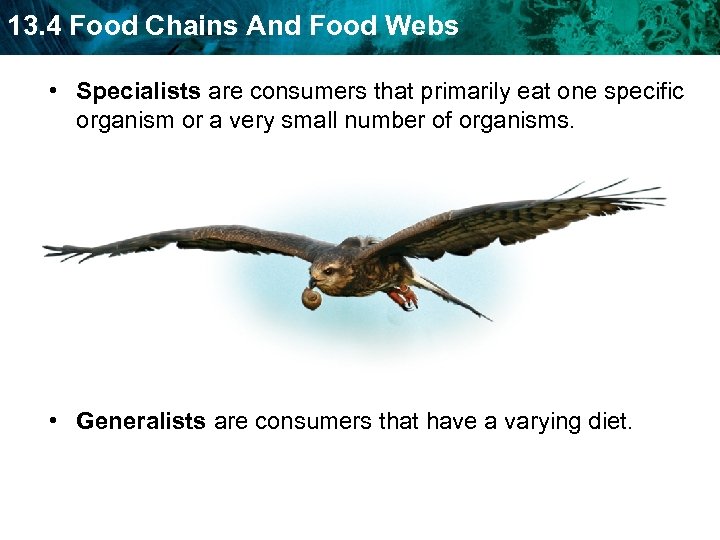
13. 4 Food Chains And Food Webs • Specialists are consumers that primarily eat one specific organism or a very small number of organisms. • Generalists are consumers that have a varying diet.
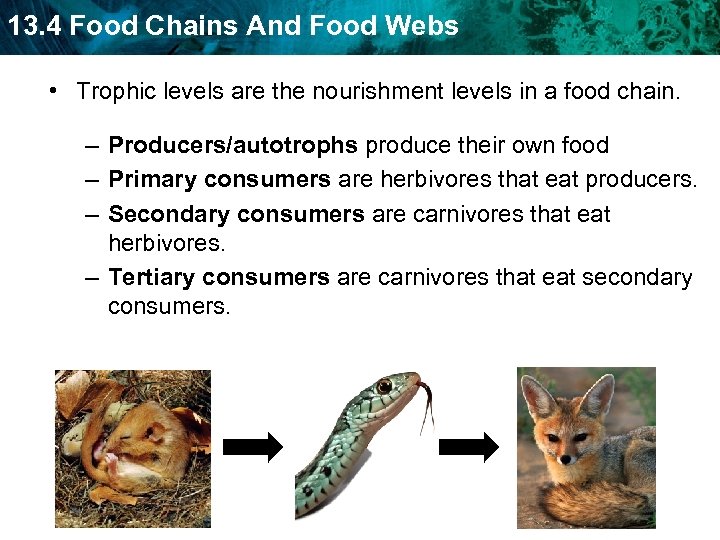
13. 4 Food Chains And Food Webs • Trophic levels are the nourishment levels in a food chain. – Producers/autotrophs produce their own food – Primary consumers are herbivores that eat producers. – Secondary consumers are carnivores that eat herbivores. – Tertiary consumers are carnivores that eat secondary consumers.
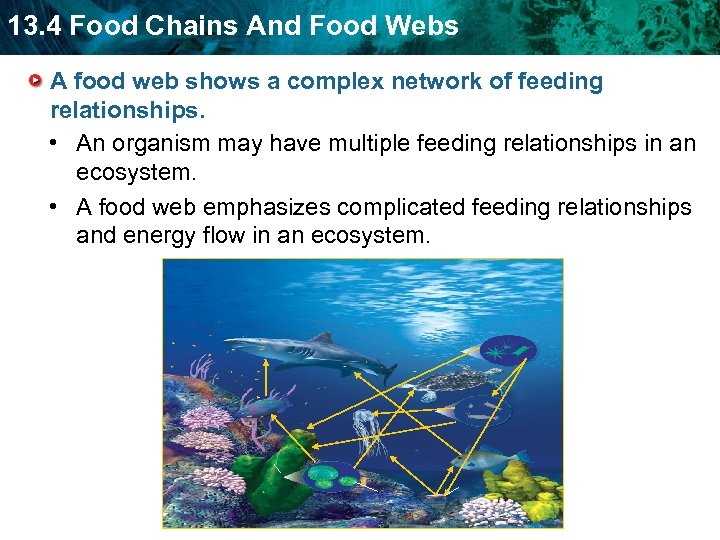
13. 4 Food Chains And Food Webs A food web shows a complex network of feeding relationships. • An organism may have multiple feeding relationships in an ecosystem. • A food web emphasizes complicated feeding relationships and energy flow in an ecosystem.
13. 4 Food Chains And Food Webs KEY CONCEPT Pyramids model the distribution of energy and matter in an ecosystem.
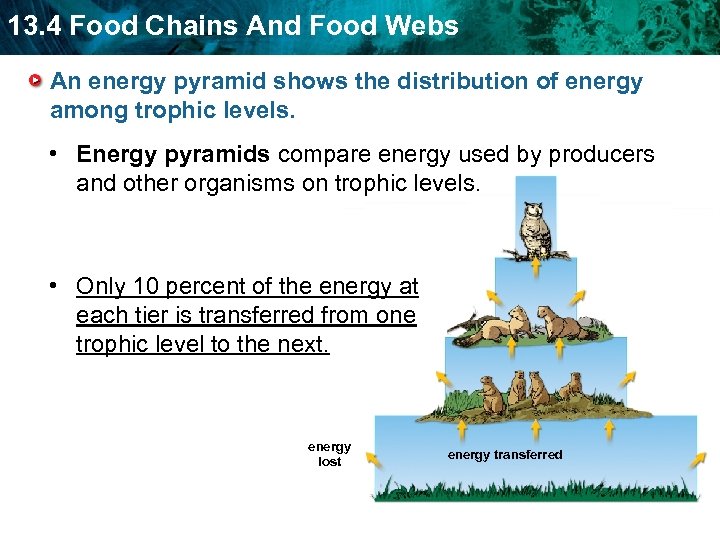
13. 4 Food Chains And Food Webs An energy pyramid shows the distribution of energy among trophic levels. • Energy pyramids compare energy used by producers and other organisms on trophic levels. • Only 10 percent of the energy at each tier is transferred from one trophic level to the next. energy lost energy transferred
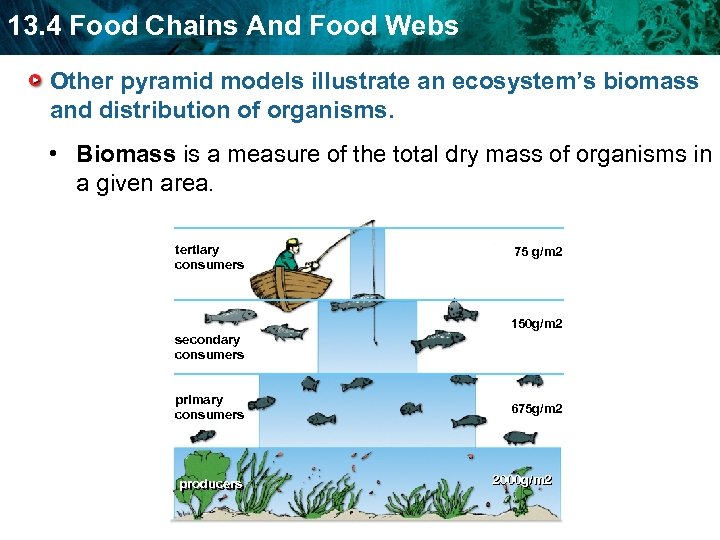
13. 4 Food Chains And Food Webs Other pyramid models illustrate an ecosystem’s biomass and distribution of organisms. • Biomass is a measure of the total dry mass of organisms in a given area. tertiary consumers 75 g/m 2 150 g/m 2 secondary consumers primary consumers producers 675 g/m 2 2000 g/m 2
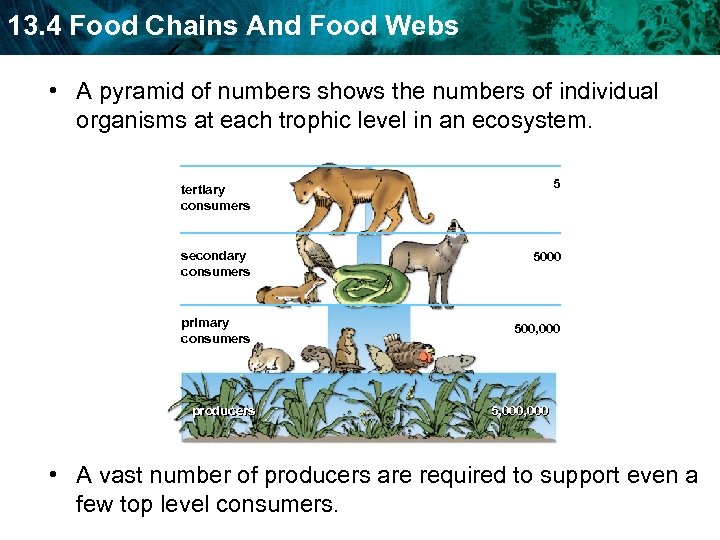
13. 4 Food Chains And Food Webs • A pyramid of numbers shows the numbers of individual organisms at each trophic level in an ecosystem. tertiary consumers 5 secondary consumers 5000 primary consumers 500, 000 producers 5, 000 • A vast number of producers are required to support even a few top level consumers.
Скачать презентацию 13 4 Food Chains And Food Webs KEY
1c32cc65ba6365b95354fa49568f11b2.ppt