

12/9/2017 1 Gastroenteritis, Infections of the GI Tract,


 Скачать презентацию 12/9/2017 1 Gastroenteritis, Infections of the GI Tract,
15428-kopiya_total.ppt
- Количество слайдов: 68
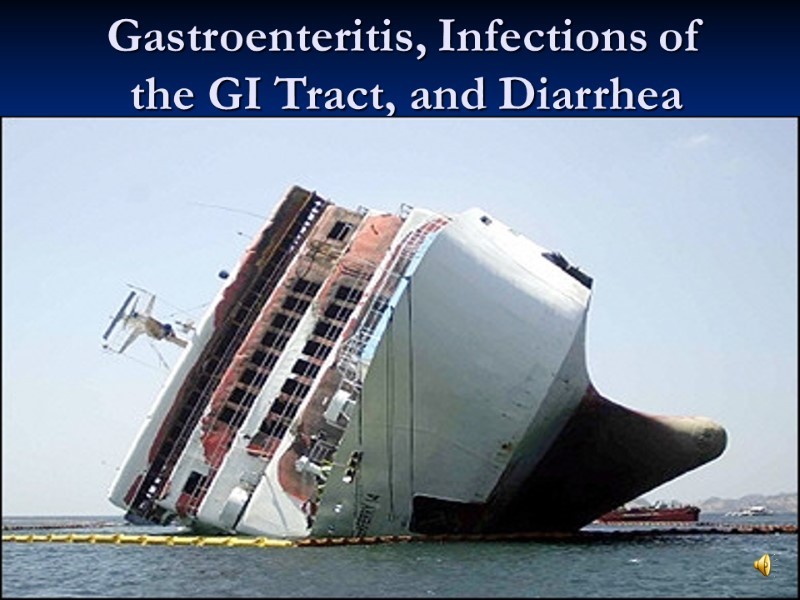
12/9/2017 1 Gastroenteritis, Infections of the GI Tract, and Diarrhea
12/9/2017 2 Gastroenteritis Gastroenteritis is a nonspecific term for various pathologic states of the gastrointestinal tract. The primary manifestation is diarrhea, but it may be accompanied by nausea, vomiting, and abdominal pain. A universal definition of diarrhea does not exist, although patients seem to have no difficulty defining their own situation. Although most definitions center on the frequency, consistency, and water content of stools
12/9/2017 3 Gastroenteritis Defined as- Inflammation of the mucous membrane of both the stomach and intestine, usually causing nausea, vomiting, and diarrhea. Acute gastroenteritis usually causes profuse watery diarrhea, often c nausea and vomiting, but without localized findings. Between cramps, the abdomen is completely relaxed.
12/9/2017 4 Cause of Gastroenteritis Infectious agents usually cause acute gastroenteritis. These agents cause diarrhea by adherence, mucosal invasion, enterotoxin production, and/or cytotoxin production. These mechanisms result in increased fluid secretion and/or decreased absorption. This produces an increased luminal fluid content that cannot be adequately reabsorbed, leading to dehydration and the loss of electrolytes and nutrients.
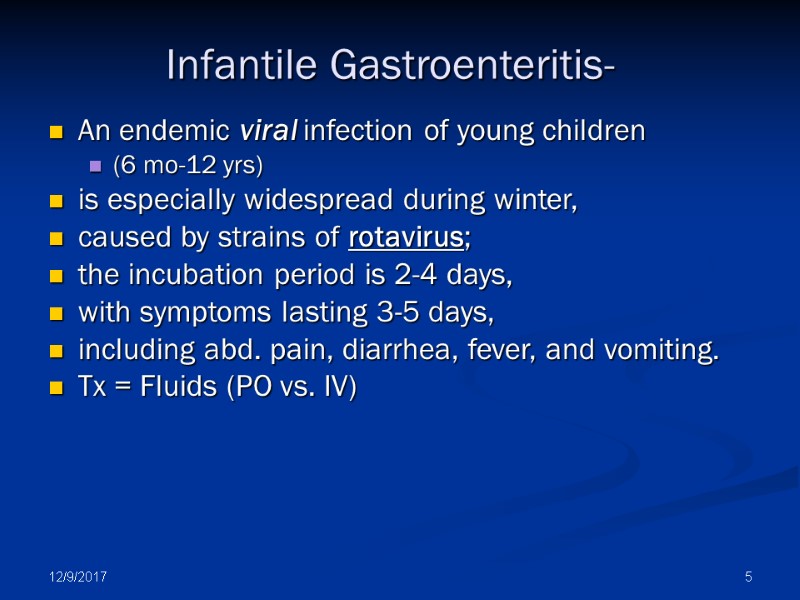
12/9/2017 5 Infantile Gastroenteritis- An endemic viral infection of young children (6 mo-12 yrs) is especially widespread during winter, caused by strains of rotavirus; the incubation period is 2-4 days, with symptoms lasting 3-5 days, including abd. pain, diarrhea, fever, and vomiting. Tx = Fluids (PO vs. IV)
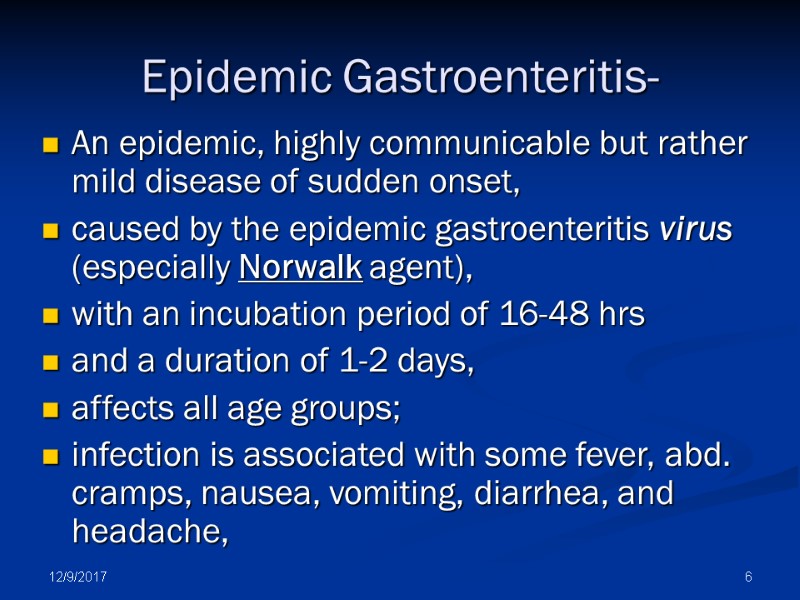
12/9/2017 6 Epidemic Gastroenteritis- An epidemic, highly communicable but rather mild disease of sudden onset, caused by the epidemic gastroenteritis virus (especially Norwalk agent), with an incubation period of 16-48 hrs and a duration of 1-2 days, affects all age groups; infection is associated with some fever, abd. cramps, nausea, vomiting, diarrhea, and headache,
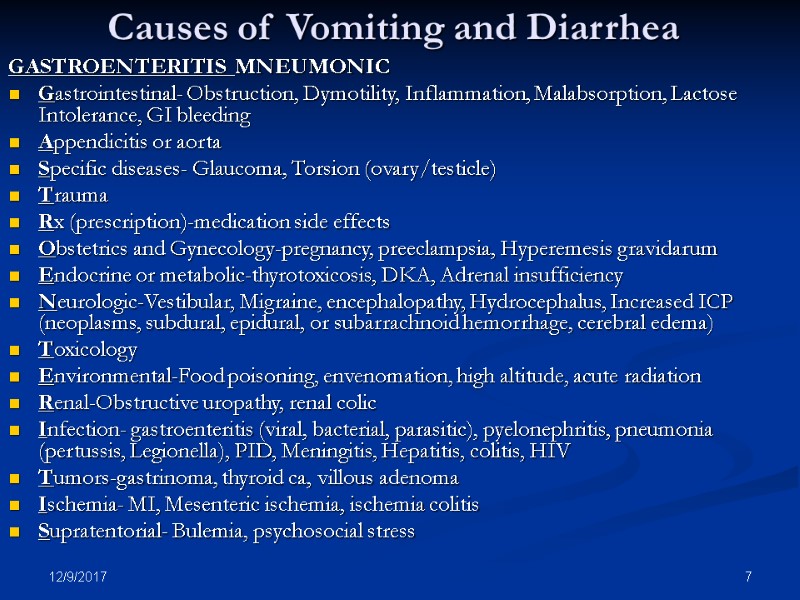
12/9/2017 7 Causes of Vomiting and Diarrhea GASTROENTERITIS MNEUMONIC Gastrointestinal- Obstruction, Dymotility, Inflammation, Malabsorption, Lactose Intolerance, GI bleeding Appendicitis or aorta Specific diseases- Glaucoma, Torsion (ovary/testicle) Trauma Rx (prescription)-medication side effects Obstetrics and Gynecology-pregnancy, preeclampsia, Hyperemesis gravidarum Endocrine or metabolic-thyrotoxicosis, DKA, Adrenal insufficiency Neurologic-Vestibular, Migraine, encephalopathy, Hydrocephalus, Increased ICP (neoplasms, subdural, epidural, or subarrachnoid hemorrhage, cerebral edema) Toxicology Environmental-Food poisoning, envenomation, high altitude, acute radiation Renal-Obstructive uropathy, renal colic Infection- gastroenteritis (viral, bacterial, parasitic), pyelonephritis, pneumonia (pertussis, Legionella), PID, Meningitis, Hepatitis, colitis, HIV Tumors-gastrinoma, thyroid ca, villous adenoma Ischemia- MI, Mesenteric ischemia, ischemia colitis Supratentorial- Bulemia, psychosocial stress
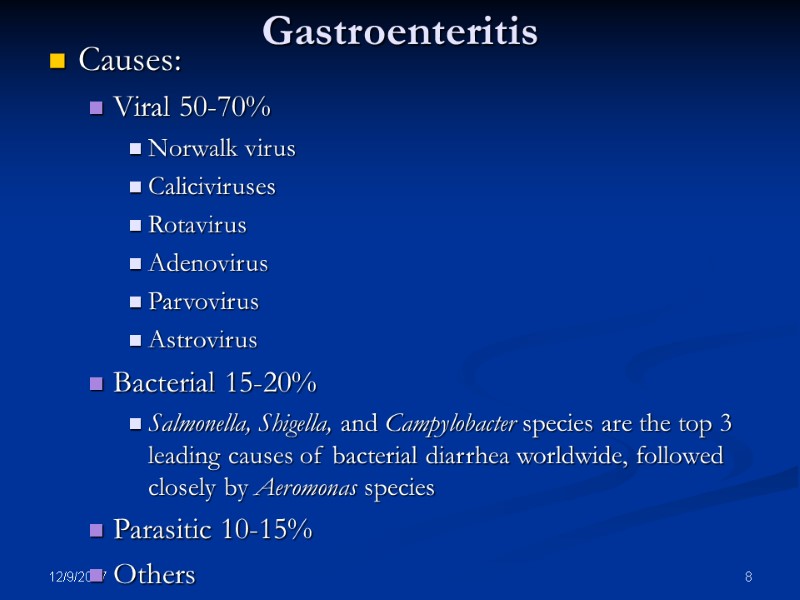
12/9/2017 8 Gastroenteritis Causes: Viral 50-70% Norwalk virus Caliciviruses Rotavirus Adenovirus Parvovirus Astrovirus Bacterial 15-20% Salmonella, Shigella, and Campylobacter species are the top 3 leading causes of bacterial diarrhea worldwide, followed closely by Aeromonas species Parasitic 10-15% Others
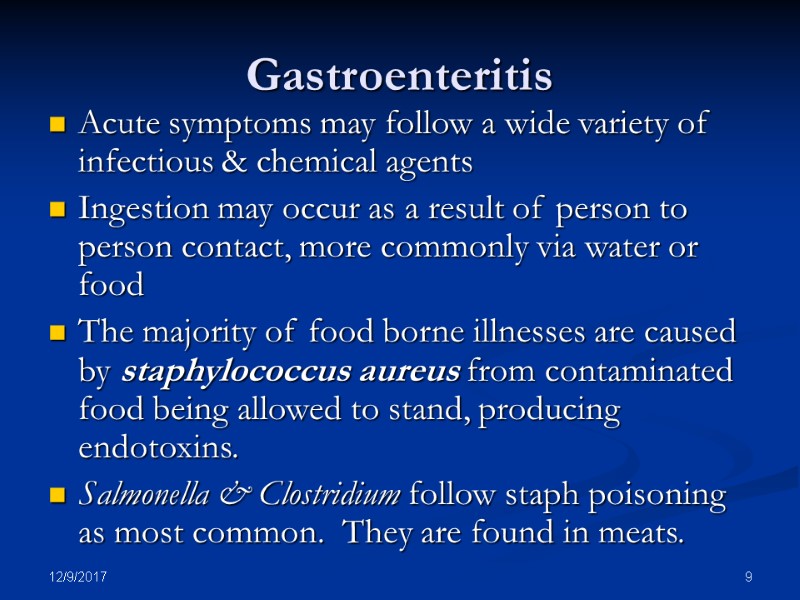
12/9/2017 9 Gastroenteritis Acute symptoms may follow a wide variety of infectious & chemical agents Ingestion may occur as a result of person to person contact, more commonly via water or food The majority of food borne illnesses are caused by staphylococcus aureus from contaminated food being allowed to stand, producing endotoxins. Salmonella & Clostridium follow staph poisoning as most common. They are found in meats.
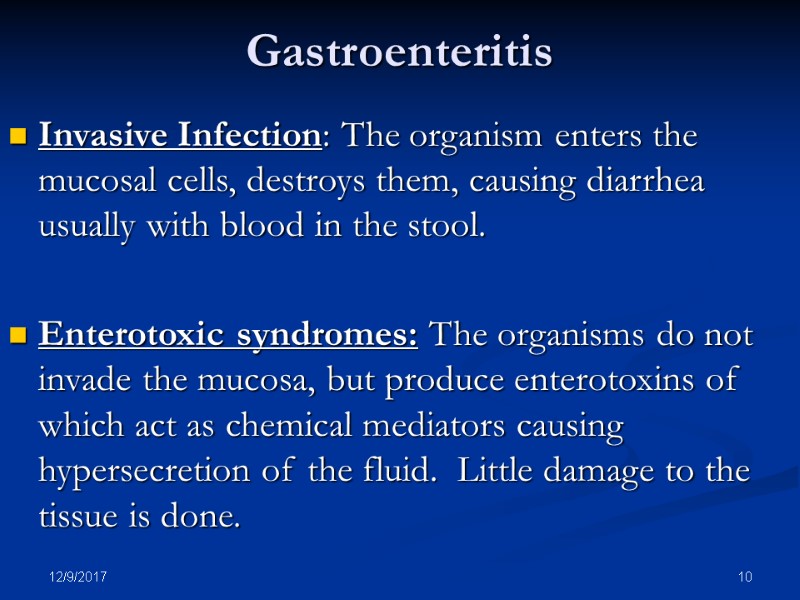
12/9/2017 10 Gastroenteritis Invasive Infection: The organism enters the mucosal cells, destroys them, causing diarrhea usually with blood in the stool. Enterotoxic syndromes: The organisms do not invade the mucosa, but produce enterotoxins of which act as chemical mediators causing hypersecretion of the fluid. Little damage to the tissue is done.
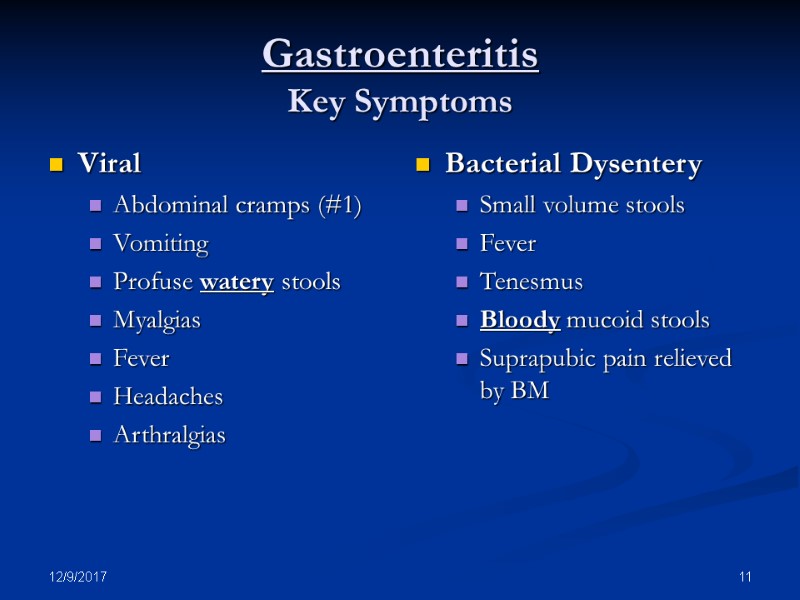
12/9/2017 11 Gastroenteritis Key Symptoms Viral Abdominal cramps (#1) Vomiting Profuse watery stools Myalgias Fever Headaches Arthralgias Bacterial Dysentery Small volume stools Fever Tenesmus Bloody mucoid stools Suprapubic pain relieved by BM
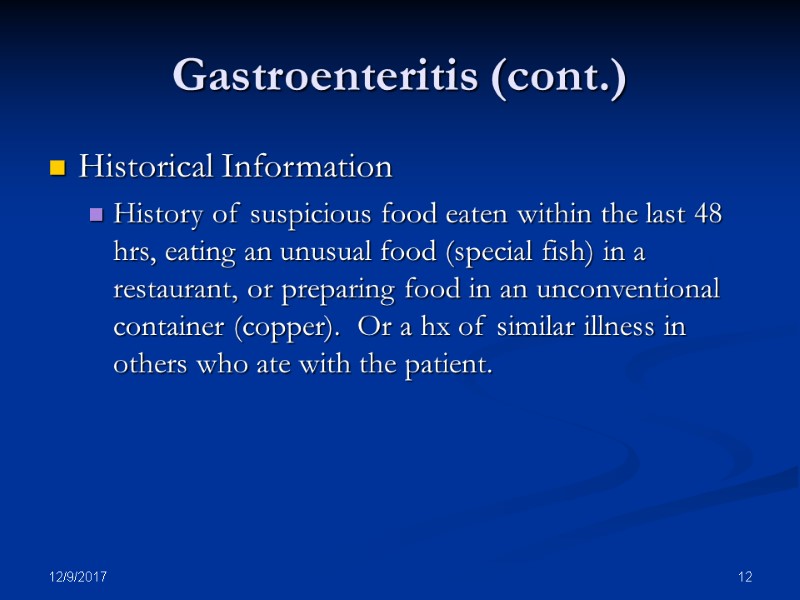
12/9/2017 12 Gastroenteritis (cont.) Historical Information History of suspicious food eaten within the last 48 hrs, eating an unusual food (special fish) in a restaurant, or preparing food in an unconventional container (copper). Or a hx of similar illness in others who ate with the patient.
12/9/2017 13 Gastroenteritis (cont.) Physical Exam Findings Minimally helpful Abdominal tenderness Diarrhea causing dehydration Fever- usually indicates organism invasion Hypotension- usually indicates dehydration and electrolyte imbalance Rectal Exam- “to bleed or not to bleed”
12/9/2017 14 Gastroenteritis (cont.) Laboratory: Stool Culture Hemoccult of stool Fecal leukocytes CBC; If WBC count is elevated increased likelyhood of bacterial infection. (If eosinophils present r/o parasitic infection). If C. Difficile is suspected request cytotoxin of stool Treatment: With the exception of Giardiasis, amebiasis, C. difficile, salmonellosis, & shigellosis, practically all only need fluid replacement, glucose, and electrolyte control (IV NS, pedialyte)
12/9/2017 15 Gastroenteritis (cont.) Incubation period Chemical poisons: onset immediate after ingestion of food like Ciguatera or scromboid (scrombotoxin found in fish) Staphylococcal food poisoning: onset within hrs after eating contaminated food Salmonella & Shigella infection: onset usually within 24-48 hrs (bacillary dysentery) Giardiasis infection: onset of symptoms after one week with recurrent diarrhea.
12/9/2017 16 Gastroenteritis (cont.) Incubation period (cont.) Clostridium difficile: Antimicrobial use within the last 2 weeks Botulism: Associated Neurological symptoms after eating canned food. Symptoms within 24 hrs. A h/o homosexuality: r/o AIDS, Shigella, Campylobacter jejuni, Salmonella, protozoalike Entamoeba, cryptosproidia, candida, giardiasis, and many others
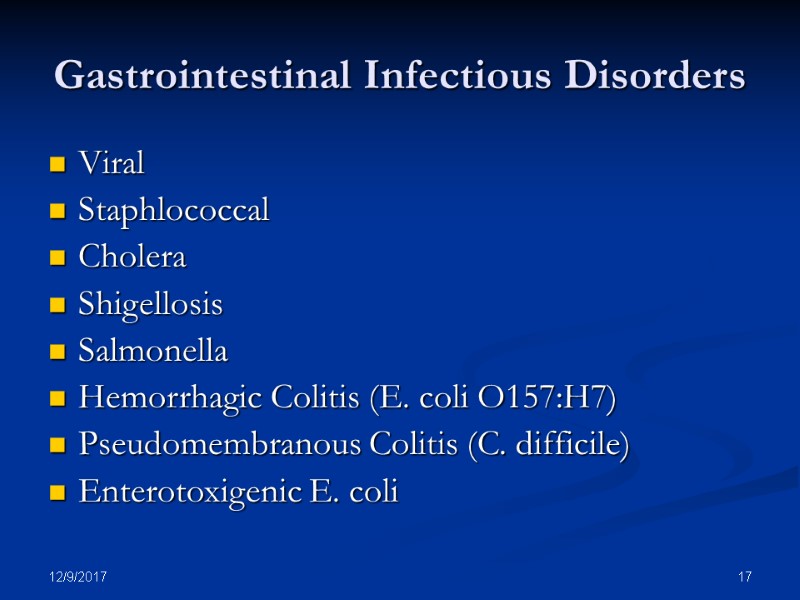
12/9/2017 17 Gastrointestinal Infectious Disorders Viral Staphlococcal Cholera Shigellosis Salmonella Hemorrhagic Colitis (E. coli O157:H7) Pseudomembranous Colitis (C. difficile) Enterotoxigenic E. coli
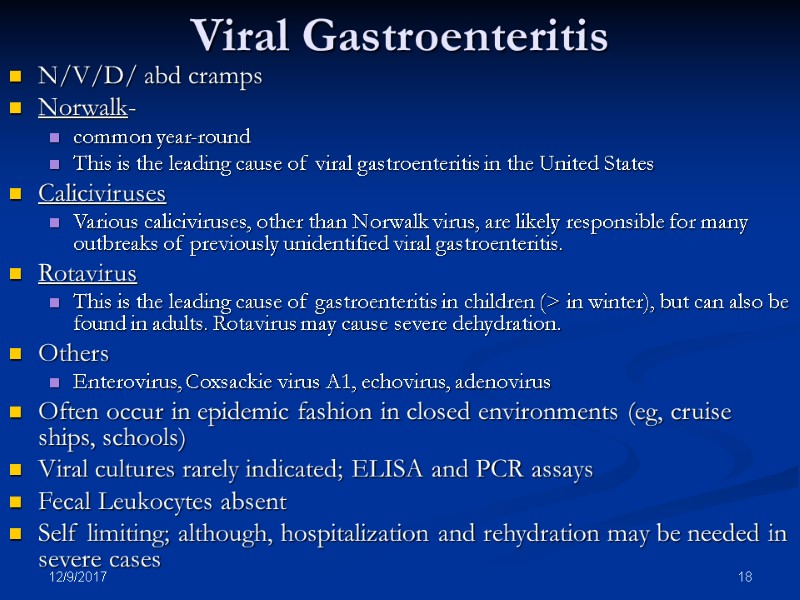
12/9/2017 18 Viral Gastroenteritis N/V/D/ abd cramps Norwalk- common year-round This is the leading cause of viral gastroenteritis in the United States Caliciviruses Various caliciviruses, other than Norwalk virus, are likely responsible for many outbreaks of previously unidentified viral gastroenteritis. Rotavirus This is the leading cause of gastroenteritis in children (> in winter), but can also be found in adults. Rotavirus may cause severe dehydration. Others Enterovirus, Coxsackie virus A1, echovirus, adenovirus Often occur in epidemic fashion in closed environments (eg, cruise ships, schools) Viral cultures rarely indicated; ELISA and PCR assays Fecal Leukocytes absent Self limiting; although, hospitalization and rehydration may be needed in severe cases
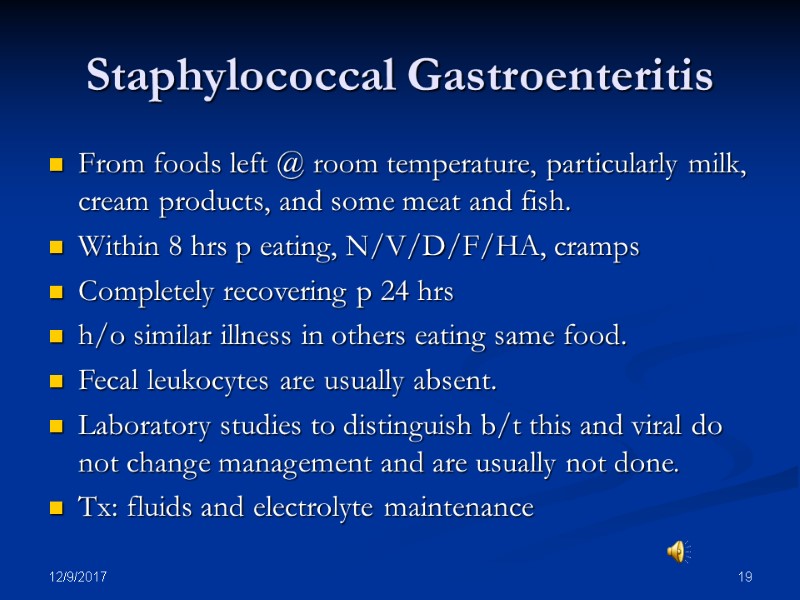
12/9/2017 19 Staphylococcal Gastroenteritis From foods left @ room temperature, particularly milk, cream products, and some meat and fish. Within 8 hrs p eating, N/V/D/F/HA, cramps Completely recovering p 24 hrs h/o similar illness in others eating same food. Fecal leukocytes are usually absent. Laboratory studies to distinguish b/t this and viral do not change management and are usually not done. Tx: fluids and electrolyte maintenance
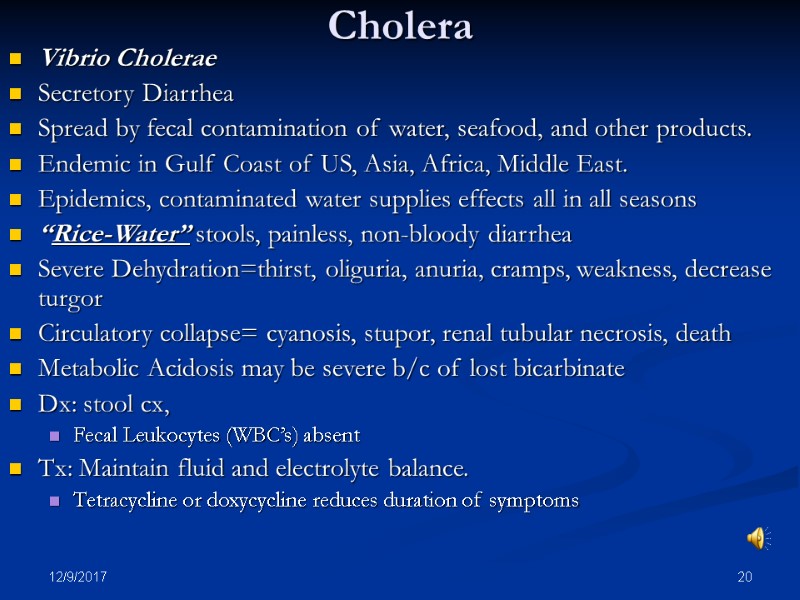
12/9/2017 20 Cholera Vibrio Cholerae Secretory Diarrhea Spread by fecal contamination of water, seafood, and other products. Endemic in Gulf Coast of US, Asia, Africa, Middle East. Epidemics, contaminated water supplies effects all in all seasons “Rice-Water” stools, painless, non-bloody diarrhea Severe Dehydration=thirst, oliguria, anuria, cramps, weakness, decrease turgor Circulatory collapse= cyanosis, stupor, renal tubular necrosis, death Metabolic Acidosis may be severe b/c of lost bicarbinate Dx: stool cx, Fecal Leukocytes (WBC’s) absent Tx: Maintain fluid and electrolyte balance. Tetracycline or doxycycline reduces duration of symptoms
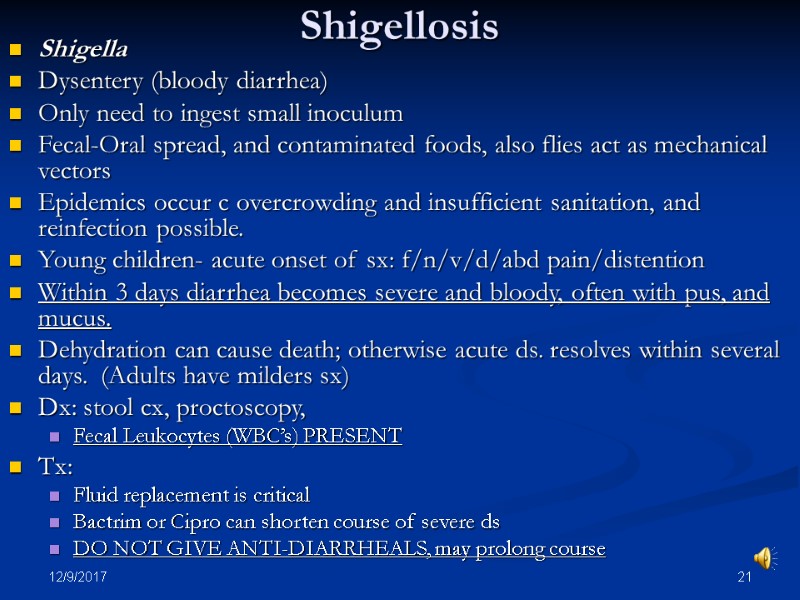
12/9/2017 21 Shigellosis Shigella Dysentery (bloody diarrhea) Only need to ingest small inoculum Fecal-Oral spread, and contaminated foods, also flies act as mechanical vectors Epidemics occur c overcrowding and insufficient sanitation, and reinfection possible. Young children- acute onset of sx: f/n/v/d/abd pain/distention Within 3 days diarrhea becomes severe and bloody, often with pus, and mucus. Dehydration can cause death; otherwise acute ds. resolves within several days. (Adults have milders sx) Dx: stool cx, proctoscopy, Fecal Leukocytes (WBC’s) PRESENT Tx: Fluid replacement is critical Bactrim or Cipro can shorten course of severe ds DO NOT GIVE ANTI-DIARRHEALS, may prolong course
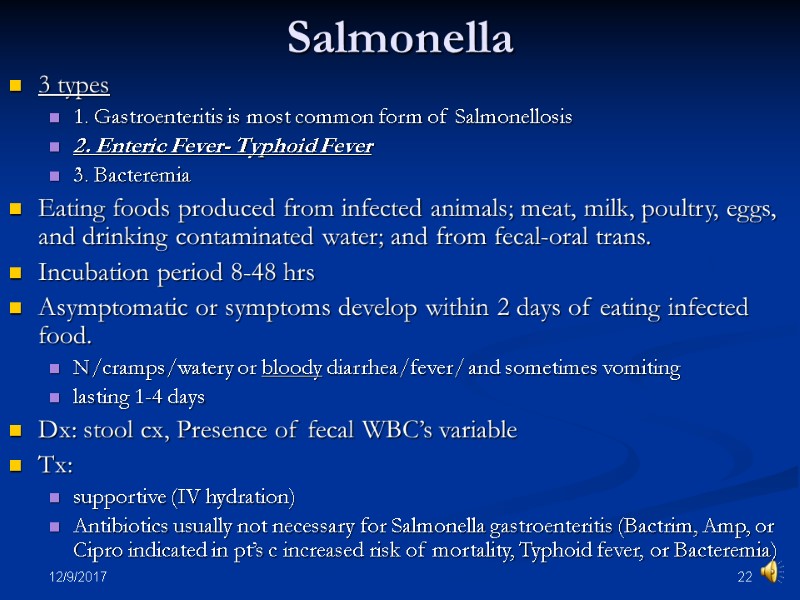
12/9/2017 22 Salmonella 3 types 1. Gastroenteritis is most common form of Salmonellosis 2. Enteric Fever- Typhoid Fever 3. Bacteremia Eating foods produced from infected animals; meat, milk, poultry, eggs, and drinking contaminated water; and from fecal-oral trans. Incubation period 8-48 hrs Asymptomatic or symptoms develop within 2 days of eating infected food. N/cramps/watery or bloody diarrhea/fever/ and sometimes vomiting lasting 1-4 days Dx: stool cx, Presence of fecal WBC’s variable Tx: supportive (IV hydration) Antibiotics usually not necessary for Salmonella gastroenteritis (Bactrim, Amp, or Cipro indicated in pt’s c increased risk of mortality, Typhoid fever, or Bacteremia)
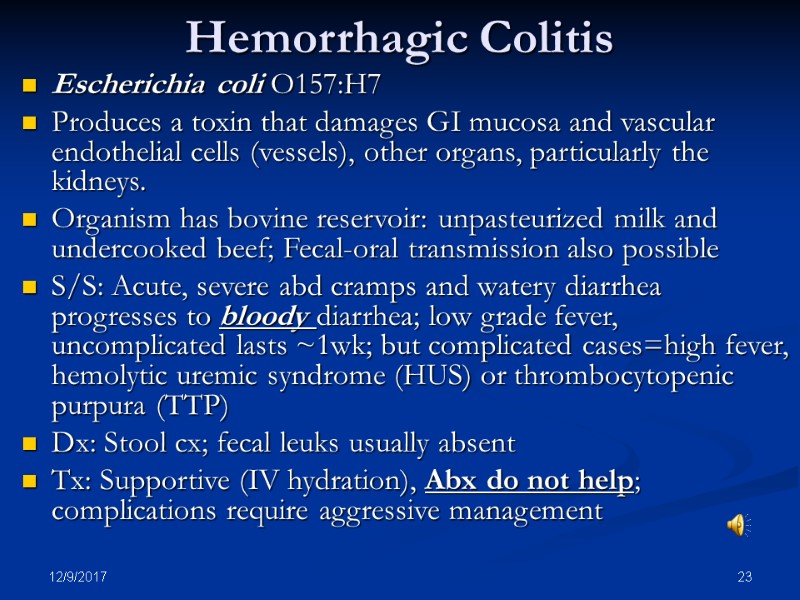
12/9/2017 23 Hemorrhagic Colitis Escherichia coli O157:H7 Produces a toxin that damages GI mucosa and vascular endothelial cells (vessels), other organs, particularly the kidneys. Organism has bovine reservoir: unpasteurized milk and undercooked beef; Fecal-oral transmission also possible S/S: Acute, severe abd cramps and watery diarrhea progresses to bloody diarrhea; low grade fever, uncomplicated lasts ~1wk; but complicated cases=high fever, hemolytic uremic syndrome (HUS) or thrombocytopenic purpura (TTP) Dx: Stool cx; fecal leuks usually absent Tx: Supportive (IV hydration), Abx do not help; complications require aggressive management
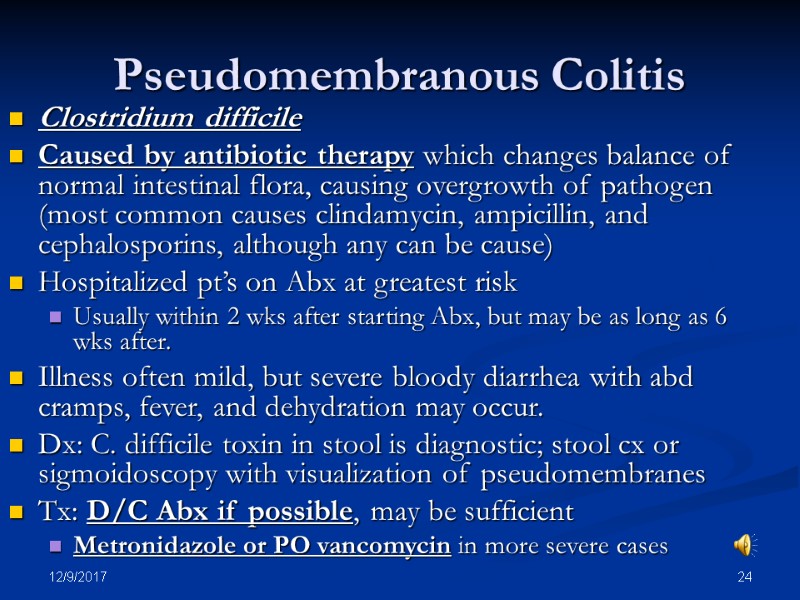
12/9/2017 24 Pseudomembranous Colitis Clostridium difficile Caused by antibiotic therapy which changes balance of normal intestinal flora, causing overgrowth of pathogen (most common causes clindamycin, ampicillin, and cephalosporins, although any can be cause) Hospitalized pt’s on Abx at greatest risk Usually within 2 wks after starting Abx, but may be as long as 6 wks after. Illness often mild, but severe bloody diarrhea with abd cramps, fever, and dehydration may occur. Dx: C. difficile toxin in stool is diagnostic; stool cx or sigmoidoscopy with visualization of pseudomembranes Tx: D/C Abx if possible, may be sufficient Metronidazole or PO vancomycin in more severe cases
12/9/2017 25 Traveler’s Diarrhea Most commonly caused by bacteria (80%), Enterotoxigenic E. coli, Shigella, Campylobacter jejuni being the most common pathogens. Chronic watery diarrhea Up to 10 or more loose stools per day, usually without blood or mucus. Fever is rare Self limiting within 1-5 days Dx: stool cx for pt’s c f/dysentery, and those that don’t respond to abx Tx: mostly symptomatic therapy (IV hydration) If high fever, or dysentery tx c Cipro (not antidiarrheals) Prevention: Prophylaxis is recommended for those with significant underlying ds. Cipro Pepto-bismol is effective, but may interfere with the absorption of other medications (tetracycline/doxycycline) used for malaria prophylaxis, and it also carries the same toxicity as other salicylates (Reyes Syndrome) and turns the tongue and stool black, so it is rarely used.
12/9/2017 26 General Bacterial Overgrowth Treatment Usually self limiting IV hydration Correct the anatomic defect when possible. Empiric antibiotic trial can be used as a diagnostic and therapeutic maneuver. Ciprofloxacin (or combo c Metronidazole) (However often not necessary, unless dysenteric)
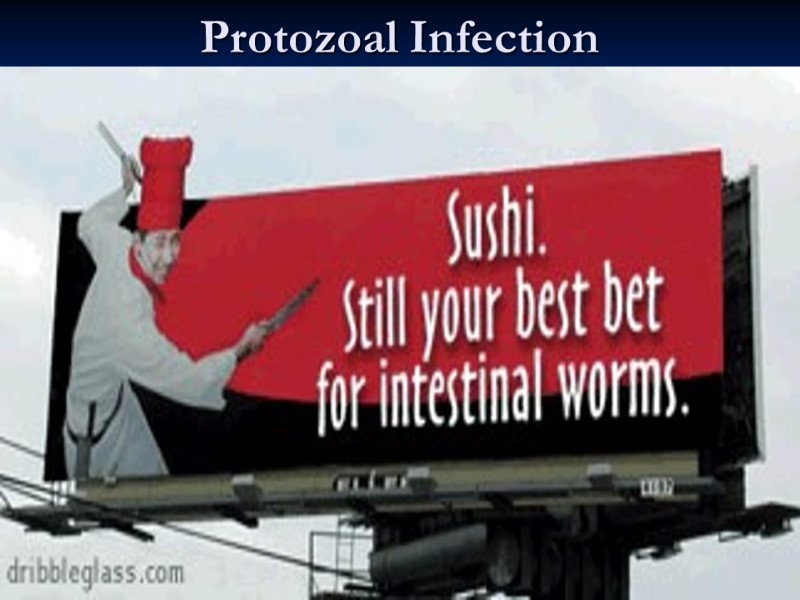
12/9/2017 27 Protozoal Infection
12/9/2017 28 Protozoal infection signs/symptoms Abdominal pain Wheezing or hemoptysis due to pulmonary migration of larva (lofflers syndrome) Dermatitis Diarrhea Dysentery Pruritis Rectal Prolapse Steatorrhea Passage of parasites Bowel obstruction (as found in taenia and ascarisis)
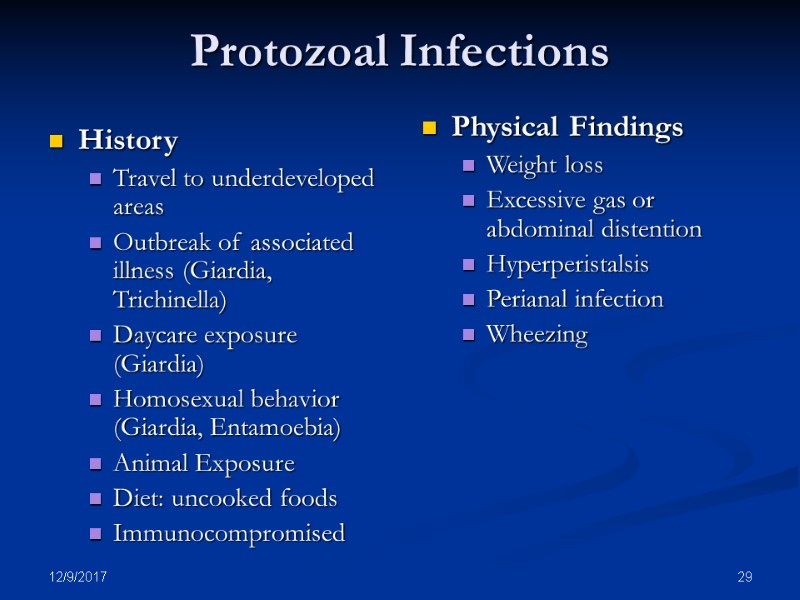
12/9/2017 29 Protozoal Infections History Travel to underdeveloped areas Outbreak of associated illness (Giardia, Trichinella) Daycare exposure (Giardia) Homosexual behavior (Giardia, Entamoebia) Animal Exposure Diet: uncooked foods Immunocompromised Physical Findings Weight loss Excessive gas or abdominal distention Hyperperistalsis Perianal infection Wheezing
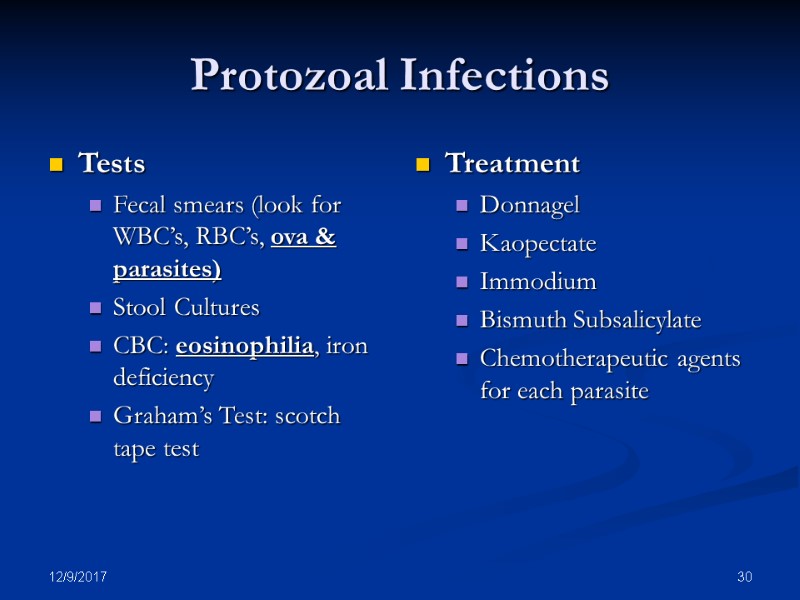
12/9/2017 30 Protozoal Infections Tests Fecal smears (look for WBC’s, RBC’s, ova & parasites) Stool Cultures CBC: eosinophilia, iron deficiency Graham’s Test: scotch tape test Treatment Donnagel Kaopectate Immodium Bismuth Subsalicylate Chemotherapeutic agents for each parasite
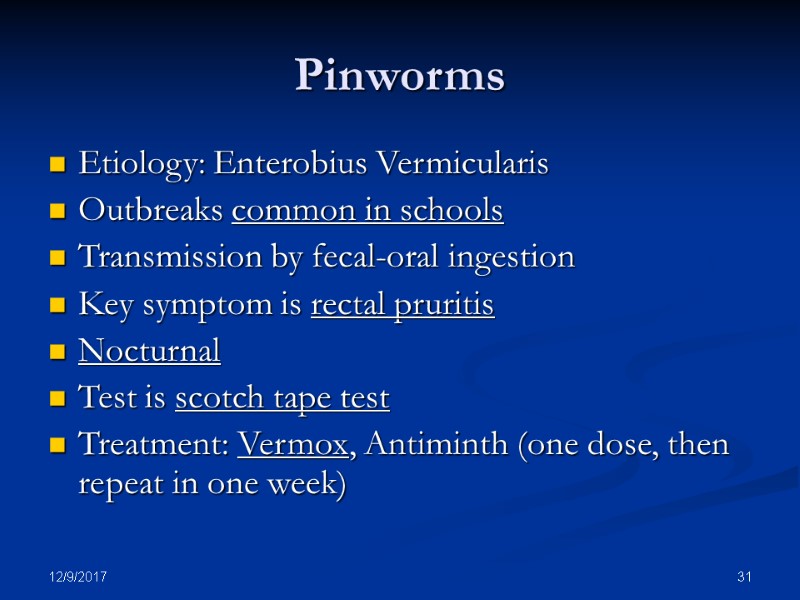
12/9/2017 31 Pinworms Etiology: Enterobius Vermicularis Outbreaks common in schools Transmission by fecal-oral ingestion Key symptom is rectal pruritis Nocturnal Test is scotch tape test Treatment: Vermox, Antiminth (one dose, then repeat in one week)
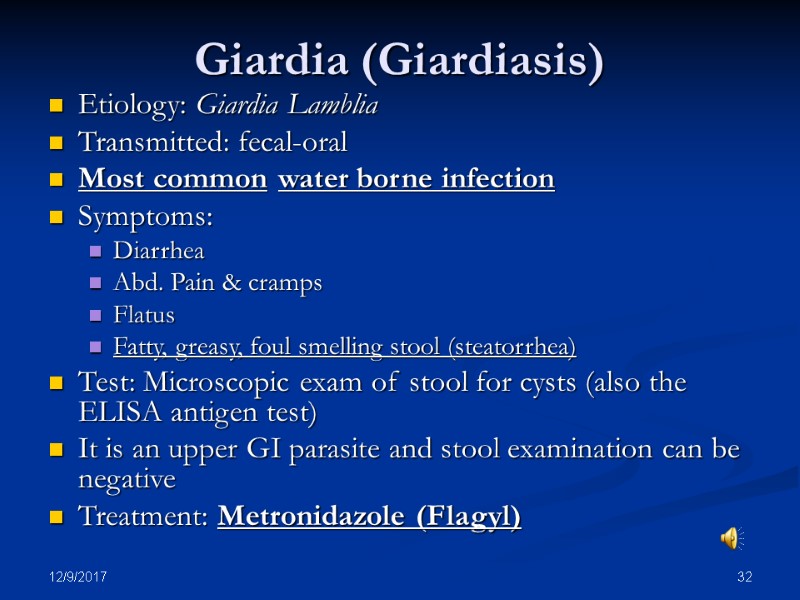
12/9/2017 32 Giardia (Giardiasis) Etiology: Giardia Lamblia Transmitted: fecal-oral Most common water borne infection Symptoms: Diarrhea Abd. Pain & cramps Flatus Fatty, greasy, foul smelling stool (steatorrhea) Test: Microscopic exam of stool for cysts (also the ELISA antigen test) It is an upper GI parasite and stool examination can be negative Treatment: Metronidazole (Flagyl)
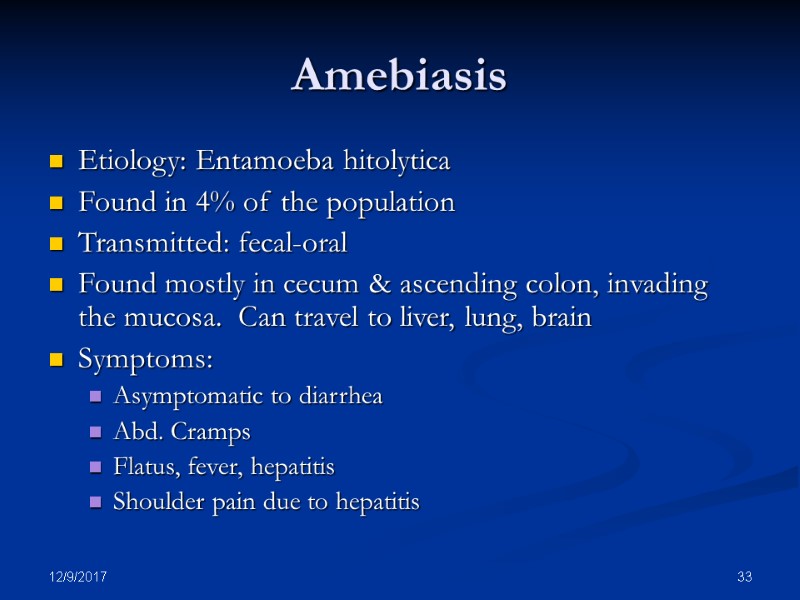
12/9/2017 33 Amebiasis Etiology: Entamoeba hitolytica Found in 4% of the population Transmitted: fecal-oral Found mostly in cecum & ascending colon, invading the mucosa. Can travel to liver, lung, brain Symptoms: Asymptomatic to diarrhea Abd. Cramps Flatus, fever, hepatitis Shoulder pain due to hepatitis
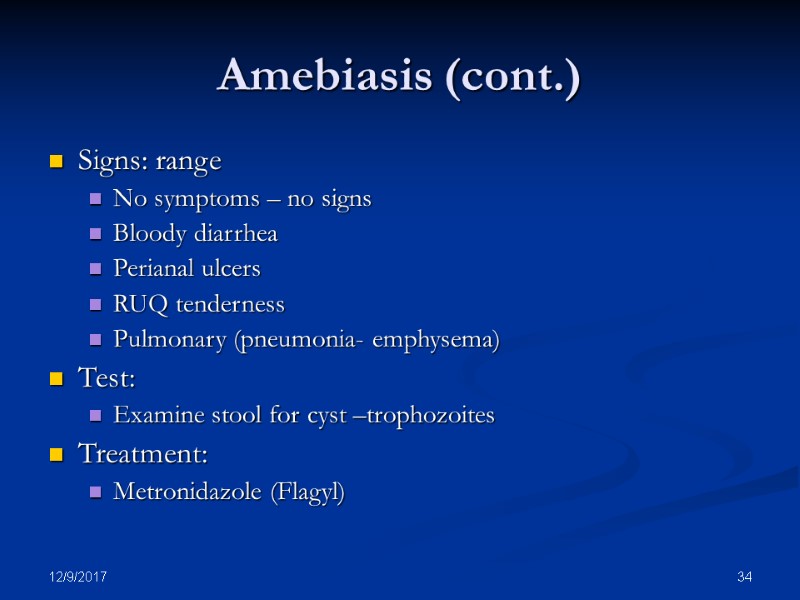
12/9/2017 34 Amebiasis (cont.) Signs: range No symptoms – no signs Bloody diarrhea Perianal ulcers RUQ tenderness Pulmonary (pneumonia- emphysema) Test: Examine stool for cyst –trophozoites Treatment: Metronidazole (Flagyl)
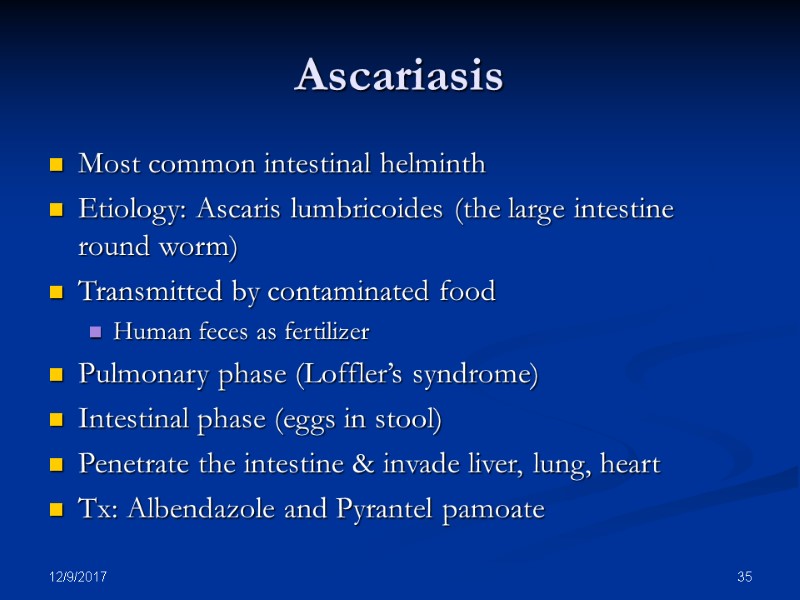
12/9/2017 35 Ascariasis Most common intestinal helminth Etiology: Ascaris lumbricoides (the large intestine round worm) Transmitted by contaminated food Human feces as fertilizer Pulmonary phase (Loffler’s syndrome) Intestinal phase (eggs in stool) Penetrate the intestine & invade liver, lung, heart Tx: Albendazole and Pyrantel pamoate
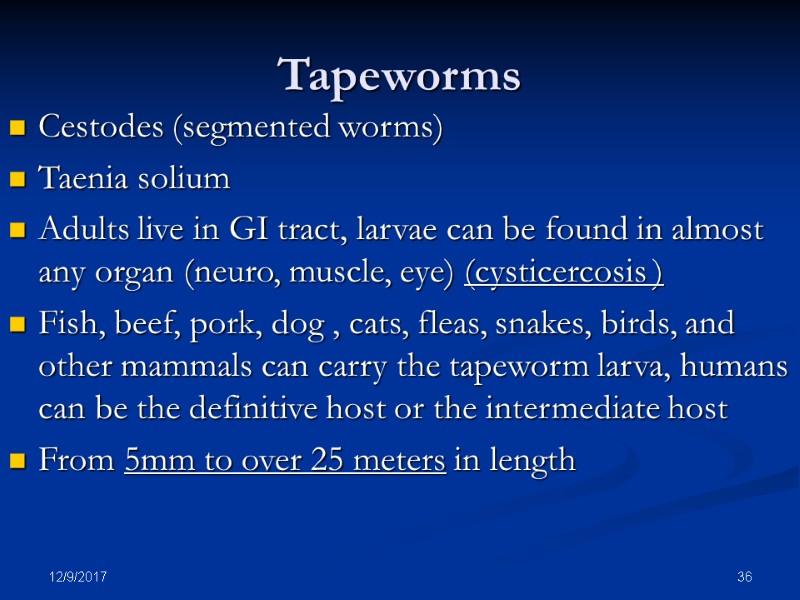
12/9/2017 36 Tapeworms Cestodes (segmented worms) Taenia solium Adults live in GI tract, larvae can be found in almost any organ (neuro, muscle, eye) (cysticercosis ) Fish, beef, pork, dog , cats, fleas, snakes, birds, and other mammals can carry the tapeworm larva, humans can be the definitive host or the intermediate host From 5mm to over 25 meters in length
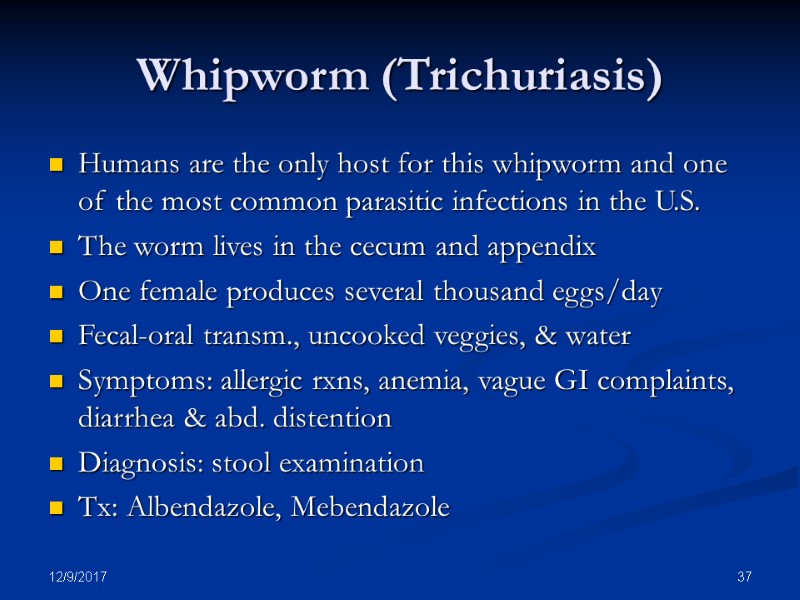
12/9/2017 37 Whipworm (Trichuriasis) Humans are the only host for this whipworm and one of the most common parasitic infections in the U.S. The worm lives in the cecum and appendix One female produces several thousand eggs/day Fecal-oral transm., uncooked veggies, & water Symptoms: allergic rxns, anemia, vague GI complaints, diarrhea & abd. distention Diagnosis: stool examination Tx: Albendazole, Mebendazole
12/9/2017 38 Diarrhea
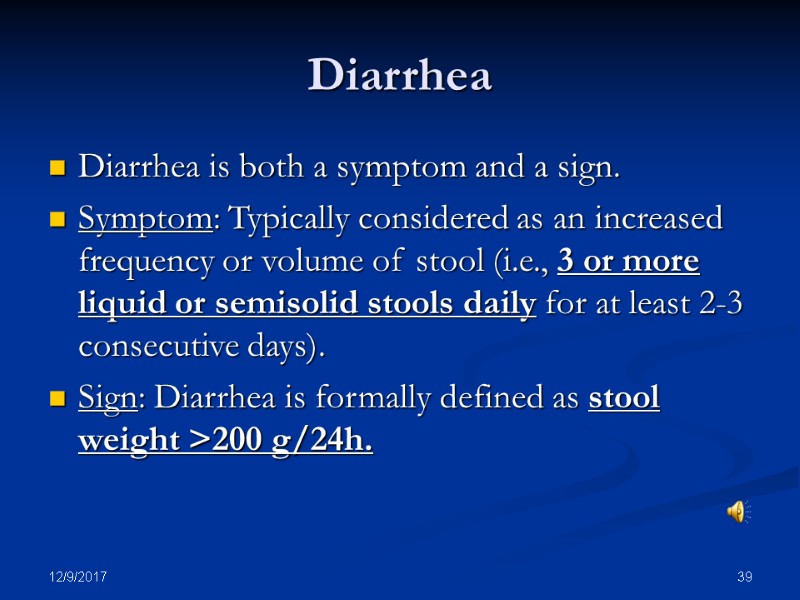
12/9/2017 39 Diarrhea Diarrhea is both a symptom and a sign. Symptom: Typically considered as an increased frequency or volume of stool (i.e., 3 or more liquid or semisolid stools daily for at least 2-3 consecutive days). Sign: Diarrhea is formally defined as stool weight >200 g/24h.
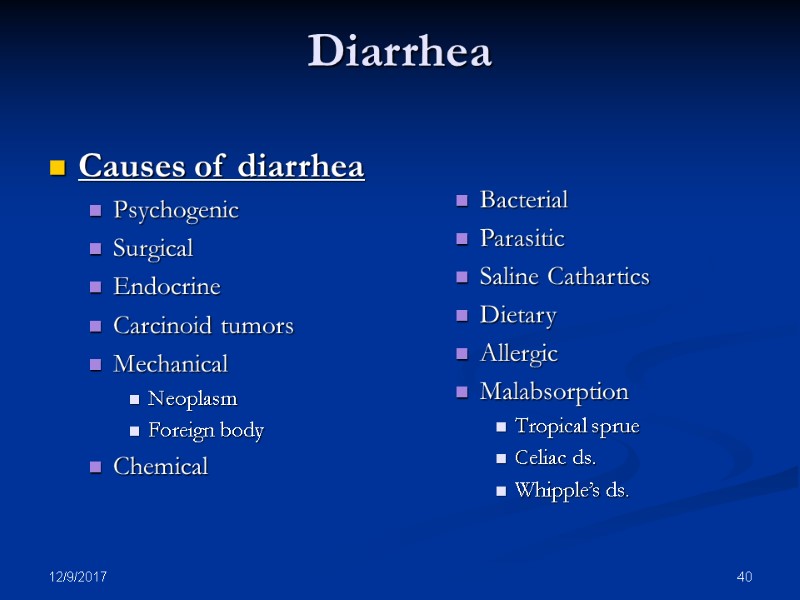
12/9/2017 40 Diarrhea Causes of diarrhea Psychogenic Surgical Endocrine Carcinoid tumors Mechanical Neoplasm Foreign body Chemical Bacterial Parasitic Saline Cathartics Dietary Allergic Malabsorption Tropical sprue Celiac ds. Whipple’s ds.
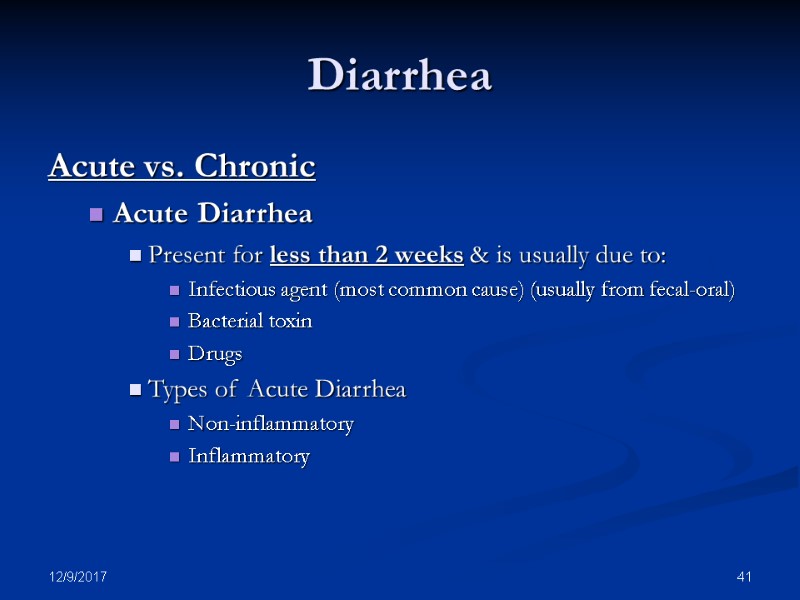
12/9/2017 41 Diarrhea Acute vs. Chronic Acute Diarrhea Present for less than 2 weeks & is usually due to: Infectious agent (most common cause) (usually from fecal-oral) Bacterial toxin Drugs Types of Acute Diarrhea Non-inflammatory Inflammatory
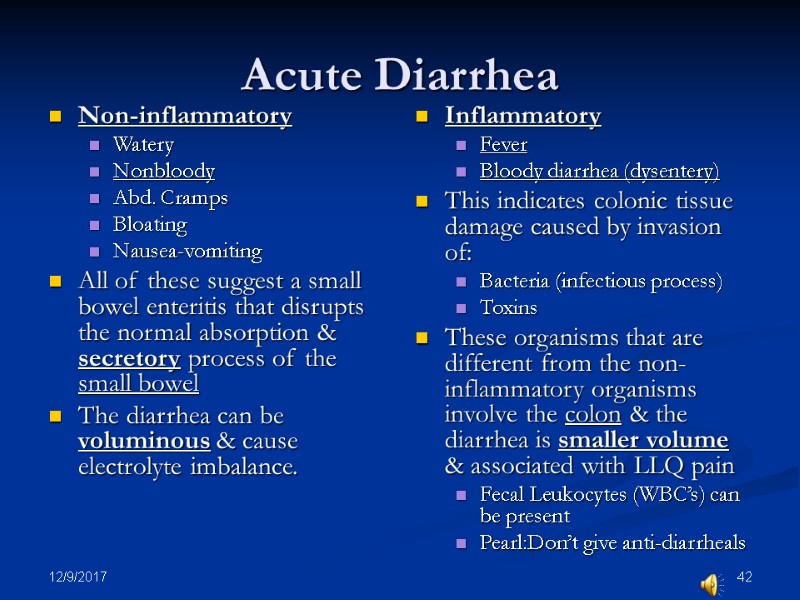
12/9/2017 42 Acute Diarrhea Non-inflammatory Watery Nonbloody Abd. Cramps Bloating Nausea-vomiting All of these suggest a small bowel enteritis that disrupts the normal absorption & secretory process of the small bowel The diarrhea can be voluminous & cause electrolyte imbalance. Inflammatory Fever Bloody diarrhea (dysentery) This indicates colonic tissue damage caused by invasion of: Bacteria (infectious process) Toxins These organisms that are different from the non-inflammatory organisms involve the colon & the diarrhea is smaller volume & associated with LLQ pain Fecal Leukocytes (WBC’s) can be present Pearl:Don’t give anti-diarrheals
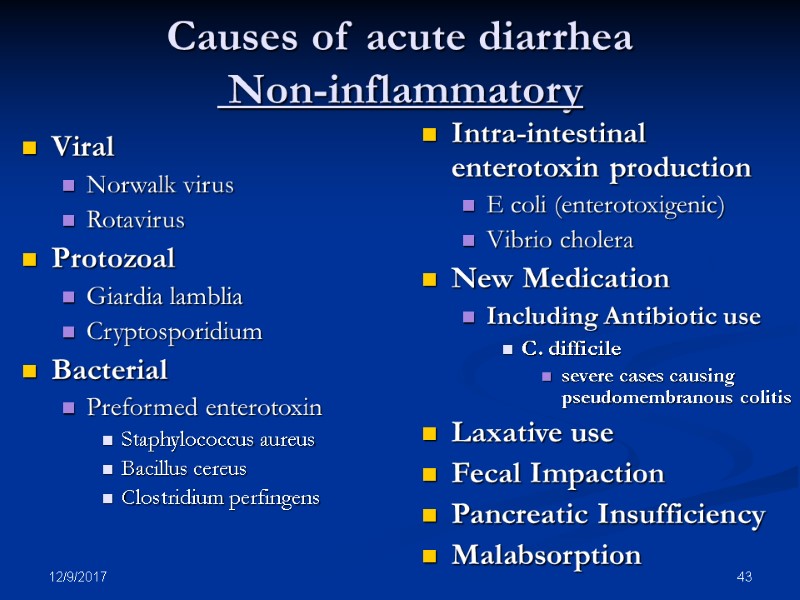
12/9/2017 43 Causes of acute diarrhea Non-inflammatory Viral Norwalk virus Rotavirus Protozoal Giardia lamblia Cryptosporidium Bacterial Preformed enterotoxin Staphylococcus aureus Bacillus cereus Clostridium perfingens Intra-intestinal enterotoxin production E coli (enterotoxigenic) Vibrio cholera New Medication Including Antibiotic use C. difficile severe cases causing pseudomembranous colitis Laxative use Fecal Impaction Pancreatic Insufficiency Malabsorption
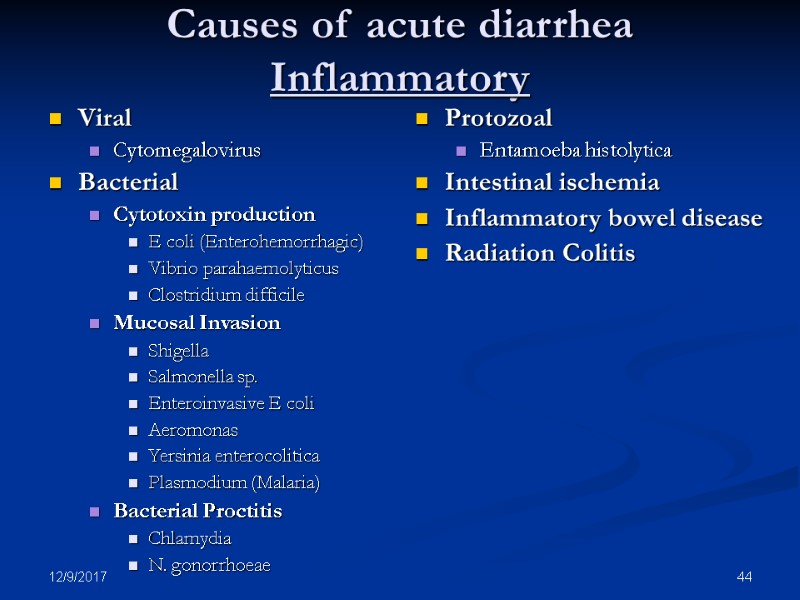
12/9/2017 44 Causes of acute diarrhea Inflammatory Viral Cytomegalovirus Bacterial Cytotoxin production E coli (Enterohemorrhagic) Vibrio parahaemolyticus Clostridium difficile Mucosal Invasion Shigella Salmonella sp. Enteroinvasive E coli Aeromonas Yersinia enterocolitica Plasmodium (Malaria) Bacterial Proctitis Chlamydia N. gonorrhoeae Protozoal Entamoeba histolytica Intestinal ischemia Inflammatory bowel disease Radiation Colitis
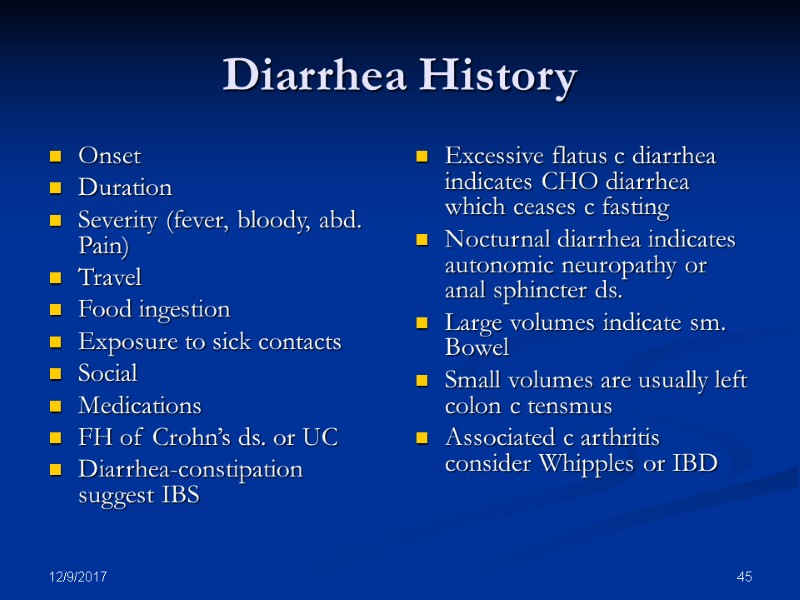
12/9/2017 45 Diarrhea History Onset Duration Severity (fever, bloody, abd. Pain) Travel Food ingestion Exposure to sick contacts Social Medications FH of Crohn’s ds. or UC Diarrhea-constipation suggest IBS Excessive flatus c diarrhea indicates CHO diarrhea which ceases c fasting Nocturnal diarrhea indicates autonomic neuropathy or anal sphincter ds. Large volumes indicate sm. Bowel Small volumes are usually left colon c tensmus Associated c arthritis consider Whipples or IBD
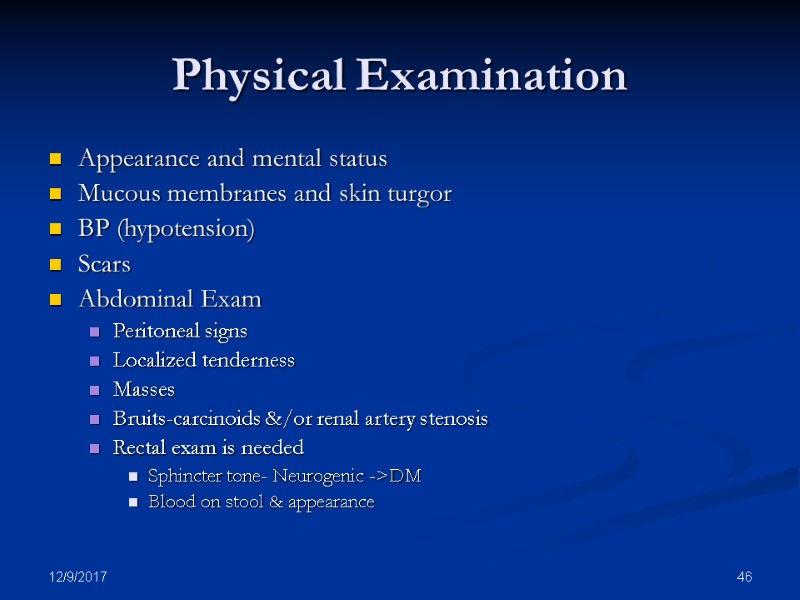
12/9/2017 46 Physical Examination Appearance and mental status Mucous membranes and skin turgor BP (hypotension) Scars Abdominal Exam Peritoneal signs Localized tenderness Masses Bruits-carcinoids &/or renal artery stenosis Rectal exam is needed Sphincter tone- Neurogenic ->DM Blood on stool & appearance
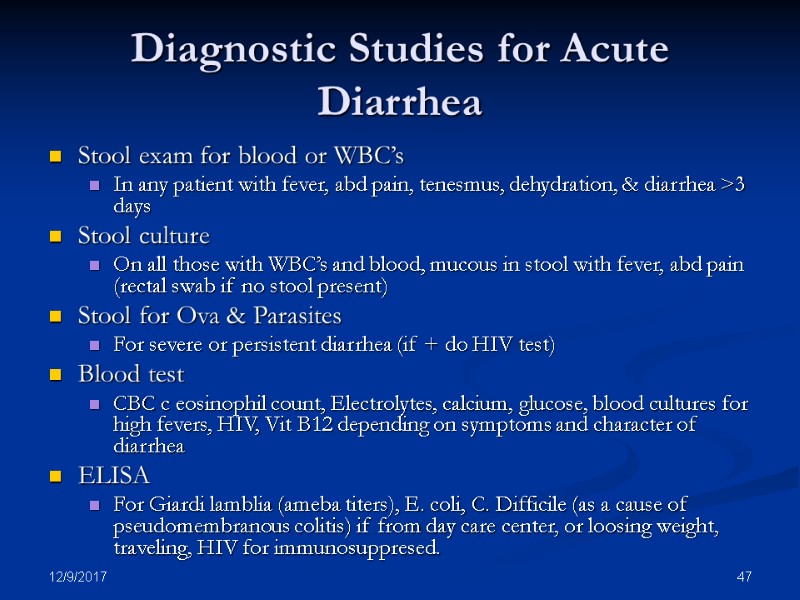
12/9/2017 47 Diagnostic Studies for Acute Diarrhea Stool exam for blood or WBC’s In any patient with fever, abd pain, tenesmus, dehydration, & diarrhea >3 days Stool culture On all those with WBC’s and blood, mucous in stool with fever, abd pain (rectal swab if no stool present) Stool for Ova & Parasites For severe or persistent diarrhea (if + do HIV test) Blood test CBC c eosinophil count, Electrolytes, calcium, glucose, blood cultures for high fevers, HIV, Vit B12 depending on symptoms and character of diarrhea ELISA For Giardi lamblia (ameba titers), E. coli, C. Difficile (as a cause of pseudomembranous colitis) if from day care center, or loosing weight, traveling, HIV for immunosuppresed.
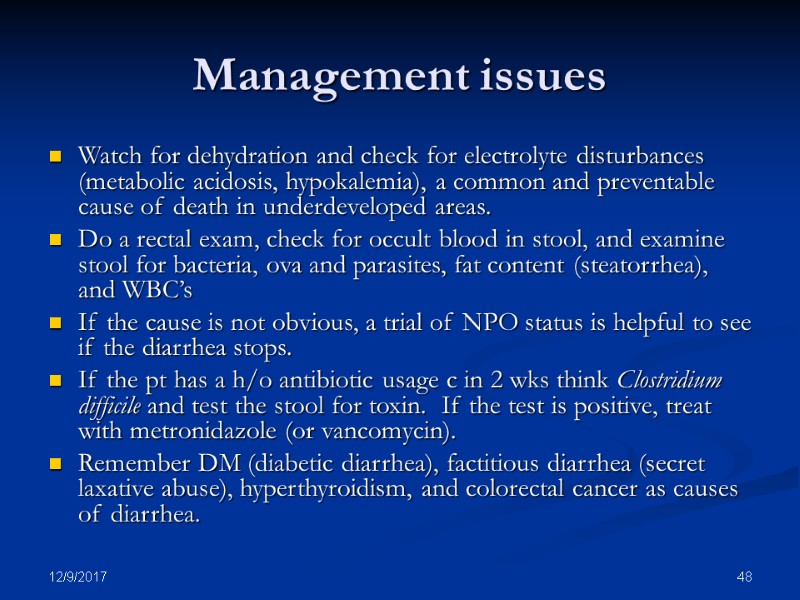
12/9/2017 48 Management issues Watch for dehydration and check for electrolyte disturbances (metabolic acidosis, hypokalemia), a common and preventable cause of death in underdeveloped areas. Do a rectal exam, check for occult blood in stool, and examine stool for bacteria, ova and parasites, fat content (steatorrhea), and WBC’s If the cause is not obvious, a trial of NPO status is helpful to see if the diarrhea stops. If the pt has a h/o antibiotic usage c in 2 wks think Clostridium difficile and test the stool for toxin. If the test is positive, treat with metronidazole (or vancomycin). Remember DM (diabetic diarrhea), factitious diarrhea (secret laxative abuse), hyperthyroidism, and colorectal cancer as causes of diarrhea.
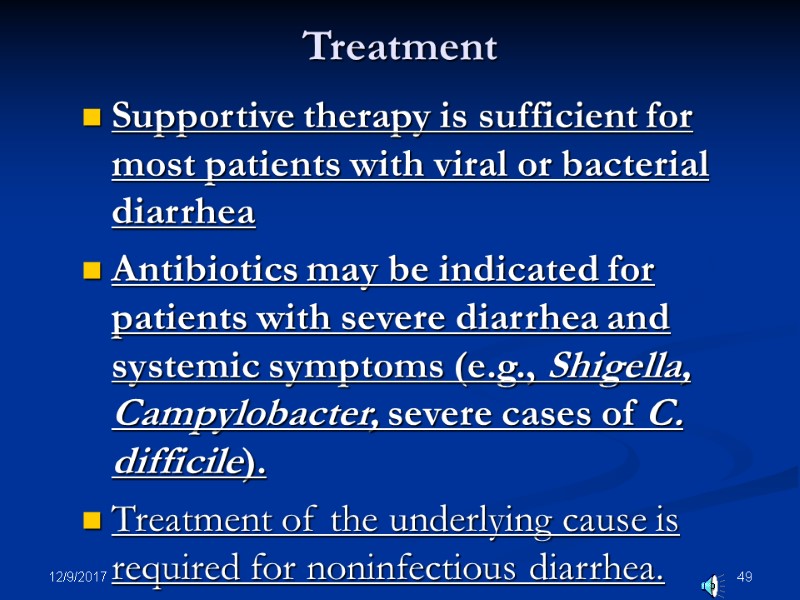
12/9/2017 49 Treatment Supportive therapy is sufficient for most patients with viral or bacterial diarrhea Antibiotics may be indicated for patients with severe diarrhea and systemic symptoms (e.g., Shigella, Campylobacter, severe cases of C. difficile). Treatment of the underlying cause is required for noninfectious diarrhea.
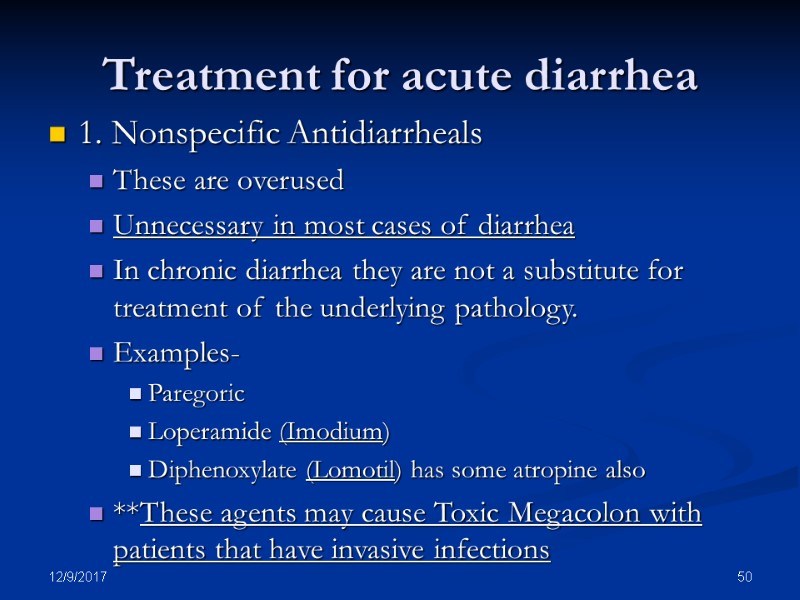
12/9/2017 50 Treatment for acute diarrhea 1. Nonspecific Antidiarrheals These are overused Unnecessary in most cases of diarrhea In chronic diarrhea they are not a substitute for treatment of the underlying pathology. Examples- Paregoric Loperamide (Imodium) Diphenoxylate (Lomotil) has some atropine also **These agents may cause Toxic Megacolon with patients that have invasive infections
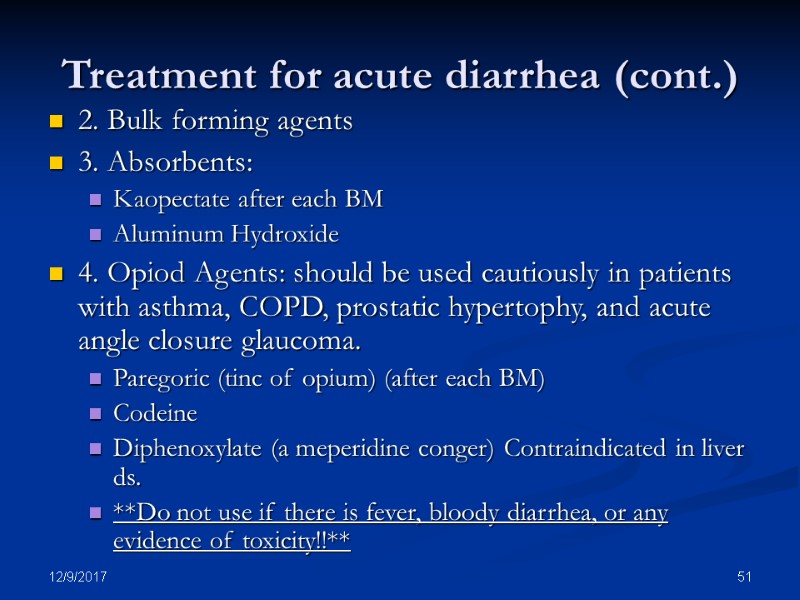
12/9/2017 51 Treatment for acute diarrhea (cont.) 2. Bulk forming agents 3. Absorbents: Kaopectate after each BM Aluminum Hydroxide 4. Opiod Agents: should be used cautiously in patients with asthma, COPD, prostatic hypertophy, and acute angle closure glaucoma. Paregoric (tinc of opium) (after each BM) Codeine Diphenoxylate (a meperidine conger) Contraindicated in liver ds. **Do not use if there is fever, bloody diarrhea, or any evidence of toxicity!!**
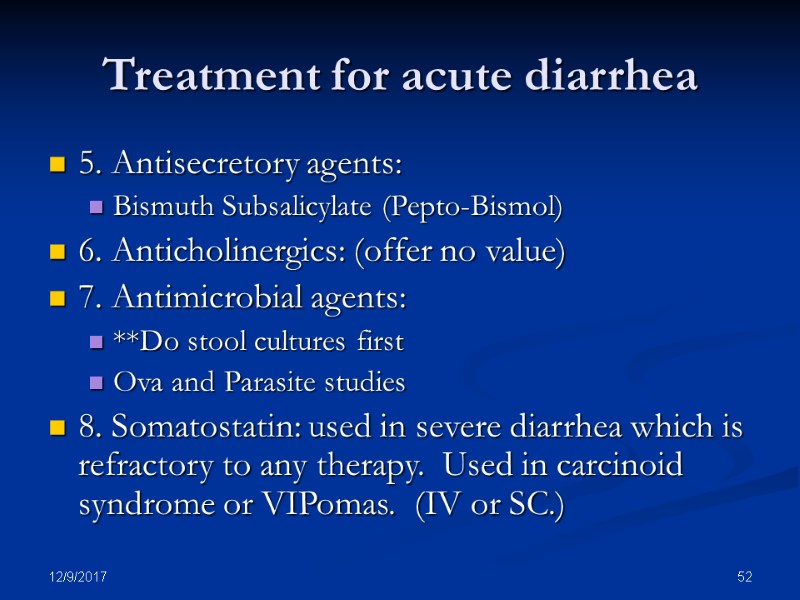
12/9/2017 52 Treatment for acute diarrhea 5. Antisecretory agents: Bismuth Subsalicylate (Pepto-Bismol) 6. Anticholinergics: (offer no value) 7. Antimicrobial agents: **Do stool cultures first Ova and Parasite studies 8. Somatostatin: used in severe diarrhea which is refractory to any therapy. Used in carcinoid syndrome or VIPomas. (IV or SC.)
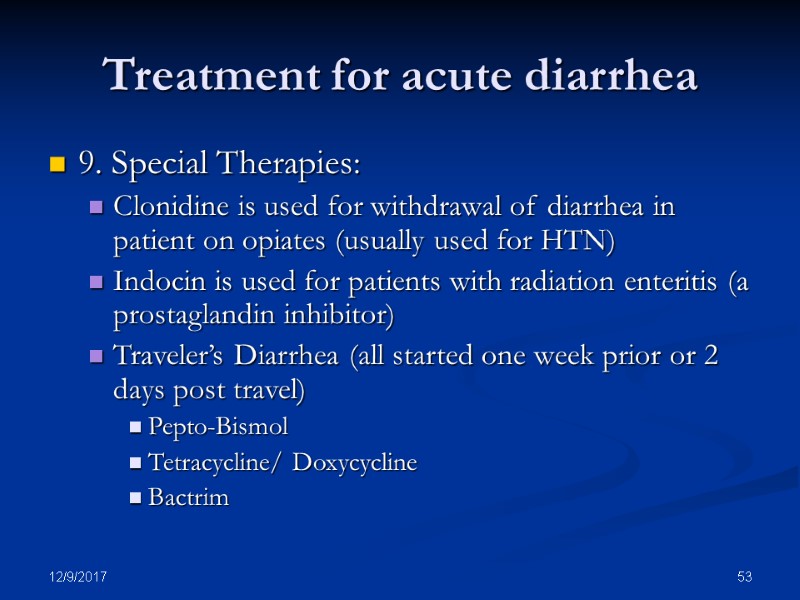
12/9/2017 53 Treatment for acute diarrhea 9. Special Therapies: Clonidine is used for withdrawal of diarrhea in patient on opiates (usually used for HTN) Indocin is used for patients with radiation enteritis (a prostaglandin inhibitor) Traveler’s Diarrhea (all started one week prior or 2 days post travel) Pepto-Bismol Tetracycline/ Doxycycline Bactrim
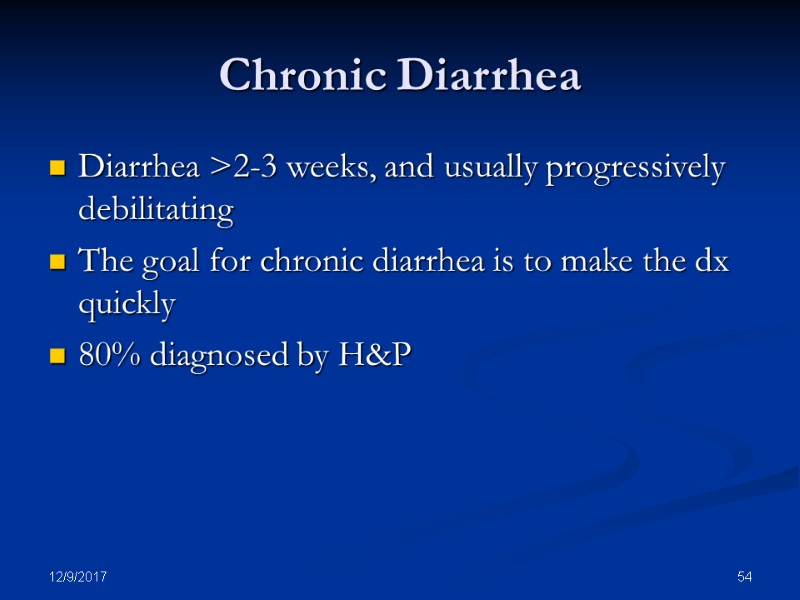
12/9/2017 54 Chronic Diarrhea Diarrhea >2-3 weeks, and usually progressively debilitating The goal for chronic diarrhea is to make the dx quickly 80% diagnosed by H&P
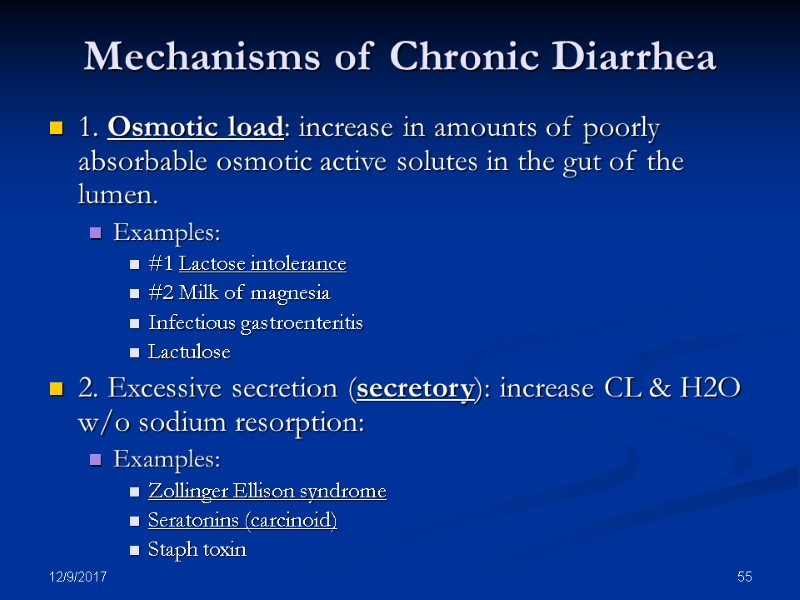
12/9/2017 55 Mechanisms of Chronic Diarrhea 1. Osmotic load: increase in amounts of poorly absorbable osmotic active solutes in the gut of the lumen. Examples: #1 Lactose intolerance #2 Milk of magnesia Infectious gastroenteritis Lactulose 2. Excessive secretion (secretory): increase CL & H2O w/o sodium resorption: Examples: Zollinger Ellison syndrome Seratonins (carcinoid) Staph toxin
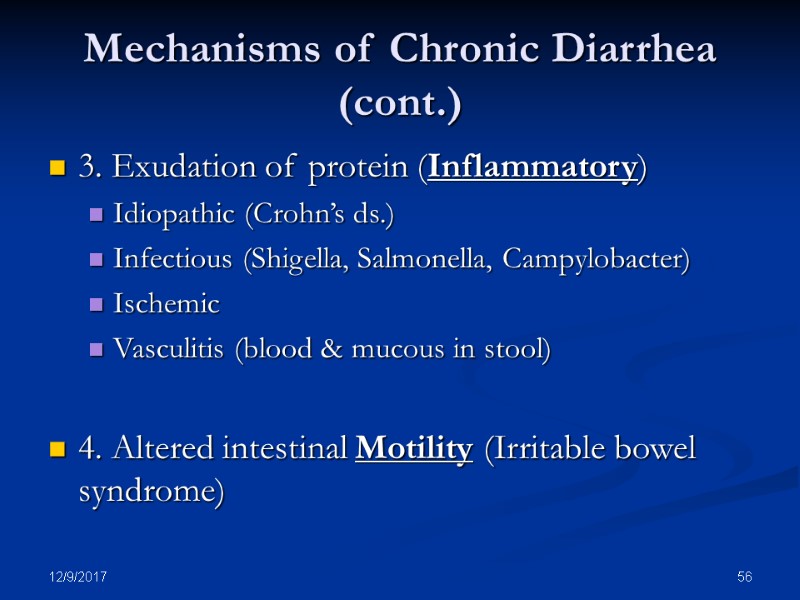
12/9/2017 56 Mechanisms of Chronic Diarrhea (cont.) 3. Exudation of protein (Inflammatory) Idiopathic (Crohn’s ds.) Infectious (Shigella, Salmonella, Campylobacter) Ischemic Vasculitis (blood & mucous in stool) 4. Altered intestinal Motility (Irritable bowel syndrome)
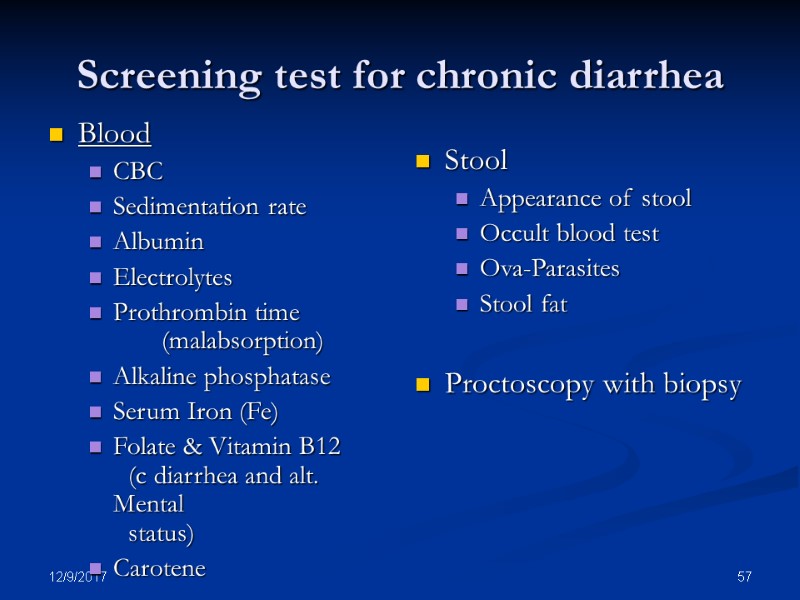
12/9/2017 57 Screening test for chronic diarrhea Blood CBC Sedimentation rate Albumin Electrolytes Prothrombin time (malabsorption) Alkaline phosphatase Serum Iron (Fe) Folate & Vitamin B12 (c diarrhea and alt. Mental status) Carotene Stool Appearance of stool Occult blood test Ova-Parasites Stool fat Proctoscopy with biopsy
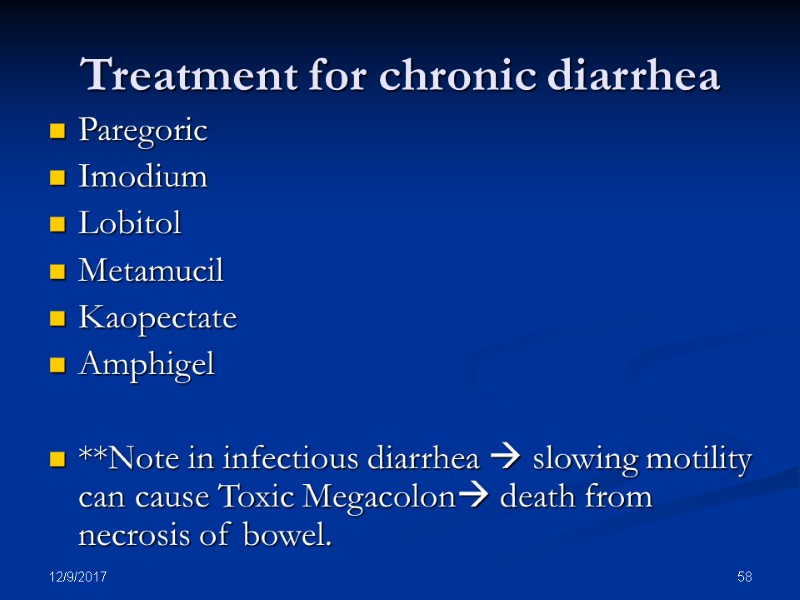
12/9/2017 58 Treatment for chronic diarrhea Paregoric Imodium Lobitol Metamucil Kaopectate Amphigel **Note in infectious diarrhea slowing motility can cause Toxic Megacolon death from necrosis of bowel.
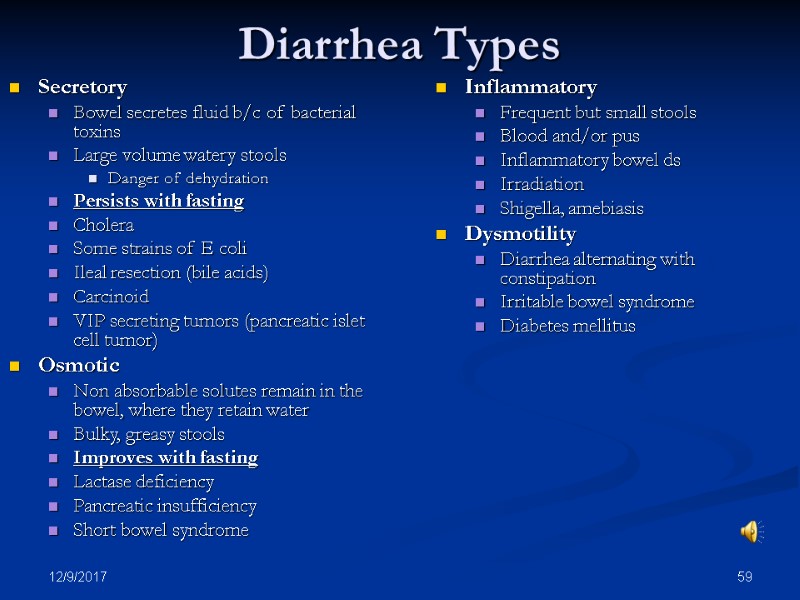
12/9/2017 59 Diarrhea Types Secretory Bowel secretes fluid b/c of bacterial toxins Large volume watery stools Danger of dehydration Persists with fasting Cholera Some strains of E coli Ileal resection (bile acids) Carcinoid VIP secreting tumors (pancreatic islet cell tumor) Osmotic Non absorbable solutes remain in the bowel, where they retain water Bulky, greasy stools Improves with fasting Lactase deficiency Pancreatic insufficiency Short bowel syndrome Inflammatory Frequent but small stools Blood and/or pus Inflammatory bowel ds Irradiation Shigella, amebiasis Dysmotility Diarrhea alternating with constipation Irritable bowel syndrome Diabetes mellitus
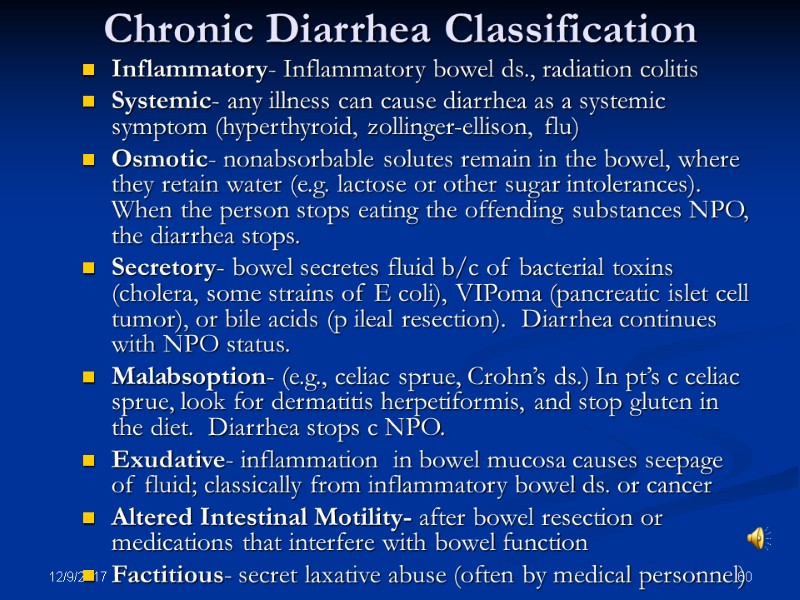
12/9/2017 60 Chronic Diarrhea Classification Inflammatory- Inflammatory bowel ds., radiation colitis Systemic- any illness can cause diarrhea as a systemic symptom (hyperthyroid, zollinger-ellison, flu) Osmotic- nonabsorbable solutes remain in the bowel, where they retain water (e.g. lactose or other sugar intolerances). When the person stops eating the offending substances NPO, the diarrhea stops. Secretory- bowel secretes fluid b/c of bacterial toxins (cholera, some strains of E coli), VIPoma (pancreatic islet cell tumor), or bile acids (p ileal resection). Diarrhea continues with NPO status. Malabsoption- (e.g., celiac sprue, Crohn’s ds.) In pt’s c celiac sprue, look for dermatitis herpetiformis, and stop gluten in the diet. Diarrhea stops c NPO. Exudative- inflammation in bowel mucosa causes seepage of fluid; classically from inflammatory bowel ds. or cancer Altered Intestinal Motility- after bowel resection or medications that interfere with bowel function Factitious- secret laxative abuse (often by medical personnel)
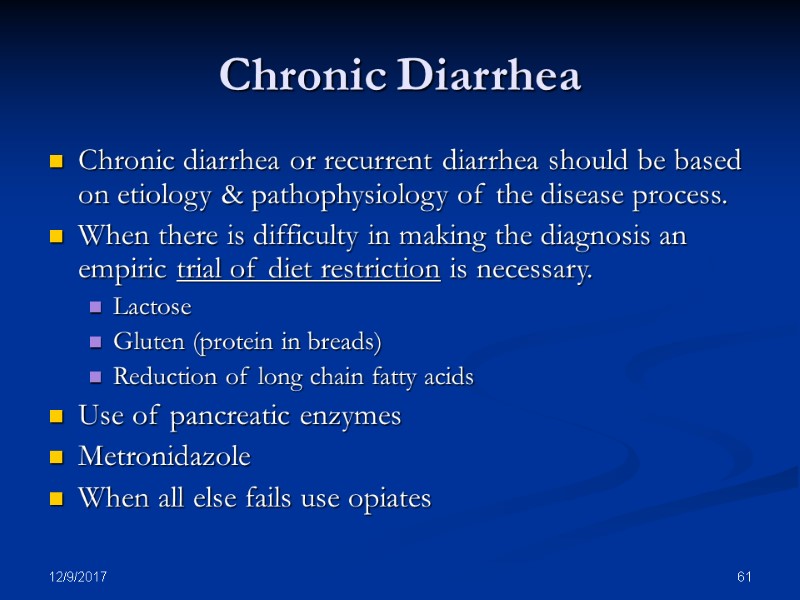
12/9/2017 61 Chronic Diarrhea Chronic diarrhea or recurrent diarrhea should be based on etiology & pathophysiology of the disease process. When there is difficulty in making the diagnosis an empiric trial of diet restriction is necessary. Lactose Gluten (protein in breads) Reduction of long chain fatty acids Use of pancreatic enzymes Metronidazole When all else fails use opiates
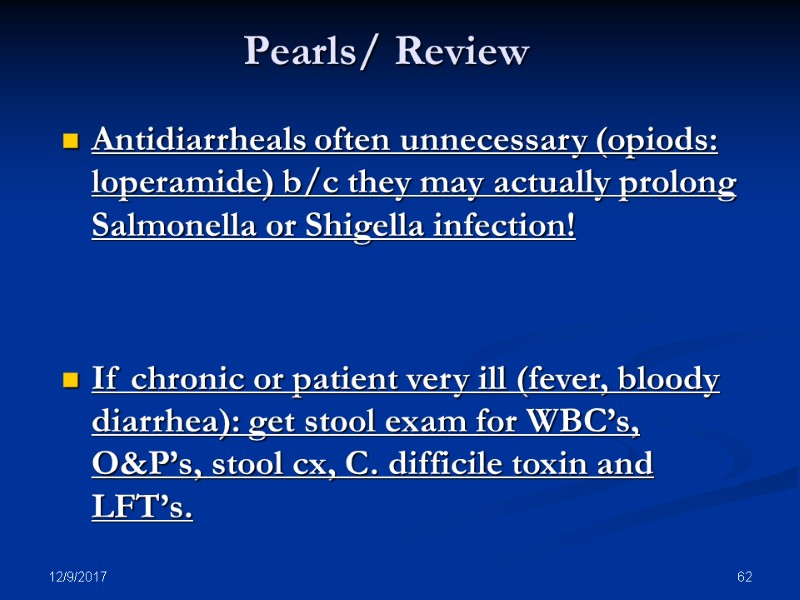
12/9/2017 62 Pearls/ Review Antidiarrheals often unnecessary (opiods: loperamide) b/c they may actually prolong Salmonella or Shigella infection! If chronic or patient very ill (fever, bloody diarrhea): get stool exam for WBC’s, O&P’s, stool cx, C. difficile toxin and LFT’s.
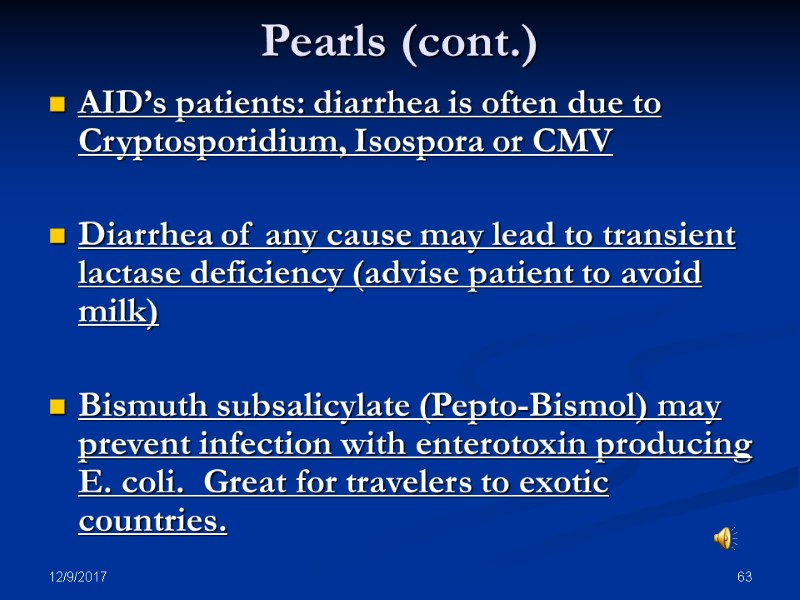
12/9/2017 63 Pearls (cont.) AID’s patients: diarrhea is often due to Cryptosporidium, Isospora or CMV Diarrhea of any cause may lead to transient lactase deficiency (advise patient to avoid milk) Bismuth subsalicylate (Pepto-Bismol) may prevent infection with enterotoxin producing E. coli. Great for travelers to exotic countries.
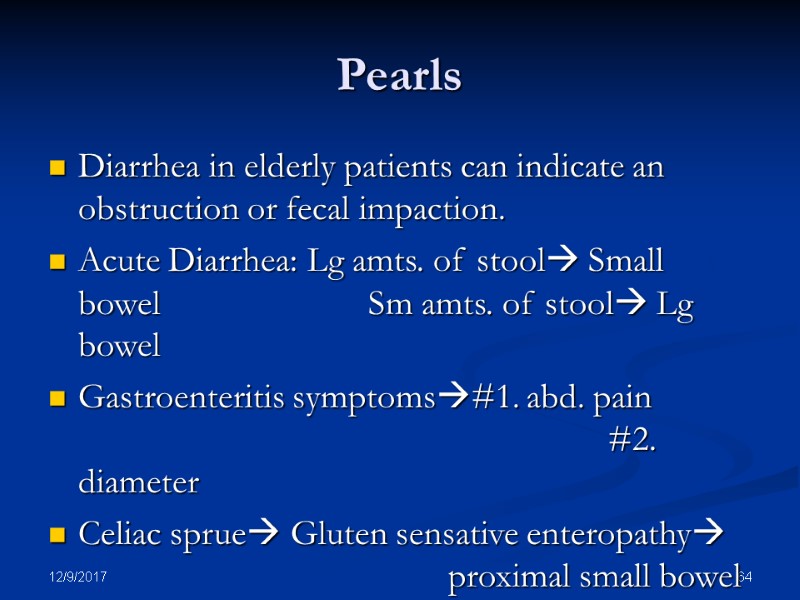
12/9/2017 64 Pearls Diarrhea in elderly patients can indicate an obstruction or fecal impaction. Acute Diarrhea: Lg amts. of stool Small bowel Sm amts. of stool Lg bowel Gastroenteritis symptoms#1. abd. pain #2. diameter Celiac sprue Gluten sensative enteropathy proximal small bowel
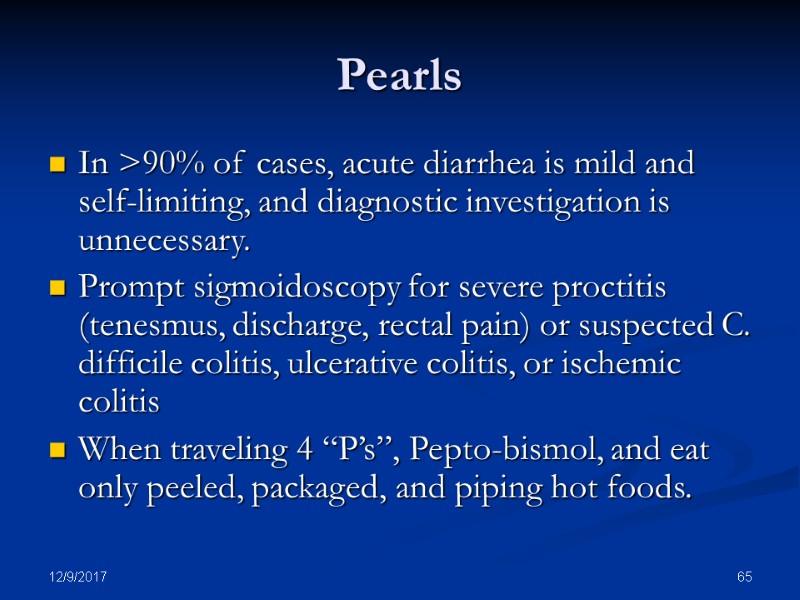
12/9/2017 65 Pearls In >90% of cases, acute diarrhea is mild and self-limiting, and diagnostic investigation is unnecessary. Prompt sigmoidoscopy for severe proctitis (tenesmus, discharge, rectal pain) or suspected C. difficile colitis, ulcerative colitis, or ischemic colitis When traveling 4 “P’s”, Pepto-bismol, and eat only peeled, packaged, and piping hot foods.
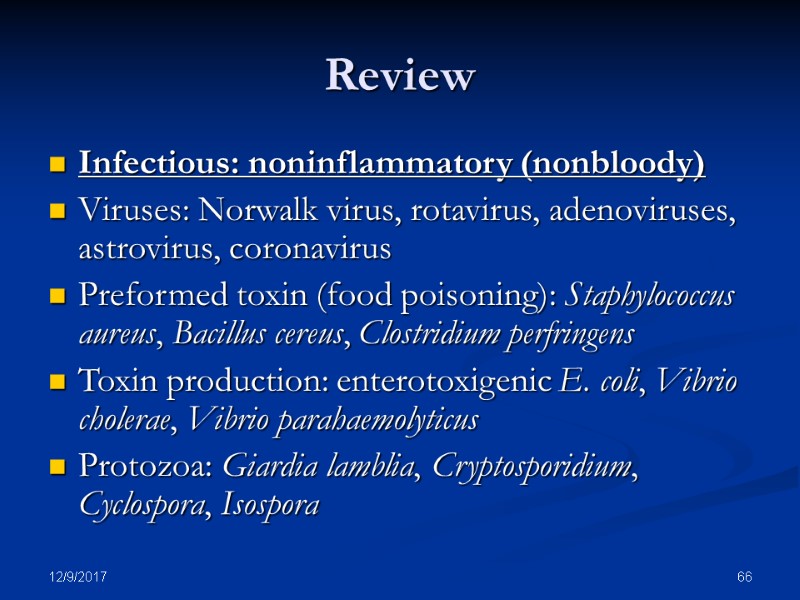
12/9/2017 66 Review Infectious: noninflammatory (nonbloody) Viruses: Norwalk virus, rotavirus, adenoviruses, astrovirus, coronavirus Preformed toxin (food poisoning): Staphylococcus aureus, Bacillus cereus, Clostridium perfringens Toxin production: enterotoxigenic E. coli, Vibrio cholerae, Vibrio parahaemolyticus Protozoa: Giardia lamblia, Cryptosporidium, Cyclospora, Isospora
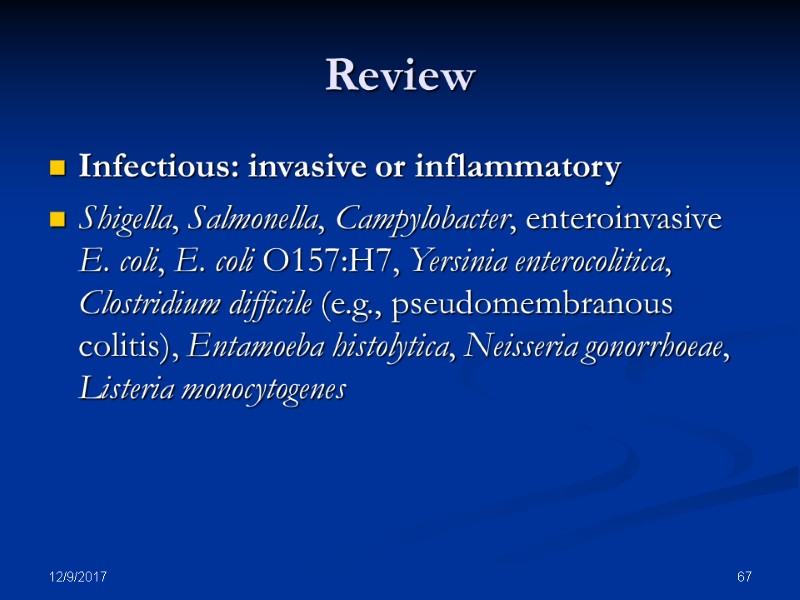
12/9/2017 67 Review Infectious: invasive or inflammatory Shigella, Salmonella, Campylobacter, enteroinvasive E. coli, E. coli O157:H7, Yersinia enterocolitica, Clostridium difficile (e.g., pseudomembranous colitis), Entamoeba histolytica, Neisseria gonorrhoeae, Listeria monocytogenes
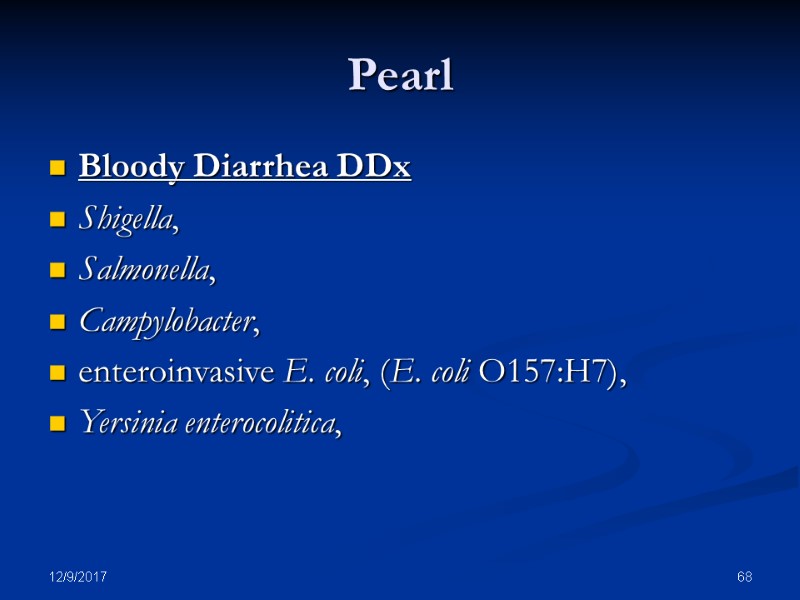
12/9/2017 68 Pearl Bloody Diarrhea DDx Shigella, Salmonella, Campylobacter, enteroinvasive E. coli, (E. coli O157:H7), Yersinia enterocolitica,