


 Скачать презентацию 12 Oils of Ancient Scripture Notice The information
d3a56df15a8290c487cc0c6662019480.ppt
- Количество слайдов: 32
 12 Oils of Ancient Scripture Notice: The information given at this class is intended for educational purposes only and is not meant to substitute for medical care or to prescribe treatment for any specific health condition. Please see a qualified health care provider for medical treatment. We assume no responsibility to, or liability for, any person or group for any loss, damage or injury resulting from the use or misuse of any information in this presentation and the products described herein. Healthy Living© Changes to this presentation cannot be made without written permission of Kitty Robinson http: //kitty. younglivingworld. com This presentation cannot be duplicated in any format. Additional copies of the presentation can by purchased by contacting Kitty Robinson.
 12 Oils of Ancient Scripture There is treasure to be desired and oil in the house of the wise. Proverbs 21: 20
 Essential Oils • Part of daily living among Hebrews, Jews, early Christians, and Gentiles throughout Biblical times • 36 of the 39 books of the Old Testament and 10 of the 27 New Testament books mention essential oils or the plants that produce them • Psalm 45: 7 -8; Proverbs 27: 9; Isaiah 61: 3; Hebrews 1: 9
 Biblical Oils • • • Aloe/Sandalwood: 5 Cassia: 3/65 Cedarwood: 5/65 Cypress: 1/four Frankincense: 22/59 Galbanum: 1/54 • • Hyssop: 12 Myrrh: 18/138 Myrtle: 6 Onycha: 1/54 Rose of Sharon: 1/two Spikenard: 7/10 Calamus: 3/65 Cinnamon: 4/65
 Mosiac Healing Laws • Ancient rituals in the Torah required the use of essential oils for cleansing of Leprosy and absolving guilt Leviticus 14: 17 “And the priest shall put some of the oil that is in his hand on the tip of the right ear of him who is to be cleansed…on the place of the guilt offering. …thumb of the right hand (brain and pituitary point on vita flex chart) …on the big toe of the right foot (brain and pituitary point on vita flex chart)
 ALOES or SANDALWOOD Psalms 45: 8; Proverbs 7: 17; Song of Solomon 4: 14 times in the Bible • • • Mentioned 5 John 19: 39; Numbers 24: 6 Imported from India during Biblical times Distilled from roots and heartwood of the tree Known for ability to nurture body systems Oxygenates tissue (including the brain) Stimulates natural secretion of melatonin …. enables sleep • Anti-inflammatory, anti-febrile/infectious properties • Prepare bodies for burial For embalming
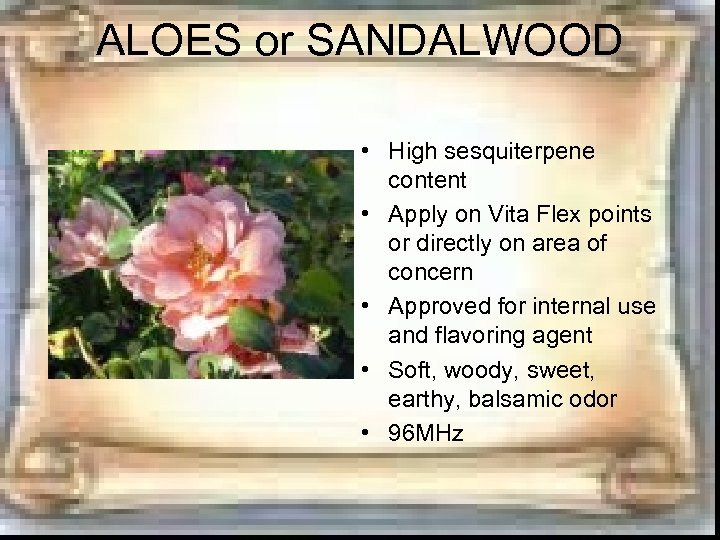 ALOES or SANDALWOOD • High sesquiterpene content • Apply on Vita Flex points or directly on area of concern • Approved for internal use and flavoring agent • Soft, woody, sweet, earthy, balsamic odor • 96 MHz
 CASSIA Exodus 30: 24, Ezekiel 27: 19 Mentioned 3 times in the Bible • • Psalms 45: 8 Among the oldest known spices Grown in China – slender evergreen tree Hebraic root “qadad” which means “to bow the head in reverence. ” • Part of the holy anointing oil and incense burned daily in the Temple of Israel
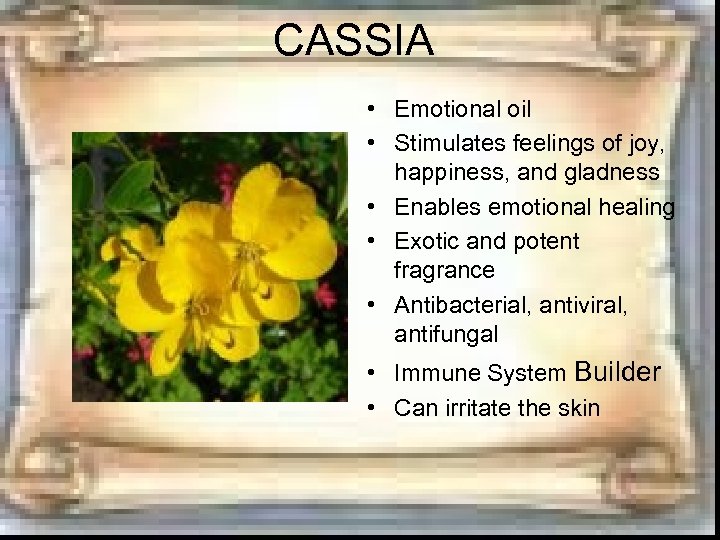 CASSIA • Emotional oil • Stimulates feelings of joy, happiness, and gladness • Enables emotional healing • Exotic and potent fragrance • Antibacterial, antiviral, antifungal • Immune System Builder • Can irritate the skin
 CEDARWOOD Leviticus 14: 17, 6, 49, 51, 52; Numbers 19: 6 Mentioned Bible 6 -7 times in the • Leviticus 14: 4 • Revered for use in storing and protecting possessions, clothing, and keepsakes • Associated with weddings • King Solomon built his palace and temple using Cedarwood (I Kings 6: 9 -15)
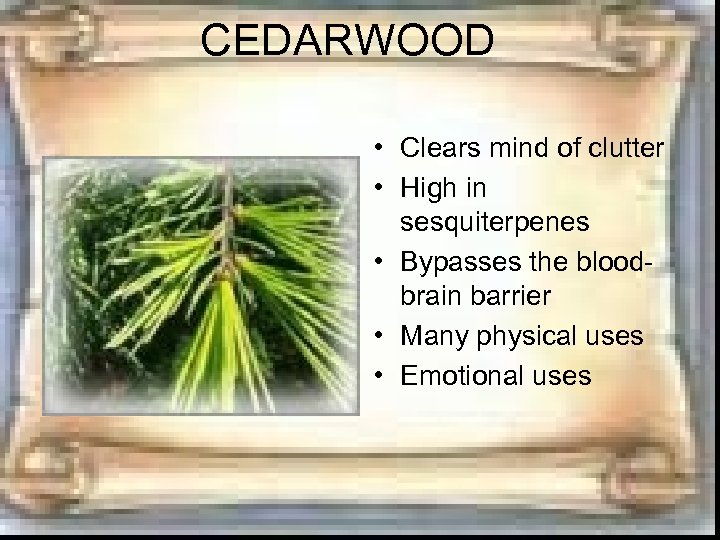 CEDARWOOD • Clears mind of clutter • High in sesquiterpenes • Bypasses the bloodbrain barrier • Many physical uses • Emotional uses
 CYPRESS Genesis 6: 14, Isaiah 44: 14, I Kings 9: 11, Song of Solomon 1: 17, Isaiah 41: 19 • Isaiah 60: 13 • Trees included in the groves of Lebanon…trees which groweth up to the clouds, can grow to 147 feet • References found in many Hebrew writings • Hebrew root is “Tirzah” which means to “make slender”
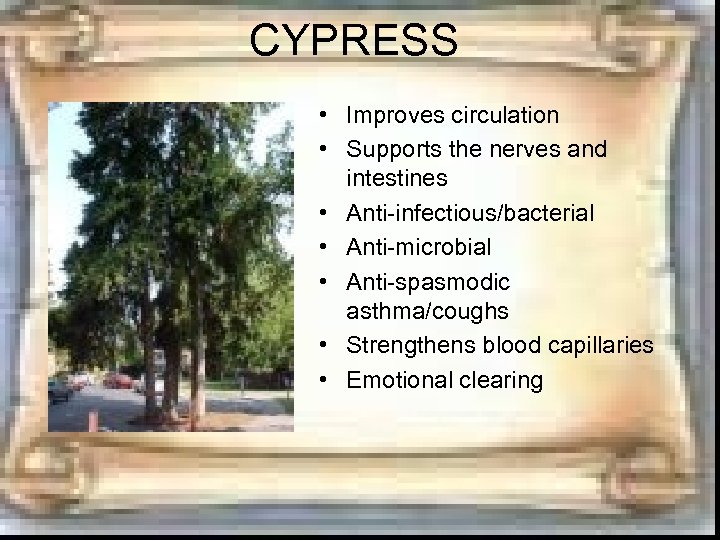 CYPRESS • Improves circulation • Supports the nerves and intestines • Anti-infectious/bacterial • Anti-microbial • Anti-spasmodic asthma/coughs • Strengthens blood capillaries • Emotional clearing
 12 Oils of Ancient Scripture There is treasure to be desired and oil in the house of the wise. Proverbs 21: 20
 FRANKINCENSE 5: 15 Exodus 30: 34, Leviticus 2: 1, 15, 16, 5: 11, 6: 15, 24: 7, Numbers 16: 46 -50 (Aaron stops a plague), Matthew 2: 11, Revelation 18: 38 Over 52 references in the Bible • • Leviticus 2: 1; Numbers 16: 46 -50 Considered by many to be the “holy anointing oil” Used by religious cultures worldwide Included in the sacred recipe for the Temple (Exodus 30: 34) • Take approximately 40 years (one generation) to grow a Frankincense tree. • Song Of Solomon 3: 6 • Warm, rich balsamic fresh aroma
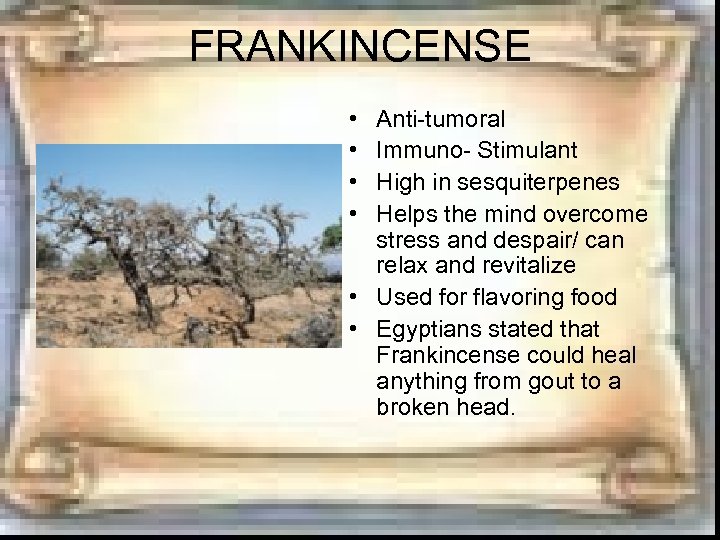 FRANKINCENSE • • Anti-tumoral Immuno- Stimulant High in sesquiterpenes Helps the mind overcome stress and despair/ can relax and revitalize • Used for flavoring food • Egyptians stated that Frankincense could heal anything from gout to a broken head.
 GALBANUM • Exodus 30: 34 -35 Mentioned only once in the Bible • Hebrew root: “Cheleb” which means “the fat or the richest part” • According to Scripture, the fat belonged to the Lord and was forbidden for human consumption • Used in holy anointing oils, incense and various medicines • Pungent, earthy odor
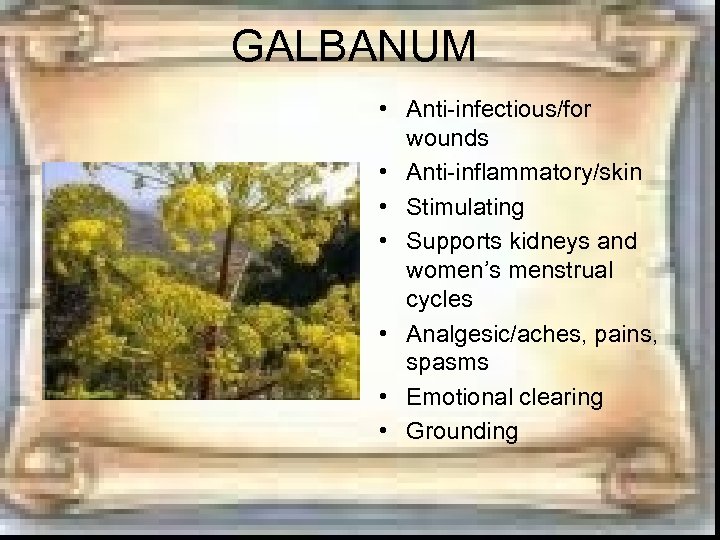 GALBANUM • Anti-infectious/for wounds • Anti-inflammatory/skin • Stimulating • Supports kidneys and women’s menstrual cycles • Analgesic/aches, pains, spasms • Emotional clearing • Grounding
 HYSSOP Leviticus 14: 4, 6, 49, 51, 52; Numbers 9: 6, 18; I Kings 4: 33; Psalms 51: 7, John 19: 29, Hebrews 9: 19 Mentioned 12 times in the bible • Exodus 12: 22 • Hebraic root: “Esob” translated as “holy herb” • The Hebrew word for strike “na’than” translates “shoots forth” • Sweet spicy aroma that is pleasing • Small scrub 1 -2 feet in height
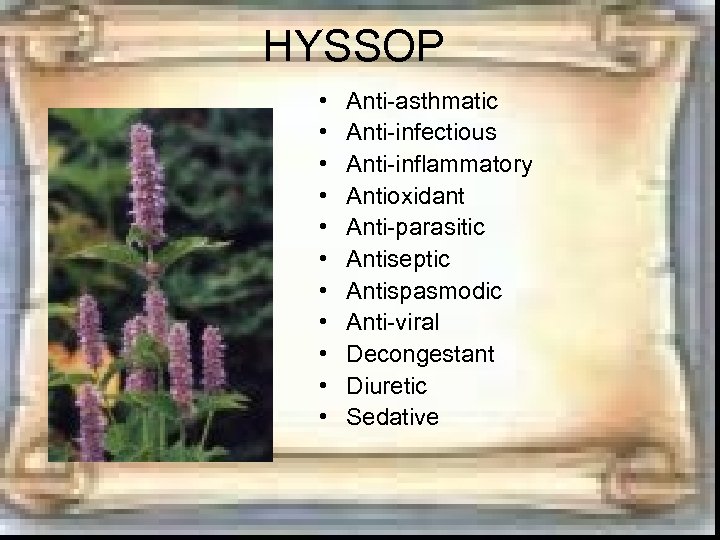 HYSSOP • • • Anti-asthmatic Anti-infectious Anti-inflammatory Antioxidant Anti-parasitic Antiseptic Antispasmodic Anti-viral Decongestant Diuretic Sedative
 MYRRH Genesis 37: 25, 43: 11, Esther 2: 12, Psalms 45: 8, Proverbs 7: 17, Exodus 30: 22 -25 Song of Solomon 1: 13, 3: 6, 4: 6, 14; 5: 1, 5, 13; Matthew 26: 7, 9, 12, Revelation 18: 13 Mark 14: 3, 4; Luke 7: 37, 38, 46; 23: 56; John 11: 2; 12: 3, 5; 19: 39 • Also referred to as Stacte in the Bible. Several references could be to Cistis or Rose of Sharon. • Rich, musty, balsamic incense like smell • Shrub exudes yellow resin that harden into “tears” • Oil is steam distilled from gum resin tears • Oil offered at Christ’s birth and at His crucifixion (Mark 15: 23) • Hebrew midwives used for childbirth
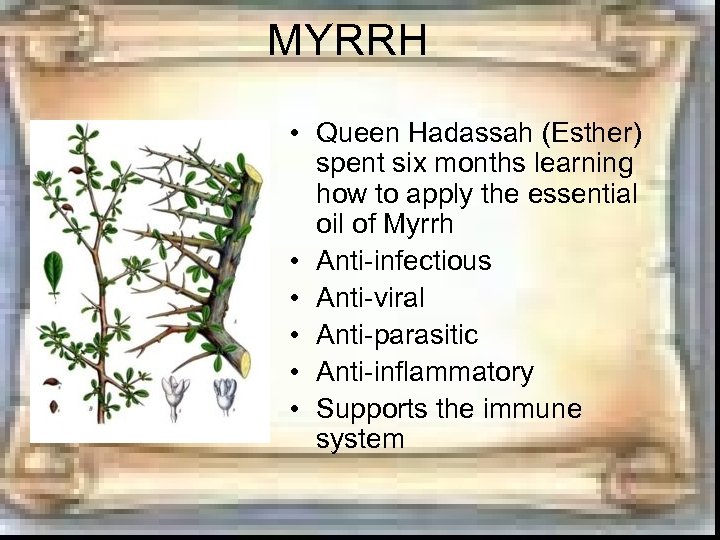 MYRRH • Queen Hadassah (Esther) spent six months learning how to apply the essential oil of Myrrh • Anti-infectious • Anti-viral • Anti-parasitic • Anti-inflammatory • Supports the immune system
 MYRTLE Nehemiah 8: 15, Isaiah 41: 19, Zechariah 1: 7 -11, Isaiah 55; 13, Esther 2: 7, Nehemiah 8: 15 • Grows from a large bush or small tree with tough slender branches • Clean, fresh, camphor-like, sweet odor similar to eucalyptus. • Symbol of peace and justice • Source of healing, used in “angel’s water”, a skin care lotion of that day • Used in the celebration of release from Babylonian captivity (Nehemiah 8: 15) • Used for purification ceremonies during Biblical times • Ancient medical uses: restore normal thyroid activity and decongesting of the respiratory tract and sinuses
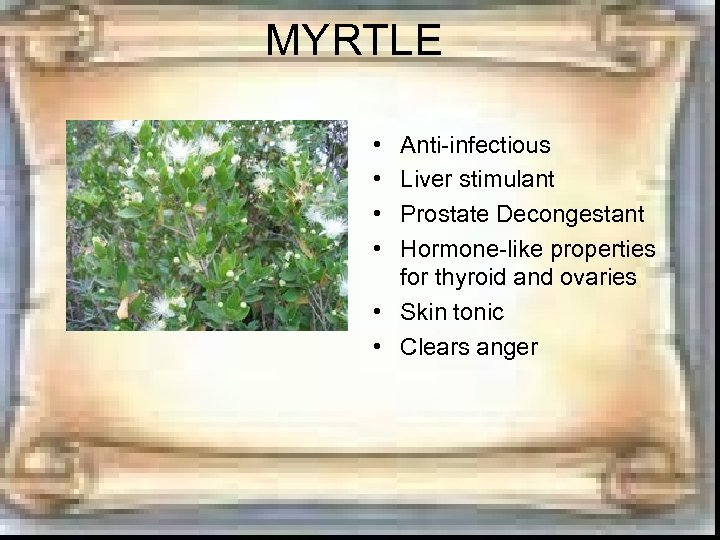 MYRTLE • • Anti-infectious Liver stimulant Prostate Decongestant Hormone-like properties for thyroid and ovaries • Skin tonic • Clears anger
 ONYCHA Also found in Sirach 24: 15 (Arpcrypha) • • • Exodus 30: 34 -35 Part of the holy incense Used in perfumes Ointment for skin wounds Hebrew root is shecheleth which means an aromatic mussel or shell
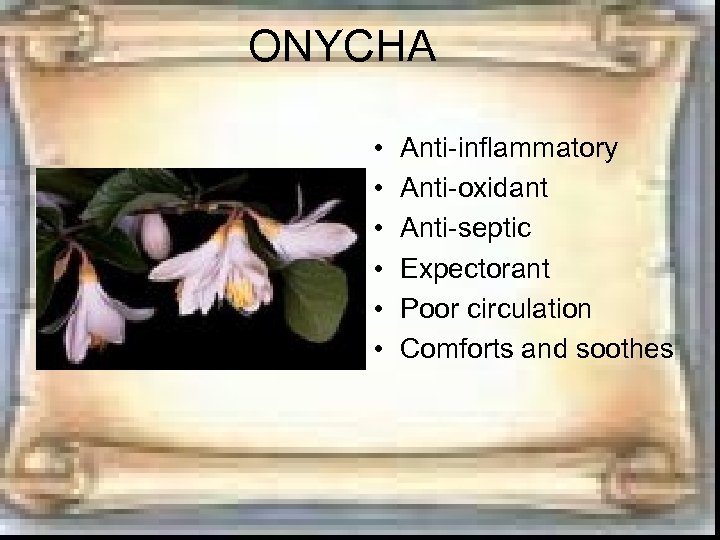 ONYCHA • • • Anti-inflammatory Anti-oxidant Anti-septic Expectorant Poor circulation Comforts and soothes
 ROSE OF SHARON--CISTUS Genesis 37: 25; 45: 11 Mentioned 2 -4 times in the Bible • • • Song of Solomon 2: 1 Also known as labdanum and rock rose Rich, sweet, musky, balsamic odor Grown on Plains of Sharon, west of Jerusalem Collected from the hairs of goats that browsed among the bushes • Hebraic derivative for Sharon is Sarai, meaning “princess”
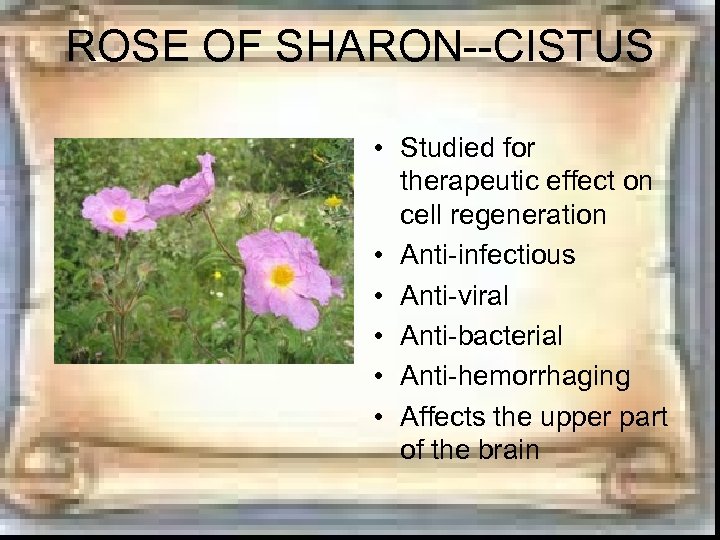 ROSE OF SHARON--CISTUS • Studied for therapeutic effect on cell regeneration • Anti-infectious • Anti-viral • Anti-bacterial • Anti-hemorrhaging • Affects the upper part of the brain
 SPIKENARD Song of Solomon 4: 13, 14 • Song of Solomon 1: 12; Matthew 26: 6 -7; Luke 7: 36 -38; Mark 14: 3; John 12: 1 -3 • Ancient tradition to anoint the head or feet of guests with spikenard • Jesus was anointed twice (that we know of) before He died (Matt 26: 6 -7, John 12: 1 -3) • Transported to Israel from the Himalayan Mountains in sealed alabaster boxes • Root word means “earthy aromatic plant” • Used to prepare bodies for burial
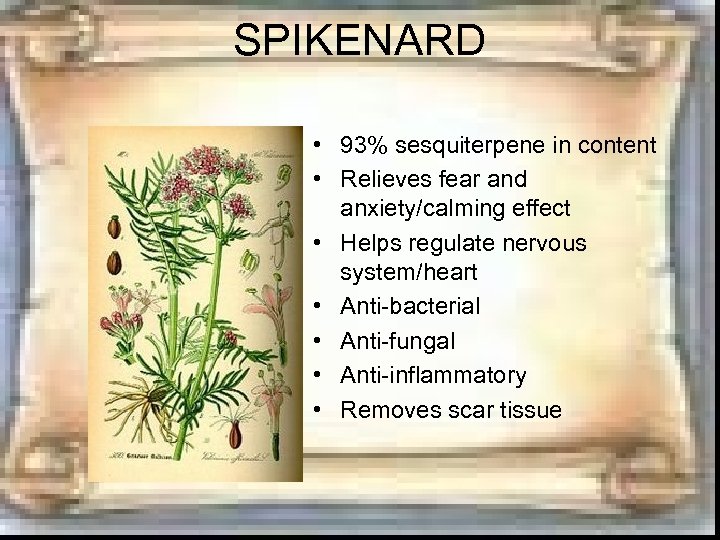 SPIKENARD • 93% sesquiterpene in content • Relieves fear and anxiety/calming effect • Helps regulate nervous system/heart • Anti-bacterial • Anti-fungal • Anti-inflammatory • Removes scar tissue
 Sources • Mc. Bride, Janet. “Secrets of the Cohanim—The Power of Essential Oils” Scriptural Essence. 2001 • Stewart, David. 12 Oils of Ancient Scripture. Sound Concepts. • Stewart, David. Principal Oils of Ancient Scripture. Healing Oils of the Bible. CARE 2003. • Linda L. Smith. “Sent to Heal & Anoint” The use of Essential Oils with Healing Touch Spiritual Ministry. 2002
 Contact Information Barbara Lemke, RN, CCAP 920 -285 -4635 healthopts@hotmail. com www. youngliving. com/601146