


 Скачать презентацию 11 Supply Chain Management Mc Graw-Hill Irwin Copyright
e4bdc4c448d8fac6c5d7e2ffda67224b.ppt
- Количество слайдов: 57
 11 Supply Chain Management Mc. Graw-Hill/Irwin Copyright © 2007 by The Mc. Graw-Hill Companies, Inc. All rights reserved.
 Learning Objectives § § § § Explain what a supply chain is. Explain the need to manage a supply chain and the potential benefits of doing so. Explain the increasing importance of outsourcing. State the objective of supply chain management. List the elements of supply chain management. Identify the strategic, tactical, and operations issues in supply chain management. Describe the bullwhip effect and the reasons why it occurs. 2
 Learning Objectives § § § § Explain the value of strategic partnering. Discuss the critical importance of information exchange across a supply chain. Outline the key steps, and potential challenges, in creating an effective supply chain. Explain the importance of the purchasing function in business organizations. Describe the responsibilities of purchasing. Explain the term value analysis. Identify several guidelines for ethical behavior in purchasing. 3
 Supply Chain Management § Supply Chain: the sequence of organizations - their facilities, functions, and activities - that are involved in producing and delivering a product or service. Sometimes referred to as value chains 4
 Facilities § § § Warehouses Factories Processing centers Distribution centers Retail outlets Offices 5
 Functions and Activities § § § § Forecasting Purchasing Inventory management Information management Quality assurance Scheduling Production and delivery Customer service 6
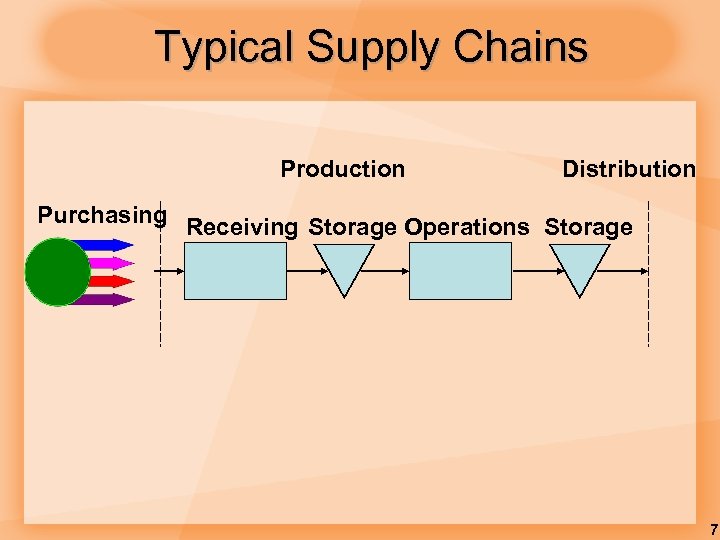 Typical Supply Chains Production Distribution Purchasing Receiving Storage Operations Storage 7
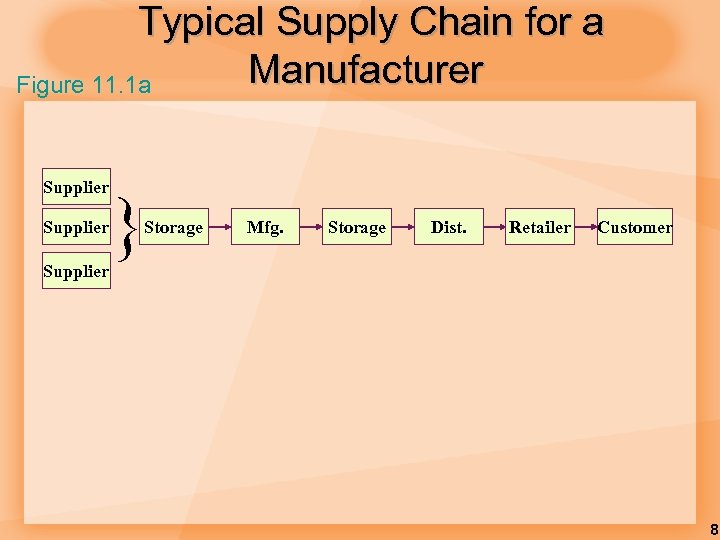 Typical Supply Chain for a Manufacturer Figure 11. 1 a Supplier } Storage Mfg. Storage Dist. Retailer Customer 8
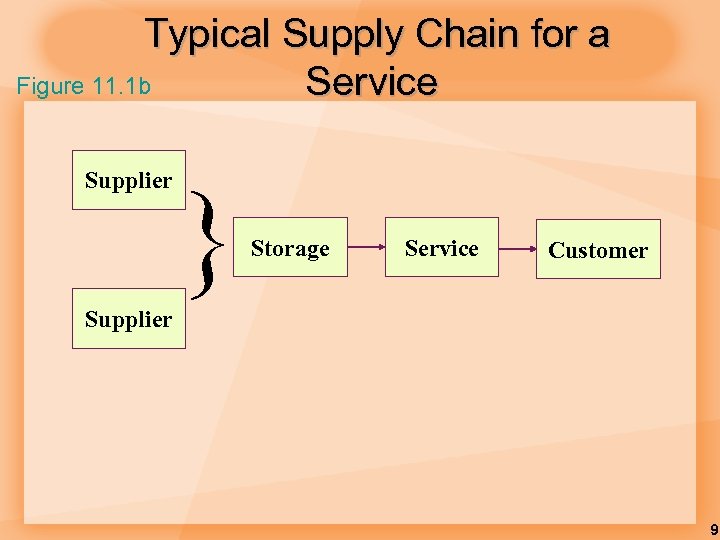 Typical Supply Chain for a Figure 11. 1 b Service Supplier } Storage Service Customer Supplier 9
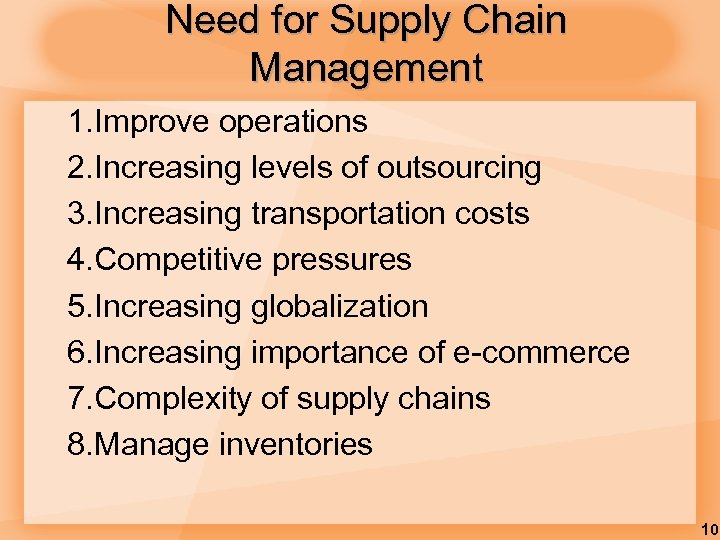 Need for Supply Chain Management 1. Improve operations 2. Increasing levels of outsourcing 3. Increasing transportation costs 4. Competitive pressures 5. Increasing globalization 6. Increasing importance of e-commerce 7. Complexity of supply chains 8. Manage inventories 10
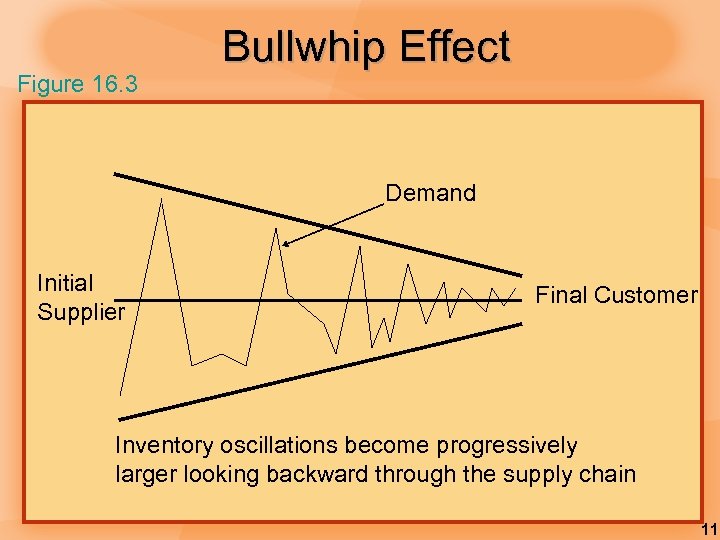 Figure 16. 3 Bullwhip Effect Demand Initial Supplier Final Customer Inventory oscillations become progressively larger looking backward through the supply chain 11
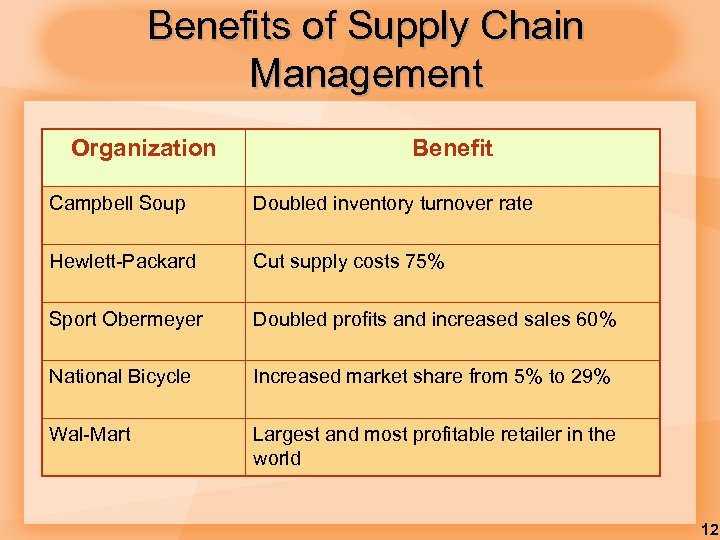 Benefits of Supply Chain Management Organization Benefit Campbell Soup Doubled inventory turnover rate Hewlett-Packard Cut supply costs 75% Sport Obermeyer Doubled profits and increased sales 60% National Bicycle Increased market share from 5% to 29% Wal-Mart Largest and most profitable retailer in the world 12
 Benefits of Supply Chain Management § § § § Lower inventories Higher productivity Greater agility Shorter lead times Higher profits Greater customer loyalty Integrates separate organizations into a cohesive operating system 13
 Global Supply Chains § Increasing more complex § § § § Language Culture Currency fluctuations Political Transportation costs Local capabilities Finance and economics Environmental 14
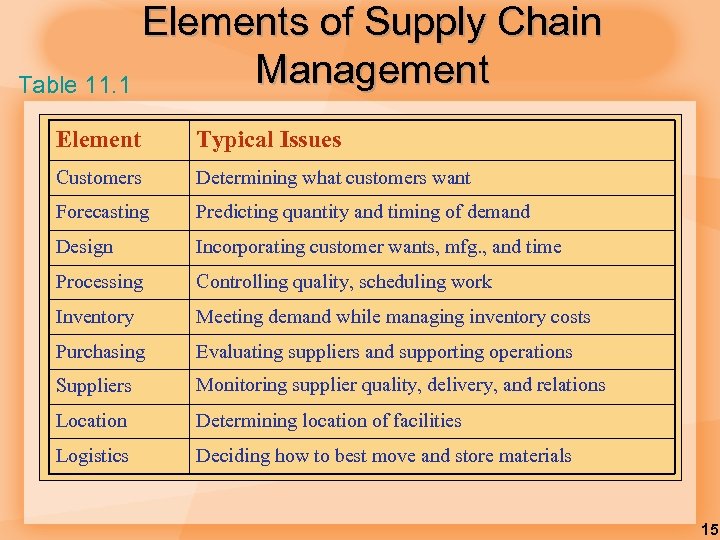 Elements of Supply Chain Management Table 11. 1 Element Typical Issues Customers Determining what customers want Forecasting Predicting quantity and timing of demand Design Incorporating customer wants, mfg. , and time Processing Controlling quality, scheduling work Inventory Meeting demand while managing inventory costs Purchasing Evaluating suppliers and supporting operations Suppliers Monitoring supplier quality, delivery, and relations Location Determining location of facilities Logistics Deciding how to best move and store materials 15
 Strategic or Operational § Two types of decisions in supply chain management § Strategic – design and policy § Operational – day-today activities § Major decisions areas § § Location Production Inventory Distribution 16
 Logistics § Refers to the movement of materials and information within a facility and to incoming and outgoing shipments of goods and materials in a supply chain 17
 Logistics • Movement within the facility • Incoming and outgoing shipments • Bar coding • EDI • Distribution • JIT Deliveries 0 214800 232087768 18
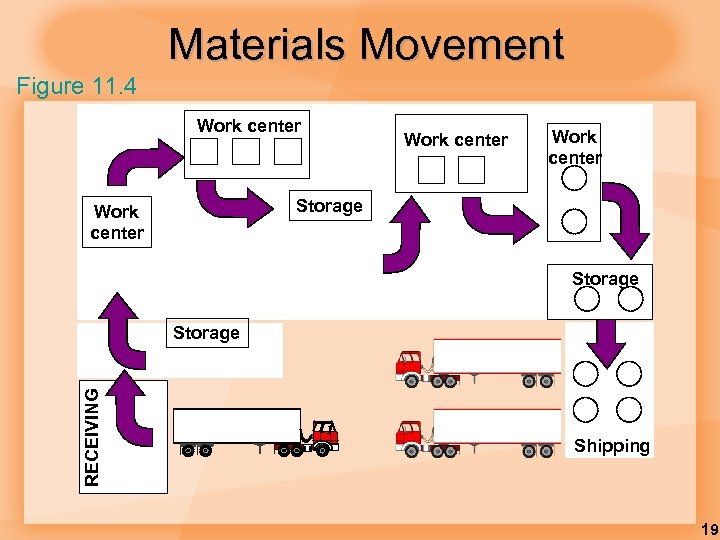 Materials Movement Figure 11. 4 Work center Storage RECEIVING Storage Shipping 19
 Distribution Requirements Planning § Distribution requirements planning (DRP) is a system for inventory management and distribution planning § Extends the concepts of MRPII 20
 Uses of DRP § Management uses DRP to plan and coordinate: § § § Transportation Warehousing Workers Equipment Financial flows 21
 E-Business § E-Business: the use of electronic technology to facilitate business transactions § Applications include § § Internet buying and selling E-mail Order and shipment tracking Electronic data interchange 22
 Advantages E-Business § Companies can: § § § § Have a global presence Improve competitiveness and quality Analyze customer interests Collect detailed information Shorten supply chain response times Realize substantial cost savings Create virtual companies Level the playing field for small companies 23
 Disadvantages of E-Business § Customer expectations § Order quickly -> fast delivery § Order fulfillment § Order rate often exceeds ability to fulfill it § Inventory holding § Outsourcing loss of control § Internal holding costs 24
 Reverse Logistics § Reverse logistics – the backward flow of goods returned to the supply chain § Processing returned goods § Sorting, examining/testing, restocking, repairing § Reconditioning, recycling, disposing § Gatekeeping – screening goods to prevent incorrect acceptance of goods § Avoidance – finding ways to minimize the number of items that are returned 25
 Effective Supply Chain § Requires linking the market, distribution channels processes, and suppliers § Supply chain should enable members to: § Share forecasts § Determine the status of orders in real time § Access inventory data of partners 26
 Successful Supply Chain § Trust among trading partners § Effective communications § Supply chain visibility § Event-management capability § The ability to detect and respond to unplanned events § Performance metrics 27
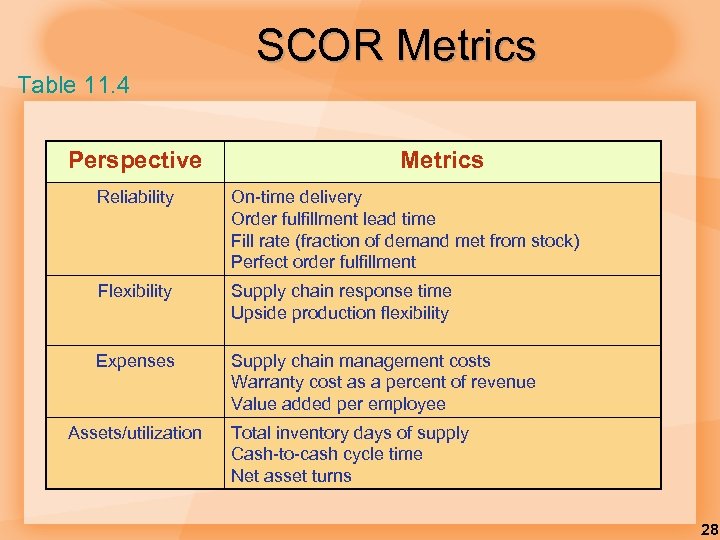 Table 11. 4 Perspective SCOR Metrics Reliability On-time delivery Order fulfillment lead time Fill rate (fraction of demand met from stock) Perfect order fulfillment Flexibility Supply chain response time Upside production flexibility Expenses Supply chain management costs Warranty cost as a percent of revenue Value added per employee Assets/utilization Total inventory days of supply Cash-to-cash cycle time Net asset turns 28
 RFID Technology § Used to track goods in supply chain § RFID tag attached to object § Similar to bar codes but uses radio frequency to transmit product information to receiver § RFID eliminates need for manual counting and bar code scanning 29
 CPFR § Collaborative Planning, Forecasting, and Replenishment § Focuses on information sharing among trading partners § Forecasts can be frozen and then converted into a shipping plan § Eliminates typical order processing 30
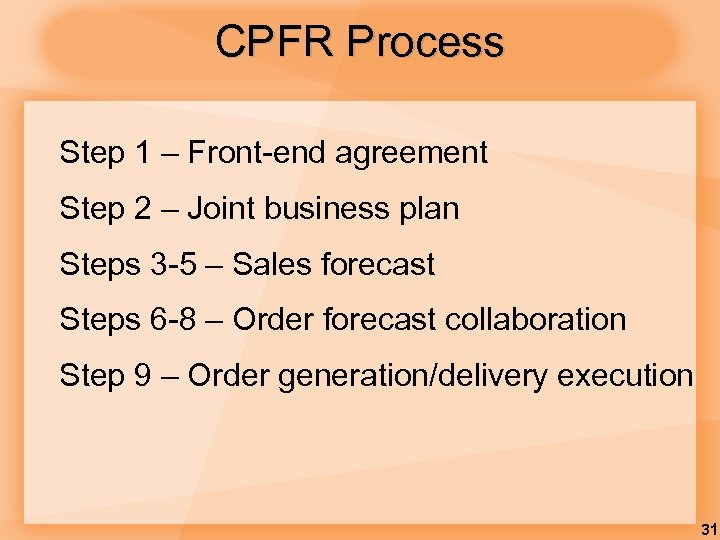 CPFR Process Step 1 – Front-end agreement Step 2 – Joint business plan Steps 3 -5 – Sales forecast Steps 6 -8 – Order forecast collaboration Step 9 – Order generation/delivery execution 31
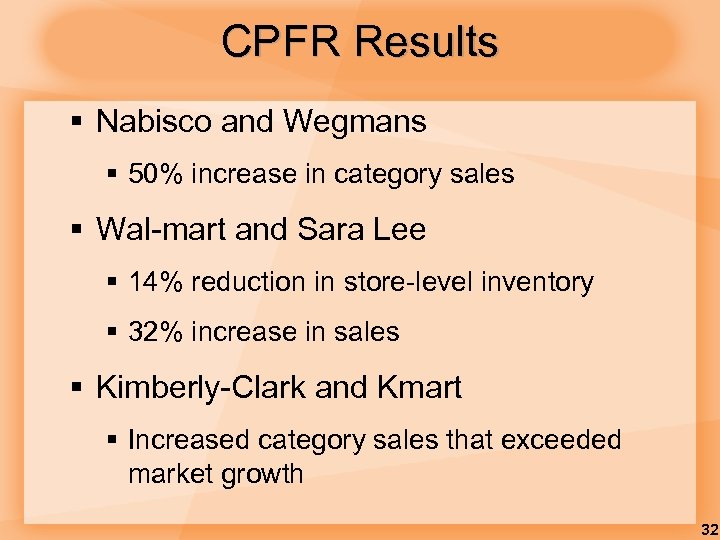 CPFR Results § Nabisco and Wegmans § 50% increase in category sales § Wal-mart and Sara Lee § 14% reduction in store-level inventory § 32% increase in sales § Kimberly-Clark and Kmart § Increased category sales that exceeded market growth 32
 Creating an Effective Supply Chain 1. Develop strategic objectives and tactics 2. Integrate and coordinate activities in the internal supply chain 3. Coordinate activities with suppliers with customers 4. Coordinate planning and execution across the supply chain 5. Form strategic partnerships 33
 Supply Chain Performance Drivers 1. Quality 2. Cost 3. Flexibility 4. Velocity 5. Customer service 34
 Velocity § Inventory velocity § The rate at which inventory(material) goes through the supply chain § Information velocity § The rate at which information is communicated in a supply chain 35
 Challenges § Barriers to integration of organizations § Getting top management on board § Dealing with trade-offs § Small businesses § Variability and uncertainty § Long lead times 36
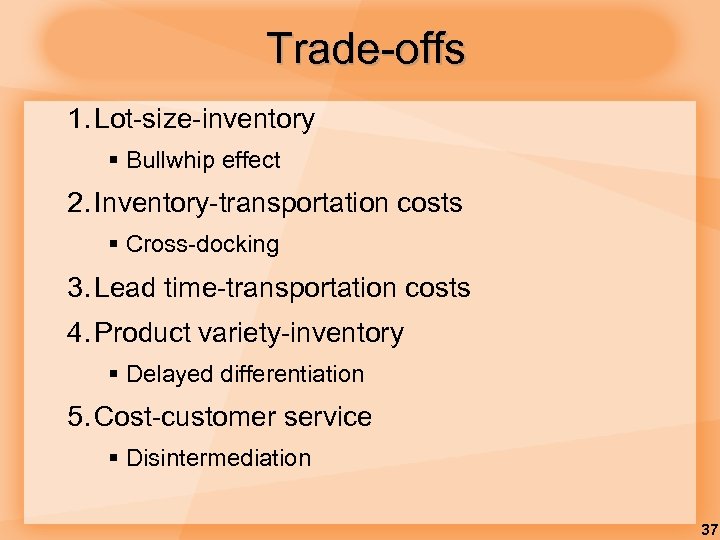 Trade-offs 1. Lot-size-inventory § Bullwhip effect 2. Inventory-transportation costs § Cross-docking 3. Lead time-transportation costs 4. Product variety-inventory § Delayed differentiation 5. Cost-customer service § Disintermediation 37
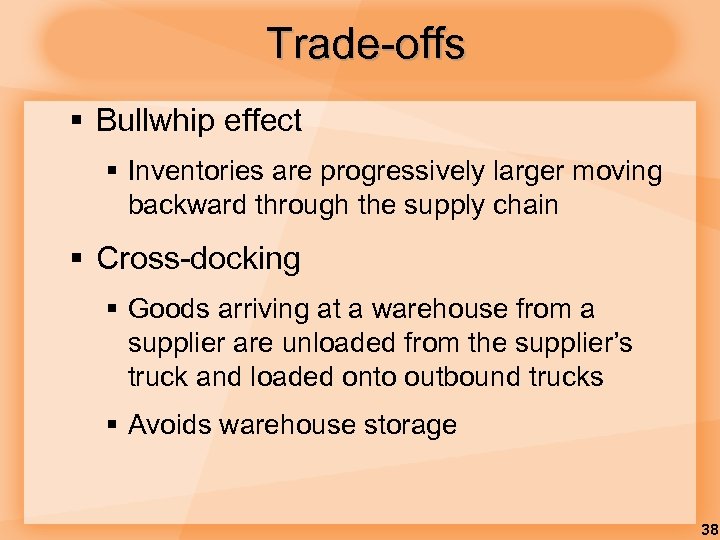 Trade-offs § Bullwhip effect § Inventories are progressively larger moving backward through the supply chain § Cross-docking § Goods arriving at a warehouse from a supplier are unloaded from the supplier’s truck and loaded onto outbound trucks § Avoids warehouse storage 38
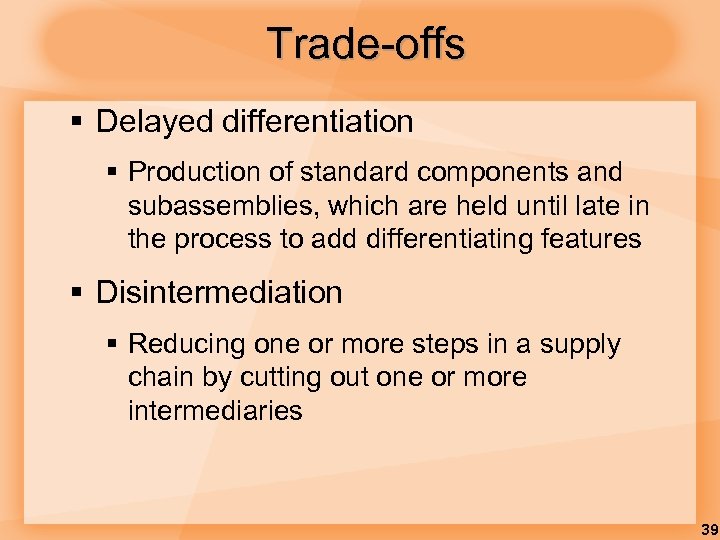 Trade-offs § Delayed differentiation § Production of standard components and subassemblies, which are held until late in the process to add differentiating features § Disintermediation § Reducing one or more steps in a supply chain by cutting out one or more intermediaries 39
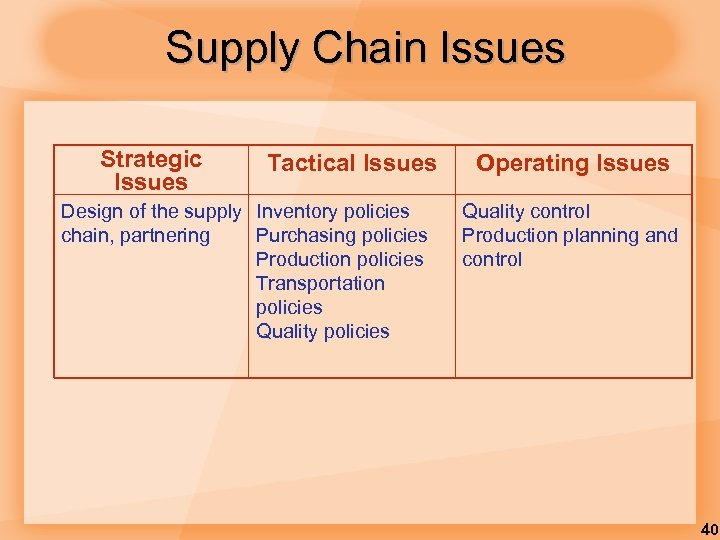 Supply Chain Issues Strategic Issues Tactical Issues Design of the supply Inventory policies chain, partnering Purchasing policies Production policies Transportation policies Quality policies Operating Issues Quality control Production planning and control 40
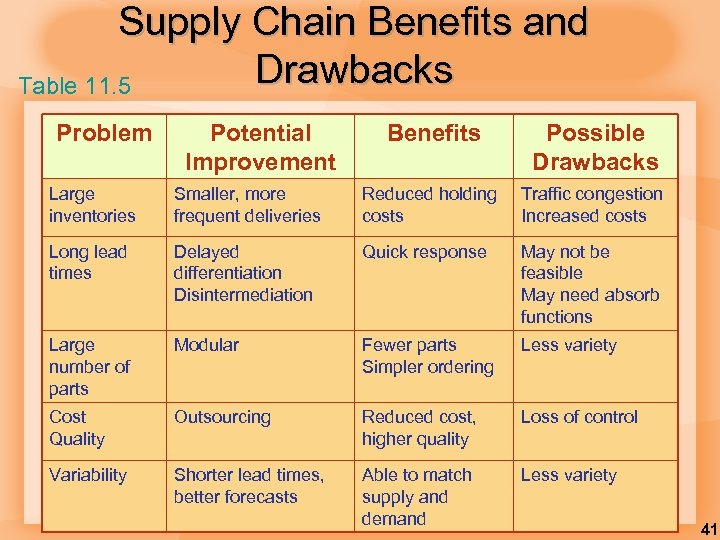 Supply Chain Benefits and Drawbacks Table 11. 5 Problem Potential Improvement Benefits Possible Drawbacks Large inventories Smaller, more frequent deliveries Reduced holding costs Traffic congestion Increased costs Long lead times Delayed differentiation Disintermediation Quick response May not be feasible May need absorb functions Large number of parts Modular Fewer parts Simpler ordering Less variety Cost Quality Outsourcing Reduced cost, higher quality Loss of control Variability Shorter lead times, better forecasts Able to match supply and demand Less variety 41
 Purchasing § Purchasing is responsible for obtaining the materials, parts, and supplies and services needed to produce a product or provide a service. § Purchasing cycle: Series of steps that begin with a request for purchase and end with notification of shipment received in satisfactory condition. 42
 Goal of Purchasing § Develop and implement purchasing plans for products and services that support operations strategies 43
 Duties of Purchasing § Identifying sources of supply § Negotiating contracts § Maintaining a database of suppliers § Obtaining goods and services § Managing supplies 44
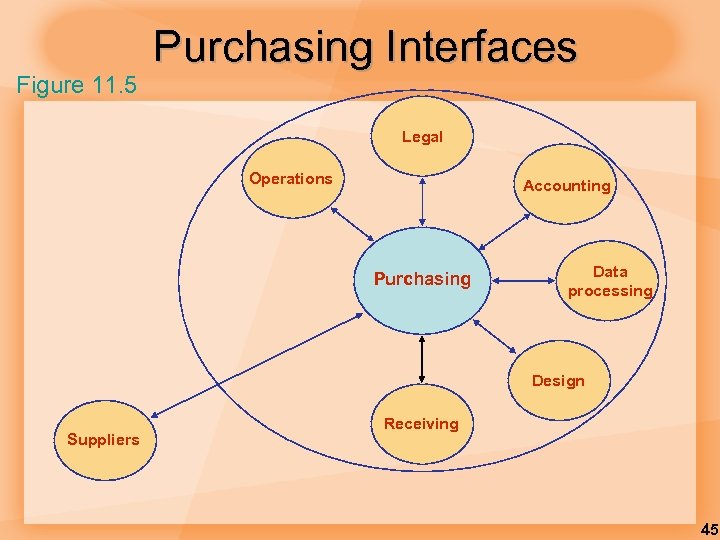 Figure 11. 5 Purchasing Interfaces Legal Operations Accounting Purchasing Data processing Design Suppliers Receiving 45
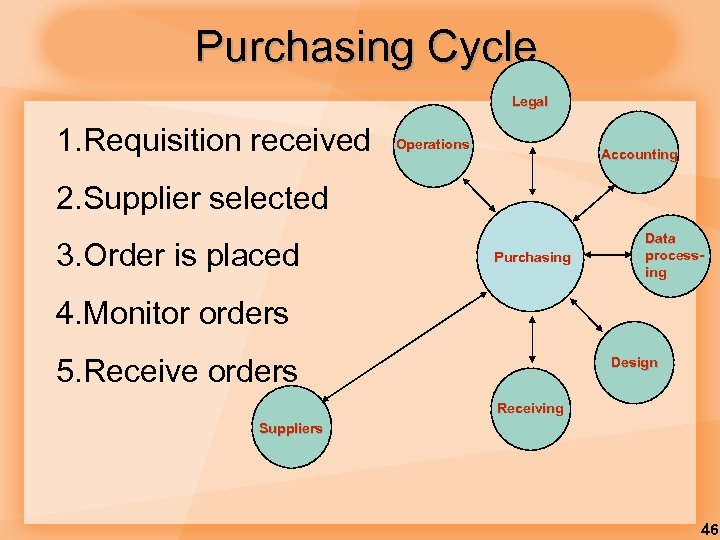 Purchasing Cycle Legal 1. Requisition received Operations Accounting 2. Supplier selected 3. Order is placed Purchasing Data processing 4. Monitor orders 5. Receive orders Design Receiving Suppliers 46
 Value Analysis vs. Outsourcing § Value analysis § Examination of the function of purchased parts and materials in an effort to reduce cost and/or improve performance 47
 Centralized vs Decentralized Purchasing § Centralized purchasing § Purchasing is handled by one special department § Decentralized purchasing § Individual departments or separate locations handle their own purchasing requirements 48
 Suppliers § Choosing suppliers § Evaluating sources of supply § Supplier audits § Supplier certification § Supplier relationships § Supplier partnerships 49
 Factors in Choosing a Supplier § § Quality and quality assurance Flexibility Location Price 50
 Factors in Choosing a Supplier (cont’d) § § Product or service changes Reputation and financial stability Lead times and on-time delivery Other accounts 51
 Evaluating Sources of Supply § Vendor analysis: Evaluating the sources of supply in terms of price, quality, reputation, and service 52
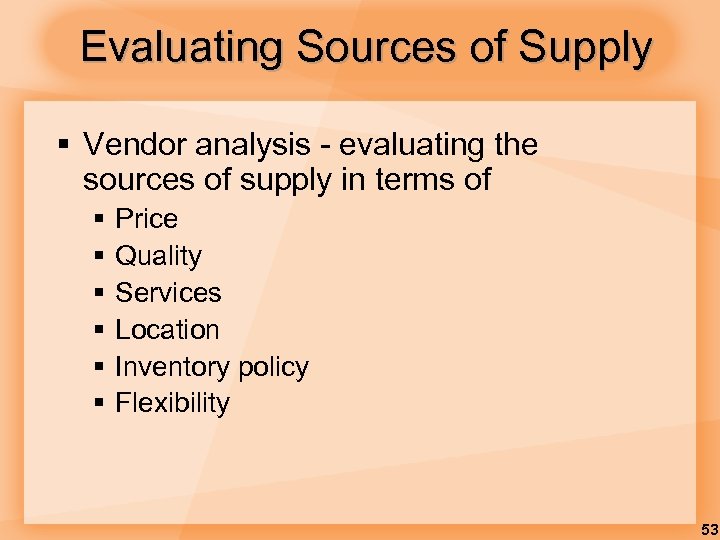 Evaluating Sources of Supply § Vendor analysis - evaluating the sources of supply in terms of § § § Price Quality Services Location Inventory policy Flexibility 53
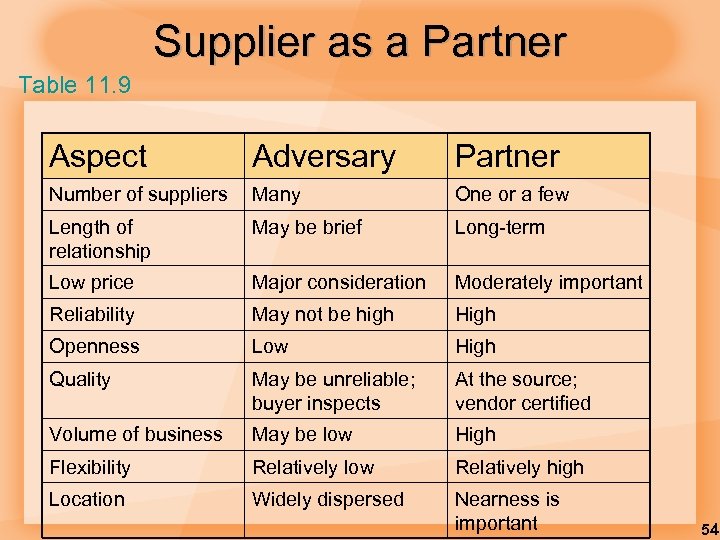 Supplier as a Partner Table 11. 9 Aspect Adversary Partner Number of suppliers Many One or a few Length of relationship May be brief Long-term Low price Major consideration Moderately important Reliability May not be high High Openness Low High Quality May be unreliable; buyer inspects At the source; vendor certified Volume of business May be low High Flexibility Relatively low Relatively high Location Widely dispersed Nearness is important 54
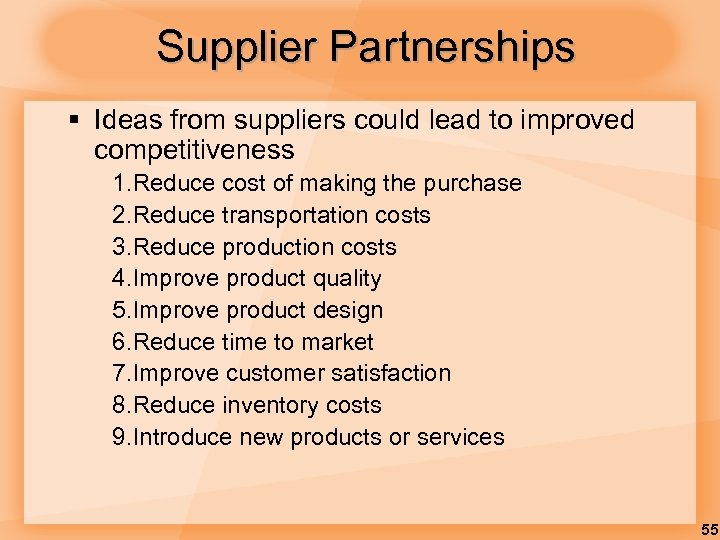 Supplier Partnerships § Ideas from suppliers could lead to improved competitiveness 1. Reduce cost of making the purchase 2. Reduce transportation costs 3. Reduce production costs 4. Improve product quality 5. Improve product design 6. Reduce time to market 7. Improve customer satisfaction 8. Reduce inventory costs 9. Introduce new products or services 55
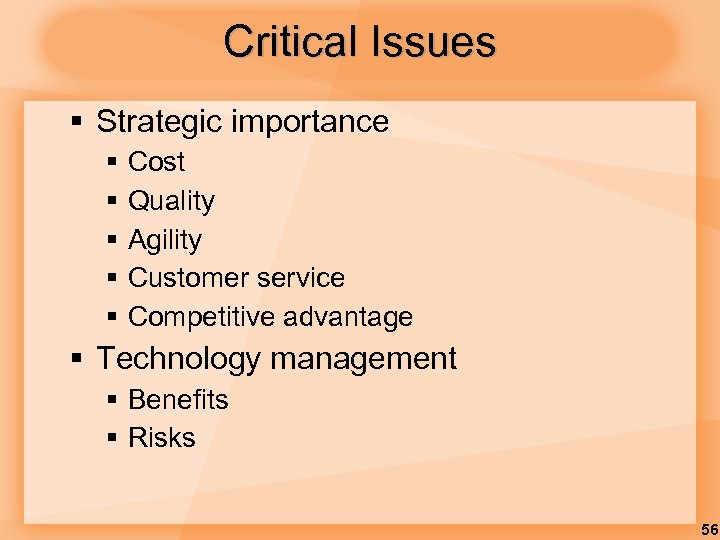 Critical Issues § Strategic importance § § § Cost Quality Agility Customer service Competitive advantage § Technology management § Benefits § Risks 56
 Critical Issues § Purchasing function § § Increased outsourcing Increased conversion to lean production Just-in-time deliveries Globalization 57