


 Скачать презентацию 11 -IE-48 11 -IE-59 11 -IE-60
e34587a545055a9fba09f785714d1133.ppt
- Количество слайдов: 37

 11 -IE-48 11 -IE-59 11 -IE-60
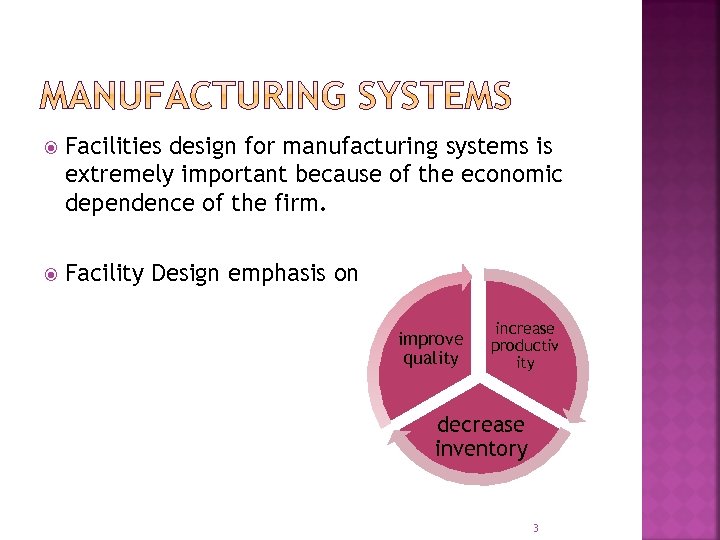 Facilities design for manufacturing systems is extremely important because of the economic dependence of the firm. Facility Design emphasis on improve quality increase productiv ity decrease inventory 3
 There are number of factors that effect the facility planning process. Volume of production Variety of production Value of each product 4
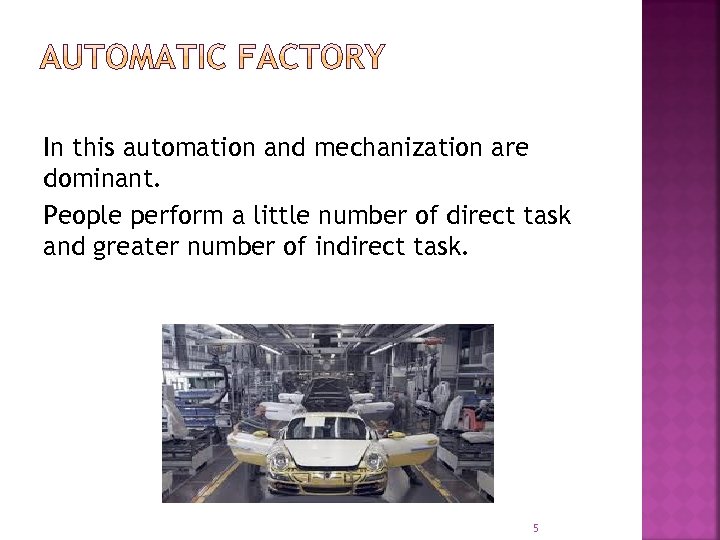 In this automation and mechanization are dominant. People perform a little number of direct task and greater number of indirect task. 5
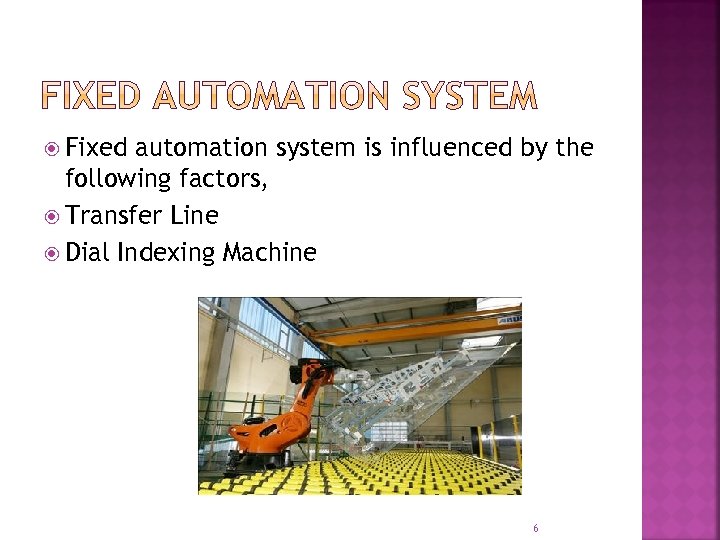 Fixed automation system is influenced by the following factors, Transfer Line Dial Indexing Machine 6
 Transfer Line: In this the material flow from one work station to the next in a sequential manner. It is used for high volume production and are highly automated. In highly automated line, the processing rates of individual machines are matched. (no buffer storage is required) 7
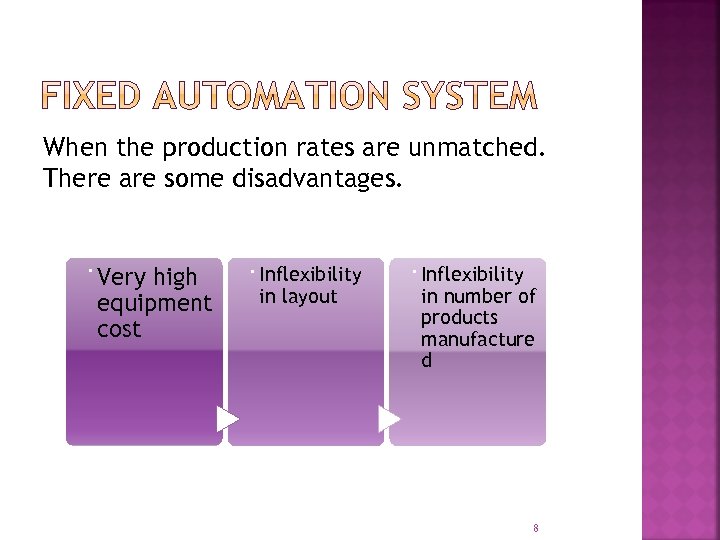 When the production rates are unmatched. There are some disadvantages. Inflexibility in number of products manufacture d . Inflexibility in layout . . Very high equipment cost 8
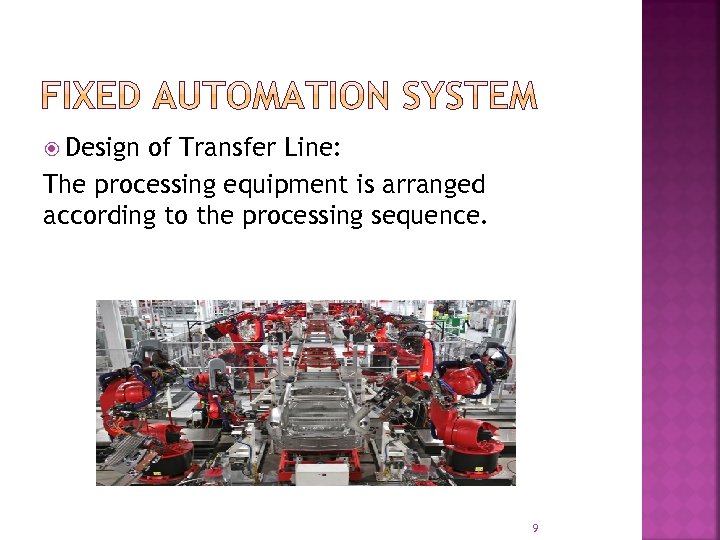 Design of Transfer Line: The processing equipment is arranged according to the processing sequence. 9
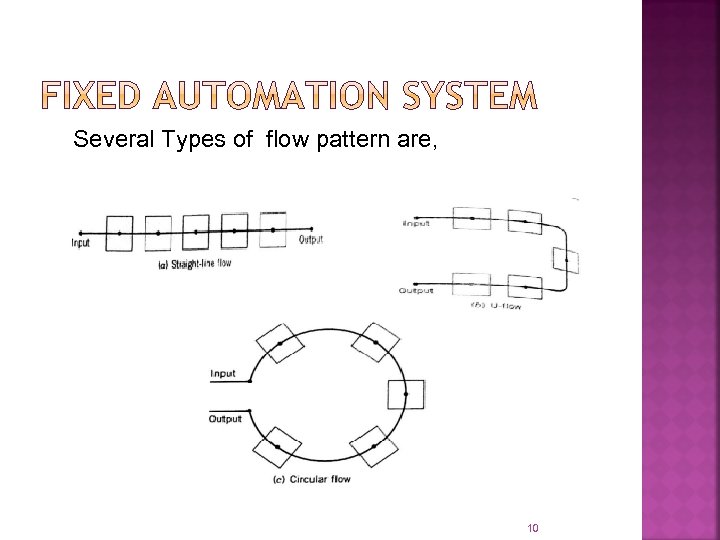 Several Types of flow pattern are, 10
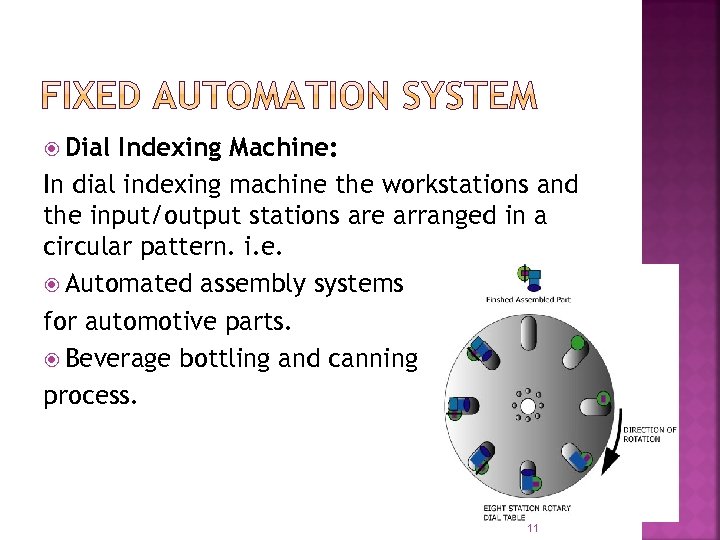 Dial Indexing Machine: In dial indexing machine the workstations and the input/output stations are arranged in a circular pattern. i. e. Automated assembly systems for automotive parts. Beverage bottling and canning process. 11
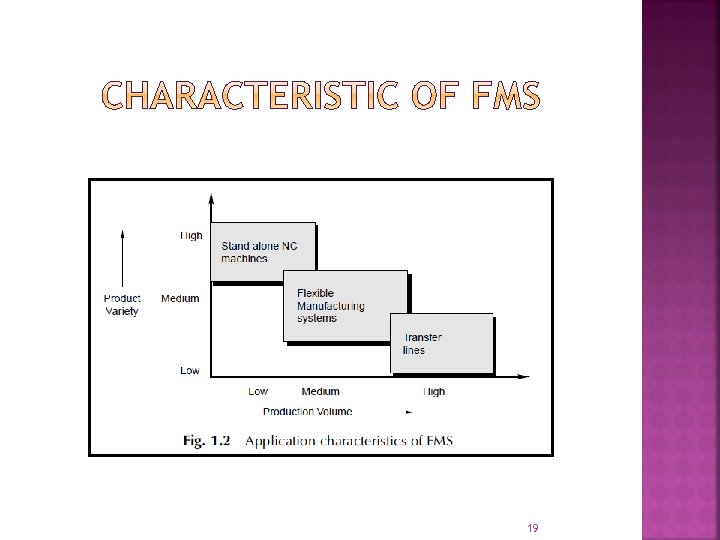
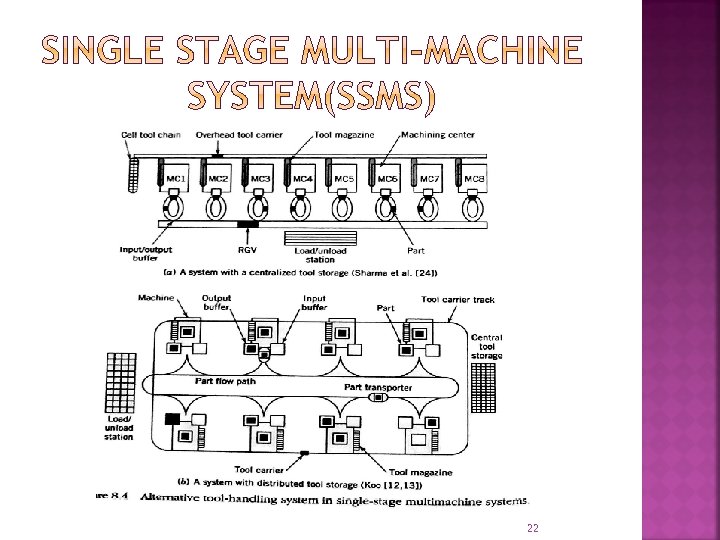
 FLEXIBLE MANUFACTURING SYSTEM Ø FMS consists of a group of processing work stations/Identical machines interconnected by means of an automated material handling and storage system and controlled by integrated computer control system. Ø FMS is called flexible due to the reason that it is capable of processing a variety of different part styles simultaneously at the workstation and quantities of production can be adjusted in response to changing demand patterns. 12
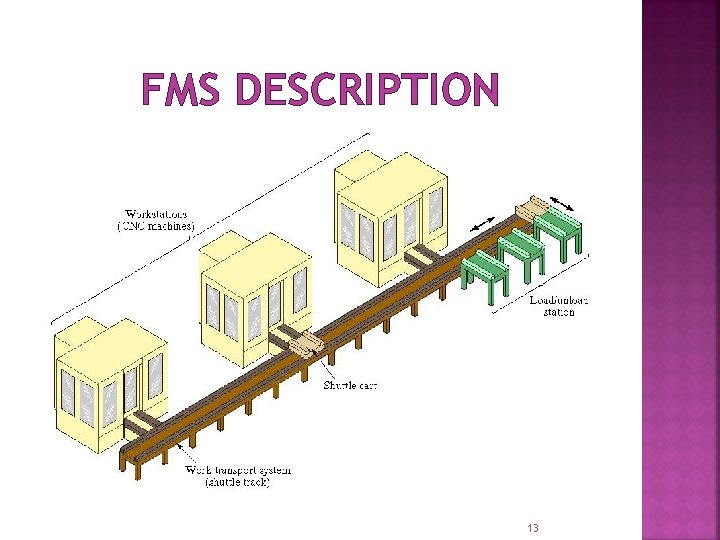 FMS DESCRIPTION 13
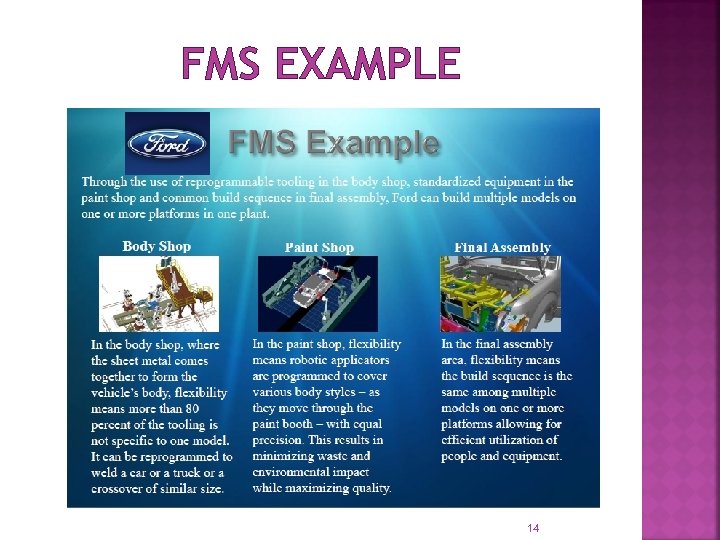 FMS EXAMPLE 14
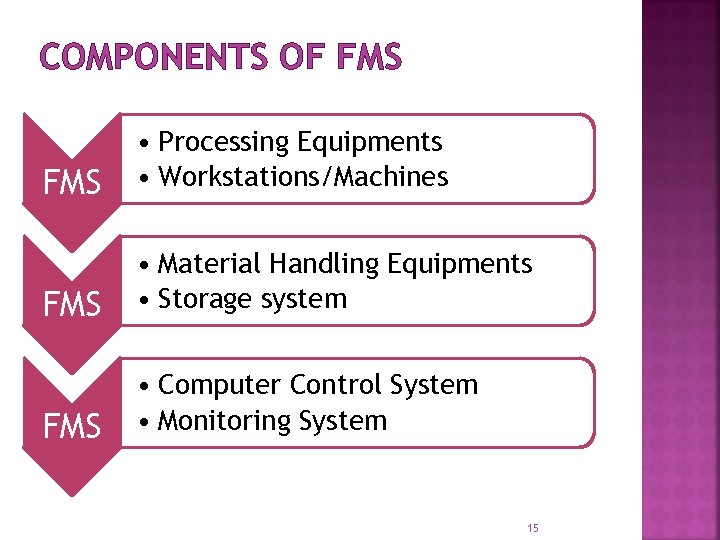 COMPONENTS OF FMS • Processing Equipments • Workstations/Machines FMS • Material Handling Equipments • Storage system FMS • Computer Control System • Monitoring System 15
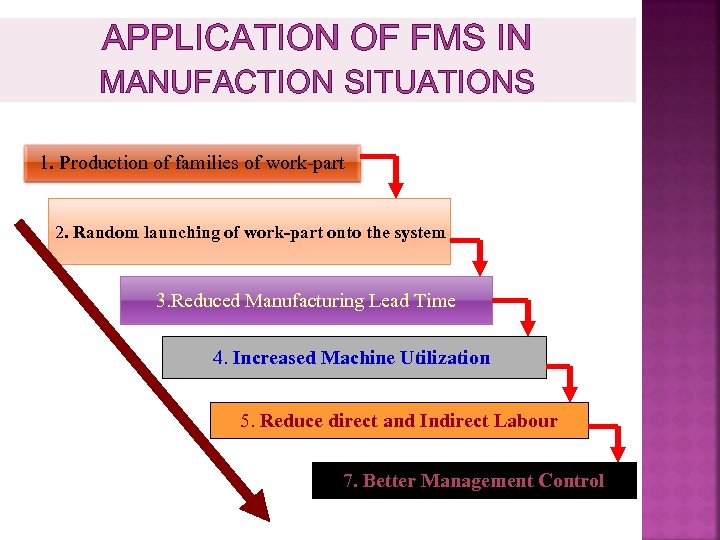 APPLICATION OF FMS IN MANUFACTION SITUATIONS 1. Production of families of work-part 2. Random launching of work-part onto the system 3. Reduced Manufacturing Lead Time 4. Increased Machine Utilization 5. Reduce direct and Indirect Labour 7. Better Management Control
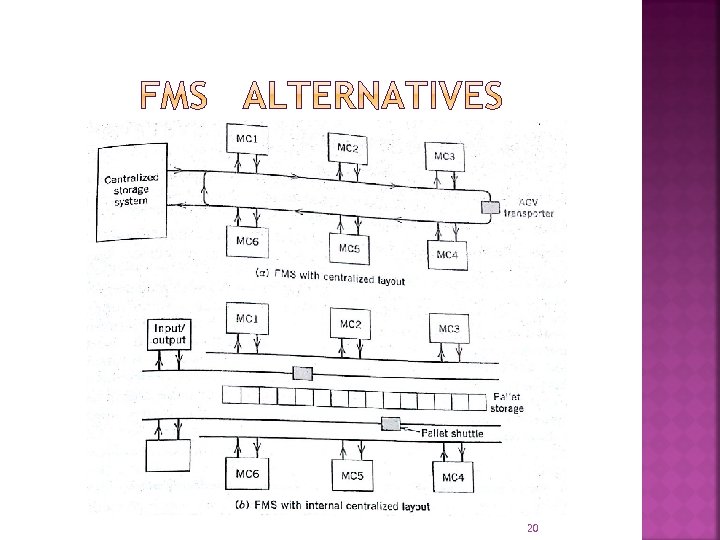
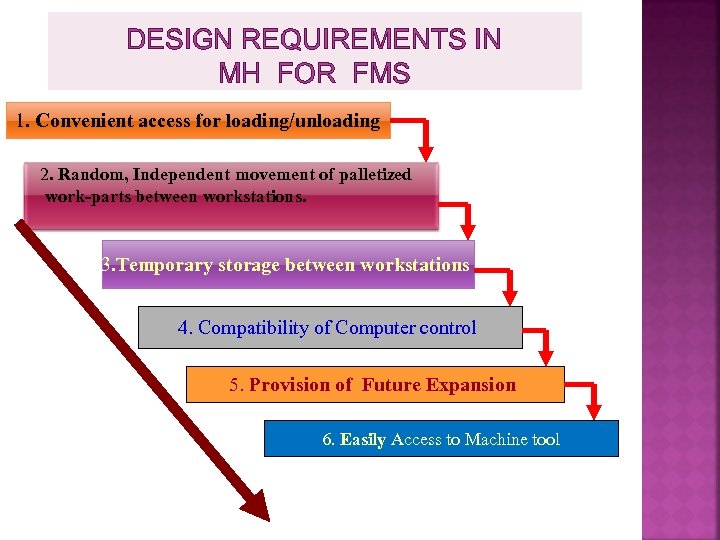 DESIGN REQUIREMENTS IN MH FOR FMS 1. Convenient access for loading/unloading 2. Random, Independent movement of palletized work-parts between workstations. 3. Temporary storage between workstations 4. Compatibility of Computer control 5. Provision of Future Expansion 6. Easily Access to Machine tool
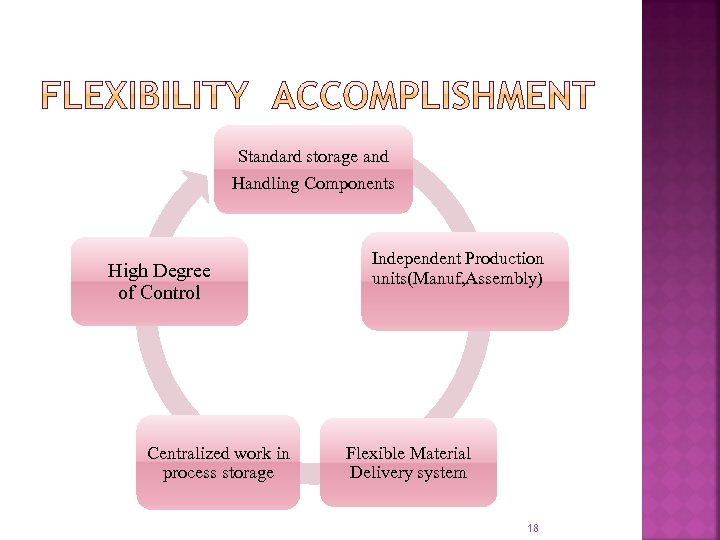 Standard storage and Handling Components High Degree of Control Centralized work in process storage Independent Production units(Manuf, Assembly) Flexible Material Delivery system 18
 19
19
 20
20
 21
21
 22
22
 Ø Produce a variety of Items under one roof Ø Produce more product more quickly Ø Improve efficiency Ø Improve product routing Ø Improve product quality Ø To reduce setup and queue times Ø Reduce time for product completion Ø Utilize human workers better 23
 Ø Substantial pre-planning activity Ø Expensive, costing millions of dollars Ø Technological problems of exact component positioning and precise timing necessary to process a component 24
 Ø Substantial pre-planning activity Ø Expensive, costing millions of dollars Ø Technological problems of exact component positioning and precise timing necessary to process a component 25
 Ø Handling less is best. Ø Grab, Hold, and do not turn loose. Ø Eliminate, Combine and simplify the process. Ø Moving and Storing material cost should included. Ø Pre-position Material. 26
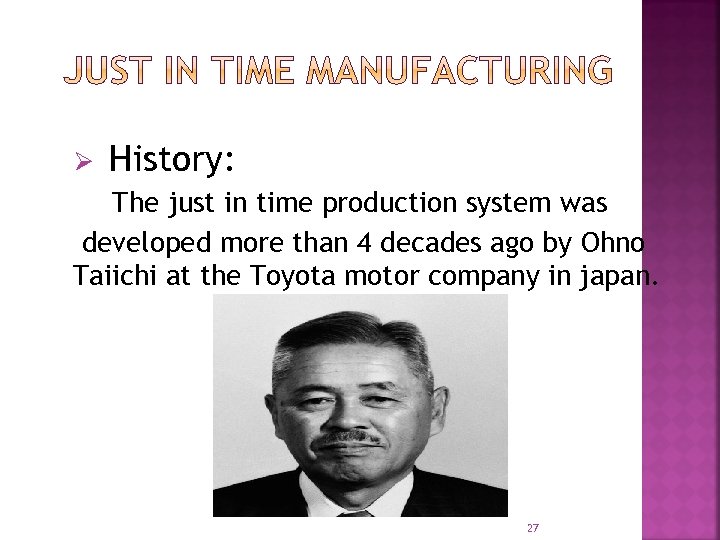 Ø History: The just in time production system was developed more than 4 decades ago by Ohno Taiichi at the Toyota motor company in japan. 27
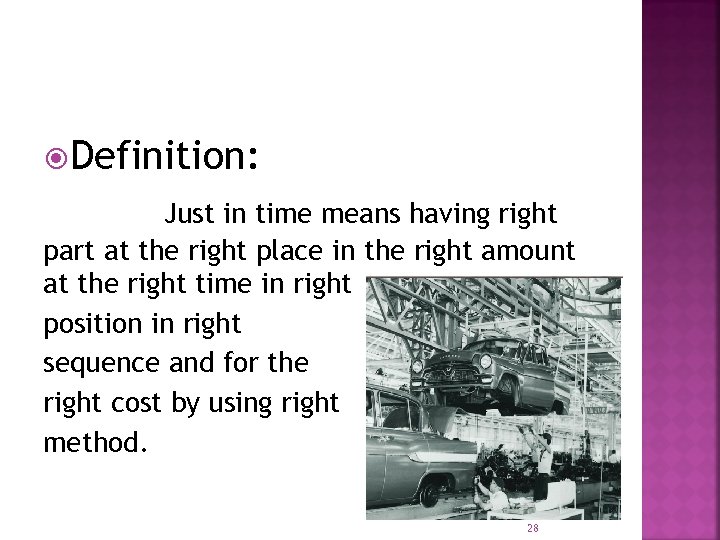 Definition: Just in time means having right part at the right place in the right amount at the right time in right position in right sequence and for the right cost by using right method. 28
 According to Ohno waste is divided into following seven categories. Waste Waste arising arising from over production. due to waiting. from transporting. from processing itself. from unnecessary stock on hand. from unnecessary motion. from producing defective goods. 29
 We categorize JIT philosophy into five different Elements. Ø Visibility: Ø Simplicity: Ø Flexibility: Ø Standardization: Ø Organization: 30
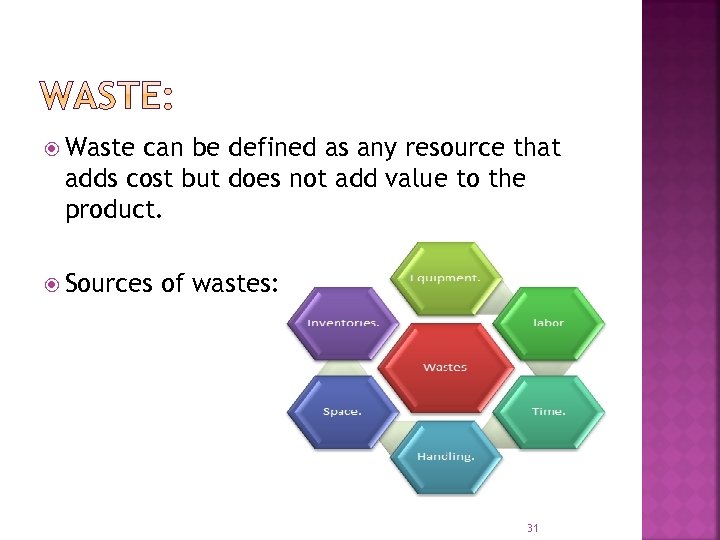 Waste can be defined as any resource that adds cost but does not add value to the product. Sources of wastes: 31
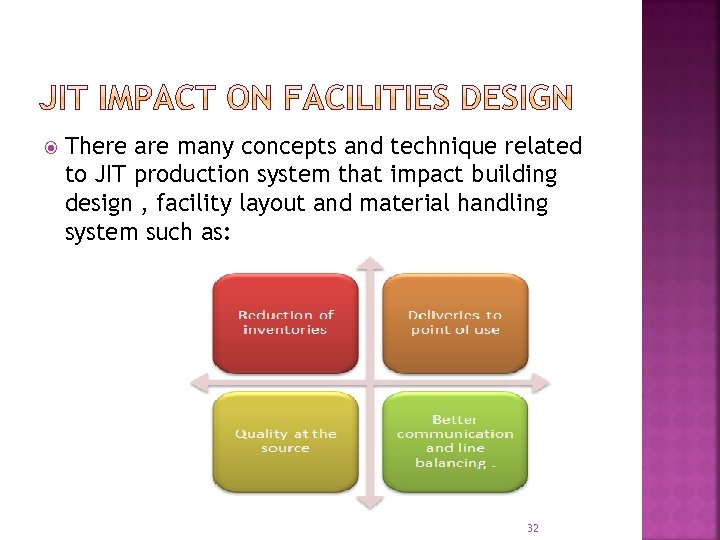 There are many concepts and technique related to JIT production system that impact building design , facility layout and material handling system such as: 32
 One of the main objective of JIT production system is the reduction of inventories. By reducing inventory we obtain the following: Ø Space requirements are reduced by constructing smaller buildings. Ø Smaller loads are moved and stored. Ø Use of smaller and simpler storage systems, storage requirements are reduced. 33
 If products are purchased and produces in smaller lots, they should be delivered to the point of use to avoid stock out at the consuming process. Quality at the source: To achieve quality at the source concept the following could be required. Ø Proper packaging for parts and boxes on pallets Ø Efficient transportation 34
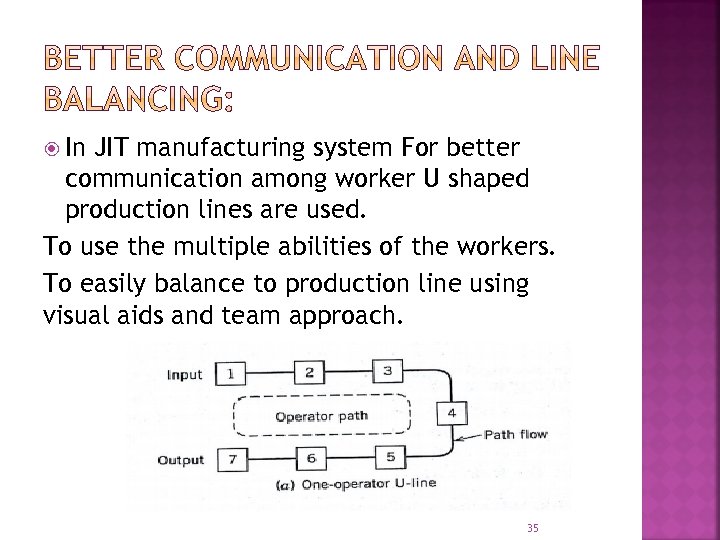 In JIT manufacturing system For better communication among worker U shaped production lines are used. To use the multiple abilities of the workers. To easily balance to production line using visual aids and team approach. 35
 Following trends can be seen: Ø Smaller centralized storage area Ø Decentralized material handling equipment Ø Material handling alternatives. Ø Visible, accessible and durable transferable containers. Ø Asynchronous production lines Ø Better handling and transportation part protection Ø Standard containers, Trays or Pallets. 36
 And If you have any questions. Ask me Freely