


 Скачать презентацию 11 2 Por and para ANTE TODO
483b28db5cf31e74987204a9dfdcae4f.ppt
- Количество слайдов: 13
 11. 2 Por and para ANTE TODO § Unlike English, Spanish has two words that mean for : por and para. § These two prepositions are not interchangeable. Study the following charts to see how they are used.
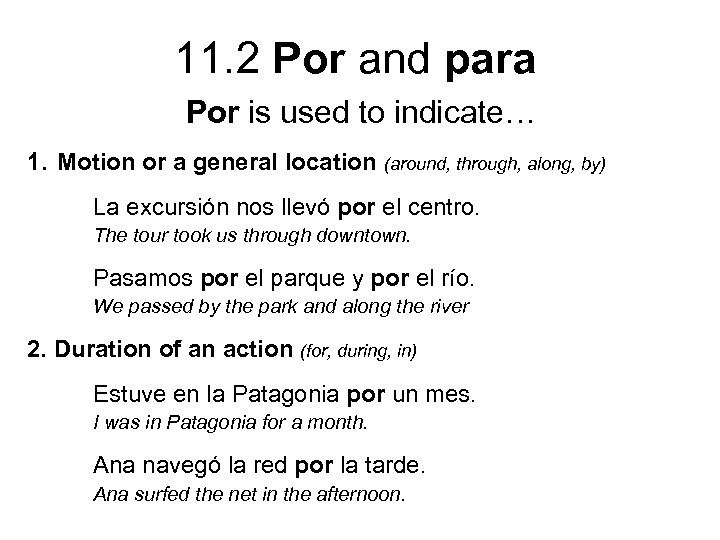 11. 2 Por and para Por is used to indicate… 1. Motion or a general location (around, through, along, by) La excursión nos llevó por el centro. The tour took us through downtown. Pasamos por el parque y por el río. We passed by the park and along the river 2. Duration of an action (for, during, in) Estuve en la Patagonia por un mes. I was in Patagonia for a month. Ana navegó la red por la tarde. Ana surfed the net in the afternoon.
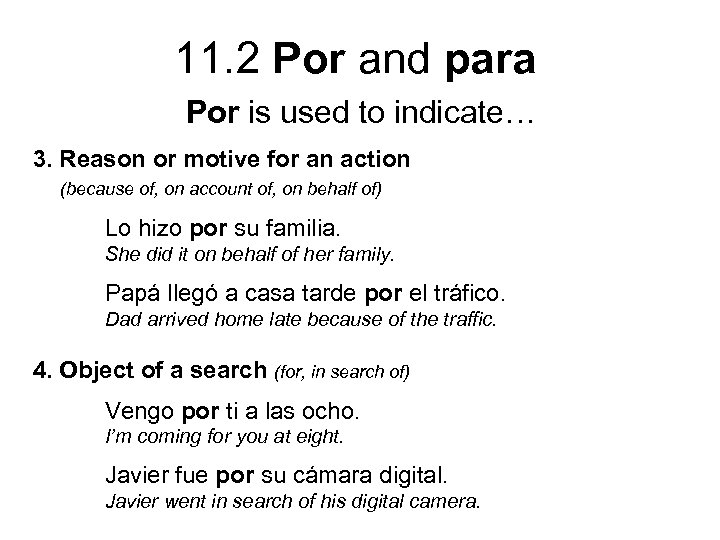 11. 2 Por and para Por is used to indicate… 3. Reason or motive for an action (because of, on account of, on behalf of) Lo hizo por su familia. She did it on behalf of her family. Papá llegó a casa tarde por el tráfico. Dad arrived home late because of the traffic. 4. Object of a search (for, in search of) Vengo por ti a las ocho. I’m coming for you at eight. Javier fue por su cámara digital. Javier went in search of his digital camera.
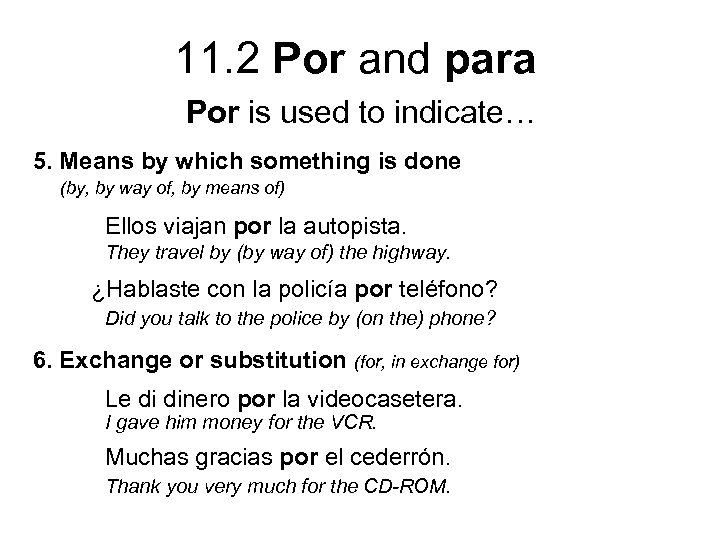 11. 2 Por and para Por is used to indicate… 5. Means by which something is done (by, by way of, by means of) Ellos viajan por la autopista. They travel by (by way of) the highway. ¿Hablaste con la policía por teléfono? Did you talk to the police by (on the) phone? 6. Exchange or substitution (for, in exchange for) Le di dinero por la videocasetera. I gave him money for the VCR. Muchas gracias por el cederrón. Thank you very much for the CD-ROM.
 11. 2 Por and para Por is used to indicate… 7. Unit of measure (per, by) José manejaba a 120 kilómetros por hora. José was driving 120 kilometers per hour.
 11. 2 Por and para ¡ATENCIÓN! § Por is also used in several idiomatic expressions, including: por aquí around here por ejemplo for example por eso that's why; therefore por finally
 11. 2 Por and para ¡ATENCIÓN! § Remember that when giving an exact time, de is used instead of por before la mañana, la tarde, etc. La clase empieza a las nueve de la mañana. § In addition to por, durante is also commonly used to mean for when referring to time. Esperé al mecánico durante cincuenta minutos.
 11. 2 Por and para Para is used to indicate… 1. Destination (toward, in the direction of ) Salimos para Córdoba el sábado. We are leaving for Córdoba on Saturday. 2. Deadline or a specific time in the future (by, for) Él va a arreglar el carro para el viernes. He will fix the car by Friday.
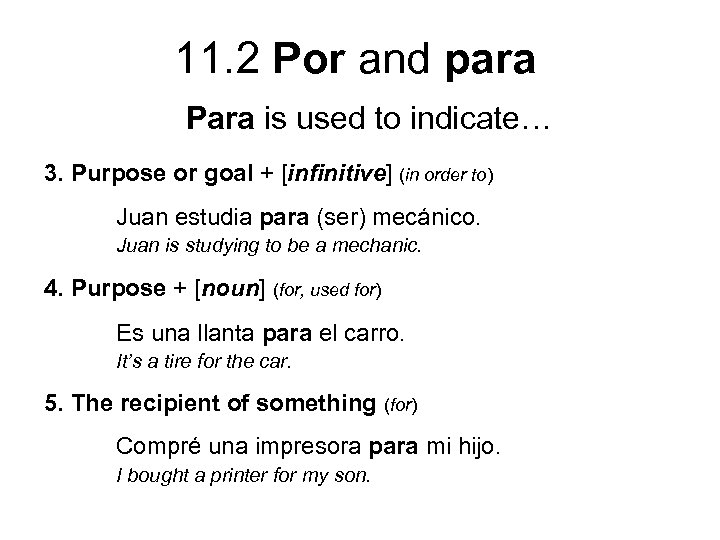 11. 2 Por and para Para is used to indicate… 3. Purpose or goal + [infinitive] (in order to) Juan estudia para (ser) mecánico. Juan is studying to be a mechanic. 4. Purpose + [noun] (for, used for) Es una llanta para el carro. It’s a tire for the car. 5. The recipient of something (for) Compré una impresora para mi hijo. I bought a printer for my son.
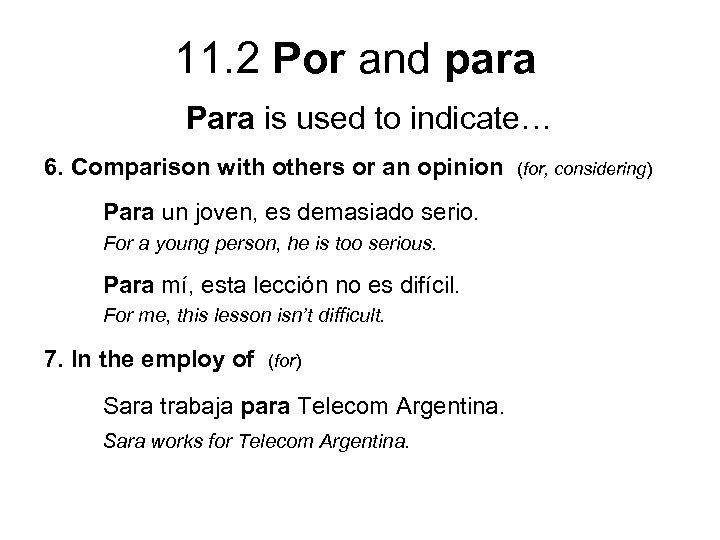 11. 2 Por and para Para is used to indicate… 6. Comparison with others or an opinion Para un joven, es demasiado serio. For a young person, he is too serious. Para mí, esta lección no es difícil. For me, this lesson isn’t difficult. 7. In the employ of (for) Sara trabaja para Telecom Argentina. Sara works for Telecom Argentina. (for, considering)
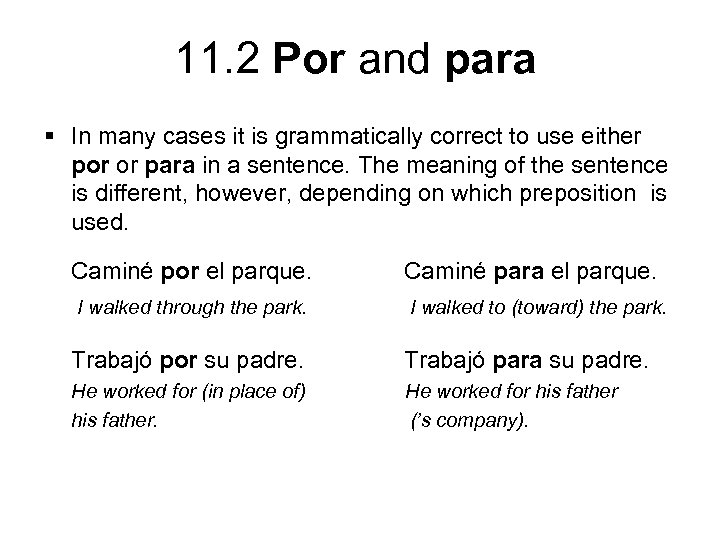 11. 2 Por and para § In many cases it is grammatically correct to use either por or para in a sentence. The meaning of the sentence is different, however, depending on which preposition is used. Caminé por el parque. I walked through the park. Caminé para el parque. I walked to (toward) the park. Trabajó por su padre. Trabajó para su padre. He worked for (in place of) his father. He worked for his father (’s company).
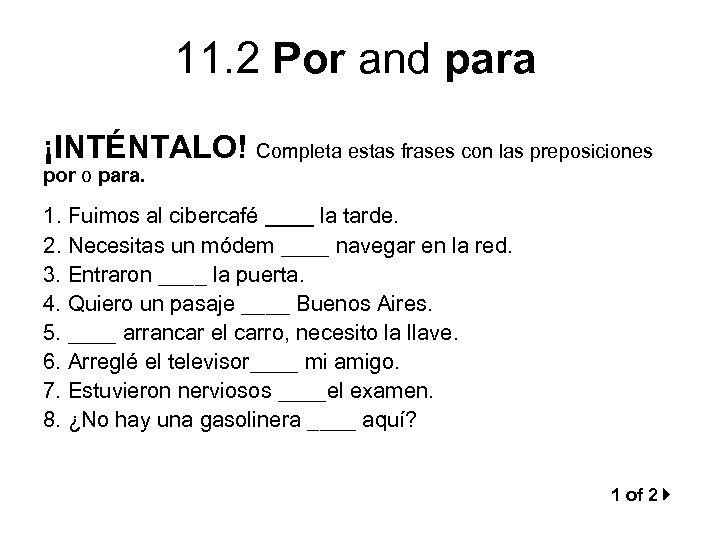 11. 2 Por and para ¡INTÉNTALO! Completa estas frases con las preposiciones por o para. 1. Fuimos al cibercafé ____ la tarde. 2. Necesitas un módem ____ navegar en la red. 3. Entraron ____ la puerta. 4. Quiero un pasaje ____ Buenos Aires. 5. ____ arrancar el carro, necesito la llave. 6. Arreglé el televisor____ mi amigo. 7. Estuvieron nerviosos ____el examen. 8. ¿No hay una gasolinera ____ aquí? 1 of 2
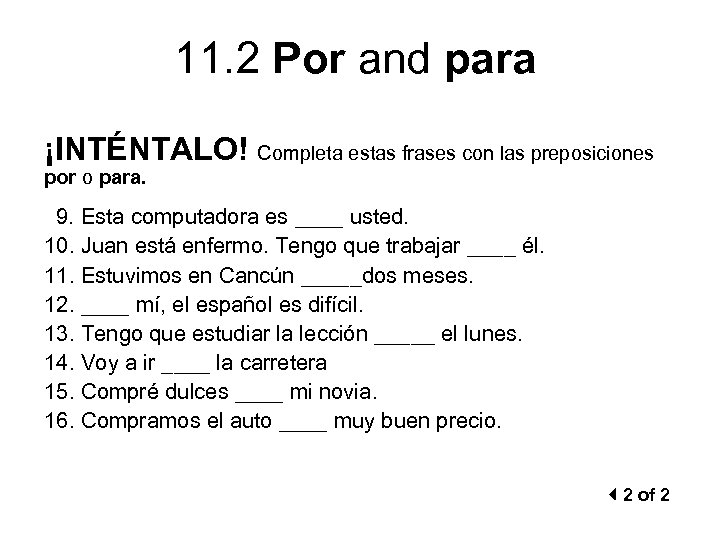 11. 2 Por and para ¡INTÉNTALO! Completa estas frases con las preposiciones por o para. 9. Esta computadora es ____ usted. 10. Juan está enfermo. Tengo que trabajar ____ él. 11. Estuvimos en Cancún _____dos meses. 12. ____ mí, el español es difícil. 13. Tengo que estudiar la lección _____ el lunes. 14. Voy a ir ____ la carretera 15. Compré dulces ____ mi novia. 16. Compramos el auto ____ muy buen precio. 2 of 2