 Скачать презентацию 10 Recommandments For Conducting Business in China Keith
9de77166c223aa78b71199d3ed449c1a.ppt
- Количество слайдов: 24



10 Recommandments For Conducting Business in China Keith Lomason Executive Director — China
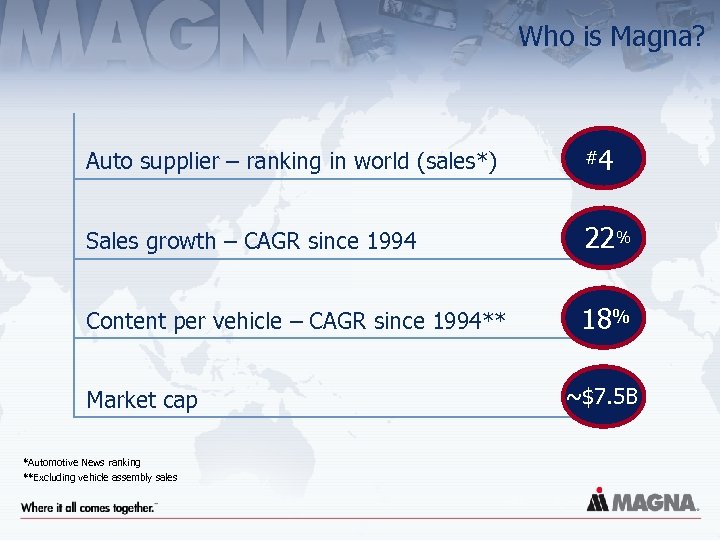
Who is Magna? Auto supplier – ranking in world (sales*) #4 Sales growth – CAGR since 1994 22% Content per vehicle – CAGR since 1994** 18% Market cap *Automotive News ranking **Excluding vehicle assembly sales ~$7. 5 B
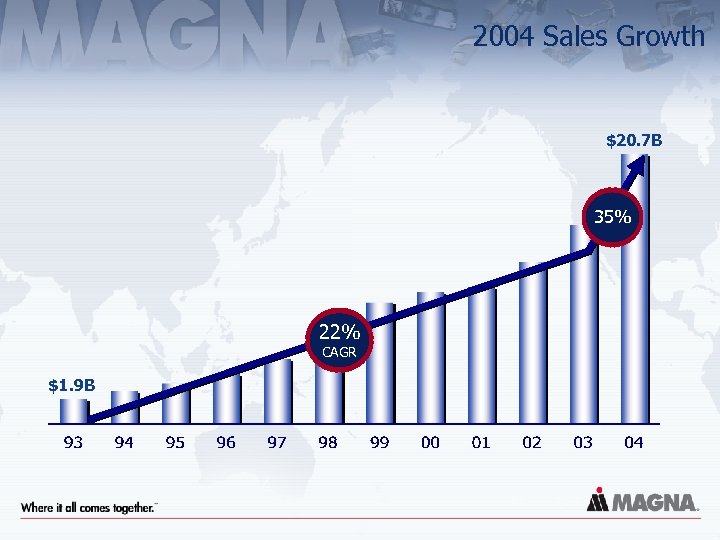
2004 Sales Growth $20. 7 B 35% 22% CAGR $1. 9 B
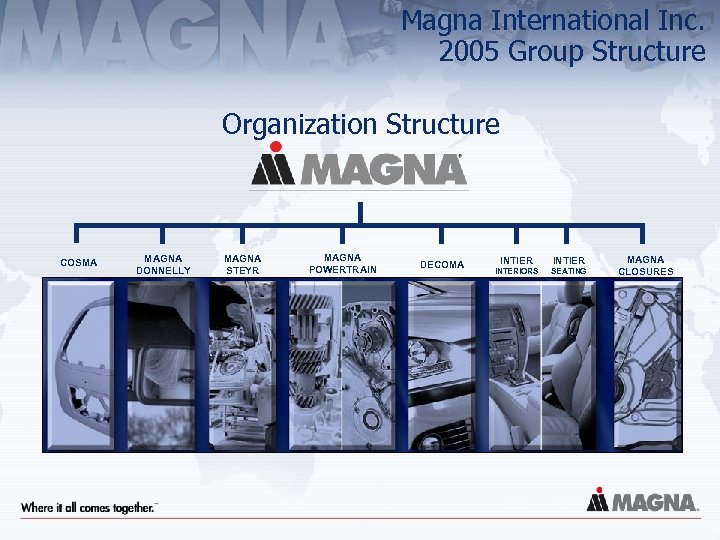
Magna International Inc. 2005 Group Structure Organization Structure COSMA MAGNA DONNELLY MAGNA STEYR MAGNA POWERTRAIN DECOMA INTIER INTERIORS SEATING MAGNA CLOSURES
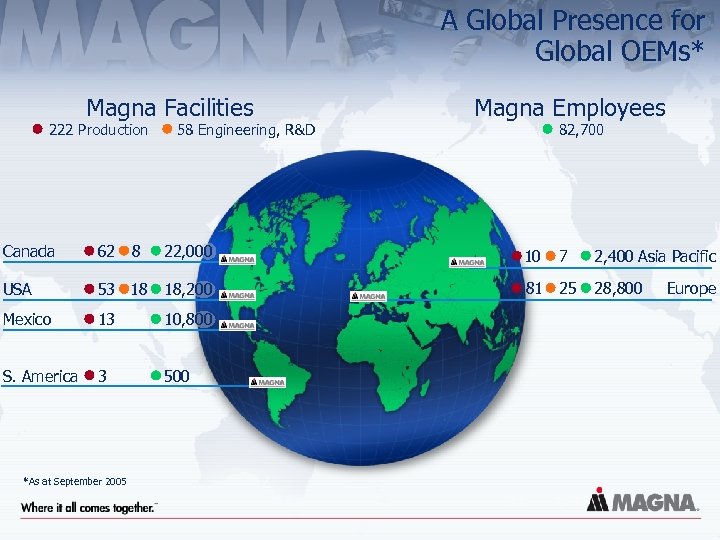
A Global Presence for Global OEMs* Magna Facilities 222 Production Canada 62 USA 82, 700 22, 000 10 53 18 18, 200 81 25 Mexico 13 10, 800 S. America 3 500 *As at September 2005 8 58 Engineering, R&D Magna Employees 7 2, 400 Asia Pacific 28, 800 Europe
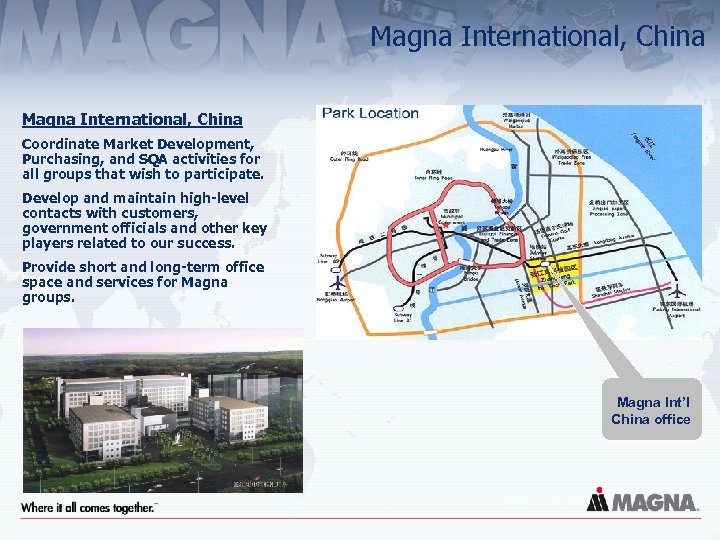
Magna International, China Coordinate Market Development, Purchasing, and SQA activities for all groups that wish to participate. Develop and maintain high-level contacts with customers, government officials and other key players related to our success. Provide short and long-term office space and services for Magna groups. Magna Int’l China office
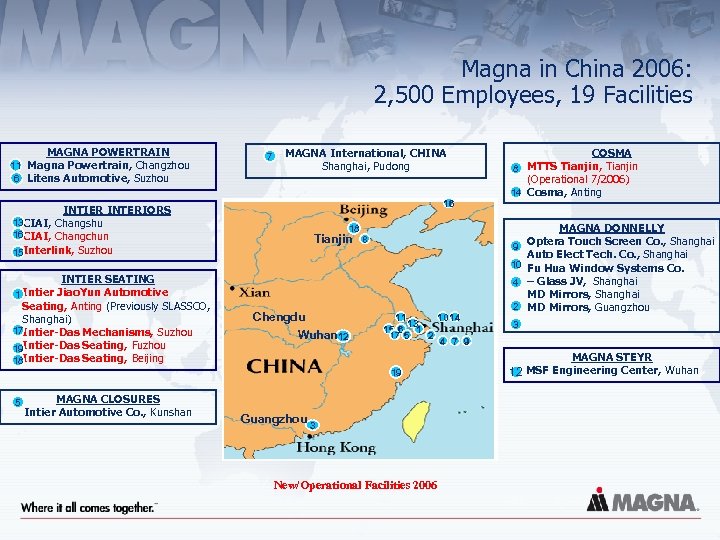
Magna in China 2006: 2, 500 Employees, 19 Facilities MAGNA POWERTRAIN 11 Magna Powertrain, Changzhou 6 Litens Automotive, Suzhou INTIER INTERIORS 13 CIAI, Changshu 16 CIAI, Changchun 15 Interlink, Suzhou 7 MAGNA International, CHINA Shanghai, Pudong 16 COSMA 8 MTTS Tianjin, Tianjin (Operational 7/2006) 14 Cosma, Anting 18 Tianjin 8 9 10 INTIER SEATING 1 Intier Jiao. Yun Automotive Seating, Anting (Previously SLASSCO, Shanghai) 17 Intier-Das Mechanisms, Suzhou 19 Intier-Das Seating, Fuzhou 18 Intier-Das Seating, Beijing 4 Chengdu Wuhan 12 11 10 14 13 15 6 1 17 5 2 4 7 9 19 5 MAGNA CLOSURES Intier Automotive Co. , Kunshan Guangzhou 3 New/Operational Facilities 2006 2 MAGNA DONNELLY Optera Touch Screen Co. , Shanghai Auto Elect Tech. Co. , Shanghai Fu Hua Window Systems Co. – Glass JV, Shanghai MD Mirrors, Guangzhou 3 MAGNA STEYR MSF Engineering Center, Wuhan 12
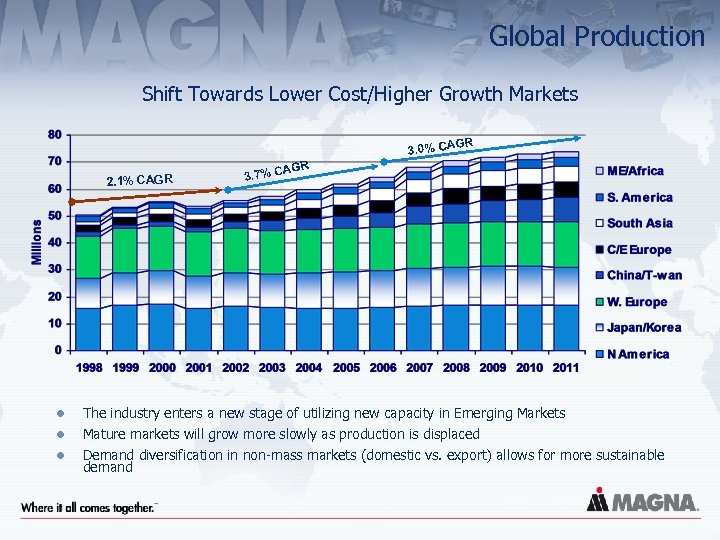
Global Production Shift Towards Lower Cost/Higher Growth Markets R G 3. 0% CA 2. 1% CAGR 3. 7% C l The industry enters a new stage of utilizing new capacity in Emerging Markets l Mature markets will grow more slowly as production is displaced l Demand diversification in non-mass markets (domestic vs. export) allows for more sustainable demand
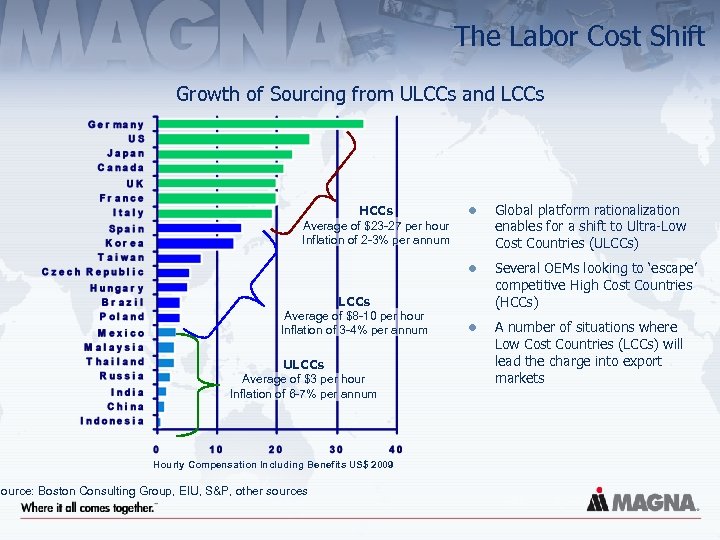
The Labor Cost Shift Growth of Sourcing from ULCCs and LCCs Average of $8 -10 per hour Inflation of 3 -4% per annum ULCCs Average of $3 per hour Inflation of 6 -7% per annum Hourly Compensation Including Benefits US$ 2009 Source: Boston Consulting Group, EIU, S&P, other sources l Global platform rationalization enables for a shift to Ultra-Low Cost Countries (ULCCs) l HCCs Average of $23 -27 per hour Inflation of 2 -3% per annum Several OEMs looking to ‘escape’ competitive High Cost Countries (HCCs) l A number of situations where Low Cost Countries (LCCs) will lead the charge into export markets
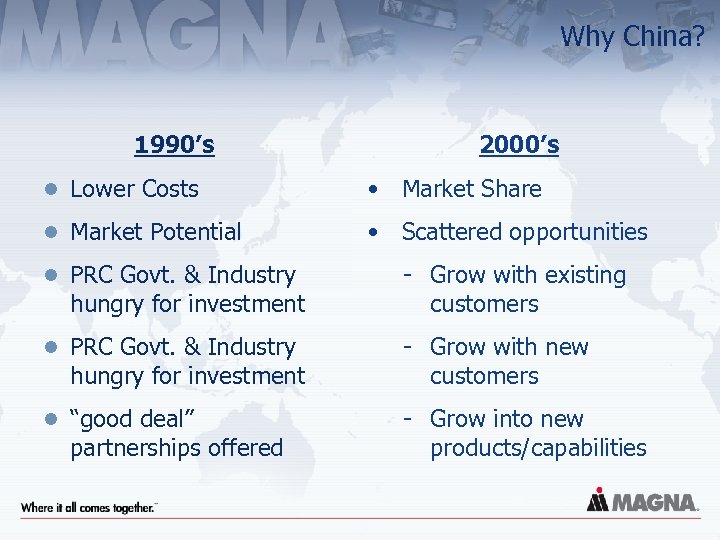
Why China? 1990’s 2000’s l Lower Costs • Market Share l Market Potential • Scattered opportunities l PRC Govt. & Industry - Grow with existing customers l PRC Govt. & Industry - Grow with new customers l “good deal” - Grow into new products/capabilities hungry for investment partnerships offered
The “Ten Recommandments” Preface: l Every investment must be: – Evaluated on its own merits – Structured in the best way to benefit your company l Adhering to as many of the following suggestions as possible will help ensure a successful operation in the China environment
Recommandment One: Investment Vehicle = WFOE Exception should be made ONLY if partner provides strategic Market Share l There are many functions you can start in China today that do not require a local contact: – Purchasing – Engineering – Sales and Marketing l Your group will probably be better served in the long run if you commit to the cost of a sales office for 2 -3 years to gain business as a WFOE than you will be if you rush to market via a partnership built on a desire to have a presence in China
Recommandment Two: Location = Central Government Economic Development Zones (CEDZ) l Maximum tax rate of 15%* l Central government approved and managed l Listed in WTO documents (legal structure) l More developed infrastructure than most other areas l 55 locations – there is one near where you want to be!
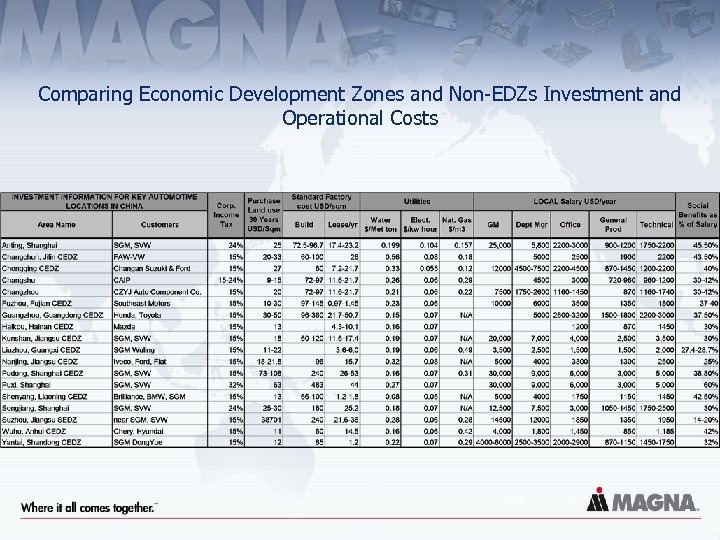
Comparing Economic Development Zones and Non-EDZs Investment and Operational Costs
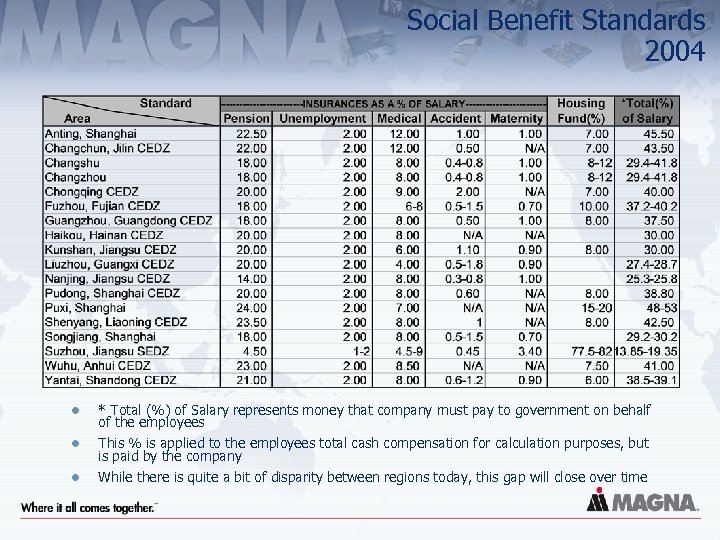
Social Benefit Standards 2004 l * Total (%) of Salary represents money that company must pay to government on behalf of the employees l This % is applied to the employees total cash compensation for calculation purposes, but is paid by the company While there is quite a bit of disparity between regions today, this gap will close over time l
Recommandment Three: If you must use JV, Use One Partner for all China Activity l Reduces intellectual property exposure l Lower costs for overseas support, training, engineering, etc… l Visteon “best practice” comparison from beginning of China activity l General motors following practice once investment rules changed, allowing using SAIC together to buy out other China partners
Recommandment Four: Quadruple Your Normal Training Plan l Education different from that in North America or Europe – Learning through memorization and repetition vs. Free thinking and creativity l High turnover - especially in coastal areas l In many cases, must continually break “bad habits”
Recommandment Five: Go Greenfield - Eventually l Very few existing structures are adequate for long-term use – Land cost in China is still relatively cheap, but will only continue to climb l Operations can start in rented pre-fab facility, but plan on move to “purpose-built” – More efficient – Higher quality – Better locations (CEDZ)
Recommandment Six: Go Quickly – Or Wait Until 2010 l Tax reduction/holiday foreign invested enterprises being reduced – may be eliminated – Even if you have no imminent production, you can establish a company in a CEDZ, from which you can begin your operations l Large volumes overall, but extremely fragmented and therefore difficult to justify investment
Recommandment Seven: Where Possible, Exploit Export Opportunities l Fragile domestic market – it is growing, but has plateaus, is very fragmented and first-time buyers cause swings l Improves economies of scale l Quality requirements for exports typically higher than domestic requirements resulting in better product than domestic competitor l Savings at home may help meet customer demands* – *Recent and ongoing revaluation of RMB will make exports less profitable and imports more reasonable
Recommandment Eight: Due Diligence & Business Plan l Profits will be harder to come by in future – – Market growth is slowing Vehicle prices are dropping Price pressures on OE’s passed on to suppliers Payment terms being extended l Hype must be ignored – know what to expect and have robust business plans – most competitive market in the world right now l Get ready for OE & Supplier shakeout and consolidation (20% during next 5 years? )
Recommandment Nine: Utilize External Experts When Necessary l Good legal advice is critical – Keep it focused on key issues – Have solid exit/takeover clauses for JVs – Ensure all tax advantages are utilized l Understand that negotiations with a PRC partner begin AFTER the contracts are signed – not a ploy, simply a difference in cultures l Establish your own local resources group – Maybe 1 person, maybe 100 – Specific to your needs – Local Networking can not be over emphasized – Can monitor swiftly changing environments
Recommandment Ten: Rethink Your Normal Manufacturing Process l Overcapacity exists at the OEMs, but is even more prevalent at the Tier-2 level and below l OEMs do NOT pay for most tooling up front but want it amortized – this cost can be pushed down to the component supplier l If there is overcapacity on a component your company normally manufactures, you will not be able to compete on price – but the OEMs (especially foreign invested) need your engineering and supplier management capabilities l Suppliers and sub-suppliers will need constant assistance with SQA and development activities l + management costs/- capital & component costs

THANK YOU
Скачать презентацию 10 Recommandments For Conducting Business in China Keith
9de77166c223aa78b71199d3ed449c1a.ppt