


 Скачать презентацию 10 Media Planning and Strategy Mc Graw-Hill Irwin Copyright
befd74d2d5b0a0bde71bf03be3fa0d1d.ppt
- Количество слайдов: 37
 10 Media Planning and Strategy Mc. Graw-Hill/Irwin Copyright © 2009 by The Mc. Graw-Hill Companies, Inc. All rights reserved.
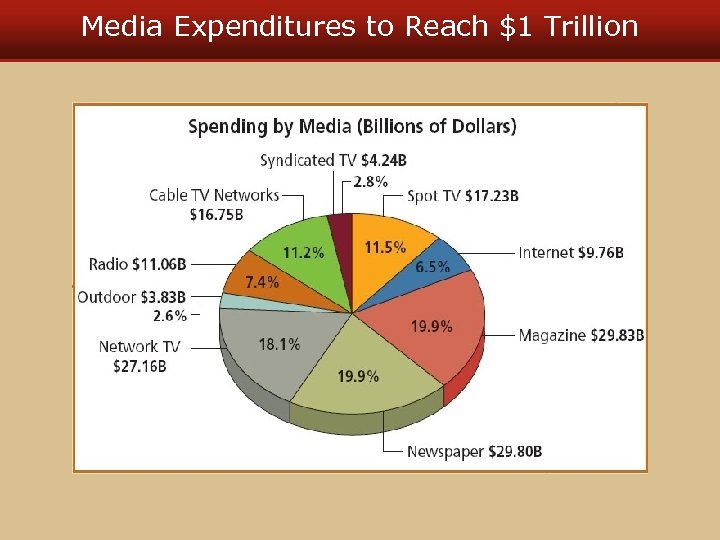 Media Expenditures to Reach $1 Trillion
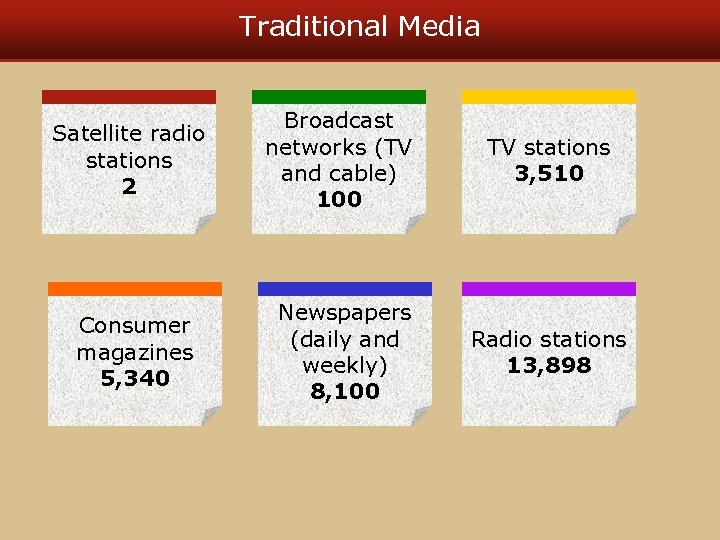 Traditional Media Satellite radio stations 2 Broadcast networks (TV and cable) 100 TV stations 3, 510 Consumer magazines 5, 340 Newspapers (daily and weekly) 8, 100 Radio stations 13, 898
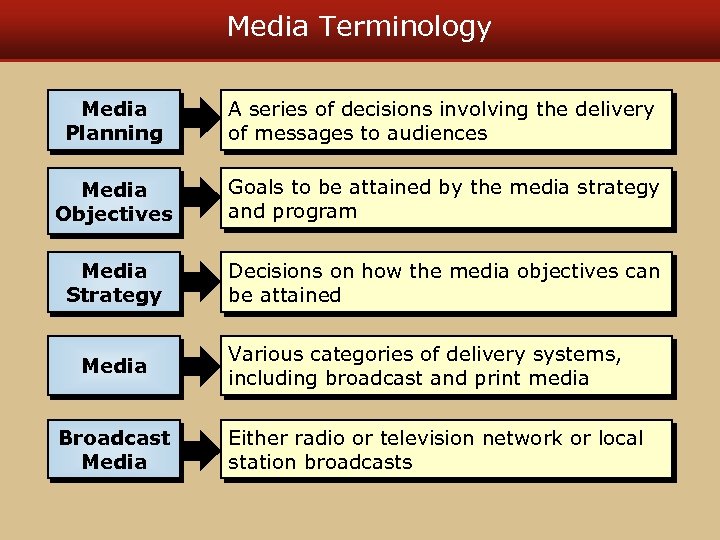 Media Terminology Media Planning A series of decisions involving the delivery of messages to audiences Media Objectives Goals to be attained by the media strategy and program Media Strategy Decisions on how the media objectives can be attained Media Broadcast Media Various categories of delivery systems, including broadcast and print media Either radio or television network or local station broadcasts
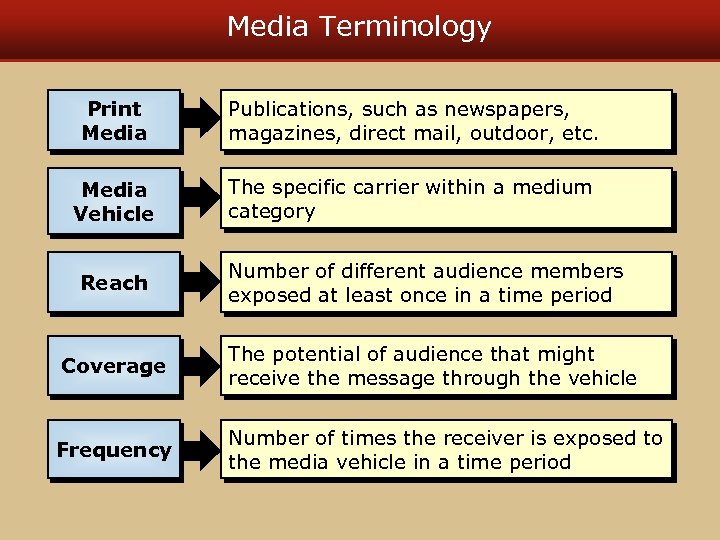 Media Terminology Print Media Publications, such as newspapers, magazines, direct mail, outdoor, etc. Media Vehicle The specific carrier within a medium category Reach Number of different audience members exposed at least once in a time period Coverage The potential of audience that might receive the message through the vehicle Frequency Number of times the receiver is exposed to the media vehicle in a time period
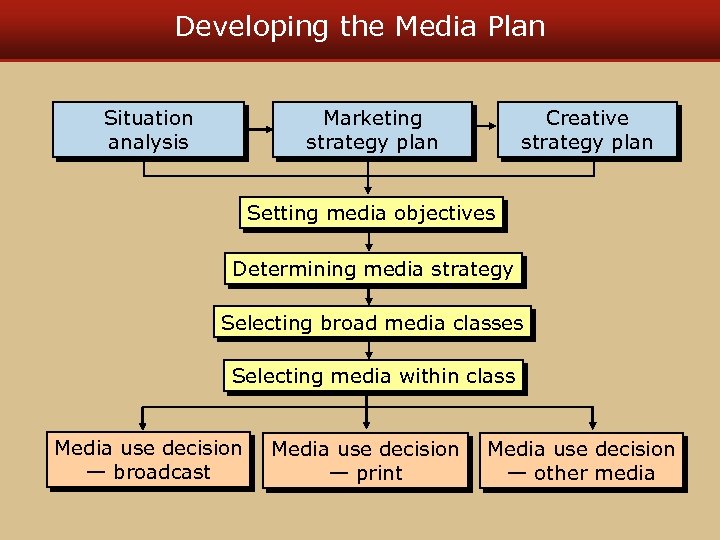 Developing the Media Plan Situation analysis Marketing strategy plan Creative strategy plan Setting media objectives Determining media strategy Selecting broad media classes Selecting media within class Media use decision — broadcast Media use decision — print Media use decision — other media
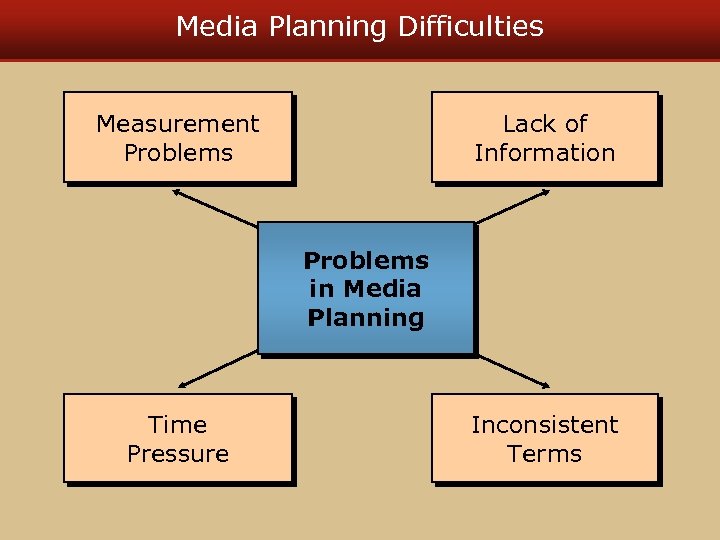 Media Planning Difficulties Measurement Problems Lack of Information Problems in Media Planning Time Pressure Inconsistent Terms
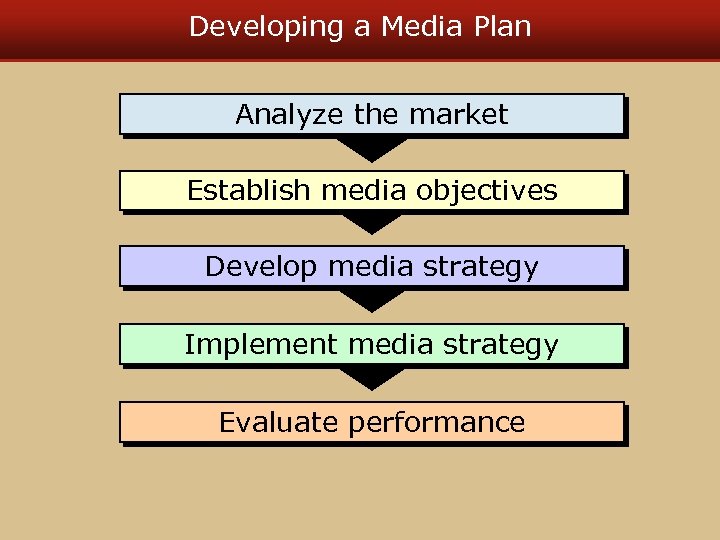 Developing a Media Plan Analyze the market Establish media objectives Develop media strategy Implement media strategy Evaluate performance
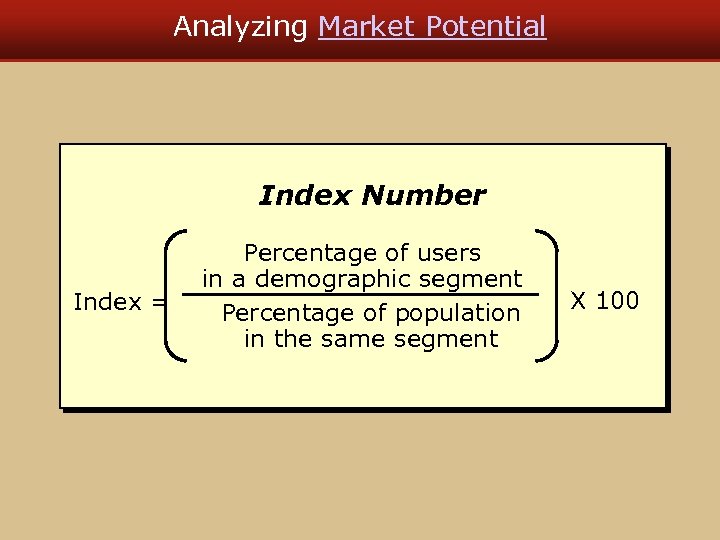 Analyzing Market Potential Index Number Index = Percentage of users in a demographic segment Percentage of population in the same segment X 100
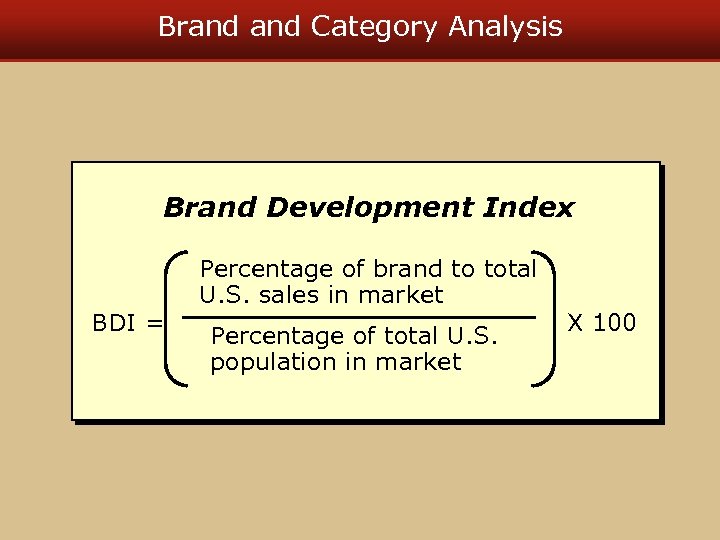 Brand Category Analysis Brand Development Index BDI = Percentage of brand to total U. S. sales in market Percentage of total U. S. population in market X 100
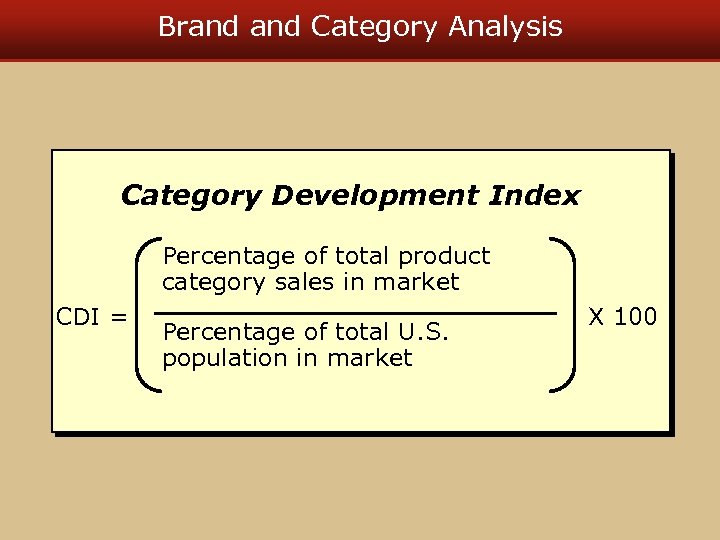 Brand Category Analysis Category Development Index Percentage of total product category sales in market CDI = Percentage of total U. S. population in market X 100
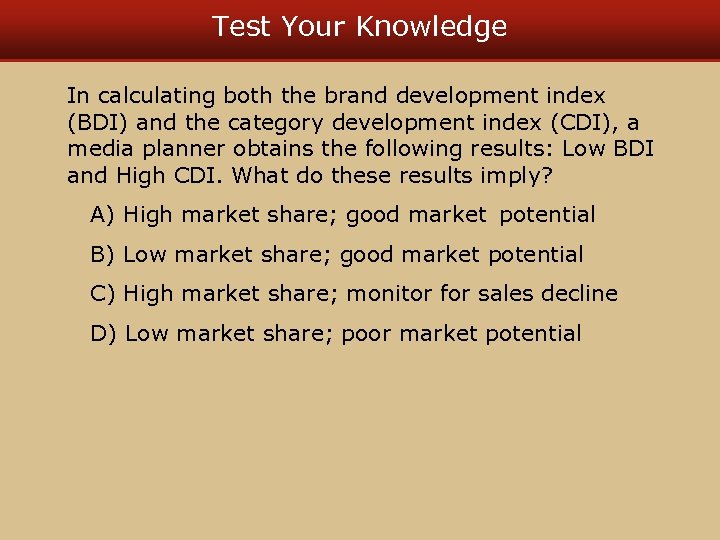 Test Your Knowledge In calculating both the brand development index (BDI) and the category development index (CDI), a media planner obtains the following results: Low BDI and High CDI. What do these results imply? A) High market share; good market potential B) Low market share; good market potential C) High market share; monitor for sales decline D) Low market share; poor market potential
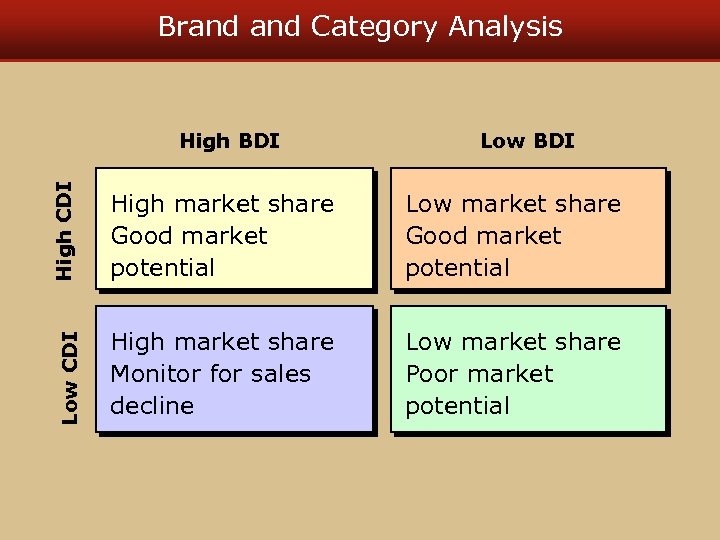 Brand Category Analysis High CDI Low BDI High market share Good market potential Low CDI High BDI High market share Monitor for sales decline Low market share Poor market potential
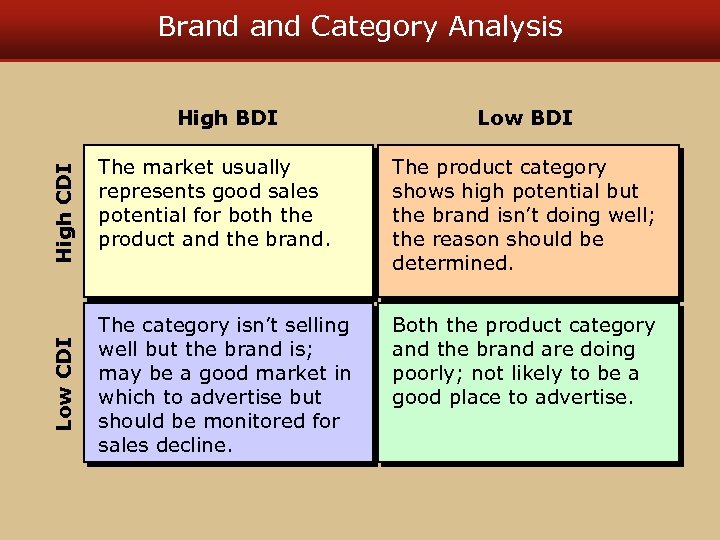 Brand Category Analysis Low CDI High BDI Low BDI The market usually represents good sales potential for both the product and the brand. The product category shows high potential but the brand isn’t doing well; the reason should be determined. The category isn’t selling well but the brand is; may be a good market in which to advertise but should be monitored for sales decline. Both the product category and the brand are doing poorly; not likely to be a good place to advertise.
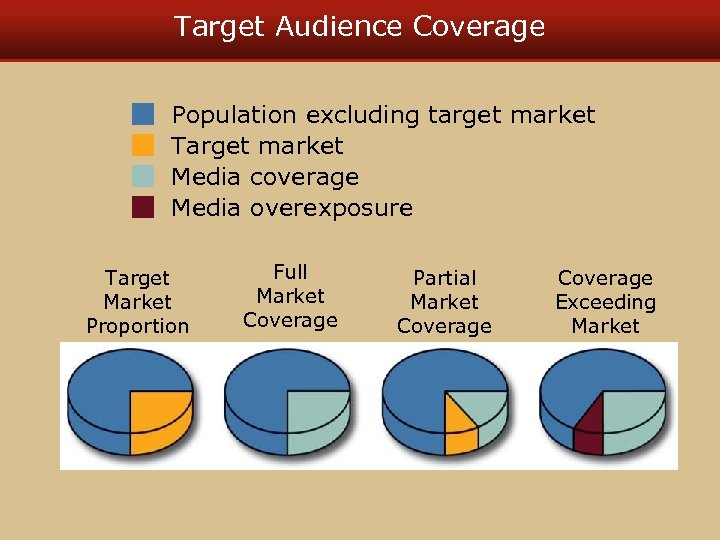 Target Audience Coverage Population excluding target market Target market Media coverage Media overexposure Target Market Proportion Full Market Coverage Partial Market Coverage Exceeding Market
 Geographic Coverage
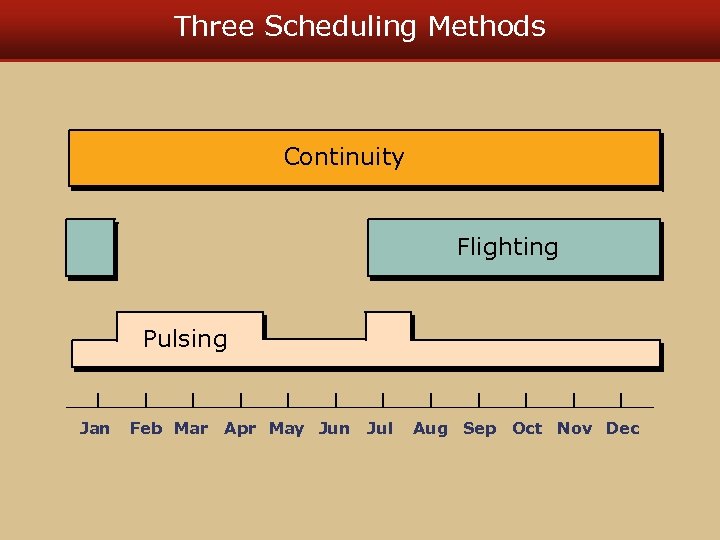 Three Scheduling Methods Continuity Flighting Pulsing Jan Feb Mar Apr May Jun Jul Aug Sep Oct Nov Dec
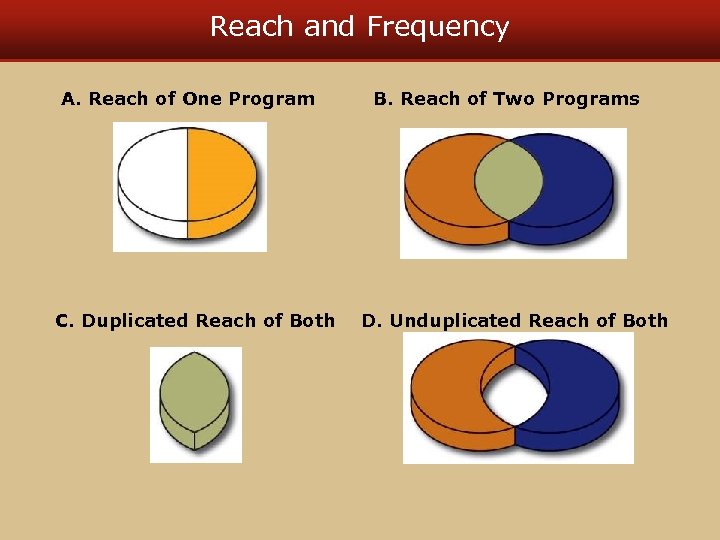 Reach and Frequency A. Reach of One Program C. Duplicated Reach of Both B. Reach of Two Programs D. Unduplicated Reach of Both
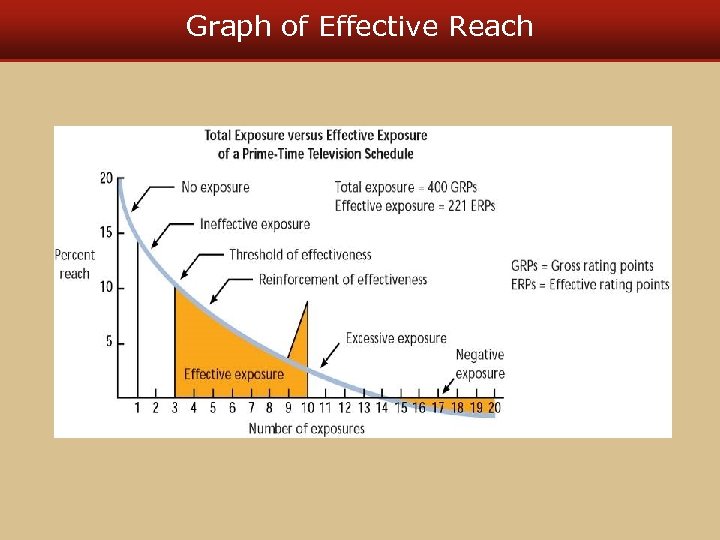 Graph of Effective Reach
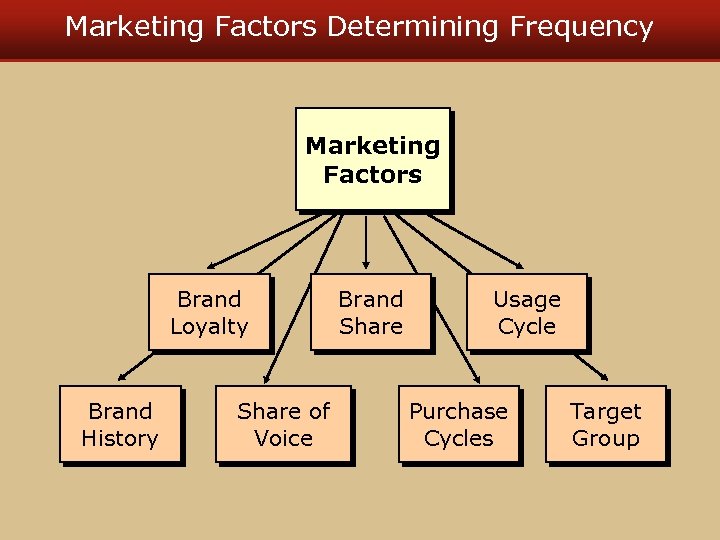 Marketing Factors Determining Frequency Marketing Factors Brand Loyalty Brand History Share of Voice Brand Share Usage Cycle Purchase Cycles Target Group
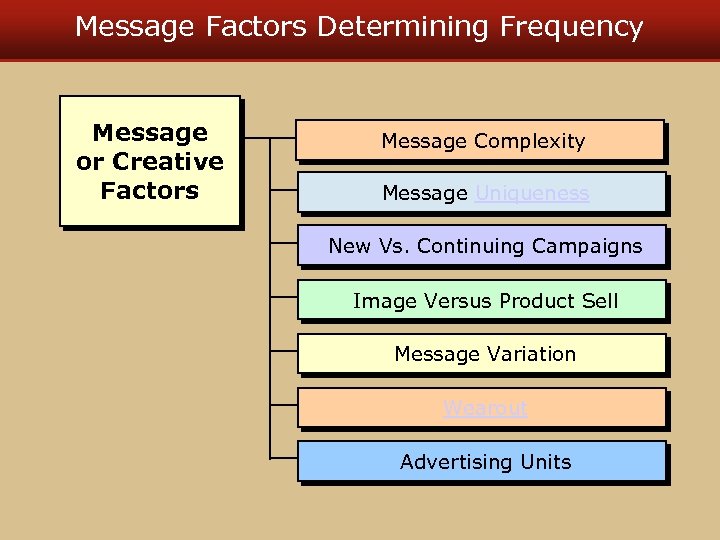 Message Factors Determining Frequency Message or Creative Factors Message Complexity Message Uniqueness New Vs. Continuing Campaigns Image Versus Product Sell Message Variation Wearout Advertising Units
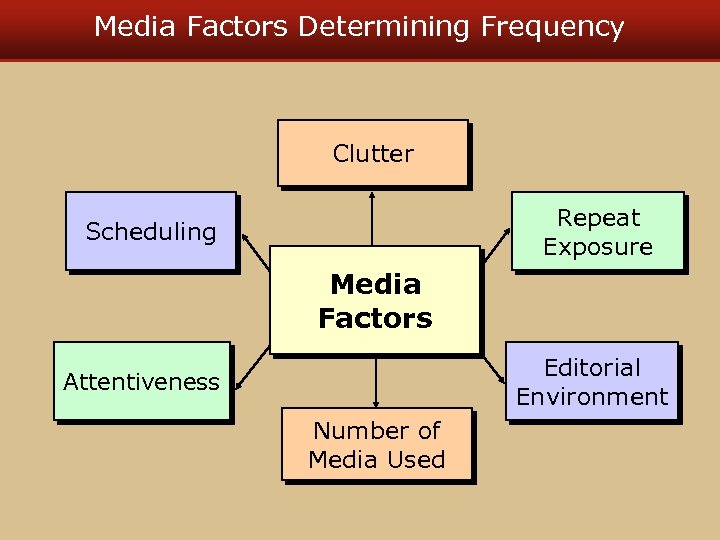 Media Factors Determining Frequency Clutter Repeat Exposure Scheduling Media Factors Editorial Environment Attentiveness Number of Media Used
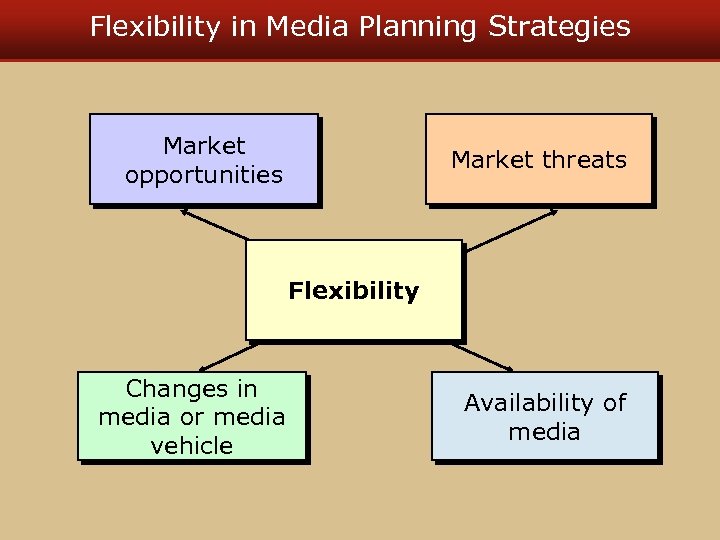 Flexibility in Media Planning Strategies Market opportunities Market threats Flexibility Changes in media or media vehicle Availability of media
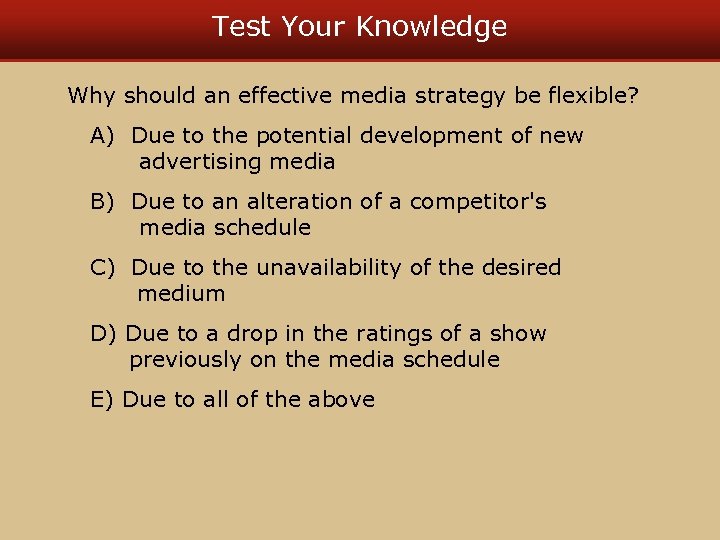 Test Your Knowledge Why should an effective media strategy be flexible? A) Due to the potential development of new advertising media B) Due to an alteration of a competitor's media schedule C) Due to the unavailability of the desired medium D) Due to a drop in the ratings of a show previously on the media schedule E) Due to all of the above
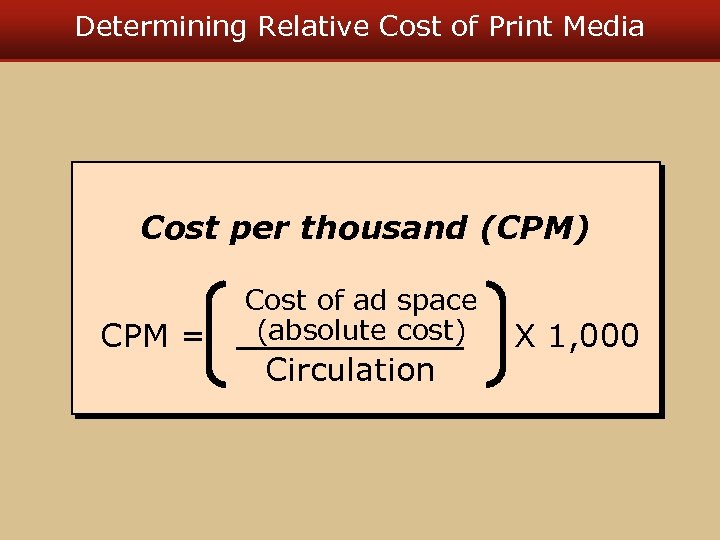 Determining Relative Cost of Print Media Cost per thousand (CPM) CPM = Cost of ad space (absolute cost) Circulation X 1, 000
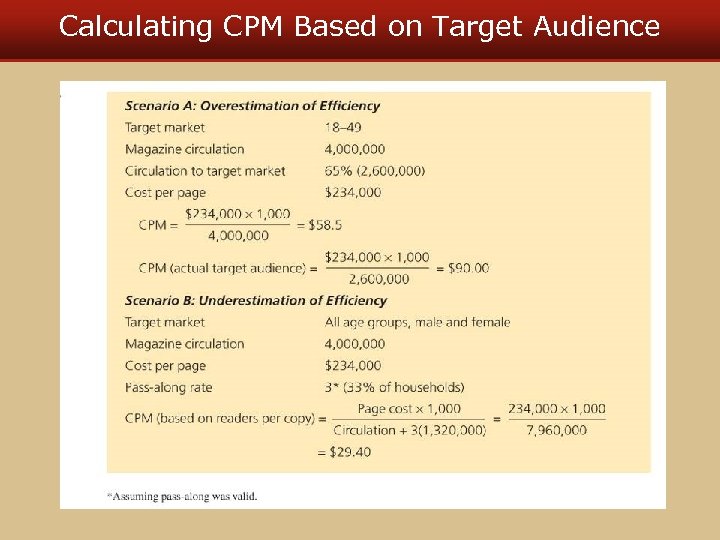 Calculating CPM Based on Target Audience
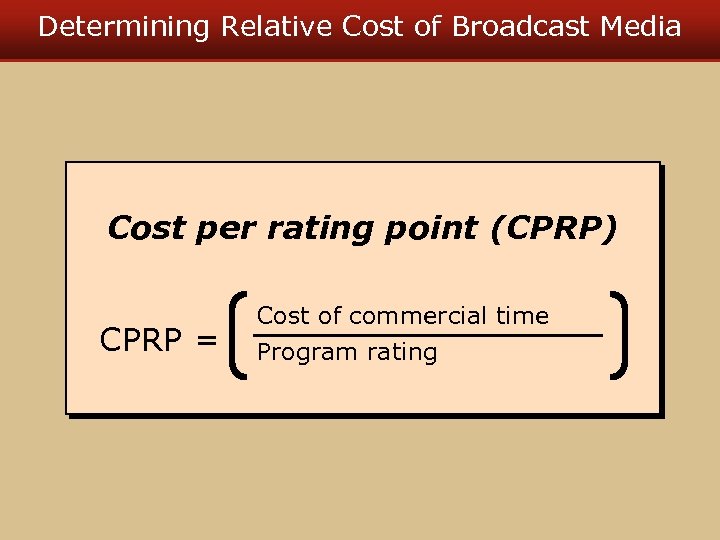 Determining Relative Cost of Broadcast Media Cost per rating point (CPRP) CPRP = Cost of commercial time Program rating
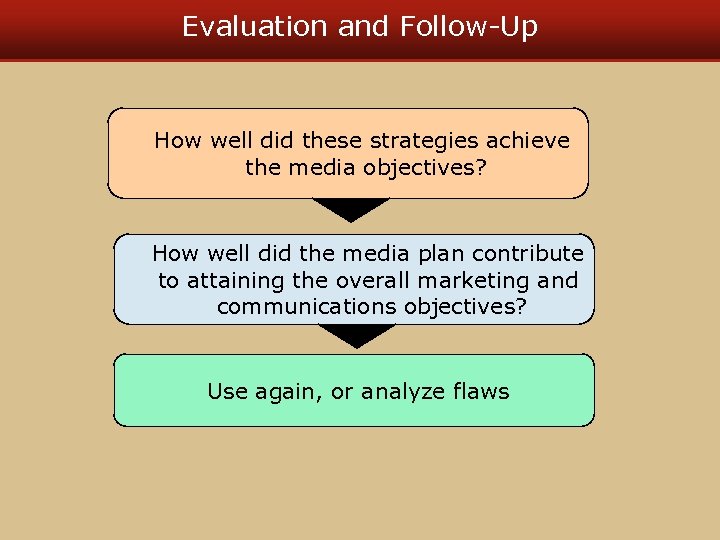 Evaluation and Follow-Up How well did these strategies achieve the media objectives? How well did the media plan contribute to attaining the overall marketing and communications objectives? Use again, or analyze flaws
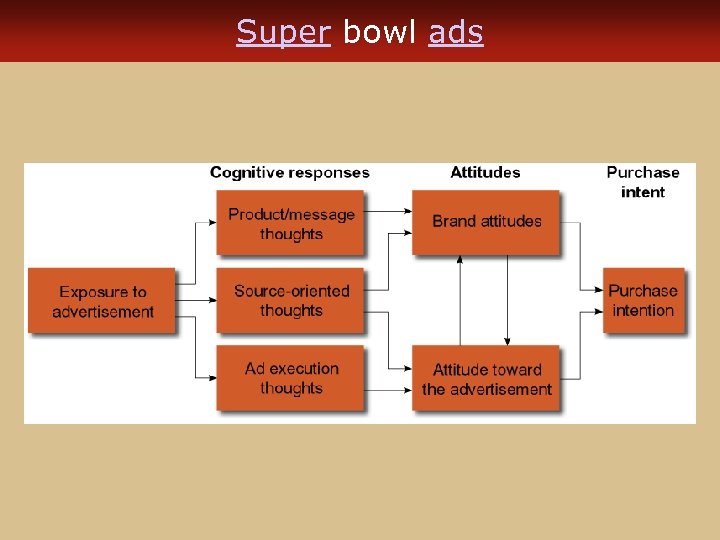 Super bowl ads
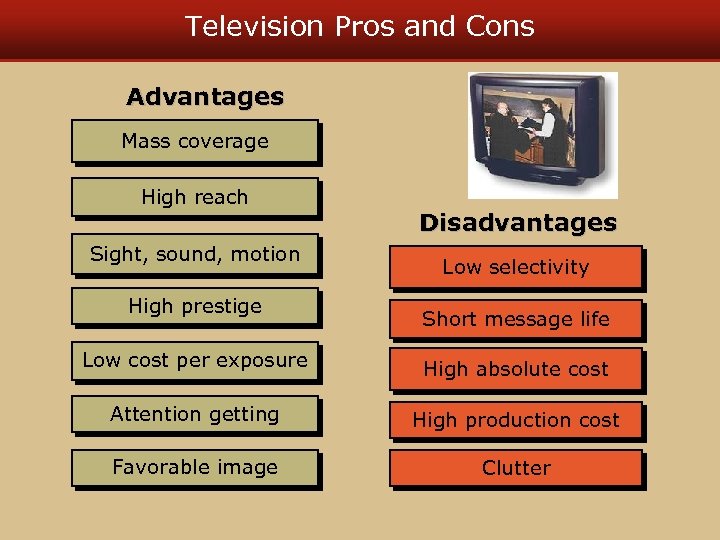 Television Pros and Cons Advantages Mass coverage High reach Sight, sound, motion High prestige Disadvantages Low selectivity Short message life Low cost per exposure High absolute cost Attention getting High production cost Favorable image Clutter
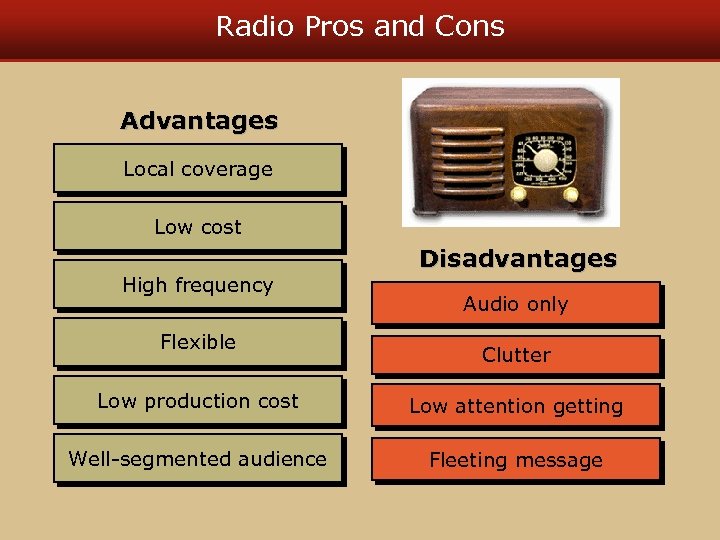 Radio Pros and Cons Advantages Local coverage Low cost High frequency Flexible Disadvantages Audio only Clutter Low production cost Low attention getting Well-segmented audience Fleeting message
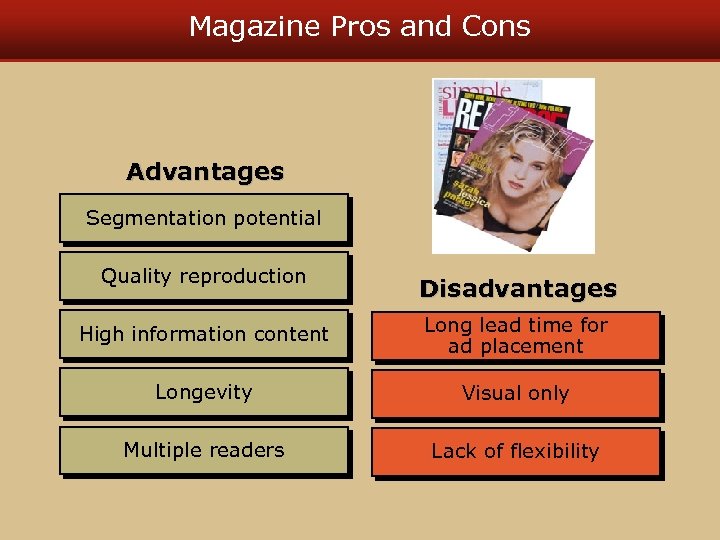 Magazine Pros and Cons Advantages Segmentation potential Quality reproduction Disadvantages High information content Long lead time for ad placement Longevity Visual only Multiple readers Lack of flexibility
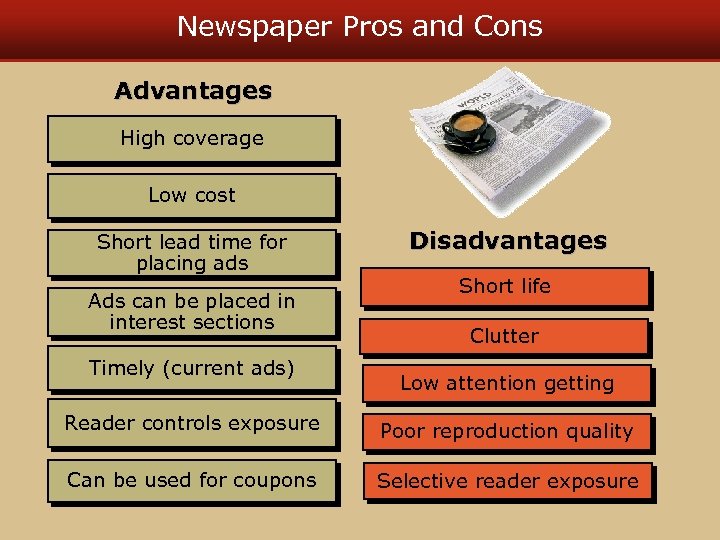 Newspaper Pros and Cons Advantages High coverage Low cost Short lead time for placing ads Ads can be placed in interest sections Timely (current ads) Disadvantages Short life Clutter Low attention getting Reader controls exposure Poor reproduction quality Can be used for coupons Selective reader exposure
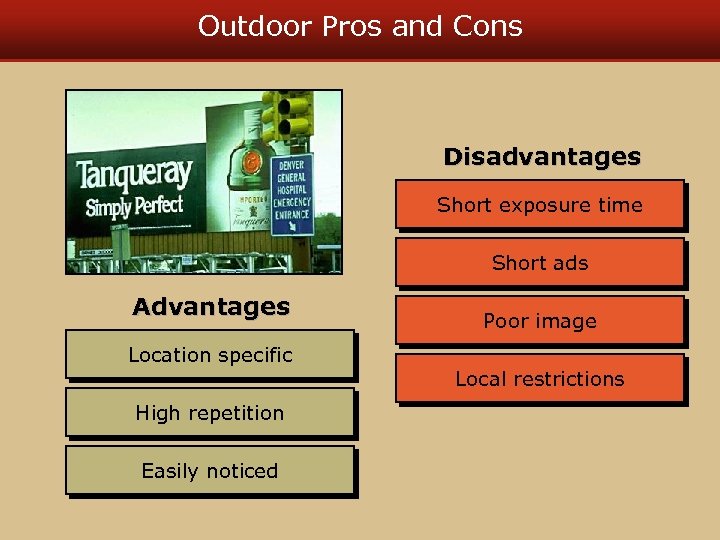 Outdoor Pros and Cons Disadvantages Short exposure time Short ads Advantages Location specific High repetition Easily noticed Poor image Local restrictions
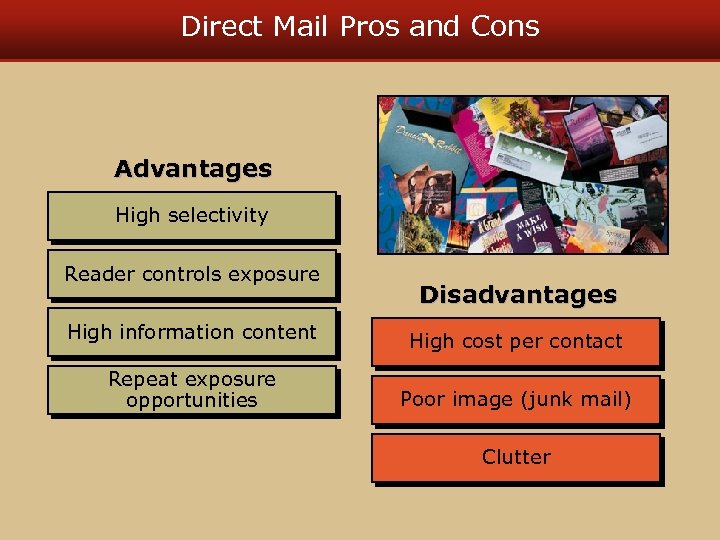 Direct Mail Pros and Cons Advantages High selectivity Reader controls exposure Disadvantages High information content High cost per contact Repeat exposure opportunities Poor image (junk mail) Clutter
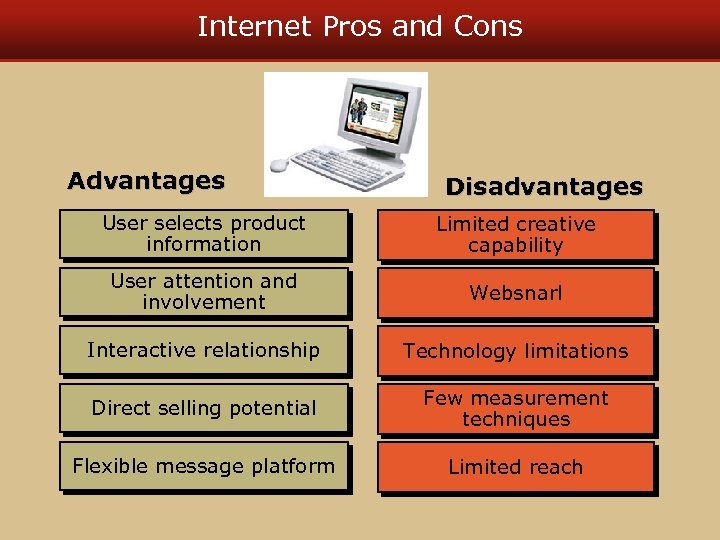 Internet Pros and Cons Advantages Disadvantages User selects product information Limited creative capability User attention and involvement Websnarl Interactive relationship Technology limitations Direct selling potential Few measurement techniques Flexible message platform Limited reach
 Test Your Knowledge In terms of media vehicles, ______ would be most efficient medium for the “Got Milk” slogan. A) television B) interactive media C) radio D) outdoor E) newspapers